On This Page
Description
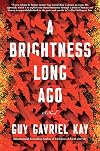
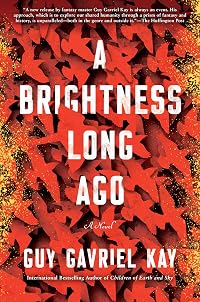
"International bestselling author Guy Gavriel Kay's latest work is set in a world evoking early Renaissance Italy and offers an extraordinary cast of characters whose lives come together through destiny, love, and ambition. In a chamber overlooking the nighttime waterways of a maritime city, a man looks back on his youth and the people who shaped his life. Danio Cerra's intelligence won him entry to a renowned school even though he was only the son of a tailor. He took service at the court show more of a ruling count--and soon learned why that man was known as the Beast. Danio's fate changed the moment he saw and recognized Adria Ripoli as she entered the count's chambers one autumn night, intending to kill. Born to power, Adria had chosen, instead of a life of comfort, one of danger--and freedom. Which is how she encounters Danio in a perilous time and place. Vivid figures share the unfolding story. Among them: a healer determined to defy her expected lot; a charming, frivolous son of immense wealth; a powerful religious leader more decadent than devout; and, affecting all these lives and many more, two larger-than-life mercenary commanders, lifelong adversaries, whose rivalry puts a world in the balance. A Brightness Long Ago offers both compelling drama and deeply moving reflections on the nature of memory, the choices we make in life, and the role played by the turning of Fortune's wheel."--provided by publisher. show lessTags
Recommendations

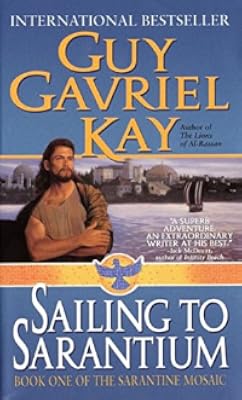
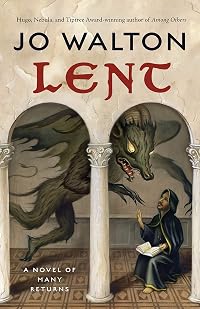
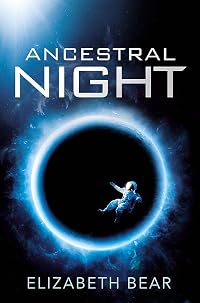

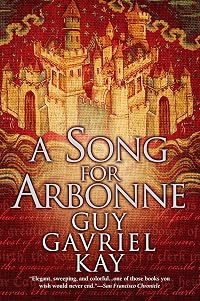


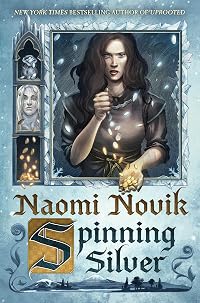
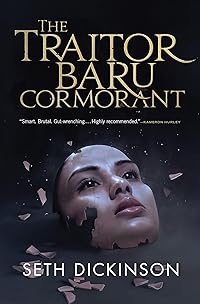
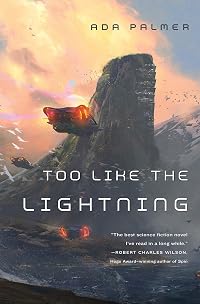
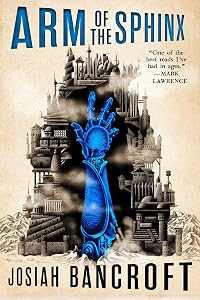
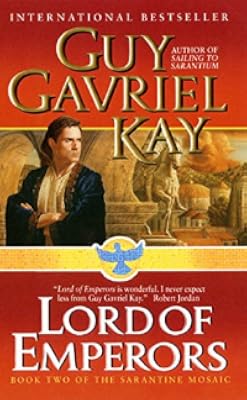
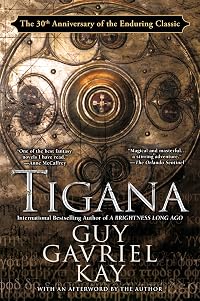
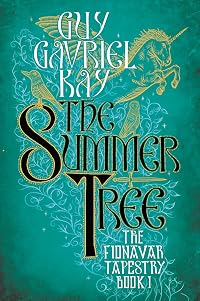
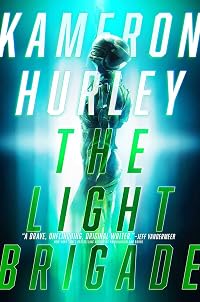
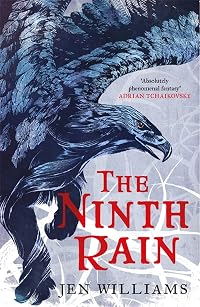
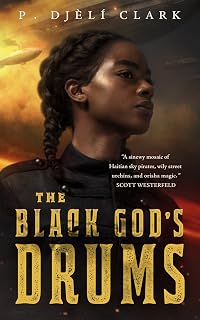
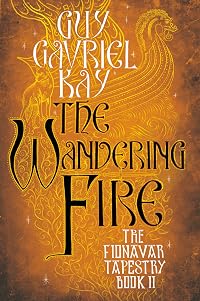
Member Recommendations
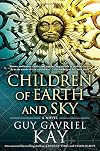
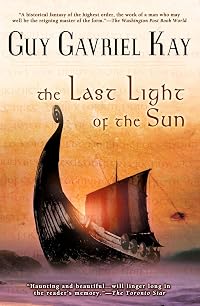
Cecrow Minor overlap of characters.
Member Reviews
" ... isn't it also true sometimes that the only way a person survives after they die is in the memories of others?"
I think that excerpt from the book is the essence of what this story tells us.
I have wanted to try one of Guy Gavriel Kay's novels for a long time. This recent novel (2019) sounded interesting. It far exceeded whatever expectations I had. It is a historical fiction and a slight fantasy because it is set in a fictional place, although it bears a strong resemblance to what renaissance Italian city-states must have been like. Despite the resemblance this place does have two moons. So it is not Italy. This book is so richly drawn with characters the reader is drawn to, that I was easily immersed into this world and pulled into show more these imagined lives.
It can be a bit of a chore with books like this to initially sort out relationships between characters. The author here lets us learn them through the story and does it very well with multiple viewpoint characters. There are also names laid out at the start of the book along with a map to reference to help.
The story is so intense, full of insight, and so well told that I will have to read more stories by this author. This is a journey through life. And death. Your heart will be ripped.
It is also a mature, reflective work, and I appreciated that. show less
I think that excerpt from the book is the essence of what this story tells us.
I have wanted to try one of Guy Gavriel Kay's novels for a long time. This recent novel (2019) sounded interesting. It far exceeded whatever expectations I had. It is a historical fiction and a slight fantasy because it is set in a fictional place, although it bears a strong resemblance to what renaissance Italian city-states must have been like. Despite the resemblance this place does have two moons. So it is not Italy. This book is so richly drawn with characters the reader is drawn to, that I was easily immersed into this world and pulled into show more these imagined lives.
It can be a bit of a chore with books like this to initially sort out relationships between characters. The author here lets us learn them through the story and does it very well with multiple viewpoint characters. There are also names laid out at the start of the book along with a map to reference to help.
The story is so intense, full of insight, and so well told that I will have to read more stories by this author. This is a journey through life. And death. Your heart will be ripped.
It is also a mature, reflective work, and I appreciated that. show less
The arrow that flies, the memory that lingers.
I have read almost everything Kay has written. I know his patterns: the slow opening, the lavish descriptions of food and weather, the historical parallels filed down just enough to be fiction, the quiet tragedy that arrives not with a scream but with a sigh. A Brightness Long Ago follows these patterns. And yet, it surprised me. Not with plot twists; those are few. Not with shocking deaths; those are earned. It surprised me with its meditation on memory itself: how we remember, what we choose to forget, and how the past, once written, can never be unwritten.
What it is:
A world shaped like Renaissance Italy, a generation before the events of Children of Earth and Sky. A Brightness Long Ago show more actually takes place earlier, in the same "quarter-turn to the fantastic" universe. The city-states of Batiara (think Florence, Venice, Milan) are caught between the rising Ottoman Empire (the Ashharites) and their own internal rivalries. The story follows Danio Cerra, the son of a tailor, who as a young man witnesses a sudden act of violence that will shape the rest of his life. He becomes the servant and confidant of a powerful condottiere (mercenary captain) named Adria Ripoli, a woman who commands armies and breaks hearts. And he becomes entangled with the fates of two other men: Folco d'Acorsi, a brilliant, arrogant, charismatic leader; and Guidanio, a skilled but unheralded fighter who carries a burden of guilt.
The novel spans decades, from Danio's youth to his old age. It is framed as a memoir: an old man, looking back, trying to make sense of the brightness and the darkness he has witnessed. The central event is a duel, or rather, a missed duel between Folco and Guidanio, two men who could have been friends but are forced by circumstance and pride to be enemies. The outcome, when it comes, is not the one you expect.
Why it works (and why it lingers):
1. The meditation on memory is the heart of the book. Danio is an unreliable narrator, but not in the flashy, twist‑ending way. He is unreliable because memory is unreliable. He admits he does not remember certain conversations. He knows he is romanticizing some events, minimizing others. He writes his memoir to fix the past in place, to make it solid, to give meaning to the chaos. But he also knows that the act of writing changes what happened. The title 'A Brightness Long Ago' captures this perfectly. The brightness is real. But it is also filtered through decades of longing and loss.
2. The characters are morally complex, even the villains. Adria Ripoli is a woman who has built her power on ruthlessness. She orders executions, manipulates allies, and sacrifices pawns without visible regret. But she is also capable of tenderness, loyalty, and a kind of tragic self‑awareness. "I am not a good woman," she tells Danio. "But I am not a small one either." Folco d'Acorsi is charming, brilliant, and doomed by his own pride. Guidanio is haunted, honorable, and unable to forgive himself for a single moment of violence. There are no easy heroes. There are no cartoon villains.
3. The prose is Kay at his most reflective. This is not the lean prose of The Last Light of the Sun nor the lushness of Tigana. It is something in between: elegant, measured, full of sentences that you want to underline and return to. There is a passage about the nature of time- "We live forward, but we understand backward", that I have quoted to myself a dozen times since finishing the book. The pacing is slow, deliberate, almost hypnotic. Kay is not in a hurry. He wants you to sit with the characters, to feel the weight of their choices.
4. The duel that never happens is more powerful than any duel that does. The novel builds toward a confrontation between Folco and Guidanio. You know it is coming. You dread it. And then, at the last moment, something intervenes. Kay denies you the catharsis of a sword fight. Instead, he gives you something more painful: the long aftermath, the what‑ifs, the slow decay of a friendship that never had a chance to bloom. The scene where the two men finally meet, years later, not as enemies but as old men who have outlived their grudges, is one of the most beautiful things Kay has ever written.
5. The ending is a quiet triumph. Kay does not give you a happy ending. He gives you a real ending: people grow old, lovers part, friends die, and the world moves on. But he also gives you hope. Danio, at the end of his life, has not lost his capacity for wonder. He still remembers the brightness. And he still believes that the brightness was worth the pain.
Where it might lose some readers (honest, even as a fan):
1. The pacing is slow. Very slow. Kay spends pages on descriptions of a city square, a meal, a conversation on a balcony. If you need constant plot momentum, this will frustrate you. I love the pace. But I know it is not for everyone.
2. The cast is large, and some characters appear only briefly. Kay has a habit of introducing minor characters with rich backstories, only to leave them behind. Some readers find this immersive. Others find it frustrating.
Who should read this:
Lovers of literary historical fiction with a light touch of the fantastic.
Readers who appreciate meditations on memory, aging, and the nature of storytelling.
Anyone who has ever wondered how the past shapes the present.
Fans of The Lions of Al-Rassan and A Song for Arbonne.
Who might skip it:
If you need fast-paced action or clear good-vs-evil binaries.
If you dislike slow, reflective prose and frequent digressions.
If you prefer your fantasy heavy on magic and light on politics.
Final verdict:
A Brightness Long Ago is not Kay's most accessible novel. It is not his most action-packed. But it is one of his most wise. It is a book about time: how it passes, how it changes us, how we try to pin it down with words and always fail. Danio Cerra is not a hero. He is a witness. And his testimony, filtered through Kay's luminous prose, is a gift.
I finished this book in a single weekend, reading late into the night. When I closed the cover, I felt not the emptiness of finishing a good story, but the fullness of having lived alongside these characters for a while. I thought about my own memories, the brightnesses long ago, and how they have shaped me. That is what Kay does. He makes you look at your own life with clearer eyes.
Five stars. For the arrow that flies. For the city on the hill. For the old man who writes his memoir in a quiet room, knowing that the words will never capture everything, but writing them anyway. show less
I have read almost everything Kay has written. I know his patterns: the slow opening, the lavish descriptions of food and weather, the historical parallels filed down just enough to be fiction, the quiet tragedy that arrives not with a scream but with a sigh. A Brightness Long Ago follows these patterns. And yet, it surprised me. Not with plot twists; those are few. Not with shocking deaths; those are earned. It surprised me with its meditation on memory itself: how we remember, what we choose to forget, and how the past, once written, can never be unwritten.
What it is:
A world shaped like Renaissance Italy, a generation before the events of Children of Earth and Sky. A Brightness Long Ago show more actually takes place earlier, in the same "quarter-turn to the fantastic" universe. The city-states of Batiara (think Florence, Venice, Milan) are caught between the rising Ottoman Empire (the Ashharites) and their own internal rivalries. The story follows Danio Cerra, the son of a tailor, who as a young man witnesses a sudden act of violence that will shape the rest of his life. He becomes the servant and confidant of a powerful condottiere (mercenary captain) named Adria Ripoli, a woman who commands armies and breaks hearts. And he becomes entangled with the fates of two other men: Folco d'Acorsi, a brilliant, arrogant, charismatic leader; and Guidanio, a skilled but unheralded fighter who carries a burden of guilt.
The novel spans decades, from Danio's youth to his old age. It is framed as a memoir: an old man, looking back, trying to make sense of the brightness and the darkness he has witnessed. The central event is a duel, or rather, a missed duel between Folco and Guidanio, two men who could have been friends but are forced by circumstance and pride to be enemies. The outcome, when it comes, is not the one you expect.
Why it works (and why it lingers):
1. The meditation on memory is the heart of the book. Danio is an unreliable narrator, but not in the flashy, twist‑ending way. He is unreliable because memory is unreliable. He admits he does not remember certain conversations. He knows he is romanticizing some events, minimizing others. He writes his memoir to fix the past in place, to make it solid, to give meaning to the chaos. But he also knows that the act of writing changes what happened. The title 'A Brightness Long Ago' captures this perfectly. The brightness is real. But it is also filtered through decades of longing and loss.
2. The characters are morally complex, even the villains. Adria Ripoli is a woman who has built her power on ruthlessness. She orders executions, manipulates allies, and sacrifices pawns without visible regret. But she is also capable of tenderness, loyalty, and a kind of tragic self‑awareness. "I am not a good woman," she tells Danio. "But I am not a small one either." Folco d'Acorsi is charming, brilliant, and doomed by his own pride. Guidanio is haunted, honorable, and unable to forgive himself for a single moment of violence. There are no easy heroes. There are no cartoon villains.
3. The prose is Kay at his most reflective. This is not the lean prose of The Last Light of the Sun nor the lushness of Tigana. It is something in between: elegant, measured, full of sentences that you want to underline and return to. There is a passage about the nature of time- "We live forward, but we understand backward", that I have quoted to myself a dozen times since finishing the book. The pacing is slow, deliberate, almost hypnotic. Kay is not in a hurry. He wants you to sit with the characters, to feel the weight of their choices.
4. The duel that never happens is more powerful than any duel that does. The novel builds toward a confrontation between Folco and Guidanio. You know it is coming. You dread it. And then, at the last moment, something intervenes. Kay denies you the catharsis of a sword fight. Instead, he gives you something more painful: the long aftermath, the what‑ifs, the slow decay of a friendship that never had a chance to bloom. The scene where the two men finally meet, years later, not as enemies but as old men who have outlived their grudges, is one of the most beautiful things Kay has ever written.
5. The ending is a quiet triumph. Kay does not give you a happy ending. He gives you a real ending: people grow old, lovers part, friends die, and the world moves on. But he also gives you hope. Danio, at the end of his life, has not lost his capacity for wonder. He still remembers the brightness. And he still believes that the brightness was worth the pain.
Where it might lose some readers (honest, even as a fan):
1. The pacing is slow. Very slow. Kay spends pages on descriptions of a city square, a meal, a conversation on a balcony. If you need constant plot momentum, this will frustrate you. I love the pace. But I know it is not for everyone.
2. The cast is large, and some characters appear only briefly. Kay has a habit of introducing minor characters with rich backstories, only to leave them behind. Some readers find this immersive. Others find it frustrating.
Who should read this:
Lovers of literary historical fiction with a light touch of the fantastic.
Readers who appreciate meditations on memory, aging, and the nature of storytelling.
Anyone who has ever wondered how the past shapes the present.
Fans of The Lions of Al-Rassan and A Song for Arbonne.
Who might skip it:
If you need fast-paced action or clear good-vs-evil binaries.
If you dislike slow, reflective prose and frequent digressions.
If you prefer your fantasy heavy on magic and light on politics.
Final verdict:
A Brightness Long Ago is not Kay's most accessible novel. It is not his most action-packed. But it is one of his most wise. It is a book about time: how it passes, how it changes us, how we try to pin it down with words and always fail. Danio Cerra is not a hero. He is a witness. And his testimony, filtered through Kay's luminous prose, is a gift.
I finished this book in a single weekend, reading late into the night. When I closed the cover, I felt not the emptiness of finishing a good story, but the fullness of having lived alongside these characters for a while. I thought about my own memories, the brightnesses long ago, and how they have shaped me. That is what Kay does. He makes you look at your own life with clearer eyes.
Five stars. For the arrow that flies. For the city on the hill. For the old man who writes his memoir in a quiet room, knowing that the words will never capture everything, but writing them anyway. show less
A Brightness Long Ago - Guy Gavriel Kay
Audio performance by Simon Vance
4.5 stars
“The sailors say the rain misses the cloud even as it falls through light or dark into the sea. I miss her like that as I fall through my life, through time, the chaos of our time.”
The book begins with Danio Cerra reflecting on his early life. The narrator perspective changes frequently as the book progresses, but it circles back to the aging Danio Cerra and his bright memories of long ago. The setting is Kay’s pseudo Renaissance Italy. This book is a prequel to Children of Earth and Sky. There’s an interesting, but minor overlap of characters. Either book could be enjoyed without the other one. I listened to this one and immediately listened, show more again, to parts of the first book, just to see how they fit together.
“Perhaps in the darkest times all we can do is refuse to be part of the darkness.”
Although this book begins with an assassination, it is slow moving and reflective. Kay’s books are usually philosophically provoking. This story, in particular, is very introspective as it starts with an elderly man’s memories. Much of this book revolves around the enmity of two powerful, competing, war lords. Danio Cerra is in the unique position to observe both men intimately. Kay has done this before (and better,I think) in The Lions of Al Rassan and A Song for Arbonne. As usual, his characters are complex, with private doubts and motivations. Kay brings readers into the interior life of every character, even someone as minor as a shoemaker. He gives major roles to female characters, especially Adria Ripoli and Jelena the healer, who each choose non traditional lifestyles in very different ways. Technically the book is a medieval fantasy, but it has fewer paranormal elements than any other of Kay’s books that I’ve read. It reads like detailed historical fiction. It left me feeling like I’d just returned from an exotic vacation. show less
Audio performance by Simon Vance
4.5 stars
“The sailors say the rain misses the cloud even as it falls through light or dark into the sea. I miss her like that as I fall through my life, through time, the chaos of our time.”
The book begins with Danio Cerra reflecting on his early life. The narrator perspective changes frequently as the book progresses, but it circles back to the aging Danio Cerra and his bright memories of long ago. The setting is Kay’s pseudo Renaissance Italy. This book is a prequel to Children of Earth and Sky. There’s an interesting, but minor overlap of characters. Either book could be enjoyed without the other one. I listened to this one and immediately listened, show more again, to parts of the first book, just to see how they fit together.
“Perhaps in the darkest times all we can do is refuse to be part of the darkness.”
Although this book begins with an assassination, it is slow moving and reflective. Kay’s books are usually philosophically provoking. This story, in particular, is very introspective as it starts with an elderly man’s memories. Much of this book revolves around the enmity of two powerful, competing, war lords. Danio Cerra is in the unique position to observe both men intimately. Kay has done this before (and better,I think) in The Lions of Al Rassan and A Song for Arbonne. As usual, his characters are complex, with private doubts and motivations. Kay brings readers into the interior life of every character, even someone as minor as a shoemaker. He gives major roles to female characters, especially Adria Ripoli and Jelena the healer, who each choose non traditional lifestyles in very different ways. Technically the book is a medieval fantasy, but it has fewer paranormal elements than any other of Kay’s books that I’ve read. It reads like detailed historical fiction. It left me feeling like I’d just returned from an exotic vacation. show less
Some Kay musings, after finishing his most recent book. Recommendation notes at the end.
It's been interesting watching the trajectory of Kay's work, and how I feel like we're seeing him find a tighter and tighter focus into the kinds of stories he wants to tell.
The Fionavar Tapestry was probably fresh from having helped Christopher Tolkien edit the Silmarillion. Epic Fantasy, big magic. But at the same time with a deeply-felt connection to personal, individual choices.
Tigana, The Lions of Al-Rassan, A Song for Arbonne, he really comes into his own with the 'quarter-turn to the fantastic,' deeply inspired by history.
From the Sarantine Mosaic onwards, he has continued to travel down that path with greater and greater detail and focus on show more characters and their choices, spending what so much more time on this than most other writers in fantasy.
Fantasy often feels like a plot-heavy genre. It's about the things that are happening, and often the order that they're happening in, often leading to Big Events with Important People.
Kay still definitely does that; but at the same time these Important People encounter and are deeply affected by people who aren't destined to be recorded by history.
By the time we reach this, his most recent book, the 'plot' of the book consists of maybe five or six major events. In the hands of a different writer, this would only be half the novel. But Kay spends so much time exploring the moments and details that these events are heightened, not due to their 'Importance,' but in their emotional and character-specific detail.
He's referencing a world that he's built up over many books, but none of those references are required to enjoy it. They become little gifts and reminders... and they enhance a sense of reality to the setting, not because of the encyclopedic expository explanations, but because these references are obliquely made, and sometimes about events that are either very distant or seen differently.
At first I felt like I was seeing too many of Kay's 'tricks' in terms of characterizations and narrative styles, but by the time I finished the book, I've come around to feeling that like these aren't tricks, they are the ways in which Kay himself profoundly feels about stories and character.
If this is your first Kay novel, I hope you enjoy! There is absolutely nothing from a plot or background level that you're missing. (A great feature of his books is that you can start with just about any of them!)
At a writing level, it is superb. Kay's writing is often described as lyrical, but it is never overwrought of needlessly complex. The lyricism is in arrangement of the details and not in obscure language.
I will say that if you're expecting something like adventure fiction (though there is some wonderful action) or heroic fantasy (though characters make very brave choices) you will find this to be very different. It isn't constructed that way, but it is constructed very intentionally. Settle in to some intricate, finely wrought storytelling. show less
It's been interesting watching the trajectory of Kay's work, and how I feel like we're seeing him find a tighter and tighter focus into the kinds of stories he wants to tell.
The Fionavar Tapestry was probably fresh from having helped Christopher Tolkien edit the Silmarillion. Epic Fantasy, big magic. But at the same time with a deeply-felt connection to personal, individual choices.
Tigana, The Lions of Al-Rassan, A Song for Arbonne, he really comes into his own with the 'quarter-turn to the fantastic,' deeply inspired by history.
From the Sarantine Mosaic onwards, he has continued to travel down that path with greater and greater detail and focus on show more characters and their choices, spending what so much more time on this than most other writers in fantasy.
Fantasy often feels like a plot-heavy genre. It's about the things that are happening, and often the order that they're happening in, often leading to Big Events with Important People.
Kay still definitely does that; but at the same time these Important People encounter and are deeply affected by people who aren't destined to be recorded by history.
By the time we reach this, his most recent book, the 'plot' of the book consists of maybe five or six major events. In the hands of a different writer, this would only be half the novel. But Kay spends so much time exploring the moments and details that these events are heightened, not due to their 'Importance,' but in their emotional and character-specific detail.
He's referencing a world that he's built up over many books, but none of those references are required to enjoy it. They become little gifts and reminders... and they enhance a sense of reality to the setting, not because of the encyclopedic expository explanations, but because these references are obliquely made, and sometimes about events that are either very distant or seen differently.
At first I felt like I was seeing too many of Kay's 'tricks' in terms of characterizations and narrative styles, but by the time I finished the book, I've come around to feeling that like these aren't tricks, they are the ways in which Kay himself profoundly feels about stories and character.
If this is your first Kay novel, I hope you enjoy! There is absolutely nothing from a plot or background level that you're missing. (A great feature of his books is that you can start with just about any of them!)
At a writing level, it is superb. Kay's writing is often described as lyrical, but it is never overwrought of needlessly complex. The lyricism is in arrangement of the details and not in obscure language.
I will say that if you're expecting something like adventure fiction (though there is some wonderful action) or heroic fantasy (though characters make very brave choices) you will find this to be very different. It isn't constructed that way, but it is constructed very intentionally. Settle in to some intricate, finely wrought storytelling. show less
A Brightness Long Ago is, like all of Kay’s work, exquisitely crafted and deeply moving. A beautiful meditation on how seemingly small choices can have such great consequences, and on how people who come into our lives, even briefly, can change them. As Danio Cerra reflects on his life, on the great upheaval he witnessed in his youth, we see how small, impulsive decisions made by him and others brought dukes to their knees, ruined or saved whole cities, and changed the course of history.
This book also made me think about how much I love the author's style. Not just the achingly poetic way he describes his world, but also how he will take a character, a face in the crowd, and show how their lives were affected by the larger events they show more witnessed, even if they had no part in them. A shoemaker in debt risks his last coins on a horserace, and we see how that changes his life, his children's lives, and those around them. A humble cleric on the side of the road takes on offhand remark by a passing soldier to heart, and goes on pilgrimage, and so on and on. Each life is important in its sphere, and some spheres just happen to be much larger. show less
This book also made me think about how much I love the author's style. Not just the achingly poetic way he describes his world, but also how he will take a character, a face in the crowd, and show how their lives were affected by the larger events they show more witnessed, even if they had no part in them. A shoemaker in debt risks his last coins on a horserace, and we see how that changes his life, his children's lives, and those around them. A humble cleric on the side of the road takes on offhand remark by a passing soldier to heart, and goes on pilgrimage, and so on and on. Each life is important in its sphere, and some spheres just happen to be much larger. show less
To be perfectly candid, I wasn't a huge fan of Kay's earlier work and I left off reading anything else by him, thinking I already got his measure. Two books in an early trilogy. They were pretty good but it left a not-so-pleasant taste in my mouth.
So why did I come back? Give him another try?
I can't really say. I don't know. I just remembered how lyrical his prose was in places and thought, perhaps, he had grown into an even better writer since then. That maybe I judged him a bit too harshly. Maybe I just didn't like the rape scenes in his early work. Something like that.
So what happened? How did my second chance go?
Amazingly, so it seems. :) I loved this book. From start to finish, the characters came to life, always interested me, show more and the place so reminiscent of Renaissance Italy simply shone and shone and shone through these pages.
The fantasy elements were totally understated. The world and the characters were not. I was enraptured by one of the most gorgeous, lush tales of youth, discovery, and independence. Of how he grew to admire and respect two men who were old, bitter enemies, of how he sidestepped and played his own role between their conflict. Of a non-traditional love with a woman who would always, by any means possible, remain independent.
If I sidestep some of the most beautiful scenes, it's not because they were not memorable. Indeed, a certain assassination and a certain race will be scenes I will never forget.
Far from having to push myself through this book, I found that I never wanted it to end.
This is one of the highest praises I can ever bestow. :) show less
So why did I come back? Give him another try?
I can't really say. I don't know. I just remembered how lyrical his prose was in places and thought, perhaps, he had grown into an even better writer since then. That maybe I judged him a bit too harshly. Maybe I just didn't like the rape scenes in his early work. Something like that.
So what happened? How did my second chance go?
Amazingly, so it seems. :) I loved this book. From start to finish, the characters came to life, always interested me, show more and the place so reminiscent of Renaissance Italy simply shone and shone and shone through these pages.
The fantasy elements were totally understated. The world and the characters were not. I was enraptured by one of the most gorgeous, lush tales of youth, discovery, and independence. Of how he grew to admire and respect two men who were old, bitter enemies, of how he sidestepped and played his own role between their conflict. Of a non-traditional love with a woman who would always, by any means possible, remain independent.
If I sidestep some of the most beautiful scenes, it's not because they were not memorable. Indeed, a certain assassination and a certain race will be scenes I will never forget.
Far from having to push myself through this book, I found that I never wanted it to end.
This is one of the highest praises I can ever bestow. :) show less
While this is very much a readable, entertaining novel with Kay's standard complement of pseudo-historical fiction, elements of magic, strong depictions of place and time, and rich character portrayals, "A Brightness Long Ago" is sadly the least engaging and insubstantial GGK novel I've read. The stakes are quite low as these novels go; the main character, when used as narrator, reminds us again and again how insignificant he is; worse, Kay's presentation of the tale interferes with it having much impact. Rather than _telling_ the tale in ABLA, Kay _explains_ the tale, swamping the story with asides.
From another author, this would be a pleasant and memorable read but this is GGK writing here; his books have transcended the medium of the show more printed word time and again in the past. ABLA is a disappointment in comparison. show less
From another author, this would be a pleasant and memorable read but this is GGK writing here; his books have transcended the medium of the show more printed word time and again in the past. ABLA is a disappointment in comparison. show less
Members
- Recently Added By
Lists

Top Five Books of 2020
982 works; 350 members

Pleasant Surprises: Books That Exceeded Our Expectations
418 works; 143 members

2020 Hugo Eligible Novels
71 works; 12 members

Top Five Books of 2019
387 works; 111 members

Books Read in 2022
5,168 works; 111 members

Books Read in 2019
4,052 works; 110 members

Books Read in 2021
5,361 works; 113 members

Canadian Jurist-Novelists
313 works; 1 member
Author Information

35+ Works 38,743 Members
Guy Gavriel Kay was born on November 7, 1954 in Weyburn, Saskatchewan, Canada. He became interested in fantasy fiction while working as an assistant to Christopher Tolkien. He assisted him with the editing of J. R. R. Tolkien's The Silmarillion. After receiving a law degree from the University of Toronto, he became principal writer and associate show more producer for the CBC radio series, The Scales of Justice. He also wrote several episodes when the series moved to television. He has written social and political commentary for several publications including the National Post, The Globe and Mail, and The Guardian. His first fantasy novels were The Summer Tree, The Wandering Fire, and The Darkest Road, which make up the Fionavar Tapestry Trilogy. His other works include A Song for Arbonne, The Lions of Al-Rassan, Beyond This Dark House, The Last Light of the Sun, and Under Heaven. He has received numerous awards including and the Aurora Award for Tigana and The Wandering Fire, the 2008 World Fantasy Award for Best Novel for Ysabel, and the International Goliardos Award for his work in the fantasy field. (Bowker Author Biography) show less
Some Editions
Awards and Honors
Series

Belongs to Publisher Series
Common Knowledge
- Original title
- A Brightness Long Ago
- Original publication date
- 2019-05-14
- People/Characters
- Guidanio 'Danio' Cerra; Adria Ripoli; Folco Cino d'Acorsi; Teobaldo Monticola di Remigio; Ginevra della Valle; Count Uberto of Mylasia 'The Beast' (show all 9); Morani di Rosso; Antenami Sardi; Jelena
- Important events
- Renaissance
- Dedication
- For
REX KAY
with love
Lifelong support
Trusted first reader
Thank you, brother - First words
- A man no longer young in a large room at night.
- Last words
- (Click to show. Warning: May contain spoilers.)I am here and it is mine, for as near to always as we are allowed.
- Original language
- English
Classifications
- Genres
- Fiction and Literature, Fantasy, General Fiction, Historical Fiction
- DDC/MDS
- 813.54 — Literature & rhetoric American literature in English American fiction in English 1900-1999 1945-1999
- LCC
- PR9199.3 .K39 .B75 — Language and Literature English English Literature English literature: Provincial, local, etc.
- BISAC
Statistics
- Members
- 779
- Popularity
- 35,936
- Reviews
- 40
- Rating
- (4.15)
- Languages
- English, French
- Media
- Paper, Audiobook, Ebook
- ISBNs
- 16
- ASINs
- 7