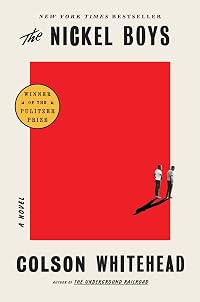
The Nickel Boys
by Colson Whitehead
On This Page
Description
As the Civil Rights movement begins to reach the black enclave of Frenchtown in segregated Tallahassee, Elwood Curtis takes the words of Dr. Martin Luther King to heart: He is "as good as anyone." Abandoned by his parents, but kept on the straight and narrow by his grandmother, Elwood is about to enroll in the local black college. But for a black boy in the Jim Crow South of the early 1960s, one innocent mistake is enough to destroy the future. Elwood is sentenced to a juvenile reformatory show more called the Nickel Academy, whose mission statement says it provides "physical, intellectual and moral training" so the delinquent boys in their charge can become "honorable and honest men." In reality, the Nickel Academy is a grotesque chamber of horrors where the sadistic staff beats and sexually abuses the students, corrupt officials and locals steal food and supplies, and any boy who resists is likely to disappear "out back." Stunned to find himself in such a vicious environment, Elwood tries to hold onto Dr. King's ringing assertion "Throw us in jail and we will still love you." His friend Turner thinks Elwood is worse than naive, that the world is crooked, and that the only way to survive is to scheme and avoid trouble. The tension between Elwood's ideals and Turner's skepticism leads to a decision whose repercussions will echo down the decades. Formed in the crucible of the evils Jim Crow wrought, the boys' fates will be determined by what they endured at the Nickel Academy. show lessTags
Recommendations







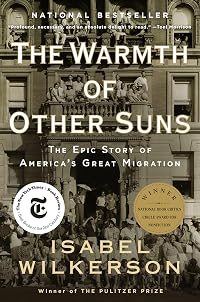
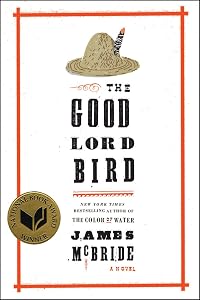
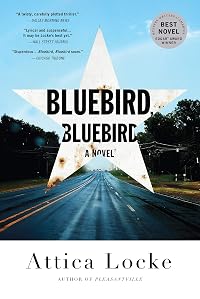
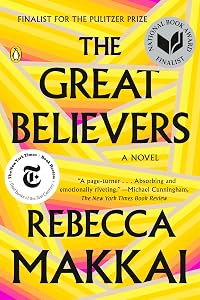

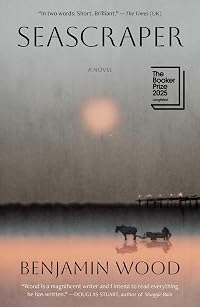
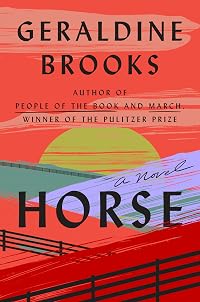
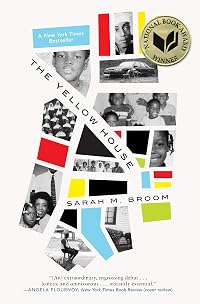
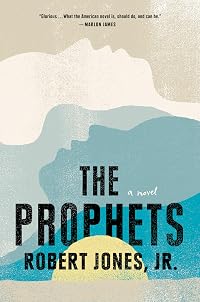

Member Recommendations
Member Reviews
Contains Spoilers!
Netgalley ARC
"Is that what normal husbands do - buy flowers for no reason? All these years out of that school and he still spent a segment of his days trying to decipher the customs of normal people."
A brilliant fictional account of a real scandal: abuse in juvenile detention in the US. Elwood is a bookish boy who is doing well despite his parents leaving him, second rate schooling and Jim Crow.
Given the promotion for the book it comes as no surprise that he is thrown into detention and must try to learn how to survive. He finds that his law abiding, hard working approach which served him so well in school and in a part time job is absolutely no protection within Nickel: being clever is of no interest, the system show more wants the boys cowed and productive (as their labour is highly profitable). Boys are imprisoned for offences that add up to being children, or being poor. One of the reasons the institution can run is the willful ignorance of those outside, who see the boys as unimportant and are happy to benefit from the way the institution is run.
The twist at the end completely got me, I was reassuring myself with the thought that this lovely boy survived such a terrible experience and made it out the other side, and instead was shocked to find that in fact he was another victim in the graveyard.
I was impressed at how Whitehead showed the long term impact of the abuse on the boys as they became adults: it would have been easy to dwell on the physical abuse but he shows the psychological effects as well as the way there is pressure on survivors to "move on" from their experiences. show less
Netgalley ARC
"Is that what normal husbands do - buy flowers for no reason? All these years out of that school and he still spent a segment of his days trying to decipher the customs of normal people."
A brilliant fictional account of a real scandal: abuse in juvenile detention in the US. Elwood is a bookish boy who is doing well despite his parents leaving him, second rate schooling and Jim Crow.
Given the promotion for the book it comes as no surprise that he is thrown into detention and must try to learn how to survive. He finds that his law abiding, hard working approach which served him so well in school and in a part time job is absolutely no protection within Nickel: being clever is of no interest, the system show more wants the boys cowed and productive (as their labour is highly profitable). Boys are imprisoned for offences that add up to being children, or being poor. One of the reasons the institution can run is the willful ignorance of those outside, who see the boys as unimportant and are happy to benefit from the way the institution is run.
The twist at the end completely got me, I was reassuring myself with the thought that this lovely boy survived such a terrible experience and made it out the other side, and instead was shocked to find that in fact he was another victim in the graveyard.
I was impressed at how Whitehead showed the long term impact of the abuse on the boys as they became adults: it would have been easy to dwell on the physical abuse but he shows the psychological effects as well as the way there is pressure on survivors to "move on" from their experiences. show less
Elwood Curtis is a smart, hard-working kid who should have a very bright future. Unfortunately, though, he is a black man growing up in the Florida panhandle during the early 1960s, where Jim Crow laws, as well as many less obvious biases, create more obstacles than he can handle. After getting caught in the wrong place at the wrong time, he is taken out of his home and sent to a reform school for “rehabilitation”. But the Nickel Academy is hardly interested in educating and reforming students; it is a prison in everything but its name. It also marks the beginning of Elwood’s real education, much of which comes at the hands of a sadistic, corrupt white superintendent and a system that could not care less about his welfare. show more Subjected to beatings, starvation, economic exploitation, and other atrocities, Elwood will struggle to recover from the experience over the rest of his life.
In The Nickel Boys, Colson Whitehead shares Elwood’s sad saga, as well as those of some of the other students at the school, most notably Jack Turner who becomes a friend and something of a mentor. Without question, this is a brutal, heartbreaking story, with little in the way of hope or redemption offered as solace. What makes it all the more harrowing is the fact that much of the story is true; in the Acknowledgments, the author notes that Nickel is based on the Dozier School for Boys in Florida where many of the incidents the novel chronicles actually occurred. I found that to be simply frightening and it definitely influenced my entire reading experience. Interestingly, Whitehead relates his tale with reasonably flat and matter-of-fact prose (despite an interesting twist near the end), preferring to allow the magnitude of the events speak for themselves. That choice made for a very effective story-telling device.
Given its subject matter, it would be difficult to say that I enjoyed reading this book. However, The Nickel Boys definitely taught me a lot about attitudes and actions in a time and place that, while ostensibly long ago and far away, seem like they could still occur in the here and now. Nevertheless, I was confused about how the author portrayed differences between the black and the white student experiences at the school. Beyond the segregated facilities, Whitehead makes it clear that black students received the worst of everything possible and likely suffered more degradation and physical abuse. This is curious since the Dozier survivor website he recommends to the reader contains the memory of a particularly gruesome whipping written by a white man; this remembrance appears to be the source of the account of the initial beating that Elwood endures. The point is that Nickel/Dozier was simply an evil institution run by vicious and self-serving people, which was true for everyone who had the misfortune to spend time there. show less
In The Nickel Boys, Colson Whitehead shares Elwood’s sad saga, as well as those of some of the other students at the school, most notably Jack Turner who becomes a friend and something of a mentor. Without question, this is a brutal, heartbreaking story, with little in the way of hope or redemption offered as solace. What makes it all the more harrowing is the fact that much of the story is true; in the Acknowledgments, the author notes that Nickel is based on the Dozier School for Boys in Florida where many of the incidents the novel chronicles actually occurred. I found that to be simply frightening and it definitely influenced my entire reading experience. Interestingly, Whitehead relates his tale with reasonably flat and matter-of-fact prose (despite an interesting twist near the end), preferring to allow the magnitude of the events speak for themselves. That choice made for a very effective story-telling device.
Given its subject matter, it would be difficult to say that I enjoyed reading this book. However, The Nickel Boys definitely taught me a lot about attitudes and actions in a time and place that, while ostensibly long ago and far away, seem like they could still occur in the here and now. Nevertheless, I was confused about how the author portrayed differences between the black and the white student experiences at the school. Beyond the segregated facilities, Whitehead makes it clear that black students received the worst of everything possible and likely suffered more degradation and physical abuse. This is curious since the Dozier survivor website he recommends to the reader contains the memory of a particularly gruesome whipping written by a white man; this remembrance appears to be the source of the account of the initial beating that Elwood endures. The point is that Nickel/Dozier was simply an evil institution run by vicious and self-serving people, which was true for everyone who had the misfortune to spend time there. show less
Elwood is a well-behaved, smart teenager. He gets good grades in school and has a job at a corner store. He listens to records of Dr. King’s speeches, attends peaceful protests for civil rights, and is starting to take college classes soon. In his excitement to get to class early he hitchhikes, in a car that turns out to be stolen. Elwood is sent to Nickel Academy, a reform school practicing corruption and violence like Elwood has never known before. He’s beaten almost to death for standing up for a smaller student, but months of toeing the line afterward gets him a cushy role selling the tax-dollar-supplied school provisions (only the Black kids’ provisions, of course) to the neighboring townspeople in exchange for cash to line show more the administrators’ pockets.
In the present day, adult Elwood lives in New York City and mostly tries not to think about Nickel, until he hears the news that archaeologists have dug up the many, many bodies buried there.
What a book. Very closely based on the real Dozier School, Whitehead once again writes fiction that is just as real as the truth. The short book feels dense, like every sparse sentence contains a full story in just a few words. Every character feels immediately recognizable, and it especially felt like I understood Elwood deeply from the moment I met him.I was confused how the elder Elwood could be so different from the boy I knew, and then after the twist everything clicked into place.
Every time I read something by Whitehead it just makes me want to read more immediately. show less
In the present day, adult Elwood lives in New York City and mostly tries not to think about Nickel, until he hears the news that archaeologists have dug up the many, many bodies buried there.
What a book. Very closely based on the real Dozier School, Whitehead once again writes fiction that is just as real as the truth. The short book feels dense, like every sparse sentence contains a full story in just a few words. Every character feels immediately recognizable, and it especially felt like I understood Elwood deeply from the moment I met him.
Every time I read something by Whitehead it just makes me want to read more immediately. show less
The Nickel School (also known as The Florida School for Boys) was a reform school that opened in 1900 and wasn’t entirely disbanded until 2011. For 111 years, this “school” allowed the perpetuation of rape, abuse, and murder. It wasn’t until 2012 that an anthropological study was done at the site and its darkest secrets confirmed. Knowing that The Nickel Boys draws on a true story makes this novel even more haunting.
Whitehead tells the story of Nickel school and the boys who went there through the eyes of Elwood, a fictional character and a Black “student”. Through The Nickel Boys, readers see Elwood’s travails as well as those of his peers and the boys that came before. From the beginning the reader knows it will be a show more harrowing tale when human remains are found in an archaeological dig.
The Nickel Boys manages to be a story about both an individual’s trials to overcome the oppression of a racist institution but also the greater problems of unfair incarceration, the corruption of private institutions, and the unfortunate roles race and class play into both of those. This book will make you angry with the world and sad for the character and angry again. It is another book about Black pain and trauma, but it’s a different shade of that ongoing story and an important perspective to have.
Be prepared to read The Nickel Boys slowly. There are time jumps that may throw the reader off, but each segment and each story is an important slice of the story. More than the writing style or the pacing – both of which are impeccable – The Nickel Boys has heavy themes and the story is devastating. It’s a beautiful, sad, and necessary story to read and one I recommend with all my heart. show less
Whitehead tells the story of Nickel school and the boys who went there through the eyes of Elwood, a fictional character and a Black “student”. Through The Nickel Boys, readers see Elwood’s travails as well as those of his peers and the boys that came before. From the beginning the reader knows it will be a show more harrowing tale when human remains are found in an archaeological dig.
The Nickel Boys manages to be a story about both an individual’s trials to overcome the oppression of a racist institution but also the greater problems of unfair incarceration, the corruption of private institutions, and the unfortunate roles race and class play into both of those. This book will make you angry with the world and sad for the character and angry again. It is another book about Black pain and trauma, but it’s a different shade of that ongoing story and an important perspective to have.
Be prepared to read The Nickel Boys slowly. There are time jumps that may throw the reader off, but each segment and each story is an important slice of the story. More than the writing style or the pacing – both of which are impeccable – The Nickel Boys has heavy themes and the story is devastating. It’s a beautiful, sad, and necessary story to read and one I recommend with all my heart. show less
For a boy in the Florida panhandle of the 1960s there are few escapes, education is one. Elwood is lucky enough to get a place at a college in a town a few miles from home and he hitches a ride. Unfortunately Elwood takes a ride in a stolen car and is arrested for car theft. Sent to a reformatory school Elwood learns how to survive but he wants more and his belief in justice causes no end of problems.
I loved this book. Whitehead evokes the hot Florida panhandle and 1960s segregation beautifully. The gratuitous violence is never overplayed and the twist is actually rather unexpected. A subtle novel of civil rights but a great one.
I loved this book. Whitehead evokes the hot Florida panhandle and 1960s segregation beautifully. The gratuitous violence is never overplayed and the twist is actually rather unexpected. A subtle novel of civil rights but a great one.
Colson Whitehead is a wonderful storyteller no matter what genre he selects. This historical fiction is beautifully told and has a surprising twist. In the acknowledgments, Mr. Whitehead reveals that this work of fiction is based on the story of the Dozier School for Boys in Mariana, Florida, whose horrifying history began to be excavated - literally - by archaeology students from the University of South Florida and was exhaustively reported on in The Tampa Bay Times. Its fictional counterpart, Nickel Academy, is a nightmarish place that terrorizes, sodomizes, brutalizes, and sometimes tortures to death its students, run by sadistic brutes, many of them Klansmen. Some find a way out; some never leave alive; the rest live with the scars show more all their lives. Chilling. show less
An emotionally difficult read, this novel was Whitehead's second Pulitzer Prize winner. I am very glad to have read this powerful story. It was wrenching, yes, but not unrelentingly so; it had an affirmative ending, and a sneaky twist that I suspected just a few pages before it was revealed. Dickens's orphans have nothing on the students of the Florida Industrial School for Boys, a/k/a Nickel Academy, a reform school where the slightest departure from the rules can result in beatings, solitary confinement, or a trip "out back" from which there is no return. From the outside, this institution looks serene, well-tended and not at all forbidding. The students perform community service, put on shows which are attended by the public, and an show more annual Christmas fair that draws visitors from across the panhandle of the state. Behind the scenes, there is cruelty and corruption without sanction or consequence to the perpetrators, and the victims are almost exclusively black. The most horrifying part of the story is that it is grounded in fact, and that thousands of young lives were lost or irreparably damaged in the actual school that provided Whitehead's model for Nickel. The real-life institution continued to operate well into the 21st century despite repeated investigations into charges of abuse. show less
Members
- Recently Added By
Published Reviews
The books feel like a mission, and it’s an essential one. In a mass culture where there is no shortage of fiction, nonfiction, movies and documentaries dramatizing slavery and its sequels under other names (whether Jim Crow or mass incarceration or “I can’t breathe”), Whitehead is implicitly asking why so much of this output has so little effect or staying power. He applies a master show more storyteller’s muscle not just to excavating a grievous past but to examining the process by which Americans undermine, distort, hide or “neatly erase” the stories he is driven to tell. show less
added by Lemeritus
Even when he’s arrested on the flimsiest evidence and sentenced to Nickel Academy, Elwood clings to his faith that goodness will be rewarded, that the rule of law will prevail. The academy, as Whitehead presents it, is a place of well-groomed exteriors and encouraging principles — a place, if you will, like the United States at large... And what a deeply troubling novel this is. It shreds show more our easy confidence in the triumph of goodness and leaves in its place a hard and bitter truth about the ongoing American experiment. show less
added by Lemeritus
Lists

Pulitzer Prize Winners for Fiction
102 works; 54 members

Recommend the 20 best books you've read in the last five years
2,168 works; 602 members

Top Five Books of 2020
982 works; 350 members

Books recommended by Barack Obama
295 works; 28 members

Top Five Books of 2019
387 works; 111 members
Southern Fiction
212 works; 52 members

2020 Notable Books for Adults
26 works; 5 members
Historical Fiction
889 works; 91 members

Kirkus Starred Fiction Reviews of Books Published in 2019
411 works; 12 members

Bitter Southerner Summer Reading Roundup
198 works; 8 members

Black Authors
386 works; 32 members

Books Read in 2020
4,379 works; 123 members

Books Set in Florida
25 works; 8 members

Childhood: Books for or about children in different cultures around the wor
345 works; 17 members

Books Read in 2022
5,226 works; 115 members

Book Club 2021
5 works; 1 member

Indie Next Picks
196 works; 4 members

Top 10 books read in 2020
10 works; 1 member

Netgalley Reads
468 works; 3 members

SHOULD Read Books!
354 works; 9 members

Fiction Published in 2019
35 works; 1 member
Overdue Podcast
808 works; 9 members

Morphy Pick!
24 works; 1 member

Barack Obama's Summer Reading List 2019
10 works; 2 members
Reading Group 2020
6 works; 1 member

Books in Riverdale
123 works; 3 members

Books Read in 2021
5,361 works; 114 members

NYT Readers best of 21st C
100 works; 8 members

Great Short Books: A Year of Reading-Briefly
59 works; 4 members

AP Lit
363 works; 6 members

Books About Boys
175 works; 15 members

Books Read in 2019
4,052 works; 108 members

Top Five Books of 2025
954 works; 303 members
Author Information

19+ Works 30,013 Members
Colson Whitehead was born on November 6, 1969. He graduated from Harvard College and worked at the Village Voice writing reviews of television, books, and music. His first novel, The Intuitionist, won the Quality Paperback Book Club's New Voices Award. His other books include The Colossus of New York, Sag Harbor, and Zone One. He won the Young show more Lions Fiction Award and the Anisfield-Wolf Book Award for John Henry Days, the PEN/Oakland Award for Apex Hides the Hurt, and the National Book Award for fiction and the Pulitzer Prize for fiction for The Underground Railroad. His reviews, essays, and fiction have appeared in numerous publications including the New York Times, The New Yorker, New York Magazine, Harper's and Granta. He has received a MacArthur Fellowship, a Whiting Writers Award, and a fellowship at the Cullman Center for Scholars and Writers. (Bowker Author Biography) show less
Some Editions
Awards and Honors
Series
Belongs to Publisher Series
Work Relationships
Is contained in
Has the adaptation
Has as a student's study guide
Common Knowledge
- Canonical title
- The Nickel Boys
- Original title
- The Nickel Boys
- Original publication date
- 2019-07-16
- People/Characters
- Elwood Curtis; Jack Turner; Harriet Johnson; Jody; Big John Hardy; Martin Luther King, Jr. (show all 27); Mr. Marconi; Evelyn Curtis; Thomas Jackson; Maynard Spencer; Desmond; Lonnie; Black Mike; Griff; Corey; Carter; Harper; Max David; Trevor Nickel; Big Chet; Director Hardee; Jaimie; Clayton Smith; Freddie Rich; Chickie Pete; Blakely; Millie Curtis
- Important places
- Nickel Academy, Eleanor, Florida, USA; Tallahassee, Florida, USA; Atlanta, Georgia, USA; Eleanor, Florida, USA; New York, New York, USA; Arthur G. Dozier School for Boys, Marianna, Florida, USA (show all 9); Marianna, Florida, USA; Florida Industrial School for Boys, Marianna, Florida, USA; Florida School for Boys, Marianna, Florida, USA
- Important events
- African-American Civil Rights Movement
- Related movies
- Nickel Boys (2024 | IMDb)
- Dedication
- For Richard Nash
- First words
- Even in death the boys were trouble.
- Quotations
- They were sent to Nickel for offenses Elwood had never heard of: malingering, mopery, incorrigibility. Words the boys didn't understand either, but what was the point when their meaning was clear enough: Nickel. I got busted ... (show all)for sleeping in a garage to keep warm, I stole five dollars from my teacher, I drank a bottle of cough syrup and went wild one night. I was on my own trying to get by (Whitehead 81).
He had a date, now he needed a course of action. He felt rotten those first days out of the hospital until he came up with a scheme that combined Turner's advice with what he'd learned from his heroes in the movement. Watch a... (show all)nd think and plan. Let the world be a mob Elwood will walk through it. They might curse and spit and strike him, but he'd make it through to the other side. Bloodied and tired, but he'd make it through (Whitehead 93).
“It used to be worse in the old days,” Harper said, “from what my aunt says. But the state cracked down and now we lay off the south-campus stuff.” Meaning, they only sold the black students' supplies. “We had this ... (show all)good old boy who used to run Nickel, Roberts, who would've sold the air you breathe if he could've. Now that was a crook!” (Whitehead 97).
The boy had been a reedy little runt when he got to Nickel and regularly punked out his first year until he learned to fight, and then he preyed on the smaller kids, taking them into closets and supply rooms—you teach what ... (show all)you're taught (Whitehead 170).
Plenty of boys had talked of the secret graveyard before, but as it had ever been with Nickel, no one believed them until someone else said it.
The theme music was stuck in his head now, and Elwood would have hummed or whistled but he didn't want to look like a copycat. The song was a tiny, quiet piece of America carved out of the rest. No fire hoses, no need for the... (show all) National Guard. It occurred to Elwood that he'd never seen a Negro in the small town of Mayberry, where the show took place.
Violence is the only lever big enough to move the world.
Jaimie kept a quiet profile and conducted himself in accordance with the Nickel handbook's rules of conduct—a miracle, since no one had ever seen the handbook despite its constant invocations by the staff. Like justice, it ... (show all)existed in theory.
Still, the law was corrupt and capricious in various measure and sometimes a boy strolled out through what passed for divine intervention.
The laggards and limpers who weren't running the course but running deep into their character—down into the cave to return to the light with what they found.
Competitors for apartments, for schools, for the very air—all those hard-won and cherished animosities fell away for a few hours as they celebrated a rite of endurance and vicarious suffering. You can do it.
The country was big, and its appetite for prejudice and depredation limitless, how could they keep up with the host of injustices, big and small. This was just one place. A lunch counter in New Orleans, a public pool in Balti... (show all)more that they filled with concrete rather than allow black kids to dip a toe in it. This was one place, but if there was one, there were hundreds, hundreds of Nickels and White Houses scattered across the land like pain factories.
It sounded how people sound when they have God in their mouth
The ring of keys on his belt jangled like the spurs on a sheriff in a Western.
You can change the law but you can't change people and how they treat each other.
Nickel was racist as hell—half the people who worked here probably dressed up like the Klan on weekends—but the way Turner saw it, wickedness went deeper than skin color.
The two fighters were the same height and build, hacked from the same quarry.
He'd had the thought of getting his GED in the back of his mind for a while. Tended to it like it was a candle flame cupped in his hand out of the wind.
He was like one of those Negroes Dr. King spoke of in his letter from jail, so complacent and sleepy after years of oppression that they had adjusted to it and learned to sleep in it as their only bed.
Silverfish and centipedes made a break for it as the boys dragged the trunks to the center of the basement.
His thoughts prowled and roved after midnight.
Their daddies taught them how to keep a slave in line, passed down this brutal heirloom.
The place was worse luck on top of bad luck, cursed.
They treat us like subhumans in our own country. Always have. Maybe always will.
How to get through the day if every indignity capsized you in a ditch?
Only reason to fix a fight is because you're betting on it. (Elwood) - Last words
- (Click to show. Warning: May contain spoilers.)He was hungry and they served all day, and that was enough.
- Publisher's editor*
- Geffard, Francis (Directeur de collection)
- Original language
- English
- Canonical DDC/MDS
- 813.6
- Canonical LCC
- PS3573.H4768
*Some information comes from Common Knowledge in other languages. Click "Edit" for more information.
Classifications
Statistics
- Members
- 5,826
- Popularity
- 2,244
- Reviews
- 259
- Rating
- (4.23)
- Languages
- 18 — Catalan, Chinese, Danish, Dutch, English, Finnish, French, German, Italian, Korean, Polish, Romanian, Serbian, Spanish, Swedish, Turkish, Ukrainian, Portuguese (Portugal)
- Media
- Paper, Audiobook, Ebook
- ISBNs
- 86
- ASINs
- 17