On This Page
Description
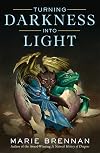
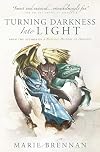
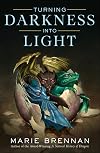
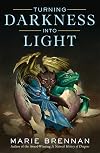
Marie Brennan's Turning Darkness Into Light is a delightful fantasy of manners, the heir to the award-winning Natural History of Dragons series, a perfect stepping stone into an alternate Victorian-esque fantasy landscape. As the renowned granddaughter of Isabella Camherst (Lady Trent, of the riveting and daring Draconic adventure memoirs) Audrey Camherst has always known she, too, would want to make her scholarly mark upon a chosen field of study. When Lord Gleinheigh recruits Audrey to show more decipher a series of ancient tablets holding the secrets of the ancient Draconean civilization, she has no idea that her research will plunge her into an intricate conspiracy, one meant to incite rebellion and invoke war. Alongside dearest childhood friend and fellow archeologist Kudshayn, Audrey must find proof of the conspiracy before it's too late. show lessTags
Recommendations













Member Recommendations
g33kgrrl Young women who can't quite live up to the family they are carrying around inside their heads. The reasons are different, but the battle is somewhat similar.
Member Reviews
This was a joy to read - I understand this is a standalone sequel to Brennan's Lady Trent series and features Lady Trent's granddaughter as the main character who is trying to translate an ancient Draconean text. There are all kinds of mysteries, adventures and intrigues surrounding this task but I was surprised to find I was as interested in the translation (which turns out to be an ancient Draconean creation myth and which Brennan includes in the novel) as I was in the intrigues. Perhaps because I find creation myths of our world interesting anyway but I thought what Brennan did here was really clever and enjoyable to read (which isn't always something I can say about clever books). One of my favourites of the year however I am still show more not over my disappointment that this is a standalone and not a new series....... show less
It's delightful to be back with the Camhersts again. I missed them. I love the Lady Trent series, because adventurous lady naturalist + dragons is delightful. So getting to meet her granddaughters, with their interests, and see how the world has evolved after Lady Trent's discoveries have had a chance to sink in, was great fun.
It was a gripping read, if nothing else because I could kind of see the awful plot twist coming and had to speed-read to get to it and get past it to get to the happier resolution. At first I kept thinking that Audrey was terribly naive but then I remembered she was 23 years old and then I remembered *my* 23rd year and it all made quite a bit more sense, unfortunately. 23 was my least favorite year of adulthood by show more far because it was so full of trying to figure out who I was and what I wanted and it is quite the same for poor Audrey Camherst. But she knows what she loves and who she loves, even if it takes her a while to figure out how to apply that knowledge.
Her crew are delightful - Kudashayn, her Draconean colleague, is a delight, and Cora is also fantastic.
I am also a sucker for oral history/alternate ways of telling stories, so the telling of this story via diaries, and letters, and news clips is right up my alley. show less
It was a gripping read, if nothing else because I could kind of see the awful plot twist coming and had to speed-read to get to it and get past it to get to the happier resolution. At first I kept thinking that Audrey was terribly naive but then I remembered she was 23 years old and then I remembered *my* 23rd year and it all made quite a bit more sense, unfortunately. 23 was my least favorite year of adulthood by show more far because it was so full of trying to figure out who I was and what I wanted and it is quite the same for poor Audrey Camherst. But she knows what she loves and who she loves, even if it takes her a while to figure out how to apply that knowledge.
Her crew are delightful - Kudashayn, her Draconean colleague, is a delight, and Cora is also fantastic.
I am also a sucker for oral history/alternate ways of telling stories, so the telling of this story via diaries, and letters, and news clips is right up my alley. show less
Audrey Camherst feels the weight of family expectations: her parents are both brilliant, and her grandparents are world-famous for scientific, archaeological, and linguistic discoveries -- particularly her grandmother, Lady Trent. When a cache of Draconean tablets comes to light and Audrey is asked to translate them, she jumps at the chance. With the help of her friend and fellow scholar, the Draconean Kudshayn, Audrey sets to work. But there are many things she doesn't know, including why she is the one who has been asked to do this work, and what effect the translation may have on society.
I absolutely loved Brennan's Lady Trent series, so was thrilled to get my hands on this one. It's not quite as high-stakes as the earlier series -- show more no matter how you spin it, translating texts in the library of a secluded country estate is not going to be as exciting to the reader as hacking through the rain forest or sailing around the world in search of new dragon species. And, though there were some tense moments, especially toward the end, the pacing of this book was fairly leisurely. However, the characters were just as delightful and complex, and Lady Trent does make a couple of appearances in the story. If you enjoyed the original series, you should take a look at this book. I'd recommend reading the earlier books first if you're new to the lot, because though this one probably stands alone fairly well, why would you want to miss out on all of the delights awaiting you in Lady Trent's memoirs? show less
I absolutely loved Brennan's Lady Trent series, so was thrilled to get my hands on this one. It's not quite as high-stakes as the earlier series -- show more no matter how you spin it, translating texts in the library of a secluded country estate is not going to be as exciting to the reader as hacking through the rain forest or sailing around the world in search of new dragon species. And, though there were some tense moments, especially toward the end, the pacing of this book was fairly leisurely. However, the characters were just as delightful and complex, and Lady Trent does make a couple of appearances in the story. If you enjoyed the original series, you should take a look at this book. I'd recommend reading the earlier books first if you're new to the lot, because though this one probably stands alone fairly well, why would you want to miss out on all of the delights awaiting you in Lady Trent's memoirs? show less
By chance, [b:The Cure for Hate: A Former White Supremacist's Journey from Violent Extremism to Radical Compassion|45045474|The Cure for Hate A Former White Supremacist's Journey from Violent Extremism to Radical Compassion|Tony McAleer|https://i.gr-assets.com/images/S/compressed.photo.goodreads.com/books/1563766018l/45045474._SX50_.jpg|69747683] finally came up on my library holds just a few days after an impulse purchase of [b:Turning Darkness Into Light|41555968|Turning Darkness Into Light|Marie Brennan|https://i.gr-assets.com/images/S/compressed.photo.goodreads.com/books/1541422614l/41555968._SY75_.jpg|64836455], so I read them within a day of each other. They both are about overcoming hatred and divisions in a time of increasing show more violent extremism, though one is a fantasy novel and one is a memoir, so they bounced off each other in interesting ways.
Turning Darkness Into Light was first, a standalone continuation of the Lady Trent series (beginning with [b:A Natural History of Dragons|12974372|A Natural History of Dragons (The Memoirs of Lady Trent, #1)|Marie Brennan|https://i.gr-assets.com/images/S/compressed.photo.goodreads.com/books/1359770409l/12974372._SX50_.jpg|18132937]). Those books were all about tolerance, beginning with the trials of a young woman with a scientific mind living in a Victorian-like society where she is supposed to make an advantageous marriage and have lots of babies. That series gradually broadened the horizons of empathy and acceptance, from women's rights to class issues to xenophobia and racism, untilour heroine must arrange an understanding between (some) humans and a humanoid and civilized dragon-like species in the last novel. )
It is now decades in the future, and Lady Trent's granddaughter, Audrey, a young and very capable philologist with an emphasis on draconean translations, has been hired to translate a newly discovered set of ancient plaques that appear to be the draconean's founding myth. Hijinks ensue, because of course, and it turns out that there is a conspiracy among a few sects of humans who are essentially human supremacists, willing to use violence to maintain the segregation between species and assert the right of humans to dominate and control the draconeans, through any means necessary. In 21st century speak: they want to spark a race war.
Audrey is a very believable heroine, and of course Isabella makes an appearance or two. There is less gallivanting in this novel--most of it takes place in one house--but it expands on the theme of acceptance of difference and defence of universal rights begun in the first series. It is recognizably more modern, and some of the dialogue from the human supremacists could be lifted with very few changes from a Heritage Front website.
It was utterly engrossing, well-plotted and -paced, and well written.
And then the next day I read [b:The Cure for Hate: A Former White Supremacist's Journey from Violent Extremism to Radical Compassion|45045474|The Cure for Hate A Former White Supremacist's Journey from Violent Extremism to Radical Compassion|Tony McAleer|https://i.gr-assets.com/images/S/compressed.photo.goodreads.com/books/1563766018l/45045474._SX50_.jpg|69747683], the memoir of a Canadian who is radicalized as a Vancouver teen, progressing from the new skinhead subculture through to a very public leadership position in various white supremacist organizations, and who then ... leaves. Only he doesn't just leave. He does very substantial work over a number of years to fully understand the harm of what he's done, make meaningful apologies, atone, and then dedicate his life to helping others leave violent extremist groups and assisting the populations and communities they target.
It, too, was completely engrossing. I couldn't put it down and finished it in a few hours. The writing wasn't the most polished I've come across, and at times the storytelling felt a bit scattered and disorganized, but overall it comes together in an encouraging and hopeful story about repentance, change and redemption.
There's only one substantial point I disagree with the author on, and it's his argument that hate speech laws etc. serve to drive the speech and actions underground where, he says, it becomes impossible to discuss and dispel them, and he says this makes hate groups and their actions stronger. But his own story belies this (not to mention the research showing how properly-enforced hate speech regulations make it much more difficult for hate groups to recruit and radicalize potential members): if it weren't for the social and professional consequences of his actions, the possibility of jail time, the increasing penalties placed on his own hate speech, etc., what would have been the incentive for him to leave those groups behind? Yes, his children brought to him the possibility of unconditional love and opening his heart again; but it's also the knowledge that his actions potentially harm his children and their prospects that encourages him to think again. Yes, his encounter with a formerly-Jewish person who hears his story of his skinhead and white supremacist years with forgiveness and compassion is clearly a significant turning point; but without the social and professional consequences of his hate actions, what would have impelled him to have that conversation?
Not to mention the fact that as a white man he's never had to have the "debates" about his own rights and humanity, not just in person but broadcast on television and the internet, and the recaps of those debates in the press, ad nauseum, and the way they suffuse the entire culture so you never know when you're meeting or talking to someone if they think you're a person or not, so he doesn't know the harm that having those debates and conversations in public can cause. Which is ironic, because he does discuss at length in other parts of the book the toxic shame that results from membership in a group that is routinely discriminated against. Well, where does that come from?
In Turning Darkness Into Light, Audrey's former love interest, Aaron, is an irritating and interesting young man of a type that will be known to many women reading this: Extremely smart. Charming. Good conversationalist. Flattering. Pays attention and treats your opinions with respect. But also steals your ideas and takes credit for them, never acknowledges or apologizes for what he's done, and when you get to know him better, has some pretty appalling opinions about other demographics. Kind of like Tony McAleer portrays himself in the memoir, though I doubt he ever did much to hide his opinions on other races when he met women as a young man. In the novel, Aaron is brilliant, attentive, charming, funny, adventurous ... and he steals Audrey's work and belongs to one of the less-violent anti-draconean factions. Kind of like Tony in his respectable white-supremacist-businessman phase, he doesn't dole out the bloodshed, but he does promote hatred. (This is all back-story to the novel, by the way; Audrey recaps it almost as soon as Aaron is introduced, so these actions are not part of this novel. No spoilers!)
And Audrey does not scorch and salt the earth of their former relationship. She makes it clear that she finds the views repugnant, but leaves the door open for him to re-enter her life if he changes those views. Normally, I would take a pretty dim view of that decision: of course he's never going to change! But it's hard to be so certain on the heels of The Cure for Hate.
I highly recommend both books, and think they make a great pair to read together, particularly with violent extremism and far-right politics on the rise in so many places. There's a lot of good and a lot of hope to get from each. show less
Turning Darkness Into Light was first, a standalone continuation of the Lady Trent series (beginning with [b:A Natural History of Dragons|12974372|A Natural History of Dragons (The Memoirs of Lady Trent, #1)|Marie Brennan|https://i.gr-assets.com/images/S/compressed.photo.goodreads.com/books/1359770409l/12974372._SX50_.jpg|18132937]). Those books were all about tolerance, beginning with the trials of a young woman with a scientific mind living in a Victorian-like society where she is supposed to make an advantageous marriage and have lots of babies. That series gradually broadened the horizons of empathy and acceptance, from women's rights to class issues to xenophobia and racism, until
It is now decades in the future, and Lady Trent's granddaughter, Audrey, a young and very capable philologist with an emphasis on draconean translations, has been hired to translate a newly discovered set of ancient plaques that appear to be the draconean's founding myth. Hijinks ensue, because of course, and it turns out that there is a conspiracy among a few sects of humans who are essentially human supremacists, willing to use violence to maintain the segregation between species and assert the right of humans to dominate and control the draconeans, through any means necessary. In 21st century speak: they want to spark a race war.
Audrey is a very believable heroine, and of course Isabella makes an appearance or two. There is less gallivanting in this novel--most of it takes place in one house--but it expands on the theme of acceptance of difference and defence of universal rights begun in the first series. It is recognizably more modern, and some of the dialogue from the human supremacists could be lifted with very few changes from a Heritage Front website.
It was utterly engrossing, well-plotted and -paced, and well written.
And then the next day I read [b:The Cure for Hate: A Former White Supremacist's Journey from Violent Extremism to Radical Compassion|45045474|The Cure for Hate A Former White Supremacist's Journey from Violent Extremism to Radical Compassion|Tony McAleer|https://i.gr-assets.com/images/S/compressed.photo.goodreads.com/books/1563766018l/45045474._SX50_.jpg|69747683], the memoir of a Canadian who is radicalized as a Vancouver teen, progressing from the new skinhead subculture through to a very public leadership position in various white supremacist organizations, and who then ... leaves. Only he doesn't just leave. He does very substantial work over a number of years to fully understand the harm of what he's done, make meaningful apologies, atone, and then dedicate his life to helping others leave violent extremist groups and assisting the populations and communities they target.
It, too, was completely engrossing. I couldn't put it down and finished it in a few hours. The writing wasn't the most polished I've come across, and at times the storytelling felt a bit scattered and disorganized, but overall it comes together in an encouraging and hopeful story about repentance, change and redemption.
There's only one substantial point I disagree with the author on, and it's his argument that hate speech laws etc. serve to drive the speech and actions underground where, he says, it becomes impossible to discuss and dispel them, and he says this makes hate groups and their actions stronger. But his own story belies this (not to mention the research showing how properly-enforced hate speech regulations make it much more difficult for hate groups to recruit and radicalize potential members): if it weren't for the social and professional consequences of his actions, the possibility of jail time, the increasing penalties placed on his own hate speech, etc., what would have been the incentive for him to leave those groups behind? Yes, his children brought to him the possibility of unconditional love and opening his heart again; but it's also the knowledge that his actions potentially harm his children and their prospects that encourages him to think again. Yes, his encounter with a formerly-Jewish person who hears his story of his skinhead and white supremacist years with forgiveness and compassion is clearly a significant turning point; but without the social and professional consequences of his hate actions, what would have impelled him to have that conversation?
Not to mention the fact that as a white man he's never had to have the "debates" about his own rights and humanity, not just in person but broadcast on television and the internet, and the recaps of those debates in the press, ad nauseum, and the way they suffuse the entire culture so you never know when you're meeting or talking to someone if they think you're a person or not, so he doesn't know the harm that having those debates and conversations in public can cause. Which is ironic, because he does discuss at length in other parts of the book the toxic shame that results from membership in a group that is routinely discriminated against. Well, where does that come from?
In Turning Darkness Into Light, Audrey's former love interest, Aaron, is an irritating and interesting young man of a type that will be known to many women reading this: Extremely smart. Charming. Good conversationalist. Flattering. Pays attention and treats your opinions with respect. But also steals your ideas and takes credit for them, never acknowledges or apologizes for what he's done, and when you get to know him better, has some pretty appalling opinions about other demographics. Kind of like Tony McAleer portrays himself in the memoir, though I doubt he ever did much to hide his opinions on other races when he met women as a young man. In the novel, Aaron is brilliant, attentive, charming, funny, adventurous ... and he steals Audrey's work and belongs to one of the less-violent anti-draconean factions. Kind of like Tony in his respectable white-supremacist-businessman phase, he doesn't dole out the bloodshed, but he does promote hatred. (This is all back-story to the novel, by the way; Audrey recaps it almost as soon as Aaron is introduced, so these actions are not part of this novel. No spoilers!)
And Audrey does not scorch and salt the earth of their former relationship. She makes it clear that she finds the views repugnant, but leaves the door open for him to re-enter her life if he changes those views. Normally, I would take a pretty dim view of that decision: of course he's never going to change! But it's hard to be so certain on the heels of The Cure for Hate.
I highly recommend both books, and think they make a great pair to read together, particularly with violent extremism and far-right politics on the rise in so many places. There's a lot of good and a lot of hope to get from each. show less
Turning Darkness Into Light by Marie Brennan is a standalone book set in the world of The Memoirs of Lady Trent (A Natural History of Dragons and sequels). Rather than taking a naturalist view of dragons, like the earlier books, this one focusses on a significant translation of the Draconian language. I said it stands alone, but it does rather contain a spoiler for Within the Sanctuary of Wings, the fifth and final of the Memoirs of Lady Trent. So beware if you haven't read that book and want to remain unspoiled. Similarly, do not continue reading this review if you don't want to be spoiled for the end of the Memoirs of Lady Trent.
This novel is told through a collection of diary entries, letters, and the translation in progress. Most of show more the narrative comes from Audrey's diary entries, with various letters, musings from Kudshayn's diary-like entries (but with more formality in mind on his part), and discussions in the footnotes of the translation flesh out the rest of the story. This does come with limitations, such that if something dramatic didn't happen to Audrey we didn't necessarily hear about it. That said, most of the dramatic moments did happen to Audrey and she was in a position to write about them afterwards, but that made some of the other media a bit lacklustre. For example, the first few religion-oriented musings from Kudshayn's journal were kind of dull to me, but I found his insights more interesting as we got closer to the end of the book. This style I think makes this book just slightly less compelling than the original Memoirs of Lady Trent series, because, while those books were written pseudo-autobiographically, they were written by the protagonist long after the events recounted in them. That makes them inherently feel a bit more coherent, while Turning Darkness Into Light is written in a much more immediate style, without any snarky comments added by an older protagonist looking back on her younger self. Putting it that way, perhaps it is just a matter of taste. And I want to stress that I still definitely enjoyed Turning Darkness Into Light and found myself hooked on the story. Even though a story about translating ancient tablets might sound boring, there were a lot of intriguing hooks to keep me interesting.
One does not need to have read the Memoirs of Lady Trent to enjoy Turning Darkness Into Light, but I think the reading experience is enhanced by greater familiarity with the world. Audrey, the protagonist, is the granddaughter of Lady Trent, and various members of her illustrious family make minor appearances in this book. I expect some of those references would be quite meaningless to readers unfamiliar with the earlier books, although the overarching story would still work.
I enjoyed Turning Darkness Into Light and I'm hoping there will be more books about Audrey or at least more books set in this world. I think there's plenty left to explore, even if this particular story was well-contained in this book. I recommend this book to fans of the Memoirs of Lady Trent (of course) and anyone interested by the topic of translation of a dead language in a fantasy world containing dragons.
4.5 / 5 stars
You can read more of my reviews on my blog. show less
This novel is told through a collection of diary entries, letters, and the translation in progress. Most of show more the narrative comes from Audrey's diary entries, with various letters, musings from Kudshayn's diary-like entries (but with more formality in mind on his part), and discussions in the footnotes of the translation flesh out the rest of the story. This does come with limitations, such that if something dramatic didn't happen to Audrey we didn't necessarily hear about it. That said, most of the dramatic moments did happen to Audrey and she was in a position to write about them afterwards, but that made some of the other media a bit lacklustre. For example, the first few religion-oriented musings from Kudshayn's journal were kind of dull to me, but I found his insights more interesting as we got closer to the end of the book. This style I think makes this book just slightly less compelling than the original Memoirs of Lady Trent series, because, while those books were written pseudo-autobiographically, they were written by the protagonist long after the events recounted in them. That makes them inherently feel a bit more coherent, while Turning Darkness Into Light is written in a much more immediate style, without any snarky comments added by an older protagonist looking back on her younger self. Putting it that way, perhaps it is just a matter of taste. And I want to stress that I still definitely enjoyed Turning Darkness Into Light and found myself hooked on the story. Even though a story about translating ancient tablets might sound boring, there were a lot of intriguing hooks to keep me interesting.
One does not need to have read the Memoirs of Lady Trent to enjoy Turning Darkness Into Light, but I think the reading experience is enhanced by greater familiarity with the world. Audrey, the protagonist, is the granddaughter of Lady Trent, and various members of her illustrious family make minor appearances in this book. I expect some of those references would be quite meaningless to readers unfamiliar with the earlier books, although the overarching story would still work.
I enjoyed Turning Darkness Into Light and I'm hoping there will be more books about Audrey or at least more books set in this world. I think there's plenty left to explore, even if this particular story was well-contained in this book. I recommend this book to fans of the Memoirs of Lady Trent (of course) and anyone interested by the topic of translation of a dead language in a fantasy world containing dragons.
4.5 / 5 stars
You can read more of my reviews on my blog. show less
When Audrey Camherst is offered a chance to translate a unique cache of Draconean literature, she leaps at the opportunity. But a political storm is brewing. Her work may shatter her dreams and destroy her grandmother’s legacy…
This was pure joy from start to finish. The characters are a delight, the political plot is thrilling, there’s plenty of ill-advised but highly entertaining Camherst escapades along the way and Marie Brennan gets to go to town with her myth-making and political commentary. I got pretty much all my favourite things in one book (complete with footnotes).
Full review
I received a free copy from the publisher in exchange for an honest review
Turning Darkness Into Light is set a couple of decades after Within the show more Sanctuary of Wings, and as such contains spoilers for the Memoirs of Lady Trent. While this novel theoretically stands alone, you’ll get far more out of it – and out of the Memoirs – by reading them in chronological order. show less
This was pure joy from start to finish. The characters are a delight, the political plot is thrilling, there’s plenty of ill-advised but highly entertaining Camherst escapades along the way and Marie Brennan gets to go to town with her myth-making and political commentary. I got pretty much all my favourite things in one book (complete with footnotes).
Full review
I received a free copy from the publisher in exchange for an honest review
Turning Darkness Into Light is set a couple of decades after Within the show more Sanctuary of Wings, and as such contains spoilers for the Memoirs of Lady Trent. While this novel theoretically stands alone, you’ll get far more out of it – and out of the Memoirs – by reading them in chronological order. show less
This is a spin-off to the Lady Trent Memoirs set two generations after - though Lady Trent is still very much alive. So you get a look at how things have progressed since the end of Within the Sanctuary of Wings. But it focuses on some of the adventures of one of her granddaughters and I enjoyed it much more than I expected (I wasn't seriously worried, but figured there was a risk it could feel like a cash grab.) And this book, while missing illustrations (SAD), is composed of journal entries, letters, translations, and newspaper articles. I really loved the setup and I felt like it had me flying through to find out what the next bit of info would be. I also appreciate that the cast of characters didn't just feel like copies of all show more those we met in the Trent Memoirs.
If you like the originally series, I definitely think you should give this a spin. I don't know if there are plans to make this a series as well, but I would certainly read more. show less
If you like the originally series, I definitely think you should give this a spin. I don't know if there are plans to make this a series as well, but I would certainly read more. show less
Members
- Recently Added By
Lists

2020 Hugo Eligible Novels
71 works; 12 members

LGBTQ+ Speculative Fiction
821 works; 51 members

Books Read in 2019
4,052 works; 110 members

Mythical Monsters of the World
199 works; 79 members

Books We Couldn't Put Down
443 works; 197 members
Author Information

100+ Works 11,569 Members

Marie Brennan is a LibraryThing Author, an author who lists their personal library on LibraryThing.
Some Editions
Series

Common Knowledge
- Canonical title
- Turning Darkness into Light
- Original publication date
- 2019-08
- People/Characters
- Audrey Camherst; Kudshayn; Lord Glenleigh; Cora Fitzarthur
- First words
- Though nearly barren of water, the deserts of Akhia are a wellspring of secrets.
- Last words
- (Click to show. Warning: May contain spoilers.)I probably will.
- Publisher's editor
- Weinberg, Miriam
- Original language
- English
Classifications
Statistics
- Members
- 338
- Popularity
- 94,009
- Reviews
- 16
- Rating
- (4.33)
- Languages
- English, German, Italian
- Media
- Paper, Audiobook, Ebook
- ISBNs
- 10
- ASINs
- 5