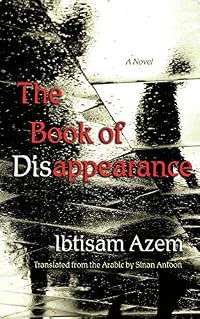
The Book of Disappearance
by Ibtisam Azem
On This Page
Description
"What if all the Palestinians in Israel simply disappeared one day? What would happen next? How would Israelis react? These unsettling questions are posed in Azem's powerfully imaginative novel. Set in contemporary Tel Aviv forty eight hours after Israelis discover all their Palestinian neighbors have vanished, the story unfolds through alternating narrators, Alaa, a young Palestinian man who converses with his dead grandmother in the journal he left behind when he disappeared, and his show more Jewish neighbor, Ariel, a journalist struggling to understand the traumatic event. Through these perspectives, the novel stages a confrontation between two memories. Ariel is a liberal Zionist who is critical of the military occupation of the West Bank and Gaza, but nevertheless believes in Israel's project and its national myth. Alaa is haunted by his grandmother's memories of being displaced from Jaffa and becoming a refugee in her homeland. Ariel's search for clues to the secret of the collective disappearance and his reaction to it intimately reveal the fissures at the heart of the Palestinian question. The Book of Disappearance grapples with both the memory of loss and the loss of memory for the Palestinians. Presenting a narrative that is often marginalized, Antoon's translation of the critically acclaimed Arabic novel invites English readers into the complex lives of Palestinians living in Israel."--Amazon.com viewed Feb. 6, 2024. show lessTags
Recommendations



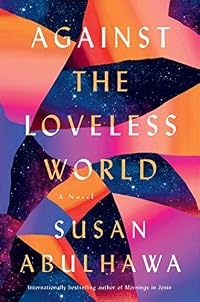
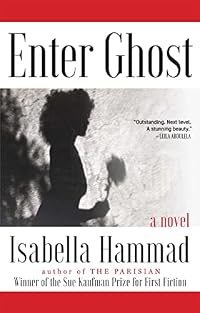
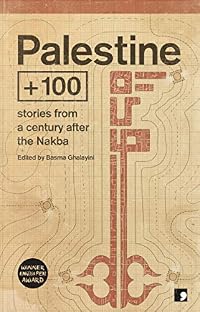
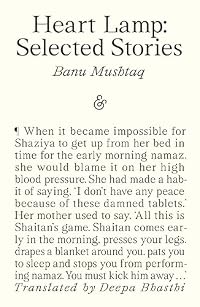













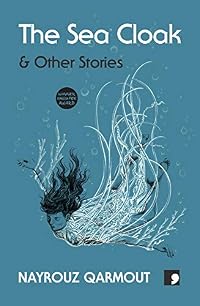
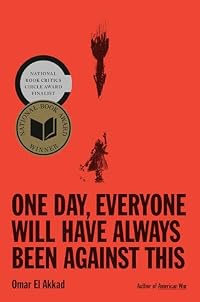
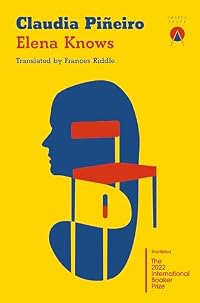
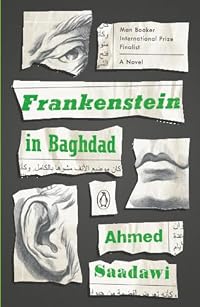
Member Reviews
My fourth from the 2025 International Booker longlist.
This is tough book for Jewish me to review, and probably I cannot review it fairly. Politics clouds the literary aspects. The book pursues a scenario where all Arabs within Israel disappear. Ariel, an Israeli reporter, goes into the apartment of his disappeared Palestinian friend, Alaa, and finds his diary...and starts reading it. Alaa's diary provides a Palestinian perspective on Israel, especially in Jaffa where 90% of the isolated city's Palestinians were evicted in 1948. But that wasn't his intent. He was merely writing his thoughts and feelings. Ariel provides an arguably weak and under-thought Israeli perspective response. But Ariel is just thinking, not presenting a public show more case. So the two men are off the hook for anything they got wrong. The author isn't. Her take on the horrors of being a peaceful Palestinian Israeli-citizen stand in front of the book. Is this take balanced? Well, this question is both key to this work's impact and interacts with the literary aspects.
The book led me to look up some history, check out my own questions, and the Israeli history is darker than I realized. What pre-Isreal did to Palestinians before independence, before the Arab invasion, was criminal. (I encourage skeptics to look this up for yourself. But this seems to be non-controversial historically, if not well-known and not part of the Israeli myth I was taught.) Then came independence, and the Arab invasion came. Whatever this invasion's failures (or successes), the Palestinians were not high on their interest level. The city of Jaffa, further, was an isolated Palestinian island with no land connection to other Palestinian territory. I don't know any details of Jaffa's war efforts, but the Palestinian's were pushed out, 90% left permanently, and probably all property was taken. Our author is the child of the ten percent who stayed.
Right, so literature. See, I get so lost in other things. It's in many ways simple and effective, giving Alaa his voice, but presenting it through the mind of his Jewish friend, thereby echoing the colonialist take. Ariel really doesn't know how to process Alaa's diary or what he himself is doing, and consciously he doesn't process it. Most of his important actions go unspoken or are not thought through by him. He just does. He's a nice guy. But his actions over three days, and his lack of awareness of their significance, are disturbing.
So, the book has its effectiveness beyond the politics. But these politics are red-hot and interwoven. For me this consumed most of my reading energy.
2025
https://www.librarything.com/topic/369129#8801393 show less
This is tough book for Jewish me to review, and probably I cannot review it fairly. Politics clouds the literary aspects. The book pursues a scenario where all Arabs within Israel disappear. Ariel, an Israeli reporter, goes into the apartment of his disappeared Palestinian friend, Alaa, and finds his diary...and starts reading it. Alaa's diary provides a Palestinian perspective on Israel, especially in Jaffa where 90% of the isolated city's Palestinians were evicted in 1948. But that wasn't his intent. He was merely writing his thoughts and feelings. Ariel provides an arguably weak and under-thought Israeli perspective response. But Ariel is just thinking, not presenting a public show more case. So the two men are off the hook for anything they got wrong. The author isn't. Her take on the horrors of being a peaceful Palestinian Israeli-citizen stand in front of the book. Is this take balanced? Well, this question is both key to this work's impact and interacts with the literary aspects.
The book led me to look up some history, check out my own questions, and the Israeli history is darker than I realized. What pre-Isreal did to Palestinians before independence, before the Arab invasion, was criminal. (I encourage skeptics to look this up for yourself. But this seems to be non-controversial historically, if not well-known and not part of the Israeli myth I was taught.) Then came independence, and the Arab invasion came. Whatever this invasion's failures (or successes), the Palestinians were not high on their interest level. The city of Jaffa, further, was an isolated Palestinian island with no land connection to other Palestinian territory. I don't know any details of Jaffa's war efforts, but the Palestinian's were pushed out, 90% left permanently, and probably all property was taken. Our author is the child of the ten percent who stayed.
Right, so literature. See, I get so lost in other things. It's in many ways simple and effective, giving Alaa his voice, but presenting it through the mind of his Jewish friend, thereby echoing the colonialist take. Ariel really doesn't know how to process Alaa's diary or what he himself is doing, and consciously he doesn't process it. Most of his important actions go unspoken or are not thought through by him. He just does. He's a nice guy. But his actions over three days, and his lack of awareness of their significance, are disturbing.
So, the book has its effectiveness beyond the politics. But these politics are red-hot and interwoven. For me this consumed most of my reading energy.
2025
https://www.librarything.com/topic/369129#8801393 show less
‘We inherit memory the way we inherit the colour of our eyes and skin. We inherit the sound of laughter just as we inherit the sound of tears. Your memory pains me.’
This is an interesting, thought-provoking novel from Palestinian writer Ibtisam Azem, getting a timely English language publication as tensions rise again in the region. In almost magic realism style the book posits the idea: what if every single Palestinian in Israel simply vanished overnight? What the book examines is at the very heart of the ongoing political situation in the region. Mainly switching between two narratives the book, at first, seems to give a balanced view of the situation: Ariel, a Jewish journalist, lives in the same block of flats as his Palestinian show more neighbour Alaa, a freelance cameraman. Alaa has recently lost his grandmother, who pretty much raised him, and has been writing his thoughts and ideas in a red notebook, which Ariel finds when he goes to search Alaa’s flat for signs of evidence for his disappearance. What we get is a fairly rounded portrait of Jaffa and Tel Aviv and the juxtaposing of two very different religions and ideologies behind the disputed territory.
Ariel is a liberal, who questions the occupation but is a committed believer of the Jewish state, while Alaa and his family’s history lays bare the trauma of becoming a refugee in your own country. Gradually, as it becomes evident that no-one will be returning, Ariel moves into Alaa’s apartment and starts to choose passages of the notebook which he will then use as a basis to write his own book on the disappearance. The symbolism is not lost: here, in miniature, is an act of occupation and re-writing – the very claims made by Palestinians against the Jewish state. There is much made of memory, of belonging and history. At one point Ariel asks Alaa why he stays: ‘Because this is my Palestine, and I want to live wherever I please.’
There is a fable-like, magical feel to the book; the disappearance is never explained, and we are left with no suggestion of whether they will return. In part it causes a crisis of identity for the Israeli state, and this is one of the interesting undertones of the book. Here is a story of identity, but identity forged in opposition to, or contrast with, another. Jewish versus Palestinian – take one away and how do we then define the other? A fascinating take on the Middle East situation which, while it is clearly sympathetic to the Palestinians, attempts to dig under the skin of the state of Israel to understand it better. A brave and worthy read, it will stay with me for a while, I suspect. Definitely recommended. show less
This is an interesting, thought-provoking novel from Palestinian writer Ibtisam Azem, getting a timely English language publication as tensions rise again in the region. In almost magic realism style the book posits the idea: what if every single Palestinian in Israel simply vanished overnight? What the book examines is at the very heart of the ongoing political situation in the region. Mainly switching between two narratives the book, at first, seems to give a balanced view of the situation: Ariel, a Jewish journalist, lives in the same block of flats as his Palestinian show more neighbour Alaa, a freelance cameraman. Alaa has recently lost his grandmother, who pretty much raised him, and has been writing his thoughts and ideas in a red notebook, which Ariel finds when he goes to search Alaa’s flat for signs of evidence for his disappearance. What we get is a fairly rounded portrait of Jaffa and Tel Aviv and the juxtaposing of two very different religions and ideologies behind the disputed territory.
Ariel is a liberal, who questions the occupation but is a committed believer of the Jewish state, while Alaa and his family’s history lays bare the trauma of becoming a refugee in your own country. Gradually, as it becomes evident that no-one will be returning, Ariel moves into Alaa’s apartment and starts to choose passages of the notebook which he will then use as a basis to write his own book on the disappearance. The symbolism is not lost: here, in miniature, is an act of occupation and re-writing – the very claims made by Palestinians against the Jewish state. There is much made of memory, of belonging and history. At one point Ariel asks Alaa why he stays: ‘Because this is my Palestine, and I want to live wherever I please.’
There is a fable-like, magical feel to the book; the disappearance is never explained, and we are left with no suggestion of whether they will return. In part it causes a crisis of identity for the Israeli state, and this is one of the interesting undertones of the book. Here is a story of identity, but identity forged in opposition to, or contrast with, another. Jewish versus Palestinian – take one away and how do we then define the other? A fascinating take on the Middle East situation which, while it is clearly sympathetic to the Palestinians, attempts to dig under the skin of the state of Israel to understand it better. A brave and worthy read, it will stay with me for a while, I suspect. Definitely recommended. show less
Very interesting speculative book the weaves the history of Jaffa with that of current Jaffa, now classified as a neighborhood on Tel Aviv. The premise: one day all Palestinians are just gone. Azem examines what would happen: what would happen to businesses without employees or without customers; how the Jewish population would react, how the state would react, how the army and press and foreign governments might react.
The Afterword of this book, by the translator Sinan Antoon, is also fantastic.
SPOILERS:
Journalist Ariel misses his friend Alaa, he tries to research, files his articles, is upset with his mother for wanting to buy a now-empty beachside home on the cheap, and thinks poorly of settlers ready to claim seemingly abandoned show more Palestinian homes. Meanwhile, he has moved into Alaa's apartment from his own next door. He has claimed Alaa's journal, reading and considering. He does not see himself as a settler.
There are no answers, and there aren't meant to be. This book is not about the speculative disappearance of the Palestinians, it is an examination of Jaffa's history and possible future, of the reactions to the disappearances. It is an examination of colonization and is, as the afterword says, "the colonial fantasy par excellence". show less
The Afterword of this book, by the translator Sinan Antoon, is also fantastic.
SPOILERS:
Journalist Ariel misses his friend Alaa, he tries to research, files his articles, is upset with his mother for wanting to buy a now-empty beachside home on the cheap, and thinks poorly of settlers ready to claim seemingly abandoned show more Palestinian homes. Meanwhile, he has moved into Alaa's apartment from his own next door. He has claimed Alaa's journal, reading and considering. He does not see himself as a settler.
There are no answers, and there aren't meant to be. This book is not about the speculative disappearance of the Palestinians, it is an examination of Jaffa's history and possible future, of the reactions to the disappearances. It is an examination of colonization and is, as the afterword says, "the colonial fantasy par excellence". show less
By the end, I was very invested in this little book. I was drawn in most by Alaa's relationship with his grandmother, how he wrote to her even after her death, how much of an effect she still had on him, and in a sense how much she and he had become relics, parts of the archeology of Jaffa, yet his connection to her, his memories of the past, still formed the emotional core of the book. Ariel and Alaa's relationship was also fascinating -- I read it as a symbolic interplay between Tel Aviv and Jaffa, and even the descriptions of the cities themselves, or at least the emotions imbued in them, were fascinating to me. The events that take place in Israel after the disappearance were rather credible, yet depressingly so. I did feel that the show more writing was slightly bland, that some of the female characters — all the ones Ariel interacted with — were superficial and objectified, and I was distracted by how wrong the pronunciation of the Hebrew was, and perhaps by how flat the Israeli characters seemed. show less
Se non avete mai prestato troppa attenzione al conflitto israelo-palestinese e alla condizione dei palestinesi e arabi israeliani, è probabile che siate disorientatə dalla retorica disumanizzante del governo israeliano che precede il ripetersi di crimini di guerra nella Striscia di Gaza. Gli ha dato barta il cervello tutto insieme? Come si può ritenere accettabile portare la catastrofe della Shoah a giustificazione di una risposta così sproporzionata a un evento certo terribile, ma di cui l’intera popolazione della Striscia di Gaza non può certo essere ritenuta colpevole – e anche se lo fosse, tortura e pena di morte dovrebbero essere ben lontane dall’agire di uno Stato che si definisce democratico e pure civile?
Azem cerca di show more indagare cosa impedisca a questi due popoli di convivere pacificamente e lo a partire dalla realizzazione del sogno sionista: la scomparsa, senza colpo ferire, di tutti i palestinesi dall’oggi al domani. Il punto di vista che Azem usa è quello di un ebreo israeliano, Ariel, che si ritrova tra le mani il diario del suo amico palestinese Alaa e decide di iniziare a leggerlo, nella speranza che gli dia qualche indizio per capire cosa sia successo e dove siano finiti i palestinesi.
L’evoluzione che segue a un evento tanto imprevedibile e inspiegabile all’inizio ci sembra comprensibile: sta per accadere qualcosa di terribile? Ci sarà un attentato? La guerra? Qualche Paese ostile ha aiutato i palestinesi a fuggire e li sta nascondendo? A mano a mano che il romanzo va avanti, però, emergono sempre di più le lacerazioni nascoste sotto le luci, i colori, la libertà e lo spasso. Lacerazioni che così coperte non hanno potuto iniziare il loro processo di guarigione e hanno suppurato per decenni, finendo per incancrenire e minare la pace e la sicurezza per gli stessi israeliani.
Tendiamo a immaginarci il male come qualcosa di eclatante e palese, qualcosa di così evidentemente sbagliato che non lo si può confondere con nient’altro. Da quest’idea deriva forse il nostro sconcerto davanti alle tragedie della storia: com’è stato possibile? Perché non ci si è fermatə prima? Invece il male è semplicemente a portata di mano: è facile, comodo, lo si raggiunge senza fatica e lo si mantiene senza sforzo. Il male è facile come far cambiare la serratura della porta di una casa rimasta vuota dopo che il suo proprietario è scomparso. show less
Azem cerca di show more indagare cosa impedisca a questi due popoli di convivere pacificamente e lo a partire dalla realizzazione del sogno sionista: la scomparsa, senza colpo ferire, di tutti i palestinesi dall’oggi al domani. Il punto di vista che Azem usa è quello di un ebreo israeliano, Ariel, che si ritrova tra le mani il diario del suo amico palestinese Alaa e decide di iniziare a leggerlo, nella speranza che gli dia qualche indizio per capire cosa sia successo e dove siano finiti i palestinesi.
L’evoluzione che segue a un evento tanto imprevedibile e inspiegabile all’inizio ci sembra comprensibile: sta per accadere qualcosa di terribile? Ci sarà un attentato? La guerra? Qualche Paese ostile ha aiutato i palestinesi a fuggire e li sta nascondendo? A mano a mano che il romanzo va avanti, però, emergono sempre di più le lacerazioni nascoste sotto le luci, i colori, la libertà e lo spasso. Lacerazioni che così coperte non hanno potuto iniziare il loro processo di guarigione e hanno suppurato per decenni, finendo per incancrenire e minare la pace e la sicurezza per gli stessi israeliani.
Tendiamo a immaginarci il male come qualcosa di eclatante e palese, qualcosa di così evidentemente sbagliato che non lo si può confondere con nient’altro. Da quest’idea deriva forse il nostro sconcerto davanti alle tragedie della storia: com’è stato possibile? Perché non ci si è fermatə prima? Invece il male è semplicemente a portata di mano: è facile, comodo, lo si raggiunge senza fatica e lo si mantiene senza sforzo. Il male è facile come far cambiare la serratura della porta di una casa rimasta vuota dopo che il suo proprietario è scomparso. show less
Dec 26, 2024 (Edited)Italian
Ratings
Members
- Recently Added By
Lists

Arab and Arab Diaspora Literature We Recommend
112 works; 53 members
Author Information
3+ Works 180 Members
Some Editions
Awards and Honors
Common Knowledge
- Canonical title
- The Book of Disappearance
- Original title
- Sifr al'Ikhtifa'
- Original publication date
- 2014
- People/Characters
- Alaa; Ariel
- Important places
- Jaffa, Israel; Tel Aviv, Israel
- Dedication
- For Tata Rasmiyye.
For Sidu Mhammad, Ikhlas, Abla, and Salim.
For Jaffans. - First words
- My mother put on mismatched shoes and ran out of the house.
- Blurbers
- Richard Ford; Molly Crabapple; Ahdaf Soueif; Abbas Beydoun
- Original language
- Arabic
Classifications
- Genres
- Fiction and Literature, General Fiction
- DDC/MDS
- 892.7 — Literature & rhetoric Asian Literature Afro-Asiatic literatures Arabic (Egypt, Lebanon, Palestine, Saudi Arabia, Sudan)
- LCC
- PJ7914 .Z35 .S54 — Language and Literature Oriental languages and literatures Oriental philology and literature Arabic Arabic literature Individual authors or works
- BISAC
Statistics
- Members
- 176
- Popularity
- 185,157
- Reviews
- 5
- Rating
- (3.95)
- Languages
- Arabic, English, German, Italian
- Media
- Paper, Ebook
- ISBNs
- 9
- ASINs
- 2