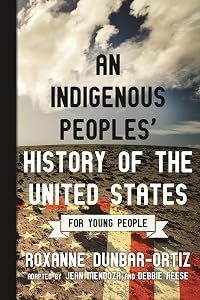
An Indigenous Peoples' History of the United States for Young People
by Roxanne Dunbar-Ortiz, Jean Mendoza, Debbie Reese
On This Page
Description
"Going beyond the story of America as a country "discovered" by a few brave men in the "New World," Indigenous human rights advocate Roxanne Dunbar-Ortiz reveals the roles that settler colonialism and policies of American Indian genocide played in forming our national identity. The original academic text is fully adapted by renowned curriculum experts Debbie Reese and Jean Mendoza, for middle-grade and young adult readers to include discussion topics, archival images, original maps, show more recommendations for further reading, and other materials to encourage students, teachers, and general readers to think critically about their own place in history"-- show lessTags
Recommendations










Member Reviews
The first history of the United States told from the perspective of indigenous peoples
Today in the United States, there are more than five hundred federally recognized Indigenous nations comprising nearly three million people, descendants of the fifteen million Native people who once inhabited this land. The centuries-long genocidal program of the US settler-colonial regimen has largely been omitted from history. Now, for the first time, acclaimed historian and activist Roxanne Dunbar-Ortizoffers a history of the United States told from the perspective of Indigenous peoples and reveals how Native Americans, for centuries, actively resisted expansion of the US empire.
With growing support for movements such as the campaign to abolish show more Columbus Day and replace it with Indigenous Peoples’ Day and the Dakota Access Pipeline protest led by the Standing Rock Sioux Tribe, An Indigenous Peoples’ History of the United States is an essential resource providing historical threads that are crucial for understanding the present. In An Indigenous Peoples’ History of the United States, Dunbar-Ortiz adroitly challenges the founding myth of the United States and shows how policy against the Indigenous peoples was colonialist and designed to seize the territories of the original inhabitants, displacing or eliminating them. And as Dunbar-Ortiz reveals, this policy was praised in popular culture, through writers like James Fenimore Cooper and Walt Whitman, and in the highest offices of government and the military. Shockingly, as the genocidal policy reached its zenith under President Andrew Jackson, its ruthlessness was best articulated by US Army general Thomas S. Jesup, who, in 1836, wrote of the Seminoles: “The country can be rid of them only by exterminating them.”
Spanning more than four hundred years, this classic bottom-up peoples’ history radically reframes US history and explodes the silences that have haunted our national narrative. show less
Today in the United States, there are more than five hundred federally recognized Indigenous nations comprising nearly three million people, descendants of the fifteen million Native people who once inhabited this land. The centuries-long genocidal program of the US settler-colonial regimen has largely been omitted from history. Now, for the first time, acclaimed historian and activist Roxanne Dunbar-Ortizoffers a history of the United States told from the perspective of Indigenous peoples and reveals how Native Americans, for centuries, actively resisted expansion of the US empire.
With growing support for movements such as the campaign to abolish show more Columbus Day and replace it with Indigenous Peoples’ Day and the Dakota Access Pipeline protest led by the Standing Rock Sioux Tribe, An Indigenous Peoples’ History of the United States is an essential resource providing historical threads that are crucial for understanding the present. In An Indigenous Peoples’ History of the United States, Dunbar-Ortiz adroitly challenges the founding myth of the United States and shows how policy against the Indigenous peoples was colonialist and designed to seize the territories of the original inhabitants, displacing or eliminating them. And as Dunbar-Ortiz reveals, this policy was praised in popular culture, through writers like James Fenimore Cooper and Walt Whitman, and in the highest offices of government and the military. Shockingly, as the genocidal policy reached its zenith under President Andrew Jackson, its ruthlessness was best articulated by US Army general Thomas S. Jesup, who, in 1836, wrote of the Seminoles: “The country can be rid of them only by exterminating them.”
Spanning more than four hundred years, this classic bottom-up peoples’ history radically reframes US history and explodes the silences that have haunted our national narrative. show less
This is an ambitious book about a huge topic, and Dunbar-Ortiz has a difficult time doing justice to her subject in such a short volume.
This isn't really a history of indigenous people. This is a history of what white Europeans did (and are still doing) to indigenous people. More white people are named, and more of their actions described, than indigenous individuals.
Dunbar-Ortiz's main thesis is that the long slow genocide of Native Americans is the defining characteristic of the United States, and has served as the inspiration for many aspects of American culture, and has provided the template for American colonialism abroad (Vietnam, Iraq, etc.). Buried in there is her secondary thesis that Native Americans have survived despite show more 500 years of systematic destruction of their people and culture, but unfortunately she doesn't have much time to discuss how they have managed to do this.
This book is a merciless condemnation of the history of the United States. Dunbar-Ortiz does not hold back in criticizing American colonialism. For example, in discussing how much the quest for gold was a driving force in colonization, she says "The systems of colonization were modern and rational, but its ideological basis was madness."
This book is part of a series called ReVisioning American History for Young People. I would think that in a book aimed at a young audience, Dunbar-Ortiz doesn't explain more of the basic definitions and characteristics of colonialism. I think this is another effect of trying to fit a lot of information into a small volume - I really wish she had been given free reign to do justice to her subject.
Despite all of these criticisms (which I think are probably a result of the publisher's restrictions, not Dunbar-Ortiz's skill), this is a devastating and important book, and I think all Americans should read it or at least be aware of its narrative. show less
This isn't really a history of indigenous people. This is a history of what white Europeans did (and are still doing) to indigenous people. More white people are named, and more of their actions described, than indigenous individuals.
Dunbar-Ortiz's main thesis is that the long slow genocide of Native Americans is the defining characteristic of the United States, and has served as the inspiration for many aspects of American culture, and has provided the template for American colonialism abroad (Vietnam, Iraq, etc.). Buried in there is her secondary thesis that Native Americans have survived despite show more 500 years of systematic destruction of their people and culture, but unfortunately she doesn't have much time to discuss how they have managed to do this.
This book is a merciless condemnation of the history of the United States. Dunbar-Ortiz does not hold back in criticizing American colonialism. For example, in discussing how much the quest for gold was a driving force in colonization, she says "The systems of colonization were modern and rational, but its ideological basis was madness."
This book is part of a series called ReVisioning American History for Young People. I would think that in a book aimed at a young audience, Dunbar-Ortiz doesn't explain more of the basic definitions and characteristics of colonialism. I think this is another effect of trying to fit a lot of information into a small volume - I really wish she had been given free reign to do justice to her subject.
Despite all of these criticisms (which I think are probably a result of the publisher's restrictions, not Dunbar-Ortiz's skill), this is a devastating and important book, and I think all Americans should read it or at least be aware of its narrative. show less
"A young readers’ adaptation of the groundbreaking 2014 work, An Indigenous Peoples’ History of the United States, offering an important corrective to conventional narratives of our nation’s history.
Questioning the ideologies behind the belief systems that gave birth to America’s dominant origin stories, this book not only challenges the standard tale of European explorers “discovering” America, it provides an Indigenous perspective on key events. The book urges students to think critically about private property and extractive industries, land conservation and environmental rights, social activism, the definition of what it means to be “civilized,” and the role of the media in shaping perceptions. With an eye to the show more diversity and number of Indigenous nations in America, the volume untangles the many conquerors and victims of the early colonization era and beyond. From the arrival of the first Europeans through to the 21st century, the work tackles subjects as diverse as the Dakota 38, the Ghost Dance and Wounded Knee, the American Indian Movement’s takeover of Alcatraz, and the Dakota Access Pipeline resistance. A deeply felt connection to the Earth’s health permeates the text, along with the strength and resiliency that have kept Indigenous cultures alive. Maps, photographs, informative sidebars, points for discussion, and a recommended book list round out this accessible, engaging, and necessary addition to school libraries and classrooms.
An excellent read, dismantling American mythologies and fostering critical reasoning about history and current events. (further reading, recommended titles, notes, image credits, index) (Nonfiction. 12-18)" A Kirkus Starred Reveiw, www.kirkusreviews.com show less
Questioning the ideologies behind the belief systems that gave birth to America’s dominant origin stories, this book not only challenges the standard tale of European explorers “discovering” America, it provides an Indigenous perspective on key events. The book urges students to think critically about private property and extractive industries, land conservation and environmental rights, social activism, the definition of what it means to be “civilized,” and the role of the media in shaping perceptions. With an eye to the show more diversity and number of Indigenous nations in America, the volume untangles the many conquerors and victims of the early colonization era and beyond. From the arrival of the first Europeans through to the 21st century, the work tackles subjects as diverse as the Dakota 38, the Ghost Dance and Wounded Knee, the American Indian Movement’s takeover of Alcatraz, and the Dakota Access Pipeline resistance. A deeply felt connection to the Earth’s health permeates the text, along with the strength and resiliency that have kept Indigenous cultures alive. Maps, photographs, informative sidebars, points for discussion, and a recommended book list round out this accessible, engaging, and necessary addition to school libraries and classrooms.
An excellent read, dismantling American mythologies and fostering critical reasoning about history and current events. (further reading, recommended titles, notes, image credits, index) (Nonfiction. 12-18)" A Kirkus Starred Reveiw, www.kirkusreviews.com show less
"A young readers’ adaptation of the groundbreaking 2014 work, An Indigenous Peoples’ History of the United States, offering an important corrective to conventional narratives of our nation’s history.
Questioning the ideologies behind the belief systems that gave birth to America’s dominant origin stories, this book not only challenges the standard tale of European explorers “discovering” America, it provides an Indigenous perspective on key events. The book urges students to think critically about private property and extractive industries, land conservation and environmental rights, social activism, the definition of what it means to be “civilized,” and the role of the media in shaping perceptions. With an eye to the show more diversity and number of Indigenous nations in America, the volume untangles the many conquerors and victims of the early colonization era and beyond. From the arrival of the first Europeans through to the 21st century, the work tackles subjects as diverse as the Dakota 38, the Ghost Dance and Wounded Knee, the American Indian Movement’s takeover of Alcatraz, and the Dakota Access Pipeline resistance. A deeply felt connection to the Earth’s health permeates the text, along with the strength and resiliency that have kept Indigenous cultures alive. Maps, photographs, informative sidebars, points for discussion, and a recommended book list round out this accessible, engaging, and necessary addition to school libraries and classrooms.
An excellent read, dismantling American mythologies and fostering critical reasoning about history and current events. (further reading, recommended titles, notes, image credits, index) (Nonfiction. 12-18)" A Kirkus Starred Reveiw, www.kirkusreviews.com show less
Questioning the ideologies behind the belief systems that gave birth to America’s dominant origin stories, this book not only challenges the standard tale of European explorers “discovering” America, it provides an Indigenous perspective on key events. The book urges students to think critically about private property and extractive industries, land conservation and environmental rights, social activism, the definition of what it means to be “civilized,” and the role of the media in shaping perceptions. With an eye to the show more diversity and number of Indigenous nations in America, the volume untangles the many conquerors and victims of the early colonization era and beyond. From the arrival of the first Europeans through to the 21st century, the work tackles subjects as diverse as the Dakota 38, the Ghost Dance and Wounded Knee, the American Indian Movement’s takeover of Alcatraz, and the Dakota Access Pipeline resistance. A deeply felt connection to the Earth’s health permeates the text, along with the strength and resiliency that have kept Indigenous cultures alive. Maps, photographs, informative sidebars, points for discussion, and a recommended book list round out this accessible, engaging, and necessary addition to school libraries and classrooms.
An excellent read, dismantling American mythologies and fostering critical reasoning about history and current events. (further reading, recommended titles, notes, image credits, index) (Nonfiction. 12-18)" A Kirkus Starred Reveiw, www.kirkusreviews.com show less
I haven't read all the options, but if you're going to pick one book to get a more accurate/less colonized history of Native Peoples in the U.S., this seems like a good one to go with. You won't get the details on most specific tribes, but this is the full sweep of major items to start with. Probably follow-up with one on the specific groups or regions of interest!
Going beyond the story of America as a country “discovered” by a few brave men in the “New World,” Indigenous human rights advocate Roxanne Dunbar-Ortiz reveals the roles that settler colonialism and policies of American Indian genocide played in forming our national identity.
The original academic text is fully adapted by renowned curriculum experts Debbie Reese and Jean Mendoza, for middle-grade and young adult readers to include discussion topics, archival images, original maps, recommendations for further reading, and other materials to encourage students, teachers, and general readers to think critically about their own place in history.
The original academic text is fully adapted by renowned curriculum experts Debbie Reese and Jean Mendoza, for middle-grade and young adult readers to include discussion topics, archival images, original maps, recommendations for further reading, and other materials to encourage students, teachers, and general readers to think critically about their own place in history.
nonfiction/history (indigenous/native American perspectives)
As I expected, there was much I didn't know about American history (that really should be included in our textbooks). This was pretty comprehensive--sometimes a bit overwhelmingly so--and unfortunately, it frequently read like a dry textbook. I could only manage about a chapter a day, but it's still worthwhile--an important resource for information that we just don't get in very many places, though I don't think it's necessarily great for most kids' casual reading. I would recommend it to kids who like history, or kids with a special interest in Native Americans and First Nations.
I really liked the suggested reading list on the back, featuring Indigenous authors (as opposed to show more outsiders pretending to know about native customs and containing various errors and stereotypes/bias) and will need to add some of them to my to-read list. I am including the entire list below because I think this online community of readers should have easy access to it as well--note that I've only so far read a few of these, but I figure the authors' recommended list is much better than anything I could come up with on my own:
[bc:Fighter in Velvet Gloves: Alaska Civil Rights Hero Elizabeth Peratrovich|42786117|Fighter in Velvet Gloves Alaska Civil Rights Hero Elizabeth Peratrovich|Annie Boochever|https://i.gr-assets.com/images/S/compressed.photo.goodreads.com/books/1545485939l/42786117._SY75_.jpg|66546176][bc:Hidden Roots|2011098|Hidden Roots|Joseph Bruchac|https://i.gr-assets.com/images/S/compressed.photo.goodreads.com/books/1328869664l/2011098._SY75_.jpg|2015163][bc:Dreaming in Indian: Contemporary Native American Voices|21561039|Dreaming in Indian Contemporary Native American Voices|Lisa Charleyboy|https://i.gr-assets.com/images/S/compressed.photo.goodreads.com/books/1397431299l/21561039._SX50_.jpg|40893167][bc:#Notyourprincess: Voices of Native American Women|33215514|#Notyourprincess Voices of Native American Women|Lisa Charleyboy|https://i.gr-assets.com/images/S/compressed.photo.goodreads.com/books/1502310718l/33215514._SX50_.jpg|53917315][bc:Bowwow Powwow|39665297|Bowwow Powwow|Brenda J. Child|https://i.gr-assets.com/images/S/compressed.photo.goodreads.com/books/1522182247l/39665297._SX50_.jpg|61241415][bc:Unstoppable: How Jim Thorpe and the Carlisle Indian School Football Team Defeated Army|38508827|Unstoppable How Jim Thorpe and the Carlisle Indian School Football Team Defeated Army|Art Coulson|https://i.gr-assets.com/images/S/compressed.photo.goodreads.com/books/1524077249l/38508827._SX50_.jpg|60146748][bc:New Poets of Native Nations|36477476|New Poets of Native Nations|Heid E. Erdrich|https://i.gr-assets.com/images/S/compressed.photo.goodreads.com/books/1508977150l/36477476._SX50_.jpg|58187441][bc:Original Local: Indigenous Foods, Stories, and Recipes from the Upper Midwest|17980708|Original Local Indigenous Foods, Stories, and Recipes from the Upper Midwest|Heid E. Erdrich|https://i.gr-assets.com/images/S/compressed.photo.goodreads.com/books/1371685950l/17980708._SX50_.jpg|25211424][bc:The Birchbark House|159666|The Birchbark House|Louise Erdrich|https://i.gr-assets.com/images/S/compressed.photo.goodreads.com/books/1280242695l/159666._SY75_.jpg|154105][bc:The Round House|13602426|The Round House|Louise Erdrich|https://i.gr-assets.com/images/S/compressed.photo.goodreads.com/books/1352999408l/13602426._SY75_.jpg|19195697][bc:If I Ever Get Out of Here|17071488|If I Ever Get Out of Here|Eric Gansworth|https://i.gr-assets.com/images/S/compressed.photo.goodreads.com/books/1374119419l/17071488._SY75_.jpg|23421230][bc:Give Me Some Truth|36127468|Give Me Some Truth|Eric Gansworth|https://i.gr-assets.com/images/S/compressed.photo.goodreads.com/books/1506575949l/36127468._SY75_.jpg|53457433][bc:Mission to Space|34834470|Mission to Space|John Herrington|https://i.gr-assets.com/images/S/compressed.photo.goodreads.com/books/1491841450l/34834470._SX50_.jpg|56063179][bc:In the Footsteps of Crazy Horse|24795887|In the Footsteps of Crazy Horse|Joseph M. Marshall III|https://i.gr-assets.com/images/S/compressed.photo.goodreads.com/books/1425594754l/24795887._SX50_.jpg|44431922][bc:When the Shadbush Blooms|2183475|When the Shadbush Blooms|Carla Messinger|https://i.gr-assets.com/images/S/compressed.photo.goodreads.com/books/1320556433l/2183475._SX50_.jpg|2189168][bc:Hungry Johnny|18936752|Hungry Johnny|Cheryl Minnema|https://i.gr-assets.com/images/S/compressed.photo.goodreads.com/books/1407813609l/18936752._SX50_.jpg|26944508][bc:The Wool of Jonesy|34455746|The Wool of Jonesy|Jonathan Nelson|https://i.gr-assets.com/images/S/compressed.photo.goodreads.com/books/1488558223l/34455746._SY75_.jpg|55569679][bc:Love Beyond Body, Space, and Time|31560094|Love Beyond Body, Space, and Time|Hope Nicholson|https://i.gr-assets.com/images/S/compressed.photo.goodreads.com/books/1471636874l/31560094._SX50_.jpg|52243134][bc:Moonshot: The Indigenous Comics Collection, Volume 1|25823323|Moonshot The Indigenous Comics Collection, Volume 1|Hope Nicholson|https://i.gr-assets.com/images/S/compressed.photo.goodreads.com/books/1435656532l/25823323._SY75_.jpg|45681301][bc:The People Shall Continue|1840241|The People Shall Continue|Simon J. Ortiz|https://i.gr-assets.com/images/S/compressed.photo.goodreads.com/books/1304443844l/1840241._SX50_.jpg|1840446][bc:Celebrate my Hopi corn|40608628|Celebrate my Hopi corn|Anita Poleahla|https://i.gr-assets.com/images/S/compressed.photo.goodreads.com/books/1529644654l/40608628._SX50_.jpg|63077426][bc:Murder on the Red River|29633624|Murder on the Red River|Marcie Rendon|https://i.gr-assets.com/images/S/compressed.photo.goodreads.com/books/1468409314l/29633624._SX50_.jpg|49984974][bc:The Water Walker|34415917|The Water Walker|Joanne Robertson|https://i.gr-assets.com/images/S/compressed.photo.goodreads.com/books/1499179295l/34415917._SX50_.jpg|55518959][bc:Hiawatha and the Peacemaker|24795927|Hiawatha and the Peacemaker|Robbie Robertson|https://i.gr-assets.com/images/S/compressed.photo.goodreads.com/books/1427933301l/24795927._SX50_.jpg|44431959][bc:Rock and Roll Highway: The Robbie Robertson Story|20519007|Rock and Roll Highway The Robbie Robertson Story|Sebastian Robertson|https://i.gr-assets.com/images/S/compressed.photo.goodreads.com/books/1390169325l/20519007._SX50_.jpg|36428519][bc:Son Who Returns|18854859|Son Who Returns|Gary Robinson|https://i.gr-assets.com/images/S/compressed.photo.goodreads.com/books/1385994896l/18854859._SY75_.jpg|26801215][bc:The Sioux Chef's Indigenous Kitchen|34448042|The Sioux Chef's Indigenous Kitchen|Sean Sherman|https://i.gr-assets.com/images/S/compressed.photo.goodreads.com/books/1493314411l/34448042._SX50_.jpg|55558887][bc:Jingle Dancer|742125|Jingle Dancer|Cynthia Leitich Smith|https://i.gr-assets.com/images/S/compressed.photo.goodreads.com/books/1347725245l/742125._SX50_.jpg|728289][bc:Rain Is Not My Indian Name|1007345|Rain Is Not My Indian Name|Cynthia Leitich Smith|https://i.gr-assets.com/images/S/compressed.photo.goodreads.com/books/1348084921l/1007345._SX50_.jpg|993471][bc:Indian Shoes|1007346|Indian Shoes|Cynthia Leitich Smith|https://i.gr-assets.com/images/S/compressed.photo.goodreads.com/books/1348330486l/1007346._SX50_.jpg|993472][bc:Hearts Unbroken|38564416|Hearts Unbroken|Cynthia Leitich Smith|https://i.gr-assets.com/images/S/compressed.photo.goodreads.com/books/1522343961l/38564416._SY75_.jpg|60178419][bc:The Christmas Coat: Memories of My Sioux Childhood|11935255|The Christmas Coat Memories of My Sioux Childhood|Virginia Driving Hawk Sneve|https://i.gr-assets.com/images/S/compressed.photo.goodreads.com/books/1347519466l/11935255._SX50_.jpg|16896117][bc:We Are Grateful: Otsaliheliga|36711245|We Are Grateful Otsaliheliga|Traci Sorell|https://i.gr-assets.com/images/S/compressed.photo.goodreads.com/books/1525825917l/36711245._SX50_.jpg|58508012][bc:Tales of the Mighty Code Talkers #1|22730813|Tales of the Mighty Code Talkers #1 (Tales of the Mighty Code Talkers, #1)|Arigon Starr|https://i.gr-assets.com/images/S/compressed.photo.goodreads.com/books/1405474238l/22730813._SY75_.jpg|64161330][bc:Super Indian, Vol. 1|18687879|Super Indian, Vol. 1|Arigon Starr|https://i.gr-assets.com/images/S/compressed.photo.goodreads.com/books/1382159432l/18687879._SY75_.jpg|26531669][bc:Saltypie: A Choctaw Journey from Darkness into Light|7999750|Saltypie A Choctaw Journey from Darkness into Light|Tim Tingle|https://i.gr-assets.com/images/S/compressed.photo.goodreads.com/books/1348038292l/7999750._SX50_.jpg|12516095][bc:How I Became a Ghost|17901341|How I Became a Ghost|Tim Tingle|https://i.gr-assets.com/images/S/compressed.photo.goodreads.com/books/1374334746l/17901341._SY75_.jpg|25076772][bc:When a Ghost Talks, Listen|40606587|When a Ghost Talks, Listen (How I Became A Ghost, Book 2)|Tim Tingle|https://i.gr-assets.com/images/S/compressed.photo.goodreads.com/books/1529626922l/40606587._SY75_.jpg|63071904][bc:Code Talker Stories =: Nihizaad Bee Nidasiibaa'|16655849|Code Talker Stories = Nihizaad Bee Nidasiibaa'|Laura Tohe|https://i.gr-assets.com/images/S/compressed.photo.goodreads.com/books/1356149554l/16655849._SY75_.jpg|22863068][bc:Young Water Protectors: A Story About Standing Rock|41541639|Young Water Protectors A Story About Standing Rock|Aslan Tudor|https://i.gr-assets.com/images/S/compressed.photo.goodreads.com/books/1535390600l/41541639._SX50_.jpg|64716246][bc:Kamik: An Inuit Puppy Story|16033532|Kamik An Inuit Puppy Story|Donald Uluadluak|https://i.gr-assets.com/images/S/compressed.photo.goodreads.com/books/1361572217l/16033532._SX50_.jpg|21804653][bc:Fall in Line, Holden!|35746900|Fall in Line, Holden!|Daniel W. Vandever|https://i.gr-assets.com/images/S/compressed.photo.goodreads.com/books/1504926343l/35746900._SX50_.jpg|57250842] show less
As I expected, there was much I didn't know about American history (that really should be included in our textbooks). This was pretty comprehensive--sometimes a bit overwhelmingly so--and unfortunately, it frequently read like a dry textbook. I could only manage about a chapter a day, but it's still worthwhile--an important resource for information that we just don't get in very many places, though I don't think it's necessarily great for most kids' casual reading. I would recommend it to kids who like history, or kids with a special interest in Native Americans and First Nations.
I really liked the suggested reading list on the back, featuring Indigenous authors (as opposed to show more outsiders pretending to know about native customs and containing various errors and stereotypes/bias) and will need to add some of them to my to-read list. I am including the entire list below because I think this online community of readers should have easy access to it as well--note that I've only so far read a few of these, but I figure the authors' recommended list is much better than anything I could come up with on my own:
[bc:Fighter in Velvet Gloves: Alaska Civil Rights Hero Elizabeth Peratrovich|42786117|Fighter in Velvet Gloves Alaska Civil Rights Hero Elizabeth Peratrovich|Annie Boochever|https://i.gr-assets.com/images/S/compressed.photo.goodreads.com/books/1545485939l/42786117._SY75_.jpg|66546176][bc:Hidden Roots|2011098|Hidden Roots|Joseph Bruchac|https://i.gr-assets.com/images/S/compressed.photo.goodreads.com/books/1328869664l/2011098._SY75_.jpg|2015163][bc:Dreaming in Indian: Contemporary Native American Voices|21561039|Dreaming in Indian Contemporary Native American Voices|Lisa Charleyboy|https://i.gr-assets.com/images/S/compressed.photo.goodreads.com/books/1397431299l/21561039._SX50_.jpg|40893167][bc:#Notyourprincess: Voices of Native American Women|33215514|#Notyourprincess Voices of Native American Women|Lisa Charleyboy|https://i.gr-assets.com/images/S/compressed.photo.goodreads.com/books/1502310718l/33215514._SX50_.jpg|53917315][bc:Bowwow Powwow|39665297|Bowwow Powwow|Brenda J. Child|https://i.gr-assets.com/images/S/compressed.photo.goodreads.com/books/1522182247l/39665297._SX50_.jpg|61241415][bc:Unstoppable: How Jim Thorpe and the Carlisle Indian School Football Team Defeated Army|38508827|Unstoppable How Jim Thorpe and the Carlisle Indian School Football Team Defeated Army|Art Coulson|https://i.gr-assets.com/images/S/compressed.photo.goodreads.com/books/1524077249l/38508827._SX50_.jpg|60146748][bc:New Poets of Native Nations|36477476|New Poets of Native Nations|Heid E. Erdrich|https://i.gr-assets.com/images/S/compressed.photo.goodreads.com/books/1508977150l/36477476._SX50_.jpg|58187441][bc:Original Local: Indigenous Foods, Stories, and Recipes from the Upper Midwest|17980708|Original Local Indigenous Foods, Stories, and Recipes from the Upper Midwest|Heid E. Erdrich|https://i.gr-assets.com/images/S/compressed.photo.goodreads.com/books/1371685950l/17980708._SX50_.jpg|25211424][bc:The Birchbark House|159666|The Birchbark House|Louise Erdrich|https://i.gr-assets.com/images/S/compressed.photo.goodreads.com/books/1280242695l/159666._SY75_.jpg|154105][bc:The Round House|13602426|The Round House|Louise Erdrich|https://i.gr-assets.com/images/S/compressed.photo.goodreads.com/books/1352999408l/13602426._SY75_.jpg|19195697][bc:If I Ever Get Out of Here|17071488|If I Ever Get Out of Here|Eric Gansworth|https://i.gr-assets.com/images/S/compressed.photo.goodreads.com/books/1374119419l/17071488._SY75_.jpg|23421230][bc:Give Me Some Truth|36127468|Give Me Some Truth|Eric Gansworth|https://i.gr-assets.com/images/S/compressed.photo.goodreads.com/books/1506575949l/36127468._SY75_.jpg|53457433][bc:Mission to Space|34834470|Mission to Space|John Herrington|https://i.gr-assets.com/images/S/compressed.photo.goodreads.com/books/1491841450l/34834470._SX50_.jpg|56063179][bc:In the Footsteps of Crazy Horse|24795887|In the Footsteps of Crazy Horse|Joseph M. Marshall III|https://i.gr-assets.com/images/S/compressed.photo.goodreads.com/books/1425594754l/24795887._SX50_.jpg|44431922][bc:When the Shadbush Blooms|2183475|When the Shadbush Blooms|Carla Messinger|https://i.gr-assets.com/images/S/compressed.photo.goodreads.com/books/1320556433l/2183475._SX50_.jpg|2189168][bc:Hungry Johnny|18936752|Hungry Johnny|Cheryl Minnema|https://i.gr-assets.com/images/S/compressed.photo.goodreads.com/books/1407813609l/18936752._SX50_.jpg|26944508][bc:The Wool of Jonesy|34455746|The Wool of Jonesy|Jonathan Nelson|https://i.gr-assets.com/images/S/compressed.photo.goodreads.com/books/1488558223l/34455746._SY75_.jpg|55569679][bc:Love Beyond Body, Space, and Time|31560094|Love Beyond Body, Space, and Time|Hope Nicholson|https://i.gr-assets.com/images/S/compressed.photo.goodreads.com/books/1471636874l/31560094._SX50_.jpg|52243134][bc:Moonshot: The Indigenous Comics Collection, Volume 1|25823323|Moonshot The Indigenous Comics Collection, Volume 1|Hope Nicholson|https://i.gr-assets.com/images/S/compressed.photo.goodreads.com/books/1435656532l/25823323._SY75_.jpg|45681301][bc:The People Shall Continue|1840241|The People Shall Continue|Simon J. Ortiz|https://i.gr-assets.com/images/S/compressed.photo.goodreads.com/books/1304443844l/1840241._SX50_.jpg|1840446][bc:Celebrate my Hopi corn|40608628|Celebrate my Hopi corn|Anita Poleahla|https://i.gr-assets.com/images/S/compressed.photo.goodreads.com/books/1529644654l/40608628._SX50_.jpg|63077426][bc:Murder on the Red River|29633624|Murder on the Red River|Marcie Rendon|https://i.gr-assets.com/images/S/compressed.photo.goodreads.com/books/1468409314l/29633624._SX50_.jpg|49984974][bc:The Water Walker|34415917|The Water Walker|Joanne Robertson|https://i.gr-assets.com/images/S/compressed.photo.goodreads.com/books/1499179295l/34415917._SX50_.jpg|55518959][bc:Hiawatha and the Peacemaker|24795927|Hiawatha and the Peacemaker|Robbie Robertson|https://i.gr-assets.com/images/S/compressed.photo.goodreads.com/books/1427933301l/24795927._SX50_.jpg|44431959][bc:Rock and Roll Highway: The Robbie Robertson Story|20519007|Rock and Roll Highway The Robbie Robertson Story|Sebastian Robertson|https://i.gr-assets.com/images/S/compressed.photo.goodreads.com/books/1390169325l/20519007._SX50_.jpg|36428519][bc:Son Who Returns|18854859|Son Who Returns|Gary Robinson|https://i.gr-assets.com/images/S/compressed.photo.goodreads.com/books/1385994896l/18854859._SY75_.jpg|26801215][bc:The Sioux Chef's Indigenous Kitchen|34448042|The Sioux Chef's Indigenous Kitchen|Sean Sherman|https://i.gr-assets.com/images/S/compressed.photo.goodreads.com/books/1493314411l/34448042._SX50_.jpg|55558887][bc:Jingle Dancer|742125|Jingle Dancer|Cynthia Leitich Smith|https://i.gr-assets.com/images/S/compressed.photo.goodreads.com/books/1347725245l/742125._SX50_.jpg|728289][bc:Rain Is Not My Indian Name|1007345|Rain Is Not My Indian Name|Cynthia Leitich Smith|https://i.gr-assets.com/images/S/compressed.photo.goodreads.com/books/1348084921l/1007345._SX50_.jpg|993471][bc:Indian Shoes|1007346|Indian Shoes|Cynthia Leitich Smith|https://i.gr-assets.com/images/S/compressed.photo.goodreads.com/books/1348330486l/1007346._SX50_.jpg|993472][bc:Hearts Unbroken|38564416|Hearts Unbroken|Cynthia Leitich Smith|https://i.gr-assets.com/images/S/compressed.photo.goodreads.com/books/1522343961l/38564416._SY75_.jpg|60178419][bc:The Christmas Coat: Memories of My Sioux Childhood|11935255|The Christmas Coat Memories of My Sioux Childhood|Virginia Driving Hawk Sneve|https://i.gr-assets.com/images/S/compressed.photo.goodreads.com/books/1347519466l/11935255._SX50_.jpg|16896117][bc:We Are Grateful: Otsaliheliga|36711245|We Are Grateful Otsaliheliga|Traci Sorell|https://i.gr-assets.com/images/S/compressed.photo.goodreads.com/books/1525825917l/36711245._SX50_.jpg|58508012][bc:Tales of the Mighty Code Talkers #1|22730813|Tales of the Mighty Code Talkers #1 (Tales of the Mighty Code Talkers, #1)|Arigon Starr|https://i.gr-assets.com/images/S/compressed.photo.goodreads.com/books/1405474238l/22730813._SY75_.jpg|64161330][bc:Super Indian, Vol. 1|18687879|Super Indian, Vol. 1|Arigon Starr|https://i.gr-assets.com/images/S/compressed.photo.goodreads.com/books/1382159432l/18687879._SY75_.jpg|26531669][bc:Saltypie: A Choctaw Journey from Darkness into Light|7999750|Saltypie A Choctaw Journey from Darkness into Light|Tim Tingle|https://i.gr-assets.com/images/S/compressed.photo.goodreads.com/books/1348038292l/7999750._SX50_.jpg|12516095][bc:How I Became a Ghost|17901341|How I Became a Ghost|Tim Tingle|https://i.gr-assets.com/images/S/compressed.photo.goodreads.com/books/1374334746l/17901341._SY75_.jpg|25076772][bc:When a Ghost Talks, Listen|40606587|When a Ghost Talks, Listen (How I Became A Ghost, Book 2)|Tim Tingle|https://i.gr-assets.com/images/S/compressed.photo.goodreads.com/books/1529626922l/40606587._SY75_.jpg|63071904][bc:Code Talker Stories =: Nihizaad Bee Nidasiibaa'|16655849|Code Talker Stories = Nihizaad Bee Nidasiibaa'|Laura Tohe|https://i.gr-assets.com/images/S/compressed.photo.goodreads.com/books/1356149554l/16655849._SY75_.jpg|22863068][bc:Young Water Protectors: A Story About Standing Rock|41541639|Young Water Protectors A Story About Standing Rock|Aslan Tudor|https://i.gr-assets.com/images/S/compressed.photo.goodreads.com/books/1535390600l/41541639._SX50_.jpg|64716246][bc:Kamik: An Inuit Puppy Story|16033532|Kamik An Inuit Puppy Story|Donald Uluadluak|https://i.gr-assets.com/images/S/compressed.photo.goodreads.com/books/1361572217l/16033532._SX50_.jpg|21804653][bc:Fall in Line, Holden!|35746900|Fall in Line, Holden!|Daniel W. Vandever|https://i.gr-assets.com/images/S/compressed.photo.goodreads.com/books/1504926343l/35746900._SX50_.jpg|57250842] show less
Members
- Recently Added By
Lists

Indigenous America Reader
145 works; 12 members

Youth: DEI
296 works; 2 members
Author Information

18+ Works 4,702 Members
Roxanne Dunbar-Ortiz is Professor Emerita of Ethnic Studies and Women's Studies at California State University, East Bay.
1 Work 1,307 Members
3 Works 1,311 Members
Awards and Honors
Awards
Distinctions
Notable Lists
Series
Belongs to Publisher Series
Work Relationships
Is an adaptation of
Common Knowledge
- Canonical title
- An Indigenous Peoples' History of the United States for Young People
- Important places
- USA
- Original language
- English
Classifications
Statistics
- Members
- 1,309
- Popularity
- 18,484
- Reviews
- 13
- Rating
- (4.04)
- Languages
- English
- Media
- Paper, Ebook
- ISBNs
- 5
- ASINs
- 1

