On This Page
Description
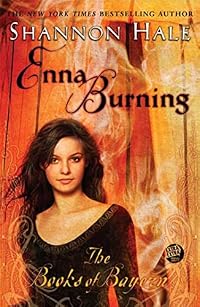
Enna hopes that her new knowledge of how to wield fire will help protect her good friend Isi--the Princess Anidori--and all of Bayern against their enemies, but the need to burn is uncontrollable and puts Enna and her loved ones in grave danger.Tags
Recommendations
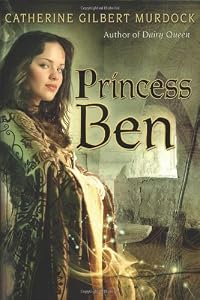
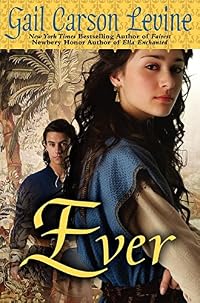
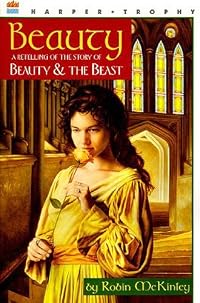
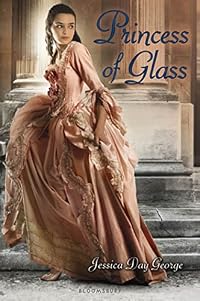
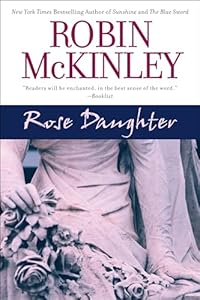
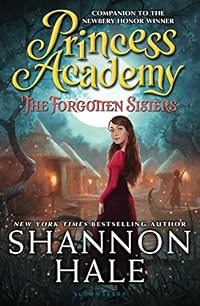
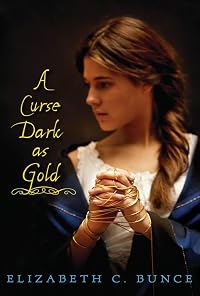
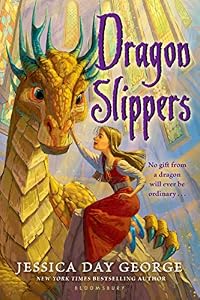
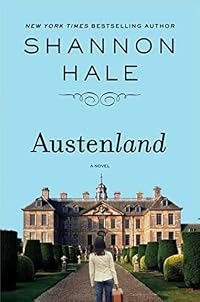
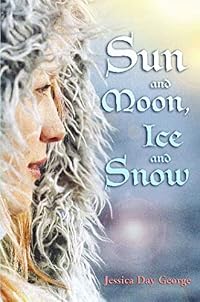
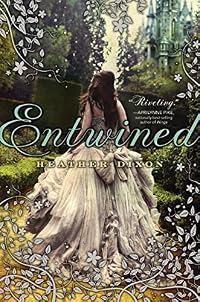
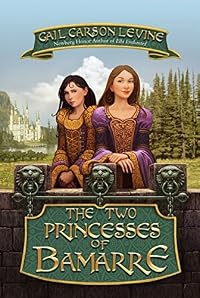
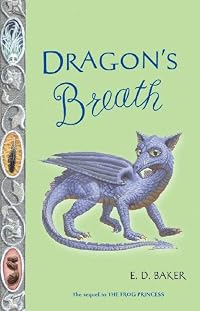

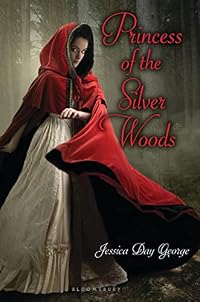
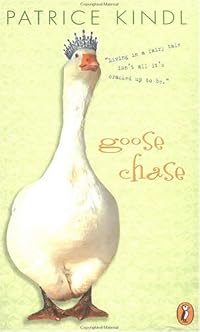
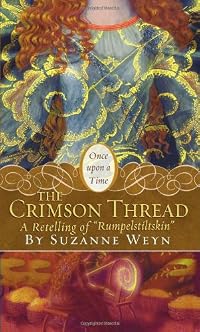
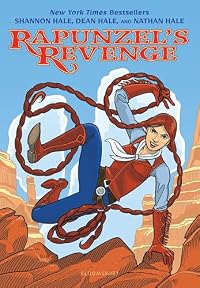
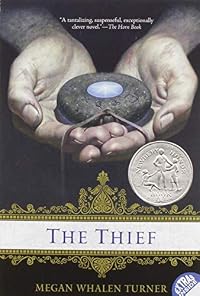
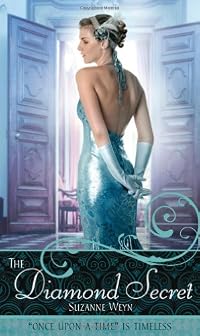
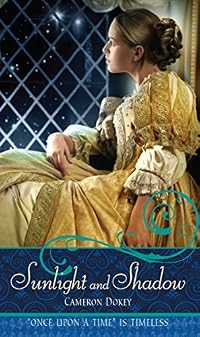
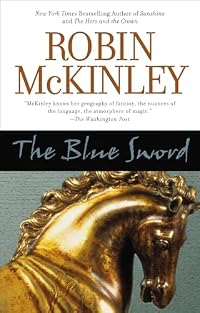
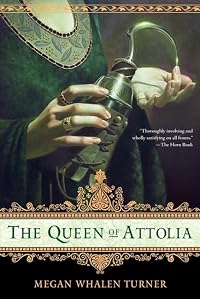
Member Recommendations
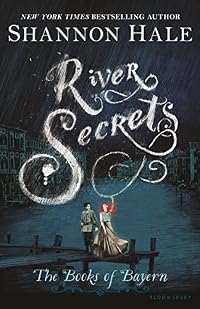
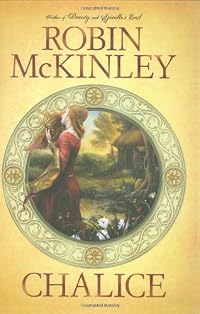
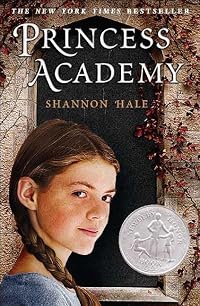
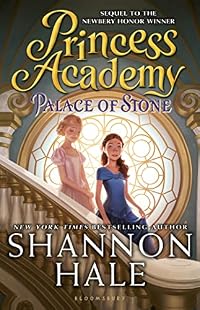
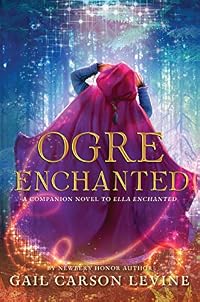
wordcauldron Far superior book about fire powers and learning to control them. The last in a four-part series--I recommend reading them all, but if fire powers are what you're into I think this book can stand alone.
Member Reviews
This book is so absurd, I don't even know where to begin. Until reading this book, I had no idea a book could be so bizarre and so tedious at the same time.
Overall, this book felt forced and disingenuous. Near the middle, I began to disbelieve that Hale herself even wrote it because it is so messy and completely lacked the depth of her other novels.
By 3/4 of the way through, I gave up and read a summary online to spare myself. The last straw was Enna mooning over how she must be "falling in love with" Sileph while she has a knife to his neck while simultaneously thinking that she finally has what she wants in making a difference in the war (which didn't even make sense to me, given the circumstances under which she felt she was show more contributing). Then, all that is quickly followed up by the fact that she didn't think to maybe ask someone to check if there were any people in the house that Sileph told her to destroy. My first thought when he told her to do that was, "I'd ask first to make sure there are no people inside." And, yep. There you go. She kills someone.
What "plot" is there is trite, overdone, and completely overshadowed by the incessant, nauseating references to how intoxicating, drug-like, uncontrollable, bad (but seemingly in a good way!), and irresistible fire is. Eventually, the descriptions veer into sexual innuendo territory, which I was able to not guffaw at until she met Sileph, and then I just began to laugh out loud whenever he talked about it. For example: "I brought you here, Enna, so you could burn. I saw in your face the release and pleasure it gives you. Why don't you just surrender?" Are you kidding me? Eventually, "fire" became a metaphor for "sex" and the "painful-yet-pleasurable release of her fire" became a metaphor for "orgasm." Enna is basically reduced to a sex-starved, drug-addicted teenager on the verge of womanhood being seduced, manipulated, and used by a patronizing older man (because, of course, there has to be a conflict with her love interest in Fin, and what better and more convenient way to do it than Stockholm syndrome?).
At one point, I actually agreed with Sileph that Enna should just give in to being "bad" and join Tira because her constant failings due to the intoxication of the fire became so--yep, you guessed it--tedious. The whole book would've been more believable that way, and I think she would make a much better antagonist than a failed protagonist. Her empty promises to herself and others, the number of times she betrays (and even hurts) her friends, her desire to actually kill people outright, her strained attempts at trying to convince herself that she what she wants is to help, it all fails and does not make me feel empathy for her, but annoyance at her changeable, fickle nature--I know that is supposed to be the fire's doing and we're supposed to blame that, but mostly it just makes you think Enna is not very smart, has no integrity, and can't be counted on. She knew better than to get mixed up in the fire to begin with and did it, anyway, even after watching her own brother burn himself to death.
Even Isi's inability to control the wind in this book became tiresome. What I'd really like is a book that shows these children trying to find masters who can help them control what they're doing, like the people that Enna mentions a few times in the beginning (I can't remember the name of the people, unfortunately), instead of destroying everything around them. That's what I thought this book was going to be about--she and Isi seeking help from the masters.
It doesn't matter to me if, at the end, Enna supposedly redeems herself because her journey to get to that point was so painful and disingenuous. I don't even know what the point of this book was, aside from someone told Hale (or a ghost-writer for Hale) that there has to be a four-part series so that every element is covered, and she couldn't figure out what to do with the fire bit so it resulted in this travesty of a book.
A real disappointment after the first book in this series, which I thought was pretty good and gave promise to the others in the series. I don't even know when I'll recover enough to try the third book, if at all. show less
Overall, this book felt forced and disingenuous. Near the middle, I began to disbelieve that Hale herself even wrote it because it is so messy and completely lacked the depth of her other novels.
By 3/4 of the way through, I gave up and read a summary online to spare myself. The last straw was Enna mooning over how she must be "falling in love with" Sileph while she has a knife to his neck while simultaneously thinking that she finally has what she wants in making a difference in the war (which didn't even make sense to me, given the circumstances under which she felt she was show more contributing). Then, all that is quickly followed up by the fact that she didn't think to maybe ask someone to check if there were any people in the house that Sileph told her to destroy. My first thought when he told her to do that was, "I'd ask first to make sure there are no people inside." And, yep. There you go. She kills someone.
What "plot" is there is trite, overdone, and completely overshadowed by the incessant, nauseating references to how intoxicating, drug-like, uncontrollable, bad (but seemingly in a good way!), and irresistible fire is. Eventually, the descriptions veer into sexual innuendo territory, which I was able to not guffaw at until she met Sileph, and then I just began to laugh out loud whenever he talked about it. For example: "I brought you here, Enna, so you could burn. I saw in your face the release and pleasure it gives you. Why don't you just surrender?" Are you kidding me? Eventually, "fire" became a metaphor for "sex" and the "painful-yet-pleasurable release of her fire" became a metaphor for "orgasm." Enna is basically reduced to a sex-starved, drug-addicted teenager on the verge of womanhood being seduced, manipulated, and used by a patronizing older man (because, of course, there has to be a conflict with her love interest in Fin, and what better and more convenient way to do it than Stockholm syndrome?).
At one point, I actually agreed with Sileph that Enna should just give in to being "bad" and join Tira because her constant failings due to the intoxication of the fire became so--yep, you guessed it--tedious. The whole book would've been more believable that way, and I think she would make a much better antagonist than a failed protagonist. Her empty promises to herself and others, the number of times she betrays (and even hurts) her friends, her desire to actually kill people outright, her strained attempts at trying to convince herself that she what she wants is to help, it all fails and does not make me feel empathy for her, but annoyance at her changeable, fickle nature--I know that is supposed to be the fire's doing and we're supposed to blame that, but mostly it just makes you think Enna is not very smart, has no integrity, and can't be counted on. She knew better than to get mixed up in the fire to begin with and did it, anyway, even after watching her own brother burn himself to death.
Even Isi's inability to control the wind in this book became tiresome. What I'd really like is a book that shows these children trying to find masters who can help them control what they're doing, like the people that Enna mentions a few times in the beginning (I can't remember the name of the people, unfortunately), instead of destroying everything around them. That's what I thought this book was going to be about--she and Isi seeking help from the masters.
It doesn't matter to me if, at the end, Enna supposedly redeems herself because her journey to get to that point was so painful and disingenuous. I don't even know what the point of this book was, aside from someone told Hale (or a ghost-writer for Hale) that there has to be a four-part series so that every element is covered, and she couldn't figure out what to do with the fire bit so it resulted in this travesty of a book.
A real disappointment after the first book in this series, which I thought was pretty good and gave promise to the others in the series. I don't even know when I'll recover enough to try the third book, if at all. show less
Though Enna Burning is a sequel to The Goose Girl, it doesn't really have the feeling of a sequel to me. It shares a setting and certain plot elements of the first story, yes, but the mood and themes are different enough that it just doesn't read like a continuation. A large part of that is most likely because the main character has shifted from Ani to Enna, a forest-born girl who kept chickens and became Ani's friend when she was the goose girl.
Where The Goose Girl is about Ani becoming comfortable in her own skin and claiming her identity, Enna Burning is about Enna learning to rely on her friends, plus a bunch of stuff about wanting to prove oneself and emotions like lust, envy, or anger, which tie into the "fire" theme, which itself show more is partly represented in a war between Bayern and the neighboring country of Tira.
Enna Burning didn't enchant me as much as the first book in the Bayern series, and it felt too rushed and deus ex machina in the final parts, when Enna and Isi (Ani) learn to temper their elemental magic by learning each other's version. I would have much really liked to have fewer chapters about the war and more about the two of them learning wind and fire (respectively) in Yasid. I also wasn't entirely comfortable with the romance subplot between Enna and Finn. I would have been happier, I think, if it had never been introduced, and instead the theme had focused solely on friendship, which seemed to be the most important part of the story.
Nonetheless, I did enjoy reading the book, and I am looking forward to finally reading the third in the series, River Secrets. I just don't think that Enna Burning has quite the re-readability as The Goose Girl or other books I've read recently. show less
Where The Goose Girl is about Ani becoming comfortable in her own skin and claiming her identity, Enna Burning is about Enna learning to rely on her friends, plus a bunch of stuff about wanting to prove oneself and emotions like lust, envy, or anger, which tie into the "fire" theme, which itself show more is partly represented in a war between Bayern and the neighboring country of Tira.
Enna Burning didn't enchant me as much as the first book in the Bayern series, and it felt too rushed and deus ex machina in the final parts, when Enna and Isi (Ani) learn to temper their elemental magic by learning each other's version. I would have much really liked to have fewer chapters about the war and more about the two of them learning wind and fire (respectively) in Yasid. I also wasn't entirely comfortable with the romance subplot between Enna and Finn. I would have been happier, I think, if it had never been introduced, and instead the theme had focused solely on friendship, which seemed to be the most important part of the story.
Nonetheless, I did enjoy reading the book, and I am looking forward to finally reading the third in the series, River Secrets. I just don't think that Enna Burning has quite the re-readability as The Goose Girl or other books I've read recently. show less
In this unusual but thought-provoking companion to "The Goose Girl," Shannon Hale takes what is usually a pretty big step in most series; turning the spotlight to a new main character. But somehow it works flawlessly for Enna, a character I had hoped to get to know better. I was definitely rewarded with this novel.
Enna's life has definitely much improved. Now a personal friend of Bayern's royalty, she no longer has to be an animal keeper. But new problems rise to fill the space of the old; Enna's brother Leifer is acting strangely. He has acquired a frightening new talent to fire-speak, a talent Enna might share. And Bayern is on the brink of a war with neighboring Tira. A war that Enna will become enmeshed in.
Characters from "Goose show more Girl" return in full force as Enna embarks on her own odyssey of learning to control the forces within her, learning how best to serve her beloved country, and learning what the consequences of great power truly entail.
Enna was a brilliant character, strong but flawed, confident but foolish. She grew incredibly over the novel's course, and you could really see just how impacted she was by all her trials. Her relationships with others, especially Isi and Finn (loved her and Finn!), gave a very human quality to her personality. The nuances of fire-speaking were fascinating and haunting, showing the double-edged nature of such an unstable ability. And the ending was hopeful, but not too neat, leaving many possibilities open. Very well done sequel. show less
Enna's life has definitely much improved. Now a personal friend of Bayern's royalty, she no longer has to be an animal keeper. But new problems rise to fill the space of the old; Enna's brother Leifer is acting strangely. He has acquired a frightening new talent to fire-speak, a talent Enna might share. And Bayern is on the brink of a war with neighboring Tira. A war that Enna will become enmeshed in.
Characters from "Goose show more Girl" return in full force as Enna embarks on her own odyssey of learning to control the forces within her, learning how best to serve her beloved country, and learning what the consequences of great power truly entail.
Enna was a brilliant character, strong but flawed, confident but foolish. She grew incredibly over the novel's course, and you could really see just how impacted she was by all her trials. Her relationships with others, especially Isi and Finn (loved her and Finn!), gave a very human quality to her personality. The nuances of fire-speaking were fascinating and haunting, showing the double-edged nature of such an unstable ability. And the ending was hopeful, but not too neat, leaving many possibilities open. Very well done sequel. show less
Since I really enjoyed The Goose Girl, I decided to try the next book in the series. Enna lives a life of busy poverty in the Forest of Bayern with her brother Liefer. Although she misses her friend Isi and the adventures they shared in the city, she tries to stay upbeat and content. But when Liefer brings home a piece of vellum containing the secrets of fire language, life suddenly gets a lot more dangerous: Liefer becomes reckless and uncontrollable, consumed by his desire to create fire. Enna fears the fire magic but also finds herself drawn to it – and when the neighboring country of Tira declares war on Bayern, she must master the fire magic before it consumes her.
This book was a satisfying follow-up to The Goose Girl. Enna is a show more scrappy and courageous young woman who tries to do the right thing in some really tough situations. Occasionally she fails and makes a bad choice, which is one thing I really liked about the novel – it makes her a more realistic and relatable heroine. I also liked the way Hale described the fire magic, both in its mechanics and in its effect on Enna. The characters in general were more fleshed out than they were in The Goose Girl, and I hope to see this trend continue in the next book, River Secrets. This is definitely a worthy addition to a YA fantasy collection. show less
This book was a satisfying follow-up to The Goose Girl. Enna is a show more scrappy and courageous young woman who tries to do the right thing in some really tough situations. Occasionally she fails and makes a bad choice, which is one thing I really liked about the novel – it makes her a more realistic and relatable heroine. I also liked the way Hale described the fire magic, both in its mechanics and in its effect on Enna. The characters in general were more fleshed out than they were in The Goose Girl, and I hope to see this trend continue in the next book, River Secrets. This is definitely a worthy addition to a YA fantasy collection. show less
This wasn't as good as The Goose Girl, but was still a very good read. There's war! Intrigue! Fire magic! New and strange lands! Enna Burning explores the darker side of the nature gifts, including Isi's wind power. There is a prevalent theme of control - both over powers and over yourself - while the story is set in a situation where the characters have no control. A neighboring kingdom has invaded Bayern and declared war. In this setting, the characters we first met in The Goose Girl have a harsh coming of age, and trial by sword and fire to deal with.
My review just got eaten, so here's take two. I did not particularly feel the need to read on after The Goose Girl, a satisfactory book in itself, but because I like Enna and I trust Hale, and I saw the copy in my library, I went for it. It was a good choice; Hale has yet to disappoint me with her novels. The first fifty pages or so, the pacing could be better and I am plodding along, perhaps one or two chapters at a time, though it is always a treat, because her writing is so simple and elegant, with imagery and details that never feel burdensome. But once I cross that threshold, I want to speed through the whole novel in one sitting--and though I usually do not, I certainly want to.
In other words: pacing may not be Hale's strongest show more suit, but she has many others that more than make up for it. Her genuine, likeable, well-intentioned characters always warm my heart and capture me. Enna is a lovely example of a headstrong character written well, such that we get to enjoy the stark rewards and painful failures that accompany one more prone to risk-taking than Isi, for example; yet in reading this book, I could not help reflecting back on The Goose Girl, not without renewed admiration for Hale's skill in writing and fleshing out a personality type like Isi's, so often passed over for protagonists today because it initially seems so much weaker and less interesting.
As for the romance:it worked, and though less neat than the romance in The Goose Girl, it undeniably made more sense for Enna's personality. I had already loved Finn in The Goose Girl, though I resigned myself early on to the fact that he and Isi probably wouldn't be a good match (who would talk?), but when he reappeared in Enna Burning, I immediately hoped the best for him. When Sileph appeared, I felt an inward groaning as I imagined a horrific love triangle coming into play, and formerly strong-willed Enna being a helpless victim of Stockholm syndrome, but I should have trusted Hale. She shows Enna making real mistakes, being genuinely confused, and yet coming out all right in the end and discovering what matters and what constitutes trustworthiness and love. In other words, it was simple and understated, as is Hale's style and my preference, but it also showed genuine conflict. It was a love triangle where it wasn't obvious who would win out, and cutting one person out wasn't a clean and easy break. I still found myself happy with how it ended
Readers of The Goose Girl will also be happy to note that Finn, Razo, and Isi all play significant roles in the book. I find that companion novels I've read usually don't feature the characters from the earlier novel as much, and sometimes that makes the most sense; but I was quite happy with how Hale developed a story that included them in a reasonable and delightful way, one keeping well with lasting friendship.
Hale also deals with universal themes like love, family, friendship, betrayal, and war--more mature themes, I felt, than in The Goose Girl, but always handled deftly and tactfully. Though by no means my new favorite Hale novel, it was still wonderfully crafted and a pleasure to read. show less
In other words: pacing may not be Hale's strongest show more suit, but she has many others that more than make up for it. Her genuine, likeable, well-intentioned characters always warm my heart and capture me. Enna is a lovely example of a headstrong character written well, such that we get to enjoy the stark rewards and painful failures that accompany one more prone to risk-taking than Isi, for example; yet in reading this book, I could not help reflecting back on The Goose Girl, not without renewed admiration for Hale's skill in writing and fleshing out a personality type like Isi's, so often passed over for protagonists today because it initially seems so much weaker and less interesting.
As for the romance:
Readers of The Goose Girl will also be happy to note that Finn, Razo, and Isi all play significant roles in the book. I find that companion novels I've read usually don't feature the characters from the earlier novel as much, and sometimes that makes the most sense; but I was quite happy with how Hale developed a story that included them in a reasonable and delightful way, one keeping well with lasting friendship.
Hale also deals with universal themes like love, family, friendship, betrayal, and war--more mature themes, I felt, than in The Goose Girl, but always handled deftly and tactfully. Though by no means my new favorite Hale novel, it was still wonderfully crafted and a pleasure to read. show less
6/27/18 review
I didn't love this as much the second time through. Probably because YA books don't sing to me like they used to. But still very much an enjoyable read.
6/19/12 review, 5 stars
The best books are those that (1) provide engaging, relatable characters, (2) force those characters through believable struggles, and (3) have a happy ending. This book met all three requirements.
Even though Enna is the main character of this novel, Ani/Isi still plays an important role. One of the annoying things about "continuing stories" is that after we've become attached to the original characters we are forced to leave them behind and get used to a new set of characters. Oftentimes the story feels contrived, and even though you still get to show more bask in the world you've come to love, the magic you experienced with the first book or set of characters . . . feels different.
Thankfully, that is not the case with this novel. Everything that is good about The Goose Girl is still present in Enna Burning. In fact, I think this book is even better than The Goose Girl.
There are several reasons for this. First is the relationships that are developed throughout the novel. I loved Isi and Enna's friendship from the start, and it continues to grow in this novel. The romance between Enna and Finn is genuine and sweet, just like Isi and Geric's relationship. And, of course, I loved it whenever Razo popped up. (I'm excited he gets his own book . . . can't wait to read it.)
The tension in this novel is much more stressful than the tension in The Goose Girl. I was fairly certain throughout that everything would work out fine in the end, but Hale had me seriously doubting this assumption on many instances. I, like Finn, was half-convinced that someone would have to die to bring about the best overall resolution. Enna's struggles were intense, and Hale didn't gloss over them.
While not as lyrical as The Goose Girl, this book still has some powerful word usage. Hale knows how to use words--she could be a people-speaker herself. I, with Enna, was drawn into Sileph's romantic ploy, even though I knew I shouldn't be. I, with Enna, felt the excitement and pain that comes with wielding fire.
Though ficitional, the world Hale created is as real to me as my own world. I wish more authors--both adult and young adult--could write more like this. show less
I didn't love this as much the second time through. Probably because YA books don't sing to me like they used to. But still very much an enjoyable read.
6/19/12 review, 5 stars
The best books are those that (1) provide engaging, relatable characters, (2) force those characters through believable struggles, and (3) have a happy ending. This book met all three requirements.
Even though Enna is the main character of this novel, Ani/Isi still plays an important role. One of the annoying things about "continuing stories" is that after we've become attached to the original characters we are forced to leave them behind and get used to a new set of characters. Oftentimes the story feels contrived, and even though you still get to show more bask in the world you've come to love, the magic you experienced with the first book or set of characters . . . feels different.
Thankfully, that is not the case with this novel. Everything that is good about The Goose Girl is still present in Enna Burning. In fact, I think this book is even better than The Goose Girl.
There are several reasons for this. First is the relationships that are developed throughout the novel. I loved Isi and Enna's friendship from the start, and it continues to grow in this novel. The romance between Enna and Finn is genuine and sweet, just like Isi and Geric's relationship. And, of course, I loved it whenever Razo popped up. (I'm excited he gets his own book . . . can't wait to read it.)
The tension in this novel is much more stressful than the tension in The Goose Girl. I was fairly certain throughout that everything would work out fine in the end, but Hale had me seriously doubting this assumption on many instances. I, like Finn, was half-convinced that someone would have to die to bring about the best overall resolution. Enna's struggles were intense, and Hale didn't gloss over them.
While not as lyrical as The Goose Girl, this book still has some powerful word usage. Hale knows how to use words--she could be a people-speaker herself. I, with Enna, was drawn into Sileph's romantic ploy, even though I knew I shouldn't be. I, with Enna, felt the excitement and pain that comes with wielding fire.
Though ficitional, the world Hale created is as real to me as my own world. I wish more authors--both adult and young adult--could write more like this. show less
Members
- Recently Added By
Published Reviews
ThingScore 94
Hale has a deft touch with her prose and characterization. The story is fast-paced and satisfying, and I especially liked how she was
able to depict the ability to speak with the elements as both a wondrous thing and a terrible, soul-destroying power.
able to depict the ability to speak with the elements as both a wondrous thing and a terrible, soul-destroying power.
added by Katya0133
[T]his novel’s pulsing heart lies in rich writing and sharply drawn characters, elements that will be devoured by genre fans just like kindling beneath flames.
added by Katya0133
Powerful and romantic.
added by Katya0133
Author Information

93+ Works 47,617 Members
Shannon Hale was born in Salt Lake City, Utah on January 26, 1974. She received a bachelor's degree in English from the University of Utah and a master's degree in creative writing from the University of Montana. Her first book, The Goose Girl, was published in 2003. She writes for both adults and young adults. Her adult books include Austenland, show more Midnight in Austenland, and The Actor and the Housewife. Her young adult books include Book of a Thousand Days, Princess Academy, Palace of Stone, and the Ever after High series. She co-wrote the graphic novels Rapunzel's Revenge and Calamity Jack with husband Dean Hale. (Bowker Author Biography) show less
Some Editions
Awards and Honors
Series

Work Relationships
Common Knowledge
- Canonical title
- Enna Burning
- Original publication date
- 2004
- People/Characters
- Enna; Finn; Razo; Isi; Geric; Sileph
- Important places
- Bavaria, Germany; Yasid
- Dedication
- For the Bryner sisters
(perhaps you've heard of us)
Melissa, Katie & Jessica - First words
- (Prologue) The woman bore a scorch mark from her chin to her brow.
- Last words
- (Click to show. Warning: May contain spoilers.)She was home.
Classifications
- Genres
- Fiction and Literature, Fantasy, Teen, Tween, Young Adult
- DDC/MDS
- 813.6 — Literature & rhetoric American literature in English American fiction in English 2000-
- LCC
- PZ8 .H134 .E — Language and Literature Fiction and juvenile belles lettres Fiction and juvenile belles lettres Juvenile belles lettres
- BISAC
Statistics
- Members
- 2,068
- Popularity
- 9,958
- Reviews
- 56
- Rating
- (3.94)
- Languages
- 5 — English, French, German, Korean, Spanish
- Media
- Paper, Audiobook, Ebook
- ISBNs
- 27
- ASINs
- 13