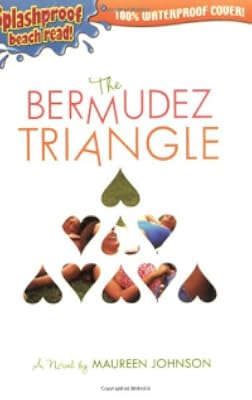
The Bermudez Triangle
by Maureen Johnson
On This Page
Description
The friendship of three high school girls and their relationships with their friends and families are tested when two of them fall in love with each other.Tags
Recommendations















Member Recommendations

Member Reviews
Okay, if you read any blog that remotely talks about YA news (and even some that don’t), you’ve probably heard that a book by the lovely Maureen Johnson got banned in some school in the USA. After I finished 13 Little Blue Envelopes I said that I would read more books by Johnson, but I didn’t expect it to be quite this soon. However, once I heard that The Bermudez Triangle got banned, I put aside what I was reading, and took this out from the library. I had to see what all the fuss was about. I already thought book bannings were stupid. Now I’m completely annoyed with people who challenge books. Utterly and thoroughly annoyed.
Because this was one of the truest books I’ve read about high school life in a long time. It’s a show more really well written book, and I couldn’t help but being completely drawn into the lives of the three girls in the book. I couldn’t help the fact that I totally empathized with everything the characters were feeling. I couldn’t help being heartbroken, and excited and totally touched by what happened to the characters in this book.
See, The Bermudez Triangle is about 3 girls. The summer before their senior year, Nina goes away to a summer program at Standord, while Mel and Avery spend their summer working. One morning, after a night of partying, Mel and Avery kiss, and their friendship moves to the next level. This book explores how relationships effect friendship – between two friends who start a relationship, between friends where one side becomes distant due to a new relationship, what happens after two people who were friends first split up… and it is all so real. Who couldn’t relate to anything any of these girls are feeling?
Yes, one of the protagonists is a lesbian. Yes, some of the characters kiss. A lot YA books have characters kissing, and compared to a good number of other YA books, The Bermudez Triangle is extremely tame. So we know WHY exactly this book got challenged, and quite frankly I find that rather disturbing. And I’m going to stop now before this turns into a full blown rant. show less
Because this was one of the truest books I’ve read about high school life in a long time. It’s a show more really well written book, and I couldn’t help but being completely drawn into the lives of the three girls in the book. I couldn’t help the fact that I totally empathized with everything the characters were feeling. I couldn’t help being heartbroken, and excited and totally touched by what happened to the characters in this book.
See, The Bermudez Triangle is about 3 girls. The summer before their senior year, Nina goes away to a summer program at Standord, while Mel and Avery spend their summer working. One morning, after a night of partying, Mel and Avery kiss, and their friendship moves to the next level. This book explores how relationships effect friendship – between two friends who start a relationship, between friends where one side becomes distant due to a new relationship, what happens after two people who were friends first split up… and it is all so real. Who couldn’t relate to anything any of these girls are feeling?
Yes, one of the protagonists is a lesbian. Yes, some of the characters kiss. A lot YA books have characters kissing, and compared to a good number of other YA books, The Bermudez Triangle is extremely tame. So we know WHY exactly this book got challenged, and quite frankly I find that rather disturbing. And I’m going to stop now before this turns into a full blown rant. show less
This is the one of the stronger Maureen Johnson books, and one of the ones I typically point people in the direction of starting her books. It’s also very telling that the cover synopsis for this, as with most of Maureen Johnson’s other books, put such a heavy emphasis on the romance aspect of the story, when it really only plays a minor role in the story.
Bermudez Triangle is one of the few were the romance is a major role in the story, but it’s less focused on the puppy love ideology of a lot of romance YA. So much of this is about growing up and moving on from high school and dealing with personal identity for the first time. And I think that Johnson really pulls it off without being too heavy-handed or cloying.
What works here show more is the dynamic between the titular Triangle. Mel, Avery and Nina really do come off as girls who would have been friends since they were little, and don’t really fall victim to being just friends of convenience. And they still have their own interests and lives without each other—I like the fact that Avery can’t make fun of school council and prep meetings because Nina’s a member, and she doesn’t want to hurt her friends’ feelings. But when the worst happens, they’re always finding one another and relying on each other. I really feel a lot with Nina, being stuck in the middle between Mel and Avery while her feelings are hurt from all of the secrets from the summer.
The sexual identity question is also handled really well. A lot of the coming out drama does feel like the standard discovery and subsequent grappling with being “gay,” but it doesn’t come off as stereotypical or overplayed. I liked that Avery doesn’t know if she’s really gay or bi or even just experimenting for the hell of it. I even liked that she has reservations about coming out and that her mind tends to jump to the stereotypical associations about being a lesbian, including having to listen to k.d. Lang and the Indigo Girls. (And that when such stereotypes are brought up to Mel, her reaction is “Who’s that?”) And completely illustrating my point above, when Mel’s mother is verbally attacking the girls for their relationship, Avery’s the one who jumps to Mel’s defense. It really shows how strong the bond is between the girls, even in times of crisis.
Even though Mel is a lot more comfortable in her newfound identity, I love that she’s similarly struggling with coming out. She desperately wants to show off Avery and the fact that they’re girlfriends, but she’s afraid to admit it to her own family. I like to think that she understands the gravity of the situation more than Avery claims, but Mel wants to claim her identity, despite those reservations. She’s pretty much my favorite character in the whole thing.
In regards to her friends, Nina does have a much stronger dynamic. She’s the one who first goes away, and does something outside of her friends, but doesn’t know how to deal with the new dynamic after the summer. She definitely does feel betrayed by Mel and Avery, but honestly doesn’t know how to deal with it. I’m not as big of a fan of her romance subplot, but I like that it does illustrate the problems with a young, long-distance relationship. I also like that there’s a genuine question left in the air near the end about if she will get back with Steve or not. And while I love Parker and his fantastic, S-stealing antics, his motives for being with Nina came off as little too “Nice Guy” argument, which kinda rubbed me the wrong way.
The other thing I love about this book is the normality and reality of everything. There’s no overdone high school clique setting, there’s no real stereotypical small town characters, no quirky people to liven things up. It feels like a story that could happen almost anywhere. I even really like the scenes with Avery and Mel at their waitressing job, as it reminds of almost every job I’ve had. (Minus some of the sabotage scenes. But everything else, oh God, the stories.)
This is definitely more dramatic than most of the other entries in Johnson’s bibliography, but it still manages to be extremely funny and touching at the same time. I would rank this near my automatic go-to reads for her works, especially if you’re just starting out on Maureen Johnson. show less
Bermudez Triangle is one of the few were the romance is a major role in the story, but it’s less focused on the puppy love ideology of a lot of romance YA. So much of this is about growing up and moving on from high school and dealing with personal identity for the first time. And I think that Johnson really pulls it off without being too heavy-handed or cloying.
What works here show more is the dynamic between the titular Triangle. Mel, Avery and Nina really do come off as girls who would have been friends since they were little, and don’t really fall victim to being just friends of convenience. And they still have their own interests and lives without each other—I like the fact that Avery can’t make fun of school council and prep meetings because Nina’s a member, and she doesn’t want to hurt her friends’ feelings. But when the worst happens, they’re always finding one another and relying on each other. I really feel a lot with Nina, being stuck in the middle between Mel and Avery while her feelings are hurt from all of the secrets from the summer.
The sexual identity question is also handled really well. A lot of the coming out drama does feel like the standard discovery and subsequent grappling with being “gay,” but it doesn’t come off as stereotypical or overplayed. I liked that Avery doesn’t know if she’s really gay or bi or even just experimenting for the hell of it. I even liked that she has reservations about coming out and that her mind tends to jump to the stereotypical associations about being a lesbian, including having to listen to k.d. Lang and the Indigo Girls. (And that when such stereotypes are brought up to Mel, her reaction is “Who’s that?”) And completely illustrating my point above, when Mel’s mother is verbally attacking the girls for their relationship, Avery’s the one who jumps to Mel’s defense. It really shows how strong the bond is between the girls, even in times of crisis.
Even though Mel is a lot more comfortable in her newfound identity, I love that she’s similarly struggling with coming out. She desperately wants to show off Avery and the fact that they’re girlfriends, but she’s afraid to admit it to her own family. I like to think that she understands the gravity of the situation more than Avery claims, but Mel wants to claim her identity, despite those reservations. She’s pretty much my favorite character in the whole thing.
In regards to her friends, Nina does have a much stronger dynamic. She’s the one who first goes away, and does something outside of her friends, but doesn’t know how to deal with the new dynamic after the summer. She definitely does feel betrayed by Mel and Avery, but honestly doesn’t know how to deal with it. I’m not as big of a fan of her romance subplot, but I like that it does illustrate the problems with a young, long-distance relationship. I also like that there’s a genuine question left in the air near the end about if she will get back with Steve or not. And while I love Parker and his fantastic, S-stealing antics, his motives for being with Nina came off as little too “Nice Guy” argument, which kinda rubbed me the wrong way.
The other thing I love about this book is the normality and reality of everything. There’s no overdone high school clique setting, there’s no real stereotypical small town characters, no quirky people to liven things up. It feels like a story that could happen almost anywhere. I even really like the scenes with Avery and Mel at their waitressing job, as it reminds of almost every job I’ve had. (Minus some of the sabotage scenes. But everything else, oh God, the stories.)
This is definitely more dramatic than most of the other entries in Johnson’s bibliography, but it still manages to be extremely funny and touching at the same time. I would rank this near my automatic go-to reads for her works, especially if you’re just starting out on Maureen Johnson. show less
It's partly because I'm a librarian (a.k.a. information rights ninja) and partly just that I'm still kind of a contrary teenager on the inside, but for whatever reason I can't seem to pass up a book that people want to ban. The controversy over The Bermudez Triangle has been going on for some time, but I just happened to read about it recently when I started following Maureen Johnson's blog. Naturally I had to run right out and get myself a copy, particularly since I've been enjoying her posts so much. Also, it seemed weird that I hadn't gotten around to reading any of her books considering how popular she is.
I'm glad I started with this one, because it's truly excellent. It's a story about three best friends, Nina, Mel and Avery. show more They've been inseparable since they were little girls, but the summer before their senior year of high school Nina goes away to a leadership camp leaving Mel and Avery at home. While Nina is having her first serious romance with a guy she meets at camp, Mel and Avery start experimenting with dating each other. Mel has long suspected she was gay but hadn't ever been able to express it before, while Avery is completely shocked to realize she's attracted to another girl. When Nina returns from camp the ensuing awkwardness threatens to break up the triangle, especially once Avery comes to the conclusion that she's not really gay after all. There were so many important lessons in this book: People don't always fit into neat categories (gay/straight, friend/girlfriend), there are many different ways to love someone, relationships of all kinds are messy, everybody gets confused and makes mistakes from time to time, and most of all, the importance of forgiveness. Frankly, these are all things I would want teens to read about. Put all that together with extremely well-written characters, hilarious dialogue and smart pacing and you have a great book. I was very impressed with it, and I'll be reading more of Maureen Johnson's novels. show less
I'm glad I started with this one, because it's truly excellent. It's a story about three best friends, Nina, Mel and Avery. show more They've been inseparable since they were little girls, but the summer before their senior year of high school Nina goes away to a leadership camp leaving Mel and Avery at home. While Nina is having her first serious romance with a guy she meets at camp, Mel and Avery start experimenting with dating each other. Mel has long suspected she was gay but hadn't ever been able to express it before, while Avery is completely shocked to realize she's attracted to another girl. When Nina returns from camp the ensuing awkwardness threatens to break up the triangle, especially once Avery comes to the conclusion that she's not really gay after all. There were so many important lessons in this book: People don't always fit into neat categories (gay/straight, friend/girlfriend), there are many different ways to love someone, relationships of all kinds are messy, everybody gets confused and makes mistakes from time to time, and most of all, the importance of forgiveness. Frankly, these are all things I would want teens to read about. Put all that together with extremely well-written characters, hilarious dialogue and smart pacing and you have a great book. I was very impressed with it, and I'll be reading more of Maureen Johnson's novels. show less
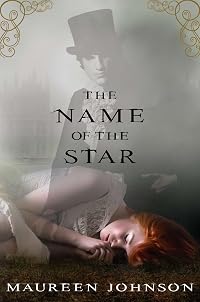
After reading 13 Little Blue Envelopes and The Last Blue Envelope by Maureen Johnson, then being thrilled by her newest novel, The Name of the Star (not to be confused with her pal John Green’s novel, The Fault in our Stars), I decided to pick up some of her other works, which lead me to The Bermudez Triangle.
The story begins with three friends going out for dinner, simple enough. It’s the last time they will all be together until Nina, returns from her summer course at Stanford—Avery and Mel will be staying at home, working.
The bulk of the story really centers around relationships - from Nina and Steve, Avery and Mel to Nina, Avery and Mel, each relationship is different and complicated and I thought that Maureen managed to show more capture the emotions of each of her characters with perfection. As a reader, I felt the butterflies when Steve admits that he’s been trying to get Nina to notice him, the hesitance as Avery tries not to put labels to her relationship with Mel, the betrayal that Nina feels in the changing room when she walks in on Mel and Avery kissing, and so much more.
The great thing about this story is that it explores the fact that relationships can be messy. It doesn’t necessarily tie things up in a neat bow, but it explores the complexity of friendships, dating relationships, and even a bit of family dynamics - all in a very realistic manner.
The one flaw for me was that the story dragged a little in the middle, however, the relationships kept me intrigued enough to push through. show less
The story begins with three friends going out for dinner, simple enough. It’s the last time they will all be together until Nina, returns from her summer course at Stanford—Avery and Mel will be staying at home, working.
The bulk of the story really centers around relationships - from Nina and Steve, Avery and Mel to Nina, Avery and Mel, each relationship is different and complicated and I thought that Maureen managed to show more capture the emotions of each of her characters with perfection. As a reader, I felt the butterflies when Steve admits that he’s been trying to get Nina to notice him, the hesitance as Avery tries not to put labels to her relationship with Mel, the betrayal that Nina feels in the changing room when she walks in on Mel and Avery kissing, and so much more.
The great thing about this story is that it explores the fact that relationships can be messy. It doesn’t necessarily tie things up in a neat bow, but it explores the complexity of friendships, dating relationships, and even a bit of family dynamics - all in a very realistic manner.
The one flaw for me was that the story dragged a little in the middle, however, the relationships kept me intrigued enough to push through. show less
I enjoyed this a great deal. I was expecting it to be a book about young lesbians, but it turned out to be more of a book about three friends trying to figure out who they were, who they were becoming, and how to deal with it. How to deal with new love, with collapsing relationships, with broken hearts, with trying to get back on the horse. Maureen Johnson handled all of this beautifully, I think. Very good book. This book offers a look at things that everyone -- gay or straight or bi -- has gone through or will go through eventually.
Oh, for what it's worth, this book is no longer called "The Bermudez Triangle." They've changed the title to "On the Count of Three." Same book, though.
Oh, for what it's worth, this book is no longer called "The Bermudez Triangle." They've changed the title to "On the Count of Three." Same book, though.
If you know a teen who is struggling with homosexuality, or has a friend who is struggling to figure out their sexual identity -- and who may (or may not) find themselves ridiculed or treated differently by their friends because of it -- this is the book to hand over. Particularly to teen girls.
The story centers around three high school girls who have been friends for as long as they can remember, and when one of the three goes away for the summer, the other two fall into a "relationship" that will eventually test the boundaries of their friendship. One of the girls knows she likes other girls, but doesn't know how to tell anyone. One of the girls has no idea if she likes guys or girls or whatever, and is scared that someone will find show more out she's 'dating' her long-time friend. The other girl likes boys... so eventually, when all 3 reunite after the summer, conflict is inevitable and the friendship is brought to the breaking point.
That's not unexpected, once you learn the plot of the book. What I didn't expect was Johnson's sensitive treatment of the subject and her skill in weaving these different girls' experiences (ie. "who am I? is everyone going to hate me?") together in a coherent and believable way.
And I'm happy to say she doesn't wrap it all up in a neat little ball at the end, which I appreciated -- it's more realistic that way. But altogether, it's a very well done story of teenage girls figuring out who they are in relationship to themselves, their friends, their parents (very important) and their romantic interests.
I can't give the book 4 stars simply because... I thought the story dragged a bit at points, and there were a few things left unresolved that I thought *could* have been addressed and still left the ending the way it was. However, all in all? A great resource for questioning teens. show less
The story centers around three high school girls who have been friends for as long as they can remember, and when one of the three goes away for the summer, the other two fall into a "relationship" that will eventually test the boundaries of their friendship. One of the girls knows she likes other girls, but doesn't know how to tell anyone. One of the girls has no idea if she likes guys or girls or whatever, and is scared that someone will find show more out she's 'dating' her long-time friend. The other girl likes boys... so eventually, when all 3 reunite after the summer, conflict is inevitable and the friendship is brought to the breaking point.
That's not unexpected, once you learn the plot of the book. What I didn't expect was Johnson's sensitive treatment of the subject and her skill in weaving these different girls' experiences (ie. "who am I? is everyone going to hate me?") together in a coherent and believable way.
And I'm happy to say she doesn't wrap it all up in a neat little ball at the end, which I appreciated -- it's more realistic that way. But altogether, it's a very well done story of teenage girls figuring out who they are in relationship to themselves, their friends, their parents (very important) and their romantic interests.
I can't give the book 4 stars simply because... I thought the story dragged a bit at points, and there were a few things left unresolved that I thought *could* have been addressed and still left the ending the way it was. However, all in all? A great resource for questioning teens. show less
An article about efforts to ban this book in Oklahoma: http://www.examiner-enterprise.com/articles/2007/05/10/community/com804.txt
My response: I can't claim to be shocked that this book was challenged, since it does deal with teenage girls questioning and discovering their sexuality, but as always I'm disappointed when people choose to bury their heads in the sand rather than accepting that people are different, and choosing to recognize a book that deals with real issues in a sensitive and realistic manner.
I thought that Johnson approached her subject matter in an interesting way. Rather than just focusing on the one character who winds up coming out, and her struggle to come to terms with her own sexuality, Johnson sets her story show more within a group of 3 girls. When one of the girls goes away for the summer before their senior year of high school, the other two find themselves in a "more than friends" situation. Johnson sympathetically relates the story of any two people who try to negotiate going from being friends to having a romantic relationship, and possibly back again. Teenagers can definitely relate to this story, regardless of gender or sexual orientation. Added to that well-drawn story, Johnson also gives us the third girl in the triangle, who comes home from her summer away and finds herself in the middle of the complicated relationship of her two best friends, while at the same time dealing with issues surrounding her own new long-distance relationship.
One criticism I have is that the characters weren't all that well-drawn. I had trouble at the beginning distinguishing the three main characters, and even after I could remember who was who, they all seemed a little fuzzy around the edges. None of the secondary characters were particularly clear either. In a book that is largely character driven, I wanted to get a better sense of the characters outside of the particular conflicts they were facing. show less
My response: I can't claim to be shocked that this book was challenged, since it does deal with teenage girls questioning and discovering their sexuality, but as always I'm disappointed when people choose to bury their heads in the sand rather than accepting that people are different, and choosing to recognize a book that deals with real issues in a sensitive and realistic manner.
I thought that Johnson approached her subject matter in an interesting way. Rather than just focusing on the one character who winds up coming out, and her struggle to come to terms with her own sexuality, Johnson sets her story show more within a group of 3 girls. When one of the girls goes away for the summer before their senior year of high school, the other two find themselves in a "more than friends" situation. Johnson sympathetically relates the story of any two people who try to negotiate going from being friends to having a romantic relationship, and possibly back again. Teenagers can definitely relate to this story, regardless of gender or sexual orientation. Added to that well-drawn story, Johnson also gives us the third girl in the triangle, who comes home from her summer away and finds herself in the middle of the complicated relationship of her two best friends, while at the same time dealing with issues surrounding her own new long-distance relationship.
One criticism I have is that the characters weren't all that well-drawn. I had trouble at the beginning distinguishing the three main characters, and even after I could remember who was who, they all seemed a little fuzzy around the edges. None of the secondary characters were particularly clear either. In a book that is largely character driven, I wanted to get a better sense of the characters outside of the particular conflicts they were facing. show less
Members
- Recently Added By
Lists

Books Read in 2011
684 works; 19 members

Read in 2011
81 works; 1 member

Vlogbrothers Book Recommendations
307 works; 4 members
Author Information

51+ Works 32,258 Members
Maureen Johnson was born in Philadelphia, Pennsylvania on February 16, 1973. She received an undergraduate degree in writing from the University of Delaware and a MFA in writing from Columbia University School of the Arts. After college and before graduate school, she was the literary manager of a Philadelphia theater company. Her first book, The show more Key to the Golden Firebird, was published in 2004. Her other works include 13 Little Blue Envelopes, Devilish, Suite Scarlett, The Last Little Blue Envelope, and the Shades of London series. (Bowker Author Biography) show less
Awards and Honors
Notable Lists
Common Knowledge
- Canonical title
- The Bermudez Triangle
- Alternate titles
- On the Count of Three
- Original publication date
- 2004
- People/Characters
- Nina Bermudez; Avery Dekker; Melanie Forrest (Mel)
- Dedication
- For the other sides of the hexagon:
Shannon Skalski, Peggy Banaszek, Alexis Fisher,
Laurie Sharp, and Dr. Kirsten Rambo - First words
- The host stood at his podium under the pink-and-yellow neon arch and surveyed the three girls who had just come through the door.
- Last words
- (Click to show. Warning: May contain spoilers.)The three of them slipped ahead, tighly holding on to one another for support on the slick sidewalk, and let Parker and the girl lag conveniently behind.
Classifications
- Genres
- Teen, LGBTQ+, Fiction and Literature, Young Adult
- DDC/MDS
- 813.6 — Literature & rhetoric American literature in English American fiction in English 2000-
- LCC
- PZ7 .J634145 .B — Language and Literature Fiction and juvenile belles lettres Fiction and juvenile belles lettres Juvenile belles lettres
- BISAC
Statistics
- Members
- 1,051
- Popularity
- 24,637
- Reviews
- 34
- Rating
- (3.59)
- Languages
- Dutch, English
- Media
- Paper, Audiobook, Ebook
- ISBNs
- 14
- ASINs
- 4