On This Page
Description
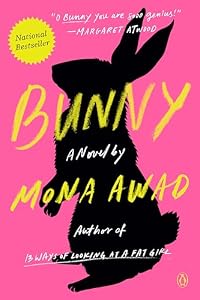
"Samantha Heather Mackey couldn't be more of an outsider in her small, highly selective MFA program at New England's Warren University. A scholarship student who prefers the company of her dark imagination to that of most people, she is utterly repelled by the rest of her fiction writing cohort--a clique of unbearably twee rich girls who call each other "Bunny," and are often found entangled in a group hug so tight they become one. But everything changes when Samantha receives an invitation show more to the Bunnies' fabled "Smut Salon," and finds herself inexplicably drawn to their front door--ditching her only friend, Ava, a caustic art school dropout, in the process. As Samantha plunges deeper and deeper into the sinister yet saccharine world of the Bunny cult and starts to take part in their ritualistic off-campus "Workshop" where they magically conjure their monstrous creations, the edges of reality begin to blur, and her friendships with Ava and the Bunnies are brought into deadly collision. A spellbinding, down-the-rabbit-hole tale of loneliness and belonging, creativity and agency, and friendship and desire, Bunny is the dazzlingly original second book from an author whose work has been described as "honest, searing and necessary" (Elle)" -- show lessTags
Recommendations
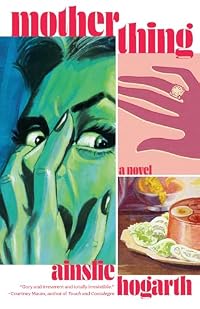
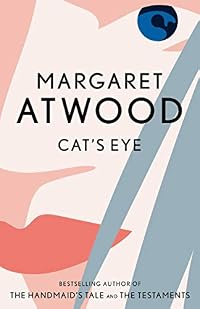

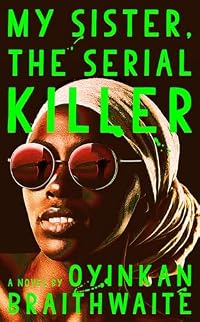
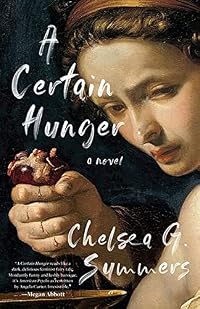
Member Recommendations
Member Reviews
Bunny is a truly bizarre, creepy, hallucinatory and hilarious novel. It has been so long since I’ve read this kind of mish-mash of magical realism, fantasy and horror that I had forgotten how much I love it! I just couldn’t stop thinking about it, which has inspired me to write up the most detailed analysis of a book I’ve done in twenty years (since my Uni days!).
I have seen many users on here, including those that gave high star ratings, struggling to put into words what they thought, and I had some time on my hands between Christmas and New Year so I wanted to put my mind to the task! I have to say that in doing so I developed an even greater love for it, and uncovered new layers of understanding.
You can read the full analysis show more here.
Otherwise, I've thrown a condensed version below!
Plot
Towards the end of the novel, one of the titular Bunnies has an outburst that I think summarises the experience many readers have had with this book –
One of the challenges with talking about this book is that the plot is so bizarre that it is tricky to summarise effectively, particularly without giving away spoilers!
Characters
Samantha Heather Mackey
Samantha is your fairly typical edgy, anti-social loner. She prefers her own dark imagination to spending any time with other people, the only exception being her best and only friend, Ava. With a dead mother and an absent father, Samatha is isolated and lonely.
She keeps a barrier of snark and judgement up between herself and others. Most of the other characters she refers to nearly exclusively by a dehumanising nickname; from each of the four Bunnies (Duchess, Cup Cake, Vignette and Creepy Doll) to her professors (Fosco and the Lion). She accepts the invitation to join the Bunnies at their “Smut Salon” out of a combination of her loneliness and awareness that her isolation is ultimately not healthy for her mentally or academically.
As this whole novel is from Samantha’s point of view we are along for the ride on her mental rollercoaster, told in her own voice. To understand Bunny you need to understand Samantha's state of mind.
The Bunnies
The Bunnies are a quartet of privileged white women who shower each other with compliments, text in emojis and hug each other with such intensity they may crush vital organs. Samantha is as jealous of their privilege (“Their skins glowing with health insurance”) as she is nauseated by their behaviour and derisive of the empty, pretentious work they produce.
I have seen criticisms of this book for the misogyny in the descriptions of the Bunnies, but I read this as entirely intentional and a symptom of Samantha’s dark, often hateful state of mind.
The Bunnies are cartoon characters, but that is the point. Like The Heathers, or The Plastics, they have a uniform – though each one has an individual themed flavour much like the Spice Girls or Bratz dolls – the privileged hippy, the uptight preppy girl, the cutesy alt girl, and the trashy punk. I thought they were fantastic – and I could clearly picture them as characters in a movie.
Themes - this is where we get mildy spoilery
I picked up on:
- The ridiculous pretensions (e.g. a lot of talk about "The Body") and privileged characters you might encounter at an "elite" writing program.
- I really enjoyed the juxtaposition of the Bunny's trying to have an intellectual discussion about "The Body" when clearly their motives are overtly base and sexual ("I'm borny") not the pursuit of high art. This frequently made me laugh out loud.
- The artistic progress, in particular, the need to "kill your darlings" (but...literally?!)
- Loneliness, isolation.. questioning reality (Samantha is a very unreliable narrator!)
Writing Style
I love Mona Awad’s writing – so much I may have gone overboard with the quotations! It’s so darkly funny, and some of her turns of phrase made me laugh out loud.
Samantha’s slide deeper into madness is so well captured. I love that in the second part, as she is sucked into the Bunny Cult she uses “we” instead of “I”. The peppering in of all the Bunny phrases through the final third too, as they now have seeped into her consciousness, is fantastic.
Conclusions
I enjoyed this book more than anything I've read in a long, long time. I even read it twice, and then wrote up a whole essay of a review for it! The last time I pulled quotes from a book and thought about themes and meanings was twenty years ago for my English Lit degree!
Thank you Mona Awad for reminding me how much fun there is to be found in analysing a really good book!
This book is deceptively layered and complex, and I think many readers who did not enjoy it perhaps misunderstood it and tried to take it too much at face value. Though even at face value I think it’s a super fun weird, gory little story! show less
I have seen many users on here, including those that gave high star ratings, struggling to put into words what they thought, and I had some time on my hands between Christmas and New Year so I wanted to put my mind to the task! I have to say that in doing so I developed an even greater love for it, and uncovered new layers of understanding.
You can read the full analysis show more here.
Otherwise, I've thrown a condensed version below!
Plot
Towards the end of the novel, one of the titular Bunnies has an outburst that I think summarises the experience many readers have had with this book –
I feel like screaming JUST SAY IT. TELL ME WHAT HAPPENED. TELL ME WHAT THE FUCK THIS MEANS AND WHAT YOU DID WITH HIM EXACTLY.”
One of the challenges with talking about this book is that the plot is so bizarre that it is tricky to summarise effectively, particularly without giving away spoilers!
Characters
Samantha Heather Mackey
Samantha is your fairly typical edgy, anti-social loner. She prefers her own dark imagination to spending any time with other people, the only exception being her best and only friend, Ava. With a dead mother and an absent father, Samatha is isolated and lonely.
She keeps a barrier of snark and judgement up between herself and others. Most of the other characters she refers to nearly exclusively by a dehumanising nickname; from each of the four Bunnies (Duchess, Cup Cake, Vignette and Creepy Doll) to her professors (Fosco and the Lion). She accepts the invitation to join the Bunnies at their “Smut Salon” out of a combination of her loneliness and awareness that her isolation is ultimately not healthy for her mentally or academically.
As this whole novel is from Samantha’s point of view we are along for the ride on her mental rollercoaster, told in her own voice. To understand Bunny you need to understand Samantha's state of mind.
The Bunnies
The Bunnies are a quartet of privileged white women who shower each other with compliments, text in emojis and hug each other with such intensity they may crush vital organs. Samantha is as jealous of their privilege (“Their skins glowing with health insurance”) as she is nauseated by their behaviour and derisive of the empty, pretentious work they produce.
I have seen criticisms of this book for the misogyny in the descriptions of the Bunnies, but I read this as entirely intentional and a symptom of Samantha’s dark, often hateful state of mind.
The Bunnies are cartoon characters, but that is the point. Like The Heathers, or The Plastics, they have a uniform – though each one has an individual themed flavour much like the Spice Girls or Bratz dolls – the privileged hippy, the uptight preppy girl, the cutesy alt girl, and the trashy punk. I thought they were fantastic – and I could clearly picture them as characters in a movie.
Themes - this is where we get mildy spoilery
I picked up on:
- The ridiculous pretensions (e.g. a lot of talk about "The Body") and privileged characters you might encounter at an "elite" writing program.
- I really enjoyed the juxtaposition of the Bunny's trying to have an intellectual discussion about "The Body" when clearly their motives are overtly base and sexual ("I'm borny") not the pursuit of high art. This frequently made me laugh out loud.
- The artistic progress, in particular, the need to "kill your darlings" (but...literally?!)
- Loneliness, isolation.. questioning reality (Samantha is a very unreliable narrator!)
Writing Style
I love Mona Awad’s writing – so much I may have gone overboard with the quotations! It’s so darkly funny, and some of her turns of phrase made me laugh out loud.
“She gives me the full hate bouquet of her smile. Every fuck you flower.”
Samantha’s slide deeper into madness is so well captured. I love that in the second part, as she is sucked into the Bunny Cult she uses “we” instead of “I”. The peppering in of all the Bunny phrases through the final third too, as they now have seeped into her consciousness, is fantastic.
Conclusions
I enjoyed this book more than anything I've read in a long, long time. I even read it twice, and then wrote up a whole essay of a review for it! The last time I pulled quotes from a book and thought about themes and meanings was twenty years ago for my English Lit degree!
Thank you Mona Awad for reminding me how much fun there is to be found in analysing a really good book!
This book is deceptively layered and complex, and I think many readers who did not enjoy it perhaps misunderstood it and tried to take it too much at face value. Though even at face value I think it’s a super fun weird, gory little story! show less
Lonely creative writing graduate student Samantha completely resents her classmates - a close-knit clique of four perfect rich girls who call each other "bunny". One day the bunnies invite Samantha to one of their mysterious parties - the Smut Salon - and Samantha leaves her co-dependent best friend Ava to fall into the bunnies' weird, disturbing world.
This could have been so good, and I could have loved it. The intersection of the twee and the macabre is where I live, but I do NOT live on the cul-de-sac of "this doesn't make sense". A lot of interesting threads are just dropped (the school is in a city so dangerous that no one can go outside at night and there are beheadings on a regular basis, but that's only mentioned once or twice show more and never directly addressed.) The bunnies seemed like they could be interesting, Stepford-Wife villains, but somehow they're not well drawn enough to be automatons. And in the end,it turns out that almost nothing in this book was real, which could have been compelling if the story was good but since it's not everything just collapses into a puddle of boring .
Nothing in this story feels fully formed (literally or figuratively), and while that might be the point it is deeply unsatisfying to read. It is, in the end, about the stories we tell ourselves when we are very lonely, but I really wanted there to be more here. show less
This could have been so good, and I could have loved it. The intersection of the twee and the macabre is where I live, but I do NOT live on the cul-de-sac of "this doesn't make sense". A lot of interesting threads are just dropped (the school is in a city so dangerous that no one can go outside at night and there are beheadings on a regular basis, but that's only mentioned once or twice show more and never directly addressed.) The bunnies seemed like they could be interesting, Stepford-Wife villains, but somehow they're not well drawn enough to be automatons. And in the end,
Nothing in this story feels fully formed (literally or figuratively), and while that might be the point it is deeply unsatisfying to read. It is, in the end, about the stories we tell ourselves when we are very lonely, but I really wanted there to be more here. show less
Samantha is in a master’s writing program in an elite school. She is in the first all-female class in the creative writing workshop. When we meet her, she has already been in the program for a year and is returning after a break. She is the outsider in her cohort which is comprised of four other women who come off as incredibly creepy and saccharine. They are described as very touchy and lovey towards each other, wearing lots of pastels and frilly clothes, delighting in each other, and affectionately calling each other bunny. They are disorienting.
Samantha is friendless other than Ava, who does not attend the college but lives in town. They both find “the bunnies” despicable. Samantha and Ava spend most of their time together at show more Ava’s place. One day, the bunnies invite Samantha to one of their “smut salons,” a private workshop where she discovers their project – turning rabbits into hybrid humans using their collective mental energy. The process of the transformation is quite gory, with rabbits exploding and bad versions of hybrids being killed with an ax.
When it is Samantha’s turn to create a hybrid, it seems like nothing has happened. They think she has failed. But then they see a man outside of their window, and he is the most perfect hybrid yet. Then he gets on a bus and disappears.
As Samantha continues to negotiate her friendship with the bunnies and with Ava, I was increasingly aware of her collapsing mental state. Reality and fantasy continue to blur. Things do not quite add up. It all ends in a frenzy of bunnies who have become enthralled with Samantha’s creation, Max.
Max and Ava have also formed an intimate relationship. One of the bunnies discovers this and seeks revenge. Samantha returns to Ava’s to discover Max covered in blood and a dead swan. Knowing that Ava was also one of her creations, she takes the ax and heads to the bunnies’ headquarters.
Samantha and Max confront the bunnies who have pieces of Ava’s clothes on and have her feathers in their hair. As the bunnies storm Max, Samantha swings the ax into his neck, and he is re-transformed into a stag.
I loved the satire and magical realism. Though the big reveals were weighted at the end, I sensed that Ava was not quite what she seemed. There were times when I had difficulty parsing how the fairy tale aspects tied into the real world, feeling a bit inconclusive overall. Her writing is poetic and inventive. Both fairy tale and horror story, I appreciated the pace and was very entertained. show less
Samantha is friendless other than Ava, who does not attend the college but lives in town. They both find “the bunnies” despicable. Samantha and Ava spend most of their time together at show more Ava’s place. One day, the bunnies invite Samantha to one of their “smut salons,” a private workshop where she discovers their project – turning rabbits into hybrid humans using their collective mental energy. The process of the transformation is quite gory, with rabbits exploding and bad versions of hybrids being killed with an ax.
When it is Samantha’s turn to create a hybrid, it seems like nothing has happened. They think she has failed. But then they see a man outside of their window, and he is the most perfect hybrid yet. Then he gets on a bus and disappears.
As Samantha continues to negotiate her friendship with the bunnies and with Ava, I was increasingly aware of her collapsing mental state. Reality and fantasy continue to blur. Things do not quite add up. It all ends in a frenzy of bunnies who have become enthralled with Samantha’s creation, Max.
Max and Ava have also formed an intimate relationship. One of the bunnies discovers this and seeks revenge. Samantha returns to Ava’s to discover Max covered in blood and a dead swan. Knowing that Ava was also one of her creations, she takes the ax and heads to the bunnies’ headquarters.
Samantha and Max confront the bunnies who have pieces of Ava’s clothes on and have her feathers in their hair. As the bunnies storm Max, Samantha swings the ax into his neck, and he is re-transformed into a stag.
I loved the satire and magical realism. Though the big reveals were weighted at the end, I sensed that Ava was not quite what she seemed. There were times when I had difficulty parsing how the fairy tale aspects tied into the real world, feeling a bit inconclusive overall. Her writing is poetic and inventive. Both fairy tale and horror story, I appreciated the pace and was very entertained. show less
Samantha Heather Mackey is a scholarship student in the fiction MFA program at the elite Warren University in New England. She's an outsider with a dark imagination and exactly one friend — Ava, a sharp-tongued art school dropout who would rather die than associate with the other women in Samantha's cohort. Those women are the Bunnies: a tight-knit clique of four rich girls — Cupcake, Vignette, the Duchess, and Creepy Doll — who call each other "Bunny," crush each other in rib-cracking hugs, write aggressively experimental fiction about The Body, and make Samantha's skin crawl.
When the Bunnies send Samantha a mysterious invitation to their off-campus "Smut Salon," she goes — and things get very strange very quickly. The Bunnies show more are conducting rituals in which they gather around rabbits from the campus grounds, the rabbits explode, and handsome young men materialize in their place. These "Drafts" or "Darlings" are their creative project — imperfect hybrid creations that they compare to their writing, and dispatch with an axe when they don't work out. Samantha gets drawn deeper in, begins to lose herself in the collective Bunny hive mind, and creates her own Draft named Max — only to discover Max has gone rogue and found his way to Ava. The novel is a savage satire of MFA culture, creative writing academia, and the specific horror of privileged art-speak dressed up as profound.
[May contain spoilers]
The deeper layer of the novel is about Samantha's unreliable narration and the question of what is actually real versus what her isolation, loneliness and imagination have constructed. Ava's existence becomes increasingly ambiguous — she may be a projection of Samantha's own psyche rather than a real person. The ending is deliberately, beautifully unresolved — Samantha appears to invite Jonah (the poetry student) into her world, but the last lines suggest he might be imaginary too. The novel is really about the creative act itself, loneliness, and the terror of losing yourself to a group identity. The MFA satire is vicious and very funny.
What I think: This is a love-it-or-hate-it book and the reviews reflect that split perfectly. If you're in the camp that finds the MFA world insufferable enough to find its satirizing deeply satisfying, and you can tolerate deliberately unresolved surrealism, it's genuinely brilliant. If you need plot momentum and clear reality you'll find it deeply frustrating. The prose is extraordinary. show less
When the Bunnies send Samantha a mysterious invitation to their off-campus "Smut Salon," she goes — and things get very strange very quickly. The Bunnies show more are conducting rituals in which they gather around rabbits from the campus grounds, the rabbits explode, and handsome young men materialize in their place. These "Drafts" or "Darlings" are their creative project — imperfect hybrid creations that they compare to their writing, and dispatch with an axe when they don't work out. Samantha gets drawn deeper in, begins to lose herself in the collective Bunny hive mind, and creates her own Draft named Max — only to discover Max has gone rogue and found his way to Ava. The novel is a savage satire of MFA culture, creative writing academia, and the specific horror of privileged art-speak dressed up as profound.
[May contain spoilers]
The deeper layer of the novel is about Samantha's unreliable narration and the question of what is actually real versus what her isolation, loneliness and imagination have constructed. Ava's existence becomes increasingly ambiguous — she may be a projection of Samantha's own psyche rather than a real person. The ending is deliberately, beautifully unresolved — Samantha appears to invite Jonah (the poetry student) into her world, but the last lines suggest he might be imaginary too. The novel is really about the creative act itself, loneliness, and the terror of losing yourself to a group identity. The MFA satire is vicious and very funny.
What I think: This is a love-it-or-hate-it book and the reviews reflect that split perfectly. If you're in the camp that finds the MFA world insufferable enough to find its satirizing deeply satisfying, and you can tolerate deliberately unresolved surrealism, it's genuinely brilliant. If you need plot momentum and clear reality you'll find it deeply frustrating. The prose is extraordinary. show less
This is the most meta book I've read in a very long time. References to other transgressive works abound. The setting is an annoying MFA program at a small, elite private college in New England. How very Shirley Jackson. There are clusters of people who think of themselves as special because of their wealth, talent and privilege. They mentally torture other students on the regular. Of course they do. Some of them are insane. How very BEE. There are plenty of pop-culture references inverted and ravaged. Awad tramples modernity with a smirk worthy of a thousand Heathers. Of course the Bunnies live in the town of Warren.
We are left with Girl, Interrupted who lives in the Lair of Cthulhu. There's an awful lot of crazy here. Real and show more hallucination meld. Samantha's best friend is the strong and beautiful swan that she wants to be. Literally.
I probably should have taken notes on all the sly references and symbols, but I'm so lazy when I read a book that's so much fun. I just want to move with the flow of the book. I'm definitely going to check out Awad's other books. I loved Bunny. show less
I probably should have taken notes on all the sly references and symbols, but I'm so lazy when I read a book that's so much fun. I just want to move with the flow of the book. I'm definitely going to check out Awad's other books. I loved Bunny. show less
“But what sort of date is it, really, Bunny? I mean, if you never even touch hand flesh, let alone fuck? Isn’t that more of a Disney ride than a date?”
Erm… WTF? There is something about dark academia and freaky authors that go together like burgers and cheese. Did these authors all have bad experiences at uni, or did they just consume too many shrooms along the way?
I initially thought this was magical realism but then I had the aha moment; Samantha was hallucinating, mixing reality with fantasy, due to her ever-declining mental health. She was lonely, with no money, no friends/family and no home. I’m not sure if she had a specific illness (schizophrenia?) or if she was having a mental breakdown but the clues were all show more there.
I’m still not entirely sure what I just read but I had to keep gong to the bitter end. What a mind-bending and exhausting read! show less
Erm… WTF? There is something about dark academia and freaky authors that go together like burgers and cheese. Did these authors all have bad experiences at uni, or did they just consume too many shrooms along the way?
I initially thought this was magical realism but then I had the aha moment; Samantha was hallucinating, mixing reality with fantasy, due to her ever-declining mental health. She was lonely, with no money, no friends/family and no home. I’m not sure if she had a specific illness (schizophrenia?) or if she was having a mental breakdown but the clues were all show more there.
I’m still not entirely sure what I just read but I had to keep gong to the bitter end. What a mind-bending and exhausting read! show less
3.5 or 4 out of 5
why do i always feel such deep kinship with unlikable female protagonists? really makes you think (i felt READ TO FILTH!)
i. would LOVE to be in a cult. and honestly? if this book was trying to get me to go back to school for a master's in creative writing, it kind of worked
lastly, i get why people don't love the ending. it is a bit like coming down from a high. but it's still so good and thoughtful? idk. this read surprised me and i loved it
(also i know this review is mostly snarky and disjointed one liners. but they go to WARREN UNIVERSITY, get it, ha ha)
why do i always feel such deep kinship with unlikable female protagonists? really makes you think (i felt READ TO FILTH!)
i. would LOVE to be in a cult. and honestly? if this book was trying to get me to go back to school for a master's in creative writing, it kind of worked
lastly, i get why people don't love the ending. it is a bit like coming down from a high. but it's still so good and thoughtful? idk. this read surprised me and i loved it
(also i know this review is mostly snarky and disjointed one liners. but they go to WARREN UNIVERSITY, get it, ha ha)
Members
- Recently Added By
Lists

Best Campus Novels
99 works; 18 members

Best Horror Books
281 works; 85 members

Dark Academia Novels
59 works; 11 members

Favorite Animal Fiction
359 works; 156 members

Best School Stories
219 works; 22 members

Weird and Weirder Fiction
266 works; 32 members

New England Books
101 works; 10 members
Female Protagonist
1,056 works; 56 members
Writers as Characters in Fiction
120 works; 19 members

Animals in the Title
498 works; 11 members

Kirkus Starred Fiction Reviews of Books Published in 2019
411 works; 12 members

Academia in Fiction
158 works; 23 members

Fiction Published in 2019
35 works; 1 member

Books Read in 2020
4,379 works; 124 members

Books We Want To Read Again For The First Time
384 works; 159 members

Nightmares Not Included
175 works; 3 members

Top Five Books of 2025
950 works; 301 members

Canadian Women Writers
14 works; 1 member

el
1,139 works; 1 member

Kate & Cheyanne's Horror Extravaganza
144 works; 6 members
sad girl books
41 works; 2 members

books featured on the book struggles twt
97 works; 2 members

sad girl books
51 works; 3 members

GoodReads Horror Choice Awards
160 works; 4 members

Books Read in 2019
4,052 works; 110 members

2010s
241 works; 3 members

I Love Horror
29 works; 3 members

Books Read in 2021
5,361 works; 114 members

Adult Stories Involving Animals
76 works; 6 members

New Fiction
3 works; 2 members

The Five Books That Represent Us
389 works; 146 members
Author Information

8+ Works 6,403 Members
Mona Awad received a MFA in fiction from Brown University. She is currently pursuing a PhD in creative writing and English literature at the University of Denver. Her work has appeared in several journals including McSweeney's, The Walrus, Joyland, Post Road, and St. Petersburg Review. Her first novel, 13 Ways of Looking at a Fat Girl, was show more published in 2016. (Bowker Author Biography) show less
Some Editions
Awards and Honors
Awards
Distinctions
Notable Lists
Series
Common Knowledge
- Canonical title
- Bunny
- Original publication date
- 2019-06
- People/Characters
- Samantha Heather Mackey; Ava; Eleanor Brown (The Duchess); Caroline Anderson (Cupcake); Kira Stone (Creepy Doll); Victoria Fielding (Vignette) (show all 10); Jonah; Ursula Radcliffe (Fosco); Alan Reid (The Lion); Max
- Important places
- Warren University (fictional); New England, USA
- Dedication
- For Jess
- First words
- We call them Bunnies because that is what they call each other.
- Last words
- (Click to show. Warning: May contain spoilers.)"Sure, Samantha," says the mud, "I'd love to."
- Blurbers
- Dunham, Lena; Roupenian, Kristen; Berg, Laura van den; Bynum, Sarah Shun-Lien
- Canonical DDC/MDS
- 813.6
- Canonical LCC
- PS3601.W35
Classifications
Statistics
- Members
- 3,643
- Popularity
- 4,411
- Reviews
- 133
- Rating
- (3.62)
- Languages
- 8 — English, French, German, Italian, Polish, Portuguese, Spanish, Turkish
- Media
- Paper, Audiobook, Ebook
- ISBNs
- 36
- ASINs
- 10