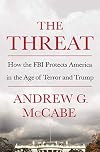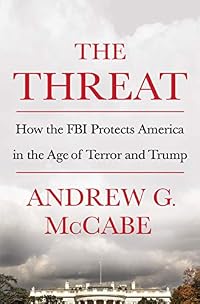
The Threat: How the FBI Protects America in the Age of Terror and Trump
by Andrew G. McCabe
On This Page
Description
The former deputy director of the FBI recounts his career; discusses how law enforcement battles terror threats, Russian crime, and attacks by the White House itself on the U.S. Constitution; and offers details of the events leading up to his firing by Donald Trump.Tags
Recommendations




Member Reviews
I have never before read a book written from the vantage point of a high ranking FBI operative and I found the book fascinating. It is both an autobiography and a meditation on the importance of keeping intelligence investigations outside the realm of partisan politics.
Initially, McCabe's writing is clear, almost brusque and to the point. He provides the reader with objective evidence, devoid of emotion. He describes his early life, career choices and case assignments. His resume is impressive. He investigated the Russian mafia and its links to the Kremlin, 9/11, Benghazi, the Boston bombing and the Clinton e-mail scandal prior to James Comey's firing and his appointment as acting FBI director.
McCabe's tone changes as he recounts his show more encounters with Trump, Sessions et.al. He describes FBI processes and procedures and argues passionately for the rule of law, based upon factual evidence. The detailed accounts of the behavior of Trump, Sessions, and their total disregard for all protocol is chilling. Standing up to Trump costs McCabe his job and his pension. He is a courageous man and his story and passionate plea needs to be heard. show less
Initially, McCabe's writing is clear, almost brusque and to the point. He provides the reader with objective evidence, devoid of emotion. He describes his early life, career choices and case assignments. His resume is impressive. He investigated the Russian mafia and its links to the Kremlin, 9/11, Benghazi, the Boston bombing and the Clinton e-mail scandal prior to James Comey's firing and his appointment as acting FBI director.
McCabe's tone changes as he recounts his show more encounters with Trump, Sessions et.al. He describes FBI processes and procedures and argues passionately for the rule of law, based upon factual evidence. The detailed accounts of the behavior of Trump, Sessions, and their total disregard for all protocol is chilling. Standing up to Trump costs McCabe his job and his pension. He is a courageous man and his story and passionate plea needs to be heard. show less
Andrew McCabe, at the time he Acting Director of the FBI, was fired on March 16, 2018, 26 hours before his scheduled retirement. The claimed reason was "lack of candor" in the Clinton email investigation. Even discounting McCabe's own account, it would appear that McCabe's "lack of candor" mostly consists of not being willing to pledge personal loyalty to Trump and support his preferred story in the face of the evidence, while not immediately rushing to say so while continuing to do his job properly, i.e., in compliance with the law, the Constitution, and FBI and DOJ policy, so that he could be more efficiently sidelined and forced out.
This is McCabe's story, of his career, and of the roughly the first eighteen months of the Trump show more administration and its scandals and creeping horrors. It's not really a book to enjoy. The sheer cruelty of firing McCabe 26 hours before his retirement--hard to defend even if the "lack of candor" ethical violations were real, given that they weren't a basis for prosecution--is just another example of who Trump is. Serious investigation of terrorism and organized crime compete for resources with Trump's attempts to use the FBI as his personal defensive operation and tool against his perceived enemies. McCabe gives us a fascinating look inside the FBI. At the same time, sometimes I was cheering him on and other times wanting to give him a whack upside the head. For instance, his own experiences ought to tell him that law-abiding citizens really do have sensible reasons for not being sanguine about federal law enforcement scooping up all of everyone's communications metadata (which is not, in fact, the content of your phone calls and messages, as he points out) or built-in backdoors to your phone and computer security software. Yes, there are times the government really does have legitimate reason to access your communications, and yes, good security hampers that, and yes, sorry, Mr. McCabe, but you were yourself struggling under the entirely legal supervision of people who should absolutely never be rusted with that kind of access. There's a real conflict between the legitimate needs of law enforcement, and the legitimate rights and concerns of ordinary, law-abiding Americans.
And that's before we even take note of the unavoidable reality that a built-in backdoor would, not might, but would be hacked by nefarious operators even if law enforcement were 100% composed of saints. Which, unfortunately, it not only isn't, but can't be. Nothing humans create is perfect.
But the meat of this book is of course the Clinton and Trump investigations, and the steadily increasing horror of fworking for a President who has no interest in and no understanding of the Constitution. It's not a fun book, but it is interesting and valuable.
Recommended.
I bought this audiobook. show less
This is McCabe's story, of his career, and of the roughly the first eighteen months of the Trump show more administration and its scandals and creeping horrors. It's not really a book to enjoy. The sheer cruelty of firing McCabe 26 hours before his retirement--hard to defend even if the "lack of candor" ethical violations were real, given that they weren't a basis for prosecution--is just another example of who Trump is. Serious investigation of terrorism and organized crime compete for resources with Trump's attempts to use the FBI as his personal defensive operation and tool against his perceived enemies. McCabe gives us a fascinating look inside the FBI. At the same time, sometimes I was cheering him on and other times wanting to give him a whack upside the head. For instance, his own experiences ought to tell him that law-abiding citizens really do have sensible reasons for not being sanguine about federal law enforcement scooping up all of everyone's communications metadata (which is not, in fact, the content of your phone calls and messages, as he points out) or built-in backdoors to your phone and computer security software. Yes, there are times the government really does have legitimate reason to access your communications, and yes, good security hampers that, and yes, sorry, Mr. McCabe, but you were yourself struggling under the entirely legal supervision of people who should absolutely never be rusted with that kind of access. There's a real conflict between the legitimate needs of law enforcement, and the legitimate rights and concerns of ordinary, law-abiding Americans.
And that's before we even take note of the unavoidable reality that a built-in backdoor would, not might, but would be hacked by nefarious operators even if law enforcement were 100% composed of saints. Which, unfortunately, it not only isn't, but can't be. Nothing humans create is perfect.
But the meat of this book is of course the Clinton and Trump investigations, and the steadily increasing horror of fworking for a President who has no interest in and no understanding of the Constitution. It's not a fun book, but it is interesting and valuable.
Recommended.
I bought this audiobook. show less
I suppose I am behind the times reading Andrew G. McCabe’s book about the start of the Russia investigation and his retaliatory firing while America has moved on to the Ukraine scandal and impeachment, but the roots of the the current scandal are found in the earlier one. The Threat puts that threat squarely in the character of Donald Trump.
Everyone knows the outline of the story. Andrew McCabe refused to turn the FBI into Trump’s personal law enforcement force to be used to protect his friends and punish his enemies and was fired, not long after James Comey, the acting director was fired. The firing was an act of authoritarian overreach by a president who thinks “L’etat est-il.”‘
McCabe tells his story chronologically from show more training to his early cases bringing RICO charges against the Russian mafia to counter-terrorism investigations and the Boston Marathon and Underwear Bomber cases. Throughout he displays a punctilious dedication to the Constitution and Bill of Rights—advocating for conducting interviews with terror suspects that focus on rappor-building and making connections and opposing torture.
It is also intriguing to read how they develop cases, explaining some of the terms of art for the kinds of cases and how they go about them. When it gets to 2016 and 2017, he covers familiar territory though it is simultaneously alarming and reassuring that he found Trump irrational, disinterested, and corrupt. Reassuring because I feel the same and alarming for the same reason—recognizing the danger such an unqualified, incompetent, ignorant, and immoral head of state represents.
FBI agents know how to organize their thoughts and produce a clear narrative. They do it daily writing up notes of meetings and interviews. This makes McCabe an excellent explainer, clear and linear. He is a good writer, though he does not adorn the text with embellishment.
I can’t say I really ‘enjoyed’ The Threat atbecause after all, who enjoys reading about a feckless president who is a clear and constant danger to our democracy and constitutional form of government. I also think McCabe particularizes the threat too much in Trump. He does mention the spread of propaganda masquerading as news and the hyper-partisanship that seeks nothing but partisan wins. However, he’s a Republican, or he was, and is prone to both-sides delusions that this is a bipartisan disease. It isn’t.
The Threat at St. Martin’s Press | Macmillan
Andrew G. McCabe – 60 Minutes interview
https://tonstantweaderreviews.wordpress.com/2019/11/24/9781250207579/ show less
Everyone knows the outline of the story. Andrew McCabe refused to turn the FBI into Trump’s personal law enforcement force to be used to protect his friends and punish his enemies and was fired, not long after James Comey, the acting director was fired. The firing was an act of authoritarian overreach by a president who thinks “L’etat est-il.”‘
McCabe tells his story chronologically from show more training to his early cases bringing RICO charges against the Russian mafia to counter-terrorism investigations and the Boston Marathon and Underwear Bomber cases. Throughout he displays a punctilious dedication to the Constitution and Bill of Rights—advocating for conducting interviews with terror suspects that focus on rappor-building and making connections and opposing torture.
It is also intriguing to read how they develop cases, explaining some of the terms of art for the kinds of cases and how they go about them. When it gets to 2016 and 2017, he covers familiar territory though it is simultaneously alarming and reassuring that he found Trump irrational, disinterested, and corrupt. Reassuring because I feel the same and alarming for the same reason—recognizing the danger such an unqualified, incompetent, ignorant, and immoral head of state represents.
FBI agents know how to organize their thoughts and produce a clear narrative. They do it daily writing up notes of meetings and interviews. This makes McCabe an excellent explainer, clear and linear. He is a good writer, though he does not adorn the text with embellishment.
I can’t say I really ‘enjoyed’ The Threat atbecause after all, who enjoys reading about a feckless president who is a clear and constant danger to our democracy and constitutional form of government. I also think McCabe particularizes the threat too much in Trump. He does mention the spread of propaganda masquerading as news and the hyper-partisanship that seeks nothing but partisan wins. However, he’s a Republican, or he was, and is prone to both-sides delusions that this is a bipartisan disease. It isn’t.
The Threat at St. Martin’s Press | Macmillan
Andrew G. McCabe – 60 Minutes interview
https://tonstantweaderreviews.wordpress.com/2019/11/24/9781250207579/ show less
The low rating has nearly everything to do with the reader and much less to do with the author. I should have realized from the book blurb and even the book's title that "The Threat" would focus far less on the Trump era and more on McCabe's career in the FBI. Truth be told, I'm just not overly interested in the "inside baseball" logistics of counter-terrorism efforts. Given this reality, McCabe's deep-dive into specific investigations was way too detailed for my tastes and resulted in me giving up about halfway through the work. Readers who are fascinated by the nuts and bolts of internal criminal probes would likely give "The Threat" favorable reviews.
The Threat: How the FBI Protects America... is less about FBI methods than McCabe's experiences living out his shortened career under Trump's Reign of Terror. There are revealing experiences here naturally reflecting those of effective predecessor James Comey in A Higher Loyalty: Truth, Lies, and Leadership. Between both we see a world where Trump goes so far to try and truncate FBI investigations that may get close to his campaign and business management they will turn a career-destroying vindication on FBI leadership.
It should be apparent to anyone considering this book that there will be political opinions expressed in it. The author, Andrew McCabe, was fired from his job as Assistant Director of the Federal Bureau of Investigation (FBI) by President Trump twenty-six hours before he was eligible to collect his FBI pension. So Mr. McCabe could be expected to have an ax to grind, feeling that his firing was petty and vindictive. But regardless of your political persuasion, I'd still recommend the book since so much of it centers on the author's FBI career and how the FBI operates. McCabe spent time investigating the Russian mafia, and then after 9/11 spent time doing counter-terrorism. He recounts a number of significant cases he was involved with, show more including the Boston Marathon terror attack, the underwear bomber investigation, Faisal Shahzad's failed car bombing in mid-town Manhattan, the Benghazi investigation, and most significant to this book, Secretary of State Hillary Clinton's e-mail investigation. Each story is interesting in its own right, and it's important to understand how dedicated, thorough, and professional the FBI is during its investigations.
It's only toward the end of the book, when McCabe discusses the FBI investigation of the Hillary Clinton e-mails that politics becomes more a topic of conversation. The investigation, taking place just before the 2016 Presidential election, became politicized, and it'd be impossible to write about the investigation without including the politics that went along with it. The investigation itself became a rallying cry among Republicans and Donald Trump during his campaign for President, yet defenders of Hillary Clinton felt vindicated when the FBI determined that there was no criminal wrongdoing by her. McCabe talked about the difficulties faced during the investigation, the results of the investigation, why no charges were brought, and the political fall-out from the last minute announcement by Director Comey of a new cache of e-mails discovered on ex-Congressman Anthony Weiner's computer.
The President was clearly irked by the fact that the FBI filed no criminal charges against Ms. Clinton, and that the FBI continued to probe Russia's interference in the 2016 Presidential Election. Director Comey paid the price for this, and was soon fired by the President. Mr. Comey wrote his own book (A Higher Loyalty) about his firing, which readers may also find interesting. Following the Comey firing, Andrew McCabe became Acting Director. It wasn't long before the president began to rage against Mr. McCabe as well, calling him as being biased because his wife had run for a senate seat in the State of Virginia as a Democrat. During her run for this office, Mrs. McCabe had accepted campaign contributions from Democratic sources close to the Clintons, and Mr. McCabe was seen wearing a t-shirt supporting his wife's candidacy. Even though Mr. McCabe had been a registered Republican and voted for Republican candidates throughout his career, the fact that his wife had run for State office as a Democrat was enough to make the president question McCabe's loyalty and ability to remain unbiased. McCabe was never able to overcome the President's opinion of his independence, and Trump had him fired a mere 26 hours before McCabe would have been eligible to collect his pension. That appears pretty vindictive, but not unheard of treatment of senior FBI officials. The President had also fired the previous FBI Director, James Comey, due in part to the FBI's on-going investigation into Russia's involvement and interference in the 2016 Presidential election. Immediately after the Comey firing, the President questioned McCabe as to why he had allowed the just-fired Director Comey, who was on Bureau business in Los Angeles at the time, to return to Washington, D.C. on an FBI airplane. McCabe explains that the plane had to be flown back anyway, that Comey was in Los Angeles on Bureau business, that Comey's detail had to be flown back, so it only seemed reasonable that Comey return to Washington with his team. Trump disagreed, and wanted to further punish Comey after firing him, by not allowing him on an FBI aircraft or being allowed to enter any FBI offices. Most bosses wouldn't be that vindictive after firing a subordinate, I would think.
Up to that point in the book, any criticisms of President Trump by Mr. McCabe are mostly just observations - observations however which are repeated over and over again by numerous other authors of other "Trump books". After the firing, Mr. McCabe's understandable anger becomes more obvious, and criticisms of President Trump become more pointed. Among McCabe's criticism are that Trump demands personal loyalty over Bureau policies and requirements, and that the President doesn't listen well to people who have opinions not consistent with his own. These same points are made by many others, both supporters and critics of the President. Perhaps among the most disheartening observation Mr. McCabe offered was when the Intelligence Agencies briefed the President on a missile test just conducted by North Korea, and Trump told the briefer that the test report couldn't be true, because Putin told him that North Korea didn't have that capability. This was one of several examples of the President discounting his own Intelligence Agencies if the intelligence briefs wasn't consistent with the President's existing biases and beliefs, and sided with the likes of Putin instead. Again, like many others, including supporters of the President, McCabe made note of Trump's tendency to dominate most conversations, talking all the time, not letting briefers complete their statements, etc. Also, he notes, that if the President asks a question, he often doesn't wait for an answer, and simply answers his own question with his own opinion on the subject. That makes offering a contrary position to the President even more difficult for most staffers. And McCabe's complaints about the President become more vociferous as Trump continued his Twitter attacks against himself, and his imminent firing became probable. In spite of McCabe's understandable dislike of the President who fired him, the book comes across as a credible look at FBI practices and interaction with the President. show less
It's only toward the end of the book, when McCabe discusses the FBI investigation of the Hillary Clinton e-mails that politics becomes more a topic of conversation. The investigation, taking place just before the 2016 Presidential election, became politicized, and it'd be impossible to write about the investigation without including the politics that went along with it. The investigation itself became a rallying cry among Republicans and Donald Trump during his campaign for President, yet defenders of Hillary Clinton felt vindicated when the FBI determined that there was no criminal wrongdoing by her. McCabe talked about the difficulties faced during the investigation, the results of the investigation, why no charges were brought, and the political fall-out from the last minute announcement by Director Comey of a new cache of e-mails discovered on ex-Congressman Anthony Weiner's computer.
The President was clearly irked by the fact that the FBI filed no criminal charges against Ms. Clinton, and that the FBI continued to probe Russia's interference in the 2016 Presidential Election. Director Comey paid the price for this, and was soon fired by the President. Mr. Comey wrote his own book (A Higher Loyalty) about his firing, which readers may also find interesting. Following the Comey firing, Andrew McCabe became Acting Director. It wasn't long before the president began to rage against Mr. McCabe as well, calling him as being biased because his wife had run for a senate seat in the State of Virginia as a Democrat. During her run for this office, Mrs. McCabe had accepted campaign contributions from Democratic sources close to the Clintons, and Mr. McCabe was seen wearing a t-shirt supporting his wife's candidacy. Even though Mr. McCabe had been a registered Republican and voted for Republican candidates throughout his career, the fact that his wife had run for State office as a Democrat was enough to make the president question McCabe's loyalty and ability to remain unbiased. McCabe was never able to overcome the President's opinion of his independence, and Trump had him fired a mere 26 hours before McCabe would have been eligible to collect his pension. That appears pretty vindictive, but not unheard of treatment of senior FBI officials. The President had also fired the previous FBI Director, James Comey, due in part to the FBI's on-going investigation into Russia's involvement and interference in the 2016 Presidential election. Immediately after the Comey firing, the President questioned McCabe as to why he had allowed the just-fired Director Comey, who was on Bureau business in Los Angeles at the time, to return to Washington, D.C. on an FBI airplane. McCabe explains that the plane had to be flown back anyway, that Comey was in Los Angeles on Bureau business, that Comey's detail had to be flown back, so it only seemed reasonable that Comey return to Washington with his team. Trump disagreed, and wanted to further punish Comey after firing him, by not allowing him on an FBI aircraft or being allowed to enter any FBI offices. Most bosses wouldn't be that vindictive after firing a subordinate, I would think.
Up to that point in the book, any criticisms of President Trump by Mr. McCabe are mostly just observations - observations however which are repeated over and over again by numerous other authors of other "Trump books". After the firing, Mr. McCabe's understandable anger becomes more obvious, and criticisms of President Trump become more pointed. Among McCabe's criticism are that Trump demands personal loyalty over Bureau policies and requirements, and that the President doesn't listen well to people who have opinions not consistent with his own. These same points are made by many others, both supporters and critics of the President. Perhaps among the most disheartening observation Mr. McCabe offered was when the Intelligence Agencies briefed the President on a missile test just conducted by North Korea, and Trump told the briefer that the test report couldn't be true, because Putin told him that North Korea didn't have that capability. This was one of several examples of the President discounting his own Intelligence Agencies if the intelligence briefs wasn't consistent with the President's existing biases and beliefs, and sided with the likes of Putin instead. Again, like many others, including supporters of the President, McCabe made note of Trump's tendency to dominate most conversations, talking all the time, not letting briefers complete their statements, etc. Also, he notes, that if the President asks a question, he often doesn't wait for an answer, and simply answers his own question with his own opinion on the subject. That makes offering a contrary position to the President even more difficult for most staffers. And McCabe's complaints about the President become more vociferous as Trump continued his Twitter attacks against himself, and his imminent firing became probable. In spite of McCabe's understandable dislike of the President who fired him, the book comes across as a credible look at FBI practices and interaction with the President. show less
The Threat: How The FBI Protects America in the Age of Terror and Trump
by Andrew G. McCabe
2019
St. Martins Press
4.5 / 5.0
McCabe, the former acting director of the FBI, replaced Comey after he was fired by Trump. McCabe explains how the FBI works as an institution, sharing the investigative techniques and how they gather and present intelligence. McCabe explains the process of applying to work for the DOJ and the FBI, his frustrations with the process. As well as explaining the origins of Russian organized crime, the Enterprise Theory, RICO, HIG and Midyear. Boston Marathon Bombing, ISIS, Edward Snowden and Jeff Sessions, Clinton emails and Trumps public attacks about his wife, Jill. It includes statements regarding the 25th Amendment show more and the confirmation of Deputy Attorney General Rod Rosenstein.
McCabe found Trump to be terrifying and alarming. an insecure bully who instills fear and anxiety to force others to his will, with a mob boss mentality. He calls Trump ¨a deliberate liar who will say and do whatever he pleases to get whatever he wants.¨ They definitely do not like each other.
This was one of the better tell-alls about this administration. McCabe is level-headed and straight-forward approach bring much civility to an administration out of control. McCabes biggest fears for our future are terrorism and the digital privacy protections being lost. show less
by Andrew G. McCabe
2019
St. Martins Press
4.5 / 5.0
McCabe, the former acting director of the FBI, replaced Comey after he was fired by Trump. McCabe explains how the FBI works as an institution, sharing the investigative techniques and how they gather and present intelligence. McCabe explains the process of applying to work for the DOJ and the FBI, his frustrations with the process. As well as explaining the origins of Russian organized crime, the Enterprise Theory, RICO, HIG and Midyear. Boston Marathon Bombing, ISIS, Edward Snowden and Jeff Sessions, Clinton emails and Trumps public attacks about his wife, Jill. It includes statements regarding the 25th Amendment show more and the confirmation of Deputy Attorney General Rod Rosenstein.
McCabe found Trump to be terrifying and alarming. an insecure bully who instills fear and anxiety to force others to his will, with a mob boss mentality. He calls Trump ¨a deliberate liar who will say and do whatever he pleases to get whatever he wants.¨ They definitely do not like each other.
This was one of the better tell-alls about this administration. McCabe is level-headed and straight-forward approach bring much civility to an administration out of control. McCabes biggest fears for our future are terrorism and the digital privacy protections being lost. show less
Members
- Recently Added By
Author Information
2 Works 411 Members
Common Knowledge
- Canonical title
- The Threat: How the FBI Protects America in the Age of Terror and Trump
- Original title
- The Threat: How the FBI Protects America in the Age of Terror and Trump
- Original publication date
- 2019-02
- People/Characters
- Andrew McCabe; Donald Trump
- Important places
- Boston, Massachusetts, USA; Benghazi, Libya
- Important events
- Boston Marathon bombing
- Dedication
- To Jill: my best friend, my inspiration, my strength, and my center.
Your love and support made this adventure possible. - First words
- Between the world of chaos and the world of order stands the rule of law. (Author's Note)
Application. Interview. Background check. (Prologue)
Whenever James Comey, the director of the Federal Bureau of Investigation, was gone from the office for an extended period, my position as deputy director effectively cast me in the role of acting director. - Last words
- (Click to show. Warning: May contain spoilers.)This confrontation is part of my story, too. (Author's Note)
(Click to show. Warning: May contain spoilers.)Preliminary results showed no indicators of deception. (Prologue)
(Click to show. Warning: May contain spoilers.)But that capacity is something that real Americans will never lose. - Original language
- English
Classifications
- Genres
- Politics and Government, General Nonfiction, Nonfiction, Biography & Memoir, History
- DDC/MDS
- 363.25092 — Society, Government, and Culture Social problems and social services Public Safety - Police, Crime Investigation Police services Criminal investigation & forensics
- LCC
- HV8144 .F43 .M386 — Social sciences Social pathology. Social and public welfare. Criminology Social pathology. Social and public welfare. Criminal justice administration Police. Detectves. Constabulary By region or country
- BISAC
Statistics
- Members
- 410
- Popularity
- 75,327
- Reviews
- 16
- Rating
- (3.96)
- Languages
- English, Italian
- Media
- Paper, Audiobook, Ebook
- ISBNs
- 6
- ASINs
- 3