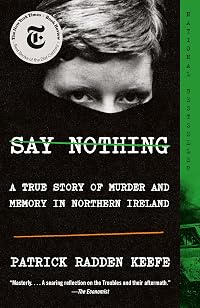
Say Nothing: A True Story of Murder and Memory in Northern Ireland
by Patrick Radden Keefe 
On This Page
Description
Documents the notorious abduction and murder of Jean McConville in 1972 Belfast, exploring how the case reflected the brutal conflicts of Northern Ireland and their ongoing repercussions. ""Meticulously reported, exquisitely written, and grippingly told, Say Nothing is a work of revelation." --David Grann, #1 New York Times bestselling author of Killers of the Flower Moon From award-winning New Yorker staff writer Patrick Radden Keefe, a stunning, intricate narrative about a notorious show more killing in Northern Ireland and its devastating repercussions In December 1972, Jean McConville, a thirty-eight-year-old mother of ten, was dragged from her Belfast home by masked intruders, her children clinging to her legs. They never saw her again. Her abduction was one of the most notorious episodes of the vicious conflict known as The Troubles. Everyone in the neighborhood knew the I.R.A. was responsible. But in a climate of fear and paranoia, no one would speak of it. In 2003, five years after an accord brought an uneasy peace to Northern Ireland, a set of human bones was discovered on a beach. McConville's children knew it was their mother when they were told a blue safety pin was attached to the dress--with so many kids, McConville always kept it handy for diapers or ripped clothes. Patrick Radden Keefe's mesmerizing book on the bitter conflict in Northern Ireland and its aftermath uses the McConville case as a starting point for the tale of a society wracked by a violent guerrilla war, a war whose consequences have never been reckoned with. The brutal violence seared not only people like the McConville children, but also I.R.A. members embittered by a peace that fell far short of the goal of a united Ireland, and left them wondering whether the killings they committed were not justified acts of war, but simple murders. From radical and impetuous I.R.A. terrorists--or volunteers, depending on which side one was on--such as Dolours Price, who, when she was barely out of her teens, was already planting bombs in London and targeting informers for execution, to the ferocious I.R.A. mastermind known as The Dark, to the spy games and dirty schemes of the British Army, to Gerry Adams, who negotiated the peace and denied his I.R.A. past, betraying his hardcore comrades--Say Nothing conjures a world of passion, betrayal, vengeance, and anguish"-- "A narrative about a notorious killing that took place in Northern Ireland during The Troubles and its devastating repercussions to this day"-- show lessTags
Recommendations










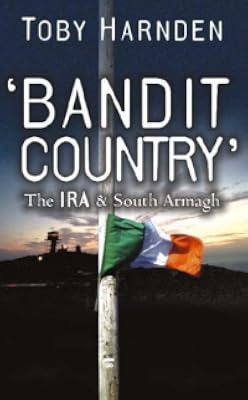
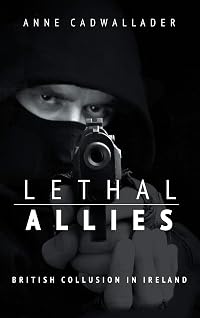
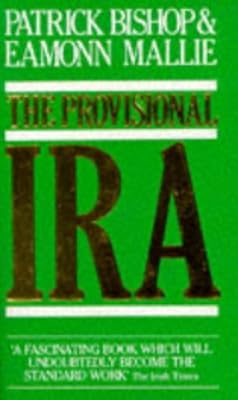
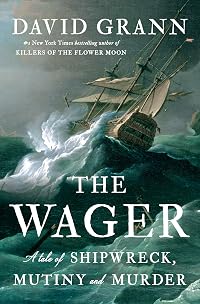

Member Recommendations

by AmourFou
Member Reviews
In December 1972, Jean McConville is taken away from her apartment in front of her ten children by masked gunmen. She is never seen again. In March 1973, along with nine others including her sister, Delours Price places four car bombs in central London. She is arrested while trying to leave the country. During her stay in prison, she and her sister go on a hunger strike and are force-fed by the prison authorities.
Using the framework of these two women's lives, Patrick Radden Keefe explores the history of Northern Ireland during the years known as The Troubles, a thirty year span that began in the late 1960s and ended with the Good Friday Agreements of 1998. The Troubles are a complex and maddening part of a long conflict, but by show more structuring it around a single event, and two women, Keefe manages to control the focus of the book. McConville was killed by the Provisional IRA, known as the Provos, and while usually the bodies of anyone murdered by them were left to be found as a warning to others, McConville's was not. The reasoning for that is unclear as is the reason for her murder. The attempt to unravel what happened to her involves learning about what daily life was like for the citizens of Belfast, what drew young people into the IRA and how the Provisional IRA functioned during those years and how it was that they came to decide on peace.
This is a superlatively good book. By keeping the focus on the two women, Keefe was able to give a solid history of the IRA during the years of The Troubles in a manageable and compelling way. Delours Price is a fascinating woman who was in the middle of the things for a long time. And the impact of and ambiguity around Jean McConville's disappearance, not the least what it did to her children, makes her story impossible to set aside. show less
Using the framework of these two women's lives, Patrick Radden Keefe explores the history of Northern Ireland during the years known as The Troubles, a thirty year span that began in the late 1960s and ended with the Good Friday Agreements of 1998. The Troubles are a complex and maddening part of a long conflict, but by show more structuring it around a single event, and two women, Keefe manages to control the focus of the book. McConville was killed by the Provisional IRA, known as the Provos, and while usually the bodies of anyone murdered by them were left to be found as a warning to others, McConville's was not. The reasoning for that is unclear as is the reason for her murder. The attempt to unravel what happened to her involves learning about what daily life was like for the citizens of Belfast, what drew young people into the IRA and how the Provisional IRA functioned during those years and how it was that they came to decide on peace.
This is a superlatively good book. By keeping the focus on the two women, Keefe was able to give a solid history of the IRA during the years of The Troubles in a manageable and compelling way. Delours Price is a fascinating woman who was in the middle of the things for a long time. And the impact of and ambiguity around Jean McConville's disappearance, not the least what it did to her children, makes her story impossible to set aside. show less
This is an engrossing account of The Troubles in Ireland, starting in the 1970s and ending on the eve of Brexit. It's a very complex and fraught subject: there are a lot of people involved, the conflicts between them can seem inexplicable to outsiders, and the issues are morally complex. Keefe doesn't shy away from any of that complexity, and yet still manages to make all of it readily digestible for his readers.
The book is meticulously researched. So much of The Troubles have been shrouded in secrecy - the titular "say nothing" is an IRA survival tactic, to the point that a lot of people never even told their closest family members that they were involved in the IRA - so the amount of detail Keefe has been able to uncover and piece show more together is impressive.
Keefe also does a good job of helping the reader keep track of all of the people involved. He paints vivid but realistic portraits of everyone, and provides the reader with just enough context when he hasn't mentioned a person in a while that it's easy to remember who is who and why they are important.
The Troubles are a very morally and emotionally charged topic. Keefe clearly understands the motivations of the people involved, and portrays them sympathetically without justifying or condemning their actions. There is no easy good/bad/right/wrong here, and Keefe is sensitive to that fact. Even with as complex a character as Gerry Adams, who could easily be portrayed as either a saint or a psychopath, Keefe does not pass judgement.
The book also focuses a lot of attention on an oral history project undertaken by Boston College. The college had the best of intentions: they wanted to get the people who had said nothing for decades to spill their beans, with the promise that their stories would be kept a secret until after their deaths. However, they clearly didn't think through the ramifications very well, and as soon as the British government learned of the existence of these oral histories they subpoenaed them and the college was utterly unprepared to deal with it. There are some tough lessons for historians here, which add another layer of difficult moral questions.
All of this makes for a fascinating, compelling, compassionate, and heartbreaking read. show less
The book is meticulously researched. So much of The Troubles have been shrouded in secrecy - the titular "say nothing" is an IRA survival tactic, to the point that a lot of people never even told their closest family members that they were involved in the IRA - so the amount of detail Keefe has been able to uncover and piece show more together is impressive.
Keefe also does a good job of helping the reader keep track of all of the people involved. He paints vivid but realistic portraits of everyone, and provides the reader with just enough context when he hasn't mentioned a person in a while that it's easy to remember who is who and why they are important.
The Troubles are a very morally and emotionally charged topic. Keefe clearly understands the motivations of the people involved, and portrays them sympathetically without justifying or condemning their actions. There is no easy good/bad/right/wrong here, and Keefe is sensitive to that fact. Even with as complex a character as Gerry Adams, who could easily be portrayed as either a saint or a psychopath, Keefe does not pass judgement.
The book also focuses a lot of attention on an oral history project undertaken by Boston College. The college had the best of intentions: they wanted to get the people who had said nothing for decades to spill their beans, with the promise that their stories would be kept a secret until after their deaths. However, they clearly didn't think through the ramifications very well, and as soon as the British government learned of the existence of these oral histories they subpoenaed them and the college was utterly unprepared to deal with it. There are some tough lessons for historians here, which add another layer of difficult moral questions.
All of this makes for a fascinating, compelling, compassionate, and heartbreaking read. show less
https://www.goodreads.com/review/show/5625475909
Thrilling!
At first, I struggled to get into it. I think because of the plethora of names, locations, factions, etc., that are explored to set the scenery. Possibly because I knew absolutely nothing at all about The Troubles except whatever I’ve picked up from the odd Tom Clancy book/movie (and, thus, very probably less than nothing).
The book is exceptionally well paced, and the author threads the stories so delicately that when the pictures start to come together there are times when you can’t help but sit upright.
The book explores themes of moral injury and ambiguous loss in ways I find deeply fascinating. More, the book explores the stories communities tell themselves and how show more factions interact with communities as mitigators and agitators. From page 402:
“In the intertwining lives of Jean McConville, Dolours Price, Brendan Hughes, and Gerry Adams, I saw an opportunity to tell a story about how people become radicalized in their uncompromising devotion to a cause, and about how individuals—and a whole society—make sense of political violence once they have passed through the crucible and finally have time to reflect.”
A great opportunity, and there are plenty of things we can view as analogous re: how populations/communities warp around themselves.
Great read — would recommend! show less
Thrilling!
At first, I struggled to get into it. I think because of the plethora of names, locations, factions, etc., that are explored to set the scenery. Possibly because I knew absolutely nothing at all about The Troubles except whatever I’ve picked up from the odd Tom Clancy book/movie (and, thus, very probably less than nothing).
The book is exceptionally well paced, and the author threads the stories so delicately that when the pictures start to come together there are times when you can’t help but sit upright.
The book explores themes of moral injury and ambiguous loss in ways I find deeply fascinating. More, the book explores the stories communities tell themselves and how show more factions interact with communities as mitigators and agitators. From page 402:
“In the intertwining lives of Jean McConville, Dolours Price, Brendan Hughes, and Gerry Adams, I saw an opportunity to tell a story about how people become radicalized in their uncompromising devotion to a cause, and about how individuals—and a whole society—make sense of political violence once they have passed through the crucible and finally have time to reflect.”
A great opportunity, and there are plenty of things we can view as analogous re: how populations/communities warp around themselves.
Great read — would recommend! show less
Say Nothing is a history of the "Troubles" afflicting Northern Ireland starting in 1969 and continuing until the Good Friday peace deal in 1998, and affecting Ireland even to the present day. But it is much more than a history. It is a riveting piece of investigative journalism that by unraveling the mystery of the disappearance of a widowed mother of ten children in Belfast in December 1972, shines a bright light on the viciousness of the conflict and the shifting strategies and tactics of the participants in this decades-long civil insurrection.
The story is all the more interesting to me because of my personal experiences in Northern Ireland from 1970-72 that I will relate at the end of this essay.
In 1972, Jean McConville, a show more Protestant widow from a mixed marriage, lived with her ten children in the Divis Flats, a stark public housing complex in the Catholic section of Belfast. Jean had been seen aiding a wounded British soldier outside her apartment, an act that brought ostracism from her neighbors and led to suspicion that she was a "tout", the word for an informant. One night in December, she was snatched in front of her children and never seen again. Through what happened to Jean, Keefe takes us to the larger story of the three decades of the Troubles, focusing on four principals of the uprising: the Price sisters -- Dolours and Marian, Brenden Hughes and Gerry Adams.
The Price sisters came from a family deeply committed to reunification of Ireland with a family history of involvement in the IRA violence of the 1950's. While on a civil rights march from Belfast to Derry in 1969 to protest discrimination against Catholics they were beaten by a Protestant mob. This incited them to join the provisional branch of the IRA (Provos) as soldiers for the cause. They were completely committed to violent acts to drive the British from the six counties. The sisters were ordered to carry out a bomb attack in London for which they were arrested and imprisoned first in England, later in Northern Ireland. They, and other prisoners held by the British as suspected IRA, went on hunger strikes to protest the lack of recognition as prisoners of war, rather than criminals. These strikes received considerable public attention and resulted in the deaths of a number of detainees. Before their incarceration, the sisters were part of the "Unknowns", a special unit that carried out kidnappings and executions of suspected touts, including Jean McConville. (After her disenchantment with the IRA and Adams, Dolours went on the lead an interesting, if troubled, life. She married the actor Stephen Rea and become a commentator on all things IRA. She suffered from depression and PTSD, fell into alcohol and drug abuse and died in her early 60's.)
Brenden Hughes was one of the IRA's most active and violent soldiers. His attacks on British soldiers and his ability to avoid capture and escape from incarceration were legendary. Eventually he, too, was imprisoned for years in the infamous detention camp at Long Kesh. Hughes was one of the hunger strikers.
Gerry Adams emerged early in the struggle as a leader of the Provos, among the top echelon directing the organization's campaign. Hughes and the Price sisters were devoted to his leadership. Despite his later patently unbelievable denials that he was ever in the IRA, it was Adams who ordered the Price's bombing campaign and directed the execution of McConville. Adams was ruthless. According to Hughes, when a hunger strike at Long Kesh resulted in three deaths, the British made enough concessions to warrant calling it off. Adams refused to allow this, ordering it to continue resulting in the death of six additional strikers. Adams's self-serving lies about his membership in the IRA and his denials of having anything to do with its violent acts is a critical part of the story. Adams's abandonment of the strategy of violent resistance to expel the British evolved into the power-sharing agreements of the late 1990's.
Another aspect that Keefe reveals is the grossly unethical activity and extra-legal acts carried out by British authorities including assassinations and alliances with actors in the IRA and Protestant paramilitaries like the Ulster Volunteer Force who were known to be murdering others. One gap in the narrative (that Keefe admits ) is the slight attention he gives to the Protestant paramilitaries who committed acts as heinous as any done by the IRA.
As decades passed, an interest developed in recording the stories of participants in the violence and resistance of the 1970's and 80's. Named the "Belfast Project" this program at Boston College interviewed key IRA and UVF figures to preserve their stories for future study. The project's leaders devised a confidentiality agreement that stipulated that the tapes and transcriptions would be sealed until the deaths of the interviewees. However, word of its existence leaked out and the Police Service of Northern Ireland subpoenaed the records, a demand that was upheld by US courts. This brought panic throughout the community of former IRA and UVF members and resulted in some arrests, most notably Gerry Adams who, by this time, was the leader of the Sinn Fein political party, a member of parliament, and a major political figure in the United Kingdom. Adams had been one of the brokers of the Good Friday peace accords. The charges against Adams were later dropped, but it is undisputedly clear that Adams's disavowal of involvement with the IRA was a falsehood and that he had blood on his hands.
Adams's transition from leadership of a violent movement to one of political accommodation angered and disillusioned his former acolytes like the Price sisters and Hughes. His disingenuousness evokes distaste, but the prospect of continuing the horror of the violence with little likelihood that an armed campaign would ever dislodge the British from Northern Ireland, prompted a peace settlement that was in the best interests of the inhabitants of the six counties. It could be argued that two decades of violence did indeed open the way to a peaceful resolution. The Good Friday peace accords of 1998, though far from achieving unification of the two Irelands, reduced enmity between the factions in the north and created a substantially better political alliance between the two Irelands.
Memories of my personal experience in Northern Ireland from 1970 to 1972 makes Keefe's story quite resonant to me. I arrived in Derry in November 1970, assigned to a small post of about 100 US Navy specialists working at a communication station. The base had been in Derry since WWII and was located within the city and with a mountain-top transmitter site about 25 miles east. My wife soon joined me, and we found a flat on the Strand Road overlooking the docks along the River Foyle. We were aware of the recent history of conflict; the riot at Burntollet Bridge outside Derry was just the year before. There was truth to the claim of systemic and pervasive discrimination against Catholics. The British army had a large garrison in the city and patrolled throughout the city and countryside. By late 1970, the Brits' honeymoon period as protectors of Catholics from Protestant aggression was over and the locals, mostly youth, made their aversion to the British known through stone-throwing riots that happened frequently.
Derry is mostly a Catholic city whose neighborhoods were strictly segregated by faiths. It could be easily discerned where each faction lived by the curb stones painted the British colors red, white and blue or the Republican green, white and orange. Union Jacks or Tri-Colors waving from lamp posts and graffiti leaving no doubt who lived there. The Protestant district was called Waterside and was near the naval station. The British army compound -- the Eglington Barracks -- was also in the Waterside. The Catholic district was the "Bogside" across the river, comprised of mostly rundown row houses. The Creggan Estates was Catholic-occupied council housing on the hills above the Bogside.
What amazed me then was the complete lack of concern the navy bosses had for the whereabouts of its off-duty sailors. Despite the growing civil unrest, we could, and did, go into any residential district of the city. I surmised that we sailors were the only people in the city who would be welcomed everywhere. The British and Royal Irish Constabulary (RUC) could not go into the Catholic areas and the Protestants and Catholics were definitely unsafe in each other's neighborhoods. I believe the naval personnel were considered neutral by each side in the conflict.
Throughout 1971, things worsened; rioting occurred nearly daily with tear gas and rubber bullets fired into crowds of mostly young people. Opportunistic killings of British soldiers began. Bombings started that spring. Bombs were directed at commercial targets, always with evacuation warnings. The British policy of compensating owners for losses due to terrorism fueled increasing attacks on commercial property. The belief was this would place an unsustainable economic burden on the Brits and cause them to withdraw. (In light of the increasing violence reported in the US news, my mother-in-law would write "do not go downtown, it's too dangerous, but if do would you get me Waterford crystal and have it shipped home?")
Entrances to the Bogside were barricaded with junked cars and IRA gun posts so that the area became a "No-Go" zone where the British and civilian police could not enter. The famous "You are Now Entering Free Derry" sign appeared on the facade of a house at one entrance, along with other graffiti with republican messaging throughout the Bogside. Still, civilians who lived in the Bogside could come and go as could the US sailors. I recall a tiny fish and chips shop behind the barricades that we frequented for take-away. (Incidentally, there were a number of sailors on second and third tours because they had married Irish girls who were homesick.
The violence increased substantially after on the night of August 9, 1971 when the British swept up hundreds of suspected IRA terrorists and interned them without charge in a concentration camp outside of Belfast -- Long Kesh. The Catholic population was outraged and bombing in Derry increased the next night. On this mild summer's night, my wife and I were in our flat entertaining an Irish girl we knew. We heard bombs going off in the city center. There were four that successively sounded louder and nearer. The fifth detonated right outside the building containing our flat. The force blew in the windows, cut the power and left the strong smell of cordite in the air. We evacuated across the alley between us and a shirt factory where the night watchman let us in. The alley was thick with glass that I crossed in my stocking feet, somehow not getting cut. The blast destroyed our Austin-Healy mini parked in the alley. (I subsequently made a claim on the British government and received 40 pounds which, as the car was on its last legs, was generous.) Newspaper accounts reported a young boy spotted placing the bombs. Why were we a target? Our building's ground floor housed a car showroom on the first floor, three sides of which were glass. The owners were Thompson (a Protestant) and McGeady (a Catholic.) Perhaps this was the reason, but it is more likely that the secluded alley by a commercial enterprise was attractive to furtively place a bomb. I doubt that the bomber was aware of people living above.
After the blast, the flat was not habitable so we stayed at a hotel downtown next to the Guildhall . We could hear gunfire at night not too far distant and tear gas wafted into our room. The Navy command took an interest in helping us find new housing and came up with an interesting, if somewhat unnerving, solution. There was an abandoned WWII era weapons depot about three miles out of town, quite isolated. Overlooking the compound was a duplex house that the British army could not use for its soldiers as it was impossible to protect. The house was well-maintained and fully furnished and was offered to us and another Navy couple looking for housing. We took it and moved in early September. Because the house was on a steeply sloping hill below the roadway, the second-floor bedrooms were level with the road. In bed on our first Saturday evening around 11:30, after the pubs had closed, I heard shuffling feet coming up the road. Someone shouted, "British bastards go home". Naturally, this was not a comforting thing to hear. I took pains each morning that week to stand by the road waiting for my ride in my naval uniform with a friendly wave to passing motorists. The next week I heard, "Yankee bastards, go home". This was a considerable relief.
There were civilians who worked at the navy base. I was friendly with a man named Tony Martin. Tony was a bit of a blowhard who hinted that he was connected with the IRA. I didn't find this credible as such an indiscrete comment to a casual acquaintance made this seem unlikely. Tony told me that on a Sunday in January there was to be a huge civil rights march and I should come along as it would be a bit of a lark. The navy commander had warned us to stay away so I declined. On Sunday evening we got reports of the massacre of 13 marchers by British soldiers of the 1st Parachute Regiment. The following morning, I was reading newspaper accounts in the Daily Mail (a national tabloid newspaper equivalent to the New York Daily News) and read an eyewitness account by Tony Martin of being next to people who were shot down. I don't know if this was true, and I never saw Tony again; he either quit or was fired. The Brits claimed they were fired on and an initial inquiry whitewashed the incident. Decades later a second inquiry concluded that they were not fired upon. Just recently, nearly 50 years after the event, a former British soldier has been charged with murder.
Throughout 1972, the situation in Derry got much worse. Bombings were more frequent; shootings had become common. It seemed surreal at times. Derry is a small city with most of its retail shops in a compact area at its center. Partly because many people didn't have adequate home refrigeration the town was always crowded with shoppers. Amidst the bustle of shoppers there would be four-man British patrols moving along the streets with guns in hand, cautiously peering around street corners, scanning the roof tops for snipers and racing across intersections. I have a photo of a full-bore riot with stones and bricks thrown while the British responded firing rubber bullets and menacing the crowd with their armored cars moving forward aggressively. In the midst of the mayhem there sat a drunk leaning against a wall on a traffic island seemingly oblivious to the chaos around him. I was able to acquire a rubber bullet and CS gas shell from one of these clashes. I have a photo of British soldiers dodging petrol bombs thrown by young men. Later, on the way to my dentist's office just off the Strand road, I saw that his building had just been nearly destroyed by a bomb attack.
One notable occasion witnessed was the annual "Apprentice Boys" parade in which Protestant marchers dressed in orange regalia marched through Derry pounding their drums to insult and antagonize their Catholic foes. The "Apprentice Boys" refers to the siege of Derry in 1688 when a group of youth locked the gates of the city wall barring entry to King James's army in his war with William of Orange. It reminds us that the enmity between Protestants and Catholics has its roots not in decades, but in centuries.
We left in August of '72. I remember thinking things could not possibly get worse, that such intensity could not be sustained. I was wrong about this of course, and the carnage continued and worsened throughout the '70's and 80's. I learned that the navy eventually abandoned its base. The story is that armed gunmen raided the mountain-top radio transmitter site east of Derry. Apparently, they believed weapons were stored there (they weren't), but this may have been the cause of the Navy's departure. I also heard that the Navy command had gotten cozy with its counterparts in the British army, exchanging social events, etc. This likely ruined the safety that our neutrality had created.
We returned to Northern Ireland in 2000 and 2008. The contrast from our experience of years earlier was astounding. Derry is unrecognizable with a prosperity that one couldn't have imagined would ever exist. We found that we had access to parts of the city that were closed in the 70's because of security restrictions. We visited the Bogside that is still a Catholic district. The area is loaded with wall murals depicting events and martyrs of the troubled times. The famous Free Derry sign has been replaced with a faux replica that completely lacks the drama and pathos of the original. Amazingly, despite changes that make much of the city unfamiliar, the building that housed our flat is still there. We took a guided tour of the city wall that had been closed in the 1970's due to security concerns. In 2008, we made the trip again to visit our daughter studying in Dublin. We took a trip to the British depot house in the country and it too is still occupied.
We were young during our first time in Ireland. We were so fascinated and intrigued by the tumultuous events that we probably weren't as cautious as we should have been. It seemed a bit romantic and thrilling to be close to such dramatic happenings. Keefe's excellent book gives a look at the darkness and tragedy that was visited on this small province for over two decades.
Just hours after finishing this essay I learned of riots in Creggan estates in Derry where a journalist was shot and killed. The "New IRA" was allegedly behind this event. The discord continues.... show less
The story is all the more interesting to me because of my personal experiences in Northern Ireland from 1970-72 that I will relate at the end of this essay.
In 1972, Jean McConville, a show more Protestant widow from a mixed marriage, lived with her ten children in the Divis Flats, a stark public housing complex in the Catholic section of Belfast. Jean had been seen aiding a wounded British soldier outside her apartment, an act that brought ostracism from her neighbors and led to suspicion that she was a "tout", the word for an informant. One night in December, she was snatched in front of her children and never seen again. Through what happened to Jean, Keefe takes us to the larger story of the three decades of the Troubles, focusing on four principals of the uprising: the Price sisters -- Dolours and Marian, Brenden Hughes and Gerry Adams.
The Price sisters came from a family deeply committed to reunification of Ireland with a family history of involvement in the IRA violence of the 1950's. While on a civil rights march from Belfast to Derry in 1969 to protest discrimination against Catholics they were beaten by a Protestant mob. This incited them to join the provisional branch of the IRA (Provos) as soldiers for the cause. They were completely committed to violent acts to drive the British from the six counties. The sisters were ordered to carry out a bomb attack in London for which they were arrested and imprisoned first in England, later in Northern Ireland. They, and other prisoners held by the British as suspected IRA, went on hunger strikes to protest the lack of recognition as prisoners of war, rather than criminals. These strikes received considerable public attention and resulted in the deaths of a number of detainees. Before their incarceration, the sisters were part of the "Unknowns", a special unit that carried out kidnappings and executions of suspected touts, including Jean McConville. (After her disenchantment with the IRA and Adams, Dolours went on the lead an interesting, if troubled, life. She married the actor Stephen Rea and become a commentator on all things IRA. She suffered from depression and PTSD, fell into alcohol and drug abuse and died in her early 60's.)
Brenden Hughes was one of the IRA's most active and violent soldiers. His attacks on British soldiers and his ability to avoid capture and escape from incarceration were legendary. Eventually he, too, was imprisoned for years in the infamous detention camp at Long Kesh. Hughes was one of the hunger strikers.
Gerry Adams emerged early in the struggle as a leader of the Provos, among the top echelon directing the organization's campaign. Hughes and the Price sisters were devoted to his leadership. Despite his later patently unbelievable denials that he was ever in the IRA, it was Adams who ordered the Price's bombing campaign and directed the execution of McConville. Adams was ruthless. According to Hughes, when a hunger strike at Long Kesh resulted in three deaths, the British made enough concessions to warrant calling it off. Adams refused to allow this, ordering it to continue resulting in the death of six additional strikers. Adams's self-serving lies about his membership in the IRA and his denials of having anything to do with its violent acts is a critical part of the story. Adams's abandonment of the strategy of violent resistance to expel the British evolved into the power-sharing agreements of the late 1990's.
Another aspect that Keefe reveals is the grossly unethical activity and extra-legal acts carried out by British authorities including assassinations and alliances with actors in the IRA and Protestant paramilitaries like the Ulster Volunteer Force who were known to be murdering others. One gap in the narrative (that Keefe admits ) is the slight attention he gives to the Protestant paramilitaries who committed acts as heinous as any done by the IRA.
As decades passed, an interest developed in recording the stories of participants in the violence and resistance of the 1970's and 80's. Named the "Belfast Project" this program at Boston College interviewed key IRA and UVF figures to preserve their stories for future study. The project's leaders devised a confidentiality agreement that stipulated that the tapes and transcriptions would be sealed until the deaths of the interviewees. However, word of its existence leaked out and the Police Service of Northern Ireland subpoenaed the records, a demand that was upheld by US courts. This brought panic throughout the community of former IRA and UVF members and resulted in some arrests, most notably Gerry Adams who, by this time, was the leader of the Sinn Fein political party, a member of parliament, and a major political figure in the United Kingdom. Adams had been one of the brokers of the Good Friday peace accords. The charges against Adams were later dropped, but it is undisputedly clear that Adams's disavowal of involvement with the IRA was a falsehood and that he had blood on his hands.
Adams's transition from leadership of a violent movement to one of political accommodation angered and disillusioned his former acolytes like the Price sisters and Hughes. His disingenuousness evokes distaste, but the prospect of continuing the horror of the violence with little likelihood that an armed campaign would ever dislodge the British from Northern Ireland, prompted a peace settlement that was in the best interests of the inhabitants of the six counties. It could be argued that two decades of violence did indeed open the way to a peaceful resolution. The Good Friday peace accords of 1998, though far from achieving unification of the two Irelands, reduced enmity between the factions in the north and created a substantially better political alliance between the two Irelands.
Memories of my personal experience in Northern Ireland from 1970 to 1972 makes Keefe's story quite resonant to me. I arrived in Derry in November 1970, assigned to a small post of about 100 US Navy specialists working at a communication station. The base had been in Derry since WWII and was located within the city and with a mountain-top transmitter site about 25 miles east. My wife soon joined me, and we found a flat on the Strand Road overlooking the docks along the River Foyle. We were aware of the recent history of conflict; the riot at Burntollet Bridge outside Derry was just the year before. There was truth to the claim of systemic and pervasive discrimination against Catholics. The British army had a large garrison in the city and patrolled throughout the city and countryside. By late 1970, the Brits' honeymoon period as protectors of Catholics from Protestant aggression was over and the locals, mostly youth, made their aversion to the British known through stone-throwing riots that happened frequently.
Derry is mostly a Catholic city whose neighborhoods were strictly segregated by faiths. It could be easily discerned where each faction lived by the curb stones painted the British colors red, white and blue or the Republican green, white and orange. Union Jacks or Tri-Colors waving from lamp posts and graffiti leaving no doubt who lived there. The Protestant district was called Waterside and was near the naval station. The British army compound -- the Eglington Barracks -- was also in the Waterside. The Catholic district was the "Bogside" across the river, comprised of mostly rundown row houses. The Creggan Estates was Catholic-occupied council housing on the hills above the Bogside.
What amazed me then was the complete lack of concern the navy bosses had for the whereabouts of its off-duty sailors. Despite the growing civil unrest, we could, and did, go into any residential district of the city. I surmised that we sailors were the only people in the city who would be welcomed everywhere. The British and Royal Irish Constabulary (RUC) could not go into the Catholic areas and the Protestants and Catholics were definitely unsafe in each other's neighborhoods. I believe the naval personnel were considered neutral by each side in the conflict.
Throughout 1971, things worsened; rioting occurred nearly daily with tear gas and rubber bullets fired into crowds of mostly young people. Opportunistic killings of British soldiers began. Bombings started that spring. Bombs were directed at commercial targets, always with evacuation warnings. The British policy of compensating owners for losses due to terrorism fueled increasing attacks on commercial property. The belief was this would place an unsustainable economic burden on the Brits and cause them to withdraw. (In light of the increasing violence reported in the US news, my mother-in-law would write "do not go downtown, it's too dangerous, but if do would you get me Waterford crystal and have it shipped home?")
Entrances to the Bogside were barricaded with junked cars and IRA gun posts so that the area became a "No-Go" zone where the British and civilian police could not enter. The famous "You are Now Entering Free Derry" sign appeared on the facade of a house at one entrance, along with other graffiti with republican messaging throughout the Bogside. Still, civilians who lived in the Bogside could come and go as could the US sailors. I recall a tiny fish and chips shop behind the barricades that we frequented for take-away. (Incidentally, there were a number of sailors on second and third tours because they had married Irish girls who were homesick.
The violence increased substantially after on the night of August 9, 1971 when the British swept up hundreds of suspected IRA terrorists and interned them without charge in a concentration camp outside of Belfast -- Long Kesh. The Catholic population was outraged and bombing in Derry increased the next night. On this mild summer's night, my wife and I were in our flat entertaining an Irish girl we knew. We heard bombs going off in the city center. There were four that successively sounded louder and nearer. The fifth detonated right outside the building containing our flat. The force blew in the windows, cut the power and left the strong smell of cordite in the air. We evacuated across the alley between us and a shirt factory where the night watchman let us in. The alley was thick with glass that I crossed in my stocking feet, somehow not getting cut. The blast destroyed our Austin-Healy mini parked in the alley. (I subsequently made a claim on the British government and received 40 pounds which, as the car was on its last legs, was generous.) Newspaper accounts reported a young boy spotted placing the bombs. Why were we a target? Our building's ground floor housed a car showroom on the first floor, three sides of which were glass. The owners were Thompson (a Protestant) and McGeady (a Catholic.) Perhaps this was the reason, but it is more likely that the secluded alley by a commercial enterprise was attractive to furtively place a bomb. I doubt that the bomber was aware of people living above.
After the blast, the flat was not habitable so we stayed at a hotel downtown next to the Guildhall . We could hear gunfire at night not too far distant and tear gas wafted into our room. The Navy command took an interest in helping us find new housing and came up with an interesting, if somewhat unnerving, solution. There was an abandoned WWII era weapons depot about three miles out of town, quite isolated. Overlooking the compound was a duplex house that the British army could not use for its soldiers as it was impossible to protect. The house was well-maintained and fully furnished and was offered to us and another Navy couple looking for housing. We took it and moved in early September. Because the house was on a steeply sloping hill below the roadway, the second-floor bedrooms were level with the road. In bed on our first Saturday evening around 11:30, after the pubs had closed, I heard shuffling feet coming up the road. Someone shouted, "British bastards go home". Naturally, this was not a comforting thing to hear. I took pains each morning that week to stand by the road waiting for my ride in my naval uniform with a friendly wave to passing motorists. The next week I heard, "Yankee bastards, go home". This was a considerable relief.
There were civilians who worked at the navy base. I was friendly with a man named Tony Martin. Tony was a bit of a blowhard who hinted that he was connected with the IRA. I didn't find this credible as such an indiscrete comment to a casual acquaintance made this seem unlikely. Tony told me that on a Sunday in January there was to be a huge civil rights march and I should come along as it would be a bit of a lark. The navy commander had warned us to stay away so I declined. On Sunday evening we got reports of the massacre of 13 marchers by British soldiers of the 1st Parachute Regiment. The following morning, I was reading newspaper accounts in the Daily Mail (a national tabloid newspaper equivalent to the New York Daily News) and read an eyewitness account by Tony Martin of being next to people who were shot down. I don't know if this was true, and I never saw Tony again; he either quit or was fired. The Brits claimed they were fired on and an initial inquiry whitewashed the incident. Decades later a second inquiry concluded that they were not fired upon. Just recently, nearly 50 years after the event, a former British soldier has been charged with murder.
Throughout 1972, the situation in Derry got much worse. Bombings were more frequent; shootings had become common. It seemed surreal at times. Derry is a small city with most of its retail shops in a compact area at its center. Partly because many people didn't have adequate home refrigeration the town was always crowded with shoppers. Amidst the bustle of shoppers there would be four-man British patrols moving along the streets with guns in hand, cautiously peering around street corners, scanning the roof tops for snipers and racing across intersections. I have a photo of a full-bore riot with stones and bricks thrown while the British responded firing rubber bullets and menacing the crowd with their armored cars moving forward aggressively. In the midst of the mayhem there sat a drunk leaning against a wall on a traffic island seemingly oblivious to the chaos around him. I was able to acquire a rubber bullet and CS gas shell from one of these clashes. I have a photo of British soldiers dodging petrol bombs thrown by young men. Later, on the way to my dentist's office just off the Strand road, I saw that his building had just been nearly destroyed by a bomb attack.
One notable occasion witnessed was the annual "Apprentice Boys" parade in which Protestant marchers dressed in orange regalia marched through Derry pounding their drums to insult and antagonize their Catholic foes. The "Apprentice Boys" refers to the siege of Derry in 1688 when a group of youth locked the gates of the city wall barring entry to King James's army in his war with William of Orange. It reminds us that the enmity between Protestants and Catholics has its roots not in decades, but in centuries.
We left in August of '72. I remember thinking things could not possibly get worse, that such intensity could not be sustained. I was wrong about this of course, and the carnage continued and worsened throughout the '70's and 80's. I learned that the navy eventually abandoned its base. The story is that armed gunmen raided the mountain-top radio transmitter site east of Derry. Apparently, they believed weapons were stored there (they weren't), but this may have been the cause of the Navy's departure. I also heard that the Navy command had gotten cozy with its counterparts in the British army, exchanging social events, etc. This likely ruined the safety that our neutrality had created.
We returned to Northern Ireland in 2000 and 2008. The contrast from our experience of years earlier was astounding. Derry is unrecognizable with a prosperity that one couldn't have imagined would ever exist. We found that we had access to parts of the city that were closed in the 70's because of security restrictions. We visited the Bogside that is still a Catholic district. The area is loaded with wall murals depicting events and martyrs of the troubled times. The famous Free Derry sign has been replaced with a faux replica that completely lacks the drama and pathos of the original. Amazingly, despite changes that make much of the city unfamiliar, the building that housed our flat is still there. We took a guided tour of the city wall that had been closed in the 1970's due to security concerns. In 2008, we made the trip again to visit our daughter studying in Dublin. We took a trip to the British depot house in the country and it too is still occupied.
We were young during our first time in Ireland. We were so fascinated and intrigued by the tumultuous events that we probably weren't as cautious as we should have been. It seemed a bit romantic and thrilling to be close to such dramatic happenings. Keefe's excellent book gives a look at the darkness and tragedy that was visited on this small province for over two decades.
Just hours after finishing this essay I learned of riots in Creggan estates in Derry where a journalist was shot and killed. The "New IRA" was allegedly behind this event. The discord continues.... show less
In 1972 a Belfast mother of 10, Jean McConville, was taken from her home by people in masks and never seen again. To explain why this happened, Keefe goes back to the beginning to explain what The Troubles are, how they started, the different groups involved, the environment in which something like this could happen, and the personal histories of McConville and everyone else who could have been involved. Then he details the ceasefires, the alleged end of The Troubles, the discovery of McConville’s body, the investigation into what happened, the continued lives of everyone involved, the uncovering of oral histories secretly recorded by Boston College, and continued fallout through 2018.
As an examination of this one particular murder, I show more think this book does not do a great job. There are too many characters, too much detail, too much history. However, the book is incredible anyway. Keefe does an excellent job of explaining the high-level factors of The Troubles, and I absolutely understand the whole thing better now. I don’t think I fully understood before this that there were at least four sides directly involved in the fighting, not two, nor did I get the schism and differences in ideology between the original Irish Republican Army and the Provisional. I was especially interested in the more recent information after the 1998 Good Friday Agreement - the feelings of betrayal from Provisional IRA members who were fighting for nothing less than a united Ireland, the details of the Boston College oral history project which started to leak out, and the 2015 investigation by the UK government which stated that the paramilitaries are still active. The story of The Troubles is definitely not over. As mentioned in the title, this is a story about memory: the memory of the people who contributed to the Boston College oral history project, the memory of the people who went back to listen to those tapes later, and the voluntary amnesia that enabled the ceasefires while also devastating those who were denied closure. It’s an incredible work of patience and research. Audiobook is not usually my ideal medium for involved non-fiction like this, but it does a great job of setting the mood and feeling the emotions of the people involved. Irish actor Matthew Blaney is the perfect narrator for the book.
I highly recommend it, but don’t expect a straightforward true crime story. show less
As an examination of this one particular murder, I show more think this book does not do a great job. There are too many characters, too much detail, too much history. However, the book is incredible anyway. Keefe does an excellent job of explaining the high-level factors of The Troubles, and I absolutely understand the whole thing better now. I don’t think I fully understood before this that there were at least four sides directly involved in the fighting, not two, nor did I get the schism and differences in ideology between the original Irish Republican Army and the Provisional. I was especially interested in the more recent information after the 1998 Good Friday Agreement - the feelings of betrayal from Provisional IRA members who were fighting for nothing less than a united Ireland, the details of the Boston College oral history project which started to leak out, and the 2015 investigation by the UK government which stated that the paramilitaries are still active. The story of The Troubles is definitely not over. As mentioned in the title, this is a story about memory: the memory of the people who contributed to the Boston College oral history project, the memory of the people who went back to listen to those tapes later, and the voluntary amnesia that enabled the ceasefires while also devastating those who were denied closure. It’s an incredible work of patience and research. Audiobook is not usually my ideal medium for involved non-fiction like this, but it does a great job of setting the mood and feeling the emotions of the people involved. Irish actor Matthew Blaney is the perfect narrator for the book.
I highly recommend it, but don’t expect a straightforward true crime story. show less
https://fromtheheartofeurope.eu/say-nothing-a-true-story-of-murder-and-memory-in...
This is a tremendous book about one particular aspect of the Northern Ireland conflict, tracking two intertwined stories through the decades: first, the history of sisters and IRA members Dolours and Marian Price, and second the mystery of Jean McConville née Murray, who was abducted and murdered by the IRA in 1972. Keefe has interviewed, and read interviews with, many of the surviving protagonists, and of course the story was made into a major Disney+ TV drama. It’s a chilling narrative of violence and death, sometimes political and sometimes just thuggery.
It is a book that has evoked sharp reactions. One person on social media responded to my note show more that I had read the book by fuming that it was “IRA propaganda. Complete bullshit”, though he later admitted that he had not actually read it himself. On the other hand, mainstream Republicans find both book and series sensationalist and unduly hostile to Gerry Adams. (Links are to two separate reviews by Tim O’Grady on Danny Morrison’s blog.)
By telling one particular set of stories, others are not told. Of course, everyone must write the book that they want to write; but the fact is that Northern Ireland is a lot wider than the dynamics of Republican West Belfast, and the experiences of the Prices and McConvilles, awful as they were, are representative of a part of society but not the whole. Keefe does make the occasional effort to acknowledge this, but I think a reader who knew nothing about the Troubles might get the impression that there was nothing else happening. Lost Lives would be a very good corrective.
The question is, what does one want to make of the past? At the end of the peace process, both the Prices and McConvilles felt cheated for different reasons. The McConvilles eventually did get closure with the discovery of their mother’s body, but that came about by chance rather than by any help from political factors. The Prices on the other hand felt that if the British remained in Northern Ireland, the entire armed struggle looked pointless, and they were revolted by that thought.
But the armed struggle was pointless; and it was evil. This is my analysis, not Keefe’s. The 1998 Good Friday Agreement was much the same as the 1974 power-sharing structure. The most significant differences were the provisions for ex-paramilitary prisoners, and police reform. (Some would argue that the D’Hondt coalition government is also a major change, but I would say that the forced coalition was there in 1974 and the D’Hondt process is a detail of implementation.) Was that worth the lives lost and devastated over thirty years?
This of course does not excuse or minimise the role of the British and Unionists in the story. If Unionists had run Stormont better in the first place, especially if the British had leaned on them to do so, there would have been no conflict. Loyalist violence, directed by Unionist leaders, was the initiating factor in the Troubles (as shown in the early episodes of Say Nothing), and Loyalists killed more civilians than either Republicans or the British Army. Bloody Sunday was an atrocity, and the cover-up was a crime (though Bloody Friday was an atrocity too). The Price sisters were brutalised in jail, and they were not the only ones.
Books like Say Nothing are very valuable to help understand the past – especially so if the reader keeps in mind that they show only part of the whole story.
The Boston College archives play a large part in how much of the story came to light. These were a set of taped interviews with paramilitaries which unexpectedly became a source of evidence for the police investigating the murder of Jean McConville. I had a lot of respect and affection for Ed Moloney, the director of the project who died last year, and I corresponded warmly and sympathetically with him in 2011 when it started seriously running into trouble. But I have to say that he does not appear to have done the necessary due diligence on the extent to which his carefully gathered records could be used in future criminal investigations, and relied unwisely on the doctrine of the protection of journalistic sources. Expert legal advice was simply never sought, and that is a big error – on Keefe’s telling, Ed Moloney’s error rather than anyone else’s.
Whatever you make of the political intentions of the author, it is a well told story. I groaned a bit when I looked at 404 pages of dense text, with 93 pages of footnotes, but it really slips by quickly – even when you know what happened in the end. And here Keefe’s choice to focus on the McConvilles and the Prices does make sense, because by focusing on the human cost of the conflict to two families, you turn historical facts and statistics into stories that can be related to by any reader. show less
This is a tremendous book about one particular aspect of the Northern Ireland conflict, tracking two intertwined stories through the decades: first, the history of sisters and IRA members Dolours and Marian Price, and second the mystery of Jean McConville née Murray, who was abducted and murdered by the IRA in 1972. Keefe has interviewed, and read interviews with, many of the surviving protagonists, and of course the story was made into a major Disney+ TV drama. It’s a chilling narrative of violence and death, sometimes political and sometimes just thuggery.
It is a book that has evoked sharp reactions. One person on social media responded to my note show more that I had read the book by fuming that it was “IRA propaganda. Complete bullshit”, though he later admitted that he had not actually read it himself. On the other hand, mainstream Republicans find both book and series sensationalist and unduly hostile to Gerry Adams. (Links are to two separate reviews by Tim O’Grady on Danny Morrison’s blog.)
By telling one particular set of stories, others are not told. Of course, everyone must write the book that they want to write; but the fact is that Northern Ireland is a lot wider than the dynamics of Republican West Belfast, and the experiences of the Prices and McConvilles, awful as they were, are representative of a part of society but not the whole. Keefe does make the occasional effort to acknowledge this, but I think a reader who knew nothing about the Troubles might get the impression that there was nothing else happening. Lost Lives would be a very good corrective.
The question is, what does one want to make of the past? At the end of the peace process, both the Prices and McConvilles felt cheated for different reasons. The McConvilles eventually did get closure with the discovery of their mother’s body, but that came about by chance rather than by any help from political factors. The Prices on the other hand felt that if the British remained in Northern Ireland, the entire armed struggle looked pointless, and they were revolted by that thought.
But the armed struggle was pointless; and it was evil. This is my analysis, not Keefe’s. The 1998 Good Friday Agreement was much the same as the 1974 power-sharing structure. The most significant differences were the provisions for ex-paramilitary prisoners, and police reform. (Some would argue that the D’Hondt coalition government is also a major change, but I would say that the forced coalition was there in 1974 and the D’Hondt process is a detail of implementation.) Was that worth the lives lost and devastated over thirty years?
This of course does not excuse or minimise the role of the British and Unionists in the story. If Unionists had run Stormont better in the first place, especially if the British had leaned on them to do so, there would have been no conflict. Loyalist violence, directed by Unionist leaders, was the initiating factor in the Troubles (as shown in the early episodes of Say Nothing), and Loyalists killed more civilians than either Republicans or the British Army. Bloody Sunday was an atrocity, and the cover-up was a crime (though Bloody Friday was an atrocity too). The Price sisters were brutalised in jail, and they were not the only ones.
Books like Say Nothing are very valuable to help understand the past – especially so if the reader keeps in mind that they show only part of the whole story.
The Boston College archives play a large part in how much of the story came to light. These were a set of taped interviews with paramilitaries which unexpectedly became a source of evidence for the police investigating the murder of Jean McConville. I had a lot of respect and affection for Ed Moloney, the director of the project who died last year, and I corresponded warmly and sympathetically with him in 2011 when it started seriously running into trouble. But I have to say that he does not appear to have done the necessary due diligence on the extent to which his carefully gathered records could be used in future criminal investigations, and relied unwisely on the doctrine of the protection of journalistic sources. Expert legal advice was simply never sought, and that is a big error – on Keefe’s telling, Ed Moloney’s error rather than anyone else’s.
Whatever you make of the political intentions of the author, it is a well told story. I groaned a bit when I looked at 404 pages of dense text, with 93 pages of footnotes, but it really slips by quickly – even when you know what happened in the end. And here Keefe’s choice to focus on the McConvilles and the Prices does make sense, because by focusing on the human cost of the conflict to two families, you turn historical facts and statistics into stories that can be related to by any reader. show less
This is about as dense and bleak a non-fiction book you could read, though that's not surprising with a story about the Troubles.
Say Nothing is meticulously researched, and I appreciated the afterward from Keefe letting us know how many people were involved in the creation of this book - the amount of time, energy and people required to make this a reality is a minor miracle.
I have to remind myself not to judge too harshly the people involved in all the chaos during this incredibly tumultuous time, but I fail to do so. The amount of lies, denial, stubbornness, and cruelty displayed by parties from all sides is staggering. The fact that the McConville children still don't have full closure or justice on her murder is maddening and show more heartbreaking. The Price sisters, among others, I'm sure had their reasons but what got me is how nobody wants to take ownership or fess up to their crimes decades later.
Maybe I wouldn't either, if I was in their position.
I just had no idea how decades later the pain and trauma still reverberates so steadily with all those involved. This is an incredible book, but all I can say in summary is I'm thankful I was born where I was and when I was. show less
Say Nothing is meticulously researched, and I appreciated the afterward from Keefe letting us know how many people were involved in the creation of this book - the amount of time, energy and people required to make this a reality is a minor miracle.
I have to remind myself not to judge too harshly the people involved in all the chaos during this incredibly tumultuous time, but I fail to do so. The amount of lies, denial, stubbornness, and cruelty displayed by parties from all sides is staggering. The fact that the McConville children still don't have full closure or justice on her murder is maddening and show more heartbreaking. The Price sisters, among others, I'm sure had their reasons but what got me is how nobody wants to take ownership or fess up to their crimes decades later.
Maybe I wouldn't either, if I was in their position.
I just had no idea how decades later the pain and trauma still reverberates so steadily with all those involved. This is an incredible book, but all I can say in summary is I'm thankful I was born where I was and when I was. show less
Members
- Recently Added By
Lists

Top Five Books of 2020
982 works; 348 members

Top Five Books of 2021
604 works; 181 members

Recommend the 20 best books you've read in the last five years
2,168 works; 606 members

Non-Fiction Worth Reading
1,015 works; 255 members

2020 Notable Books for Adults
26 works; 5 members

Top Five Books of 2022
736 works; 272 members

Top Five Books of 2019
387 works; 107 members

Books recommended by Barack Obama
295 works; 28 members

Top 10 books read in 2020
10 works; 1 member

Books Read in 2019
4,052 works; 108 members

Barack Obama's Favorite Books of 2019
19 works; 3 members

Top Five Books of 2025
954 works; 303 members

2024-2025 Ezra Klein Guest Recommendations
213 works; 6 members

.
184 works; 1 member

Non-Fiction
68 works; 1 member

Best Audiobooks
240 works; 114 members

Books for Birute
39 works; 1 member

2024
34 works; 1 member

NYT Readers best of 21st C
100 works; 8 members

NYT 100 best books of 21st C
100 works; 31 members

Top Five Books of 2023
767 works; 317 members

Books Read in 2022
5,164 works; 113 members

Books Read in 2020
4,379 works; 124 members

Ireland
3 works; 1 member
Author Information

8+ Works 7,679 Members
Patrick Radden Keefe is a LibraryThing Author, an author who lists their personal library on LibraryThing.
Some Editions
Awards and Honors
Awards
Distinctions
Notable Lists
Series
Belongs to Publisher Series
Astrolabi (6)
Work Relationships
Is contained in
Common Knowledge
- Canonical title*
- Ne dis rien. Meurtre et mémoire en Irlande du Nord
- Original title
- Say Nothing. A True Story of Murder and Memory in Northern Ireland
- Original publication date
- 2019
- People/Characters
- Jean McConville (née Murray,murdered by the IRA as a suspected informer); Arthur McConville, Sr. (Jean's husband); Agnes McConville (child of Jean & Arthur); Arthur McConville, Jr. (child of Jean & Arthur); Billy McConville (child of Jean & Arthur); Helen McConville McKendry (child of Jean & Arthur) (show all 46); Jim McConville (child of Jean & Arthur); Michael McConville (child of Jean & Arthur); Robert McConville (child of Jean & Arthur); Susan McConville (child of Jean & Arthur); Thomas McConville (child of Jean & Arthur); Granny Mary McConville; Gerry Adams; Ivor Bell; Trevor Campbell; Bridie Dolan; Eileen Hickey; Brendan Hughes; Gerry Kelly; Frank Kitson; Joe Lynskey; Wilson McArthur; Eamon McCann; Pat McClure; Francie McGuigan; Martin McGuinness; Anthony McIntyre; Kevin McKee; Roisin McNearney; Seán Mac Stíofáin; Ed Moloney; Bob O'Neill; Ricky O'Rawe; Ian Paisley; Albert Price; Chrissie Price; Dolours Price (later Dolours Price Rea | married Stephen Rea ); Marian Price; Danny Rea; Stephen Rea; Alec Reid; Bobby Sands; Alfredo Scappaticci; Margaret Thatcher; Carrie Twomey; Seamus Wright
- Important places
- Northern Ireland, UK; Belfast, Northern Ireland, UK; Boston, Massachusetts, USA
- Important events
- The Troubles
- Related movies
- Say Nothing (2024 | IMDb)
- Epigraph
- All wars are fought twice, the first time on the battlefield, the second time in memory.
-- Viet Thanh Nguyen - Dedication
- TO LUCIAN AND FELIX
- First words
- JULY 2013
The John J. Burns Library occupies a grand neo-Gothic building on the leafy campus of Boston College. (Prologue)
Jean McConville was thirty-eight when she disappeared, and she had spent nearly half of her life either pregnant or recovering from childbirth. - Last words
- (Click to show. Warning: May contain spoilers.)But their [pigeons] natural instinct is to fly back to the place where they were born.
- Publisher's editor
- Thomas, Bill
- Blurbers
- Grann, David; Gourevitch, Philip; Jasanoff, Maya; McCann, Colum; Flynn, Gillian; Bergen, Peter (show all 7); Anderson, Scott
- Original language
- English
- Canonical DDC/MDS
- 364.1523092
- Canonical LCC
- HV6574.G7
*Some information comes from Common Knowledge in other languages. Click "Edit" for more information.
Classifications
- Genres
- General Nonfiction, History, Nonfiction
- DDC/MDS
- 364.1523092 — Society, government, & culture Social problems and social services Crime Criminal offenses Offenses against the person Homicide Murder History, geographic treatment, biography Biography
- LCC
- HV6574 .G7 — Social sciences Social pathology. Social and public welfare. Criminology Social pathology. Social and public welfare. Criminology Crimes and offenses
- BISAC
Statistics
- Members
- 3,741
- Popularity
- 4,259
- Reviews
- 147
- Rating
- (4.41)
- Languages
- 10 — Catalan, Dutch, English, Finnish, French, German, Italian, Polish, Spanish, Swedish
- Media
- Paper, Audiobook, Ebook
- ISBNs
- 29
- ASINs
- 9