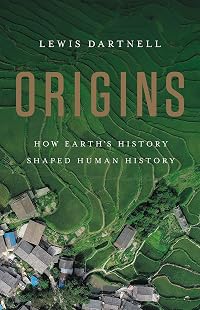
Origins: How Earth's History Shaped Human History
by Lewis Dartnell
On This Page
Description
"When we talk about human history, we often focus on great leaders, population forces, and decisive wars. But how has the earth itself determined our destiny? Our planet wobbles, driving changes in climate that forced the transition from nomadism to farming. Mountainous terrain led to the development of democracy in Greece. Atmospheric circulation patterns later on shaped the progression of global exploration, colonization, and trade. Even today, voting behavior in the south-east United show more States ultimately follows the underlying pattern of 75 million-year-old sediments from an ancient sea. Everywhere is the deep imprint of the planetary on the human. From the cultivation of the first crops to the founding of modern states, Origins reveals the breathtaking impact of the earth beneath our feet on the shape of our human civilizations"-- show lessTags
Recommendations








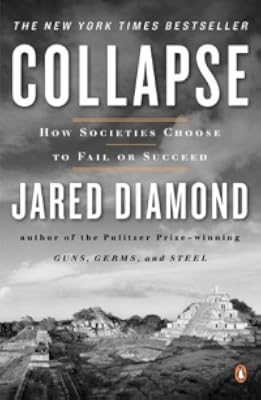




Member Recommendations

Member Reviews
Origins is a fascinating demonstration of the many ways geology (and other earth sciences) has shaped human history. Some of it is well known like the Black Belt in the American South East. But much of it is new, or at least seems new when told as a whole. Civilizations it turns out arose along the fault lines of continental plates because this is where minerals and other resources tend to be most available. The human species arose in the rift valley of East Africa because the unique geography creates a wet-period/dry-period "pump" that sped up evolution and eventually pushed humans out of Africa. It keeps going page after page of perspectives and ideas. Your interest in this might be equal to how interesting you already find the topic show more of geology and human history. I see the influence of geology everywhere in my home region, the earth is a strong but largely invisible background force on people's lives, it takes some consideration to see its influence, however it is everywhere from the large to the small and when you discover something it's a eureka moment. Origins does a good job at showing many large-scale examples I never knew about (and many I did). Everything seems to come back to plate tectonics, that is what made the earth and the earth is what made us. Well worth the journey across time and place. One should remember that just as demography is not destiny, neither is geology, yet both are powerful background forces that like small waves can push the giant ship of history. show less
This book was a joy to read: it was engagingly written and felt securely anchored in the understanding of science and history. I don't think there was much I didn't already know something about already, but the book did an excellent job of showing those things in context, and from a new angle. I could have easily read for another 300 pages.
In Origins, Lewis Dartnell takes a similar approach to that of [a:Jared Diamond|256|Jared Diamond|https://images.gr-assets.com/authors/1456487863p2/256.jpg] in [b:Guns, Germs, and Steel|1842|Guns, Germs, and Steel The Fates of Human Societies|Jared Diamond|https://i.gr-assets.com/images/S/compressed.photo.goodreads.com/books/1453215833l/1842._SY75_.jpg|2138852], using a long view to explain why human development progressed in the way it did. In this case, the billions-years process of geology.
Starting with the hypothesis that humans developed the way we did in East Africa due to the climate created by the Great Rift Valley - a drying out of the land leading to the forest being replaced by savanna, amongst other factors - through the show more forces that raised mountains from which flowed rivers, depositing mineral rich alluvial soils in Mesopotamia and the Indus and Nile valleys, enabling the development of agriculture - extending this to show how voting patterns in US elections closely match the areas where African slaves were brought to farm cotton, and still have large black populations; how these geological forces allowed civilisation to flourish on the North and East coasts of the Mediterranean rather than the South; how the patterns of wind and ocean currents enabled European expansion and colonisation; how geological processes have given us the materials to build structures, make our technology and power our civilisations.
His arguments are well made and convincing, although sometimes written a little simplistically - an indication of this is that the footnotes sprinkled throughout the text are of the ‘fascinating aside’ variety, but I found most to be those I’d consider common knowledge. Perhaps that’s simply as I’m someone who reads quite a lot of this type of thing, of course, and a reader newer to the subject may get more out of these.
Overall, a great overview of how the unimaginably long and powerful processes of geology shape not only our world, but us as a species. show less
Starting with the hypothesis that humans developed the way we did in East Africa due to the climate created by the Great Rift Valley - a drying out of the land leading to the forest being replaced by savanna, amongst other factors - through the show more forces that raised mountains from which flowed rivers, depositing mineral rich alluvial soils in Mesopotamia and the Indus and Nile valleys, enabling the development of agriculture - extending this to show how voting patterns in US elections closely match the areas where African slaves were brought to farm cotton, and still have large black populations; how these geological forces allowed civilisation to flourish on the North and East coasts of the Mediterranean rather than the South; how the patterns of wind and ocean currents enabled European expansion and colonisation; how geological processes have given us the materials to build structures, make our technology and power our civilisations.
His arguments are well made and convincing, although sometimes written a little simplistically - an indication of this is that the footnotes sprinkled throughout the text are of the ‘fascinating aside’ variety, but I found most to be those I’d consider common knowledge. Perhaps that’s simply as I’m someone who reads quite a lot of this type of thing, of course, and a reader newer to the subject may get more out of these.
Overall, a great overview of how the unimaginably long and powerful processes of geology shape not only our world, but us as a species. show less
I bought this after hearing an interview with Lewis Dartnell on ABC Radio, in which he had plenty of interesting stories anecdotes to tell. Sadly the book doesn't quite live up to this but its still quite interesting.
The overall theme is how plate techtonics have created our world, and shaped the development of humans in sometimes surprising ways. This is interesting enough as far as it goes - yes we all understand that human civilizations found it easier to develop East - West than North - South due to similarities in soil, climate, temperature etc moving in that direction but Jared Diamond and others have already discussed this in detail - Diamond famously posing the question as to why the Spanish invaded the Aztecs and not the other show more way around.
Dartnell is more interesting on maritime history particularly the Portuguese innovations in navigation that opened up the fast route to India - and by accident led to the discovery of Brazil - and how using the Roaring 40s in the Southern Hemisphere effectively opened up a super highway to Indonesia, but also led to the wreck of many a ship that missed its exit ramp, off the coast of Western Australia
So its interesting, but is told rather in the tone of a TV documentary; perhaps thats what it is, or will be. I was hoping for something a little more show less
The overall theme is how plate techtonics have created our world, and shaped the development of humans in sometimes surprising ways. This is interesting enough as far as it goes - yes we all understand that human civilizations found it easier to develop East - West than North - South due to similarities in soil, climate, temperature etc moving in that direction but Jared Diamond and others have already discussed this in detail - Diamond famously posing the question as to why the Spanish invaded the Aztecs and not the other show more way around.
Dartnell is more interesting on maritime history particularly the Portuguese innovations in navigation that opened up the fast route to India - and by accident led to the discovery of Brazil - and how using the Roaring 40s in the Southern Hemisphere effectively opened up a super highway to Indonesia, but also led to the wreck of many a ship that missed its exit ramp, off the coast of Western Australia
So its interesting, but is told rather in the tone of a TV documentary; perhaps thats what it is, or will be. I was hoping for something a little more show less
Interesting but read like a book of trivia.
Fascinating combination of geology, geography, technology and history. In a very readable style. Its scope can be gathered from excerpts from the bibliography:
- The shaping of modern human immune systems by multi-regional admixture with archaic humans.
- Climate change: biological and human aspects.
- Loess in Europe.
- The Barbegal water mill in its environment.
- The sea and civilization.
- Rich petroleum source rocks.
- Anthropogenic carbon release rate unprecedented during the past 66 million years.
- The shaping of modern human immune systems by multi-regional admixture with archaic humans.
- Climate change: biological and human aspects.
- Loess in Europe.
- The Barbegal water mill in its environment.
- The sea and civilization.
- Rich petroleum source rocks.
- Anthropogenic carbon release rate unprecedented during the past 66 million years.
A good book, well written, and very interesting
Members
- Recently Added By
Published Reviews
Such a grand sweep of history and prehistory could be chaotic, but Dartnell’s story is beautifully written and organized. His infectious curiosity and enthusiasm tug the reader from page to page, synthesizing geology, oceanography, climatology, meteorology, geography, palaeontology, archaeology and political history in a manner that recalls Jared Diamond’s classic 1997 book Guns, Germs, show more and Steel. show less
added by ndara
Lists

Geography (Michelle TBR)
16 works; 1 member

Big History
72 works; 1 member

Books recommended in the history category on FiveBooks.com
329 works; 4 members
Author Information

15+ Works 1,664 Members
Awards and Honors
Notable Lists
Common Knowledge
- Original publication date
- 2019-01
- Important places
- Earth
- First words
- Why is the world the way it is? (Introduction)
We are all apes. - Last words
- (Click to show. Warning: May contain spoilers.)In this sense we will have come full circle: from the earliest agrarian societies capturing the energy of sunlight with their fields of crops and felled woodland, to installing a miniature sun within our fusion reactors, and so cutting out the middleman.
(Click to show. Warning: May contain spoilers.)The Earth made us. (Coda) - Blurbers
- Fortey, Richard; Nield, Ted
Classifications
- Genres
- Anthropology, Science & Nature, History, Nonfiction, General Nonfiction
- DDC/MDS
- 599.938 — Natural sciences & mathematics Animals Mammals Homo sapiens Genetics, sex and age characteristics, evolution Evolution
- LCC
- GN281.4 .D37 — Geography, Anthropology and Recreation Anthropology Anthropology Physical anthropology. Somatology Human evolution
- BISAC
Statistics
- Members
- 483
- Popularity
- 62,603
- Reviews
- 14
- Rating
- (3.85)
- Languages
- 9 — Danish, Dutch, English, French, German, Serbian, Spanish, Swedish, Turkish
- Media
- Paper, Audiobook, Ebook
- ISBNs
- 23
- ASINs
- 6