Rowing to Latitude: Journeys Along the Arctic's Edge
by Jill Fredston
On This Page
Description
Two by sea: a couple rows the wild coasts of the far north in Rowing to Latitude: Journeys Along the Arctic's Edge.Jill Fredston has traveled more than twenty thousand miles of the Arctic and sub-Arctic-backwards. With her ocean-going rowing shell and her husband, Doug Fesler, in a small boat of his own, she has disappeared every summer for years, exploring the rugged shorelines of Alaska, Canada, Greenland, Spitsbergen, and Norway. Carrying what they need to be self-sufficient, the two of show more them have battled mountainous seas and hurricane-force winds, dragged their boats across jumbles of ice, fended off grizzlies and polar bears, been serenaded by humpback whales and scrutinized by puffins, and reveled in moments of calm.As Fredston writes, these trips are "neither a vacation nor an escape, they are a way of life." Rowing to Latitude is a lyrical, vivid celebration of these northern journeys and the insights they inspired. It is a passionate testimonial to the extraordinary grace and fragility of wild places, the power of companionship, the harsh but liberating reality of risk, the lure of discovery, and the challenges and joys of living an unconventional life. show lessTags
Recommendations

























Member Reviews
This is my favorite kind of travel book, a first-person account of difficult travels in a wild and dangerous place. Jill Fredston writes wonderfully well of her adventures rowing around the Arctic with her husband, Doug Fesler. Avalanche experts in Alaska most of the year, they take off in a rowboat and kayak in the summer to row long distances in lonely waters. This is the story of what they learn, why they do it, and how it changes them in the process. A lovely book and one of a series that I steal from my wife when she is finished reading them for her book club.
I flew through this great travel memoir about rowing in various arctic waters. I didn't really know what to expect when I started this book. I thought it was going to primarily be about a woman facing the challenges of rowing by herself in the wilderness. Instead its really about a couple who rows together in the wilderness. At first I didn't like the author's tone. There was something a little haughty about Jill that I didn't like. Than I realized that she is an east coaster who moved to Alaska, and it all clicked. I'm used to talking to bitter transplant Alaskans. It's just why they are here in the first place. Anyway, after I got over that, I really enjoyed the commentary on all the places that Jill and Doug had gone. The Alaska show more portion was especially interesting and I appreciated that Jill didn't pull any punches on some of the not so pleasant things she saw on the remote west and North coasts. The Norway trip was also intriguing. I didn't realize that there was so little wildlife along that coast. Favorite quote: "We saw more wildlife in the first hour outside of Whittier's small boat harbor (Prince William Sound, Alaska) than we saw during five months in Norway."
One of my friends who also read this book noticed something that I hadn't. While reading about her journey's, its easy to forget that she is rowing the whole time. Its not like she isn't writing about the rowing, but I just kept having to remind myself, "oh yeah, she is still rowing this giant boat through arctic waters". Part of it, maybe, is that I found this book to be more about a relationship between Jill and Doug than rowing. Her writing about how they make decisions and support each other and fight with each other reminded me of going on long hikes with my wife. Many points in the book offered me opportunities for reflection.
I didn't care so much for some of the flowery metaphors that popped up here and there. They seemed a bit forced. On the plus side, there is a very good chapter near the end on her philosophy of risk management. It's very practical, succinct, and well worded. I found myself agreeing with most it. I have an adventurous friend or two who could really stand to read this chapter.
When I finished, I found myself wondering what other trips Jill and Doug have been up to. It's been nine years since she wrote this book. I will have to see if they are still in the Anchorage area and still writing.
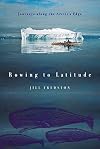
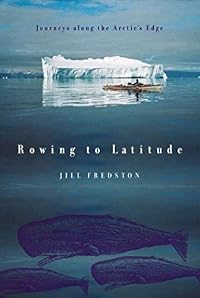
Side note: tons of whales in this book, but alas no sperm whales, like the cover alludes to. show less
One of my friends who also read this book noticed something that I hadn't. While reading about her journey's, its easy to forget that she is rowing the whole time. Its not like she isn't writing about the rowing, but I just kept having to remind myself, "oh yeah, she is still rowing this giant boat through arctic waters". Part of it, maybe, is that I found this book to be more about a relationship between Jill and Doug than rowing. Her writing about how they make decisions and support each other and fight with each other reminded me of going on long hikes with my wife. Many points in the book offered me opportunities for reflection.
I didn't care so much for some of the flowery metaphors that popped up here and there. They seemed a bit forced. On the plus side, there is a very good chapter near the end on her philosophy of risk management. It's very practical, succinct, and well worded. I found myself agreeing with most it. I have an adventurous friend or two who could really stand to read this chapter.
When I finished, I found myself wondering what other trips Jill and Doug have been up to. It's been nine years since she wrote this book. I will have to see if they are still in the Anchorage area and still writing.
Side note: tons of whales in this book, but alas no sperm whales, like the cover alludes to. show less
I think Jill and I share a similar need, although hers seems to express itself in more extreme ways. Although I wouldn't choose to row around in the Arctic, I was still right there with her. And I'm glad it was she who could report back on her journeys in this book, and not some lesser messenger lacking in the appropriate levels of reverence for what little wildness remains in this world.
In Rowing to Latitude, Jill Fredstone tackles the reasons why she travels (and why so many of us don't) in perceptive prose. But her own self-discovery isn't the focus of this work. Instead, Fredstone lets her and her husband's rowing trips around Baffin Island, Nova Scotia, Alaska and Greenland take center stage. She is a witness to dying cultures, polluted waters and natural beauty beyond the scope of my imagination. A book to bring your mind to new places and heighten your understanding of why we so urgently need to protect nature.
My mom read this book before I did- it was just sort of lying around the house when I came home from college.
I really liked it. Fredston appears to be a first time writer, and her prose has exactly the unpolished earnestness that makes such writers good. Even if one disagrees with her politics, she makes her points gracefully and with narrative force- the preachy points happen only after she has already snared you in the beauty of the land she rows past.
I really liked it. Fredston appears to be a first time writer, and her prose has exactly the unpolished earnestness that makes such writers good. Even if one disagrees with her politics, she makes her points gracefully and with narrative force- the preachy points happen only after she has already snared you in the beauty of the land she rows past.
This book made me want to canoe the length of the Yukon River. She has beautiful things to say about nature and our relationship with it, and some wonderful storytelling as well.
Members
- Recently Added By
Author Information
3+ Works 449 Members
Awards and Honors
Awards
Work Relationships
Is abridged in
Classifications
- Genres
- Nonfiction, Travel, Sports and Leisure, General Nonfiction, Biography & Memoir, Science & Nature
- DDC/MDS
- 797.122092 — Arts & recreation Recreation, sports, and performing arts Aquatic and air sports Boating Types of vessels Canoeing
- LCC
- GV790.92 .F74 .A3 — Geography, Anthropology and Recreation Recreation. Leisure Recreation. Leisure Sports Water sports: Canoeing, sailing, yachting, scuba
- BISAC
Statistics
- Members
- 249
- Popularity
- 129,693
- Reviews
- 8
- Rating
- (4.34)
- Languages
- Dutch, English, German
- Media
- Paper, Ebook
- ISBNs
- 5
- ASINs
- 4