On This Page
Description
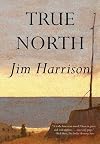
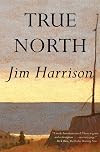
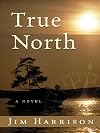
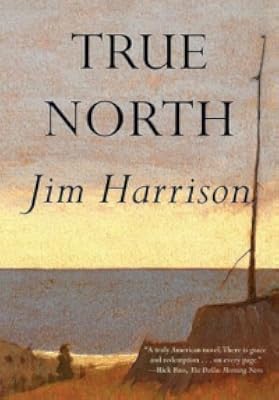
An epic tale that pits a son against the legacy of his family's desecration of the earth, and his own father's more personal violations, Jim Harrison's True North is a beautiful and moving novel that speaks to the territory in our hearts that calls us back to our roots. The scion of a family of wealthy timber barons, David Burkett has grown up with a father who is a malevolent force and a mother made vague and numb by alcohol and pills. He and his sister Cynthia, a firecracker who show more scandalizes the family at fourteen by taking up with the son of their Finnish-Native American gardener, are mostly left to make their own way. As David comes to adulthood-often guided and enlightened by the unforgettable, intractable, courageous women he loves-he realizes he must come to terms with his forefathers' rapacious destruction of the woods of Michigan's Upper Peninsula, as well as the working people who made their wealth possible. Jim Harrison has given us a family tragedy of betrayal, amends, and justice for the worst sins. True North is a bravura performance from one of our finest writers, accomplished with deep humanity, humor, and redemptive soul. show lessTags
Recommendations










Member Reviews
This is a beautifully written novel about the ways that the sins of the parents are visited on the children. David Burkett is a fourth generation member of a family responsible for the deforestation, in true "robber baron" style, of Michigan's Upper Peninsula. Burkett's father is even further flawed. Among other things, he has been a serial statutory rapist throughout David's life. As he grows (during the novel) from early teens through the middle of his 30s, David, an intellectual who wants no part of his father's business dealings, becomes obsessed with discoving, and writing about, the depths of his family's depravations of greed and ecological disaster. And yet he can't get away from the fact that it is only the fact that he is a show more child of privilege that allows him to live his live this way. David's relationship with his sister, his parents, and the various women he becomes are mostly well drawn. His sister, Cynthia, is a particularly well developed character. In addition, and extremely importantly in terms of the book's overall impact, Harrison's descriptions of many of the natural settings of the Upper Peninsula are admirably rendered. You really feel like you're there.
About two thirds of the way through the novel, however, I grew a bit tired of living inside this character's head. His philosophical meanderings, and the things that occur to him about himself as the narrative rolls along, start to become repetitive. The wonderful quality of the writing, however, pulled me a long nevertheless, and overall with is a terrific novel. show less
About two thirds of the way through the novel, however, I grew a bit tired of living inside this character's head. His philosophical meanderings, and the things that occur to him about himself as the narrative rolls along, start to become repetitive. The wonderful quality of the writing, however, pulled me a long nevertheless, and overall with is a terrific novel. show less
Protagonist David Burkett is descended from a line of wealthy timber barons in the Upper Peninsula of Michigan. He is part of a dysfunctional family. His alcoholic father takes advantage of underage girls. David wishes his he and his father could have an ordinary relationship but is appalled at his debauchery. David feels a sense of guilt for his ancestors’ role in the destruction of natural resources and their corrupt actions against the local people. He is obsessed with making amends but is uncertain how to go about it. He turns to writing. He gets involved with a number of women but has trouble forming lasting bonds. We follow David’s life as he searches for direction.
I have mixed feeling about this book. I appreciated the show more writing, especially the sense of place and descriptions of the natural world. I particularly liked the dog, a wonderful character – probably the most likeable of the bunch. The flow is choppy, and the ending did not work for me. This is my first book by this author, and I liked it enough to read more of Harrison’s work.
3.5 show less
I have mixed feeling about this book. I appreciated the show more writing, especially the sense of place and descriptions of the natural world. I particularly liked the dog, a wonderful character – probably the most likeable of the bunch. The flow is choppy, and the ending did not work for me. This is my first book by this author, and I liked it enough to read more of Harrison’s work.
3.5 show less
I found the book difficult to enter; it's a really specific voice, and the tale depends on knowledge of a broad range of characters and circumstances. But once the voice is assimilated, and once the milieu solidifies around you, the book picks up momentum and begins to unfold. The scent of things awakens. The last third of the book, with the currents of what came before bearing it up, is masterful.
Listening to the audio version I was beginning to tire of the main character's quest for proof of self but I kept hoping "something" would evolve. I think I'm glad I made it to the end but it seemed to take an awfully long time to spin out the story. I found Carla very appealing as she made her appearances amid the humans. He did manage to produce an array of inter-related people that were described to the point where I found I could see and understand them enough to keep me going to find out what would happen to them.
A story telling of a family from northern Michigan whose father was brutal and mother mentally incapable of closeness. Once again JH makes a wealthy, dysfuntional family appear understandable and entertaining to his readers.
An enjoyable read, although too long and a tad repetitive. There's enough good writing to help you stay with it, though.
If the sins of the fathers are visited on the sons, what should a son do to provide moral recompense? In Harrison's earnest, initially riveting new novel, narrator David Burkett decides as a teenager in the 1960s that he must rectify the ecological damage done to his beloved Upper Peninsula area of Michigan by his rapacious timber baron ancestors. More immediately, he vows to tell the world about the rapes and abuses committed by his alcoholic father, a charismatic Yale graduate with an egregious sense of entitlement. After a foray into organized religion, David finds spiritual solace in the stark natural world, described by Harrison in soaring prose. Unable to sustain emotional connection with any woman other than his older sister, show more David has brief liaisons with four women, but he feels more pain over the death of his dog than of his marriage. Meanwhile, he spends decades working on a history of his despised family, only to realize that he is a dud as a writer. By this time, he's in his late 30s, a man who has never achieved maturity because his father hangs like an albatross around his neck. A master of surprise endings (Dalva, etc.), Harrison pulls off a bravura climax when David attempts to reconcile with his feckless father. By this time, though, the reader may have tired of the monochromatic narrative, composed mainly of David's anguished introspection and depressed dreams. Still, Harrison's tragic sense of history and his ironic insight into the depravities of human nature are as potent as ever and bring deeper meaning to his (eventually) redemptive tale.
Copyright © Reed Business Information, a division of Reed Elsevier Inc. All rights reserved. (Publishers Weekly) show less
Copyright © Reed Business Information, a division of Reed Elsevier Inc. All rights reserved. (Publishers Weekly) show less
Members
- Recently Added By
Lists

Top Five Books of 2018
802 works; 265 members

Best Five Books of 2018
5 works; 1 member

Literary Travelogue of the United States Challenge
133 works; 6 members

2000s decade
85 works; 7 members

2000s (the decade, not the century)
184 works; 11 members
Favourite Books
1,819 works; 316 members

Best 21st Century Books (So Far)
670 works; 86 members

Great American Novels
158 works; 42 members

Best Contemporary Literary Fiction (Around the Last 30 Years)
388 works; 122 members
Author Information

81+ Works 11,877 Members
James Thomas Harrison was born on December 11, 1937 in Grayling, Michigan. After receiving a B.A. in comparative literature from Michigan State University in 1960 and a M.A. in comparative literature from the same school in 1964, he briefly taught English at the State University of New York at Stony Brook. During his lifetime, he wrote 14 show more collections of poetry, 21 volumes of fiction, two books of essays, a memoir, and a children's book. His collections of poetry included Plain Song, The Theory and Practice of Rivers, Songs of Unreason, and Dead Man's Float. He received a Guggenheim fellowship for his poetry in 1969. His essays on food, much of which first appeared in Esquire, was collected in the 2001 book, The Raw and the Cooked. His memoir, Off to the Side, was published in 2002. His first novel, Wolf, was published in 1971. His other works of fiction included A Good Day to Die, Farmer, The Road Home, Julip, and The Ancient Minstrel. His novel, Legends of the Fall, was adapted into a feature film starring Anthony Hopkins and Brad Pitt. Harrison wrote the screenplay for the movie. His novel, Dalva, was adapted as a made-for-television movie starring Rod Steiger and Farrah Fawcett. He died on March 26, 2016 at the age of 78. (Bowker Author Biography) show less
Some Editions
Awards and Honors
Awards
Notable Lists
Series

Common Knowledge
- Canonical title*
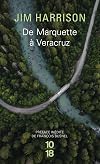
- De Marquette à Vera Cruz
- Original publication date
- 2004
- Important places
- Michigan, USA; Upper Peninsula, Michigan, USA
*Some information comes from Common Knowledge in other languages. Click "Edit" for more information.
Classifications
Statistics
- Members
- 530
- Popularity
- 56,413
- Reviews
- 9
- Rating
- (3.82)
- Languages
- English, French
- Media
- Paper, Audiobook, Ebook
- ISBNs
- 23
- ASINs
- 3