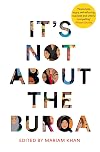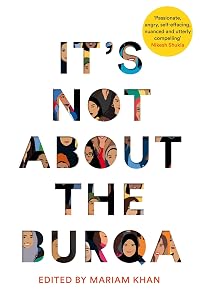
It's Not About the Burqa: Muslim Women on Faith, Feminism, Sexuality and Race
by Mariam Khan (Editor)
On This Page
Description
In 2016, Mariam Khan read that David Cameron had linked the radicalization of Muslim men to the `traditional submissiveness' of Muslim women. Mariam felt pretty sure she didn't know a single Muslim woman who would describe herself that way. Why was she hearing about Muslim women from people who were neither Muslim, nor female? Years later the state of the national discourse has deteriorated even further, and Muslim women's voices are still pushed to the fringes - the figures leading the show more discussion are white and male. Taking one of the most politicized and misused words associated with Muslim women and Islamophobia, It's Not About the Burqa is poised to change all that. Here are voices you won't see represented in the national news headlines: seventeen Muslim women speaking frankly about the hijab and wavering faith, about love and divorce, about feminism, queer identity, sex, and the twin threats of a disapproving community and a racist country. With a mix of British and international women writers, from activist Mona Eltahawy's definition of a revolution to journalist and broadcaster Saima Mir telling the story of her experience of arranged marriage, from author Sufiya Ahmed on her Islamic feminist icon to playwright Afshan D'souza-Lodhi's moving piece about her relationship with her hijab, these essays are funny, warm, sometimes sad, and often angry, and each of them is a passionate declaration calling time on the oppression, the lazy stereotyping, the misogyny and the Islamophobia. What does it mean, exactly, to be a Muslim woman in the West today? According to the media, it's all about the burqa. Here's what it's really about. show lessTags
Recommendations





Member Reviews
A collection of essays by Muslim women, mostly from the UK, covering a variety of topics while centering issues of identity, representation, misogyny, and racism/the racialisation of Islam. As with all essay collections, some are stronger than others. I found myself with lots to think about in terms of the tensions and limitations of diversity/representation, particularly in Nafisa Bakkar's grappling with "where and why [Muslims] should be represented" and her conflicted feelings about what "guidelines", "points of difference", "sense of having some barriers that we must not break" can or should be part of thinking about Islam's social representation and status. There were other points though where I felt myself frustrated with a show more characterisation of Islam that seemed to skirt the line of "No True Scotsman." show less
I'm afraid that this stellar collection won't be as widely read as it deserves to be: the essays within are fantastic, and those who don't go through life as a Muslim woman have so much to learn, straight from Muslim women themselves. Their voices, they point out, are not sought out, even when the conversation (and policies) concern them directly. Many of the authors point out the difficulties of their intersectional identities - not inherent difficulties, but those created by society, culture, and religion. However, there is no inherent contradiction between Islam and feminism, nor is mainstream white, British culture free of misogyny and racism. An important, informative, and sometimes entertaining collection.
See also: YA novels show more Saints & Misfits and Love from A to Z by S.K. Ali
Quotes/notes
Mona Eltahawy:
...Muslim women are especially vulnerable to what I call a trifecta of oppressions: misogyny (faced by all women), racism (faced by women of colour), and Islamophobia (faced by Muslims). (4)
I believe the role of the writer is to tell society what it pretends it does not know. (5)
...it is imperative to ask who speaks for the 'community' and whose interests that community serves.
Too often, 'community' is synonymous with men... (7)
Sufiya Ahmed:
For those who have little knowledge of Islam, there is the assumption that Muslim women's oppression stems from Islamic teachers. This is simply not the case. (33)
Nafisa Bakkar, quoting Dawn Foster:
'focusing on individual success stories is far easier than changing the way business operates - but doesn't actually improve women's working lives.' (55)
Nafisa Bakkar:
We know that, even if they're totally different from us, the rest of the world sees them as representing us. (60)
Yassmin Midhat Abdel-Magied:
coping mechanisms (blocking, rationalizing)
impression management (proving oneself, image projection) (84-85)
I had yet to entertain the thought that I should never need to earn my equality. I was started from a basis of believing that I needed to earn my right to be seen as equal. (87)
Jamilla Hekmoun:
...if I was in physical pain, ther ewould be no question about taking medicine to get better, so why should that be any different with a mental illness? (98)
Mariam Khan:
...I've found being a feminist taxing because I am so emphatically othered in a movement that should represent all women. (109)
Well-meaning feminists are often the people who perpetuate an exclusionary feminism that centers their experience as universal. (112)
Salma Haidrani:
https://www.vice.com/en_uk/article/mvkgp3/how-british-muslim-women-feel-about-co.... (130)
Amna Saleem:
...being a Muslim feminist means being caught between radical Islamists and white supremacists (as well as your garden variety racists), which for the record isn't as fun as it sounds. (146)
Saima Mir:
There is a difference between guilt and shame. Guilt comes from recognizing one's own mistake. Shame is heaped upon us by others. And there is a place for shame in our society. It should be heaped upon the patriarchal cultures that subjugate women... (157)
There are things that we know, things that we recognize to be true, but which must be spoken aloud by those we love to take effect. (158)
Salma El-Wardany:
And the reason [sex, shame, and guilt] have become part of the same conversation is that you cannot talk about sex in Islam without also encountering culture and the patriarchy. (173)
Muslim women are only taught what is wrong, never what is allowed, and they are never encouraged or shown the ways in which two people can, and should, enjoy one another. (174)
If you tell someone something for long enough, they will eventually believe it, and unlearning is a difficult process. (175)
[We need a translation of the Quran] translated by a female scholar, without the trappings of male chauvinism stamped on it. (179)
Raifa Rafiq:
Raligion, race, and gender interact so intimately that to try to unpack one is to intrude on the other. (205)
Malia Bouattia:
Make no mistake - our existence in British society is important, but the relationship is dependent on us being both visible and silent: on being talked about but never invited into the discussion. (210)
It turns out - once more - that 'freedom to choose' is limited to making the right kinds of choices. (219)
...as misogyny exists in wider society, so it will inevitably exist within the Muslim community... (220)
Nadine Aisha Jassat:
There is no one term for the mix of everything we are, and no simple explanation that can be given for how that mix came to be without also drawing on wider history. (226)
Her words seemed to take mine away, and I was no longer sure who I was. (229)
This dynamic - between whose stories are told, and by whom, and who is respected and who is targeted - is played out across society. (233)
pbuh = peace and blessings be upon him show less
See also: YA novels show more Saints & Misfits and Love from A to Z by S.K. Ali
Quotes/notes
Mona Eltahawy:
...Muslim women are especially vulnerable to what I call a trifecta of oppressions: misogyny (faced by all women), racism (faced by women of colour), and Islamophobia (faced by Muslims). (4)
I believe the role of the writer is to tell society what it pretends it does not know. (5)
...it is imperative to ask who speaks for the 'community' and whose interests that community serves.
Too often, 'community' is synonymous with men... (7)
Sufiya Ahmed:
For those who have little knowledge of Islam, there is the assumption that Muslim women's oppression stems from Islamic teachers. This is simply not the case. (33)
Nafisa Bakkar, quoting Dawn Foster:
'focusing on individual success stories is far easier than changing the way business operates - but doesn't actually improve women's working lives.' (55)
Nafisa Bakkar:
We know that, even if they're totally different from us, the rest of the world sees them as representing us. (60)
Yassmin Midhat Abdel-Magied:
coping mechanisms (blocking, rationalizing)
impression management (proving oneself, image projection) (84-85)
I had yet to entertain the thought that I should never need to earn my equality. I was started from a basis of believing that I needed to earn my right to be seen as equal. (87)
Jamilla Hekmoun:
...if I was in physical pain, ther ewould be no question about taking medicine to get better, so why should that be any different with a mental illness? (98)
Mariam Khan:
...I've found being a feminist taxing because I am so emphatically othered in a movement that should represent all women. (109)
Well-meaning feminists are often the people who perpetuate an exclusionary feminism that centers their experience as universal. (112)
Salma Haidrani:
https://www.vice.com/en_uk/article/mvkgp3/how-british-muslim-women-feel-about-co.... (130)
Amna Saleem:
...being a Muslim feminist means being caught between radical Islamists and white supremacists (as well as your garden variety racists), which for the record isn't as fun as it sounds. (146)
Saima Mir:
There is a difference between guilt and shame. Guilt comes from recognizing one's own mistake. Shame is heaped upon us by others. And there is a place for shame in our society. It should be heaped upon the patriarchal cultures that subjugate women... (157)
There are things that we know, things that we recognize to be true, but which must be spoken aloud by those we love to take effect. (158)
Salma El-Wardany:
And the reason [sex, shame, and guilt] have become part of the same conversation is that you cannot talk about sex in Islam without also encountering culture and the patriarchy. (173)
Muslim women are only taught what is wrong, never what is allowed, and they are never encouraged or shown the ways in which two people can, and should, enjoy one another. (174)
If you tell someone something for long enough, they will eventually believe it, and unlearning is a difficult process. (175)
[We need a translation of the Quran] translated by a female scholar, without the trappings of male chauvinism stamped on it. (179)
Raifa Rafiq:
Raligion, race, and gender interact so intimately that to try to unpack one is to intrude on the other. (205)
Malia Bouattia:
Make no mistake - our existence in British society is important, but the relationship is dependent on us being both visible and silent: on being talked about but never invited into the discussion. (210)
It turns out - once more - that 'freedom to choose' is limited to making the right kinds of choices. (219)
...as misogyny exists in wider society, so it will inevitably exist within the Muslim community... (220)
Nadine Aisha Jassat:
There is no one term for the mix of everything we are, and no simple explanation that can be given for how that mix came to be without also drawing on wider history. (226)
Her words seemed to take mine away, and I was no longer sure who I was. (229)
This dynamic - between whose stories are told, and by whom, and who is respected and who is targeted - is played out across society. (233)
pbuh = peace and blessings be upon him show less
This is a series of essays by muslim women and covers a range of topics and experiences. The colleciton was prompted by the idea that while many people claim to speak for Muslim women, it is rare that you hear from Muslim women. this collection aims to put their perspective. And it is a wide ranging one. There are a range of contributors here, of different origins and different degress of religious belief or practice. The essays cover how they are percieved; how mainstream feminism fails to be sufficinely inclusive of women who don't fit the feminists idea of a woman; the head scarf and wearing it versus not wearing, what it signals and what it means; how different cultural influences mean that black muslims suffer from racism within show more the muslim comunity itself and how the percieved mysogeny is more cultural than based on the Quran. For the most part it is eye openeing and illuminating. The essayists are confident and yet depict the barriers they and their fellows face. As a colleciton it shows how diverse the label "muslim woman" can be, there are a vast array of people here that all represent that label, and yet they are not one person or one experience.
Once or twice it felt rather aggressive and that acts entirely counter productively, but that was the exception in the collection.
I listened to this, as read by the essayists. If you want to peek under the veils and glimpse the women behind them, this would be a very good place to start. show less
Once or twice it felt rather aggressive and that acts entirely counter productively, but that was the exception in the collection.
I listened to this, as read by the essayists. If you want to peek under the veils and glimpse the women behind them, this would be a very good place to start. show less
This is an anthology of essays by Muslim women, mainly from the UK, about issues facing Muslim women. A lot of the essays were quite powerful, and it was also interesting to see the range of voices and perspectives in the book. A few of my favorites included "Feminism Needs to Die" (Mariam Khan), on the importance of intersectional feminism; "Life was Easier Before I was Woke" (Yassmin Midhat Abdel-Magied), on her experiences with racism and sexism; "How Not to Get Married" (Aina Khan), on family law; and "A Woman of Substance" (Saima Mir), on divorce in the Muslim community. The authors cover a pretty wide range of topics, from marriage and divorce to the hijab, sex, and mental health. Some of the essays do get repetitive, but it was show more definitely a thought-provoking book. show less
I've a simple policy:
1. Never trust people who become too offensive about religion.
2. Never trust people who become too defensive about religion.
Unfortunately, at least half of the essays in this book fell in either of the above two categories. It seems targeted at a very narrow set of readers, thereby missing out on the golden opportunity to speak to all women across religions and regions.
While all the seventeen essays are written by Muslim women of colour, I enjoyed only those that narrated their personal experience of living as a Muslim believer in a Muslim family in a non-Muslim nation.
What I wanted from the book was an insight into life as a modern Muslim woman. Only a few essays satisfied this curiosity. Yes, there are moments show more of fun and pain, moments of motivation and desperation, even a couple of moments that are eye-opening and brilliant. But these appear in bits and pieces, with vehemence and aggression being the more dominant emotions. When will people realise that pushing down others doesn't elevate themselves?
Hence this ended up as a mixed bag for me. Maybe I just expected more. Or maybe, the book delivered less than the potential it had. It just feels like a wasted opportunity.
*************************************
Join me on the Facebook group, Readers Forever!, for more reviews, book-related discussions and fun. show less
1. Never trust people who become too offensive about religion.
2. Never trust people who become too defensive about religion.
Unfortunately, at least half of the essays in this book fell in either of the above two categories. It seems targeted at a very narrow set of readers, thereby missing out on the golden opportunity to speak to all women across religions and regions.
While all the seventeen essays are written by Muslim women of colour, I enjoyed only those that narrated their personal experience of living as a Muslim believer in a Muslim family in a non-Muslim nation.
What I wanted from the book was an insight into life as a modern Muslim woman. Only a few essays satisfied this curiosity. Yes, there are moments show more of fun and pain, moments of motivation and desperation, even a couple of moments that are eye-opening and brilliant. But these appear in bits and pieces, with vehemence and aggression being the more dominant emotions. When will people realise that pushing down others doesn't elevate themselves?
Hence this ended up as a mixed bag for me. Maybe I just expected more. Or maybe, the book delivered less than the potential it had. It just feels like a wasted opportunity.
*************************************
Join me on the Facebook group, Readers Forever!, for more reviews, book-related discussions and fun. show less
This is good. I was hesitant to read it partially because i find non-fiction often a chore but these are fairly easy to read. There's a couple of funnier ones at the start to ease you in.
Some topics are a bit overly familiar, such as he cultural/religious resistance to sex education and mental healthcare. Others though where quite informative and interesting.
Of course as an Irish (read incredibly white and raised catholic, it didn't take thank god) male i'm pretty far from the target audience.
However its always a good idea to hear other voices especially with the Echo Chamber effect getting stronger everyday.
PS: I think this format of short pieces by multiple authors will be my go-to for non-fiction in future.
Some topics are a bit overly familiar, such as he cultural/religious resistance to sex education and mental healthcare. Others though where quite informative and interesting.
Of course as an Irish (read incredibly white and raised catholic, it didn't take thank god) male i'm pretty far from the target audience.
However its always a good idea to hear other voices especially with the Echo Chamber effect getting stronger everyday.
PS: I think this format of short pieces by multiple authors will be my go-to for non-fiction in future.
This is a fascinating collection of essays written by Muslim women. I don't remember having read anything like this before; if I've read pieces by Muslim women, it wasn't about being a Muslim woman. This is a really eye-opening book, and worth a look.
Members
- Recently Added By
Author Information
All Editions
Awards and Honors
Distinctions
The Guardian Book of the Day (2019-03-26)
Common Knowledge
- Original publication date
- 2019-02-21
Classifications
- Genres
- Nonfiction, General Nonfiction, Religion & Spirituality, Sexuality and Gender Studies
- DDC/MDS
- 305.48697 — Society, government, & culture Social sciences, sociology & anthropology Social group - Age, Gender, Ethnicity Women Specific groups of women Women and religion
- LCC
- HQ1170 .I924 — Social sciences The family. Marriage, Women and Sexuality The Family. Marriage. Women Women. Feminism
- BISAC
Statistics
- Members
- 245
- Popularity
- 132,512
- Reviews
- 9
- Rating
- (3.84)
- Languages
- English
- Media
- Paper, Audiobook, Ebook
- ISBNs
- 9
- ASINs
- 1