
Mona Eltahawy
Author of The Seven Necessary Sins for Women and Girls
About the Author
Mona Eltahawy is an author, an activist, a commentator, and one of today's most powerful and important thought leaders on global feminism. Her essays and op-eds have appeared in the New York Times, the Washington Post, The Guardian, Time, NBCNews.com, and New York magazine, among many others. show more Follow her on Twitter @monaeltahawy. show less
Works by Mona Eltahawy
Associated Works
It's Not About the Burqa: Muslim Women on Faith, Feminism, Sexuality and Race (2019) — Contributor — 245 copies, 9 reviews
Halal Sex: The Intimate Lives of Muslim Women in North America (2023) — Foreword, some editions — 15 copies
Tagged
Common Knowledge
- Birthdate
- 1967-08-01
- Gender
- female
- Occupations
- journalist
- Nationality
- Egypt
- Places of residence
- Cairo, Egypt
England, UK
USA
Members
Reviews
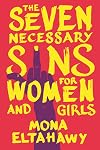
Oh folks. I wanted very much to like this book--I'm always down for a good manifesto. I found it difficult to read at first, and I'm not sure why, but then it hit one of my Absolute No-Nos, and I couldn't put it down. It wasn't a hate-read, exactly, but it absolutely clarified certain things for me about certain forms of feminism.
So I will say first: Eltahawy's rightful and righteous anger is compelling, and it's clear she's deeply invested in protecting women and destroying patriarchy as show more she understands it, which is absolutely understandable. Her chapter on violence in particular asks a lot of difficult questions I think are worth chewing on, even if I am uncomfortable to some extent with their implications (as she wants me to be!) She draws on a huge number of international feminists of color and does not hold back and holding any number of nations responsible for their role in global patriarchy; I don't think anyone is really left unexamined.
What I was most enraged by was the ways in which trans women appeared in this book. Twice Eltahawy cites the statistic that the life expectancy of trans women of color is age 35, which is a statistic I'm familiar with as a nonbinary trans person who exists on the internet. That statistic is made up; no study has ever been produced of the life expectancy of trans people, period, and doing so would be incredibly difficult. In her first citation, the abstract of the report notes that the authors "had received information" from unspecified sources of the life expectancy numbers. This is my Big Beef; repeating that statistic is bad enough when it comes from trans people who are living with the threat of death (real or imagined) all the time, but now cis allies are repeating it. And not just repeating it--Eltahawy pairs the statistic with every time trans women make a major appearance in her arguments (first in her chapter on attention, where she notes that attention, a "sin" that women and girls must crave, is dangerous for trans women, and then again in her chapter on lust, where it appears alongside insisting we must consider trans women to be women) so that trans women are always alongside death in the text.
This makes sense if you understand the book to be almost wholly surrounding the experiences of cis women, which it is. Eltahawy draws repeatedly on ideas regarding socialization, though she doesn't not necessarily name it as such; these sins, she insists, women are socialized away from worldwide. Yet so many of these claims are around vaginas, menstruation, and little about the experiences of socialization are interrogated with regard to gender difference (though she is careful about race in particular, and class to a lesser extent.) Women must embrace these "sins" they have been socialized away from. Early in the book, Eltahawy insists she is not interested in the damage that patriarchy does to men, which a claim which I admire to a certain extent, but then the absence of trans men and transmasculine people, and thus of the problems they pose to her feminism, mean that she cannot actually interrogate the impact of patriarchy on people who are not cis women, despite her occasional inclusion of trans women (and once, very casually, trans men.) There is no interrogation of the impact of patriarchy on nonbinary people (as if that impact is singular, and impacts equally across all nonbinary people,) though she is quick to include them in her list of "women, nonbinary, and queer people." She includes the activism work of cis gay men in her book; she includes no trans voices at all. (Her chapter on lust also seems to hold little space for asexual people, for folks interested in that, nor does she speak of the potential of sex as a space of reenacting trauma etc, but I don't know that I expected the latter.)
Maybe I'm being too harsh because she hit on my Personal Specific Beef with the statistics, but I think the deployment of those statistics, and her inability to grapple with the problem that transgender people (especially trans men) pose to her ideas of feminism seem to indicate a larger problem within cis feminism. Eltahawy is not a TERF necessarily, though I think having her engage deeply in the legacies of radical feminism on her thinking would be really interesting (especially around issues of violence,) and she speaks the language of incorporation, but I'm left again with the understanding that mere incorporation without actually engaging in what the lives of transgender people (and trans women especially) entail in their relationship to patriarchy is not a feminism I find compelling. show less
So I will say first: Eltahawy's rightful and righteous anger is compelling, and it's clear she's deeply invested in protecting women and destroying patriarchy as show more she understands it, which is absolutely understandable. Her chapter on violence in particular asks a lot of difficult questions I think are worth chewing on, even if I am uncomfortable to some extent with their implications (as she wants me to be!) She draws on a huge number of international feminists of color and does not hold back and holding any number of nations responsible for their role in global patriarchy; I don't think anyone is really left unexamined.
What I was most enraged by was the ways in which trans women appeared in this book. Twice Eltahawy cites the statistic that the life expectancy of trans women of color is age 35, which is a statistic I'm familiar with as a nonbinary trans person who exists on the internet. That statistic is made up; no study has ever been produced of the life expectancy of trans people, period, and doing so would be incredibly difficult. In her first citation, the abstract of the report notes that the authors "had received information" from unspecified sources of the life expectancy numbers. This is my Big Beef; repeating that statistic is bad enough when it comes from trans people who are living with the threat of death (real or imagined) all the time, but now cis allies are repeating it. And not just repeating it--Eltahawy pairs the statistic with every time trans women make a major appearance in her arguments (first in her chapter on attention, where she notes that attention, a "sin" that women and girls must crave, is dangerous for trans women, and then again in her chapter on lust, where it appears alongside insisting we must consider trans women to be women) so that trans women are always alongside death in the text.
This makes sense if you understand the book to be almost wholly surrounding the experiences of cis women, which it is. Eltahawy draws repeatedly on ideas regarding socialization, though she doesn't not necessarily name it as such; these sins, she insists, women are socialized away from worldwide. Yet so many of these claims are around vaginas, menstruation, and little about the experiences of socialization are interrogated with regard to gender difference (though she is careful about race in particular, and class to a lesser extent.) Women must embrace these "sins" they have been socialized away from. Early in the book, Eltahawy insists she is not interested in the damage that patriarchy does to men, which a claim which I admire to a certain extent, but then the absence of trans men and transmasculine people, and thus of the problems they pose to her feminism, mean that she cannot actually interrogate the impact of patriarchy on people who are not cis women, despite her occasional inclusion of trans women (and once, very casually, trans men.) There is no interrogation of the impact of patriarchy on nonbinary people (as if that impact is singular, and impacts equally across all nonbinary people,) though she is quick to include them in her list of "women, nonbinary, and queer people." She includes the activism work of cis gay men in her book; she includes no trans voices at all. (Her chapter on lust also seems to hold little space for asexual people, for folks interested in that, nor does she speak of the potential of sex as a space of reenacting trauma etc, but I don't know that I expected the latter.)
Maybe I'm being too harsh because she hit on my Personal Specific Beef with the statistics, but I think the deployment of those statistics, and her inability to grapple with the problem that transgender people (especially trans men) pose to her ideas of feminism seem to indicate a larger problem within cis feminism. Eltahawy is not a TERF necessarily, though I think having her engage deeply in the legacies of radical feminism on her thinking would be really interesting (especially around issues of violence,) and she speaks the language of incorporation, but I'm left again with the understanding that mere incorporation without actually engaging in what the lives of transgender people (and trans women especially) entail in their relationship to patriarchy is not a feminism I find compelling. show less
Best for:
Women. People with women in their lives. Feminists.
In a nutshell:
Author and activist Eltahawy makes the case for the sins women should embrace as we seek to destroy the patriarch.
Worth quoting:
“I don’t want to be protected. I want to be free.”
“I refuse to be civil with someone who refuses to acknowledge my humanity fully.”
“But who indoctrinated those Republican white women? Who taught them to submit to patriarchy? Those are questions often reserved for Muslima women, but show more I demand we ask them now of white women - whose votes uphold the benefits of whiteness but hurt the rest of us.”
Why I chose it:
I was looking for a little motivation, and I wanted to read some quality, bad-ass writing.
Review:
What a perfect book to reach my Cannonball Read goal on: a call to action written by a queer woman of color. Fuck yeah.
Within the first ten pages of this book, Eltahawy shares two different experiences of sexual assault, and how she has changed as a person between them. The second one ends with her beating the shit out of her assailant.
Eltahawy frames this book around seven actions - sins - that she argues women are taught to stay away from but that indeed very necessary in overthrowing the patriarchy. The sins are Anger, Attention, Profanity, Ambition, Power, Violence, and Lust. In each exploration of sin, she offers examples of how that action was necessary in fighting back against the harm patriarchy inflicts on us all. Some, I have no problem embracing - anger, profanity, even ambition. Others I do have somewhat of a negative response to - attention, violence. But Eltahawy makes strong cases for each, with the constant refrain that we need to dismantle and overthrow the patriarchy, that it hurts women and girls, and being polite and asking to be respected hasn’t worked.
We have to demand it, and take the power back, by force if necessary.
I finished this with the backdrop of what’s been going on in the US this week, where a court that includes two men accused of sexual harassment / sexual assault (Thomas and Kavanaugh) along with a woman Eltahawy would definitely characterize as a foot soldier of the patriarchy (Coney Barrett, who probably wouldn’t have to do much acting to take on a Commander’s Wife role in The Handmaid’s Tale) will help to bastardize the US Constitution and take away one of the most fundamental human rights from people who can get pregnant. Its disgusting, it pisses me off, and having such an obvious marker of the patriarchy in the background as I read made this hit a little different than it might have if I’d read it at a different time.
There’s so much to unpack here, I wish I’d read this with other women, and could discuss each of the chapters separately. But it’s one of my favorite books of the year, and one I can see myself referring back to often.
Recommend to a Friend / Donate it / Toss it:
Recommend to a Friend show less
Women. People with women in their lives. Feminists.
In a nutshell:
Author and activist Eltahawy makes the case for the sins women should embrace as we seek to destroy the patriarch.
Worth quoting:
“I don’t want to be protected. I want to be free.”
“I refuse to be civil with someone who refuses to acknowledge my humanity fully.”
“But who indoctrinated those Republican white women? Who taught them to submit to patriarchy? Those are questions often reserved for Muslima women, but show more I demand we ask them now of white women - whose votes uphold the benefits of whiteness but hurt the rest of us.”
Why I chose it:
I was looking for a little motivation, and I wanted to read some quality, bad-ass writing.
Review:
What a perfect book to reach my Cannonball Read goal on: a call to action written by a queer woman of color. Fuck yeah.
Within the first ten pages of this book, Eltahawy shares two different experiences of sexual assault, and how she has changed as a person between them. The second one ends with her beating the shit out of her assailant.
Eltahawy frames this book around seven actions - sins - that she argues women are taught to stay away from but that indeed very necessary in overthrowing the patriarchy. The sins are Anger, Attention, Profanity, Ambition, Power, Violence, and Lust. In each exploration of sin, she offers examples of how that action was necessary in fighting back against the harm patriarchy inflicts on us all. Some, I have no problem embracing - anger, profanity, even ambition. Others I do have somewhat of a negative response to - attention, violence. But Eltahawy makes strong cases for each, with the constant refrain that we need to dismantle and overthrow the patriarchy, that it hurts women and girls, and being polite and asking to be respected hasn’t worked.
We have to demand it, and take the power back, by force if necessary.
I finished this with the backdrop of what’s been going on in the US this week, where a court that includes two men accused of sexual harassment / sexual assault (Thomas and Kavanaugh) along with a woman Eltahawy would definitely characterize as a foot soldier of the patriarchy (Coney Barrett, who probably wouldn’t have to do much acting to take on a Commander’s Wife role in The Handmaid’s Tale) will help to bastardize the US Constitution and take away one of the most fundamental human rights from people who can get pregnant. Its disgusting, it pisses me off, and having such an obvious marker of the patriarchy in the background as I read made this hit a little different than it might have if I’d read it at a different time.
There’s so much to unpack here, I wish I’d read this with other women, and could discuss each of the chapters separately. But it’s one of my favorite books of the year, and one I can see myself referring back to often.
Recommend to a Friend / Donate it / Toss it:
Recommend to a Friend show less
Gave me a feminist boner throughout.
"I will not be civil to anything or anyone that refuses to acknowledge the full humanity of women and girls."
This one is more than a good book about intersectional feminism in the Trump era. It battles more than misogyny, islamophobia, racism, homophobia, fatphobia and transphobia. It actually advocates the right of women to not only be seen, but to be angry about the injustices they face, and their right to not be polite, their right to attention and show more respect.
It was energetic and pure fun to read. Even though it has a great amount of facts of instances of oppression and violence, the general feeling I got was empowerment. It is often that feminist books leave me a bit more depressed about the state of the world. This one calls to action, makes you feel ready to fight for yourself and your sisters.
I loved every word of it. show less
"I will not be civil to anything or anyone that refuses to acknowledge the full humanity of women and girls."
This one is more than a good book about intersectional feminism in the Trump era. It battles more than misogyny, islamophobia, racism, homophobia, fatphobia and transphobia. It actually advocates the right of women to not only be seen, but to be angry about the injustices they face, and their right to not be polite, their right to attention and show more respect.
It was energetic and pure fun to read. Even though it has a great amount of facts of instances of oppression and violence, the general feeling I got was empowerment. It is often that feminist books leave me a bit more depressed about the state of the world. This one calls to action, makes you feel ready to fight for yourself and your sisters.
I loved every word of it. show less
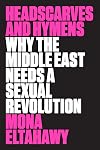
Mona Eltahawy's book, Headscarves and Hymens is a manifesto, intended to be a rallying call for feminists in the Arab world. It is a sometimes compelling and frequently disturbing account of the ways in which misogyny leads to the brutalisation of women in the Middle East. And I do mean brutal—there are a number of points where I had to pause in my reading because I was quite literally nauseated by a story which Eltahawy recounted. Almost every single woman in Egypt has been sexually show more harassed at least once; 15 schoolgirls in Saudi Arabia burned to death in a school because the "morality police" didn't want them to be seen in public without the abaya and headscarf; female genital mutilation is still rampant. Her take-down of what she dubs "purity culture"—and its counterpart amongst religious conservatives in the US—is sharp and to-the-point.
However, I'm inclined to think that Eltahawy works better at essay, as opposed to book, length. Those parts of the book in which she gives her first person account of how she was "traumatized into feminism" are compelling and sincere. Yet beyond that, her arguments and examples can be repetitive, particularly as Eltahawy builds her argument less on any kind of ethnographic field work and more on an aggregation of English-language news reports and dry UN human rights reports.
There are also problematic elements of Eltahawy's work. Is a sexual revolution the same thing as a women's rights and/or feminist revolution? The point is never clarified. Her definition of the "they" who hate women is slippery and shifts at several points in the book. She provides the reader little sense of how nationality, sectarianism, social class, geography, or gender (as opposed specifically to femaleness; she doesn't analyse masculinity at all) affect the narrative she is constructing—while Libya and Lebanon, for instance, may have commonalities of faith, language, and culture, they are also markedly different in many ways. Would an author write of a "Christian Europe" that paired, say, England and Italy in such a manner? Eltahawy seems to be arguing for a misogynist pathology that is unique to the Arab Muslim world, but in order to set up that construction she needs to ignore the non-Arab Muslim world and to avoid comparison with other patriarchal cultures. I wasn't wholly convinced.
I'm also dubious about Eltahawy's demand for the niqab (and possibly even the hijab—she is not clear on this point) to be banned. She would claim that for someone like myself (a white atheist westerner from a Catholic background) to defer to a Muslimah about whether she veils is cultural relativism gone wrong. By not supporting the niqab ban in France, I am implicitly supporting the oppression of Muslim women. But I think it's a more complex issue than Eltahawy presents here. Legislating what a woman cannot wear is no more freeing than legislating what she can. (And even on a basic level: if a man is so repressive that he will not let his wife or daughter leave the house without the niqab, do you think he's going to just give in and let her go out in public without the veil, or will things get worse?)
There are many Muslim feminists who choose to veil, and Eltahawy is quite insistent that they're delusional. Veiling, she argues, is uniquely imposed on women as a means of controlling their sexuality and erasing their personhood. I don't think she's entirely wrong here—there are a variety of reasons why I could never see myself adopting a veil, after all—but nor is she entirely right. For instance, she doesn't even begin to engage with Muslim cultures in which the men veil but the women do not (the Tuareg, Hausa, Fulani, etc).
An interesting book, but very much the beginning of a conversation, not the last word. show less
However, I'm inclined to think that Eltahawy works better at essay, as opposed to book, length. Those parts of the book in which she gives her first person account of how she was "traumatized into feminism" are compelling and sincere. Yet beyond that, her arguments and examples can be repetitive, particularly as Eltahawy builds her argument less on any kind of ethnographic field work and more on an aggregation of English-language news reports and dry UN human rights reports.
There are also problematic elements of Eltahawy's work. Is a sexual revolution the same thing as a women's rights and/or feminist revolution? The point is never clarified. Her definition of the "they" who hate women is slippery and shifts at several points in the book. She provides the reader little sense of how nationality, sectarianism, social class, geography, or gender (as opposed specifically to femaleness; she doesn't analyse masculinity at all) affect the narrative she is constructing—while Libya and Lebanon, for instance, may have commonalities of faith, language, and culture, they are also markedly different in many ways. Would an author write of a "Christian Europe" that paired, say, England and Italy in such a manner? Eltahawy seems to be arguing for a misogynist pathology that is unique to the Arab Muslim world, but in order to set up that construction she needs to ignore the non-Arab Muslim world and to avoid comparison with other patriarchal cultures. I wasn't wholly convinced.
I'm also dubious about Eltahawy's demand for the niqab (and possibly even the hijab—she is not clear on this point) to be banned. She would claim that for someone like myself (a white atheist westerner from a Catholic background) to defer to a Muslimah about whether she veils is cultural relativism gone wrong. By not supporting the niqab ban in France, I am implicitly supporting the oppression of Muslim women. But I think it's a more complex issue than Eltahawy presents here. Legislating what a woman cannot wear is no more freeing than legislating what she can. (And even on a basic level: if a man is so repressive that he will not let his wife or daughter leave the house without the niqab, do you think he's going to just give in and let her go out in public without the veil, or will things get worse?)
There are many Muslim feminists who choose to veil, and Eltahawy is quite insistent that they're delusional. Veiling, she argues, is uniquely imposed on women as a means of controlling their sexuality and erasing their personhood. I don't think she's entirely wrong here—there are a variety of reasons why I could never see myself adopting a veil, after all—but nor is she entirely right. For instance, she doesn't even begin to engage with Muslim cultures in which the men veil but the women do not (the Tuareg, Hausa, Fulani, etc).
An interesting book, but very much the beginning of a conversation, not the last word. show less
Awards


You May Also Like


Associated Authors
Statistics
- Works
- 3
- Also by
- 4
- Members
- 572
- Popularity
- #43,782
- Rating
- 4.0
- Reviews
- 17
- ISBNs
- 45
- Languages
- 7
- Favorited
- 1
