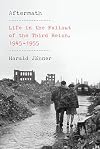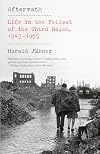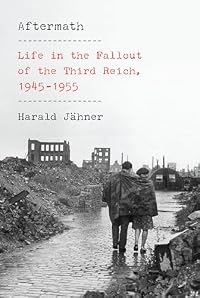
Aftermath: Life in the Fallout of the Third Reich, 1945–1955
by Harald Jähner
On This Page
Description
"A revelatory history of the transformational decade after World War II when Germany raised itself out of the ashes of defeat, turned away from fascism, and reckoned with the corruption of its soul, and the horrors of the Holocaust"--Tags
Recommendations


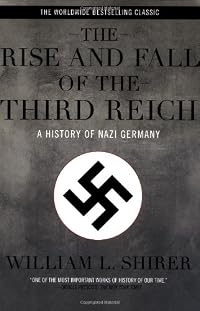
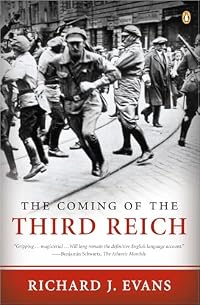



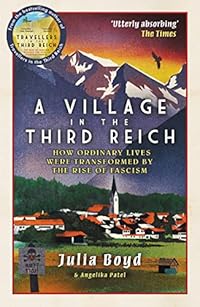
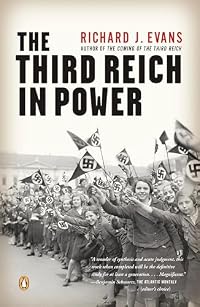











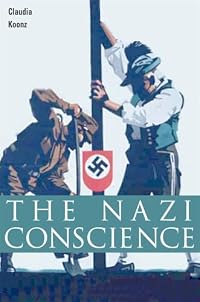











Member Recommendations
Member Reviews
Absolutely incredible. I loved that it covered so many aspects of life, from theft to theater to love. I suspect that many readers will be extremely curious about denazification, as was I, and the chapter does not disappoint; frankly, it stunned me.
One thing that I particularly loved was that Brigitte Eicke's diary was one of the sources of information for this book. See, she grew up on the street that I now live on, in fact I can see her door from my living room. So her input for this book had particular meaning to me, and gave me a little thrill every time I saw her name. For the curious, Eicke's diary is called Backfisch im Bombenkrieg (Teenager in the War), available only in German as of this writing.
One thing that I particularly loved was that Brigitte Eicke's diary was one of the sources of information for this book. See, she grew up on the street that I now live on, in fact I can see her door from my living room. So her input for this book had particular meaning to me, and gave me a little thrill every time I saw her name. For the curious, Eicke's diary is called Backfisch im Bombenkrieg (Teenager in the War), available only in German as of this writing.
Unhappily, I am unable to read Harald Jähner's Wolfszeit for my command of the German language is far too inadequate. I also harbor a bit of innate mistrust of translated material since one never knows how accurately it may represent the author's intentions, nuances, and tone. That said, I find Aftermath: Life in the Fallout of the Third Reich, 1945 – 1955, the English translation by Shaun Whiteside of Wolfszeit, an exceedingly important book, adroitly written and significantly informative.
Why important? Any world history book will tell us that World War II in the European theater ended with Germany's surrender in May 1945. Other books such as David Nasaw's The Last Million: Europe's Displaced Persons from World War to Cold War show more enable us to see the lingering plight of millions of civilians that lost their homes, livelihoods, possessions, and, in many cases, countries in a war that they did not create. But what of the German people themselves? How did they survive in a land in which cities had been bombed into rubble, where food, clothing, supplies of any other sort, and shelter were all but impossible to come by?
Whiteside's translation of Jähner's remarkable history is an eye-opener on the aftermath, the “time of the wolf,” that confronted the German people in the years following the Allied victory. This is history that is as readable as any fascinating novel and, superior to a novel, educates the reader in a facet of history that he or she has likely never encountered before.
Those who appreciate enlargement of their own vocabularies through their reading will also appreciate the fact that this translation was initially published in Great Britain and that Whiteside is possessed of an excellent English vocabulary. I confess that I consulted a dictionary a few times when encountering terms such as obol, volutes, brio, and furbelows. Then there was a reference to a “wood gas carburettor engine” that occasioned a quick Internet search that expanded my knowledge of internal combustion engine fuel.
One can become quite depressed through empathizing with a people trying desperately to survive in a ruined country with almost no functioning infrastructure, and Jähner/Whiteside do address mindsets and beliefs that people created to cope with the situation in which they found themselves. All in all, I found the topic of the book fully worth the time expended in its reading, and I appreciate the readability of Whiteside's translation—which, of course made Jähner's book accessible to me in the first place. show less
Why important? Any world history book will tell us that World War II in the European theater ended with Germany's surrender in May 1945. Other books such as David Nasaw's The Last Million: Europe's Displaced Persons from World War to Cold War show more enable us to see the lingering plight of millions of civilians that lost their homes, livelihoods, possessions, and, in many cases, countries in a war that they did not create. But what of the German people themselves? How did they survive in a land in which cities had been bombed into rubble, where food, clothing, supplies of any other sort, and shelter were all but impossible to come by?
Whiteside's translation of Jähner's remarkable history is an eye-opener on the aftermath, the “time of the wolf,” that confronted the German people in the years following the Allied victory. This is history that is as readable as any fascinating novel and, superior to a novel, educates the reader in a facet of history that he or she has likely never encountered before.
Those who appreciate enlargement of their own vocabularies through their reading will also appreciate the fact that this translation was initially published in Great Britain and that Whiteside is possessed of an excellent English vocabulary. I confess that I consulted a dictionary a few times when encountering terms such as obol, volutes, brio, and furbelows. Then there was a reference to a “wood gas carburettor engine” that occasioned a quick Internet search that expanded my knowledge of internal combustion engine fuel.
One can become quite depressed through empathizing with a people trying desperately to survive in a ruined country with almost no functioning infrastructure, and Jähner/Whiteside do address mindsets and beliefs that people created to cope with the situation in which they found themselves. All in all, I found the topic of the book fully worth the time expended in its reading, and I appreciate the readability of Whiteside's translation—which, of course made Jähner's book accessible to me in the first place. show less
A fascinating read. Many Americans are familiar with the political aftermath of Germany’s defeat, fewer think much about what that defeat meant for ordinary Germans. Mostly they thought themselves victims. Certainly they could point to great suffering--500 million cubic tons of rubble!-- food shortages, and those ghastly fellow Germans expelled from Poland and points east to one’s own doorstep. But victims? Not so much, but in the end the Allies pretty much let the Germans, West and East, claim that mantle. And, asks Harald Jähner, might that have been the necessary price for establishing civil society and democracy in Germany?
Aftermath offers considerable insight on how defeat played out social spaces, from economics (one guess show more whom Germans blamed for the omnipresent black market) to family structure and gender relations. The visual arts saw a ‘rubble chic’ boom and the rise of abstract art in the West, encouraged by the CIA no less, as a Cold War riposte to the socialist realism imposed in the Sovietized GDR.
A true reckoning only would come decades later, and even then, as Jähner wisely surmises: “the generation of 1968 had little interest in a detailed examination of the Nazi involvements of their parents’ generation. They preferred to develop theories of fascism designed to identify capitalism as a preliminary state of dictatorship….”
Over 40 amazing photos add significantly to the book’s considerable value. Well worth your time. 4 stars…. show less
Aftermath offers considerable insight on how defeat played out social spaces, from economics (one guess show more whom Germans blamed for the omnipresent black market) to family structure and gender relations. The visual arts saw a ‘rubble chic’ boom and the rise of abstract art in the West, encouraged by the CIA no less, as a Cold War riposte to the socialist realism imposed in the Sovietized GDR.
A true reckoning only would come decades later, and even then, as Jähner wisely surmises: “the generation of 1968 had little interest in a detailed examination of the Nazi involvements of their parents’ generation. They preferred to develop theories of fascism designed to identify capitalism as a preliminary state of dictatorship….”
Over 40 amazing photos add significantly to the book’s considerable value. Well worth your time. 4 stars…. show less
This is a long, detailed and quite interesting account of the first years of Germany following the defeat of the Nazi regime in 1945. But it is not comprehensive. There are many topics that Jähner has chosen to cover only briefly or superficially. We learn hardly anything about the emergence of new political parties, including revivals of pre-1933 parties like the Social Democrats. There is no mention at all, not even a sentence, about the re-emergence of free and independent trade unions. But there are other subjects where he goes into great depth, and has some insights. The final chapter, which shows how the modern Germany was born as a stable democracy precisely because it did not grapple honestly with its past is one that will be show more controversial. As the author puts it, “We may condemn post-war Germany for its unwillingness to face the truth, but we are surely obliged to agree that it accomplished an extraordinary feat of repression, a process from which later generations profited to a substantial degree.” Yes, read that sentence again. I don’t agree, and I believe instead that the unfinished anti-fascist revolution in Germany, though far better than what happened in Italy or Japan, is not something worthy of praise. Jähner forgives a certain degree of historical amnesia that I, for one, cannot stomach. show less
This is a significant book in many ways in its delve into the postwar German mind, but not quite the book that I wanted to read. The author organizes topically rather than chronologically, making it read a bit like a volume of contributed papers, and, as usual, some are interesting, others not. At its best, it can be a pageturner, sometimes it is pretty sluggish. It doesn't help that in the one of his areas that I've read some, viz., Operation Werwolf, he doesn't get it right. Although the book doesn't claim to be a political history, there is an almost total absence of coverage of that which would have gone a ways toward adding context. His many tangents are not always great; there's quite a bit of art and literary criticism, topics show more which I doubt were foremost in the mind of the common man. This is very good historical research and writing, but not a read for just anybody. show less
תאור עשר השנים שעברו על גרמניה מאז סוף המלחמה ואילץ. תהליך השיקום הפיזי, נדידת העמים, הרעב, ההתעלמות המוחלטת מרצח היהודים, ההוללות המינית, הדנציפיקציה וכשלונה, הפריחה הכלכלית והתרבותית, המלחמה הקרה. למעשה ספר המשך לספרו של יהנר על רפובליקת ויימר וספר משובח כמוהו. כל כך הרבה דברים שלא ידעתי, וכל כך הרבה דברים שידעתי אך לא הבנתי. מרתק
A well researched story about the ten years after the end of WWII in what had been Nazi Germany. This is a part of history that hasn’t been written extensively about, especially beyond the Holocaust and the liberating of the camps right at the end of the way. Much of this book discusses the people of Germany, those who pretty much ignored the evilness going on around them and those who were exiled to foreign lands and their return to their homeland with nothing as a result of the Nazi reign of terror. Much to learn here but pretty dry at the same time. This isn’t so much a book you read for entertainment as it is a book you should read to educate yourself about something you might feel you know a lot about.
Members
- Recently Added By
Lists

Books Read in 2023
5,547 works; 144 members
Author Information

All Editions
Some Editions
Awards and Honors
Awards
Distinctions
Common Knowledge
- Canonical title
- Aftermath: Life in the Fallout of the Third Reich, 1945–1955
- Original title
- Wolfszeit. Deutschland und die Deutschen 1945 - 1955
- Original publication date
- 2019-02-19 (1e édition originale allemande, Rowohlt) (1e édition originale allemande, Rowohlt); 2024-01-10 (1e traduction et édition française, Actes Sud) (1e traduction et édition française, Actes Sud)
- Important places
- Germany
- Important events
- End of World War II
- First words
- On 18 March 1952 the Neue Zeitung published an article by the author and editor Kurt Kusenberg entitled NOTHING CAN BE TAKEN FOR GRANTED: PRAISE FOR A TIME OF MISERY. (Preface)
- Last words
- (Click to show. Warning: May contain spoilers.)Perhaps Jaspers's lessons, intended for a fragmented, conflict-prone country, deserve to be learned by us all.
- Original language
- German
Classifications
- Genres
- History, General Nonfiction, Nonfiction
- DDC/MDS
- 943.087 — History & geography History of Europe Germany and neighboring central European countries Historical periods of Germany Germany 1866- East And West 1945-1990
- LCC
- DD257.2 .J3513 — History of Europe, Asia, Africa and Oceania Germany History of Germany History By period Modern, 1519- 19th-20th centuries Revolution and Republic, 1918- Period of Allied occupation, 1945-
- BISAC
Statistics
- Members
- 745
- Popularity
- 37,565
- Reviews
- 15
- Rating
- (4.03)
- Languages
- 7 — Dutch, English, French, German, Polish, Portuguese, Swedish
- Media
- Paper, Audiobook, Ebook
- ISBNs
- 26
- ASINs
- 11