
A Woman in Berlin: Eight Weeks in the Conquered City: A Diary
by Marta Hillers
On This Page
Description
A New York Times Book Review Editors' Choice. For eight weeks in 1945, as Berlin fell to the Russian army, a young woman kept a daily record of life in her apartment building and among its residents. "With bald honesty and brutal lyricism" (Elle), the anonymous author depicts her fellow Berliners in all their humanity, as well as their cravenness, corrupted first by hunger and then by the Russians. "Spare and unpredictable, minutely observed and utterly free of self-pity" (The Plain Dealer, show more Cleveland), A Woman in Berlin tells of the complex World War II relationship between civilians and an occupying army and the shameful indignities to which women in a conquered city are always subject--the mass rape suffered by all, regardless of age or infirmity. A Woman in Berlin stands as "one of the essential books for understanding war and life" (A. S. Byatt, author of Possession). show lessTags
Recommendations






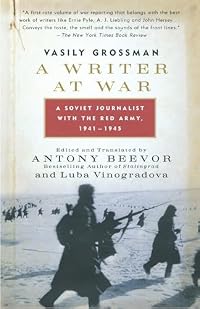










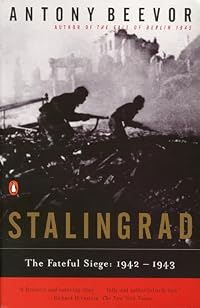
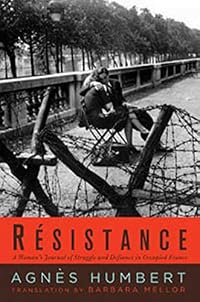


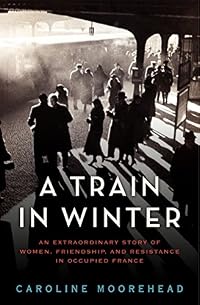

























Member Recommendations



kiwiflowa Both about the immediate aftermath of the surrender of Germany WW2.
betsytacy After reading Gillham's novel about a German woman's life in Berlin at the height of World War II, including her affair with a Jewish man and her growing involvement in hiding Jewish residents, turn to A Woman in Berlin, an anonymous diary account of a woman's struggle to survive the Russian occupation of Berlin at the end of the war.


srdr A riveting story of the author's experiences as a Latvian during the German and Russian occupations of her homeland.
Member Reviews
*A Woman in Berlin* by A Woman in Berlin feels less like a war memoir and more like watching a human consciousness contract and expand under pressure. What surprised me most was not the brutality, though there is plenty of that, but how intellectual and philosophical the narration is. Anonymous is clearly highly educated and deeply reflective. She is not emotionally distant, but analytical, constantly examining what the collapse of Berlin is doing to her morality, beliefs, identity, and understanding of humanity.
The diary begins with a wider lens: war, politics, soldiers, society, the machinery of collapse. But as conditions worsen, her world physically and psychologically narrows until life becomes centered around the attic, food, show more survival, and avoiding danger. Then, when circumstances improve even slightly, her world expands again. The structure of the book mirrors survival itself, shrinking and stretching with each new crisis.
What struck me most is that she never fully retreats from humanity. Even after repeated trauma, she continues to go outside, barter, observe, speak to people, and engage with the ruined society around her. She remains curious about people even when people are dangerous. That tension gives the memoir much of its power.
The book is also unflinching about sexual violence. At first, the assaults come randomly from Soviet soldiers. Later, like many women in Berlin, she makes calculated choices to attach herself to higher-ranking officers in hopes of gaining some protection from constant assault. The memoir refuses to simplify these choices into heroism or shame. Women, young and old alike, were forced into impossible negotiations for survival. Anonymous presents this reality with painful honesty.
What makes this memoir extraordinary is that it complicates the comforting simplicity of liberation narratives. Most people are understandably relieved that the Soviet army entered Berlin and ended the Nazi regime. But this book forces the reader to confront who paid the immediate human price for that victory: women, children, and the elderly civilians left behind in the ruins. Not generals, not politicians, not the architects of the war, but ordinary people trapped beneath history as it rolled over them like tank tracks through wet plaster. show less
The diary begins with a wider lens: war, politics, soldiers, society, the machinery of collapse. But as conditions worsen, her world physically and psychologically narrows until life becomes centered around the attic, food, show more survival, and avoiding danger. Then, when circumstances improve even slightly, her world expands again. The structure of the book mirrors survival itself, shrinking and stretching with each new crisis.
What struck me most is that she never fully retreats from humanity. Even after repeated trauma, she continues to go outside, barter, observe, speak to people, and engage with the ruined society around her. She remains curious about people even when people are dangerous. That tension gives the memoir much of its power.
The book is also unflinching about sexual violence. At first, the assaults come randomly from Soviet soldiers. Later, like many women in Berlin, she makes calculated choices to attach herself to higher-ranking officers in hopes of gaining some protection from constant assault. The memoir refuses to simplify these choices into heroism or shame. Women, young and old alike, were forced into impossible negotiations for survival. Anonymous presents this reality with painful honesty.
What makes this memoir extraordinary is that it complicates the comforting simplicity of liberation narratives. Most people are understandably relieved that the Soviet army entered Berlin and ended the Nazi regime. But this book forces the reader to confront who paid the immediate human price for that victory: women, children, and the elderly civilians left behind in the ruins. Not generals, not politicians, not the architects of the war, but ordinary people trapped beneath history as it rolled over them like tank tracks through wet plaster. show less
Devastating. This is a nasty story in many ways. Drunken soldiers, mass rape of women and children. Cruelty. Pettiness. The author several times quotes about man being a wolf to other men- sort of a comment on "humanity" that is inhumanity really, in much the same way Christians aren't very Christian (or humane) when they preach hate. Nonetheless, it is a fascinating look at the real cost of war- the ones politicians and generals don't think about. On the other hand, it is also a tribute to the resourcefulness and resilience of women, who bore more than their fair share of the costs of war.
https://nwhyte.livejournal.com/3758659.html
A Woman in Berlin is the diary of an anonymous resident of Berlin during and after the final defeat of the Third Reich, from 20 April to 22 June. It's an intense, closely observed account of how an entire society and system of government collapses, and then the first steps to restoring it to a state of order, though under foreign occupation and with a new ideology being imposed on the disempowered inhabitants.
If that were all, it would still be a really valuable account of catastrophic endings and stumbling beginnings at a truly historical moment for Europe. But that is not all. From 27 April to 7 May, the writer, and pretty much every woman in Berlin who did not manage to hide, was raped show more repeatedly by Russian soldiers (strictly, Soviet soldiers; she mentions some from other parts of the USSR). I guess I've always known that this was an integral part of the collapse of the Eastern Front, but it's quite another matter to read a first person account. The details are calmly recounted, as the Russians arrive and take what they want, using German homes and bodies with no need for restraint and encountering little resistance (but no consent). It's a collective experience for the women of Berlin, and to an extent their few remaining men who are unable to intervene; but also an intensely personal and individual one for every woman affected. This grim situation is not unique to Germany in 1945, but it can rarely have been better described.
And yet those 11 days of constant rape are less than a fifth of the time period covered by the diary. On 8 May, VE Day, Berliners, women and men, wake up to the abrupt disappearance of the Russians and then the gradual restoration of civil authority after total catastrophe. The writer, aged 34 in 1945, later moved to Switzerland, and after the brutal reception of her diary when published in Germany in 1959, decided that it would not see light again in her lifetime. She died in 2001, and her identity is now pretty well established; it was republished in 2003 and a 2008 film is based on it.
A few years back I found a fascinating short film of scenes from Berlin in July 1945. The general absence of men is very notable. But every single woman we see must have been through the same experience.
This is a really gripping book, if a very tough read. show less
A Woman in Berlin is the diary of an anonymous resident of Berlin during and after the final defeat of the Third Reich, from 20 April to 22 June. It's an intense, closely observed account of how an entire society and system of government collapses, and then the first steps to restoring it to a state of order, though under foreign occupation and with a new ideology being imposed on the disempowered inhabitants.
If that were all, it would still be a really valuable account of catastrophic endings and stumbling beginnings at a truly historical moment for Europe. But that is not all. From 27 April to 7 May, the writer, and pretty much every woman in Berlin who did not manage to hide, was raped show more repeatedly by Russian soldiers (strictly, Soviet soldiers; she mentions some from other parts of the USSR). I guess I've always known that this was an integral part of the collapse of the Eastern Front, but it's quite another matter to read a first person account. The details are calmly recounted, as the Russians arrive and take what they want, using German homes and bodies with no need for restraint and encountering little resistance (but no consent). It's a collective experience for the women of Berlin, and to an extent their few remaining men who are unable to intervene; but also an intensely personal and individual one for every woman affected. This grim situation is not unique to Germany in 1945, but it can rarely have been better described.
And yet those 11 days of constant rape are less than a fifth of the time period covered by the diary. On 8 May, VE Day, Berliners, women and men, wake up to the abrupt disappearance of the Russians and then the gradual restoration of civil authority after total catastrophe. The writer, aged 34 in 1945, later moved to Switzerland, and after the brutal reception of her diary when published in Germany in 1959, decided that it would not see light again in her lifetime. She died in 2001, and her identity is now pretty well established; it was republished in 2003 and a 2008 film is based on it.
A few years back I found a fascinating short film of scenes from Berlin in July 1945. The general absence of men is very notable. But every single woman we see must have been through the same experience.
This is a really gripping book, if a very tough read. show less
A powerful but bleak read -- here are eight weeks of diary entries (April 20 - June 22, 1945) by a German woman (Journalist Marta Hillers) living in Berlin, just before and after the end of World War II. It is a dark tale of mass rape (by conquering Soviet soldiers), starvation, widespread lawlessness, and human desperation.
I think those of us who live in the U.S. often forget how lucky we were that our mainland was not bombed during World War II. Because this book certainly paints a savage portrait of how the end of the war looked in Europe. Or in any of the areas that were badly damaged, where shortages were already widespread before the war's end, and where the end of the war actually unleashed a new kind of brutality that made life show more even more difficult. It's certainly not the image most of us have of crowds gathering in New York's Time Square, kissing strangers and throwing confetti.
In essence, Berlin in 1945 was in chaos. Scrounging for food, everyday, was the universal preoccupation. Services were non-existent. No jobs, government, banks, running water, electricity, mass transit, or news media. Heavily damaged buildings forced people to randomly seek shelter with neighbors or friends, only to be suddenly kicked out if food ran short. Information was so scarce that no one had any idea what was happening from day to day.
Hardly ANY women (young or old) escaped rape. It was so pervasive, with some women attacked multiple times a day, that many began to accept it as just another regular feature of daily life.
The lesson I took away is that when society's civilizing rules are stripped away and people are forced to struggle everyday for their very survival, there is an opportunity to see both the worst and best humans under stress will do. At one moment, you find yourself warmed by an unexpected act of kindness or generosity. The next, you witness people ransacking their neighbor's meager possessions or stealing food from family members. And you will find yourself celebrating even the small victories -- when boards are nailed up to keep soldiers from spontaneously entering a damaged apartment, when flowing water returns to a faucet, when a public bus means someone doesn't have to walk 12 miles to work.
This book has an interesting history. It was first published in 1954 in the US and translated into seven languages -- all with reasonable success. But when published in Germany, anonymously, in 1959, the book was reviled. Readers were horrified at the pragmatic descriptions of German women taking Soviet lovers, to ensure protection and food. And they accused the author of besmirching the honor of both German women AND German men (who were unable to protect the women). The book was so criticized that the author refused to have another edition published in her lifetime. But when Hillers died in 2001, and the book WAS republished, it won widespread critical acclaim, even in Germany.
If you a student of World War II or interested in the subject of war and how it impacts us humans -- you should definitely read this one. Just understand going in, that you probably will find it hard going. show less
I think those of us who live in the U.S. often forget how lucky we were that our mainland was not bombed during World War II. Because this book certainly paints a savage portrait of how the end of the war looked in Europe. Or in any of the areas that were badly damaged, where shortages were already widespread before the war's end, and where the end of the war actually unleashed a new kind of brutality that made life show more even more difficult. It's certainly not the image most of us have of crowds gathering in New York's Time Square, kissing strangers and throwing confetti.
In essence, Berlin in 1945 was in chaos. Scrounging for food, everyday, was the universal preoccupation. Services were non-existent. No jobs, government, banks, running water, electricity, mass transit, or news media. Heavily damaged buildings forced people to randomly seek shelter with neighbors or friends, only to be suddenly kicked out if food ran short. Information was so scarce that no one had any idea what was happening from day to day.
Hardly ANY women (young or old) escaped rape. It was so pervasive, with some women attacked multiple times a day, that many began to accept it as just another regular feature of daily life.
The lesson I took away is that when society's civilizing rules are stripped away and people are forced to struggle everyday for their very survival, there is an opportunity to see both the worst and best humans under stress will do. At one moment, you find yourself warmed by an unexpected act of kindness or generosity. The next, you witness people ransacking their neighbor's meager possessions or stealing food from family members. And you will find yourself celebrating even the small victories -- when boards are nailed up to keep soldiers from spontaneously entering a damaged apartment, when flowing water returns to a faucet, when a public bus means someone doesn't have to walk 12 miles to work.
This book has an interesting history. It was first published in 1954 in the US and translated into seven languages -- all with reasonable success. But when published in Germany, anonymously, in 1959, the book was reviled. Readers were horrified at the pragmatic descriptions of German women taking Soviet lovers, to ensure protection and food. And they accused the author of besmirching the honor of both German women AND German men (who were unable to protect the women). The book was so criticized that the author refused to have another edition published in her lifetime. But when Hillers died in 2001, and the book WAS republished, it won widespread critical acclaim, even in Germany.
If you a student of World War II or interested in the subject of war and how it impacts us humans -- you should definitely read this one. Just understand going in, that you probably will find it hard going. show less
A powerful but bleak read -- here are eight weeks of diary entries (April 20 - June 22, 1945) by a German woman (Journalist Marta Hillers) living in Berlin, just before and after the end of World War II. It is a dark tale of mass rape (by conquering Soviet soldiers), starvation, widespread lawlessness, and human desperation.
I think those of us who live in the U.S. often forget how lucky we were that our mainland was not bombed during World War II. Because this book certainly paints a savage portrait of how the end of the war looked in Europe. Or in any of the areas that were badly damaged, where shortages were already widespread before the war's end, and where the end of the war actually unleashed a new kind of brutality that made life show more even more difficult. It's certainly not the image most of us have of crowds gathering in New York's Time Square, kissing strangers and throwing confetti.
In essence, Berlin in 1945 was in chaos. Scrounging for food, everyday, was the universal preoccupation. Services were non-existent. No jobs, government, banks, running water, electricity, mass transit, or news media. Heavily damaged buildings forced people to randomly seek shelter with neighbors or friends, only to be suddenly kicked out if food ran short. Information was so scarce that no one had any idea what was happening from day to day.
Hardly ANY women (young or old) escaped rape. It was so pervasive, with some women attacked multiple times a day, that many began to accept it as just another regular feature of daily life.
The lesson I took away is that when society's civilizing rules are stripped away and people are forced to struggle everyday for their very survival, there is an opportunity to see both the worst and best humans under stress will do. At one moment, you find yourself warmed by an unexpected act of kindness or generosity. The next, you witness people ransacking their neighbor's meager possessions or stealing food from family members. And you will find yourself celebrating even the small victories -- when boards are nailed up to keep soldiers from spontaneously entering a damaged apartment, when flowing water returns to a faucet, when a public bus means someone doesn't have to walk 12 miles to work.
This book has an interesting history. It was first published in 1954 in the US and translated into seven languages -- all with reasonable success. But when published in Germany, anonymously, in 1959, the book was reviled. Readers were horrified at the pragmatic descriptions of German women taking Soviet lovers, to ensure protection and food. And they accused the author of besmirching the honor of both German women AND German men (who were unable to protect the women). The book was so criticized that the author refused to have another edition published in her lifetime. But when Hillers died in 2001, and the book WAS republished, it won widespread critical acclaim, even in Germany.
If you a student of World War II or interested in the subject of war and how it impacts us humans -- you should definitely read this one. Just understand going in, that you probably will find it hard going. show less
I think those of us who live in the U.S. often forget how lucky we were that our mainland was not bombed during World War II. Because this book certainly paints a savage portrait of how the end of the war looked in Europe. Or in any of the areas that were badly damaged, where shortages were already widespread before the war's end, and where the end of the war actually unleashed a new kind of brutality that made life show more even more difficult. It's certainly not the image most of us have of crowds gathering in New York's Time Square, kissing strangers and throwing confetti.
In essence, Berlin in 1945 was in chaos. Scrounging for food, everyday, was the universal preoccupation. Services were non-existent. No jobs, government, banks, running water, electricity, mass transit, or news media. Heavily damaged buildings forced people to randomly seek shelter with neighbors or friends, only to be suddenly kicked out if food ran short. Information was so scarce that no one had any idea what was happening from day to day.
Hardly ANY women (young or old) escaped rape. It was so pervasive, with some women attacked multiple times a day, that many began to accept it as just another regular feature of daily life.
The lesson I took away is that when society's civilizing rules are stripped away and people are forced to struggle everyday for their very survival, there is an opportunity to see both the worst and best humans under stress will do. At one moment, you find yourself warmed by an unexpected act of kindness or generosity. The next, you witness people ransacking their neighbor's meager possessions or stealing food from family members. And you will find yourself celebrating even the small victories -- when boards are nailed up to keep soldiers from spontaneously entering a damaged apartment, when flowing water returns to a faucet, when a public bus means someone doesn't have to walk 12 miles to work.
This book has an interesting history. It was first published in 1954 in the US and translated into seven languages -- all with reasonable success. But when published in Germany, anonymously, in 1959, the book was reviled. Readers were horrified at the pragmatic descriptions of German women taking Soviet lovers, to ensure protection and food. And they accused the author of besmirching the honor of both German women AND German men (who were unable to protect the women). The book was so criticized that the author refused to have another edition published in her lifetime. But when Hillers died in 2001, and the book WAS republished, it won widespread critical acclaim, even in Germany.
If you a student of World War II or interested in the subject of war and how it impacts us humans -- you should definitely read this one. Just understand going in, that you probably will find it hard going. show less
What an interesting (if mildly horrifying) book… I’ve read a plethora of diaries, memoirs, and novels based on the events and aftermath of World War II, but this diary is one which stands alone amongst those that I have already encountered. Most of the narratives focus on the Jewish experience (arguably the most important documents to continue to publish so that the same events don’t happen again), but the experience of the everyday German is one of equal intrigue. Obviously, post-war there was much speculation and discussion about complicity among the German populace, denial and lack of discussion on a widespread level, and extreme changes in society due to the influx of Communism in the German Democratic Republic (GDR/East show more Germany), but this diary captures the exact moments of the end of the war in Berlin - the heart of the Nazi Reich and final resting place of Hitler and co. Ironically the author speaks little about the Nazis; she mentions other people criticizing the Party, refusing to speak the Fuhrer’s name/title, and covertly musing about the idiocy of the vehement supporters as the war winds down towards a German defeat, but steers clear of her own political affiliation and paints herself as a simple working woman only looking to survive and lead a satisfactory life. Problematic though this may be in terms of the larger complicity of the German populace, her narrative is one which adequately chronicles the reality of the final days of the war for individuals and supports other historical documents that paint a picture of this moment in history. show less
History from below. A remarkable first-hand account, that deserves to stand with Anne Frank’s for poignancy, for interest, and for its value as raw witness testimony.
All the more so in some ways, because this story of the mass defilement, the sexual advantage seized of the women of conquered Berlin by Russian soldiers in 1945 has or had often beensuppressed. Who of the victims (the survivors, as we say now) would, did want to talk of it? Even here, in this contemporaneous writing, the inclination is to avoid explicit description, to hint and refer obliquely to“desecration“ (Schändung) instead. Or indeed to acknowledge it in the solidarity of mutual empathy or with banter. Amidst this harshness, the author has a light descriptive show more and narrative touch, paying attention to nature and her surroundings - trees and sunshine, but also makeshift graves, heaps of rubble, hour-long queues for water, weary bucket hauling up flights of stairs. She steers clear of complaint or self-pity, but the tough conditions are evident in the daily tales of hunger (resorting to eating nettles and dandelions, alongside sparingly rationed pea flour and barley soup) and of course rape. show less
All the more so in some ways, because this story of the mass defilement, the sexual advantage seized of the women of conquered Berlin by Russian soldiers in 1945 has or had often beensuppressed. Who of the victims (the survivors, as we say now) would, did want to talk of it? Even here, in this contemporaneous writing, the inclination is to avoid explicit description, to hint and refer obliquely to“desecration“ (Schändung) instead. Or indeed to acknowledge it in the solidarity of mutual empathy or with banter. Amidst this harshness, the author has a light descriptive show more and narrative touch, paying attention to nature and her surroundings - trees and sunshine, but also makeshift graves, heaps of rubble, hour-long queues for water, weary bucket hauling up flights of stairs. She steers clear of complaint or self-pity, but the tough conditions are evident in the daily tales of hunger (resorting to eating nettles and dandelions, alongside sparingly rationed pea flour and barley soup) and of course rape. show less
Members
- Recently Added By
Lists

Women in War
148 works; 30 members

books to check out in 2014
9 works; 1 member

Writers at Risk
106 works; 17 members

Five star books
1,755 works; 108 members

Books That Changed Our Perspective
423 works; 166 members

Books recommended in the history category on FiveBooks.com
329 works; 4 members
Author Information

2+ Works 2,099 Members
Some Editions
Awards and Honors
Awards
Distinctions
Notable Lists
Series
Belongs to Publisher Series
btb (73216)
Work Relationships
Has the adaptation
Is abridged in
Inspired
Common Knowledge
- Canonical title
- A Woman in Berlin: Eight Weeks in the Conquered City: A Diary
- Original title
- Eine Frau in Berlin
- Original publication date
- 1954 (1st US translation and édition from German∙ Harcourt, Brace, Jovanovich, New York, USA) (1st US translation and édition from German∙ Harcourt, Brace, Jovanovich, New York, USA); 1955 (1st UK edition ∙ Secker et Warburg ∙ London ∙ UK) (1st UK edition ∙ Secker et Warburg ∙ London ∙ UK); 1959 (1st originale German edition ∙ Kossodo ∙ Geneva ∙ Switzeland) (1st originale German edition ∙ Kossodo ∙ Geneva ∙ Switzeland)
- People/Characters
- Marta Hillers
- Important places
- Berlin, Germany
- Important events
- World War II (1939 | 1945)
- Related movies
- Anonyma - Eine Frau in Berlin (2008 | IMDb)
- First words
- Friday, April 20, 1945, 4:00 P.M.
It’s true the war is rolling toward Berlin. What was yesterday a distant rumble has now become a constant roar.
In the early hours of 16 April 1945, civilians in the eastern quarters of Berlin were awoken by a distant rolling thunder. (Introduction)
This translation, like every other, must reckon with certain challenges. (Translator's Note)
It is perhaps no accident that an extraordinary work like A Woman in Berlin had a history that is no less amazing; first published in 1953, the book disappeared from view, lingering in obscurity for decades before it s... (show all)lowly re-emerged, was re-issued, and then became an international phenomenon - a full half-century after it was written. (Afterword) - Quotations
- Prayers extorted by fear and need from the lips of people who never prayed when times were good are nothing more than pitiful begging.
- Last words
- (Click to show. Warning: May contain spoilers.)Maybe we'll find our way back to each other yet.
(Click to show. Warning: May contain spoilers.)It is also one of the most revealing pieces of social history imaginable. (Introduction)
(Click to show. Warning: May contain spoilers.)Russian words have been transliterated, with any necessary translations provided in the text. (Author's Note)
(Click to show. Warning: May contain spoilers.)And it is in this context that A Woman in Berlin ought to be read. (Afterword) - Blurbers
- Beevor, Antony; Byatt, A. S.; Roy, Arundhati; Fraser, Antonia; Bawden, Nina; Ballard, J. G. (show all 7); Mosse, Kate
- Original language
- German
Classifications
Statistics
- Members
- 2,098
- Popularity
- 9,747
- Reviews
- 71
- Rating
- (4.26)
- Languages
- 13 — Danish, Dutch, English, Finnish, French, German, Hungarian, Italian, Latvian, Lithuanian, Norwegian (Bokmål), Spanish, Swedish
- Media
- Paper, Audiobook, Ebook
- ISBNs
- 45
- ASINs
- 15