On This Page
Description
Text, illustrations, and maps describe the cultural background of Egypt, geography, history, and Egyptian society.Tags
Recommendations














Member Reviews
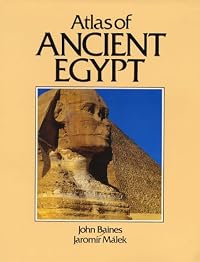
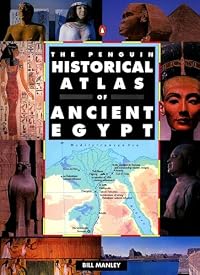
This has become a definitive reference work, not only for conventional atlas features, but for the ancient Egyptian chronology, which is often referenced by other works.
We start with basic topography, then a historic list of “nomes”. “Nome” is a term for an administrative unit, perhaps roughly equivalent to a state or province; the ruler/governor of which is called a “nomarch” (a word that spell checkers frequently convert to “monarch” without asking. The nome list includes a handy reference to the nome deities, identified by their headdresses.
Then follows an account of the European discovery of Egypt, with historic maps, then the historic section. This includes a chronology and fairly complete king list (a few ephemeral show more and dubious kings are left out). The king list uses its own, slightly eccentric naming convention; traditionally archaeologists who approached ancient Egypt starting with a Classical education use Greek forms for royal names (Cheops, Sesostris, Amenophis) while those coming from an “excavation archeology” background use a sort of “Egyptologese”, which is a conventional spelling and pronunciation adopted after hieroglyphics were first translated in the 19th century (Khufu, Senusret, Amenhotep). To further complicate things, progress in Egyptology has resulted in more accurate transliterations of some of the names; for example Djheutymesw for the “Egyptologese” Thutmose and Greek Thothmosis. The question, then, is whether to go with the old familiar names or switch to more technically correct ones. This book can’t seem to make up its mind; some names are rendered in the Greek style (Khepren for Kha’efre, builder of the second pyramid at Giza); other use an unconventional but probably more correct substitution of “w” for “u” in some names. Thus the familiar Fifth Dynasty “Unas” is replaced by “Wenis” and the Middle Kingdom “Senusret” becomes “Senwosret”.
The historic maps here suffer from a common failing; they don’t give the ancient Egyptian names for cities. Thus the Egyptian Waset is identified by the Arabic Luxor and the Greek Thebes. This is partially corrected later in the book, where detailed maps show the ancient names (when known), but it would be nice to have them on a map of the entire country. Nevertheless, the section has useful maps of the fluctuating Egyptian boundaries, including an excellent map of the various political division in the Third Intermediate Period, where the country divided up into eight separate governments, each ruled by somebody who claimed to be the sole Pharaoh of Egypt.
The next section (and the longest) are detailed maps, starting at Aswan (the ancient Egyptians did their maps with south at the top, too) and heading up the Nile. These do include the ancient names (when known), and feature detailed maps of major antiquities sites and individual temples and monuments. This would be an excellent accompaniment for a Nile cruise or visits to the antiquities at Luxor. One thing that would be a good addition is more of the Coptic and Islamic monuments, but you can’t have everything in a reasonably priced and sized book.
The final section is a short introduction to ancient Egyptian culture, with discussions of everyday life, the army, etc., illustrated with some nice photographs. show less
We start with basic topography, then a historic list of “nomes”. “Nome” is a term for an administrative unit, perhaps roughly equivalent to a state or province; the ruler/governor of which is called a “nomarch” (a word that spell checkers frequently convert to “monarch” without asking. The nome list includes a handy reference to the nome deities, identified by their headdresses.
Then follows an account of the European discovery of Egypt, with historic maps, then the historic section. This includes a chronology and fairly complete king list (a few ephemeral show more and dubious kings are left out). The king list uses its own, slightly eccentric naming convention; traditionally archaeologists who approached ancient Egypt starting with a Classical education use Greek forms for royal names (Cheops, Sesostris, Amenophis) while those coming from an “excavation archeology” background use a sort of “Egyptologese”, which is a conventional spelling and pronunciation adopted after hieroglyphics were first translated in the 19th century (Khufu, Senusret, Amenhotep). To further complicate things, progress in Egyptology has resulted in more accurate transliterations of some of the names; for example Djheutymesw for the “Egyptologese” Thutmose and Greek Thothmosis. The question, then, is whether to go with the old familiar names or switch to more technically correct ones. This book can’t seem to make up its mind; some names are rendered in the Greek style (Khepren for Kha’efre, builder of the second pyramid at Giza); other use an unconventional but probably more correct substitution of “w” for “u” in some names. Thus the familiar Fifth Dynasty “Unas” is replaced by “Wenis” and the Middle Kingdom “Senusret” becomes “Senwosret”.
The historic maps here suffer from a common failing; they don’t give the ancient Egyptian names for cities. Thus the Egyptian Waset is identified by the Arabic Luxor and the Greek Thebes. This is partially corrected later in the book, where detailed maps show the ancient names (when known), but it would be nice to have them on a map of the entire country. Nevertheless, the section has useful maps of the fluctuating Egyptian boundaries, including an excellent map of the various political division in the Third Intermediate Period, where the country divided up into eight separate governments, each ruled by somebody who claimed to be the sole Pharaoh of Egypt.
The next section (and the longest) are detailed maps, starting at Aswan (the ancient Egyptians did their maps with south at the top, too) and heading up the Nile. These do include the ancient names (when known), and feature detailed maps of major antiquities sites and individual temples and monuments. This would be an excellent accompaniment for a Nile cruise or visits to the antiquities at Luxor. One thing that would be a good addition is more of the Coptic and Islamic monuments, but you can’t have everything in a reasonably priced and sized book.
The final section is a short introduction to ancient Egyptian culture, with discussions of everyday life, the army, etc., illustrated with some nice photographs. show less
Good reference book with maps and photos keyed to the maps, showing historic sites in various parts of Egypt.
The Atlas of Ancient Egypt is a stunningly illustrated survey of over 3,000 years of Egyptian history. This highly visual book includes detailed maps, architectural reconstructions, historical artifacts, and superb scenes from everyday lif
ATLAS CULTURALES DEL MUNDO :EGIPTO VOLUMEN I
Los monumentos -pirámides, templos y tumbas, estatuas y estelas- representan la fuente más valiosa
para nuestro conocimiento del Egipto antiguo. Un AtLa estudio de los monumentos egipcios, tanto los
continuan dispersos por los distintos lugares del país como los que se encuentran en sus nuevas
localizaciones en los museos y colecciones varias constituye un feliz lugar de encuentro de
especialistas y de no especialistas.
No es necesario ningún conocimiento especial para sentirse impresionado por la grandeza y los logros técnicos a de la Gran Pirámide de Gizeh, ni para saborear el encanto de las pinturas de las tumbas privadas de Deir el-Medina pertenecientes a la época ramésida, ni para show more quedarse sin habla ante la opulencia y el gusto -un tanto irregular- que muestran los objetos de la tumba de Tutankamón en el Valle de los Reyes, y ahora en el museo de El Cairo. Pese a lo cual, el conocimiento puede incrementar nuestro interés Con ello queda fácilmente definido el propósito de este libro: proporcionar un panorama sistemático show less
Los monumentos -pirámides, templos y tumbas, estatuas y estelas- representan la fuente más valiosa
para nuestro conocimiento del Egipto antiguo. Un AtLa estudio de los monumentos egipcios, tanto los
continuan dispersos por los distintos lugares del país como los que se encuentran en sus nuevas
localizaciones en los museos y colecciones varias constituye un feliz lugar de encuentro de
especialistas y de no especialistas.
No es necesario ningún conocimiento especial para sentirse impresionado por la grandeza y los logros técnicos a de la Gran Pirámide de Gizeh, ni para saborear el encanto de las pinturas de las tumbas privadas de Deir el-Medina pertenecientes a la época ramésida, ni para show more quedarse sin habla ante la opulencia y el gusto -un tanto irregular- que muestran los objetos de la tumba de Tutankamón en el Valle de los Reyes, y ahora en el museo de El Cairo. Pese a lo cual, el conocimiento puede incrementar nuestro interés Con ello queda fácilmente definido el propósito de este libro: proporcionar un panorama sistemático show less
Mar 25, 2018Spanish
671
Jun 28, 2019Spanish
Ratings
Members
- Recently Added By
Published Reviews
"...highly recommended both as an engrossing armchair reference volume and as an indispensable travel guide."
added by GYKM
Author Information
8 Works 758 Members
Series

Common Knowledge
- Canonical title
- Cultural Atlas of Ancient Egypt
- Original title
- Cultural Atlas of Ancient Egypt
- Original publication date
- 1980
- Important places
- Egypt
- Publisher's editor
- Speake, Graham; Lawson, Andrew; Yule, John-David; Sparling, Clive; Watts, Richard; Bourque, Lauren (show all 10); Williams, Tim; Turner, Claire; Blackmore, Brian; Barrett, Ann
Classifications
Statistics
- Members
- 653
- Popularity
- 44,060
- Reviews
- 6
- Rating
- (3.88)
- Languages
- 9 — Dutch, English, French, German, Hungarian, Italian, Polish, Portuguese, Spanish
- Media
- Paper
- ISBNs
- 29
- ASINs
- 6