
Kent R. Weeks
Author of The Lost Tomb
About the Author
Dr. Kent Weeks is an Egyptologist with the American University in Cairo.
Image credit: Kent R. Weeks [credit: Tour Egypt]
Works by Kent R. Weeks
KV5: A Preliminary Report on the Excavation of the Tomb of the Sons of Ramesses II in the Valley of the Kings. (2000) — Editor — 30 copies, 1 review
Historical Bibliography of Egyptian Prehistory (American Research Center in Egypt, Catalogs, Vol 6) (1985) 10 copies
Giza Mastabas Vol 5 1 copy
Associated Works
Tagged
Common Knowledge
- Legal name
- Weeks, Kent Reid
- Birthdate
- 1941-12-16
- Gender
- male
- Education
- Yale University (PhD|1970)
University of Washington (BA|Anthropology|1963) - Occupations
- Egyptologist
- Organizations
- American University in Cairo
Metropolitan Museum of Art
University of Chicago
University of California, Berkeley - Relationships
- Weeks, Susan H. (wife)
- Nationality
- USA
- Birthplace
- Everett, Washington, USA
- Associated Place (for map)
- Washington, USA
Members
Reviews
The Lost Tomb: In 1995, An American Egyptologist Discovered The Burial Site Of The Sons Of Ramesses Ii--this Is His by Kent R. Weeks
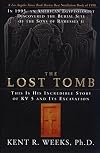
I'm an avocational Egyptologist. That's one step above simply being nuts about Egypt, and I figure I can claim the title since I actually spent two long years in college studying the Ancient Egyptian language with a man who really disliked me a lot. I wish it had been Kent Weeks.
The discovery of KV5 set the archaeological world on its ear. While it should probably be no surprise that Rameses the Great would command his tomb builders to dig out enough rooms to bury all 62 of his sons, the show more feat was, nevertheless, an amazing task. A small group of men, using tools of copper — a metal that is so soft that you can bend a sheet in your hands, that would demand sharpening after only a few moments of digging — created a veritable palace within the limestone walls of the Valley of the Kings. And Professor Weeks, when he found it, has faced almost the same effort to excavate the tomb out of the centuries of flood debris that had filled it from top to bottom.
There has been no find in the Valley of the Kings as significant as this since Howard Carter found Tutankhamun's tomb in 1922. -The Lost Tomb- is the story of that discovery and Weeks' role in it.
The book is absorbing. Weeks writes much as he speaks, with the same enthusiasm for his topic as he has shown in interviews. He is meticulous in his descriptions, and able to back up his conclusions because of his long work in Egyptology.
This is a splendid book. Weeks writes almost as well as he discovers and digs. He has shown himself to be an excellent, enthusiastic teacher of things Egyptian, and I'm happy to recommend this to others.
Also, take note of the fact that Weeks was also the leader of the multi-year project, the Theban Mapping Project, to map the Valley tombs to create an complete atlas. If you're as much of an Egyptophile as I, you may want to find a copy of it. He was also co-author of X-Raying the Pharoahs. show less
The discovery of KV5 set the archaeological world on its ear. While it should probably be no surprise that Rameses the Great would command his tomb builders to dig out enough rooms to bury all 62 of his sons, the show more feat was, nevertheless, an amazing task. A small group of men, using tools of copper — a metal that is so soft that you can bend a sheet in your hands, that would demand sharpening after only a few moments of digging — created a veritable palace within the limestone walls of the Valley of the Kings. And Professor Weeks, when he found it, has faced almost the same effort to excavate the tomb out of the centuries of flood debris that had filled it from top to bottom.
There has been no find in the Valley of the Kings as significant as this since Howard Carter found Tutankhamun's tomb in 1922. -The Lost Tomb- is the story of that discovery and Weeks' role in it.
The book is absorbing. Weeks writes much as he speaks, with the same enthusiasm for his topic as he has shown in interviews. He is meticulous in his descriptions, and able to back up his conclusions because of his long work in Egyptology.
This is a splendid book. Weeks writes almost as well as he discovers and digs. He has shown himself to be an excellent, enthusiastic teacher of things Egyptian, and I'm happy to recommend this to others.
Also, take note of the fact that Weeks was also the leader of the multi-year project, the Theban Mapping Project, to map the Valley tombs to create an complete atlas. If you're as much of an Egyptophile as I, you may want to find a copy of it. He was also co-author of X-Raying the Pharoahs. show less
KV5: A Preliminary Report on the Excavation of the Tomb of the Sons of Ramesses II in the Valley of the Kings. by Kent R. Weeks
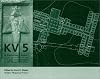
Egyptology with all the dirt and none (well, very little) of the treasure. American Egyptologist Kent Weeks is the principal on the Theban Mapping Project, an effort to produce a three-dimensional digital map and database of all the tombs in the Valley of the Kings. I wrote a little note on Valley of the Kings nomenclature a while back; basically tombs are numbered with the prefix “KV” and the order of discovery; thus Tutankhamen is KV62 and the most recent tomb is KV63. However, there show more were 12 tombs open since ancient times and thus KV1 (Ramses VII) though KV12 (unknown) are instead numbered in order from the valley mouth. (Because additional tombs were discovered later, KV1-KV12 are no longer the first 12 tombs from the valley entrance, although KV1 is still the very first).
KV5, then, was known for millennia as a small and not particularly interesting tomb of unknown ownership and without decoration or painting. It received some cursory further investigation in 1825; the tomb was unfortunately in the pathway of flash flood water and thus, after the initial rooms, was packed to the ceiling with caked mud and debris. Howard Carter rediscovered the entrance in 1902, thought that the tomb was small and uninteresting, and immediately reburied it. When Dr. Weeks began additional clearance in 1988 not too much was expected and the work was expected to be difficult as the millennia of washed in mud was hardened to “cement-like” consistency.
As it turned out, the entrance stairway opened up into a two successive chambers, and then into a large pillared hall with side chambers and a corridor and more stairways going down, until the thing became the Egyptian equivalent of the Energizer Bunny. At the time (2000) of this book, there were more than 150 chambers and KV5 was the largest tomb in the Valley by a factor of three and contained the largest single subterranean room. Work continues and the end still hasn’t been found.
The repeated flooding had wreaked havoc on what must have originally been extensive decoration – there are little chips of painted plaster all over the place. Thousands of objects were discovered – some from the tomb and others washed in. Enough evidence remained to determine the tomb was intended for the sons of Ramses II. (The archeological record isn’t clear on how many sons Ramses II had – I think 167 is the current number).
Thus, there are no spectacular wall paintings in this book, or Tutankhamen-like treasures; just chamber after chamber of more or less identical afterlife apartments. Still, the work involved is awe-inspiring. The rooms have to be dug out with scalpels and brushes to avoid missing anything. What plaster remains on the walls needs to get stuck back in place. The pillars in the pillared halls are cracking from stress and need to be restored. Some of the most interesting stiff for me was in the Appendices, where project geologists worked out the local structure; the Thebes Formation is interbedded limestone and shale of varying quality, with the shale layers particularly vulnerable to shrink-swell from wet-dry cycles. The Esna Shale underlies the Thebes formation and is even more prone to shrink-swell, although not exposed in the Valley it’s not too far from the tomb floors and probably doesn’t help matters much. KV5 is partially overlain by KV6 (Ramses IX), which in turn is partially overlain by KV55 (mysterious since its discovery but now believed to be Akhenaten based on DNA from the mummy); another appendix includes a report from a Colorado mining engineer on the stress fields in KV5, including effects of the other nearby tombs.
Although well-written (for an excavation report; these are not generally known for stirring prose) I can’t really recommend it except for die-hard Egyptophiles. I got my copy from a remainder house for less than 1/10 of what’s it’s currently going for on Amazon, and you can see all the details on the Theban Mapping Project web site (linked above). But definitely visit that site and see what’s going on in the hills west of Luxor. show less
KV5, then, was known for millennia as a small and not particularly interesting tomb of unknown ownership and without decoration or painting. It received some cursory further investigation in 1825; the tomb was unfortunately in the pathway of flash flood water and thus, after the initial rooms, was packed to the ceiling with caked mud and debris. Howard Carter rediscovered the entrance in 1902, thought that the tomb was small and uninteresting, and immediately reburied it. When Dr. Weeks began additional clearance in 1988 not too much was expected and the work was expected to be difficult as the millennia of washed in mud was hardened to “cement-like” consistency.
As it turned out, the entrance stairway opened up into a two successive chambers, and then into a large pillared hall with side chambers and a corridor and more stairways going down, until the thing became the Egyptian equivalent of the Energizer Bunny. At the time (2000) of this book, there were more than 150 chambers and KV5 was the largest tomb in the Valley by a factor of three and contained the largest single subterranean room. Work continues and the end still hasn’t been found.
The repeated flooding had wreaked havoc on what must have originally been extensive decoration – there are little chips of painted plaster all over the place. Thousands of objects were discovered – some from the tomb and others washed in. Enough evidence remained to determine the tomb was intended for the sons of Ramses II. (The archeological record isn’t clear on how many sons Ramses II had – I think 167 is the current number).
Thus, there are no spectacular wall paintings in this book, or Tutankhamen-like treasures; just chamber after chamber of more or less identical afterlife apartments. Still, the work involved is awe-inspiring. The rooms have to be dug out with scalpels and brushes to avoid missing anything. What plaster remains on the walls needs to get stuck back in place. The pillars in the pillared halls are cracking from stress and need to be restored. Some of the most interesting stiff for me was in the Appendices, where project geologists worked out the local structure; the Thebes Formation is interbedded limestone and shale of varying quality, with the shale layers particularly vulnerable to shrink-swell from wet-dry cycles. The Esna Shale underlies the Thebes formation and is even more prone to shrink-swell, although not exposed in the Valley it’s not too far from the tomb floors and probably doesn’t help matters much. KV5 is partially overlain by KV6 (Ramses IX), which in turn is partially overlain by KV55 (mysterious since its discovery but now believed to be Akhenaten based on DNA from the mummy); another appendix includes a report from a Colorado mining engineer on the stress fields in KV5, including effects of the other nearby tombs.
Although well-written (for an excavation report; these are not generally known for stirring prose) I can’t really recommend it except for die-hard Egyptophiles. I got my copy from a remainder house for less than 1/10 of what’s it’s currently going for on Amazon, and you can see all the details on the Theban Mapping Project web site (linked above). But definitely visit that site and see what’s going on in the hills west of Luxor. show less

Koffietafelboek over de graven op de Westoever van Thebe, met bijdragen van enkele grote namen uit de Egyptologie. De artikels zijn vooral beschrijvend. Het boek biedt weinig context of analyse. Het draait vooral om de afbeeldingen. Door het grote formaat bieden de foto's een rijkdom aan detail. Enkele zijn weergegeven op uitvouwbare pagina's.

LA TUMBA PERDIDA: LOS DESCUBRIMIENTOS DE LA TUMBA DE LOS HIJOS DE RAMSES II
En La tumba perdida Weeks lleva a los lectores al mausoleo más grande y complejo encontrado hasta ahora y que desvelará misterios seculares de la historia egipcia.
En La tumba perdida Weeks lleva a los lectores al mausoleo más grande y complejo encontrado hasta ahora y que desvelará misterios seculares de la historia egipcia.
You May Also Like


Associated Authors
Statistics
- Works
- 16
- Also by
- 2
- Members
- 829
- Popularity
- #30,791
- Rating
- 4.1
- Reviews
- 7
- ISBNs
- 57
- Languages
- 6
- Favorited
- 1

