
Zahi Hawass
Author of Tutankhamun and the Golden Age of the Pharaohs
About the Author
Zahi Hawass is a world-famous Egyptian archaeologist and the head of Egypt's Supreme Council of Antiquities
Works by Zahi Hawass
Hidden Treasures of Ancient Egypt: Unearthing the Masterpieces of the Egyptian Museum in Cairo (2002) 86 copies
Egyptology at the Dawn of the Twenty-First Century: Proceedings of the Eighth International Congress of Egyptologists, Cairo, 2000: v. 2 (2002) 28 copies, 1 review
The Secrets of the Sphinx: Restoration Past and Present (English and Arabic Edition) (1998) 24 copies
Annales du Service des Antiquités de l’Egypte: Cahier No. 41: Thebes and Beyond, Studies in Honor of Kent R. Weeks (2011) 10 copies
Annales du Service des Antiquités de l'Egypte: Cahier 42: Scribe of Justice: Egyptological Studies in honour of Shafik Allam (2013) 8 copies
I tesori del faraone. Catalogo della mostra (Roma, 24 ottobre 2025-3 maggio 2026). Ediz. illustrata (2025) 2 copies
Zahi Hawass' Secret Egypt 2 copies
Proceeding of the Colloquium on Theban Archaeology at the Supreme Council of Antiquities, November 5, 2009 (2011) 1 copy
Museology علم المتاحف 1 copy
Misión Planeta Azul 1 copy
Associated Works
Anubis, Upwawet, and other Deities: Personal Worship and official religion in ancient Egypt (2008) — Foreword — 10 copies
Egypt, Israel, and the Ancient Mediterranean World: Studies in Honor of Donald B. Redford (Probleme Der Agyptologie, 20. Bd) (2004) — Contributor — 6 copies
Tagged
Common Knowledge
- Other names
- زاهي حواس
- Birthdate
- 1947-05-28
- Gender
- male
- Education
- Alexandria University
Cairo University
University of Pennsylvania - Occupations
- archaeologist
Minister of State for Antiquities Affairs
Egyptologist - Organizations
- American University in Cairo
- Nationality
- Egypt
- Birthplace
- Damietta, Egypt
- Places of residence
- Egypt
USA - Associated Place (for map)
- Damietta, Egypt
Members
Reviews
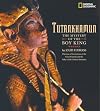
There are many books that focus on the discovery of King Tut's tomb, but there do not seem to be as many about the life of the Boy King himself. This book begins with a chapter on Howard Carter's discovery of King Tut's tomb, but then backtracks to give context of what was going on in Egypt before Tutankhamun was born, followed by chapters on his life, death and burial, and what happened in Egypt afterwards. The author is an Egyptian archeologist and his enthusiasm for his topic practically show more leaps off of the page. Reasoning behind current and rejected theories of aspects of the Boy King's life (and death) are woven into the narration, but the author does not hesitate to point out that there is still much that we do not know and have yet to find out. This book not only serves as a resource about King Tutankhamun, but also an demonstration on how archaeologists think. show less
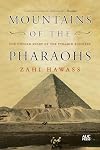
Rating: 4.5* of five
The Publisher Says: World-renowned archaeologist Zahi Hawass weaves a spellbinding narrative about how the pyramids were built and why, new in paperback
Nearly five thousand years ago, the fourth dynasty of Egypt’s Old Kingdom reigned over a highly advanced civilization. Believed to be gods, the royal family lived amid colossal palaces and temples built to honor them and their deified ancestors.
In Mountains of the Pharaohs, Zahi Hawass brings these extraordinary show more historical figures to life, detailing a soap opera-like saga complete with murder, incest, and the triumphant ascension to the throne of one of only four queens ever to rule Egypt. It was during this dynasty that the magnificent pyramids of Giza were built. These monuments attest not only to the dynasty’s supreme power, but also to the engineering expertise and architectural sophistication that flourished under its rule.
Hawass tells the complete story of the pyramids, weaving archaeological data with a history of Egypt’s powerful pharaohs, and argues that the pyramids—including the Great Pyramid of Khufu, the only one of the Seven Wonders of the World still standing—were built by skilled craftsmen who took great pride in their work.
Illustrated with black-and-white photographs and drawings, Mountains of the Pharaohs is a compelling account of one of civilization’s greatest achievements.
I RECEIVED A DRC FROM THE PUBLISHER VIA EDELWEISS+. THANK YOU.
My Review: If you've watched a single documentary about Egypt in the last thirty years, you've seen and heard the inimitable Zahi Hawass addressing us in those unique cadences as he expounds on his passion. His life has been dedicated to spreading factual knowledge about the history of one of Earth's earliest superpowers. He's risen to the august heights of the secretary general of Egypt's Supreme Council of Antiquities. This narrative history is about the Fourth Dynasty pharoahs who created by their incredible command of Egypt's entire resources the pyramids at Giza.
There are nineteen black & white images to bring the text to life.
I offer these six to show you what you are in for. The American University in Cairo Press made this trade paper edition to their usual quality standard. You'll be treated to a story that is astonishing in its timelessness, amazing in how very old it is, and unnerving in how familiar the personalities are.
Personalities are all we have left when history gets through with us. Hawass has one of the Egyptian personalities that will shape the pharoahs' journey into a very long future, one even greater than they could've imagined. Read his spirited advocacy of the culture and people who...by their own mental and physical labor...created the pyramids that we're gawkin' at five thousand years on. show less
The Publisher Says: World-renowned archaeologist Zahi Hawass weaves a spellbinding narrative about how the pyramids were built and why, new in paperback
Nearly five thousand years ago, the fourth dynasty of Egypt’s Old Kingdom reigned over a highly advanced civilization. Believed to be gods, the royal family lived amid colossal palaces and temples built to honor them and their deified ancestors.
In Mountains of the Pharaohs, Zahi Hawass brings these extraordinary show more historical figures to life, detailing a soap opera-like saga complete with murder, incest, and the triumphant ascension to the throne of one of only four queens ever to rule Egypt. It was during this dynasty that the magnificent pyramids of Giza were built. These monuments attest not only to the dynasty’s supreme power, but also to the engineering expertise and architectural sophistication that flourished under its rule.
Hawass tells the complete story of the pyramids, weaving archaeological data with a history of Egypt’s powerful pharaohs, and argues that the pyramids—including the Great Pyramid of Khufu, the only one of the Seven Wonders of the World still standing—were built by skilled craftsmen who took great pride in their work.
Illustrated with black-and-white photographs and drawings, Mountains of the Pharaohs is a compelling account of one of civilization’s greatest achievements.
I RECEIVED A DRC FROM THE PUBLISHER VIA EDELWEISS+. THANK YOU.
My Review: If you've watched a single documentary about Egypt in the last thirty years, you've seen and heard the inimitable Zahi Hawass addressing us in those unique cadences as he expounds on his passion. His life has been dedicated to spreading factual knowledge about the history of one of Earth's earliest superpowers. He's risen to the august heights of the secretary general of Egypt's Supreme Council of Antiquities. This narrative history is about the Fourth Dynasty pharoahs who created by their incredible command of Egypt's entire resources the pyramids at Giza.
There are nineteen black & white images to bring the text to life.
I offer these six to show you what you are in for. The American University in Cairo Press made this trade paper edition to their usual quality standard. You'll be treated to a story that is astonishing in its timelessness, amazing in how very old it is, and unnerving in how familiar the personalities are.
Personalities are all we have left when history gets through with us. Hawass has one of the Egyptian personalities that will shape the pharoahs' journey into a very long future, one even greater than they could've imagined. Read his spirited advocacy of the culture and people who...by their own mental and physical labor...created the pyramids that we're gawkin' at five thousand years on. show less
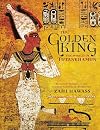
Zahi Hawass, Secretary General of the Supreme Council of Antiquities (Egypt), writes, under the auspices of the National Geographic society, a beautifully illustrated book of Tutankhamun. There are exceptional photographs on every page, generally modern ones of the artifacts or reproductions of original photographs taken during the excavation in the 1920s.
The book has a simple structure: the first part is about the time in which Tutankhamun was buried and the prior and subsequent history, show more the second part is about the time in which Tutankhamun was found and the prior and subsequent history of that event.
A lot of people like to point out that Tutankhamun was an unimportant pharaoh, but he was the last, more or less, of the 18th dynasty, the most imperial dynasty Ancient Egypt ever had and he lived and died in a time of disintegration and collapse of that imperial rule, which was already well begun in the reign of his predecessor. His would always have been an important and interesting tomb, even if any other tomb had remained that had not been thoroughly robbed. But his unique situation meant that he was scrubbed from the collective memory, so that during the organized tomb robbing of the subsequent century his tomb was missed, unlike all the others as far as is known, and stayed that way, for a few thousand years thereafter.
This book considers seriously the possibility that Howard Carter tried to filch a few special pieces from the cache before it was officially opened and inspected, but is quite respectful of him at the same time. The illustration for the Howard Carter chapter is of the young, handsome, four-square, and only moderately mustached young artist and enthusiast, not the middle aged archaeologist with the much bushier mustache who found the tomb after years of disappointment and quarrelsomeness.
Zahi Hawass likes to imagine a happy life for the young pharaoh and his consort in his beautiful palace. This pretty word picture doesn't suit me; I prefer a bit of grim palace intrigue and a murder or two, as in Cecilia Holland's excellent, albeit dated, novel, "Valley of the Kings". show less
The book has a simple structure: the first part is about the time in which Tutankhamun was buried and the prior and subsequent history, show more the second part is about the time in which Tutankhamun was found and the prior and subsequent history of that event.
A lot of people like to point out that Tutankhamun was an unimportant pharaoh, but he was the last, more or less, of the 18th dynasty, the most imperial dynasty Ancient Egypt ever had and he lived and died in a time of disintegration and collapse of that imperial rule, which was already well begun in the reign of his predecessor. His would always have been an important and interesting tomb, even if any other tomb had remained that had not been thoroughly robbed. But his unique situation meant that he was scrubbed from the collective memory, so that during the organized tomb robbing of the subsequent century his tomb was missed, unlike all the others as far as is known, and stayed that way, for a few thousand years thereafter.
This book considers seriously the possibility that Howard Carter tried to filch a few special pieces from the cache before it was officially opened and inspected, but is quite respectful of him at the same time. The illustration for the Howard Carter chapter is of the young, handsome, four-square, and only moderately mustached young artist and enthusiast, not the middle aged archaeologist with the much bushier mustache who found the tomb after years of disappointment and quarrelsomeness.
Zahi Hawass likes to imagine a happy life for the young pharaoh and his consort in his beautiful palace. This pretty word picture doesn't suit me; I prefer a bit of grim palace intrigue and a murder or two, as in Cecilia Holland's excellent, albeit dated, novel, "Valley of the Kings". show less
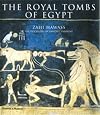
A coffee-table book, but a really good one. The title is slightly misleading – this is not a general discussion of Egyptian royal mortuary practices (although there’s an introduction with pyramid pictures, pretty much obligatory for Egypt books), but is very tightly focused on tomb art in the Valley of the Kings. What’s more, it organizes the presentation by the type of art, not by tomb or time period – thus there are chapters on “The Litanies of Re”, “The Book of Gates”, show more “The Book of the Amduat”, and other “books” painted on royal tomb walls. (I should point out that even though these are traditionally called “books”, they only appear as paintings on royal tomb walls – commoners had a papyrus “Book of the Dead” and their tomb walls were painted with scenes from daily life, not instructions on how to get through the afterworld – the Amduat).
The photography is magnificent. This is a large format book, and almost every other page is a foldout – sometime a double foldout or even a facing-page double foldout, six pages altogether - of a tomb painting. I have no idea how the camera work was done; – the photographer, Sandro Vannini, is given credit by author Zahi Hawass for developing new photographic techniques. I’ve been in several of these tombs; space is extremely tight, yet the photographs show many feet of wall scenes without any of the distortion you’d get from an ultra-wide-angle lens.
There are some drawbacks; with so many large photographs, the text is a little sparse. Paintings from several tombs are often shown sequentially to illustrate an entire “book” - this is fine, since one tomb may have missing or damaged illustrations that are present elsewhere – but this is not directly credited in the text (although the locations for all photographs is included in the Appendix). This also makes it difficult to follow exactly the way the paintings were laid out; there’s considerable evidence that the arrangement of paintings was intended to symbolize the actual journey through the afterlife.
Definitely recommended, but ideally I’d couple it with The Ancient Egyptian Books of the Afterlife, which goes into much more detail on the history and meaning of the “books”, and Atlas of the Valley of the Kings, which has detailed maps of all the tombs. With those three, you should be ready for anything The Devourer of Souls or He Whose Face Is Turned Backwards can throw at you in the Amduat. show less
The photography is magnificent. This is a large format book, and almost every other page is a foldout – sometime a double foldout or even a facing-page double foldout, six pages altogether - of a tomb painting. I have no idea how the camera work was done; – the photographer, Sandro Vannini, is given credit by author Zahi Hawass for developing new photographic techniques. I’ve been in several of these tombs; space is extremely tight, yet the photographs show many feet of wall scenes without any of the distortion you’d get from an ultra-wide-angle lens.
There are some drawbacks; with so many large photographs, the text is a little sparse. Paintings from several tombs are often shown sequentially to illustrate an entire “book” - this is fine, since one tomb may have missing or damaged illustrations that are present elsewhere – but this is not directly credited in the text (although the locations for all photographs is included in the Appendix). This also makes it difficult to follow exactly the way the paintings were laid out; there’s considerable evidence that the arrangement of paintings was intended to symbolize the actual journey through the afterlife.
Definitely recommended, but ideally I’d couple it with The Ancient Egyptian Books of the Afterlife, which goes into much more detail on the history and meaning of the “books”, and Atlas of the Valley of the Kings, which has detailed maps of all the tombs. With those three, you should be ready for anything The Devourer of Souls or He Whose Face Is Turned Backwards can throw at you in the Amduat. show less
Lists
Awards


You May Also Like


Associated Authors
Statistics
- Works
- 91
- Also by
- 9
- Members
- 2,487
- Popularity
- #10,309
- Rating
- 3.2
- Reviews
- 26
- ISBNs
- 173
- Languages
- 10
- Favorited
- 7

