
Ian Shaw (1) (1961–)
Author of The Oxford History of Ancient Egypt
For other authors named Ian Shaw, see the disambiguation page.
About the Author
Ian Shaw is Lecturer in Egyptian Archaeology at the University of Liverpool.
Works by Ian Shaw
Associated Works
Invention and Innovation: The Social Context of Technological Change II, Egypt, the Aegean and the Near East, 1650-1150 B.C. (2016) — Contributor — 8 copies
Tagged
Common Knowledge
- Legal name
- Shaw, Ian Michael Edward
- Birthdate
- 1961-06-28
- Gender
- male
- Education
- University of Cambridge (PhD|Egyptian Archaeology|1989)
- Occupations
- Egyptologist
archaeologist - Organizations
- University of Liverpool
University College London - Awards and honors
- Society of Antiquaries of London (Fellow)
- Nationality
- UK
- Birthplace
- Wallsend-on-Tyne, Northumberland, England, UK
- Map Location
- England, UK
Members
Reviews
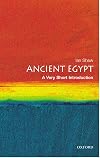
This entry in Oxford's 'Very Short Introduction' series does a serviceable job in dealing with a very big subject in a relatively short amount of space. Like many of these guides, it is well illustrated with a good list for further reading and ancillary material.
Why it is interesting is in its tough honesty about how little we know of how ancient Egyptians structured their lives and thought despite the vast amounts of data that will, perhaps, reveal more when artificial intelligence can be show more applied to its analysis.
The problem is that both archaeological and even textual data may seem large but it is only a small portion of over 3,000 years of history and heavily skewed to certain contexts - chief of which are obviously funerary contexts but increasingly settlement patterns.
Shaw's honesty allows him to explore critically the way that Egyptology has invented (not always without reason in many cases) an Egypt that relects some contemporary reality. Stripping away these layers does not solve the problem that there may not be much of a 'there' there.
This is not to say that a lot has not been discovered but only that caution is required in interpreting it. He is certainly 'brave' in removing two awkward accretions that are unhelpful - the desire to link Egypt to Biblical Studies and the Afrocentrist nonsense that would have Egypt as a 'black' civilisation.
In fact, race was probably not a great issue to Egyptians. Elsewhere we discover that African genes did enter into the population slowly and increasingly over time but were never a majority and certainly the inbreeding Greek Ptolemaic elite (including Cleopatra) was thoroughly European in origin.
There are some weaknesses to the book. The first is that building his narrative on the Narmer Palette in order to try and hold things together might have seemed like a good organisational idea at the time but it does not hold the narrative well as it unfolds. It eventually becomes forced.
The second is an embarrassing slight defensiveness about facing off various absurdities. He is too kind in tone to Afrocentrism and Pyramidology although he does show their absurdity but you can tell a professional anxiety about not going to far down the road of alienating the politically correct.
The book was published in 2004 just as left-liberalism was moving into place as hegemonic in the universities (a place it may be rapidly losing after the Trump Revolution). He would not be alone in bearing in mind that the practice of a profession required some caution in stating positions.
Finally, because he wants to show how Ancient Egypt has been used to meet contemporary needs at different stages, he fails to use the space provided to explain more of the civilisation but drifts instead into a cultural history that is still treated rather cursorily - for reasons of space.
It would have been far better to have encouraged Oxford to produce another book on the 'influence of Ancient Egypt' or as a more significant section of a book on 'Orientalism' than neglect to explain more of what we might know or surmise about Egyptian social structures and philosophy.
One gap is explaining the process by which the five-fold nature of the individual disintegrates and then reintegrates in the 'other world' or underworld. Similarly, the question of popular enslavement and free labour and of grain management and irrigation are left more open that we might like.
Of course, not everything can be covered in a book like this. There is a separate Very Short Introduction on Egyptian Myth but this book seemed unable to decide whether its remit was the story of Ancient Egypt or the story of Egyptology.
Having said this, the book is still useful and even thought-provoking not only in triggering questions about reasonable scepticism not only in archaeology but in historical literary studies and history but in making the reader interested in the subject and wanting to know more. show less
Why it is interesting is in its tough honesty about how little we know of how ancient Egyptians structured their lives and thought despite the vast amounts of data that will, perhaps, reveal more when artificial intelligence can be show more applied to its analysis.
The problem is that both archaeological and even textual data may seem large but it is only a small portion of over 3,000 years of history and heavily skewed to certain contexts - chief of which are obviously funerary contexts but increasingly settlement patterns.
Shaw's honesty allows him to explore critically the way that Egyptology has invented (not always without reason in many cases) an Egypt that relects some contemporary reality. Stripping away these layers does not solve the problem that there may not be much of a 'there' there.
This is not to say that a lot has not been discovered but only that caution is required in interpreting it. He is certainly 'brave' in removing two awkward accretions that are unhelpful - the desire to link Egypt to Biblical Studies and the Afrocentrist nonsense that would have Egypt as a 'black' civilisation.
In fact, race was probably not a great issue to Egyptians. Elsewhere we discover that African genes did enter into the population slowly and increasingly over time but were never a majority and certainly the inbreeding Greek Ptolemaic elite (including Cleopatra) was thoroughly European in origin.
There are some weaknesses to the book. The first is that building his narrative on the Narmer Palette in order to try and hold things together might have seemed like a good organisational idea at the time but it does not hold the narrative well as it unfolds. It eventually becomes forced.
The second is an embarrassing slight defensiveness about facing off various absurdities. He is too kind in tone to Afrocentrism and Pyramidology although he does show their absurdity but you can tell a professional anxiety about not going to far down the road of alienating the politically correct.
The book was published in 2004 just as left-liberalism was moving into place as hegemonic in the universities (a place it may be rapidly losing after the Trump Revolution). He would not be alone in bearing in mind that the practice of a profession required some caution in stating positions.
Finally, because he wants to show how Ancient Egypt has been used to meet contemporary needs at different stages, he fails to use the space provided to explain more of the civilisation but drifts instead into a cultural history that is still treated rather cursorily - for reasons of space.
It would have been far better to have encouraged Oxford to produce another book on the 'influence of Ancient Egypt' or as a more significant section of a book on 'Orientalism' than neglect to explain more of what we might know or surmise about Egyptian social structures and philosophy.
One gap is explaining the process by which the five-fold nature of the individual disintegrates and then reintegrates in the 'other world' or underworld. Similarly, the question of popular enslavement and free labour and of grain management and irrigation are left more open that we might like.
Of course, not everything can be covered in a book like this. There is a separate Very Short Introduction on Egyptian Myth but this book seemed unable to decide whether its remit was the story of Ancient Egypt or the story of Egyptology.
Having said this, the book is still useful and even thought-provoking not only in triggering questions about reasonable scepticism not only in archaeology but in historical literary studies and history but in making the reader interested in the subject and wanting to know more. show less

Grateful that the edition of the book that I read was the one from 2004, not 2021. I listened to the second edition and I think the first is better.
The book is structured around the Narmer palette, about which I know, now, vastly more than I used to.
The last chapter, about Egyptomania and the new popular culture takes on Egypt, is so wearying.
But there are lots of interesting remarks, and updates about, e.g., Minoan painting discovered in the Nile delta, or enormous quantities of cuneiform show more correspondence during the reign of Akhenaten.
John Ray's book, "The Rosetta Stone and the Rebirth of Ancient Egypt" is roughly the same size, and more enjoyable. Of course, it takes as its central artifact the Rosetta Stone, from the Macedonian era, not the Narmer palette, which is pre-Dynastic, so the focus is different. show less
The book is structured around the Narmer palette, about which I know, now, vastly more than I used to.
The last chapter, about Egyptomania and the new popular culture takes on Egypt, is so wearying.
But there are lots of interesting remarks, and updates about, e.g., Minoan painting discovered in the Nile delta, or enormous quantities of cuneiform show more correspondence during the reign of Akhenaten.
John Ray's book, "The Rosetta Stone and the Rebirth of Ancient Egypt" is roughly the same size, and more enjoyable. Of course, it takes as its central artifact the Rosetta Stone, from the Macedonian era, not the Narmer palette, which is pre-Dynastic, so the focus is different. show less
Ian Shaw provides an overview of Egyptian civilization by way of a single proto-Dynastic antiquity called the Narmer Palette. Especially interesting for this reader was his emphasis on the way in which our perception of Pharonic Egypt is skewed because of the almost random traces left behind by that civilization. He suggests that it was not necessarily a death-focused culture, as our modern day view has it, but one very much involved in life and the perpetuation of the state. How else could show more it have lasted 3600 years? There can be no systematic approach in a book so short, but it was enjoyable getting Shaw's "roundup," if you will, on a number of issues, including changing methods of excavation, various points of scholarly disagreement today, what we can and cannot know about Egypt by virtue of limitations inherent in the archaeological record, and--most amusingly--the impact of Ancient Egypt on present-day culture. Shaw's style is straightforward. Instead of a Further Reading section there is a handy list of relevant websites. show less
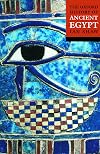
A good resource, and well-written in its way. While I wouldn't call it an "encyclopedia," as many here have, it is almost overloaded with facts and factoids to the point that it is difficult to digest the whole thing if you try to read it straight through (which I did in preparation for a trip to Egypt). Some of the writing is dry and academic, especially in the first few chapters: okay, we don't know many things for sure, but the authors of those early chapters (and some later ones too) show more seem more concerned with being called out by colleagues for not ultra-qualifying every single statement than they are with making sense to a lay person and just giving us something to go on. Yet, I got a lot out of it and plan to keep it as a reference. The edition I read dates from the year 2000 or so, and I wonder if there haven't been DNA studies that tell us more about how the many bodies found in the royal tombs were truly related to each other and who some of the general populace were- did the first Egyptians to put down permanent roots come from the East, West, or South, or were thy there all along? And who were the Hyksos? show less
Lists
You May Also Like


Associated Authors
Statistics
- Works
- 13
- Also by
- 4
- Members
- 2,118
- Popularity
- #12,148
- Rating
- 3.8
- Reviews
- 21
- ISBNs
- 134
- Languages
- 5
- Favorited
- 2