
Christiane Desroches-Noblecourt (1913–2011)
Author of Tutankhamen
About the Author
Image credit: Christiane Desroches-Noblecourt in France in April, 1997
Works by Christiane Desroches-Noblecourt
The Great Pharaoh Ramses II and His Time : an Exhibition of Antiquities from the Egyptian Museum, Cairo (1985) 67 copies
Amours et fureurs de La Lointaine: Clés pour la compréhension de symboles égyptiens (French Edition) (1995) 5 copies
L'art égyptien 4 copies
Le Style Égyptien 3 copies
Ramsès le Grand: [exposition], Galeries nationales du Grand Palais, Paris, [11 mai-15 octobre] 1976 2 copies
Ägypten - Spätzeit und Hellenismus 1070 v. Chr. bis 4. Jahrhundert n. Chr. (Universum der Kunst) (1981) — Contributor — 1 copy
Toutankhamon a Paris 1 copy
Associated Works
Egypt : architecture, sculpture, painting in three thousand years (1968) — Preface, some editions — 69 copies, 1 review
Fragments of a Shattered Visage: The Proceedings of the International Symposium of Ramesses the Great (1993) — Contributor — 8 copies
Tagged
Common Knowledge
- Canonical name
- Desroches-Noblecourt, Christiane
- Legal name
- Desroches, Clémence Christiane
- Other names
- Desroches Noblecourt, Christiane (Nom d'alliance)
- Birthdate
- 1913-11-17
- Date of death
- 2011-06-23
- Gender
- female
- Education
- Musee du Louvre
Sorbonne
Lycée Molière
École pratique des hautes études
Collège de France - Occupations
- Egyptologist
archeologist
art historian
professor
resistance member
museum curator - Organizations
- Musée du Louvre (Chargée de mission, 19 36, Conservateur)
Ecole du Louvre (Professeur, Epigraphie puis archéologie égyptienne, 19 37 | 19 82)
Institut français d'archéologie orientale (Pensionnaire, 19 37 | 19 40)
Musées de France (Inspecteur général) - Awards and honors
- Gold medal, French National Center for Scientific Research
Légion d'Honneur (Grand Cross)
Ordre national du Mérite
Medaille de la Resistance
Ordre des Palmes Académiques
Ordre des Arts et des Lettres - Short biography
- Christiane Desroches-Noblecourt was born in Paris and developed a passionate interest in ancient Egypt as a child, after reading about the excavation of the tomb of King Tutankhamun. She attended the Lycée Molière and Collège de France, and enrolled at the École pratique des hautes études and the École du Louvre to take degrees in Egyptian studies. In 1936, she joined the Department of Egyptian Antiquities at the Musée du Louvre as a project manager. In 1942, she married André Noblecourt, an engineer. During World War II, she joined the French Resistance, and helped hide the Louvre's Egyptian treasures from the Nazis. She was a professor of Egyptian archeology at the École du Louvre from 1937 to 1982 and chief curator of the Louvre's Egyptian department from 1974 to 1981. She led the people of France to launch an appeal to the world, together with the Minister of Egyptian Cultural Heritage, for funding to save the temples of Abu Simbel and other antiquities from being destroyed by flooding during construction of the Aswan Dam in 1960. She wrote 15 books on ancient Egyptian art and history. She received many of the most prestigious decorations from the French Republic, including the Légion d'honneur in 2005.
- Nationality
- France
- Birthplace
- Paris, France
- Places of residence
- Paris, France
- Place of death
- Sézanne, France
- Burial location
- Cimetière communal, Mondement-Montgivroux, Marne, Grand-Est, France
- Map Location
- France
- Associated Place (for map)
- Paris, France
Members
Reviews

A thorough and fascinating insight into the life and death of one of the most famous and historically beloved Pharaohs of Ancient Egypt, the last child of the XVIIIth Dynasty.
The book opens with the 1922 discovery of Tutankhamen's tomb by Howard Carter and Lord Carnarvon, and some background detail on the Valley of the Kings, the rulers of the dynasty, and other archaeological finds both previous and contemporary. The reader is then guided through Tutankhamen's tomb, just as the team show more uncovered it, through each room and the resplendant treasures within, in a detailed and shining inventory. It does grow a little tiresome in its excessiveness, but there were enough illustrations to keep me on track and make it exciting nonetheless. The author also uses this section to mention some of the mysteries and descrepancies surrounding certain objects and their positions inside the tomb, adding depth and intrigue to what could have become a monotonous catalogue.
From here we are taken back to the start of the heretic period, to the lives and reigns of Amenophis III and Akhenaten, the Heretic King of Amarna, then into the life and reign of Tutankhamen himself. This is perhaps the most dynamic and easily-read part of the book, and also provides a valuable background to the subsequent extensive sections on his death and mummification, and explanations of the funerary objects and rites which would immortalise the dead king and ease his passage into eternal life.
This is fairly exhaustive and occasionally repetitive, but it is ultimately a worthwhile and absorbing, even moving account of the child pharaoh's brave reign and tragically youthful demise, and the determination of his faithful followers to protect him into eternity. show less
The book opens with the 1922 discovery of Tutankhamen's tomb by Howard Carter and Lord Carnarvon, and some background detail on the Valley of the Kings, the rulers of the dynasty, and other archaeological finds both previous and contemporary. The reader is then guided through Tutankhamen's tomb, just as the team show more uncovered it, through each room and the resplendant treasures within, in a detailed and shining inventory. It does grow a little tiresome in its excessiveness, but there were enough illustrations to keep me on track and make it exciting nonetheless. The author also uses this section to mention some of the mysteries and descrepancies surrounding certain objects and their positions inside the tomb, adding depth and intrigue to what could have become a monotonous catalogue.
From here we are taken back to the start of the heretic period, to the lives and reigns of Amenophis III and Akhenaten, the Heretic King of Amarna, then into the life and reign of Tutankhamen himself. This is perhaps the most dynamic and easily-read part of the book, and also provides a valuable background to the subsequent extensive sections on his death and mummification, and explanations of the funerary objects and rites which would immortalise the dead king and ease his passage into eternal life.
This is fairly exhaustive and occasionally repetitive, but it is ultimately a worthwhile and absorbing, even moving account of the child pharaoh's brave reign and tragically youthful demise, and the determination of his faithful followers to protect him into eternity. show less
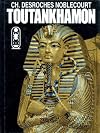
Still my most favorite book on Tutankhamen. Lavishly illustrated with full color photographs of artifacts in the Egyptian Museum of Cairo and some black and white photos from Carter's excavation, the author looks at the evidence and comes up with her own theory of Tut's parentage, childhood, and possibly how he came to be the forgotten pharoah who is so well known today.
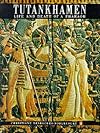
Fascinating story about an egyptian pharaoh and a bit of history also. It's amazing what has been learned by studying the tombs. The photos are very cool and this book left me wanting to learn more about the history of Egypt and the pharaohs. Grades 4 and up.
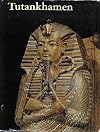
Awards


You May Also Like


Associated Authors
Statistics
- Works
- 34
- Also by
- 4
- Members
- 1,374
- Popularity
- #18,723
- Rating
- 3.6
- Reviews
- 17
- ISBNs
- 81
- Languages
- 9


