

Joyce Tyldesley
Author of Hatchepsut: The Female Pharaoh
About the Author
Joyce Tyldesley is lecturer in Egyptology at the University of Manchester and a fellow of the Manchester Museum.
Works by Joyce Tyldesley
Chronicle of the Queens of Egypt: From Early Dynastic Times to the Death of Cleopatra (2006) 114 copies, 2 reviews
Unearthing the Past: The Great Archaeological Discoveries that Have Changed History (2005) 37 copies
La maldición de Tutankamón: La historia de un rey egipcio (Ariel) (Spanish Edition) (2012) 3 copies, 1 review
From Mummies to Microchips: A Case-Study in Effective Online Teaching Developed at the University of Manchester (2020) 3 copies
Tutankamón : faraón, icono, enigma. Perdido durante tres mil años, incomprendido durante un siglo (2023) 1 copy
Encyklopedia Egipt 1 copy
Associated Works
Written in Bones: How Human Remains Unlock the Secrets of the Dead (2003) — Contributor — 254 copies, 3 reviews
Hatshepsut: The Princess Who Became King (2005) — Contributor, some editions — 128 copies, 5 reviews
Women in Antiquity: Real Women across the Ancient World (Rewriting Antiquity) (2016) — Contributor — 17 copies
Tagged
Common Knowledge
- Other names
- Tyldesley, Joyce Ann
- Birthdate
- 1960-02-25
- Gender
- female
- Education
- University of Liverpool
University of Oxford (PhD, Prehistoric Archaeology) - Occupations
- Egyptologist
archaeologist - Organizations
- University of Liverpool
Manchester Museum
Higher Education Academy - Awards and honors
- Order of the British Empire
University of Bolton (PhD, honorary) - Relationships
- Snape, Steven (spouse)
- Nationality
- UK
- Birthplace
- Bolton, Lancashire, England, UK
- Associated Place (for map)
- England, UK
Members
Reviews
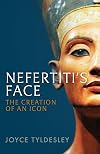
Well-researched and thoughtful consideration of the creation, re-discovery, and "afterlife" of an image that has achieved almost universal recognition and iconic status, in a little over one hundred years since it was unearthed by German archaeologists in the ruined workshop of the Court sculptor who created it (or, possibly, supervised the workshop where it was created).[return][return]Tyldesley does a clear, readable job of balancing all of the elements that make this limestone bust so show more fascinating. Beginning with what we know about the real woman who was the Chief Wife of the Pharoah Ankhenaten (answer: more than you might expect, but less than we would like!), Tyldesley moves on to cover how it was made, the controversies surrounding its excavation (and, especially, its acquisition by the Neue Museum in Berlin), and its impact on 20th Century art and popular culture.[return][return]If I have one little quibble, I felt that, after all of her excellent analysis, and her interesting references to her personal love of the statue (I don't think it's overstating it to say that it was a replica of the Nefertiti bust in Bolton Museum, that Tyldesley saw as a child, that might have started her on her future career), the book ended a bit abruptly: I felt like we were owed just one more, short chapter, to draw all the threads -- personal, artistic, cultural -- together. But that's just a quibble -- this is a fascinating read. It's an excellent example of what good popular history writing is all about. show less
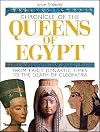
Part of a series of various “chronicles”, including (so far) Popes, Roman Emperors, Roman Republic, Old Testament Kings, Maya Kings and Queens, Pharaohs, Tsars, and Chinese Emperors. These are coffee-table books with a little extra: attractive pictures in a large format, but with some scholarly stuff interspersed. Chronicle of the Queens of Egypt is by Joyce Tyldesley, who, with previous biographies of Hatshepsut and Nefertiti, seems like a good choice.
It does seem like every psychic in show more the world was Nefertiti in a previous life (unless they were Hatshepsut or Kleopatra), but Tyldesley is stuck with the actual evidence instead of interviews. The evidence, like a lot of Egyptian history, is pretty sparse. For example, there’s a badly damaged limestone macehead that shows the first king of a unified Egypt contemplating something on a litter. From this, Egyptologists have spun out a story of the Delta ruled by a queen, Neithhotep, whose marriage to Narmer of Upper Egypt united the country. The lump on the litter is then the veiled Neithhotep and the macehead commemorates the wedding. Tyldesley is skeptical, but Neithhotep is also known from other sources and remains the first “queen” in Egyptian history.
Things do get somewhat better with time, allowing various nice color pictures, including the obligatory two page spreads of the Berlin bust of Nefertiti and the beautiful painted tomb of Nefertari. I didn’t realize the two ladies are probably distantly related, or that while there’s no trace of a body for Nefertiti (Tyldesley doesn’t buy the various theories that either the “Elder Lady’ or the “Younger Lady” from the cache in the tomb of Amenhotep II is Nefertiti), we have Nefertari’s mummified kneecaps.
On the subject of royal remains, Tyldesley makes a tantalizing suggestion. During the Late Period, when control was breaking down and tomb robbers ran rampant in the Valley of the Kings, priests collected all the remaining pharaohs and moved their mummies to various “caches” for safety (apparent simultaneously helping themselves to whatever valuables the thieves left behind). A few royal ladies were brought along, but most are missing. Tyldesley proposes the wishful hypothesis that there are similar but undiscovered caches in the Valley of the Queens.
While running through the list of various poorly- to moderately-documented Egyptian royal women, Tyldesley points out that just using the word “queen” creates a mental image that isn’t quite correct. The Egyptian word translated as “wife” is hmt; hmt nswt is translated as “royal wife” or “queen”, and hmt nswt wrt is “great royal wife” or “principal queen”. Thus an Egyptian “queen” is a king’s consort, whereas the word “queen” in English can mean that or also a female ruler. When Hatshepsut was ruler, she used the same titulary as a male Pharaoh – nswt bity, “King of Upper and Lower Egypt”, with no feminine suffix. Further, the word “wife” is problematic, because in English that implies somebody who’s been through a formal legal ceremony (well, it used to imply that). Egyptians had no marriage ceremony; a couple just set up housekeeping. The word translated “wife” and the one translated “female servant” have identical phonetic components; they differ only in the unpronounced determinative. Thus both have the implication “somebody who lives in a man’s household” with the understanding that sexual access might or might not be involved. This gets interesting when considering the long-held idea that many Egyptian pharaohs “married’ their sisters or daughters, and Tyldesley discusses this is some detail. In almost all cases of a pharaoh “marrying” near kin, it seems like the lady in question was made “female head of the household” without any sexual connotations, even though carrying the title “royal wife” or “great royal wife”, and acted to run the palace and fulfill the religious obligations of a “queen”, allowing her sister or mother to go into retirement. The issue is further complicated by the paucity of Egyptian words for relations. A relative older than you was a “father” or “mother”, a relative of the same generation was a “brother” or “sister”, and a younger relation was a “son” or “daughter”. Thus a “daughter” could actually be a third cousin twice removed. Finally, the words “sister” and “brother” were used as terms of endearment between lovers; thus erotic poetry about a woman clandestinely meeting her “brother” for hanky-panky by the Nile has nothing to do with incest.
(This was not true in Ptolemaic times, where brother-sister, mother-son, and stepmother-son marriages were common; in fact, the norm. Kleopatra VII, the famous one, was the product of a brother-sister union between Ptolemy XII and Kleopatra V. This sort of thing makes Ptolemaic genealogical charts look like a plate of linguine).
All things considered, a nicely blended combination of serious scholarship and attractive illustrations. Recommended. show less
It does seem like every psychic in show more the world was Nefertiti in a previous life (unless they were Hatshepsut or Kleopatra), but Tyldesley is stuck with the actual evidence instead of interviews. The evidence, like a lot of Egyptian history, is pretty sparse. For example, there’s a badly damaged limestone macehead that shows the first king of a unified Egypt contemplating something on a litter. From this, Egyptologists have spun out a story of the Delta ruled by a queen, Neithhotep, whose marriage to Narmer of Upper Egypt united the country. The lump on the litter is then the veiled Neithhotep and the macehead commemorates the wedding. Tyldesley is skeptical, but Neithhotep is also known from other sources and remains the first “queen” in Egyptian history.
Things do get somewhat better with time, allowing various nice color pictures, including the obligatory two page spreads of the Berlin bust of Nefertiti and the beautiful painted tomb of Nefertari. I didn’t realize the two ladies are probably distantly related, or that while there’s no trace of a body for Nefertiti (Tyldesley doesn’t buy the various theories that either the “Elder Lady’ or the “Younger Lady” from the cache in the tomb of Amenhotep II is Nefertiti), we have Nefertari’s mummified kneecaps.
On the subject of royal remains, Tyldesley makes a tantalizing suggestion. During the Late Period, when control was breaking down and tomb robbers ran rampant in the Valley of the Kings, priests collected all the remaining pharaohs and moved their mummies to various “caches” for safety (apparent simultaneously helping themselves to whatever valuables the thieves left behind). A few royal ladies were brought along, but most are missing. Tyldesley proposes the wishful hypothesis that there are similar but undiscovered caches in the Valley of the Queens.
While running through the list of various poorly- to moderately-documented Egyptian royal women, Tyldesley points out that just using the word “queen” creates a mental image that isn’t quite correct. The Egyptian word translated as “wife” is hmt; hmt nswt is translated as “royal wife” or “queen”, and hmt nswt wrt is “great royal wife” or “principal queen”. Thus an Egyptian “queen” is a king’s consort, whereas the word “queen” in English can mean that or also a female ruler. When Hatshepsut was ruler, she used the same titulary as a male Pharaoh – nswt bity, “King of Upper and Lower Egypt”, with no feminine suffix. Further, the word “wife” is problematic, because in English that implies somebody who’s been through a formal legal ceremony (well, it used to imply that). Egyptians had no marriage ceremony; a couple just set up housekeeping. The word translated “wife” and the one translated “female servant” have identical phonetic components; they differ only in the unpronounced determinative. Thus both have the implication “somebody who lives in a man’s household” with the understanding that sexual access might or might not be involved. This gets interesting when considering the long-held idea that many Egyptian pharaohs “married’ their sisters or daughters, and Tyldesley discusses this is some detail. In almost all cases of a pharaoh “marrying” near kin, it seems like the lady in question was made “female head of the household” without any sexual connotations, even though carrying the title “royal wife” or “great royal wife”, and acted to run the palace and fulfill the religious obligations of a “queen”, allowing her sister or mother to go into retirement. The issue is further complicated by the paucity of Egyptian words for relations. A relative older than you was a “father” or “mother”, a relative of the same generation was a “brother” or “sister”, and a younger relation was a “son” or “daughter”. Thus a “daughter” could actually be a third cousin twice removed. Finally, the words “sister” and “brother” were used as terms of endearment between lovers; thus erotic poetry about a woman clandestinely meeting her “brother” for hanky-panky by the Nile has nothing to do with incest.
(This was not true in Ptolemaic times, where brother-sister, mother-son, and stepmother-son marriages were common; in fact, the norm. Kleopatra VII, the famous one, was the product of a brother-sister union between Ptolemy XII and Kleopatra V. This sort of thing makes Ptolemaic genealogical charts look like a plate of linguine).
All things considered, a nicely blended combination of serious scholarship and attractive illustrations. Recommended. show less

Writing about icons is a difficult business. Even biographers of modern stars like Marilyn Monroe or Elvis Presley must wade through a morass of secrets, theories and fantasies. How much more difficult to choose a subject who lived 3,500 years ago, who emerged from nowhere, disappeared back into obscurity, and whose brief, glittering existence has been the subject of fierce iconoclasm! Thanks to the glorious portrait bust in Berlin (see below), Nefertiti is one of the most recognisable show more figures from Ancient Egypt, but the facts of her life remain tantalisingly elusive. As Joyce Tyldesley teases out the meaning of symbols, inscriptions and sculpted reliefs, Nefertiti’s lost world blossoms into life, in an archaeological story that reads like a detective novel. This is a tale of religious revolution, intrigue, iconoclasm, romance, and mysterious, powerful women. What’s not to like?
For the full review, please see my blog:
https://theidlewoman.net/2019/01/05/nefertiti-joyce-tyldesley/ show less
For the full review, please see my blog:
https://theidlewoman.net/2019/01/05/nefertiti-joyce-tyldesley/ show less
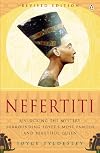
This is a very well written and researched book. The author really evokes images of what it was like in ancient Egypt, and reading about the various theories about what transpired in the Amarna court is fascinating.
However, I would say that the title of the book is a bit misleading. It would be more fitting to call it something like "The Amarna Sun Rulers" or something similar (not as snazzy, but more accurate). Nefertiti is not as prominently featured in the book as her husband, the Pharaoh show more Akhenaten. Given that not much is known about her, this is understandable, but I, personally, feel that the title does not accurately reflect the content of the book. I know that book titles are mostly determined by the publisher, not the author, so I don't hold it against the author, nor the (very good) content of the book itself. show less
However, I would say that the title of the book is a bit misleading. It would be more fitting to call it something like "The Amarna Sun Rulers" or something similar (not as snazzy, but more accurate). Nefertiti is not as prominently featured in the book as her husband, the Pharaoh show more Akhenaten. Given that not much is known about her, this is understandable, but I, personally, feel that the title does not accurately reflect the content of the book. I know that book titles are mostly determined by the publisher, not the author, so I don't hold it against the author, nor the (very good) content of the book itself. show less
Lists
Awards


You May Also Like


Associated Authors
Statistics
- Works
- 48
- Also by
- 5
- Members
- 3,084
- Popularity
- #8,280
- Rating
- 3.8
- Reviews
- 35
- ISBNs
- 159
- Languages
- 14
- Favorited
- 3
