

Aidan Dodson
Author of The Complete Royal Families of Ancient Egypt: A Genealogical Sourcebook of the Pharaohs
About the Author
Aidan Dodson is a senior research fellow in the Department of Anthropology and Archaeology at the University of Bristol, UK, where he teaches Egyptology. He is the author of twenty books and over 300 reviews and articles.
Disambiguation Notice:
Note: the books on more modern history (battleships &c) are by the same author
Works by Aidan Dodson
The Complete Royal Families of Ancient Egypt: A Genealogical Sourcebook of the Pharaohs (2004) 179 copies, 3 reviews
Amarna Sunset: Nefertiti, Tutankhamun, Ay, Horemheb, and the Egyptian Counter-Reformation (2009) 112 copies, 1 review
Afterglow of Empire: Egypt from the Fall of the New Kingdom to the Saite Renaissance (2012) 48 copies, 3 reviews
Before the Battlecruiser: The Big Cruiser in the World's Navies, 1865-1910 (2018) 30 copies, 1 review
Associated Works
Tagged
Common Knowledge
- Canonical name
- Dodson, Aidan
- Birthdate
- 1962-09-11
- Gender
- male
- Nationality
- UK
- Disambiguation notice
- Note: the books on more modern history (battleships &c) are by the same author
- Associated Place (for map)
- UK
Members
Reviews

I had some trepidation in terms of laying out money for this book, as I had some question as to whether there was really that much to say about the cruising ships of the Imperial German Navy; not to mention that I've reached a point in my life where I'm thinking more in terms of lightening the load rather than piling up more books. I was thus grateful that I could get inter-library loan service on this work.
I'm therefore here to tell you that Dodson & Nottelmann greatly exceeded my show more expectations over what could be achieved on this subject, and if you're really interested in German naval history you might well need this book. This is much more than a tabulation of data and pictures, though the data is really useful and the pictures are excellent. What you wind up with is a comprehensive history told through the lens of the small cruiser in German service, and really starts with Prussia's wars with Denmark, and attenuates into World War II (in regards to ship histories). And by comprehensive, there is no stinting of detail in regards to administration or operational matters. There is even a significant chunk devoted to Germany's export trade in warships.
I'm now interested in adding a copy to my collection, and some of Dodson's other works which I've been hanging fire on are looking more interesting to me. show less
I'm therefore here to tell you that Dodson & Nottelmann greatly exceeded my show more expectations over what could be achieved on this subject, and if you're really interested in German naval history you might well need this book. This is much more than a tabulation of data and pictures, though the data is really useful and the pictures are excellent. What you wind up with is a comprehensive history told through the lens of the small cruiser in German service, and really starts with Prussia's wars with Denmark, and attenuates into World War II (in regards to ship histories). And by comprehensive, there is no stinting of detail in regards to administration or operational matters. There is even a significant chunk devoted to Germany's export trade in warships.
I'm now interested in adding a copy to my collection, and some of Dodson's other works which I've been hanging fire on are looking more interesting to me. show less
The Complete Royal Families of Ancient Egypt: A Genealogical Sourcebook of the Pharaohs by Aidan Dodson
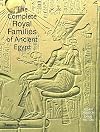
Something of a specialist book. Ancient Egypt probably attracts more junk science, pseudoscience, etc. than any other culture. Theories generally fall into the following categories:
* The ancient Egyptians knew various esoteric secrets, which they helpfully encoded into the design of the pyramids, the Sphinx, various temples, the Book of the Dead, etc.
* The pyramids were built by space aliens or Atlanteans or biblical patriarchs, by levitating rock or cutting it with lasers or pouring it from show more concrete, etc.
* Various aspects of Egyptian history correlate with various Bible stories, including the Flood, the Joseph story, the Exodus, the visit of the Queen of Sheba, etc.
This book helps with the last, by making some sense (well, not perfect sense, but at least some) out of the Third Intermediate Period. The problem that fundamentalist Biblical chronologists have is that internal evidence from the Bible (the “begats”, etc.) puts the Unified Monarchy in the late Bronze Age, while archeological and Egyptian textual evidence makes Canaan/Israel/Palestine an Egyptian colony at that time, with no sign of David or Solomon. In order to make Biblical chronology work, you have to move the Unified Monarchy into the Early Iron Age, and since all Middle Eastern chronology is tied to Egypt the only way to do that is to somehow subtract a big chunk from conventional Egyptian history. And since Egyptian history before and after the Third Intermediate Period is pretty well nailed down by astronomical evidence (although that hasn’t stopped people like Immanuel Velikovsy and Lynn Rose from trying) the 3rdIP is the best place to remove a couple of centuries. The genealogical tables in this book help sort out the mess caused by various minor Egyptian kingdoms all ruling simultaneously during the 3rdIP (and all claiming to rule the entire country). It helps that one of the authors is responsible for tracking down a previously unknown pharaoh (Sheshonq V).
Another fascinating little item is a list of all 94 known sons and daughters of Ramses II. Given actuarial reality, it’s fairly likely that with that base to start from, there are direct lineal descendents of Ramses II alive today. Probably some of you who are reading this, in fact.
I also liked the genealogical tables of the Ptolemys. My interest in Egypt has usually stopped with the last native pharaoh, Nakhtnebef, so I didn’t know much about the Macedonian rulers. The Ptolemys were an amazingly bloodthirsty lot, with husbands murdering wives, mothers killing sons, and every other variety of relational mayhem. Still creepy 20 centuries later. show less
* The ancient Egyptians knew various esoteric secrets, which they helpfully encoded into the design of the pyramids, the Sphinx, various temples, the Book of the Dead, etc.
* The pyramids were built by space aliens or Atlanteans or biblical patriarchs, by levitating rock or cutting it with lasers or pouring it from show more concrete, etc.
* Various aspects of Egyptian history correlate with various Bible stories, including the Flood, the Joseph story, the Exodus, the visit of the Queen of Sheba, etc.
This book helps with the last, by making some sense (well, not perfect sense, but at least some) out of the Third Intermediate Period. The problem that fundamentalist Biblical chronologists have is that internal evidence from the Bible (the “begats”, etc.) puts the Unified Monarchy in the late Bronze Age, while archeological and Egyptian textual evidence makes Canaan/Israel/Palestine an Egyptian colony at that time, with no sign of David or Solomon. In order to make Biblical chronology work, you have to move the Unified Monarchy into the Early Iron Age, and since all Middle Eastern chronology is tied to Egypt the only way to do that is to somehow subtract a big chunk from conventional Egyptian history. And since Egyptian history before and after the Third Intermediate Period is pretty well nailed down by astronomical evidence (although that hasn’t stopped people like Immanuel Velikovsy and Lynn Rose from trying) the 3rdIP is the best place to remove a couple of centuries. The genealogical tables in this book help sort out the mess caused by various minor Egyptian kingdoms all ruling simultaneously during the 3rdIP (and all claiming to rule the entire country). It helps that one of the authors is responsible for tracking down a previously unknown pharaoh (Sheshonq V).
Another fascinating little item is a list of all 94 known sons and daughters of Ramses II. Given actuarial reality, it’s fairly likely that with that base to start from, there are direct lineal descendents of Ramses II alive today. Probably some of you who are reading this, in fact.
I also liked the genealogical tables of the Ptolemys. My interest in Egypt has usually stopped with the last native pharaoh, Nakhtnebef, so I didn’t know much about the Macedonian rulers. The Ptolemys were an amazingly bloodthirsty lot, with husbands murdering wives, mothers killing sons, and every other variety of relational mayhem. Still creepy 20 centuries later. show less

For the typical reader of naval history this work probably counts as being in the weeds, but, building off his previous work, Dodson offers a final accounting of the fates of the ships of the navies of the defeated powers of the world wars. There was apparently a considerable amount of bad information in circulation about their disposition; particularly in regards to submarines and minor warships. From the narrative perspective, Dodson & Cant examine the diplomatic details of how these ships show more were actually distributed, and the stresses and agendas involved in that. The hope of the authors was to provide a last word on the topic and one is inclined to agree. show less
Afterglow of Empire: Egypt from the Fall of the New Kingdom to the Saite Renaissance by Aidan Dodson
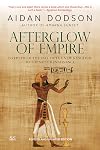
The Third Intermediate Period is the most complicated epoch of ancient Egyptian history, and the one with the most relevance to modern politics. That requires some explanation if you’re not familiar with Egyptology.
Egypt is the “anchor” for a lot of ancient Mediterranean chronology. Egyptian artifacts were traded all over the area, and these were often inscribed with the name of a pharaoh, and sometimes a specific date in that pharaoh’s reign. Thus if the chronology of Egyptian show more pharaohs was established, much of the rest of ancient Mediterranean chronology could be worked out.
The original Near Eastern archaeologists were Biblical scholars. So with the decipherment of Egyptian hieroglyphs in the beginning of the 19th century, people looked at the Egyptian records to tie them in with the Old Testament narratives. It quickly became evident that they didn’t match. In particular, the Old Testament put the United Monarchy of Saul, David and Solomon in the Late Bronze Age, but Egyptian history was pretty clear that the Levant was an Egyptian colony in the Late Bronze Age, and that there was no evidence that there ever was a United Monarchy or any such people as Saul, David, or Solomon. That obviously caused all sorts of problems for Biblical literalists (and Quranic literalists, since David and Solomon are mentioned in the Quran). The only time when there was historical “space” for United Monarchy was the Early Iron Age. That required that a good size chunk of Egyptian history had to be eliminated to make things fit. A number of scholars and pseudoscholars undertook this, and the easiest place to do it was the Third Intermediate Period.
So now we have to get into extremely simplified ancient Egyptian history. This is divided into the Old Kingdom (pyramids); Middle Kingdom (more pyramids); and New Kingdom (king Tut). The “Kingdoms” were times when the Egyptian central government was powerful and exerted influence over surrounding territory. In between (and after) the “Kingdoms” were the First, Second, and Third Intermediate Periods, when the central government weakened and Egypt broke into two or more little “kingdoms” based on geography. The catch was each of these little kingdoms often claimed to rule the whole country – especially during the Third Intermediate Period. A lot of Egyptian chronology was based on “king lists” where some ancient chronicler had listed pharaohs in order of their rule. But these chronicles sometimes listed kings in succession when, in fact, they had reigned wholly or partially simultaneously in different parts of the country during the Intermediate Periods when the country broke up. This provided fertile ground for chronological revisionists, who could now claim that any number of Egyptian pharaohs had overlapping reigns and force the Egyptian record to synchronize with the Old Testament.
So now, after that long and tedious introduction, we finally get to the book under review: Aidan Dodson’s Afterglow of Empire. Dodson starts by noting that some of the chronological revisionists have a point, and that “conventional” Egyptologists have sometimes “circled the wagons” and resisted any suggestions that conventional chronology should be adjusted. (It didn’t help the revisionist’s case that one of the earliest, Immanuel Velikovsky, was completely off the wall, allowing later revisionists to be simply dismissed as “neoVelikovskians” without further review). However, at most the adjustment is a few decades rather than the hundreds of years required by Velikovskians and Biblical literalists.
Dodson has undertaken an immense amount of scholarly labor to try and make sense out of the Third Intermediate period record. This is not an easy read, even if you are pretty well grounded in ancient Egypt; I consider myself a fairly decent amateur in Egyptology – I took courses in hieroglyphics and Egyptian history at the University of Chicago – but I had a hard time with this, having to reread some of Dodson’s arguments several times before I was reasonably confident that I understood them. Dodson’s Appendix III is a huge help here; it lists the reigns of all the pharaohs discussed, including overlapping reigns. I would recommend flipping back and forth between this Appendix and the text – or perhaps copying Appendix III as a separate chart – as a tool to understand what’s going on.
Extensive illustrations, always relevant to the text. The Appendices are extensive and greatly helpful; they’re about a quarter of the book. The endnotes and bibliography are also thorough and extensive. Highly recommended but be forewarned this is not a “coffee table” book with pretty pictures of Egyptian artifacts; it’s a highly detailed scholarly study that assumes a lot of prior knowledge. show less
Egypt is the “anchor” for a lot of ancient Mediterranean chronology. Egyptian artifacts were traded all over the area, and these were often inscribed with the name of a pharaoh, and sometimes a specific date in that pharaoh’s reign. Thus if the chronology of Egyptian show more pharaohs was established, much of the rest of ancient Mediterranean chronology could be worked out.
The original Near Eastern archaeologists were Biblical scholars. So with the decipherment of Egyptian hieroglyphs in the beginning of the 19th century, people looked at the Egyptian records to tie them in with the Old Testament narratives. It quickly became evident that they didn’t match. In particular, the Old Testament put the United Monarchy of Saul, David and Solomon in the Late Bronze Age, but Egyptian history was pretty clear that the Levant was an Egyptian colony in the Late Bronze Age, and that there was no evidence that there ever was a United Monarchy or any such people as Saul, David, or Solomon. That obviously caused all sorts of problems for Biblical literalists (and Quranic literalists, since David and Solomon are mentioned in the Quran). The only time when there was historical “space” for United Monarchy was the Early Iron Age. That required that a good size chunk of Egyptian history had to be eliminated to make things fit. A number of scholars and pseudoscholars undertook this, and the easiest place to do it was the Third Intermediate Period.
So now we have to get into extremely simplified ancient Egyptian history. This is divided into the Old Kingdom (pyramids); Middle Kingdom (more pyramids); and New Kingdom (king Tut). The “Kingdoms” were times when the Egyptian central government was powerful and exerted influence over surrounding territory. In between (and after) the “Kingdoms” were the First, Second, and Third Intermediate Periods, when the central government weakened and Egypt broke into two or more little “kingdoms” based on geography. The catch was each of these little kingdoms often claimed to rule the whole country – especially during the Third Intermediate Period. A lot of Egyptian chronology was based on “king lists” where some ancient chronicler had listed pharaohs in order of their rule. But these chronicles sometimes listed kings in succession when, in fact, they had reigned wholly or partially simultaneously in different parts of the country during the Intermediate Periods when the country broke up. This provided fertile ground for chronological revisionists, who could now claim that any number of Egyptian pharaohs had overlapping reigns and force the Egyptian record to synchronize with the Old Testament.
So now, after that long and tedious introduction, we finally get to the book under review: Aidan Dodson’s Afterglow of Empire. Dodson starts by noting that some of the chronological revisionists have a point, and that “conventional” Egyptologists have sometimes “circled the wagons” and resisted any suggestions that conventional chronology should be adjusted. (It didn’t help the revisionist’s case that one of the earliest, Immanuel Velikovsky, was completely off the wall, allowing later revisionists to be simply dismissed as “neoVelikovskians” without further review). However, at most the adjustment is a few decades rather than the hundreds of years required by Velikovskians and Biblical literalists.
Dodson has undertaken an immense amount of scholarly labor to try and make sense out of the Third Intermediate period record. This is not an easy read, even if you are pretty well grounded in ancient Egypt; I consider myself a fairly decent amateur in Egyptology – I took courses in hieroglyphics and Egyptian history at the University of Chicago – but I had a hard time with this, having to reread some of Dodson’s arguments several times before I was reasonably confident that I understood them. Dodson’s Appendix III is a huge help here; it lists the reigns of all the pharaohs discussed, including overlapping reigns. I would recommend flipping back and forth between this Appendix and the text – or perhaps copying Appendix III as a separate chart – as a tool to understand what’s going on.
Extensive illustrations, always relevant to the text. The Appendices are extensive and greatly helpful; they’re about a quarter of the book. The endnotes and bibliography are also thorough and extensive. Highly recommended but be forewarned this is not a “coffee table” book with pretty pictures of Egyptian artifacts; it’s a highly detailed scholarly study that assumes a lot of prior knowledge. show less
Lists
You May Also Like


Associated Authors
Statistics
- Works
- 31
- Also by
- 1
- Members
- 1,250
- Popularity
- #20,520
- Rating
- 3.8
- Reviews
- 18
- ISBNs
- 95
- Languages
- 5