On This Page
Description
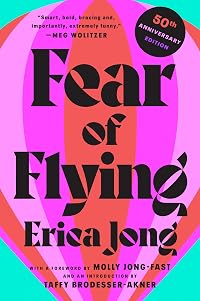
Originally published in 1973, the groundbreaking, uninhibited story of Isadora Wing and her desire to fly free caused a national sensation. In The New York Times, Henry Miller compared it to his own classic, Tropic of Cancer and predicted that "this book will make literary " It has sold more than twelve million copies. Now, after thirty years, the revolutionary novel known as Fear of Flying still stands as a timeless tale of self-discovery, liberation, and womanhood.Tags
Recommendations


















Member Recommendations

Member Reviews
Call me Isadora.
Reading Erica Jong’s Fear of Flying, there were times when I thought to myself this is me! This is how I feel! This is what I think! Finally, a female protagonist who’s reclaiming the word “slut!” Long before Lisbeth Salander blazed her own sexual trail and her own moral code, accepting no alternatives, there was Isadora Zelda White Stollerman Wing.
Historically speaking, men have had to suffer through very few social changes in terms of their sexual standing. With a very few exceptions (namely a couple of tribes in Africa), men never had to contest their place as head of the family, or their superiority in the realms of physical strength, virility, and even intelligence. Women, on the other hand, have had a much show more rougher go of it. Even as recently as the late nineteenth century, women only accounted for 15% of the total workforce in the U.S. In the beginning of the twentieth century, women were still considered the “keepers of morality”, effectively giving men free rein to develop their sexual identity, while the women were expected to keep their virginity until they married. Any woman who failed to do so became a pariah, a poster child for sexual looseness, little better than a prostitute. “It is heresy in America to embrace any way of life except as half a couple. Solitude is un-American. It may be condoned in a man….but a woman is always presumed to be alone as a result of abandonment, not choice. And she is treated that way: as a pariah” (10). Men seemingly became more manly with each notch on their belts, yet women became less than women, almost monsters, if they followed the same path. Over a hundred years later, in a new millennium, where women can vote and even be president, how much have things really changed? What happens when a woman follows her sexual desires, straying outside the bounds of traditional marriage and social expectations? What becomes of a woman who is, to use a term that’s been used frequently from Shakespeare to 50 Cent, a slut?
In this novel, which, when it came out in 1973, became an instant controversy because of it’s blatant female sexuality, Isadora Wing finds herself choosing between her husband and her “zipless fuck.”
The zipless fuck was more than a fuck. It was a platonic ideal. Zipless because when you came together zippers fell away like rose petals, underwear blew off in one breath like dandelion fluff. Tongues intertwined and turned liquid….For the true, ultimate zipless A-1 fuck, it was necessary that you never get to know the man very well….So another condition for the zipless fuck was brevity. And anonymity made it even better (11).
Does she do what society demands of her and stay with her husband? Or does she live out her own sexual fantasy and see what happens? In the first half of the novel, the reader follows Isadora as she goes back and forth between her husband, Bennett, and her lover, Adrian. This is where she started to lose me a little. What I first saw as a devil may care, sexual, independent woman seemed to shrink into a woman whose sexual waffling was really just the age-old drugstore romance-esque attempt to find “her other half.” Even though she leaves her husband and goes off on a cross-European road trip with Adrian, I had all but lost faith in Isadora.
The next part of the book is Isadora describing to Adrian her past loves, including her first marriage to Brian, who turned out to think he was Jesus Christ and had to be committed, and her romance with Charlie, the conductor with a faulty baton (double entendre intended). Thus, we come to understand two main themes in the novel: sanity v. insanity and virility v. impotency, both of which are intimately connected to Isadora’s situation.
What is sanity in a woman? Is it finding a good man, starting a monogamous relationship which culminates in marriage, popping out some babies, and having dinner on the table when the hubby gets back from his hard day of bread-winning? Or is it being independent, sleeping with whomever you please whenever you please, doing what you love for its own sake, and living the life you want?
I suddenly had a passion to be that ordinary girl. To be that good little housewife, that glorified American mother, that mascot from Mademoiselle, that matron from McCall’s, that cutie from Cosmo, that girl with the Good Housekeeping Seal tattooed on her ass and advertising jingles programmed in her brain….I had a fantasy then of myself as a happy housewife….Me in apron and gingham shirtwaist waiting on my husband and kiddies while the omnipresent TV set sings out the virtues of the American home and the American slave-wife with her tiny befuddled brains (253).
This is why I began to lose faith in Isadora. I thought she was falling into the trap of thinking that it was EASIER to be what women are told they’re supposed to be. That instead of feeling that terrible loneliness that any independent woman feels after sleeping with the wrong guy or not sleeping with anybody for a while and missing that kind of contact, that instead she should be that ideal American housewife, that life must be easier that way. And then, I was very pleasantly surprised. She turned out to be the woman I hoped she was in the beginning, only better, because now she was real. Not some new-age sexual Joan of Arc. She was me. She was any woman who dared to be more than what was expected of her:
But then the fantasy exploded. It burst like the bubble it was. I thought of all those mornings in New York when I had awakened with my husband and felt just as lonely….All those lonely moments measured out in coffee spoons, in laundry bills, in used toilet paper rolls, in dirty dishes, in broken plates, in canceled checks, in empty Scotch bottles. Marriage could be lonely too. Marriage could be desolate. All those happy housewives making breakfasts for husbands and kiddies were dreaming of running off with lovers to sleep in tents in France!….They constantly dreamed of escape. They constantly seethed with resentment. Their lives were pickled in fantasy (253).
Isadora: 1, Housewives of America: 0. Moral? We are all lonely. It’s up to us to find a way to be happy in spite of loneliness.
Next up, virility v. impotency. The ultimate male nightmare. In this story, the males get more manly when they feel that their woman is interested in another man. Adrian can do no better than half-mast whenever Isadora is practically falling over herself to have him, but becomes a sex God whenever he’s trying to convince her to run away with him. Bennett takes it even further by bursting in on Adrian and Isadora in bed together and actually fucking her while Adrian watches. Isadora’s crazy ex-husband only sleeps with her when he thinks that Isadora believes that he can no longer satisfy her, and then he practically assaults her in his violent attempt to prove himself. Men feel threatened by independent women because the idea that a woman doesn’t NEED them is terrifying. It’s impotency at its finest. Everyone likes to feel needed, but women don’t necessarily feel less female if they don’t.
I’m going to stop now. I could go on and on and on, but I won’t. I’ll just say this: it’s the classic case of woman versus society. In the end, Isadora Wing succeeds in doing what Edna Pontelier failed to do in The Awakening. She foregoes what she should do for what she desires to do. She realizes that, contrary to what she was brought up to believe and thought she did, she does not need anyone to complete her. “You did not have to apologize for wanting to own your own soul. Your soul belonged to you–for better or worse. When all was said and done, it was all you had” (288). And after a lot of wishy-washy “I love him/I love him not” in which I almost gave up on her as the feminist ideal, and instead of committing suicide a la Edna, she comes into herself, and realizes that she doesn’t need another half. She’s a whole all on her own. Women are a whole, all on their own.
For more book reviews (err... book musings?), including some Freudian feasting, visit my blog For Love and Allegory at http://www.forloveandallegory.wordpress.com/ show less
Reading Erica Jong’s Fear of Flying, there were times when I thought to myself this is me! This is how I feel! This is what I think! Finally, a female protagonist who’s reclaiming the word “slut!” Long before Lisbeth Salander blazed her own sexual trail and her own moral code, accepting no alternatives, there was Isadora Zelda White Stollerman Wing.
Historically speaking, men have had to suffer through very few social changes in terms of their sexual standing. With a very few exceptions (namely a couple of tribes in Africa), men never had to contest their place as head of the family, or their superiority in the realms of physical strength, virility, and even intelligence. Women, on the other hand, have had a much show more rougher go of it. Even as recently as the late nineteenth century, women only accounted for 15% of the total workforce in the U.S. In the beginning of the twentieth century, women were still considered the “keepers of morality”, effectively giving men free rein to develop their sexual identity, while the women were expected to keep their virginity until they married. Any woman who failed to do so became a pariah, a poster child for sexual looseness, little better than a prostitute. “It is heresy in America to embrace any way of life except as half a couple. Solitude is un-American. It may be condoned in a man….but a woman is always presumed to be alone as a result of abandonment, not choice. And she is treated that way: as a pariah” (10). Men seemingly became more manly with each notch on their belts, yet women became less than women, almost monsters, if they followed the same path. Over a hundred years later, in a new millennium, where women can vote and even be president, how much have things really changed? What happens when a woman follows her sexual desires, straying outside the bounds of traditional marriage and social expectations? What becomes of a woman who is, to use a term that’s been used frequently from Shakespeare to 50 Cent, a slut?
In this novel, which, when it came out in 1973, became an instant controversy because of it’s blatant female sexuality, Isadora Wing finds herself choosing between her husband and her “zipless fuck.”
The zipless fuck was more than a fuck. It was a platonic ideal. Zipless because when you came together zippers fell away like rose petals, underwear blew off in one breath like dandelion fluff. Tongues intertwined and turned liquid….For the true, ultimate zipless A-1 fuck, it was necessary that you never get to know the man very well….So another condition for the zipless fuck was brevity. And anonymity made it even better (11).
Does she do what society demands of her and stay with her husband? Or does she live out her own sexual fantasy and see what happens? In the first half of the novel, the reader follows Isadora as she goes back and forth between her husband, Bennett, and her lover, Adrian. This is where she started to lose me a little. What I first saw as a devil may care, sexual, independent woman seemed to shrink into a woman whose sexual waffling was really just the age-old drugstore romance-esque attempt to find “her other half.” Even though she leaves her husband and goes off on a cross-European road trip with Adrian, I had all but lost faith in Isadora.
The next part of the book is Isadora describing to Adrian her past loves, including her first marriage to Brian, who turned out to think he was Jesus Christ and had to be committed, and her romance with Charlie, the conductor with a faulty baton (double entendre intended). Thus, we come to understand two main themes in the novel: sanity v. insanity and virility v. impotency, both of which are intimately connected to Isadora’s situation.
What is sanity in a woman? Is it finding a good man, starting a monogamous relationship which culminates in marriage, popping out some babies, and having dinner on the table when the hubby gets back from his hard day of bread-winning? Or is it being independent, sleeping with whomever you please whenever you please, doing what you love for its own sake, and living the life you want?
I suddenly had a passion to be that ordinary girl. To be that good little housewife, that glorified American mother, that mascot from Mademoiselle, that matron from McCall’s, that cutie from Cosmo, that girl with the Good Housekeeping Seal tattooed on her ass and advertising jingles programmed in her brain….I had a fantasy then of myself as a happy housewife….Me in apron and gingham shirtwaist waiting on my husband and kiddies while the omnipresent TV set sings out the virtues of the American home and the American slave-wife with her tiny befuddled brains (253).
This is why I began to lose faith in Isadora. I thought she was falling into the trap of thinking that it was EASIER to be what women are told they’re supposed to be. That instead of feeling that terrible loneliness that any independent woman feels after sleeping with the wrong guy or not sleeping with anybody for a while and missing that kind of contact, that instead she should be that ideal American housewife, that life must be easier that way. And then, I was very pleasantly surprised. She turned out to be the woman I hoped she was in the beginning, only better, because now she was real. Not some new-age sexual Joan of Arc. She was me. She was any woman who dared to be more than what was expected of her:
But then the fantasy exploded. It burst like the bubble it was. I thought of all those mornings in New York when I had awakened with my husband and felt just as lonely….All those lonely moments measured out in coffee spoons, in laundry bills, in used toilet paper rolls, in dirty dishes, in broken plates, in canceled checks, in empty Scotch bottles. Marriage could be lonely too. Marriage could be desolate. All those happy housewives making breakfasts for husbands and kiddies were dreaming of running off with lovers to sleep in tents in France!….They constantly dreamed of escape. They constantly seethed with resentment. Their lives were pickled in fantasy (253).
Isadora: 1, Housewives of America: 0. Moral? We are all lonely. It’s up to us to find a way to be happy in spite of loneliness.
Next up, virility v. impotency. The ultimate male nightmare. In this story, the males get more manly when they feel that their woman is interested in another man. Adrian can do no better than half-mast whenever Isadora is practically falling over herself to have him, but becomes a sex God whenever he’s trying to convince her to run away with him. Bennett takes it even further by bursting in on Adrian and Isadora in bed together and actually fucking her while Adrian watches. Isadora’s crazy ex-husband only sleeps with her when he thinks that Isadora believes that he can no longer satisfy her, and then he practically assaults her in his violent attempt to prove himself. Men feel threatened by independent women because the idea that a woman doesn’t NEED them is terrifying. It’s impotency at its finest. Everyone likes to feel needed, but women don’t necessarily feel less female if they don’t.
I’m going to stop now. I could go on and on and on, but I won’t. I’ll just say this: it’s the classic case of woman versus society. In the end, Isadora Wing succeeds in doing what Edna Pontelier failed to do in The Awakening. She foregoes what she should do for what she desires to do. She realizes that, contrary to what she was brought up to believe and thought she did, she does not need anyone to complete her. “You did not have to apologize for wanting to own your own soul. Your soul belonged to you–for better or worse. When all was said and done, it was all you had” (288). And after a lot of wishy-washy “I love him/I love him not” in which I almost gave up on her as the feminist ideal, and instead of committing suicide a la Edna, she comes into herself, and realizes that she doesn’t need another half. She’s a whole all on her own. Women are a whole, all on their own.
For more book reviews (err... book musings?), including some Freudian feasting, visit my blog For Love and Allegory at http://www.forloveandallegory.wordpress.com/ show less
Erica creates almost an anti-heroine in this book. Isadora Wing is a Jewish American Princess, native New Yorker, & has the market on guilt cornered. She's a poet & a writer, married to her second husband Bennett, a shrink she married shortly after her first marriage to Brian was annulled. Brian had a psychotic break, tried to strangle her, & was moved to a private mental institution in California. Her family is quixotic, radical, & also artistic, everything that Bennett is not. Her adventures begin when she accompanies Bennett to Vienna for a conference for psychoanalysts, & she is smitten with Adrian Goodlove, another analyst. Written with self deprecating humor, Isadora's journey of self discovery is very funny, imminently readable, show more & I can see why it made both the Banned/Challenged book list for it's liberating ideas when it comes to women & their own sexuality, which she speaks openly about, & the 1001 Books to Read Before You Die list.
Written in 1973, this book is indeed a modern day classic, & I'm really glad I finally read it show less
Written in 1973, this book is indeed a modern day classic, & I'm really glad I finally read it show less
An exploration into the psychology of a woman finding herself, at the vanguard of the feminist movement of the 1960s. It deserves its shocking reputation even all these years later, with a relish for scatology reminiscent of Rabelais, always with a commitment to tell the emotional truth about the main character's life. Gradually, in fits and starts, Isadora invents a way to define who she is independent of the men around her. Each of these guys is described with an instinct for depicting the deep possessiveness, amounting to creepiness, that constitutes a recurring theme in her life. By the end of her misadventures, I got the sense that she was going to try something different for a change in hopes that she might have a hope of show more happiness.
It's a challenge to read this now and keep in mind that the things the author was doing in the 1960s was considered far out of bounds, because of all the novels which she helped inspire in the years since. A profanity-laced story, full of shocking confessional scenes, with characters who refuse to recognize societal boundaries and go still (mostly) unpunished for their transgressions would not be considered unique in this century. Perhaps the author would be accused of button-pushing or seeking attention, but not of trying to pull down society as a whole. show less
It's a challenge to read this now and keep in mind that the things the author was doing in the 1960s was considered far out of bounds, because of all the novels which she helped inspire in the years since. A profanity-laced story, full of shocking confessional scenes, with characters who refuse to recognize societal boundaries and go still (mostly) unpunished for their transgressions would not be considered unique in this century. Perhaps the author would be accused of button-pushing or seeking attention, but not of trying to pull down society as a whole. show less
To my surprise, the book left me with a different impression when I reread it a generation later. Yes, it’s packed with what a superficial juvenile might think is “liberating” sexual talk, and even by today’s standards it’s no tamer than ever. But now I just see a poor, lonely woman’s cry for help. She has no real friends, male or female, and the men in her life are all jerks to whom she offers sex because she can. But then, somewhere after having been used over and over by men who *she* thought she was using, she loses interest.
You won't understand this book if you're reading for prurient reasons, and if that's what you're looking for, I suggest you wait a few decades and read it after you know more about the awful mess show more some people make of their lives. show less
You won't understand this book if you're reading for prurient reasons, and if that's what you're looking for, I suggest you wait a few decades and read it after you know more about the awful mess show more some people make of their lives. show less
This book took me very much by surprise. There were mixed reviews online but I thought it was a very bold work of genius. When you consider that this was first published in 1974, it must have sounded a resounding crack across the bows of HMS Misogyny.
Jong has created one of the enduring characters of literature with Isadora Wing, the mixed up narrator who relates the relational messes she has found herself in throughout her life. Flashbacks to previous relationships puncture the contemporary narrative of a trip with her psychoanalyst husband to a convention in Vienna where she meets what she believes will be the answer to all her romantic and sexual longings.
In a way, Adrian does provide her with the answer, and it’s not necessarily show more one that feminists at the time, less so today, would feel altogether satisfied with. Still, for me, the novel’s strength lies in the way Jong used Isadora to explore what the roles of men and women in marriage actually mean.
Jong writes in a deceptively racy style. It’s easy to forget that there are layers of imagery here starting with the title and continuing throughout this very quotable novel. There were a lot of passages I felt compelled to read out to the wife for her view. It’s a great discussion starter.
This was an important book in the feminist canon, not necessarily because it provides all the answers, but because it honestly deals with the dilemmas of the issues involved. I liked the fact that it raised more questions than it answered, that the ending didn’t wrap everything up perfectly but left some element of doubt about whether Isadora had done the right thing. That seems to me a much more honest approach than attempting some Rand-ish polemic about the ideal roles of men and women. Life is messy; two lives together messier still. And that’s the way it will always be. show less
Jong has created one of the enduring characters of literature with Isadora Wing, the mixed up narrator who relates the relational messes she has found herself in throughout her life. Flashbacks to previous relationships puncture the contemporary narrative of a trip with her psychoanalyst husband to a convention in Vienna where she meets what she believes will be the answer to all her romantic and sexual longings.
In a way, Adrian does provide her with the answer, and it’s not necessarily show more one that feminists at the time, less so today, would feel altogether satisfied with. Still, for me, the novel’s strength lies in the way Jong used Isadora to explore what the roles of men and women in marriage actually mean.
Jong writes in a deceptively racy style. It’s easy to forget that there are layers of imagery here starting with the title and continuing throughout this very quotable novel. There were a lot of passages I felt compelled to read out to the wife for her view. It’s a great discussion starter.
This was an important book in the feminist canon, not necessarily because it provides all the answers, but because it honestly deals with the dilemmas of the issues involved. I liked the fact that it raised more questions than it answered, that the ending didn’t wrap everything up perfectly but left some element of doubt about whether Isadora had done the right thing. That seems to me a much more honest approach than attempting some Rand-ish polemic about the ideal roles of men and women. Life is messy; two lives together messier still. And that’s the way it will always be. show less
How is it that Isadora Wing is such a sympathetic character? She has sex on the brain constantly; she dreams about 'zipless fucks' in train carriages with strangers. Over the course of Fear of Flying, she sleeps with hundreds of men. By our society's standards, she'd be 'a slut', 'a whore', 'a loose woman'. And yet, in Jong's eyes, she's merely human. She rides through the novel on a roller coaster of the same emotions that all of us, women and men, feel. Isadora is no worse than all the sleazy men of Europe, 'opening their doors and whispering vieni, vieni' – so why does it shock us to hear a woman expressing her own feelings of unmitigated sexual desire? Answer: it shouldn't, and after three hundred pages of Jong's writing, it show more won't. This is why Fear of Flying is such a valuable experience for male readers – it has the potential to change the way we think about sex and the female brain.
Isadora's narration has such an energetic flow that one can't help but accelerate into it. Before I knew it, I'd been swept away on one of her tangents about sex or family or literature. The constant philosophising seemed didactic at first, but I soon accepted it as a crucial attribute of Jong's writing. Perhaps this is the quintessential 'feminine' style, rich in literary multitasking – a foil to the dominant 'masculine' style of the past thousand years where the author describes events more or less as they unfold, one at a time. What Isadora thinks and wants is as important as, if not more important than, what she does.
So what does she think? What does she want? It's difficult to say, because it changes from chapter to chapter, even from page to page. She wants to be with others, she wants to be alone, she wants to take risks, she wants to be secure, she wants to be with Bennet, she wants to be with Adrian, she wants to be independent, she wants to be a housewife. This seems to be one of Jong's key messages: feelings of attraction and desire are, by their very nature, in a constant state of flux. To try to diagnose Isadora, to analyse her, categorise her, would be futile – hence the irony of all the psychoanalysis that permeates the novel. Freud's theories are given some credence, but Jong ultimately implies that they are flawed and simplistic – perhaps because Freud 'thought the sun revolved around the penis.' To quote D.H. Lawrence in the epigraph of Chapter 18 – (this book is so layered with references that each chapter has its own epigraph!) – 'The real trouble about women is that they must always go on trying to adapt themselves to men's theories of women.' Isadora is simply Isadora. We cannot sum her up; the only way to experience her is to be exposed to three hundred pages of her experiences, her thoughts, her feelings. As such, the parameters of any slice of her life are going to be somewhat arbitrary – who can say how she will change in the years after the novel ends? – but Jong gives us a remarkable picture of her, absorbing and memorable, right to the very last page. show less
Isadora's narration has such an energetic flow that one can't help but accelerate into it. Before I knew it, I'd been swept away on one of her tangents about sex or family or literature. The constant philosophising seemed didactic at first, but I soon accepted it as a crucial attribute of Jong's writing. Perhaps this is the quintessential 'feminine' style, rich in literary multitasking – a foil to the dominant 'masculine' style of the past thousand years where the author describes events more or less as they unfold, one at a time. What Isadora thinks and wants is as important as, if not more important than, what she does.
So what does she think? What does she want? It's difficult to say, because it changes from chapter to chapter, even from page to page. She wants to be with others, she wants to be alone, she wants to take risks, she wants to be secure, she wants to be with Bennet, she wants to be with Adrian, she wants to be independent, she wants to be a housewife. This seems to be one of Jong's key messages: feelings of attraction and desire are, by their very nature, in a constant state of flux. To try to diagnose Isadora, to analyse her, categorise her, would be futile – hence the irony of all the psychoanalysis that permeates the novel. Freud's theories are given some credence, but Jong ultimately implies that they are flawed and simplistic – perhaps because Freud 'thought the sun revolved around the penis.' To quote D.H. Lawrence in the epigraph of Chapter 18 – (this book is so layered with references that each chapter has its own epigraph!) – 'The real trouble about women is that they must always go on trying to adapt themselves to men's theories of women.' Isadora is simply Isadora. We cannot sum her up; the only way to experience her is to be exposed to three hundred pages of her experiences, her thoughts, her feelings. As such, the parameters of any slice of her life are going to be somewhat arbitrary – who can say how she will change in the years after the novel ends? – but Jong gives us a remarkable picture of her, absorbing and memorable, right to the very last page. show less
I love this book. When the 40th anniversary of "Fear of Flying" came up as an option, I was curious to see if it would still resonate with me. As I recall, I first read this novel about 30 years ago when I was in college. It was a period during which I was becoming aware of "feminist" lit (anniversary edition of "The Women's Room" next maybe?). Although I read many of Jong's subsequent novels, I was often disappointed, remembering, not the story, but the feelings evoked by FofF. To my surprise, I found it equally as engaging and insightful all these years later. Now that I've married, divorced, married--this "coming of age" story seemed to have even more dimensions of meaning. I've underlined a number of passages that I want to reflect show more on further. It's not often that happens with a work of fiction. I'm also looking forward to pulling my original copy off the shelf to see if I marked that one up and how it compares. This is a book that I will likely set aside for my niece and encourage her to read as she moves into adulthood and relationships. Despite the jokes that have floated about, it's not about the sex. There is more sex in most young adult lit these days. It's the journey and that's what makes it enduring and a classic. show less
 This review was written for LibraryThing Early Reviewers.
Members
- Recently Added By
Lists

1001 Books You Must Read Before You Die
1,448 works; 1,133 members

Female Author
1,234 works; 67 members

1,001 BYMRBYD Concensus
723 works; 27 members

End of Your Life Book Club
134 works; 4 members

recalling favorites...
105 works; 2 members

Bibliography for How to be a Heroine
148 works; 12 members

Swinging Seventies
255 works; 18 members

Read These Too
458 works; 9 members

Tablet Magazine's List of 101 Great Jewish Books
103 works; 9 members

Global Reads: Books Set in Western Europe
186 works; 10 members

Macmillan Publishers
129 works; 3 members

important
24 works; 1 member

feminism & gender studies
17 works; 1 member
Author Information

46+ Works 8,942 Members
Erica Jong was born on March 26, 1942. She received a B.A. from Barnard College and a M.A. in 18th Century English Literature from Columbia University. She also attended Columbia University's graduate writing program where she studied poetry. She has written numerous volumes of poetry, novels, and non-fiction works including Fruits and Vegetables, show more Fear of Flying, How to Save Your Own Life, Parachutes and Kisses, Sappho's Leap, Seducing the Demon: Writing for My Life, and It Was Eight Years Ago Today (But It Seems Like Eighty). She has received numerous awards including the United Nations Award for Excellence in Literature, Poetry magazine's Bess Hokin Prize, the Deauville Award for Literary Excellence, and the Sigmund Freud Award for Literature. (Bowker Author Biography) show less
Some Editions
Awards and Honors
Awards
Distinctions
Notable Lists
Series

Belongs to Publisher Series
Work Relationships
Is abridged in
Common Knowledge
- Canonical title*
- Het ritsloze nummer
- Original title
- Fear of Flying
- Original publication date
- 1973
- People/Characters
- Isadora Zelda White Stollerman Wing; Bennett Wing; Adrian Goodlove
- Important places
- Baden-Württemberg, Germany; Heidelberg, Baden-Württemberg, Germany; New York, USA; New York, New York, USA; Paris, France; Vienna, Austria
- Epigraph
- Bigamy is having one husband too many. Monogamy is the same.
—Anonymous (a woman)
Alas! The love of women! It is known
To be a lovely and a fearful thing;
For all of theirs upon that die is thrown,
And if 'tis lost, life hath no more to bring
To them but mockeries of the past alone,
And thei... (show all)r revenge is as the tiger's spring,
Deadly, and quick, and crushing; yet, as real
Torture is theirs — what they inflict they feel.
They are right; for man, to man so oft unjust,
is always so to women; one sole bond
Awaits them — treachery is all their trust;
Taught to conceal, their bursting hearts despond
Over their idol, till some wealthier lust
Buys them in marriage — and what rests beyond?
A thankless husband — next, a faithless lover —
Then dressing, nursing, praying — and all's over.
Some take a lover, some take drams or prayers,
Some mind their household, others dissipation,
Some run away, and but exchange their cares,
Losing the advantage of a virtuous station;
Few changes e'er can better their affairs,
Theirs being an unnatural situation,
From the dull palace to the dirty hovel :
Some play the devil, and then write a novel.
— Lord Byron (from Don Juan) - Dedication
- For Grace Darling Griffin And for my grandfather Samuel Mirsky
- First words
- There were 117 psychoanalysts on the Pan Am flight to Vienna and I'd been treated by at least six of them.
- Last words
- (Click to show. Warning: May contain spoilers.)As I was soaping it again, Bennet walked in.
- Blurbers
- Updike, John; Clemens, Walter; Janeway, Elizabeth; Sayre, Nora
- Original language
- English
*Some information comes from Common Knowledge in other languages. Click "Edit" for more information.
Classifications
Statistics
- Members
- 3,748
- Popularity
- 4,274
- Reviews
- 89
- Rating
- (3.44)
- Languages
- 22 — Arabic, Czech, Danish, Dutch, English, Estonian, Finnish, French, German, Hungarian, Italian, Lithuanian, Norwegian (Bokmål), Norwegian, Polish, Portuguese, Serbian, Slovak, Slovenian, Spanish, Swedish, Turkish
- Media
- Paper, Audiobook, Ebook
- ISBNs
- 116
- ASINs
- 46
