On This Page
Description
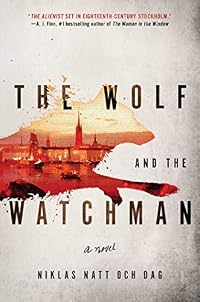
When a mutilated corpse is discovered in a local swamp, watchman Mikel Cardell and lawyer Cecil Winge comb the underworld of eighteenth-century Stockholm to unmask a murderer before a young workhouse laborer becomes the next victim.Tags
Recommendations





























Member Reviews
I had to wait for my blood pressure and heart rate to calm down before writing a review on this Novel.
A vividly written, unusual, intriguing and atmospheric Scandinavian crime thriller / horror / historical fiction story that made for difficult reading in places due to its very graphic content and yet apparently an accurate portrayal of 1780 Stockholm and I came away from this one with a feeling of gratitude for not having lived in the late 1700s as I don't think I would have lasted 5 minutes in that barbaric squalor, depraved and diseased city. extremely well written and translated and a compelling read, this one kept me up well into the night and haunted my thoughts for a long time after. A real page turner for those who can show more stomach it. What an intriguing debut novel.
First a warning................This is not an easy read. It is not for readers who find graphic descriptions of injuries, Despicable characters, war or torture upsetting and Niklas Natt Och Dag doesn't shy away from graphic detail.
Stockholm 1793, King Gustav of Sweden has been assassinated, When night watchman Mickel Cardell pulls the remains of a man from a lake, the ex soldier is confronted with a corpse that has been subjected to prolonged torture , his arms and legs cut away, his tongue and eyes removed. What or Who is capable of such depraved torture and why?
Superb writing and vivid descriptions of a city and its inhabitants in the late 1700s. I read this one with my husband and we were completely engrossed in the story and the characters and while it is a little out of my comfort zone, I loved the historical element and mystery to this one, it has a strange eerie feel to it which I loved and the sense of time and place is excellent. The crime element of the story is very well crafted and executed.
I had a hard copy of this novel and the audio version as well and was lucky to be able to switch between the two, the audio was narrated by 3 narrators and their narration of this story was excellent. It was haunting and atmospheric and so much so that while out forest walking and I had to switch off as it was way too scary to listen to in a deserted forest.
This is a book you choose to read and not a book that should be chosen for you.
show less
A vividly written, unusual, intriguing and atmospheric Scandinavian crime thriller / horror / historical fiction story that made for difficult reading in places due to its very graphic content and yet apparently an accurate portrayal of 1780 Stockholm and I came away from this one with a feeling of gratitude for not having lived in the late 1700s as I don't think I would have lasted 5 minutes in that barbaric squalor, depraved and diseased city. extremely well written and translated and a compelling read, this one kept me up well into the night and haunted my thoughts for a long time after. A real page turner for those who can show more stomach it. What an intriguing debut novel.
First a warning................This is not an easy read. It is not for readers who find graphic descriptions of injuries, Despicable characters, war or torture upsetting and Niklas Natt Och Dag doesn't shy away from graphic detail.
Stockholm 1793, King Gustav of Sweden has been assassinated, When night watchman Mickel Cardell pulls the remains of a man from a lake, the ex soldier is confronted with a corpse that has been subjected to prolonged torture , his arms and legs cut away, his tongue and eyes removed. What or Who is capable of such depraved torture and why?
Superb writing and vivid descriptions of a city and its inhabitants in the late 1700s. I read this one with my husband and we were completely engrossed in the story and the characters and while it is a little out of my comfort zone, I loved the historical element and mystery to this one, it has a strange eerie feel to it which I loved and the sense of time and place is excellent. The crime element of the story is very well crafted and executed.
I had a hard copy of this novel and the audio version as well and was lucky to be able to switch between the two, the audio was narrated by 3 narrators and their narration of this story was excellent. It was haunting and atmospheric and so much so that while out forest walking and I had to switch off as it was way too scary to listen to in a deserted forest.
This is a book you choose to read and not a book that should be chosen for you.
show less
Originally published in Swedish as “1793”, Niklas Natt och Dag’s debut novel will soon be available in English in an idiomatic translation by Ebba Segerberg. And it has all the makings of a literary bestseller. The story is set in Stockholm in the late 18th Century. Europe is still in awe of the revolutionary goings-on in France and, following the assassination of Gustav III, revolutionary fervour in the Swedish city is tempered by a sense of fear and dread as to what might happen if matters get out of hand. In this incendiary environment, Mickell Cardell, a one-armed ex-soldier and night watchman, makes a grisly find. Somebody has disposed of a body in the city’s lake – and it is a body with excised limbs and gouged eyes, show more testifying to a slow and painful death. This is the type of crime whose investigation the Head of the Stockholm Police can only assign to a trusted person – and that’s Cecil Winge, a lawyer with progressive ideals who is battling the last stages of consumption. Winge teams up with Cardell and together they attempt to crack the case. Their fraught journey will take them through all layers of Stockholm society, from the lowest classes to the supposed elite of the city, who also have their dark and base secrets.
In a virtuoso feat of storytelling, Niklas Natt och Dag introduces two further strands in his tale, which are presented to the reader in reverse chronological order. First there is the epistolary account of Kristofer Blix, a handsome young man who moves to Stockholm with the dream of becoming a doctor. Then there is the story of Anna-Stina, sent to a dreary workhouse after being wrongly accused of working as a prostitute. In the final chapters, these three threads combine to create a satisfying finale. Some plot twists are rather too convenient, but the momentum is such that one gladly suspends disbelief.
So why is The Wolf and the Watchman good “historical fiction”? First of all, the setting is no mere “appendage” to the story – the beliefs, ideals and way of life of the period fuel both the plot and the characters’ motivations and thought processes. Secondly, the historical context is authentic, not simply in the sense of being well-researched (though it seems to be that as well), but more importantly in that the novel places us soundly in the period it is describing. Indeed, the descriptions do not shy away from the revolting – whether stench, disease or bodily fluids. In this respect, a warning to the fainthearted is in order – the novel can be very graphic and I must admit to skipping a couple of paragraphs and reading some others whilst peeping between my fingers. It can be dark, it can be bleak, but it certainly cannot be accused of presenting the past with nostalgic, rose-tinted hues.
At the same time, I liked the fact that the author plays around with the genre. The Wolf and the Watchman presents elements of the “police procedural” and, in its use of an investigating duo combining brain and brawn, it pays tribute to classic detective fiction. There is also a strong noir element – the customers of smokey nightclubs and striptease joints replaced by the tobacco-chewing patrons of Stockholm pubs and coffee-houses. And, to the great pleasure of yours truly, there is more than a whiff of Gothic in some of the darker pages of the text.
1793 was voted best debut novel of 2017 by the Swedish Academy of Crime Writers. It’s a deserved win and, hopefully, its English translation will bring it to the attention of a wider audience.
A longer version of this review, with tips for accompanying music, can be found at Ends of the Word.
https://endsoftheword.blogspot.com/2019/01/stockholm-1793.html
4.5* show less
In a virtuoso feat of storytelling, Niklas Natt och Dag introduces two further strands in his tale, which are presented to the reader in reverse chronological order. First there is the epistolary account of Kristofer Blix, a handsome young man who moves to Stockholm with the dream of becoming a doctor. Then there is the story of Anna-Stina, sent to a dreary workhouse after being wrongly accused of working as a prostitute. In the final chapters, these three threads combine to create a satisfying finale. Some plot twists are rather too convenient, but the momentum is such that one gladly suspends disbelief.
So why is The Wolf and the Watchman good “historical fiction”? First of all, the setting is no mere “appendage” to the story – the beliefs, ideals and way of life of the period fuel both the plot and the characters’ motivations and thought processes. Secondly, the historical context is authentic, not simply in the sense of being well-researched (though it seems to be that as well), but more importantly in that the novel places us soundly in the period it is describing. Indeed, the descriptions do not shy away from the revolting – whether stench, disease or bodily fluids. In this respect, a warning to the fainthearted is in order – the novel can be very graphic and I must admit to skipping a couple of paragraphs and reading some others whilst peeping between my fingers. It can be dark, it can be bleak, but it certainly cannot be accused of presenting the past with nostalgic, rose-tinted hues.
At the same time, I liked the fact that the author plays around with the genre. The Wolf and the Watchman presents elements of the “police procedural” and, in its use of an investigating duo combining brain and brawn, it pays tribute to classic detective fiction. There is also a strong noir element – the customers of smokey nightclubs and striptease joints replaced by the tobacco-chewing patrons of Stockholm pubs and coffee-houses. And, to the great pleasure of yours truly, there is more than a whiff of Gothic in some of the darker pages of the text.
1793 was voted best debut novel of 2017 by the Swedish Academy of Crime Writers. It’s a deserved win and, hopefully, its English translation will bring it to the attention of a wider audience.
A longer version of this review, with tips for accompanying music, can be found at Ends of the Word.
https://endsoftheword.blogspot.com/2019/01/stockholm-1793.html
4.5* show less
Gotham City has nothing on Stockholm in 1793. A grim, bleak city rife with poverty and corruption, Stockholm reeks of desperation and despair. In The Wolf and the Watchman by Niklas Natt och Dog, when a body is found in the river with its ears punctured, eyes removed, tongue cut out, and all four of limbs have been amputated, the closest thing they have to Batman and Robin is a man dying of tuberculosis and a one-armed war veteran with PTSD, though of course, they had no such name for it.
Cecil Winge is a brilliant lawyer consulting for the police to solve the more intractable crimes. He has that adamantine integrity that repels friendship and cultivates enemies. Mickell Cardell works as a night watchman. Wounded veterans are given that show more job, though the pay is too little to live on, so most use their position corruptly. Cardell prefers to supplement his pay by working as a bouncer and not actually working at his job. He is, however, the man called when some children find the body. He swims out and retrieves the body and that commits him to find some justice for the tortured and mutilated man. Winge, too, feels an obligation to discover the man’s identity and give him justice before he dies.
The narrative of their search for justice for the corpse they name Karl Johan bookend the book in Parts One and Four. Part Two is the story of Kristofer Blix as he writes it to his sister. Blix is a young man who runs into debt and is hired by the murderer. Part Three is the story of Anna Stina, a young woman whose rejection of a suitor leads her to the workhouse and her escape and whose small mercy for Blix draws her into the mystery.
The Wolf and the Watchman begins with a headlong rush and before I knew it, I was absorbed in the story. Then we learn the very specific details of the young man’s murder that are stomach-churning. Each limb was amputated and tended to carefully so it healed before the next limb was amputated. I was nauseated and had to put the book down.
I am conflicted about this book. It’s well-written and researched. Natt och Dag realistically creates a sense of time and place with the uncertainty of the Swedish regency after the king’s assassination, the turmoil of the French Revolution sparking fear of revolution in Sweden, and the cynical wastage of human life in the Russo-Swedish War. The ever-present filth, sewage, and stench of an 18th-century city is also ever-present. On the other hand, the depravity seems otherworldly. There is no goodness in this world except, perhaps, for a few moments here and there, far too few. The evil is not just evil, it is the kind of evil that makes you wonder how someone even thought of it. It is the kind that creeps me out and this book creeps me out time and time and time again. I nearly quit a few times just in disgust. So, it is well written. I wanted to know the answers. But I am conflicted about recommending it, I would rather not have those images in my head.
So why four stars? It is that well-written. When books get this awful, I quit reading them. I tried to quit reading more than once. Setting it aside and picking up something else, but I always came back because I had to know. That is good writing, compelling writing, writing that kept me reading in spite of myself.
The Wolf and the Watchman will be released March 9th. I received an ARC of The Wolf and the Watchman from the publisher through Shelf Awareness.
The Wolf and the Watchman at Atria Books
Niklas Natt och Dag author bio
https://tonstantweaderreviews.wordpress.com/2018/12/08/9781501196775/ show less
Cecil Winge is a brilliant lawyer consulting for the police to solve the more intractable crimes. He has that adamantine integrity that repels friendship and cultivates enemies. Mickell Cardell works as a night watchman. Wounded veterans are given that show more job, though the pay is too little to live on, so most use their position corruptly. Cardell prefers to supplement his pay by working as a bouncer and not actually working at his job. He is, however, the man called when some children find the body. He swims out and retrieves the body and that commits him to find some justice for the tortured and mutilated man. Winge, too, feels an obligation to discover the man’s identity and give him justice before he dies.
The narrative of their search for justice for the corpse they name Karl Johan bookend the book in Parts One and Four. Part Two is the story of Kristofer Blix as he writes it to his sister. Blix is a young man who runs into debt and is hired by the murderer. Part Three is the story of Anna Stina, a young woman whose rejection of a suitor leads her to the workhouse and her escape and whose small mercy for Blix draws her into the mystery.
The Wolf and the Watchman begins with a headlong rush and before I knew it, I was absorbed in the story. Then we learn the very specific details of the young man’s murder that are stomach-churning. Each limb was amputated and tended to carefully so it healed before the next limb was amputated. I was nauseated and had to put the book down.
I am conflicted about this book. It’s well-written and researched. Natt och Dag realistically creates a sense of time and place with the uncertainty of the Swedish regency after the king’s assassination, the turmoil of the French Revolution sparking fear of revolution in Sweden, and the cynical wastage of human life in the Russo-Swedish War. The ever-present filth, sewage, and stench of an 18th-century city is also ever-present. On the other hand, the depravity seems otherworldly. There is no goodness in this world except, perhaps, for a few moments here and there, far too few. The evil is not just evil, it is the kind of evil that makes you wonder how someone even thought of it. It is the kind that creeps me out and this book creeps me out time and time and time again. I nearly quit a few times just in disgust. So, it is well written. I wanted to know the answers. But I am conflicted about recommending it, I would rather not have those images in my head.
So why four stars? It is that well-written. When books get this awful, I quit reading them. I tried to quit reading more than once. Setting it aside and picking up something else, but I always came back because I had to know. That is good writing, compelling writing, writing that kept me reading in spite of myself.
The Wolf and the Watchman will be released March 9th. I received an ARC of The Wolf and the Watchman from the publisher through Shelf Awareness.
The Wolf and the Watchman at Atria Books
Niklas Natt och Dag author bio
https://tonstantweaderreviews.wordpress.com/2018/12/08/9781501196775/ show less
I RECEIVED A DRC FROM THE PUBLISHER VIA NETGALLEY.
Don't so much as twitch toward this book if you're not able to breeze through Henning Mankell's more violent books about Wallander. In every line and on every page you're going to be challenged, and hard; rape, torture, murder, and a twisted vision of the upper-class privilege corrupting Sweden in its early Enlightenment days. As brutal as any Scandinoir, as evocatively written as Mantel's Sir Thomas More novels, and worth every flinch, gasp, and slamming shut in horror.
Don't so much as twitch toward this book if you're not able to breeze through Henning Mankell's more violent books about Wallander. In every line and on every page you're going to be challenged, and hard; rape, torture, murder, and a twisted vision of the upper-class privilege corrupting Sweden in its early Enlightenment days. As brutal as any Scandinoir, as evocatively written as Mantel's Sir Thomas More novels, and worth every flinch, gasp, and slamming shut in horror.
"She, a schooner, her foremast shorter than her mainmast, is still tied with her starboard side to the quay. There is no activity that he can see. Evening flâneurs are visiting coffee houses and wine cellars, loaders and quay labourers have returned home, the sailors have disappeared up the Stadsholmen alleys in search of company and entertainment. He walks by the gangway. Only one man can be seen on deck. With a look of concentration, he is lowering a lead weight into an ironclad casket. ‘Joseph Satcher?’"
A Netgalley book.
A wonderfully dark trawl through Sweden c. 1793 (the original title of the book when published in Swedish). One of the protagonists is in end-stage TB and the other has lost his arm during a hopeless war and is show more doing his best to drown his PTSD in alcohol. In the last days of an ethical police chief, the dying lawyer Winge, miraculously still walking despite his bloodied hankies, is asked to solve the mystery of a limbless torso that has been found on the shore of Stockholm's slum. For backup, he recruits the watchman of the title.
I've seen complaints on Litsy that the book was too violent, or that the plot was too meandering. For me, the violence reflected the experience of the urban poor in the time. Women are accused of prostitution by the wealthy church for trying to make money when they have not enough to eat, and sent to spin for the state. People fake wealth through gambling and debt in a bid to avoid debtor jail. Medicine is crude but in the process of changing, and political power is buyable and frequently bought. It's a wide-ranging book, from the experience of supposedly 'criminal' women in the poorhouse, to the streets of Paris during the Terror. I thought it thoroughly well done, and it was sufficiently gripping for me to be afraid at some points to carry on for fear of what might happen to the characters next... It reminded me of Andrew Miller's work (perhaps most well-known, Pure).
"Winge steers towards death by the same compass that has shown his way his entire life: reason . He tells himself that all men will die and that all are dying. This helps. But when the night sweats come and his thoughts race wildly, it is rather the particulars of his own demise that haunt him and not the general principle. All the clinical details of phthisis. Will the infection spread to all joints and bone as sometimes happens? Will he pass silently in his sleep or in spasms and paroxysms? What flavour of agony awaits to be his? When nothing else helps, he tells himself that most of him already died the last time he saw his wife. But this is also little comfort, as that part of him that has gone on living seems the one that most clearly perceives the pain." show less
A Netgalley book.
A wonderfully dark trawl through Sweden c. 1793 (the original title of the book when published in Swedish). One of the protagonists is in end-stage TB and the other has lost his arm during a hopeless war and is show more doing his best to drown his PTSD in alcohol. In the last days of an ethical police chief, the dying lawyer Winge, miraculously still walking despite his bloodied hankies, is asked to solve the mystery of a limbless torso that has been found on the shore of Stockholm's slum. For backup, he recruits the watchman of the title.
I've seen complaints on Litsy that the book was too violent, or that the plot was too meandering. For me, the violence reflected the experience of the urban poor in the time. Women are accused of prostitution by the wealthy church for trying to make money when they have not enough to eat, and sent to spin for the state. People fake wealth through gambling and debt in a bid to avoid debtor jail. Medicine is crude but in the process of changing, and political power is buyable and frequently bought. It's a wide-ranging book, from the experience of supposedly 'criminal' women in the poorhouse, to the streets of Paris during the Terror. I thought it thoroughly well done, and it was sufficiently gripping for me to be afraid at some points to carry on for fear of what might happen to the characters next... It reminded me of Andrew Miller's work (perhaps most well-known, Pure).
"Winge steers towards death by the same compass that has shown his way his entire life: reason . He tells himself that all men will die and that all are dying. This helps. But when the night sweats come and his thoughts race wildly, it is rather the particulars of his own demise that haunt him and not the general principle. All the clinical details of phthisis. Will the infection spread to all joints and bone as sometimes happens? Will he pass silently in his sleep or in spasms and paroxysms? What flavour of agony awaits to be his? When nothing else helps, he tells himself that most of him already died the last time he saw his wife. But this is also little comfort, as that part of him that has gone on living seems the one that most clearly perceives the pain." show less
The farther I read, the harder it was to put down this bold and gritty historical fiction/thriller/horror (I’m not sure exactly what to call it). I have to admit, this gutsy story didn’t start that way, though. If I hadn’t been reading it as a Buddy Read, I might have given up and moved to something else. I’m glad I stuck with it!
Yes...it is dark, gruesome and vividly detailed, but so eloquently written! Given the fact it takes place in the 1700’s, I wasn’t expecting a sappy, glorified story.
A mutilated corpse is found in Larder Lake. Mutilated might not be the appropriate word to describe the dead body. I’m not sure there is a word that describes the vicious acts done to this unidentifiable individual. Thus begins the investigation by Winge and Cardell. I didn’t care much for either at the beginning of the book, but they soon became captivating and fascinating characters, in a book filled with monsters. Winge was a little harder to warm up to, but he became my favorite.
The book was split into four parts, and as hard as it was to imagine, each part was more macabre and horrific than the previous. Yet I was completely fascinated and couldn’t stop reading show less
Yes...it is dark, gruesome and vividly detailed, but so eloquently written! Given the fact it takes place in the 1700’s, I wasn’t expecting a sappy, glorified story.
“Men are shitting and pissing themselves where they stand and the excrement is mixed with the blood under our heels. Even sweat smells different in the face of death, did you know that? Mix it all with gun smoke and you end up with theshow more
devil’s own perfume.”
A mutilated corpse is found in Larder Lake. Mutilated might not be the appropriate word to describe the dead body. I’m not sure there is a word that describes the vicious acts done to this unidentifiable individual. Thus begins the investigation by Winge and Cardell. I didn’t care much for either at the beginning of the book, but they soon became captivating and fascinating characters, in a book filled with monsters. Winge was a little harder to warm up to, but he became my favorite.
“You are a cold one, Cecil Winge. No wonder you’re so at ease in the presence of the dead. Let me return your powers of observation with some of my own: You don’t eat enough. If I were you, I would try to spend more time at the dinner table and less on the latrine.”
The book was split into four parts, and as hard as it was to imagine, each part was more macabre and horrific than the previous. Yet I was completely fascinated and couldn’t stop reading show less
"The Wolf and the Watchman," by Niklas Natt och Dag (ably translated from the Swedish by Ebba Segerberg), is a work of historical fiction that is set in 1793. Jean Michael (Mickel) Cardell is a hulking wreck who lost his left arm in battle and has terrifying flashbacks that give him little peace. In addition, he has become a belligerent alcoholic who uses his wooden prosthetic to beat his victims senseless. By chance, Mickel forms an unlikely alliance with a consumptive lawyer named Cecil Winge. Although Cecil is pale, emaciated, and likely near death, he is determined to track down the murderer who brutally tortured and mutilated an unidentified young man, and then threw his corpse into a lake.
Natt och Dag is a skilled storyteller who show more vividly depicts Stockholm and its environs in the late eighteenth century. He portrays it as both a place of beauty and wealth and a cesspool of filth, corruption, and degradation. Disabled war veterans roam the streets along with beggars, prostitutes, and guttersnipes. Sadly, few officials in government and law enforcement make an effort to protect the citizens whom they are paid to serve. Moreover, when people are injured or become seriously ill, their doctors are more likely to finish them off than cure them.
The macabre and dismal plot is so complicated that it is difficult to encapsulate. Suffice it to say that the author follows the fortunes of various troubled individuals. Johan Kristofer Blix is an immature and reckless wastrel who, at seventeen, is already on a downward spiral; a good-hearted young woman named Anna Stina Knapp is confined to a workhouse run by a psychopathic tyrant; and a horrendous childhood helped produce the bestial creature whom Cardell and Winge are trying to bring to justice. The paths of these and other characters (all of whom are portrayed insightfully and poignantly) ultimately converge. "The Wolf and the Watchman" will appeal to fans of Scandinavian noir who have a high tolerance for grotesque scenes in which Natt och Dag describes the sights, sounds, and odors of a society in decay. Tragically, the few decent individuals we encounter struggle to defend themselves against vicious predators who derive pleasure from tormenting the weak and the vulnerable. show less
Natt och Dag is a skilled storyteller who show more vividly depicts Stockholm and its environs in the late eighteenth century. He portrays it as both a place of beauty and wealth and a cesspool of filth, corruption, and degradation. Disabled war veterans roam the streets along with beggars, prostitutes, and guttersnipes. Sadly, few officials in government and law enforcement make an effort to protect the citizens whom they are paid to serve. Moreover, when people are injured or become seriously ill, their doctors are more likely to finish them off than cure them.
The macabre and dismal plot is so complicated that it is difficult to encapsulate. Suffice it to say that the author follows the fortunes of various troubled individuals. Johan Kristofer Blix is an immature and reckless wastrel who, at seventeen, is already on a downward spiral; a good-hearted young woman named Anna Stina Knapp is confined to a workhouse run by a psychopathic tyrant; and a horrendous childhood helped produce the bestial creature whom Cardell and Winge are trying to bring to justice. The paths of these and other characters (all of whom are portrayed insightfully and poignantly) ultimately converge. "The Wolf and the Watchman" will appeal to fans of Scandinavian noir who have a high tolerance for grotesque scenes in which Natt och Dag describes the sights, sounds, and odors of a society in decay. Tragically, the few decent individuals we encounter struggle to defend themselves against vicious predators who derive pleasure from tormenting the weak and the vulnerable. show less
Members
- Recently Added By
Published Reviews
ThingScore 88
Vold, fyll, nød og urenslighet slår mot deg fra første til siste side i denne tidvis groteske krimfortellingen fra et Sverige preget av nedgangstider og maktkamp
added by annek49
Niklas Natt och Dag (han heter faktisk det!) med storartet «Stockholm noir»
ANMELDELSE. En fulltreffer av en historisk roman som avdekker røttene til det moderne og motsetningsfylte Sverige.
ANMELDELSE. En fulltreffer av en historisk roman som avdekker røttene til det moderne og motsetningsfylte Sverige.
added by annek49
Lists

Top Five Books of 2018
802 works; 265 members

Historical Mystery Reads
6 works; 1 member

Kirkus Starred Fiction Reviews of Books Published in 2019
411 works; 12 members

Books Read in 2020
4,379 works; 124 members

Animals in the Title
498 works; 11 members

Books Read in 2021
5,361 works; 113 members

Books Read in 2022
5,164 works; 113 members

Top Five Books of 2023
767 works; 317 members

TBR of Books I Don't Own
132 works; 1 member
Author Information

7 Works 1,588 Members
Some Editions
Awards and Honors
Awards
Distinctions
Series

Belongs to Publisher Series
Common Knowledge
- Canonical title
- 1793: The Wolf and the Watchman
- Original title
- 1793
- Original publication date
- 2017
- People/Characters
- Cecil Winge; Mickel Cardell; Johan Kristofer Blix; Anna Stina Knapp
- Important places
- Stockholm, Sweden
- Epigraph*
- List baart list, geweld baart geweld.
- Thomas Thorild, 1793 - First words*
- Mickel Cardell drijft in het koude water.
- Last words*
- (Click to show. Warning: May contain spoilers.)Als hij naar Mickel Gardell lacht in het schijnsel van het haardvuur zijn zijn tanden bloedrood.
- Blurbers*
- Backman, Fredrik; Persson, Leif GW; Harrison, Dick
- Original language
- Swedish
- Canonical DDC/MDS
- 839.738
- Canonical LCC
- PT9877.24.A88
*Some information comes from Common Knowledge in other languages. Click "Edit" for more information.
Classifications
- Genres
- Fiction and Literature, Historical Fiction, Mystery
- DDC/MDS
- 839.738 — Literature & rhetoric German & related literatures Other Germanic literatures Swedish literature Swedish fiction 2000-
- LCC
- PT9877.24 .A88 — Language and Literature German, Dutch and Scandinavian literatures Swedish literature Individual authors or works 2001-
- BISAC
Statistics
- Members
- 1,048
- Popularity
- 24,485
- Reviews
- 80
- Rating
- (3.85)
- Languages
- 16 — Catalan, Danish, Dutch, English, Estonian, Finnish, French, German, Italian, Norwegian, Romanian, Russian, Spanish, Swedish, Ukrainian, Portuguese (Portugal)
- Media
- Paper, Audiobook, Ebook
- ISBNs
- 66
- ASINs
- 15