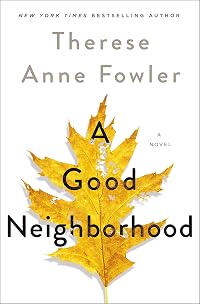
A Good Neighborhood
by Therese Anne Fowler
On This Page
Description
"A gripping contemporary novel that examines the American dream through the lens of two families living side by side in an idyllic neighborhood, and the one summer that changes their lives irrevocably"--Tags
Recommendations

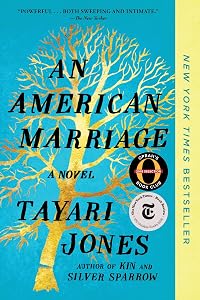
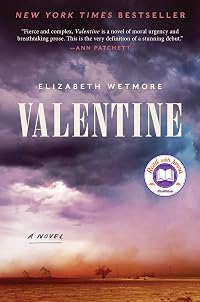
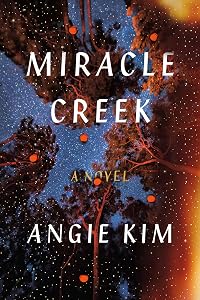
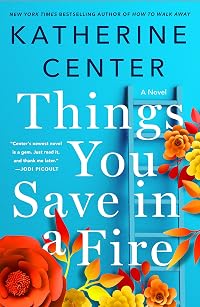




Member Recommendations
Member Reviews
Foreshadowing began with the opening sentences, narrated in a voice that brought to mind Rod Serling introducing a Twilight Zone episode, setting up the story.
A girl sitting beside a swimming pool behind her newly built home. The neighbor boy welcoming her to the neighborhood. A typical day in a typical good neighborhood, upscale and friendly, a place where women gather for book clubs and teenagers can safely run in the local park.
But underneath the 'tenuous peace' simmers the possibility of fracture, the conflict of class and money and race and values. For some, conspicuous wealth is the goal. For another, environmental concerns are primary.
And probing deeper, there are secret desires and blooming love and the blindness we hold on to show more for self-protection.
Lives will be destroyed.
Xavier was good looking, a National Honor Student. He had won a scholarship to study classical guitar. He was also biracial. His white father died tragically. His mother Valerie was a professor whose hobby was more than 'gardening', it was environmental restoration and preservation. She was especially proud of the towering oak tree in her back yard.
The oak tree whose roots had been harmed when the house behind was torn down and replaced with a showcase McMansion.
New girl Juniper never knew her dad. Her mom Julia struggled before she lucked out, catching the attention of a self-made man with a lucrative business. Brad Whitman set 'his girls' up in a sweet deal of a life. But Brad's easy-going charm hid his motivation of self-interest and sick obsessions.
Valerie includes Julia into the neighborhood while Xavier and Juniper discover friendship is turning into something more.
Valerie cannot allow development to destroy the environment--she must make a stand and decides on a lawsuit. Juniper doubts the Purity Pledge her parents shepherded her into taking and secretly meets Xavier. She knows something is wrong with her dad's attentions but Brad justifies his obsession and plots ways to take action.
I will tell you this: the culmination will make you shudder and you will cry.
A Good Neighborhood is a reflection of the social turmoil of our time.
I had to consider my own 'good neighborhood,' a two-square-mile city highly rated on lists, with quick selling properties, a safe neighborhood. A predominately white neighborhood with a small demographic of foreigners and split in half politically. A city that voted out a mayor who used tax money to dig up dirt on her opponent and fired long-time city workers who would not cooperate with her plans.
And yet...every tree-lined avenue may shade secrets.
I received access to a free ebook through NetGalley in exchange for a fair and unbiased review. show less
A girl sitting beside a swimming pool behind her newly built home. The neighbor boy welcoming her to the neighborhood. A typical day in a typical good neighborhood, upscale and friendly, a place where women gather for book clubs and teenagers can safely run in the local park.
But underneath the 'tenuous peace' simmers the possibility of fracture, the conflict of class and money and race and values. For some, conspicuous wealth is the goal. For another, environmental concerns are primary.
And probing deeper, there are secret desires and blooming love and the blindness we hold on to show more for self-protection.
Lives will be destroyed.
Xavier was good looking, a National Honor Student. He had won a scholarship to study classical guitar. He was also biracial. His white father died tragically. His mother Valerie was a professor whose hobby was more than 'gardening', it was environmental restoration and preservation. She was especially proud of the towering oak tree in her back yard.
The oak tree whose roots had been harmed when the house behind was torn down and replaced with a showcase McMansion.
New girl Juniper never knew her dad. Her mom Julia struggled before she lucked out, catching the attention of a self-made man with a lucrative business. Brad Whitman set 'his girls' up in a sweet deal of a life. But Brad's easy-going charm hid his motivation of self-interest and sick obsessions.
Valerie includes Julia into the neighborhood while Xavier and Juniper discover friendship is turning into something more.
Valerie cannot allow development to destroy the environment--she must make a stand and decides on a lawsuit. Juniper doubts the Purity Pledge her parents shepherded her into taking and secretly meets Xavier. She knows something is wrong with her dad's attentions but Brad justifies his obsession and plots ways to take action.
I will tell you this: the culmination will make you shudder and you will cry.
A Good Neighborhood is a reflection of the social turmoil of our time.
I had to consider my own 'good neighborhood,' a two-square-mile city highly rated on lists, with quick selling properties, a safe neighborhood. A predominately white neighborhood with a small demographic of foreigners and split in half politically. A city that voted out a mayor who used tax money to dig up dirt on her opponent and fired long-time city workers who would not cooperate with her plans.
And yet...every tree-lined avenue may shade secrets.
I received access to a free ebook through NetGalley in exchange for a fair and unbiased review. show less
This is one of those books that grabs hold of the reader right from the start and doesn’t let go. From the start, everything slowly revealed about these characters expertly drew me in and made me want to know more.
The titular ‘good neighborhood’ is Oak Knoll, an aging, suburban area full of close-knit neighbors and gorgeous old trees. Valerie Alston-Holt is a widowed, middle-aged Black professor of forestry and ecology. Her main passions have been raising her smart, soon-to-graduate biracial son, Xavier, and doing what she can to protect nature and the environment. Xavier has a bright future ahead of him and all is well until the neighborhood begins to change as homes of aging neighbors are bought up, torn down, and replaced with show more McMansions by ‘new money’ people. Enter local celebrity Brad Whitman, whose HVAC business is popular and prosperous. Brad moves his family next door to the Alston-Holts, after first clearing the lot of all of its old trees to build his new home. While Brad’s family appears traditional and happy from the outside, things are not as they seem and his stepdaughter, Juniper, is troubled. The two families are very quickly at odds, and a blossoming romance between Xavier and Juniper does nothing to help that.
Fowler’s writing is truly excellent: descriptive while being very to the point, and her use of apparently multiple 3rd person narratives from the perspective of some unnamed neighbors was brilliant and effective. The timing is great, and the story moves along such that I had no time to be bored.
The story itself tackles a whole lot of hot-button issues: racism, profiling, sexual abuse, white privilege, power structures caused by economic differences, Christian conservatism, and ecological conservation. While it’s not an in-depth study of any of these issues, the author does manage to keep all of the balls in the air and bring everything together nicely. The end result is a heart breaking and powerful cautionary tale.
If you’re looking for an uplifting novel, this is probably not the book for you. While there is sunshine, there’s a lot more gloom, and from the very beginning, our Greek chorus narrators have warned us that it will not end well. Still, a totally engrossing read that make me think and hurt my heart. show less
The titular ‘good neighborhood’ is Oak Knoll, an aging, suburban area full of close-knit neighbors and gorgeous old trees. Valerie Alston-Holt is a widowed, middle-aged Black professor of forestry and ecology. Her main passions have been raising her smart, soon-to-graduate biracial son, Xavier, and doing what she can to protect nature and the environment. Xavier has a bright future ahead of him and all is well until the neighborhood begins to change as homes of aging neighbors are bought up, torn down, and replaced with show more McMansions by ‘new money’ people. Enter local celebrity Brad Whitman, whose HVAC business is popular and prosperous. Brad moves his family next door to the Alston-Holts, after first clearing the lot of all of its old trees to build his new home. While Brad’s family appears traditional and happy from the outside, things are not as they seem and his stepdaughter, Juniper, is troubled. The two families are very quickly at odds, and a blossoming romance between Xavier and Juniper does nothing to help that.
Fowler’s writing is truly excellent: descriptive while being very to the point, and her use of apparently multiple 3rd person narratives from the perspective of some unnamed neighbors was brilliant and effective. The timing is great, and the story moves along such that I had no time to be bored.
The story itself tackles a whole lot of hot-button issues: racism, profiling, sexual abuse, white privilege, power structures caused by economic differences, Christian conservatism, and ecological conservation. While it’s not an in-depth study of any of these issues, the author does manage to keep all of the balls in the air and bring everything together nicely. The end result is a heart breaking and powerful cautionary tale.
If you’re looking for an uplifting novel, this is probably not the book for you. While there is sunshine, there’s a lot more gloom, and from the very beginning, our Greek chorus narrators have warned us that it will not end well. Still, a totally engrossing read that make me think and hurt my heart. show less
I read a digital advanced copy of this book generously provided by the publisher.
SPOILERS AHEAD!
The premise of this book is very “from-the-headlines” and also very trendy right now. (Two families (or maybe a boss/babysitter); one Caucasian, one biracial; a disagreement; random events & meetings; some kind of open-ended but kind of complete conclusion.) See also, Little Fires Everywhere, Modern Lovers, Such a Fun Age.
A short introduction description on edelweiss for this novel asks, “What happens when you try to do the right thing but it all goes wrong?”
There were many things I liked about this book. I liked the perspective from the neighborhood/neighbors. I liked the characters. It was a page-turner.
Here’s where the spoiler show more comes in and it comes with a *trigger warning*. Maybe it’s my fault for not expecting it, but Xavier’s suicide at the end felt like emotional manipulation instead of necessary to the story. His plan for his future was ruined, but he still had potential for a life. He had a good & fairly communicative relationship with his mom. His character (frustratingly) seemed to jump to an incredibly drastic decision so quickly it caught me off guard. I don’t know. It just felt wrong.
This definitely wasn’t the book for me because of the ending and after thinking about it for *months*, I felt ok enough to write a review. I should have known when I saw “for the fans of Celeste Ng AND (emphasis mine) Jodi Picoult” that something devastating was going to happen, but suicide was never a consideration. I know, naive. However, it makes me feel like books should require trigger warnings on the copyright page (and make it a point to tell people where to find the ‘trigger warnings’ notice without “spoiling” 🤢🤮 the book). People would need to know where to look which is why I think the copyright page. It’s usually at the back of e-books (but at the front of paper books...I’ll need to google) so it puts some of the ...responsibility?... on the reader to go find the trigger warning(s) within that published/owned/borrowed copy without having to hit the Googs & Bings to find out. Books have subject headings would a trigger warning notification really take that much away? I’m not asking for full out ratings, just a place within the book where I can prepare for what’s to come. I’m sure there are many someones out there that disagrees, but opinions are opinions, you know?
The description currently on edelweiss where I accessed the ebook includes “heartrending love” in the last line of the description. The description on goodreads currently reads “heartrending Star-crossed love” (was that edited by a librarian? I should check). Maybe if I ever read to the end of a description I would have been prepared. I totally accept that I made a mistake in reading this book. show less
SPOILERS AHEAD!
The premise of this book is very “from-the-headlines” and also very trendy right now. (Two families (or maybe a boss/babysitter); one Caucasian, one biracial; a disagreement; random events & meetings; some kind of open-ended but kind of complete conclusion.) See also, Little Fires Everywhere, Modern Lovers, Such a Fun Age.
A short introduction description on edelweiss for this novel asks, “What happens when you try to do the right thing but it all goes wrong?”
There were many things I liked about this book. I liked the perspective from the neighborhood/neighbors. I liked the characters. It was a page-turner.
Here’s where the spoiler show more comes in and it comes with a *trigger warning*. Maybe it’s my fault for not expecting it, but Xavier’s suicide at the end felt like emotional manipulation instead of necessary to the story. His plan for his future was ruined, but he still had potential for a life. He had a good & fairly communicative relationship with his mom. His character (frustratingly) seemed to jump to an incredibly drastic decision so quickly it caught me off guard. I don’t know. It just felt wrong.
This definitely wasn’t the book for me because of the ending and after thinking about it for *months*, I felt ok enough to write a review. I should have known when I saw “for the fans of Celeste Ng AND (emphasis mine) Jodi Picoult” that something devastating was going to happen, but suicide was never a consideration. I know, naive. However, it makes me feel like books should require trigger warnings on the copyright page (and make it a point to tell people where to find the ‘trigger warnings’ notice without “spoiling” 🤢🤮 the book). People would need to know where to look which is why I think the copyright page. It’s usually at the back of e-books (but at the front of paper books...I’ll need to google) so it puts some of the ...responsibility?... on the reader to go find the trigger warning(s) within that published/owned/borrowed copy without having to hit the Googs & Bings to find out. Books have subject headings would a trigger warning notification really take that much away? I’m not asking for full out ratings, just a place within the book where I can prepare for what’s to come. I’m sure there are many someones out there that disagrees, but opinions are opinions, you know?
The description currently on edelweiss where I accessed the ebook includes “heartrending love” in the last line of the description. The description on goodreads currently reads “heartrending Star-crossed love” (was that edited by a librarian? I should check). Maybe if I ever read to the end of a description I would have been prepared. I totally accept that I made a mistake in reading this book. show less
Like any proper tragedy, this one is told with a Greek chorus, narrated in second person by the neighborhood of Oak Knoll, North Carolina. We know it's a tragedy from the first page, which alludes to the funeral to come - but whose?
On one side of the fence, Valerie Alston-Holt and her 18-year-old biracial son Xavier, who is finishing his senior year and preparing to go to San Francisco to study classical guitar. On the other side of the fence is a new family, the Whitmans: Brad and Julia, their daughter Lily, and Julia's daughter Juniper, a junior at a private high school.
Xavier and Juniper are attracted to each other, and find ways to meet and talk, despite the fact that Juniper has taken a purity pledge and her mom and stepdad show more control and monitor her every move, and that Valerie is about to sue Brad Whitman for killing the massive, beloved oak tree in her backyard.
Brad is a true villain: a succeed-at-all-costs snake who owns an HVAC company, deluded into believing that his stepdaughter Juniper has a crush on him and that he can take her virginity. Brad is furious when served with Valerie's civil suit, and even more furious when he finds Juniper and Xavier together; he presses rape charges, which he later tries to have dropped in exchange for Valerie dropping the civil suit, but the damage has already been done (black 18-year-old, white 17-year-old in the South, etc.).
A ferocious and tragic story of injustice.
See also: An American Marriage by Tayari Jones, Flight Behavior by Barbara Kingsolver, Not So Pure and Simple by Lamar Giles, The Great Gatsby by F. Scott Fitzgerald, Romeo & Juliet
Quotes
...a neighborhood that had come to think of itself as progressive yet was not doing much to demonstrate that character. (15)
...finches and cardinals and chickadees and mockingbirds singing the sun down. (53)
What, [Juniper] wondered, made a neighborhood good? (54)
"Here's adulthood lesson number one: You want something, ask for it....Find out how to get whatever it is you want, and then do whatever it takes to get it." (Brad to Juniper, 100)
She'd tried to hard to be what she thought she ought to be, and where had it gotten her? (Julia, 196)
How unfair that the past was irretrievable and yet impossible to leave behind. (Valerie, 202)
Here's what we wonder: How does a man like Brad become a man like Brad - that is, so assured of his authority and viewpoint that he never bothers to interrogate himself? (212)
They wouldn't say, Here was a young man who was pushed to the wall, a product of our institutional and cultural injustice who sought only to enact real justice where otherwise there would never be any. (Xavier, 301) show less
On one side of the fence, Valerie Alston-Holt and her 18-year-old biracial son Xavier, who is finishing his senior year and preparing to go to San Francisco to study classical guitar. On the other side of the fence is a new family, the Whitmans: Brad and Julia, their daughter Lily, and Julia's daughter Juniper, a junior at a private high school.
Xavier and Juniper are attracted to each other, and find ways to meet and talk, despite the fact that Juniper has taken a purity pledge and her mom and stepdad show more control and monitor her every move, and that Valerie is about to sue Brad Whitman for killing the massive, beloved oak tree in her backyard.
Brad is a true villain: a succeed-at-all-costs snake who owns an HVAC company, deluded into believing that his stepdaughter Juniper has a crush on him and that he can take her virginity. Brad is furious when served with Valerie's civil suit, and even more furious when he finds Juniper and Xavier together; he presses rape charges, which he later tries to have dropped in exchange for Valerie dropping the civil suit, but the damage has already been done (black 18-year-old, white 17-year-old in the South, etc.).
A ferocious and tragic story of injustice.
See also: An American Marriage by Tayari Jones, Flight Behavior by Barbara Kingsolver, Not So Pure and Simple by Lamar Giles, The Great Gatsby by F. Scott Fitzgerald, Romeo & Juliet
Quotes
...a neighborhood that had come to think of itself as progressive yet was not doing much to demonstrate that character. (15)
...finches and cardinals and chickadees and mockingbirds singing the sun down. (53)
What, [Juniper] wondered, made a neighborhood good? (54)
"Here's adulthood lesson number one: You want something, ask for it....Find out how to get whatever it is you want, and then do whatever it takes to get it." (Brad to Juniper, 100)
She'd tried to hard to be what she thought she ought to be, and where had it gotten her? (Julia, 196)
How unfair that the past was irretrievable and yet impossible to leave behind. (Valerie, 202)
Here's what we wonder: How does a man like Brad become a man like Brad - that is, so assured of his authority and viewpoint that he never bothers to interrogate himself? (212)
They wouldn't say, Here was a young man who was pushed to the wall, a product of our institutional and cultural injustice who sought only to enact real justice where otherwise there would never be any. (Xavier, 301) show less
I usually only read the first couple sentences of a blurb before deciding to read a book to avoid getting spoiled and I knew I had to read this one from the first line -- it's about a professor of forestry and ecology in North Carolina and I studied forestry and ecology in North Carolina! No way I could get away with not reading this. If I'd read more and had looked up the author I would have known that this was going to be a story about racial justice written by a white woman and, well, I would have still read it but at least I would have been forewarned.
This is such a good example of why we white people should just stay in our lanes. I feel the author is trying really hard to tell a sensitive story about how hard it is to be black in show more America but it isn't her story to tell. She bends over so backwards to make her black characters the antithesis of racial stereotypes that they become one-dimensional caricatures who can do no wrong. I'm sure this wasn't her intention but it ends up suggesting that people of colour need to be perfect angels in order to "deserve" justice which is just yikes.
Our Romeo and Juliet teen pairing consists of Xavier, a biracial boy who is talented and sensitive and "not like the other boys" (is that a thing? I think that's a thing now), and Juniper, a rich white girl who is virginal and Christian (but not weird about it) and, of course, insanely pretty. Neither have much of a personality beyond being Bright Young Things with missing fathers who are outcasts in some way. Xavier is constantly being described in ways that evoke the racist idea that he's "one of the good ones" and Juniper is such an idealised version of a woke white girl who is so much more enlightened than her bigoted parents and sees beyond Xavier's race to who he really is.
And this might be controversial but I don't think white authors should be using the n-word in books even if it is used to expose a character as racist. You could just not.
The ending also had me seeing red. There was this weird fake out that made me so angry as it was happening and then even angrier when it was revealed it hadn't actually happened. Everybody hates when that happens in movies, why would you write that into a book?? And the way it actually ended was just unnecessary andglorified suicide as a noble sacrifice akin to Martin Luther King Jr. Why go out of your way to paint Xavier as the opposite of the stereotype of a violent black man only to end his story in horrible violence not once but twice, first in the fake killing of the antagonist and then against himself? How exactly does that subvert the stereotype that black men are inherently violent?? .
The author really tells on herself in the discussion at the end of the book too when she’s asked how she made sure to address issues of race with sensitivity and she says she read essays, talked to friends and drew on “the experience of being a minority during the three years [she] lived in the Philippines”. Excuse me, what? I’ve lived as a white minority in a white-colonised Asian country and have been to the Philippines and those experiences absolutely in no way compare to being a minority in America. We are a privileged minority in those countries. To compare your experience as a white American -- in particular -- in the Philippines to being black in America is just mind boggling to me. The audacity is staggering. Like the experiences are actually polar opposites. You were an American in a country that America colonised! People assumed I was American in the Philippines and treated me so nice because of that. I just can't.
Also in trying so hard to make sure Xavier doesn’t come across as a hypersexual black male she writes this bewildering sentence: "He knew he was supposed to want to jump if and when any girl asked. What normal cis male wouldn't?". Is she really trying to say that trans men can’t have sex drives or that gay and asexual cis men aren’t “normal”? She can't have really meant that, right?
And as shallow as the racial justice is in this book, the ecology is just as shallow. The author has lived in North Carolina for a long time but her knowledge of its ecology seems to have come from a cursory Google search. Everything is all oh plants are so great, they make our oxygen! Isn’t it cool how connected we are! North Carolina is so biodiverse! Just obvious statements about nature without any specific connection to particular ecosystems or ecological concepts. I was expecting something more interesting.
And when she does try to get specific she gets it wrong. The line about the “ubiquitous longleaf pine” drove me crazy! Bitch, longleaf pine are endangered! Yes the state toast does start “Here’s to the land of the longleaf pine” but they have not been “ubiquitous” since the white colonisers clearcut them and destroyed the fire regime maintained by the Native peoples that longleaf pine rely on to germinate. Hey, look at that, there’s an obvious metaphor for racial justice for you right there. I only ever saw longleaf pine on small plots where they were specifically propagated for conservation purposes and the one tree on campus that was planted in honour of a classmate who died in a motorcycle accident. Maybe she was thinking of the very common shortleaf pine that was able to outcompete longleafs after the fire cycle was disrupted? They do look similar except the leaves are, you know, shorter.
More importantly than that admitted nitpick, this book makes ecojustice look trivial. The main conflict is kicked off when the mother of our Romeo, the aforementioned professor of forestry and ecology, sues their white neighbours for damage done during construction of their house that is causing the several-hundred-year-old oak tree in her backyard to die. As a tree lover this did really pull on my heartstrings and I was all for her impassioned Erin Brockovich style fight to seek justice for the beloved tree. But given everything that it leads to it ends up just looking petty. Instead of demonstrating how intrinsically linked eco- and racial justice are it ends up making them look like they're in opposition. If she had just left well enough alone on the ecological front none of the racial injustice would have happened and that's just a bad message. It also ends up making her look "uppity" which is an even worse message.
My last point is less important but it was a strange coincidence that I happened to pick this book up immediately after finishing [b:The Mothers|28815371|The Mothers|Brit Bennett|https://i.gr-assets.com/images/S/compressed.photo.goodreads.com/books/1460652458l/28815371._SY75_.jpg|49031394] as both have the same unusual narration in that they switch between the omniscient third person and a first person plural perspective from a group of people peripheral to the story. This group works like a Greek chorus and provides an interesting perspective as we know the inside story of what's really happening with the main characters and they only know what they see from the outside. In both books this group is all like "oh if only we knew how this story would turn out back then" which provides nice foreshadowing. I really liked this technique in The Mothers and probably would have liked it in this book if I didn't have the direct comparison because it just wasn't done to as good effect. In The Mothers the narration comes from the "Mothers" of the church the main characters go to, a group of busybody old women who observe and comment on all the goings on among church members. This perspective makes a lot of sense and we see the Mothers interacting with the characters throughout the book and they talk about their own lives and give a lot of commentary about how things have changed since their day. They give context to the story and the community and they have personality. The first person plural group in this book is never really explicitly stated so I'm not sure if it's the neighbours in general or just the neighbourhood women? The neighbours don't show up at all in the story except for one book club meeting with just the women so I assume it's meant to be just them. They only interact once with Xavier and never with Juniper. They never talk about their own experiences or give any of their own personality. Because it wasn't clear for a long time who they were supposed to be I actually thought for a while that there might be a twist like it turns out the narration was coming from the trees in the neighbourhood. That actually would have been pretty cool. And yeah, this isn't a big criticism because I don't think I would have disliked it if it didn't suffer so much from comparison but it's something that just kind of adds to the overall shallowness of this book. Like it felt like the narration was just a cool device the author liked rather than having a deliberately thought out purpose like it did in The Mothers. And I'm not saying the author copied the idea from The Mothers, but maybe I am.
So I guess if I had to summarise this book in one word it would be: shallow. I didn't even touch on the feminism in this book which is also, yes, shallow and the attempt to discuss conservative Christian purity culture which is, again, shallow. So many causes were addressed that none of them were done justice. Ultimately, my takeaway from reading this is that white women really just need to stop trying to tell other people's stories for them, only partly because we just aren't good at it.
Edit: After writing this review I looked at other reviews and wow they are overwhelmingly positive. So many of the reviews are praising the author for addressing the Real Problems In Society Today. I’m having a hard time believing that so many people actually think this book says anything substantial about these Problems. Even scarier is that a lot of the one star reviews are by people mad that the book is trying to force An Agenda on them, which... I'm not even going to to touch that. And the more I think about it the more I feel like the problem with this book is it erases systemic oppression and makes everything about the individual. It’s all about how This Particular White Man Is Bad and These Particular Black People Are Good and This Particular White Girl Is Good and if all white people could just be Like Her then Racism Would Be Solved. This is a comforting idea for white people as it means we just need to be nice to people of colour and then we aren’t Part Of The Problem anymore. Similarly, all environmental issues are reduced down to This One Tree which is why the ecojustice aspect looks so trivial. The two main conflicts are over the life of one tree and the life of one black boy so obviously the tree is not important in comparison. Whereas in real life issues of ecojustice focus on large-scale environmental damage that directly affects and threatens the lives of people in mostly minority communities. Mitigating these environmental problems also directly saves human lives because these problems aren’t just I Like Trees And Don’t Want One To Die but Pollution Kills/Harms People And Is Disproportionately Concentrated In Poor, Mostly Minority Communities and Poor, Minority Communities Have Fewer Greenspaces Which Are Linked To Better Mental And Physical Health and many others. The systems of oppression that uphold a racist justice system are interlinked with those that recklessly pollute the environment and overlook providing greenspaces in poor communities and keep minority communities poor. It’s not an either/or solution because it’s not about saving one tree or one person, it's about dismantling the systems that harm people and the environment at the same time. And it’s so disappointing because there are so many good metaphors for this interconnectedness in ecology and how can a book that’s supposed to be about ecology and racial justice not take advantage of them. show less
This is such a good example of why we white people should just stay in our lanes. I feel the author is trying really hard to tell a sensitive story about how hard it is to be black in show more America but it isn't her story to tell. She bends over so backwards to make her black characters the antithesis of racial stereotypes that they become one-dimensional caricatures who can do no wrong. I'm sure this wasn't her intention but it ends up suggesting that people of colour need to be perfect angels in order to "deserve" justice which is just yikes.
Our Romeo and Juliet teen pairing consists of Xavier, a biracial boy who is talented and sensitive and "not like the other boys" (is that a thing? I think that's a thing now), and Juniper, a rich white girl who is virginal and Christian (but not weird about it) and, of course, insanely pretty. Neither have much of a personality beyond being Bright Young Things with missing fathers who are outcasts in some way. Xavier is constantly being described in ways that evoke the racist idea that he's "one of the good ones" and Juniper is such an idealised version of a woke white girl who is so much more enlightened than her bigoted parents and sees beyond Xavier's race to who he really is.
And this might be controversial but I don't think white authors should be using the n-word in books even if it is used to expose a character as racist. You could just not.
The ending also had me seeing red. There was this weird fake out that made me so angry as it was happening and then even angrier when it was revealed it hadn't actually happened. Everybody hates when that happens in movies, why would you write that into a book?? And the way it actually ended was just unnecessary and
The author really tells on herself in the discussion at the end of the book too when she’s asked how she made sure to address issues of race with sensitivity and she says she read essays, talked to friends and drew on “the experience of being a minority during the three years [she] lived in the Philippines”. Excuse me, what? I’ve lived as a white minority in a white-colonised Asian country and have been to the Philippines and those experiences absolutely in no way compare to being a minority in America. We are a privileged minority in those countries. To compare your experience as a white American -- in particular -- in the Philippines to being black in America is just mind boggling to me. The audacity is staggering. Like the experiences are actually polar opposites. You were an American in a country that America colonised! People assumed I was American in the Philippines and treated me so nice because of that. I just can't.
Also in trying so hard to make sure Xavier doesn’t come across as a hypersexual black male she writes this bewildering sentence: "He knew he was supposed to want to jump if and when any girl asked. What normal cis male wouldn't?". Is she really trying to say that trans men can’t have sex drives or that gay and asexual cis men aren’t “normal”? She can't have really meant that, right?
And as shallow as the racial justice is in this book, the ecology is just as shallow. The author has lived in North Carolina for a long time but her knowledge of its ecology seems to have come from a cursory Google search. Everything is all oh plants are so great, they make our oxygen! Isn’t it cool how connected we are! North Carolina is so biodiverse! Just obvious statements about nature without any specific connection to particular ecosystems or ecological concepts. I was expecting something more interesting.
And when she does try to get specific she gets it wrong. The line about the “ubiquitous longleaf pine” drove me crazy! Bitch, longleaf pine are endangered! Yes the state toast does start “Here’s to the land of the longleaf pine” but they have not been “ubiquitous” since the white colonisers clearcut them and destroyed the fire regime maintained by the Native peoples that longleaf pine rely on to germinate. Hey, look at that, there’s an obvious metaphor for racial justice for you right there. I only ever saw longleaf pine on small plots where they were specifically propagated for conservation purposes and the one tree on campus that was planted in honour of a classmate who died in a motorcycle accident. Maybe she was thinking of the very common shortleaf pine that was able to outcompete longleafs after the fire cycle was disrupted? They do look similar except the leaves are, you know, shorter.
More importantly than that admitted nitpick, this book makes ecojustice look trivial. The main conflict is kicked off when the mother of our Romeo, the aforementioned professor of forestry and ecology, sues their white neighbours for damage done during construction of their house that is causing the several-hundred-year-old oak tree in her backyard to die. As a tree lover this did really pull on my heartstrings and I was all for her impassioned Erin Brockovich style fight to seek justice for the beloved tree. But given everything that it leads to it ends up just looking petty. Instead of demonstrating how intrinsically linked eco- and racial justice are it ends up making them look like they're in opposition. If she had just left well enough alone on the ecological front none of the racial injustice would have happened and that's just a bad message. It also ends up making her look "uppity" which is an even worse message.
My last point is less important but it was a strange coincidence that I happened to pick this book up immediately after finishing [b:The Mothers|28815371|The Mothers|Brit Bennett|https://i.gr-assets.com/images/S/compressed.photo.goodreads.com/books/1460652458l/28815371._SY75_.jpg|49031394] as both have the same unusual narration in that they switch between the omniscient third person and a first person plural perspective from a group of people peripheral to the story. This group works like a Greek chorus and provides an interesting perspective as we know the inside story of what's really happening with the main characters and they only know what they see from the outside. In both books this group is all like "oh if only we knew how this story would turn out back then" which provides nice foreshadowing. I really liked this technique in The Mothers and probably would have liked it in this book if I didn't have the direct comparison because it just wasn't done to as good effect. In The Mothers the narration comes from the "Mothers" of the church the main characters go to, a group of busybody old women who observe and comment on all the goings on among church members. This perspective makes a lot of sense and we see the Mothers interacting with the characters throughout the book and they talk about their own lives and give a lot of commentary about how things have changed since their day. They give context to the story and the community and they have personality. The first person plural group in this book is never really explicitly stated so I'm not sure if it's the neighbours in general or just the neighbourhood women? The neighbours don't show up at all in the story except for one book club meeting with just the women so I assume it's meant to be just them. They only interact once with Xavier and never with Juniper. They never talk about their own experiences or give any of their own personality. Because it wasn't clear for a long time who they were supposed to be I actually thought for a while that there might be a twist like it turns out the narration was coming from the trees in the neighbourhood. That actually would have been pretty cool. And yeah, this isn't a big criticism because I don't think I would have disliked it if it didn't suffer so much from comparison but it's something that just kind of adds to the overall shallowness of this book. Like it felt like the narration was just a cool device the author liked rather than having a deliberately thought out purpose like it did in The Mothers. And I'm not saying the author copied the idea from The Mothers, but maybe I am.
So I guess if I had to summarise this book in one word it would be: shallow. I didn't even touch on the feminism in this book which is also, yes, shallow and the attempt to discuss conservative Christian purity culture which is, again, shallow. So many causes were addressed that none of them were done justice. Ultimately, my takeaway from reading this is that white women really just need to stop trying to tell other people's stories for them, only partly because we just aren't good at it.
Edit: After writing this review I looked at other reviews and wow they are overwhelmingly positive. So many of the reviews are praising the author for addressing the Real Problems In Society Today. I’m having a hard time believing that so many people actually think this book says anything substantial about these Problems. Even scarier is that a lot of the one star reviews are by people mad that the book is trying to force An Agenda on them, which... I'm not even going to to touch that. And the more I think about it the more I feel like the problem with this book is it erases systemic oppression and makes everything about the individual. It’s all about how This Particular White Man Is Bad and These Particular Black People Are Good and This Particular White Girl Is Good and if all white people could just be Like Her then Racism Would Be Solved. This is a comforting idea for white people as it means we just need to be nice to people of colour and then we aren’t Part Of The Problem anymore. Similarly, all environmental issues are reduced down to This One Tree which is why the ecojustice aspect looks so trivial. The two main conflicts are over the life of one tree and the life of one black boy so obviously the tree is not important in comparison. Whereas in real life issues of ecojustice focus on large-scale environmental damage that directly affects and threatens the lives of people in mostly minority communities. Mitigating these environmental problems also directly saves human lives because these problems aren’t just I Like Trees And Don’t Want One To Die but Pollution Kills/Harms People And Is Disproportionately Concentrated In Poor, Mostly Minority Communities and Poor, Minority Communities Have Fewer Greenspaces Which Are Linked To Better Mental And Physical Health and many others. The systems of oppression that uphold a racist justice system are interlinked with those that recklessly pollute the environment and overlook providing greenspaces in poor communities and keep minority communities poor. It’s not an either/or solution because it’s not about saving one tree or one person, it's about dismantling the systems that harm people and the environment at the same time. And it’s so disappointing because there are so many good metaphors for this interconnectedness in ecology and how can a book that’s supposed to be about ecology and racial justice not take advantage of them. show less
3.5 well-crafted story about the neighborhood of Oak Knoll in NC and a clash between race, class, and "old" and "new." When the Whitman family (Brad, HVAC local celebrity w/ money; Julia, his wife; Juniper, 17 Julia's daughter; and Lily, 8 their daughter together) buy a home, tear it down and erect a McMansion in the old and stable neighborhood, repercussions are felt. Back-door neighbor Valerie Alston-Holt (widow, ecology professor) and her son Xavier, 18 have resented the noise and disruption, the clear-cutting of trees and the disruption of the root system of their beautiful, historic oak tree. Such are the things that can implode a small community. However, Xavier falls for Juniper, but she is white and he is black. She has also show more take a purity pledge at her church and her strict parents don't allow her to date. Neighborhood proximity allows for a lot of sneaking around and the wheels are set in motion for a tragedy. The reader knows this from the beginning due to occasional third-person narration from the community;"We" fills in the gaps of the story and acts as a Greek chorus - which reminded me of Bear Town, though not as artful. How things escalate, how they peak and how they resolve is not entirely a surprise but it is elegantly unfolded. Sometimes our choices create traps of our making - so there is sympathy all around for the different characters. The book touches on many issues including religion and feminism, but doesn't know where to land. Overall a good reminder that conflict starts small with our own assumptions and prejudices, but so do solutions. Most eloquent quote: "'We'll start here.' They were just words, the same way this story is just words. Words, though are how we humans have been communicating with one another almost since before time. What has more meaning to humankind than words? Without a call to action, change rarely occurs. Start here, please in communion with one another despite our differences, recognizing that without start, there is no end.” show less
Ascoltato in tre giorni: scorrevole, temi all’apparenza forse anche fritti e rifritti ma narrati con qualcosa in più che rende il tutto non scontato.
Siamo in un bel quartiere, come dice il titolo, e la vicenda ruota intorno ad un ragazzo di sangue misto che vive con sua madre, docente universitaria ambientalista e ai loro nuovi vicini di casa, una famiglia bianca, all’apparenza perfetta, felice, ricca. Tutto è giocato sull’apparenza e sugli ideali imposti dalla società, che muovono in un certo senso entrambe le famiglie (anche Valerie, donna di colore e vedova di un uomo bianco consiglia al figlio di non frequentare una ragazza bianca).
E saranno le convenzioni sociali, l’ipocrisia e il conflitto razziale, oggi forte più che show more mai, a portare a livelli devastanti e incontrollabili la guerra tra le due famiglie.
Un romanzo pieno di spunti di riflessione sulla società americana (ma non solo) attuale: razzismo, conflitti sociali, ricerca spasmodica di rappresentare un modello nel quale non si crede pur di guadagnare popolarità sono alcuni di questi. show less
Siamo in un bel quartiere, come dice il titolo, e la vicenda ruota intorno ad un ragazzo di sangue misto che vive con sua madre, docente universitaria ambientalista e ai loro nuovi vicini di casa, una famiglia bianca, all’apparenza perfetta, felice, ricca. Tutto è giocato sull’apparenza e sugli ideali imposti dalla società, che muovono in un certo senso entrambe le famiglie (anche Valerie, donna di colore e vedova di un uomo bianco consiglia al figlio di non frequentare una ragazza bianca).
E saranno le convenzioni sociali, l’ipocrisia e il conflitto razziale, oggi forte più che show more mai, a portare a livelli devastanti e incontrollabili la guerra tra le due famiglie.
Un romanzo pieno di spunti di riflessione sulla società americana (ma non solo) attuale: razzismo, conflitti sociali, ricerca spasmodica di rappresentare un modello nel quale non si crede pur di guadagnare popolarità sono alcuni di questi. show less
Members
- Recently Added By
Lists

Top Five Books of 2020
982 works; 348 members
Author Information

11+ Works 4,808 Members
In 2005, author Therese Fowler received a Master in Fine Arts degree in creative writing from North Carolina State University (NCSU). Before becoming a full-time author, she was a graduate teaching assistant and creative writing instructor for NCSU. Her debut novel, Souvenir, was published in 2008; followed by Reunion in 2009. She currently lives show more in Raleigh, North Carolina with her family. (Bowker Author Biography) show less
Some Editions
Awards and Honors
Awards
Common Knowledge
- Canonical title
- A Good Neighborhood
- Original publication date
- 2020
- People/Characters
- Valerie Alston-Holt; Xavier Alston-Holt; Brad Whitman; Julia Whitman; Lily Whitman; Juniper Whitman (show all 16); Lottie Corbett; Joseph; Dashawn; Chris Johnson; Tom Holt-Alston; Penny "Pepper"; Carl Harrington; Tony Evans; Wilson Everly; Katie Whitman
- Important places
- Oak Knoll, North Carolina, USA; Tennessee, USA
- Dedication
- For Wendy and John, who always see me through
- First words
- An upscale new house in a simple old neighborhood.
- Quotations
- Start here, in communion with one another despite our differences, recognizing that without start there is no end.
- Last words
- (Click to show. Warning: May contain spoilers.)On this brisk sunny morning comes the truck with the trees themselves, tall and straight and ready, the way Xavier had been.
- Blurbers
- Picoult, Jodi; Kline, Christina Baker; Giffin, Emily; Clayton, Meg Waite; Conklin, Tara; Frankel, Laurie
- Canonical DDC/MDS
- 813.6
- Canonical LCC
- PS3606.O857
Classifications
Statistics
- Members
- 1,052
- Popularity
- 24,479
- Reviews
- 62
- Rating
- (3.65)
- Languages
- English, German, Italian, Swedish
- Media
- Paper, Audiobook, Ebook
- ISBNs
- 20
- ASINs
- 7