
The Sentinel
by Arthur C. Clarke
On This Page
Description
Few masters of science fiction have brought us glimpses of the near future as vividly as Arthur C. Clarke. It is the startling realism of his vision that has made classics of his CHILDHOODS END and 2001: A SPACE ODYSSEYand Clarke himself one of the genres most successful writers. Here is a brilliant collection of Clarkes highest caliber short fiction. Among the ten stories included in this volume are: The Sentinel: The story that inspired 2001: A SPACE ODYSSEY, one of the most famous SF show more movies of all time. Guardian Angel: The rarely-glimpsed work that gave birth to CHILDHOODS END. The Songs of Distant Earth: A fantastic tale of first contact with an alien world, which became the basis for one of Clarkes most successful novels. Breaking Strain: The inspiration for the popular book series Arthur C. Clarkes VENUS PRIME. show lessTags
Recommendations




















Member Recommendations
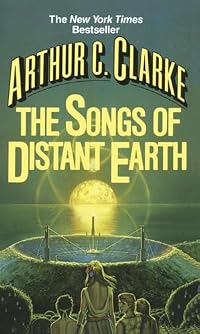
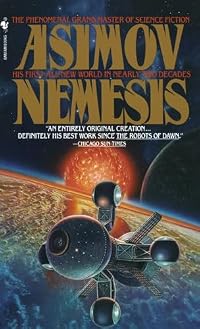
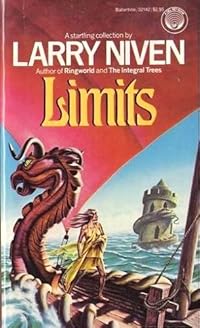
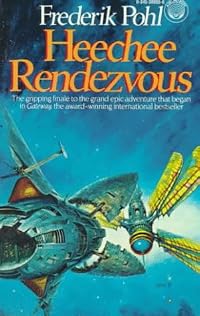
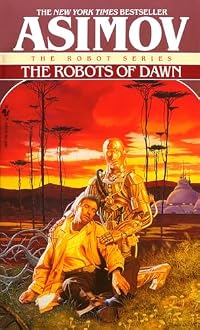
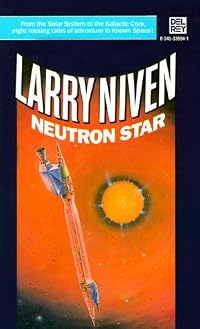
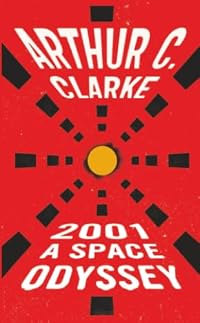
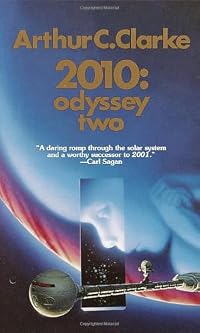
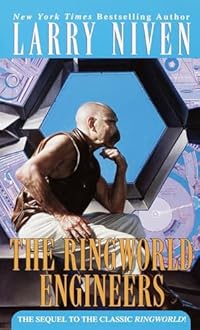
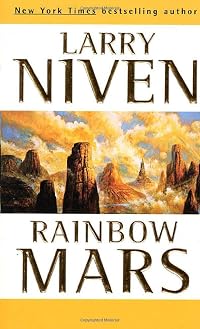
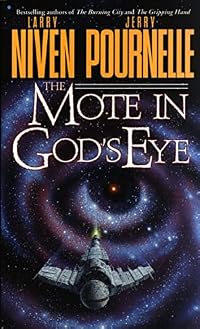
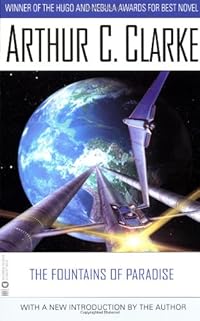
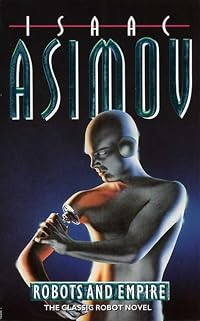
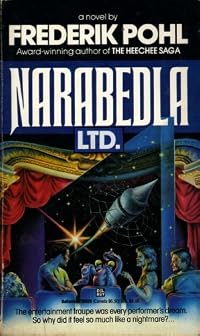
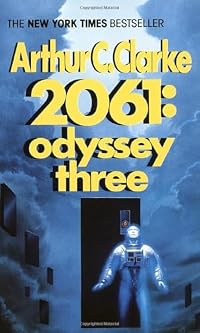
Cecrow A full-length novel based upon one of the short stories in this collection.
Member Reviews
This is a collection of short science fiction stories that Clarke wrote relatively early in his career. It starts with “Rescue Party”, written in 1945 and finishes up with “Songs of Distant Earth”, actually a movie outline published in 1981 and then later expanded into a novel.
“The Sentinel” is the title story because of its significance as inspiration for Kubrick’s (and Clarke’s) classic film, 2001: A Space Odyssey, and Clarke’s book published at the same time with the same title. As the story of 2001 goes, Kubrick wanted to make a high quality science fiction movie, something he didn’t think had been done yet. Clarke gave him a selection of stories and novels, and Kubrick was taken by “The Sentinel”, along with show more some others. But it seems that this is the most central inspiration, especially for the discovery of a technological artifact on the Moon, a “sentinel” placed by an alien civilization watching for the emergence of intelligent, technological life.
That story also illustrates how Clarke’s attitude toward our culture and our motivations for technological development and space exploration varied from story to story, and sometimes within stories. “The Sentinel”, in the end, does not paint a rosy picture of our regard for wonder.
“A Meeting with Medusa” shows a different side. It’s virtually a first-hand tour of Jupiter’s atmosphere, exploring wonders and escaping undreamt-of dangers. But there too, there is a twist that will give you pause.
Another remarkable story is “Guardian Angel”, another short story later expanded into a novel, Childhood’s End. If you’ve read Childhood’s End, you know the themes — humanity’s evolution and its guardianship, a hidden previous historical encounter with an alien civilization, political themes of authority, autonomy, and trust. “Guardian Angel” hits all of those same themes in short form.
Clarke was a very good short story writer. He says, in a short introduction to “Songs of Distant Earth” that at the time he wrote it (mostly in the late 1950s) he was abandoning short story writing to concentrate exclusively on novel length stories. Kind of a shame, especially as so many of his short stories really seem to have suggested his longer treatments of the same themes.
These stories smack of their time, the forties and fifties. The classic pulp era. Science fiction was different then. In some ways, even though Clarke located himself to the “science” side of the spectrum, the imaginations of writers in those days were unfettered by knowledge of our local space environment. There could still be intelligent life, even a civilization, on Mars or Venus. We could explore those planets in the not-distant future. You can even see some of the boundaries start to creep in when Clarke gets to stories about Jupiter, when we knew something about what Jupiter was really like. Kind of a loss of innocence. show less
“The Sentinel” is the title story because of its significance as inspiration for Kubrick’s (and Clarke’s) classic film, 2001: A Space Odyssey, and Clarke’s book published at the same time with the same title. As the story of 2001 goes, Kubrick wanted to make a high quality science fiction movie, something he didn’t think had been done yet. Clarke gave him a selection of stories and novels, and Kubrick was taken by “The Sentinel”, along with show more some others. But it seems that this is the most central inspiration, especially for the discovery of a technological artifact on the Moon, a “sentinel” placed by an alien civilization watching for the emergence of intelligent, technological life.
That story also illustrates how Clarke’s attitude toward our culture and our motivations for technological development and space exploration varied from story to story, and sometimes within stories. “The Sentinel”, in the end, does not paint a rosy picture of our regard for wonder.
“A Meeting with Medusa” shows a different side. It’s virtually a first-hand tour of Jupiter’s atmosphere, exploring wonders and escaping undreamt-of dangers. But there too, there is a twist that will give you pause.
Another remarkable story is “Guardian Angel”, another short story later expanded into a novel, Childhood’s End. If you’ve read Childhood’s End, you know the themes — humanity’s evolution and its guardianship, a hidden previous historical encounter with an alien civilization, political themes of authority, autonomy, and trust. “Guardian Angel” hits all of those same themes in short form.
Clarke was a very good short story writer. He says, in a short introduction to “Songs of Distant Earth” that at the time he wrote it (mostly in the late 1950s) he was abandoning short story writing to concentrate exclusively on novel length stories. Kind of a shame, especially as so many of his short stories really seem to have suggested his longer treatments of the same themes.
These stories smack of their time, the forties and fifties. The classic pulp era. Science fiction was different then. In some ways, even though Clarke located himself to the “science” side of the spectrum, the imaginations of writers in those days were unfettered by knowledge of our local space environment. There could still be intelligent life, even a civilization, on Mars or Venus. We could explore those planets in the not-distant future. You can even see some of the boundaries start to creep in when Clarke gets to stories about Jupiter, when we knew something about what Jupiter was really like. Kind of a loss of innocence. show less
The Sentinel collects nine pieces of Arthur C. Clarke's short fiction, with an author's introduction. These represent earlier work, since the 1972 story "A Meeting with Medusa" was Clarke's last, after which his fiction consisted entirely of novels (237). Each individual story is also supplied with a brief introduction by Clarke circa 1983.
Several of these stories are notable as having eventually contributed to novels by Clarke. The eponymous "The Sentinel" was the germ of 2001: A Space Odyssey. "Guardian Angel" was the basis of the first part of Childhood's End. "A Meeting with Medusa" contributed premises to 2010: Odyssey Two.
Despite some later incorporation into larger works, these stories do not generally presume a shared narrative show more continuity or "future history." Clarke was distinctive for his emphasis on scientifically plausible "hard" science fiction, to the point where composing a story could require "twenty or thirty pages of orbital calculations" (153). As a result, his relatively near-future stories of space exploration written over four decades had to change in order to align with the real-world developments of astronautical knowledge.
Clarke tended to err on the optimistic side. It was a little sad to read him writing in 1951 about a series of manned lunar surface explorations in 1996 which most certainly did not come to pass (139). Generally he avoids specific dates in these stories, though.
The story that was most interesting to me was "Breaking Strain," something of a psychological sketch regarding two men on a spaceship reduced to life support resources for one. It had a passing literary reference--somewhat anomalous among these pieces--to Cabell's Jurgen. Another story where there was a curious real-world reference was "Refugee," which painted a rather flattering picture of the British monarchy.
My copy of the book is a Barnes & Noble reprint of the Byron Preiss Visual Publications collection. It includes attractive and apt illustrations by Lebbeus Woods in black and white--roughly one full-page drawing per story (and in one case a two-page spread). show less
Several of these stories are notable as having eventually contributed to novels by Clarke. The eponymous "The Sentinel" was the germ of 2001: A Space Odyssey. "Guardian Angel" was the basis of the first part of Childhood's End. "A Meeting with Medusa" contributed premises to 2010: Odyssey Two.
Despite some later incorporation into larger works, these stories do not generally presume a shared narrative show more continuity or "future history." Clarke was distinctive for his emphasis on scientifically plausible "hard" science fiction, to the point where composing a story could require "twenty or thirty pages of orbital calculations" (153). As a result, his relatively near-future stories of space exploration written over four decades had to change in order to align with the real-world developments of astronautical knowledge.
Clarke tended to err on the optimistic side. It was a little sad to read him writing in 1951 about a series of manned lunar surface explorations in 1996 which most certainly did not come to pass (139). Generally he avoids specific dates in these stories, though.
The story that was most interesting to me was "Breaking Strain," something of a psychological sketch regarding two men on a spaceship reduced to life support resources for one. It had a passing literary reference--somewhat anomalous among these pieces--to Cabell's Jurgen. Another story where there was a curious real-world reference was "Refugee," which painted a rather flattering picture of the British monarchy.
My copy of the book is a Barnes & Noble reprint of the Byron Preiss Visual Publications collection. It includes attractive and apt illustrations by Lebbeus Woods in black and white--roughly one full-page drawing per story (and in one case a two-page spread). show less
A group of classic sci-fi stories told by a master storyteller. He brings us to our own world again and again, while also venturing to Jupiter, the Moon, and Jupiter again. He describes solar-powered yacht races to the Moon and back, provides us with a glimpse of ourselves millions of years hence when Sol becomes a supernova, and plant the seeds for what becomes Childhood's End and . It is a look into the "what could be" that is the best of science fiction.
For me, and the reason I gave it a 3* rating, is the super explanation of science that is now for me only mildly interesting. I can see where science geeks took ideas like this and ran with them; I'd definitely like to see the interplanetary yacht races done by giant kites! And Clarke show more does give some good human viewpoints that are burgeoning for the time in which he wrote. But like some science fiction fans for whom fantasy is not their thing, I think I'm more of a fantasy fan for whom science is interesting but not an important part of the story. show less
For me, and the reason I gave it a 3* rating, is the super explanation of science that is now for me only mildly interesting. I can see where science geeks took ideas like this and ran with them; I'd definitely like to see the interplanetary yacht races done by giant kites! And Clarke show more does give some good human viewpoints that are burgeoning for the time in which he wrote. But like some science fiction fans for whom fantasy is not their thing, I think I'm more of a fantasy fan for whom science is interesting but not an important part of the story. show less
Buena selección de cuentos (incluyendo el titular que dio origen a 2001) los personajes son flojos (intercambiables, realmente) pero las historias son imaginativas y rebosan de ideas interesantes.
A good collection of short stories, but the 'commentary' included is incredibly brief; if you've read these stories elsewhere, or own these in another collection, you'll find nothing new here.
The stories themselves, of course, are classic Clarke and well worth reading, here or anywhere else.
The stories themselves, of course, are classic Clarke and well worth reading, here or anywhere else.
The Sentinel collects nine of Arthur C. Clarke's short stories. "Rescue Party" views the destruction of Earth from the point of view of passing aliens. "Guardian Angel" explores a world in which aliens have made first contact and are guiding our cultural evolution. Clarke returned to this story when working on his novel, Childhood's End. "Breaking Strain" features the high drama of two astronauts who know their air will run out before they reach port on Venus. Clarke later repurposed "The Sentinel", after which this volume is named, for 2001: A Space Odyssey. "Jupiter V" explores the Jovian moons as astronauts discover make a world-changing archaeological discovery. "Refugee" is a fun, lighthearted story about the role of England in show more future space exploration. "The Wind From the Sun" uses a solar sail race as the setting for what, in an ocean setting, would be a traditional nautical tale. "A Meeting with Medusa" describes an explorer to Jupiter discovering strange life like that Carl Sagan later described on Cosmos. Finally, "The Songs of Distant Earth" is a story treatment born of a discussion with Stanley Kubrick in which Kubrick felt he and Clarke could have done more with 2001: A Space Odyssey. Fans of Clarke's will find recurring themes here in his work, with both "Jupiter V" and "A Meeting with Medusa" forecasting the exploration of the Jovian system that dominated Odyssey Two and Three. Those planning to read this for more background on the making of 2001 may be disappointed as only "The Sentinel" played a large role in that endeavor. To them, I recommend The Lost Worlds of 2001, which contains "The Sentinel" as well as early treatments of key scenes in Space Odyssey and better demonstrated how Clarke's ideas evolved from one story to the other. This edition features artwork by Lebbeus Woods that brilliantly captures the pulp feel of Clarke's earlier stories. show less
[2006-09-21] 1983 collection by Byron Preiss of some of Clarke's most important short stories, including "The Sentinel" -- which still makes the hairs stand up on the back of my neck. This edition is a good collection of Clarke's shorts, and beautifully illustrated.
Members
- Recently Added By
Author Information

Arthur C. Clarke was born in Minehead, Somerset, England, on December 16, 1917. During World War II, he served as a radar specialist in the RAF. His first published piece of fiction was Rescue Party and appeared in Astounding Science, May 1946. He graduated from King's College in London with honors in physics and mathematics, and worked in show more scientific research before turning his attention to writing fiction. His first book, Prelude to Space, was published in 1951. He is best known for his book 2001: A Space Odyssey, which was later turned into a highly successful and controversial film under the direction of Stanley Kubrick. His other works include Childhood's End, Rendezvous with Rama, The Garden of Rama, The Snows of Olympus, 2010: A Space Odyssey II, 2062: Odyssey III, and 3001: The Final Odyssey. During his lifetime, he received at least three Hugo Awards and two Nebula Awards. He died of heart failure on March 19, 2008 at the age of 90. (Bowker Author Biography) show less
Some Editions
Work Relationships
Contains
Common Knowledge
- Canonical title
- The Sentinel
- Original title
- The Sentinel
- Original publication date
- 1983-11
- Original language
- English
- Disambiguation notice
- This work refers to a collection of short stories first published in 1983, not to the single short story of the same name which first appeared in 1951.
Classifications
Statistics
- Members
- 1,280
- Popularity
- 18,915
- Reviews
- 15
- Rating
- (3.87)
- Languages
- 7 — Caucasian (Other), Czech, English, Hungarian, Italian, Farsi/Persian, Spanish
- Media
- Paper, Audiobook, Ebook
- ISBNs
- 25
- ASINs
- 16