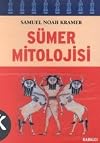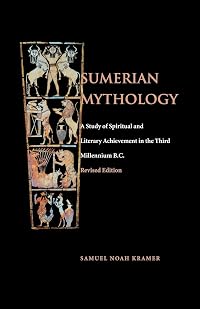
Sumerian Mythology
by Samuel Noah Kramer
On This Page
Description
The Sumerians were a non-Semitic, non-Indo-European people who flourished in southern Babylonia from the beginning of the fourth to the end of the third millennium B.C. During this long stretch of time the Sumerians, whose racial and linguistic affiliations are still unclassifiable, represented the dominant cultural group of the entire Near East. This cultural dominance manifested itself in three directions: 1. It was the Sumerians who developed and probably invented the cuneiform system of show more writing which was adopted by nearly all the peoples of the Near East and without which the cultural progress of western Asia would have been largely impossible.2. The Sumerians developed religious and spiritual concepts together with a remarkably well integrated pantheon which influenced profoundly all the peoples of the Near East, including the Hebrews and the Greeks. Moreover, by way of Judaism, Christianity, and Mohammedanism, not a few of these spiritual and religious concepts have permeated the modern civilized world.3. The Sumerians produced a vast and highly developed literature, largely poetic in character, consisting of epics and myths, hymns and lamentations, proverbs and "words of wisdom." These compositions are inscribed in cuneiform script on clay tablets which date largely from approximately 2000 B.C. show lessTags
Recommendations












Member Reviews
A book first published in the 1940s and updated in 1966. As a result I imagine there has been some more progress on finding and translating these myths. that said, Kramer is still a recognised leader in the field of Sumerian studies and his work is very informative, if somewhat dry and difficult to read as it seems to be written for the university student/ expert . I gained a good foundation knowledge of how Sumerian writing and mythology developed, as well as the significant civilisation milestones first achieved by these people. The relationship of gods to the various Sumerian city states and therir place both the pantheon of gods as well as how this facilitated the management of relationships between cities was very insightful. A show more good book to understand the basics of Sumerian civilisation and the development of their myths. show less
This is the first book of Sumerian mythology I've read. And it does recount some myths, so there's that. I hope there are better (by which I mean "other") ones. At any rate, this review won't tell you whether the book is any good; I hope, though, that it tells you fairly what you're in for.
In certain respects this book left me scratching my head. I have no idea who the intended audience is. It attempts at least three things: narrating the myths, recounting the process of their identification by the author, and "analyzing" their meaning and significance. On the one hand he does all of these things concisely; on the other, it seems so perfunctory as to be intended for a non-professional readership (and some parts are clearly written for show more the uninitiated): but then there's a great deal of information that would only be of use or even interest to the professional (e.g., nearly all of the plates and original end-notes).
As far as I'm concerned the best part of the book is the actual myths, which is why I borrowed the book in the first place. (I'd say it's the strongest part of the book, but I don't read Sumerian so, in light of what I say below, I can't offer an opinion on that.) He still manages to present these in an annoying fashion, though. Rather than just offer straight translations (which, in fairness, he does about half the time), all but one or two of the myths are presented as sections of translation broken up by sections of summary prose. The prose sections bothered me because the act of translation already requires faith in the translator's authority; why add another layer? He claims in many cases that the summarized passages are incomprehensible, but wouldn't that be apparent in the straight translation? And anyway there are plenty of gaps and uncertainties in the straight translations that are given, so what makes the prosified ones special? Too, because of the tenor of the prose, and in spite of new end-notes, I am left wondering whether the "Sumerian mythology" presented in his book is exhaustive or representative of the Sumerian mythological corpus known at the time of the revision, or whether it's a purposeful selection of Kramer's. In fairness, he does describe at the outset the extent of available Sumerian documents that bear on Sumerian mythology, which is (or was) surprisingly limited: as of 1966, apparently only 5,000 "literary compositions" of which only 3,000 or so had been fully translated.
The myths are generally interesting for at least one of a variety of reasons (interest of rhythm [and honestly a couple are stupefyingly dull, which is curiously interesting in its own right], parallels with later myths, history of figurative language, conceptual interest, &c.).
I suppose scholars would be glad to know the registration numbers of each tablet used in reconstructing each myth (which comprise the bulk of the footnotes and original end-notes), but the narrations and analyses do not seem scholarly at all (although this may be due to my being accustomed to the high-falutin' academy of the late 20th c.). Not being a student of ancient Mesopotamia I have no idea how adequate Kramer's description of the identification process is. What I did notice particularly is how all of the myths in the book seem only to be understood as well as they are because of his efforts. He acknowledges the contributions of the giants of the field (i.e., his big-name predecessors) but doesn't really suggest that he stood on their shoulders. The tenor suggests rather that they did a lot of grunt work but for the most part didn't realize its implications, and that it was only Kramer's additional work that made their earlier work at all meaningful. There is an awful lot of "I," "me," and "my" in the narratives of the myth-identifications; pp. 85–86 provide a good sense of that.
And some of his narratives don't quite jive. Of one myth he said that two giants each published fragments of a single tablet, but only when he discovered the piece of the tablet that joined the earlier-published fragments (1) was it clear that they were part of the same tablet, and (2) was the myth comprehensible: but he includes a plate of all of the fragments that clearly shows how (1) the earlier fragments joined one another just fine and presented a complete textual sequence, whereas (2) his 'crucial' fragment joins only one of those others and even then there's a gap between the earlier text and that of his fragment. I mean, dude! It's right there in B&W! Not to say that Kramer didn't or couldn't have accomplished what he says he did; he just sounds unnecessarily smug about it.
That impression doesn't help him with respect to his analyses of the myths. They are substantively superficial (although again, perhaps this is entirely due to the fragmentary texts), but Kramer nonetheless wrings some fairly weighty inferences and conclusions from them (e.g., p. 73's summary of cosmogonic evidence from the myths). There are parts where he offers examples that don't exemplify what he says they do (e.g., some cylinder-scrolls are presented as pictorial representations of myths but in the caption to that same plate he acknowledges that the scrolls' illustrations don't really match the myths after all). It leaves one with the impression that, to an uncertain extent, he was just makin' $#¡+ up (or cramming the myths into a Semitic mythological interpretive framework whether they fit or no), which doesn't do much for one's confidence in those parts exhibiting no obvious error. What's weird in this connection is his constant assertion that his translations and analyses are "scientific." I have no idea what he meant by that.
There are two batches of end-notes: the notes of the original edition and those of the revision. The revision notes describe where new or alternative information that has come to light since the original publication may be found, but it never describes what that new information is or how it might affect the arguments of this book. This is especially frustrating given that he cites his own work as the sources of most of that new or alternative information. So in that sense this edition isn't really revised, it's just sort of...annotated.
A couple of things would have been helpful: a glossary and an index. show less
In certain respects this book left me scratching my head. I have no idea who the intended audience is. It attempts at least three things: narrating the myths, recounting the process of their identification by the author, and "analyzing" their meaning and significance. On the one hand he does all of these things concisely; on the other, it seems so perfunctory as to be intended for a non-professional readership (and some parts are clearly written for show more the uninitiated): but then there's a great deal of information that would only be of use or even interest to the professional (e.g., nearly all of the plates and original end-notes).
As far as I'm concerned the best part of the book is the actual myths, which is why I borrowed the book in the first place. (I'd say it's the strongest part of the book, but I don't read Sumerian so, in light of what I say below, I can't offer an opinion on that.) He still manages to present these in an annoying fashion, though. Rather than just offer straight translations (which, in fairness, he does about half the time), all but one or two of the myths are presented as sections of translation broken up by sections of summary prose. The prose sections bothered me because the act of translation already requires faith in the translator's authority; why add another layer? He claims in many cases that the summarized passages are incomprehensible, but wouldn't that be apparent in the straight translation? And anyway there are plenty of gaps and uncertainties in the straight translations that are given, so what makes the prosified ones special? Too, because of the tenor of the prose, and in spite of new end-notes, I am left wondering whether the "Sumerian mythology" presented in his book is exhaustive or representative of the Sumerian mythological corpus known at the time of the revision, or whether it's a purposeful selection of Kramer's. In fairness, he does describe at the outset the extent of available Sumerian documents that bear on Sumerian mythology, which is (or was) surprisingly limited: as of 1966, apparently only 5,000 "literary compositions" of which only 3,000 or so had been fully translated.
The myths are generally interesting for at least one of a variety of reasons (interest of rhythm [and honestly a couple are stupefyingly dull, which is curiously interesting in its own right], parallels with later myths, history of figurative language, conceptual interest, &c.).
I suppose scholars would be glad to know the registration numbers of each tablet used in reconstructing each myth (which comprise the bulk of the footnotes and original end-notes), but the narrations and analyses do not seem scholarly at all (although this may be due to my being accustomed to the high-falutin' academy of the late 20th c.). Not being a student of ancient Mesopotamia I have no idea how adequate Kramer's description of the identification process is. What I did notice particularly is how all of the myths in the book seem only to be understood as well as they are because of his efforts. He acknowledges the contributions of the giants of the field (i.e., his big-name predecessors) but doesn't really suggest that he stood on their shoulders. The tenor suggests rather that they did a lot of grunt work but for the most part didn't realize its implications, and that it was only Kramer's additional work that made their earlier work at all meaningful. There is an awful lot of "I," "me," and "my" in the narratives of the myth-identifications; pp. 85–86 provide a good sense of that.
And some of his narratives don't quite jive. Of one myth he said that two giants each published fragments of a single tablet, but only when he discovered the piece of the tablet that joined the earlier-published fragments (1) was it clear that they were part of the same tablet, and (2) was the myth comprehensible: but he includes a plate of all of the fragments that clearly shows how (1) the earlier fragments joined one another just fine and presented a complete textual sequence, whereas (2) his 'crucial' fragment joins only one of those others and even then there's a gap between the earlier text and that of his fragment. I mean, dude! It's right there in B&W! Not to say that Kramer didn't or couldn't have accomplished what he says he did; he just sounds unnecessarily smug about it.
That impression doesn't help him with respect to his analyses of the myths. They are substantively superficial (although again, perhaps this is entirely due to the fragmentary texts), but Kramer nonetheless wrings some fairly weighty inferences and conclusions from them (e.g., p. 73's summary of cosmogonic evidence from the myths). There are parts where he offers examples that don't exemplify what he says they do (e.g., some cylinder-scrolls are presented as pictorial representations of myths but in the caption to that same plate he acknowledges that the scrolls' illustrations don't really match the myths after all). It leaves one with the impression that, to an uncertain extent, he was just makin' $#¡+ up (or cramming the myths into a Semitic mythological interpretive framework whether they fit or no), which doesn't do much for one's confidence in those parts exhibiting no obvious error. What's weird in this connection is his constant assertion that his translations and analyses are "scientific." I have no idea what he meant by that.
There are two batches of end-notes: the notes of the original edition and those of the revision. The revision notes describe where new or alternative information that has come to light since the original publication may be found, but it never describes what that new information is or how it might affect the arguments of this book. This is especially frustrating given that he cites his own work as the sources of most of that new or alternative information. So in that sense this edition isn't really revised, it's just sort of...annotated.
A couple of things would have been helpful: a glossary and an index. show less
Some of the information is outdated
One of the Golden Ages of Mankind, so deeply meaningful and fulfilling that it has endowed us even to this day, an achievement in having succession we have not seen since, took place in the fourth millenium B.C. From Tablet 29.16.422:
"In those days the land Shubur (East), the place of plenty, of righteous laws, harmonious speaking Sumer (South), the great land of the princes, Uri (North), the land having all that is needful, the land Martu (West), resting in security, the whole universe, the people in unity..."
Little wonder this tongue remained as a sacred language long after the cities were silent and new languages were spoken.
The mythological pattern of Sumerian literature is simply repeated in the Bible and the Quran: The show more Creation, the Ontology, the Epic of Paradise, Flood, and Fall of Man. show less
"In those days the land Shubur (East), the place of plenty, of righteous laws, harmonious speaking Sumer (South), the great land of the princes, Uri (North), the land having all that is needful, the land Martu (West), resting in security, the whole universe, the people in unity..."
Little wonder this tongue remained as a sacred language long after the cities were silent and new languages were spoken.
The mythological pattern of Sumerian literature is simply repeated in the Bible and the Quran: The show more Creation, the Ontology, the Epic of Paradise, Flood, and Fall of Man. show less
Ratings
Members
- Recently Added By
Lists

Books in the Bibliography of The History of Hell by Alice K. Turner
155 works; 1 member
Author Information

41+ Works 3,353 Members
Common Knowledge
- Original title
- Sumerian Mythology : A Study of Spiritual and Literary Achievement in the Third Millennium B.C.
- Original publication date
- 1944
- Important places
- Mesopotamia; Sumeria
- Original language
- English
Classifications
- Genres
- Nonfiction, History, Religion & Spirituality, General Nonfiction
- DDC/MDS
- 299.9295 — Religion Other religions Shintoism/Taoism/Other Mythologies Religions of other origin Of Pacific or Other Ethnic Origin Etruscan
- LCC
- BL1615 .K73 — Philosophy, Psychology and Religion Religions. Mythology. Rationalism Religions. Mythology. Rationalism History and principles of religions Asian. Oriental By religion Semitic religions Sumerian
- BISAC
Statistics
- Members
- 345
- Popularity
- 91,374
- Reviews
- 4
- Rating
- (3.56)
- Languages
- English, French, Turkish
- Media
- Paper, Audiobook, Ebook
- ISBNs
- 15
- ASINs
- 10