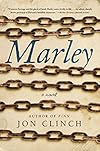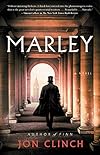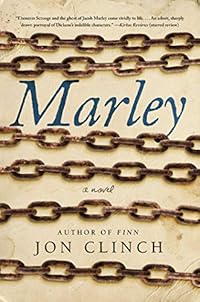
Marley
by Jon Clinch
On This Page
Description
From the acclaimed author of Finn comes a masterful re-imagining of Charles Dickens's classic, A Christmas Carol, in this exploration of the twisted relationship between Ebenezer Scrooge and Jacob Marley. They met in the gloomy confines of Professor Drabb's Academy for Boys. With Jacob Marley's genius for deception and Ebenezer Scrooge's brilliance with numbers, they build a shipping empire of dubious legality and pitiless commitment to the slave trade, concealing their true investments show more under the noses of the London authorities. When beautiful Belle Fairchild steps into Ebenezer's life and calls into question the practices that made him wealthy, Ebenezer tries to turn Scrooge and Marley's business toward better ends. But his partner is not ready to give up his unsavory past or easy profits so quickly. The two engage in a shadowy war against each other, leading to an unforgettable reckoning that will echo into their futures--Adapted from jacket. show lessTags
Recommendations





Member Recommendations
Member Reviews
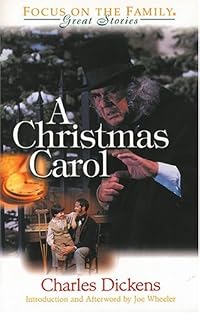
List five things you think you know about Ebenezer Scrooge. (Mean as a snake, obsessed with money, dumped by his sweetheart as a young man, lives alone in a big creepy house, gets redeemed by visits from Christmas spirits…) If anything on your list relates to how he met his business partner, Jacob Marley, you’ve been watching too many movies, and owe yourself a re-read of the Dickens original. BUT FIRST---get your hands on a copy of Jon Clinch’s Marley, so you’re ready to learn the truth about Jacob and Ebenezer. I don’t know whether Dickens gave much thought to the relationship between the two tight-fisted covetous old sinners, or the exact nature of their business, beyond usury. (I mean, they had to get the money from show more somewhere before they could lend it out, right?) He didn’t share it with his readers, if so. And what the heck is with that huge, apparently mostly empty house Scrooge lives in, having inherited it from Marley? Dickens didn’t explain that either, except for a brief reference to wine merchants using the basement for storage. But the fact that he left all that to Jon Clinch’s imagination is a fine gift from the 19th century to the 21st, and it’s one you still have plenty of time to give yourself for Christmas. The characters are much more fully-fleshed than Dickens’ version, both better and worse than we previously knew them to be. Complex, rather than contrived to present a lesson. And this is a darned good Victorian story. I re-read A Christmas Carol after finishing Marley, to verify that Clinch didn’t change anything fundamental from the source. I didn’t catch him taking a single liberty, but even if I missed something, and there is any inconsistency, I’d say Dickens got it wrong. show less
Jon Clinch's take on the backstory of A Christmas Carol's Jacob Marley and Ebenezer Scrooge.
Recently, and for far from the first time, I found myself reviewing a book that I actually did mostly enjoy but, when I the time came to sit down and talk about it, I realized most of the specific things I had to say sounded pretty negative. Well, here's a somewhat rarer example of the exact opposite thing. I find most of what I have to say about this one is very positive, and yet somehow it just didn't add up to a reading experience I loved.
The good stuff? The writing is rather lovely: not showy, but self-assured and smooth. The way the novel answers the question of just what sins Marley committed in his life to merit the chains that would later show more bind his spirit is so perfectly apt that I can only imagine that the entire book was written just to use that particular idea. Scrooge's character is explored a bit in a way that gives us some insight into how he became the miserable (but not irrevocably miserable) person that he was. The work engages with Dickens without feeling the need to ape his style, and certainly without being remotely parodic. It also raises some questions about themes of redemption and changes of heart that are much more subtle, and much more interestingly uncomfortable, than those in Dickens' feel-good tale. There are even a few rather poignant moments, towards the end.
All of which is great! And yet, I confess I just... kept wanting to put it down. And for all that good stuff, it felt like it lacked something I very much wanted it to have. Or maybe a couple of somethings, the first of which is a sense of narrative drive. For all that we do, in fact, know exactly where this story is going, for much of the novel it still doesn't seem to be going much of anywhere. There's also some sense of groundedness or detail that's lacking, too, which I felt most keenly once Scrooge starts working around to clock to deal with some problems Marley's caused him. We know what goal he's working towards, but never how he's working towards it, and all that scribbling and calculating he's doing just feels like an empty placeholder. (Really, he might was well just be muttering "business, business, business" to himself all day.)
Some part of me is wondering whether Clinch didn't have that fantastic idea about Marley's awful history but then just wasn't entirely sure what to actually do with it, while some other part is wondering if it's not just me being a big ol' hard-to-satisfy humbug. show less
Recently, and for far from the first time, I found myself reviewing a book that I actually did mostly enjoy but, when I the time came to sit down and talk about it, I realized most of the specific things I had to say sounded pretty negative. Well, here's a somewhat rarer example of the exact opposite thing. I find most of what I have to say about this one is very positive, and yet somehow it just didn't add up to a reading experience I loved.
The good stuff? The writing is rather lovely: not showy, but self-assured and smooth. The way the novel answers the question of just what sins Marley committed in his life to merit the chains that would later show more bind his spirit is so perfectly apt that I can only imagine that the entire book was written just to use that particular idea. Scrooge's character is explored a bit in a way that gives us some insight into how he became the miserable (but not irrevocably miserable) person that he was. The work engages with Dickens without feeling the need to ape his style, and certainly without being remotely parodic. It also raises some questions about themes of redemption and changes of heart that are much more subtle, and much more interestingly uncomfortable, than those in Dickens' feel-good tale. There are even a few rather poignant moments, towards the end.
All of which is great! And yet, I confess I just... kept wanting to put it down. And for all that good stuff, it felt like it lacked something I very much wanted it to have. Or maybe a couple of somethings, the first of which is a sense of narrative drive. For all that we do, in fact, know exactly where this story is going, for much of the novel it still doesn't seem to be going much of anywhere. There's also some sense of groundedness or detail that's lacking, too, which I felt most keenly once Scrooge starts working around to clock to deal with some problems Marley's caused him. We know what goal he's working towards, but never how he's working towards it, and all that scribbling and calculating he's doing just feels like an empty placeholder. (Really, he might was well just be muttering "business, business, business" to himself all day.)
Some part of me is wondering whether Clinch didn't have that fantastic idea about Marley's awful history but then just wasn't entirely sure what to actually do with it, while some other part is wondering if it's not just me being a big ol' hard-to-satisfy humbug. show less
If you've read Dickens's A Christmas Carol, you know that Ebeneezer wasn't always a scrooge. Marley, too, shows him in his younger days, when he took care of his widowed mother, adored his sister Fan, and fell in love with Belle. What changed him? According to Clinch's novel, it was Jacob Marley. The two met at boarding school, where the headmaster was virtually absent, the teachers negligent, the boys pretty much self-educated, and bullies like Marley allowed to ride roughshod over the others. Marley was a schemer: by the time they matriculated, Ebeneezer was in so much debt to him that he couldn't refuse the offer of a partnership. Marley recognized not only that Scrooge was great with numbers but that he preferred to hide his head in show more the account books and leave everything else up to his devious partner. By setting up several dummy businesses through which he could cheat clients and invest in unscrupulous investments (like the slave trade), he made a fortune, lost half of the partnership's fortune (Scrooge's half, of course), and made a second fortune, which he stashed away in secret passages of his home and kept hidden from Scrooge, constantly insisting that they were on the verge of financial disaster. When Scrooge finds out about Marley's lies and crimes, instead of confronting him, he delves deeper into the accounts in hopes of finding ways to make the books balance. His single-mindedness comes between him and the ever-patient Belle (as well as the discovery that Marley had not, as he claimed, withdrawn his investments in the slave trade). Marley will stoop to anything--arson, theft, revenge, blackmail, murder--and glories in his success. He even ingratiates himself to the Scrooge family, first courting and then disappointing Fan, then courting her again with disastrous results.
If you've wondered what dark deeds Jacob Marley must have done to deserve an eternity of haunting the earth in chains, Clinch's re-imagining of the Dickens classic will be just your cuppa. You may end up a little less inclined to blame Scrooge for his own shortcomings (or maybe not!). show less
If you've wondered what dark deeds Jacob Marley must have done to deserve an eternity of haunting the earth in chains, Clinch's re-imagining of the Dickens classic will be just your cuppa. You may end up a little less inclined to blame Scrooge for his own shortcomings (or maybe not!). show less
As soon as I saw Simon Callow's enthusiastic review of this one, I put it on hold at the library. I'm often leery of these "spinoff" novels - prequels, imaginative sequels, famous tales told from other points of view - but if Dickensian Extraordinaire Callow is on board, sign me up. So, no, this is not a sad dog story, but the life and times of Jacob Marley and Ebenezer Scrooge from Dickens's Christmas Carol (probably my least favorite Dickens of all, but never mind that).
Marley was a slaver, to begin with. The money hauled into the coffers of Scrooge & Marley is largely made by outfitting the ships that pack black Africans into the hold for sale in America, and filled on the return journey by rum, molasses, and other such useful but show more less profitable commodities. He was also a masterly business crook, shuffling shell companies, false ship registrations, and bank accounts in a wizardly fashion. Even as a youth, he indebts the shy, unhappy boy Scrooge at their dreadful Dickensian boys' school and ties him up well and truly. So far, so good. Clinch writes in a vaguely Victorian tone well enough, but even Dickens didn't use as many adjectives and adverbs as he does. We get a plausible filling-in of Scrooge's youth, that feels faithful to Dickens's allusions in Carol. But it starts to go a little wobbly over the slave plot. Scrooge's intended father-in-law forbids his marriage to daughter Belle unless he divests completely from this endeavor. Now, Dickens has no problem with selfish, demanding fathers thwarting their overly-dutiful daughters (Madeline Bray in Nickleby, Little Dorrit, et al.), but he is careful to build a relationship that causes the daughters to acquiesce (appropriately or not, we see why they do). Belle's father is a non-entity, and has virtually no relationship with Belle to speak of, so why she patiently waits for years is not believable. And Scrooge too, who really doesn't actually care about the slaves, goes along with it too - and here Clinch misses another opportunity: Scrooge really buckles into months and years of disentangling the business mostly because his heart really isn't into the marriage, though Clinch wants us to think it is. Sort of. It's just murky and disappointing, and I for one thought Belle should have cut him loose a LOT sooner.
Meanwhile, Marley is pretending to get out of the slave business while remaining actively in it, working at cross-purposes with Scrooge. There is a fairly creepy enmeshment with Scrooge's sister Fan, which of course ends badly. But it just all gets muddled and nasty, and by the time it was over, I was glad.
So, three stars because it doesn't quite succeed at what it set out to do, but worth the read for some smoky atmosphere, some illumination of Scrooge (there's a rather lovely passage about his affinity for and devotion to the beauty of numbers for their own sake), and a little fun for those of us who do love Dickens. Simon, you were a little too kind, but thanks for the heads-up on this one anyway. show less
Marley was a slaver, to begin with. The money hauled into the coffers of Scrooge & Marley is largely made by outfitting the ships that pack black Africans into the hold for sale in America, and filled on the return journey by rum, molasses, and other such useful but show more less profitable commodities. He was also a masterly business crook, shuffling shell companies, false ship registrations, and bank accounts in a wizardly fashion. Even as a youth, he indebts the shy, unhappy boy Scrooge at their dreadful Dickensian boys' school and ties him up well and truly. So far, so good. Clinch writes in a vaguely Victorian tone well enough, but even Dickens didn't use as many adjectives and adverbs as he does. We get a plausible filling-in of Scrooge's youth, that feels faithful to Dickens's allusions in Carol. But it starts to go a little wobbly over the slave plot. Scrooge's intended father-in-law forbids his marriage to daughter Belle unless he divests completely from this endeavor. Now, Dickens has no problem with selfish, demanding fathers thwarting their overly-dutiful daughters (Madeline Bray in Nickleby, Little Dorrit, et al.), but he is careful to build a relationship that causes the daughters to acquiesce (appropriately or not, we see why they do). Belle's father is a non-entity, and has virtually no relationship with Belle to speak of, so why she patiently waits for years is not believable. And Scrooge too, who really doesn't actually care about the slaves, goes along with it too - and here Clinch misses another opportunity: Scrooge really buckles into months and years of disentangling the business mostly because his heart really isn't into the marriage, though Clinch wants us to think it is. Sort of. It's just murky and disappointing, and I for one thought Belle should have cut him loose a LOT sooner.
Meanwhile, Marley is pretending to get out of the slave business while remaining actively in it, working at cross-purposes with Scrooge. There is a fairly creepy enmeshment with Scrooge's sister Fan, which of course ends badly. But it just all gets muddled and nasty, and by the time it was over, I was glad.
So, three stars because it doesn't quite succeed at what it set out to do, but worth the read for some smoky atmosphere, some illumination of Scrooge (there's a rather lovely passage about his affinity for and devotion to the beauty of numbers for their own sake), and a little fun for those of us who do love Dickens. Simon, you were a little too kind, but thanks for the heads-up on this one anyway. show less
Most everyone is familiar with Charles Dickens’ A Christmas Carol. Even if you haven’t actually read the book, you’ve probably seen at least one version in a movie. Marley is a prequel of sorts with the main character being Jacob Marley, Ebenezer Scrooge’s business partner. The book starts when they meet at a boy’s boarding school, where Marley is already bad news. Scrooge is a naïve boy that he takes advantage of without Scrooge even knowing it. Their lopsided relationship continues when they go into business together. Marley makes all the shady business deals while Scrooge handles the books, blissfully (maybe willfully) unaware that most of their business is unseemly at best.
One of the most horrible businesses they are show more involved in is slavery. When Scrooge becomes engaged to Belle, her father tells him he won’t consent to her marrying him until Scrooge and Marley are divested of the slaving business. Scrooge sets to work on that much to Marley’s consternation. Scrooge is actually a sympathetic character for most of the book. He loves money and accounting but he loves Belle too. It’s Marley that has no redeeming qualities whatsoever.
This book is actually darker and gloomier than A Christmas Carol. A couple of parts are downright horrifying. And that’s what makes it so good. A Christmas Carol is a wonderful book of course, but it’s a spare novel focused on Scrooge and his redemption. Not much is made of the other characters. Luckily for Clinch, there is a lot of room to be imaginative. And he fills in the space wonderfully. Scrooge’s sister Fan and his fiancé Belle are full-fledged characters in their own right. I haven’t read much Dickens but my friends who have tell me that there are Easter eggs related to other Dickens novels throughout. I’m sure they are fun to come across for Dickens fans.
My book club read this book and had mixed reviews as a whole but I really liked it. I was impressed by Clinch’s creativity in crafting Marley and Scrooge’s backstory. Recommended. show less
One of the most horrible businesses they are show more involved in is slavery. When Scrooge becomes engaged to Belle, her father tells him he won’t consent to her marrying him until Scrooge and Marley are divested of the slaving business. Scrooge sets to work on that much to Marley’s consternation. Scrooge is actually a sympathetic character for most of the book. He loves money and accounting but he loves Belle too. It’s Marley that has no redeeming qualities whatsoever.
This book is actually darker and gloomier than A Christmas Carol. A couple of parts are downright horrifying. And that’s what makes it so good. A Christmas Carol is a wonderful book of course, but it’s a spare novel focused on Scrooge and his redemption. Not much is made of the other characters. Luckily for Clinch, there is a lot of room to be imaginative. And he fills in the space wonderfully. Scrooge’s sister Fan and his fiancé Belle are full-fledged characters in their own right. I haven’t read much Dickens but my friends who have tell me that there are Easter eggs related to other Dickens novels throughout. I’m sure they are fun to come across for Dickens fans.
My book club read this book and had mixed reviews as a whole but I really liked it. I was impressed by Clinch’s creativity in crafting Marley and Scrooge’s backstory. Recommended. show less
Jon Clinch has written a prequel to Dickens' A Christmas Carol. If you ever wondered what made Scrooge so nasty or what really happened to Marley, then you will find this to be quite an enjoyable read. Clinch gives us plausible backstories for the partners along with all of the flavor or a Dickens novel. We get the seedy side of foggy London, Bob Crachit, the wonderfully evocative names Dickens was famous for, everyday life in the 18th Century, and a writing style that resembles the great man's. Scrooge and Marley don't escape Clinch's narrative completely unscathed, but he does give them some humanity and nuance that Dickens suppressed in favor of a simpler parable about ghosts and redemption.
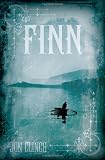
The story of Jacob Marley prior to being the ghost that visited Scrooge in A Christmas Carol - at least the story as John Clinch imagined it. I believe this is the third book I've read from Clinch - Finn, the story of Huck's dad prior to his float down the river in the house, was a great read. I think Marley was a great read as well, but the foundational material wasn't as near and dear to me. Clinch does a great job in both books of fitting the mood and being a modern mimic of the authors. There was poetry in sections of his writing, maybe a tad too clear foreshadowing, but excusable. I enjoyed the book though and if you like A Christmas Carol, this is worth picking up.
Members
- Recently Added By
Lists

Fiction: Historical
288 works; 3 members

Kirkus Starred Fiction Reviews of Books Published in 2019
411 works; 12 members

Books Read in 2019
4,052 works; 110 members
Author Information

11+ Works 1,642 Members
Work Relationships
Was inspired by
Common Knowledge
- Canonical title
- Marley
- Original publication date
- 2019
Classifications
Statistics
- Members
- 204
- Popularity
- 159,484
- Reviews
- 13
- Rating
- (3.51)
- Languages
- English
- Media
- Paper, Audiobook, Ebook
- ISBNs
- 9
- ASINs
- 2