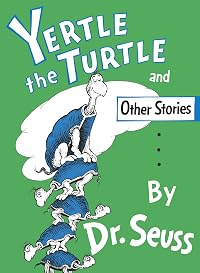
Yertle the Turtle and Other Stories
by Dr. Seuss
On This Page
Description
Includes three humorous stories in verse: Yertle the Turtle, Gertrude McFuzz, and The Big Brag.Tags
Recommendations
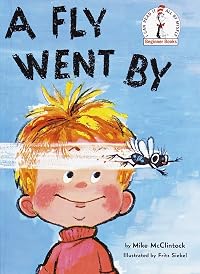
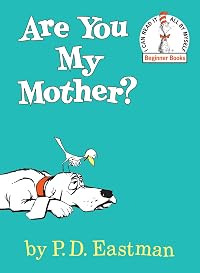

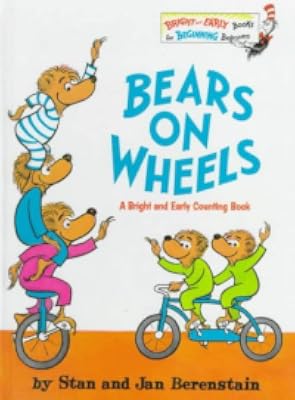

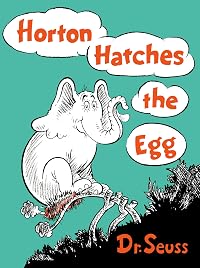
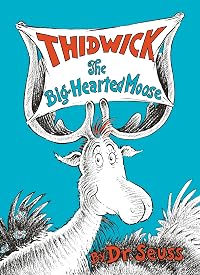
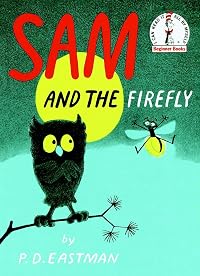
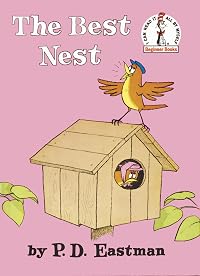
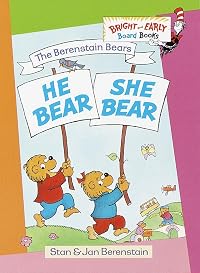
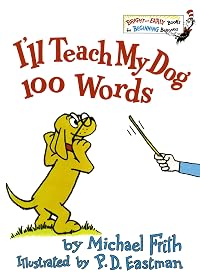
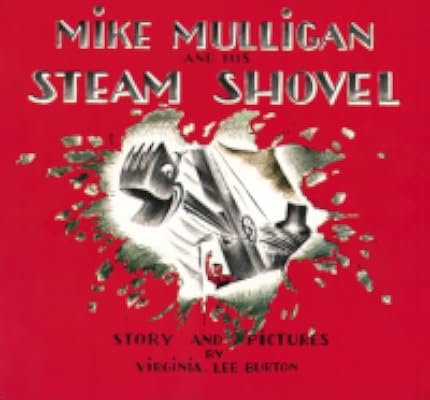
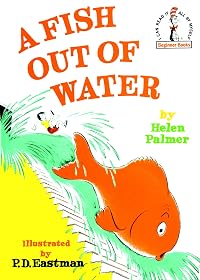
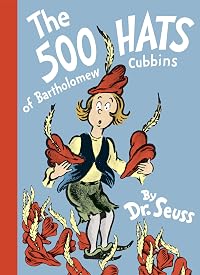
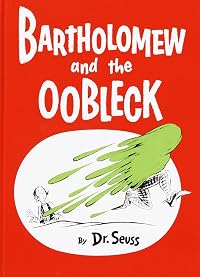
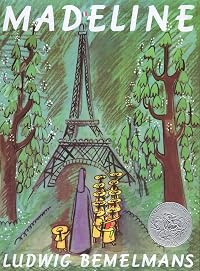

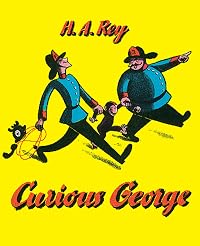
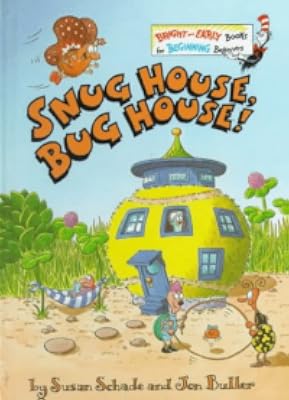
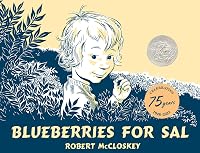
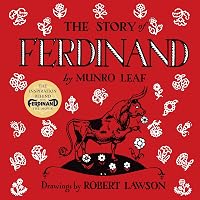

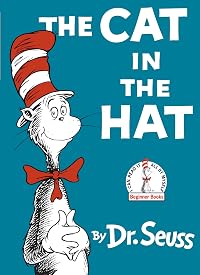
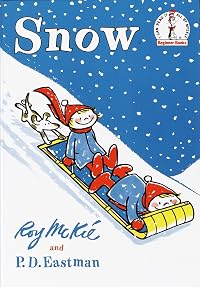
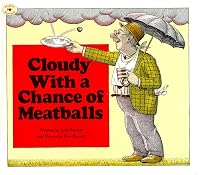
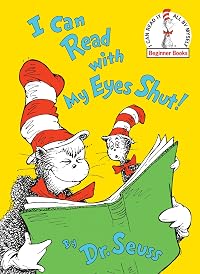
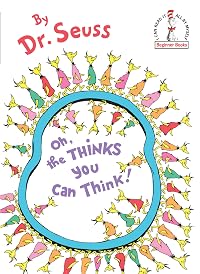
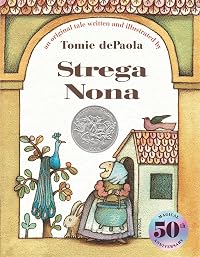
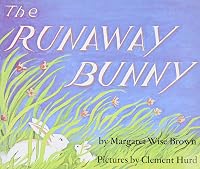
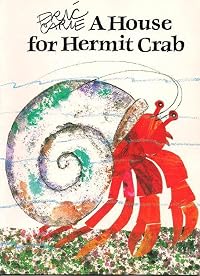
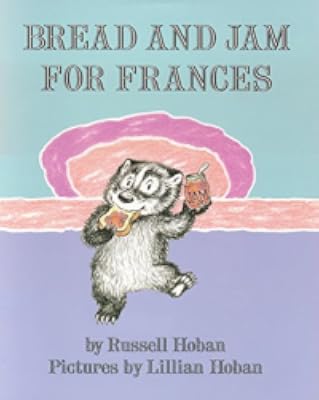
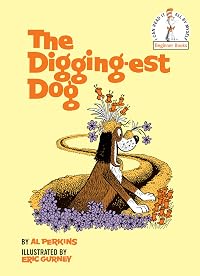
Member Recommendations
Sandydog1 Same theme, although Suess' work is far superior
Member Reviews
Dr. Seuss presents three short stories, each highlighting a particular moral lesson, in this classic picture-book. In the eponymous Yertle the Turtle, that chelonian ruler attempts to make himself greater and greater by forcing his fellow turtles to pile themselves up in a great column, so that he can sit at the very top and survey his "kingdom." Like all tyrants, he is brought low again by the instability of his rule. In Gertrude McFuzz a young bird with only one feather envies a peer - the pretty Lolla-Lee-Lou - who has two, eventually pestering her doctor uncle into telling her how to increase her tail feathers. Unfortunately, Gertrude goes a little bit too far in her quest for beauty, and must pay the price in a painful way. show more Finally, in The Big Brag, a rabbit and bear get into a competition to see who is the better of the two, one demonstrating great hearing, another great smell, before a humble worm puts them both in their place, by pointing out how foolish they have been...
Originally published in 1958, Yertle the Turtle and Other Stories was Dr. Seuss's fifteenth children's book, and is a title I recall very fondly, from my own childhood. I have vivid memories of reading and rereading this book, particularly the first two stories. I picked it up for this current reread as part of my recently begun Dr. Seuss retrospective, in which I will be reading and reviewing all forty-four of the author/artist's classic children's books, in chronological publication order. This is a project I have undertaken as an act of personal protest against the suppression of six of the author/artist's titles - And to Think That I Saw It on Mulberry Street, McElligot's Pool, If I Ran the Zoo, Scrambled Eggs Super!, On Beyond Zebra! and The Cat's Quizzer - by Dr. Seuss Enterprises, due to the outdated and potentially offensive elements that they contain. See my review of And to Think That I Saw It on Mulberry Street, to be found HERE, for a fuller exploration of my thoughts on that matter.
Leaving that aside, Yertle the Turtle has always been one of my favorite Seuss books, and might have been one of my rare five-star titles as well, if I loved the third story here as much as I love the first two. The tale of Yertle and his delusions of grandeur has always struck me (and many other readers as well) as a meditation on the nature of political power, one which emphasizes that rulers can only rule with the consent of the governed, and that the high position of our elites, whether economic or political, often rests on the hard work of ordinary people. Yertle's eventual fall, both literally and figuratively, comes about because he forgets this essential truth, and because he is indifferent to the welfare of those ordinary people (or, in his case, turtles). One wishes that this lesson could be drummed into our current leadership, whatever their political stripe! The tale of Gertrude and her plume envy highlights, not just the folly of wishing to be like others, but the idea that often, simplicity is best. After all, what could be more beautiful than flying? And yet, because our avian heroine wishes for an ornate tail, one graced by countless colorful feathers, she finds herself unable to take to the skies. A useful reminder that superficial appearance fades into insignificance, compared to the desirability of health, and the full functioning of one's body. Finally, the story of the contest between the rabbit and bear points out the absurdity of imagining that our differences make us better (or worse) than one another. While one individual may be superior in one skill or ability, another may be better at some other. In the end, arguing about who is the "best," in terms of the overall value of the individual, is a waste of time.
All in all, a wonderful book, one which presents a number of valuable lessons for the child reader, packaged in such a way as to be entertaining, rather than preachy. While it's true that The Big Brag has never quite struck the same note with me, as the other two stories - I have few memories of it, from my girlhood, whereas I can recall reading and greatly enjoying the other two - overall Yertle the Turtle and Other Stories remains a personal favorite, and certainly deserves its status as a classic. The accompanying artwork has all of the humorous appeal one would expect from Seuss, and the stories and engaging and thought-provoking. show less
Originally published in 1958, Yertle the Turtle and Other Stories was Dr. Seuss's fifteenth children's book, and is a title I recall very fondly, from my own childhood. I have vivid memories of reading and rereading this book, particularly the first two stories. I picked it up for this current reread as part of my recently begun Dr. Seuss retrospective, in which I will be reading and reviewing all forty-four of the author/artist's classic children's books, in chronological publication order. This is a project I have undertaken as an act of personal protest against the suppression of six of the author/artist's titles - And to Think That I Saw It on Mulberry Street, McElligot's Pool, If I Ran the Zoo, Scrambled Eggs Super!, On Beyond Zebra! and The Cat's Quizzer - by Dr. Seuss Enterprises, due to the outdated and potentially offensive elements that they contain. See my review of And to Think That I Saw It on Mulberry Street, to be found HERE, for a fuller exploration of my thoughts on that matter.
Leaving that aside, Yertle the Turtle has always been one of my favorite Seuss books, and might have been one of my rare five-star titles as well, if I loved the third story here as much as I love the first two. The tale of Yertle and his delusions of grandeur has always struck me (and many other readers as well) as a meditation on the nature of political power, one which emphasizes that rulers can only rule with the consent of the governed, and that the high position of our elites, whether economic or political, often rests on the hard work of ordinary people. Yertle's eventual fall, both literally and figuratively, comes about because he forgets this essential truth, and because he is indifferent to the welfare of those ordinary people (or, in his case, turtles). One wishes that this lesson could be drummed into our current leadership, whatever their political stripe! The tale of Gertrude and her plume envy highlights, not just the folly of wishing to be like others, but the idea that often, simplicity is best. After all, what could be more beautiful than flying? And yet, because our avian heroine wishes for an ornate tail, one graced by countless colorful feathers, she finds herself unable to take to the skies. A useful reminder that superficial appearance fades into insignificance, compared to the desirability of health, and the full functioning of one's body. Finally, the story of the contest between the rabbit and bear points out the absurdity of imagining that our differences make us better (or worse) than one another. While one individual may be superior in one skill or ability, another may be better at some other. In the end, arguing about who is the "best," in terms of the overall value of the individual, is a waste of time.
All in all, a wonderful book, one which presents a number of valuable lessons for the child reader, packaged in such a way as to be entertaining, rather than preachy. While it's true that The Big Brag has never quite struck the same note with me, as the other two stories - I have few memories of it, from my girlhood, whereas I can recall reading and greatly enjoying the other two - overall Yertle the Turtle and Other Stories remains a personal favorite, and certainly deserves its status as a classic. The accompanying artwork has all of the humorous appeal one would expect from Seuss, and the stories and engaging and thought-provoking. show less
Yertle, king of the pond, stands on other turtles in an attempt to reach higher than the moon! But, the bottom turtle burps and he falls into the mud.
I found this book to be quite deep for being a Dr. Seuss book. Yertle is quite tyrannical in my view! He is very greedy and eventually falls from the top when the bottom turtle burps. Maybe children won't understand this--but I like that behind the silly poetry there are deep messages!
I found this book to be quite deep for being a Dr. Seuss book. Yertle is quite tyrannical in my view! He is very greedy and eventually falls from the top when the bottom turtle burps. Maybe children won't understand this--but I like that behind the silly poetry there are deep messages!
“Yertle the Turtle” is a Dr. Seuss book about a society of turtles. The message of this book is that people who are greedy never win. I really enjoyed this story because of the characterization of “Yertle the Turtle” himself. He always wanted to be higher to see more land, because if he saw this land he automatically assume that he ruled it. This absurd thought was laughable to me and it mocks many kings or people in power, as I have come to learn were Dr. Seuss’ intentions. Furthermore, I enjoyed the symbolism of the tower of turtles that served as Yertle’s “throne.” Each time Yertle requested to be higher, more and more turtles stacked below him. These turtles symbolized the people under a king’s rule, and Yertle show more allowed them to hurt and starve until finally one turtle burped and the whole group fell. Yertle than become king of the mud, further illustrating the message of the story. show less
"Oh, Marvelous Me!" I truly love Yertle the Turtle. What a fantastic story told through a society of turtles. This story tells the tale of a dictator living off the backs of his people and only caring about his view from the top. In my opinion this story illustrates how power in a society lies with its people and those at the top are only there because of the hard work and sacrifice of those willing to support their society. But, a burp can shake the throne of a king and ultimately all creatures should be free.
I recently read that this one has appeared (as have six other of Geisel’s books) on banned books lists throughout the United States and Canada. This story ends with, “And the turtles, of course…all the turtles are free. As turtles and, maybe, all creatures should be.” What a great line and a wonderful message this is. Though this is one of Seuss’s shortest and most popular stories, his messages of authoritarianism and empowerment ring clear. Dr. Seuss admitted that his source for this story was the rise of Hitler (just like Yertle rose above the rest by stacking more and more turtles underneath him to gain more power).
This book is frequently banned based on Yertle’s story and Mack demanding that the turtles on the bottom of the tower have rights just like those at the top. By many, this book is seen as too political. However, reading with a modern eye, I think that story two, Gertrude McFuzz would be just as, if not more problematic. Gertrude is not happy with who they are. They want a second feather just like someone else has. And she gets a doc to give it to her. But then she regrets it in the end. I know this story is meant to show that children are perfect the way they are, but at the same time it could be seen as anti-trans, or as transition regret. This book is a product of it’s time. This book shouldn’t be banned, but maybe it should show more just be left in the area of nostalgia. show less
YERTLE THE TURTLE by Dr. Seuss tells the tale of a greedy king named Yertle. He reigns over all that he sees and one day he decides that what he sees is not enough. So he commands all of the other turtles to build a tall stack on which he can be at the top and look out over a greater distance. Though he is satisfied for a bit, he becomes greedy again and calls for more turtles added to the stack. Eventually, the turtles on the bottom become too tired and the stack is shaken, causing King Yertle to come crashing down into the pond. At the end of the book, all he has left to rule over is the mud and "all the turtles are free as turtles and, maybe, all creatures should be." I loved this final line, as it introduces the message of freedom. show more This story also carries a strong moral lesson about greed and power. I enjoyed the illustrations because they were very descriptive of what was going on in the text on each particular page. On a basic level, this book could be used to teach students about rhyming. But also, I think it would be a good tool to discuss the topic of power in society and hurting others to get what you want; I could ask students to brainstorm instances in which they have seen these themes played out in real life. Although this story is pretty easy to read and could be used with young children, I would probably use it with somewhat older students so that the class can have deeper discussions. show less
Members
- Recently Added By
Lists

Favorite Childhood Books
1,646 works; 514 members

Best children's picture books
377 works; 85 members
1001 Children's Books You Must Read Before You Grow Up
774 works; 101 members

Best Books About Animals
143 works; 48 members

Scholastic 100 Best Read-Aloud Books
100 works; 8 members
Picture Book Library
49 works; 7 members

Blue Pyramid 1,276 Best Books of All Time
1,248 works; 32 members

Unread books
1,063 works; 82 members

Stories Featuring Reptiles
22 works; 5 members

Books Read in 2017
4,249 works; 130 members

Literature which inspired Pop songs
85 works; 9 members

1970s
657 works; 23 members

Favorite Picture Books
479 works; 160 members

Written and Illustrated By
805 works; 1 member
Author Information

795+ Works 358,662 Members
Theodor Seuss Geisel was born in Springfield, Massachusetts on March 2, 1904. He wrote and illustrated more than 45 picture books under the pseudonym Dr. Seuss. His first picture book, And to Think That I Saw It on Mulberry Street, was published in 1937. His other books included The Cat in the Hat, The Butter-Battle Book, The Lorax, The Bippolo show more Seed and Other Lost Stories, Fox in Socks: Dr. Seuss's Book of Tongue Tanglers, What Pet Should I Get?, and Oh, the Places You'll Go. In 1984, he received a Pulitzer Prize for his contributions to children's literature. He died of oral cancer on September 24, 1991 at the age of 87. (Bowker Author Biography) show less
Some Editions
Awards and Honors
Series
Belongs to Publisher Series
Work Relationships
Is contained in
Contains
Common Knowledge
- Canonical title
- Yertle the Turtle and Other Stories
- Original publication date
- 1958
- People/Characters
- Yertle the Turtle; Gertrude McFuzz
- Dedication
- This book is for The Bartletts of Norwich, Vt. and for The Sagmasters of Cincinnati, Ohio
- First words
- On the far-away Island of Sala-ma-Sond,
Yertle the Turtle was king of the pond. - Last words
- (Click to show. Warning: May contain spoilers.)Then the little old worm gave his head a small jerk
And he dived in his hole and went back to his work.
Classifications
Statistics
- Members
- 4,487
- Popularity
- 3,273
- Reviews
- 78
- Rating
- (4.07)
- Languages
- 6 — Chinese, Dutch, English, Hebrew, Spanish, Swedish
- Media
- Paper, Audiobook, Ebook
- ISBNs
- 39
- UPCs
- 1
- ASINs
- 12