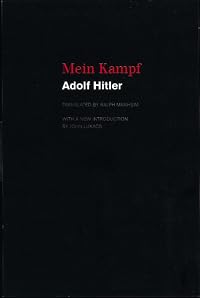
Mein Kampf
by Adolf Hitler
On This Page
Description
Tells the story of Hitler's life and his social and political philosophy.Tags
Recommendations


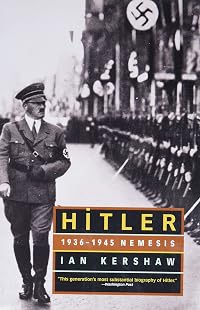


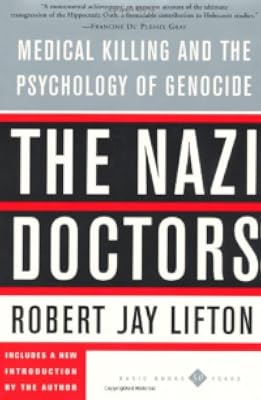
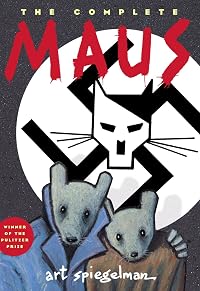


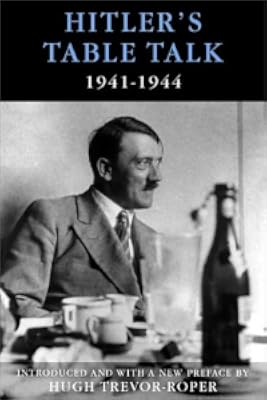
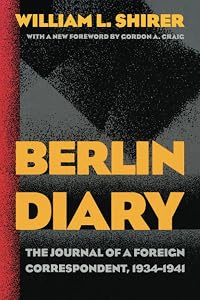






Member Recommendations
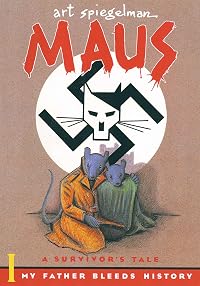
anonymous user Having read what he wrote, read what he read.
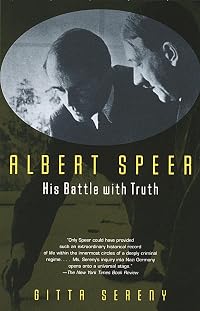
HeinousAnnals The book Rockwell obsessed about, and provided the foundation for his anti-Semitic beliefs.
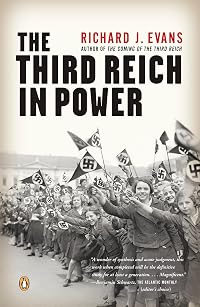
mcaution Find out from this intellectual history what gave rise to Hitler and its remedy to stop the imminent threat it still poses for America today.
06
Member Reviews
To begin with, this rating does not validate or support the views of the book, but serves as a marker where the book helps us understand where these ideas originate from.
It is simply impossible to understand intricate evil such as the ideals of 'Mein Kampf' without understanding it thoroughly. Too many views in literature (or in GoodReads reviews on this site) use hand-waving language to describe such ideas as crazy, insane, or stupid, where the evil expressed within is none of these things - but instead a cold, calculating, and complicated mentality of hatred and xenophobia. In other words, without understanding where Hitler is coming from, you can't fully comprehend the magnitude of the evil that was his vision for the world - or how show more to actively guard against it in the future.
The profound elements of this book are not commonly reported. For starters, Hitler goes into detail on his childhood and early adult years, where he describes himself as viewing anti-Semites as uneducated, uncouth, and stupid. Hitler discusses in intimate detail how, rather than simply being born an anti-Semite and self-declared racial supremacist, he had to learn to become one. Indirectly, we also learn why such ideas were able to take root in the minds of Hitler and others in a similar situation, where Habsburg Austria and WW1 Germany were horrible for the common man. Widespread starvation and commonplace poverty make many susceptible to ideals they would otherwise brush away as wrong.
Later, we come to further understand how the NSDAP formed and organized itself, and tried to make a name for itself in the early 1920s. These details are important for historians to understand how such organizations grow from nothing to govern thousands of members, particularly in an environment of desperation and political uncertainty.
Aside from frequent anti-Semitism, racism, classism, and random exclamations of hatred for non-ethnic Germans, the book is quite overwritten, and repeats itself many times for many points.
To know evil, it is important to understand what it really is, and where it came from. Contrary to what Hollywood may show or what simplistic public school textbooks may try to pawn off, evil does not exist in a vacuum. It evolves and grows from its environment, and can be stopped or healed at various stages of its infancy. Reading Mein Kampf serves two purposes: one, to really understand the evil of Nazism and how it grew, and two, to understand how future movements of a similar nature may be prevented from taking root. Simply disregarding this book due to a vehement distaste for the author only perpetuates the ignorance and misconceptions surrounding the true evil of Nazism - it wasn't inevitable, and instead was slowly learned by millions in an environment that encouraged its growth and a culture that was ambivalent to its rise.
The details of Hitler's early life here may be used to prevent future catastrophes around the world. This book should be read by historians and any students mature and rational enough to read through its propaganda and racism in order to help prevent similar evil from arising in the future. show less
It is simply impossible to understand intricate evil such as the ideals of 'Mein Kampf' without understanding it thoroughly. Too many views in literature (or in GoodReads reviews on this site) use hand-waving language to describe such ideas as crazy, insane, or stupid, where the evil expressed within is none of these things - but instead a cold, calculating, and complicated mentality of hatred and xenophobia. In other words, without understanding where Hitler is coming from, you can't fully comprehend the magnitude of the evil that was his vision for the world - or how show more to actively guard against it in the future.
The profound elements of this book are not commonly reported. For starters, Hitler goes into detail on his childhood and early adult years, where he describes himself as viewing anti-Semites as uneducated, uncouth, and stupid. Hitler discusses in intimate detail how, rather than simply being born an anti-Semite and self-declared racial supremacist, he had to learn to become one. Indirectly, we also learn why such ideas were able to take root in the minds of Hitler and others in a similar situation, where Habsburg Austria and WW1 Germany were horrible for the common man. Widespread starvation and commonplace poverty make many susceptible to ideals they would otherwise brush away as wrong.
Later, we come to further understand how the NSDAP formed and organized itself, and tried to make a name for itself in the early 1920s. These details are important for historians to understand how such organizations grow from nothing to govern thousands of members, particularly in an environment of desperation and political uncertainty.
Aside from frequent anti-Semitism, racism, classism, and random exclamations of hatred for non-ethnic Germans, the book is quite overwritten, and repeats itself many times for many points.
To know evil, it is important to understand what it really is, and where it came from. Contrary to what Hollywood may show or what simplistic public school textbooks may try to pawn off, evil does not exist in a vacuum. It evolves and grows from its environment, and can be stopped or healed at various stages of its infancy. Reading Mein Kampf serves two purposes: one, to really understand the evil of Nazism and how it grew, and two, to understand how future movements of a similar nature may be prevented from taking root. Simply disregarding this book due to a vehement distaste for the author only perpetuates the ignorance and misconceptions surrounding the true evil of Nazism - it wasn't inevitable, and instead was slowly learned by millions in an environment that encouraged its growth and a culture that was ambivalent to its rise.
The details of Hitler's early life here may be used to prevent future catastrophes around the world. This book should be read by historians and any students mature and rational enough to read through its propaganda and racism in order to help prevent similar evil from arising in the future. show less
"Jews here and Jews there and Jews everywhere." (pg. 410)
As a graduate of modern history and a World War Two buff, I've always felt I should read Mein Kampf – I've certainly read about its results. And as someone with an odd sense of humour, I've always sort of liked the idea of reading Mein Kampf ironically, and then writing a no doubt hilarious straight-faced review about how the source material doesn't match up to all the films based on it (Saving Private Ryan, etc.), let alone the live re-enactment.
The book's actually quite hard to get hold of nowadays for a decent price, considering it's in the public domain (I guess no one wants the copyright, and besides, they keep the price on academic editions artificially high to deter show more neo-Nazi looky-loos). Not that I wanted Mein Kampf for a coffee-table book, of course, but nor did I want to inadvertently bung money towards some far-right self-publisher on Amazon and end up on a government watchlist. But I still wanted a serviceable copy. I can't imagine anything worse than buying a used, well-thumbed edition of Mein Kampf – it'd be like buying second-hand underpants – so the edition I eventually chose was a Jaico edition from India; relatively cheap but brand new (the swastika has less stigma attached to it over there). This edition, however, proved to be chock full of typos, printing errors and misalignments. But then again, if there's one book you're probably allowed to treat shabbily, it's this one.
It's probably not a surprise to learn that a book by Adolf Hitler is awful; what's surprising is that it's even more awful than you imagine. Of course, there's all the stuff about the Jews and race and the cleansing power of war, which is more than a tad strong, but that's to be expected: it is Mein Kampf, after all. But you'd expect the book to have a certain raciness, a perverse entertainment factor at being so woefully inappropriate.
Unfortunately, this isn't the case: even read ironically, this is a terrible experience. It's absolute dreck: tedious, tautological rambling for six hundred (!) pages, lacking any lyrical or structural writing ability whatsoever. It has a handful of ideas which it then unpacks, repacks and unpacks and repacks and unpacks over and over again with complete ideological mercilessness. In reading this ironically, my commitment to the bit rather backfired, for the only book less appealing than Mein Kampf is Mein Kampf unabridged.
Another surprise is that, for the most part, the book is rather banal: it is My Struggle, a political memoir by an upstart radical politician talking with super-sincerity about his journey and his political 'awakening'. With its obsession with racial hierarchies and reinventing the political wheel, all in the name of the 'ordinary, hard-working folks', the book confirms what I have long suspected about political discourse, even (perhaps especially) in our current time: the extremists dominate the discussion because they have far more stamina for this tedious business than reasonable people do. Any sane person will find reading this book an arse-ache; but, by Christ, imagine writing it.
One unironical impression I got from the book saw me put my history graduate cap on: the extent to which Mein Kampf was a blueprint for all that came later. Some eminent historians, such as Ian Kershaw, have cited passages about 'extermination' of Jews as evidence the Holocaust was always intended. Personally, I didn't get this from the book: certainly, the Jews are repeatedly identified by Hitler as the ultimate and implacable enemy, but there's no grand plan offered here. As it stands, I'm of the mind that what eventually became the Holocaust was an escalation, exacerbated by the war. What is beyond doubt is that war and persecution was certainly intended: Hitler makes no bones about seeking 'lebensraum' in the East and in reversing the Versailles treaty: in his mind, the latter speaks to a wider trend of German disgrace and impurity, which can only be purged by a great blood-letting. When he writes of feeling "calm and cool" at the recognition there will have to be a war "by the whetted sword" (pg. 561), or that the "coming struggle" against Russia will be under conditions that "assume the character of sheer slaughter" (pg. 589), you can't help but feel disconcerted, knowing as we do what was to be initiated by this man.
That said, the book was published seven years before Hitler was elected and thirteen years before war broke out, so that's a long time for ideas and strategies to change. Hitler himself even said, to one of his cronies year later, that he would never have written Mein Kampf if he had known he was going to become chancellor of Germany. You can also see why, despite the fanaticism evident in the book, statesmen in the 1930s thought Hitler might be an ally, or at least harmless or controllable. He is resolutely anti-Marxist in these pages, as well as indulging in some of your meat-and-drink demagoguery and rah-rah trade unionism; what becomes clear is that he is very much a national socialist, even though not a Marxist, and many of his converts in the early years came from the left (those George Orwell later identified as communists "who will be fascists five years hence"). If you try to read the book from the perspective of 1926, rather than with the knowledge of what happened between 1939 and 1945, it's much harder to pin him down as such an apocalyptic threat – certainly by the mores of the time, with anti-Semitism a common prejudice, Marxism resurgent, and Germany paupered. From a historical perspective, such a dangerous knot of complacency and power is fascinating to try to assess.
And, taking my history-grad cap off again, it's much harder to pin him down when the book is so bloody tedious. Not an ounce of real personality comes through in six hundred pages. It says a lot that Hitler was later embarrassed by its publication; the man had one bollock, shit facial hair and chronic flatulence, to say nothing of being the berk who both started World War Two and lost it, so for Mein Kampf to be the one thing that left him rather sheepish only illustrates its abject awfulness. He should have at least included a few funny anecdotes. show less
As a graduate of modern history and a World War Two buff, I've always felt I should read Mein Kampf – I've certainly read about its results. And as someone with an odd sense of humour, I've always sort of liked the idea of reading Mein Kampf ironically, and then writing a no doubt hilarious straight-faced review about how the source material doesn't match up to all the films based on it (Saving Private Ryan, etc.), let alone the live re-enactment.
The book's actually quite hard to get hold of nowadays for a decent price, considering it's in the public domain (I guess no one wants the copyright, and besides, they keep the price on academic editions artificially high to deter show more neo-Nazi looky-loos). Not that I wanted Mein Kampf for a coffee-table book, of course, but nor did I want to inadvertently bung money towards some far-right self-publisher on Amazon and end up on a government watchlist. But I still wanted a serviceable copy. I can't imagine anything worse than buying a used, well-thumbed edition of Mein Kampf – it'd be like buying second-hand underpants – so the edition I eventually chose was a Jaico edition from India; relatively cheap but brand new (the swastika has less stigma attached to it over there). This edition, however, proved to be chock full of typos, printing errors and misalignments. But then again, if there's one book you're probably allowed to treat shabbily, it's this one.
It's probably not a surprise to learn that a book by Adolf Hitler is awful; what's surprising is that it's even more awful than you imagine. Of course, there's all the stuff about the Jews and race and the cleansing power of war, which is more than a tad strong, but that's to be expected: it is Mein Kampf, after all. But you'd expect the book to have a certain raciness, a perverse entertainment factor at being so woefully inappropriate.
Unfortunately, this isn't the case: even read ironically, this is a terrible experience. It's absolute dreck: tedious, tautological rambling for six hundred (!) pages, lacking any lyrical or structural writing ability whatsoever. It has a handful of ideas which it then unpacks, repacks and unpacks and repacks and unpacks over and over again with complete ideological mercilessness. In reading this ironically, my commitment to the bit rather backfired, for the only book less appealing than Mein Kampf is Mein Kampf unabridged.
Another surprise is that, for the most part, the book is rather banal: it is My Struggle, a political memoir by an upstart radical politician talking with super-sincerity about his journey and his political 'awakening'. With its obsession with racial hierarchies and reinventing the political wheel, all in the name of the 'ordinary, hard-working folks', the book confirms what I have long suspected about political discourse, even (perhaps especially) in our current time: the extremists dominate the discussion because they have far more stamina for this tedious business than reasonable people do. Any sane person will find reading this book an arse-ache; but, by Christ, imagine writing it.
One unironical impression I got from the book saw me put my history graduate cap on: the extent to which Mein Kampf was a blueprint for all that came later. Some eminent historians, such as Ian Kershaw, have cited passages about 'extermination' of Jews as evidence the Holocaust was always intended. Personally, I didn't get this from the book: certainly, the Jews are repeatedly identified by Hitler as the ultimate and implacable enemy, but there's no grand plan offered here. As it stands, I'm of the mind that what eventually became the Holocaust was an escalation, exacerbated by the war. What is beyond doubt is that war and persecution was certainly intended: Hitler makes no bones about seeking 'lebensraum' in the East and in reversing the Versailles treaty: in his mind, the latter speaks to a wider trend of German disgrace and impurity, which can only be purged by a great blood-letting. When he writes of feeling "calm and cool" at the recognition there will have to be a war "by the whetted sword" (pg. 561), or that the "coming struggle" against Russia will be under conditions that "assume the character of sheer slaughter" (pg. 589), you can't help but feel disconcerted, knowing as we do what was to be initiated by this man.
That said, the book was published seven years before Hitler was elected and thirteen years before war broke out, so that's a long time for ideas and strategies to change. Hitler himself even said, to one of his cronies year later, that he would never have written Mein Kampf if he had known he was going to become chancellor of Germany. You can also see why, despite the fanaticism evident in the book, statesmen in the 1930s thought Hitler might be an ally, or at least harmless or controllable. He is resolutely anti-Marxist in these pages, as well as indulging in some of your meat-and-drink demagoguery and rah-rah trade unionism; what becomes clear is that he is very much a national socialist, even though not a Marxist, and many of his converts in the early years came from the left (those George Orwell later identified as communists "who will be fascists five years hence"). If you try to read the book from the perspective of 1926, rather than with the knowledge of what happened between 1939 and 1945, it's much harder to pin him down as such an apocalyptic threat – certainly by the mores of the time, with anti-Semitism a common prejudice, Marxism resurgent, and Germany paupered. From a historical perspective, such a dangerous knot of complacency and power is fascinating to try to assess.
And, taking my history-grad cap off again, it's much harder to pin him down when the book is so bloody tedious. Not an ounce of real personality comes through in six hundred pages. It says a lot that Hitler was later embarrassed by its publication; the man had one bollock, shit facial hair and chronic flatulence, to say nothing of being the berk who both started World War Two and lost it, so for Mein Kampf to be the one thing that left him rather sheepish only illustrates its abject awfulness. He should have at least included a few funny anecdotes. show less
What can one say? There are certainly bits of brilliant deductions contained within; there are also bits of lunacy. To say that Hitler was a Machiavellian and he believed that the ends justify the means is an understatement. I found parts of the book to be fairly interesting (especially at the beginning) and other parts the rambling of a mad man. If I evaluate the content of the book; it is at least average. If I evaluate the writer, now that we know him from history; that is another rating. I believe after reading this book I do understand the mind of Hitler better. I'm glad I read this book as I now think I understand all of European history a little bit better from 1918-1945; and just not from the Allied perspective. 389 pages
I couldn't. I just fucking couldn't. As a history buff, I thought I'd take a crack at this book, despite hearing about how badly-written it was, because I'm a nerd and I am also a rubber-necker.
From a historical/psychological perspective, as others have said, this can be an interesting journey into the mind of a madman. Kudos to those of you who were able to slog all the way through this, because I couldn't. I started reading. I skimmed ahead. Then skimmed and skipped ahead several more times, hoping it got better. It didn't.
What I did read was just crazy shit. Hitler rambles on and on. Mind you, this book was written in the 1920's, so this was before things got REALLY ugly, but in this book you can see where a lot of that ugliness came show more from. 'Jewish Problem' and plenty of other anti-Semitic/racial shit is to be found here - as one might expect.
As a text to learn from - or learn what NOT to do from - Mein Kampf has a place in collections about WWII, racism, etc. But it sure as fuck isn't a 'fun' read. show less
From a historical/psychological perspective, as others have said, this can be an interesting journey into the mind of a madman. Kudos to those of you who were able to slog all the way through this, because I couldn't. I started reading. I skimmed ahead. Then skimmed and skipped ahead several more times, hoping it got better. It didn't.
What I did read was just crazy shit. Hitler rambles on and on. Mind you, this book was written in the 1920's, so this was before things got REALLY ugly, but in this book you can see where a lot of that ugliness came show more from. 'Jewish Problem' and plenty of other anti-Semitic/racial shit is to be found here - as one might expect.
As a text to learn from - or learn what NOT to do from - Mein Kampf has a place in collections about WWII, racism, etc. But it sure as fuck isn't a 'fun' read. show less
Everyone has already discussed ideology and its merit as a piece of history. Not many people have mentioned that Hitler was just a really terrible writer who seriously needed an editor. His intellectual insecurity is pathetically obvious, and every page was just dripping with a desperate need for approval from contemporary literati. I wish someone had told me that this is a glorified diary entry by an art major fancying himself as an autodidactic political pundit. Stick to secondary sources and save yourself the trouble, or give it a cursory glance and marvel at the many, many complexes shining through the text.
I’ve departed from my usual practice of assigning a book rating of one to five stars. How can you rate a blueprint for so much evil? If you give it more than one star, does that mean you resonate with Adolf Hitler? If you found it instructive, should you suppress your rating for fear of appearing sympathetic?
I couldn’t answer these questions without encouraging a review of myself rather than the book, and the book deserves a review. For one thing, the dark side of social media is that it provides both bots and neo-Nazis an opportunity to network and resurrect doctrines that should be dead. Hitler’s drive toward world domination began with the expression of ideas, so his ghostly online afterlife is reason enough to fortify against show more a rematerialization in the real world.
But for another and more general thing, “Mein Kampf” is a masterclass in the manipulation of human psychology for the purpose of taking and using power. Hitler may have been a maniac, but he knew what makes people tick. And if you know what makes people tick, you can get down into the gears and make them tick to your time.
For example, Hitler knew that when you’re an unpopular fringe, you might wonder how you can possibly be right when so many different factions are united only in their opposition to you. The answer is to manufacture a single villain: “Hence a multiplicity of different adversaries must be combined so that in the eyes of the masses of one’s own supporters this struggle is directed against only one enemy. This strengthens faith in their own right and enhances bitterness against those who attack it.”
I now think of this passage when someone complains about the Patriarchy or the Uniparty or Whiteness or Globalism. It’s the same tactic: if you can get people to believe that one enemy lurks behind every mask, then you can control and direct their anger to your ends.
But here’s where you need to be careful. When someone gets called a Nazi, the classic and correct retort is, “Hitler liked dogs, so is everyone who likes dogs a Nazi?” While it’s legitimate to notice when unscrupulous people use a tactic Hitler used, it’s impossible to be unscrupulous in the pursuit of power without taking a page out of his book. When it comes to achieving ends through corrupt means, Hitler used them all.
If anything, reading “Mein Kampf” has made me even more wary of transgressing Godwin’s law. The truth is that no one was or is like Adolf Hitler. He spawned a pseudo-historical, pseudo-scientific, and pseudo-spiritual cult of violence, founded on a doctrine of human existence as a zero-sum and exterminatory war of survival between races: “Those who want to live, let them fight, and those who do not want to fight in this world of eternal struggle do not deserve to live.”
For Hitler, of course, the great enemy of humanity was the Jew, and the fight against the Jew was a fight for human existence: “If, with the help of his Marxist creed, the Jew is victorious over the other peoples of the world, his crown will be the funeral wreath of humanity and this planet will, as it did thousands of years ago, move through the ether devoid of men.”
That said, it’s difficult to see a horizon for Hitler’s war against “blood poisoning” and for fresh soil to expand the stock of pure German blood. Though the Nazis never rounded up Africans for extermination during the war, Hitler expressed frequent disdain for them. In a world where he won, it would only have been a matter of time before they went to the camps; and ultimately, it’s hard to see how more “pure” Germans wouldn’t eventually turn on less “pure” Germans in an ouroboros of blood.
Much more could be said about “Mein Kampf,” whether we’re talking about Hitler’s contempt for the process of democratic compromise, the internal incoherence of his thoughts, the use of the “big lie” to control mass populations, or his rationale for total control of media for propaganda purposes. But what I want to close with is the Führerprinzip, the Leader Principle.
Hitler asserted the foundational dogma of totalitarianism, that the only rational form of government is a single man who bears ultimate power and, thus, ultimate responsibility. Councilors and parliaments may advise the great man, but they may never rule or contradict. Every decision of state is his, and his alone.
This has an illusory appearance of strength, since one man can move faster and more decisively and more aggressively than a deliberative body. But as totalitarians have discovered time and again, this principle carries the seeds of its own destruction. A leader without check or balance eventually unbalances, leading his followers into annihilation.
This is illustrated by Hitler’s own obsession with Jews. He saw them both as drivers of capitalist exploitation in the form of global finance and as organizers of Marxist street mobs agitating against that exploitation, all with the aim of breaking down national identities and enslaving every race under international Jewry.
That’s right: Hitler saw the same enemy behind every mask, the very tactic he so cynically used on his own people. This led him into a disastrous war that destroyed a generation and cleared the way for the Soviet Union to destroy generations more. When your house is built on lies and supported by absolute power, you eventually lose yourself in a hall of mirrors, a hall from which no one is brave enough to save you, a hall that ends in a bunker.
“Mein Kamp” is almost one hundred years old at the time of my reading, but as a cautionary tale it could’ve been written yesterday. There’s never been anyone like the Nazis, but there will also never be a shortage of vicious people who want to use you for their own ends. Hitler’s manifesto might be helpful as an inoculation against such people, but only if you can handle the twist in your stomach when you close the book and realize you’ve been spending time with depravity incarnate. show less
I couldn’t answer these questions without encouraging a review of myself rather than the book, and the book deserves a review. For one thing, the dark side of social media is that it provides both bots and neo-Nazis an opportunity to network and resurrect doctrines that should be dead. Hitler’s drive toward world domination began with the expression of ideas, so his ghostly online afterlife is reason enough to fortify against show more a rematerialization in the real world.
But for another and more general thing, “Mein Kampf” is a masterclass in the manipulation of human psychology for the purpose of taking and using power. Hitler may have been a maniac, but he knew what makes people tick. And if you know what makes people tick, you can get down into the gears and make them tick to your time.
For example, Hitler knew that when you’re an unpopular fringe, you might wonder how you can possibly be right when so many different factions are united only in their opposition to you. The answer is to manufacture a single villain: “Hence a multiplicity of different adversaries must be combined so that in the eyes of the masses of one’s own supporters this struggle is directed against only one enemy. This strengthens faith in their own right and enhances bitterness against those who attack it.”
I now think of this passage when someone complains about the Patriarchy or the Uniparty or Whiteness or Globalism. It’s the same tactic: if you can get people to believe that one enemy lurks behind every mask, then you can control and direct their anger to your ends.
But here’s where you need to be careful. When someone gets called a Nazi, the classic and correct retort is, “Hitler liked dogs, so is everyone who likes dogs a Nazi?” While it’s legitimate to notice when unscrupulous people use a tactic Hitler used, it’s impossible to be unscrupulous in the pursuit of power without taking a page out of his book. When it comes to achieving ends through corrupt means, Hitler used them all.
If anything, reading “Mein Kampf” has made me even more wary of transgressing Godwin’s law. The truth is that no one was or is like Adolf Hitler. He spawned a pseudo-historical, pseudo-scientific, and pseudo-spiritual cult of violence, founded on a doctrine of human existence as a zero-sum and exterminatory war of survival between races: “Those who want to live, let them fight, and those who do not want to fight in this world of eternal struggle do not deserve to live.”
For Hitler, of course, the great enemy of humanity was the Jew, and the fight against the Jew was a fight for human existence: “If, with the help of his Marxist creed, the Jew is victorious over the other peoples of the world, his crown will be the funeral wreath of humanity and this planet will, as it did thousands of years ago, move through the ether devoid of men.”
That said, it’s difficult to see a horizon for Hitler’s war against “blood poisoning” and for fresh soil to expand the stock of pure German blood. Though the Nazis never rounded up Africans for extermination during the war, Hitler expressed frequent disdain for them. In a world where he won, it would only have been a matter of time before they went to the camps; and ultimately, it’s hard to see how more “pure” Germans wouldn’t eventually turn on less “pure” Germans in an ouroboros of blood.
Much more could be said about “Mein Kampf,” whether we’re talking about Hitler’s contempt for the process of democratic compromise, the internal incoherence of his thoughts, the use of the “big lie” to control mass populations, or his rationale for total control of media for propaganda purposes. But what I want to close with is the Führerprinzip, the Leader Principle.
Hitler asserted the foundational dogma of totalitarianism, that the only rational form of government is a single man who bears ultimate power and, thus, ultimate responsibility. Councilors and parliaments may advise the great man, but they may never rule or contradict. Every decision of state is his, and his alone.
This has an illusory appearance of strength, since one man can move faster and more decisively and more aggressively than a deliberative body. But as totalitarians have discovered time and again, this principle carries the seeds of its own destruction. A leader without check or balance eventually unbalances, leading his followers into annihilation.
This is illustrated by Hitler’s own obsession with Jews. He saw them both as drivers of capitalist exploitation in the form of global finance and as organizers of Marxist street mobs agitating against that exploitation, all with the aim of breaking down national identities and enslaving every race under international Jewry.
That’s right: Hitler saw the same enemy behind every mask, the very tactic he so cynically used on his own people. This led him into a disastrous war that destroyed a generation and cleared the way for the Soviet Union to destroy generations more. When your house is built on lies and supported by absolute power, you eventually lose yourself in a hall of mirrors, a hall from which no one is brave enough to save you, a hall that ends in a bunker.
“Mein Kamp” is almost one hundred years old at the time of my reading, but as a cautionary tale it could’ve been written yesterday. There’s never been anyone like the Nazis, but there will also never be a shortage of vicious people who want to use you for their own ends. Hitler’s manifesto might be helpful as an inoculation against such people, but only if you can handle the twist in your stomach when you close the book and realize you’ve been spending time with depravity incarnate. show less
What is most striking about Hitler is that I've yet to feel "his" struggle. He seems more bent on revenge than some admirable cause, much like Edmund Dantes in The Count of Monte Cristo. V in V for Vendetta shared much in common with him as well. They all justified violence as a means for liberation or empowerment. He seems to genuinely care for the German people but his hatred of Jews overshadows his ability to reason or act rationally. His "movement" may have genuine nationalistic ingredients but I can't help but feel it's all too personal in nature. When you see how he treated the SA in later years you'll realize people were recruited to his cause as just the means to his ends.
Members
- Recently Added By
Published Reviews
ThingScore 100
The bequeathed art of the late Cornelius Gurlitt to Kunstmuseum Bern was controversial due to the potential Nazi or Nazi looted Art that was in his possession at the time he bequeathed it. Possibly even some of the late Adolf Hitler’s Art. The Art is currently in the possession of and housed by Kunstmuseum Bern in Bern, Switzerland.
added by ColesSeafood
When one compares his utterances of a year or so ago with those made fifteen years earlier, a thing that strikes one is the rigidity of {Hitler's} mind, the way in which his world-view doesn’t develop. It is the fixed vision of a monomaniac and not likely to be much affected by the temporary manoeuvres of power politics. Probably, in Hitler’s own mind, the Russo-German Pact represents no show more more than an alteration of timetable. The plan laid down in Mein Kampf was to smash Russia first, with the implied intention of smashing England afterwards. Now, as it has turned out, England has got to be dealt with first, because Russia was the more easily bribed of the two. But Russia’s turn will come when England is out of the picture — that, no doubt, is how Hitler sees it. Whether it will turn out that way is of course a different question. show less
added by private library
Lists

Books that changed the world
67 works; 64 members

You Couldn't Pay Me to Read That (Take 2)
213 works; 87 members
You Couldn't Pay Me to Read That
25 works; 8 members

New York Public Library's Books of the Century - All
170 works; 14 members

New York Public Library's Books of the Century
120 works; 20 members

Well-Educated Mind
150 works; 3 members

Política - Clásicos
164 works; 2 members

10 Books that Screwed Up the World (And 5 Others that Didn't Help)
15 works; 1 member

Publisher's Weekly NON-Fiction list - 1912 - 1975
486 works; 4 members

Robert B. Downs's Books that Changed the World
16 works; 1 member

Book Titles Mentioned In Newberry Medal And Honor Books
884 works; 3 members

Banned Books
40 works; 2 members
The Well-Educated Mind, Susan Wise Bauer, 2016
179 works; 3 members

Books Cited in Wasteland by W. Scott Poole
120 works; 1 member

Books cited in Progress by Samuel McDonald
160 works; 1 member
Author Information

199+ Works 5,955 Members
Adolf Hilter was born in Austria on April 20, 1889. As a young man, he wanted to become an artist, but was rejected twice by the Academy of Fine Arts Vienna. While in Vienna, he worked as a struggling painter copying scenes from postcards and selling his paintings to merchants and tourists. He served in the Bavarian army during World War I and show more received two Iron Crosses for his service. He was discharged from the army in March 1920. On April 1, 1924, he was sentenced to five years in Landsberg prison for the crime of conspiracy to commit treason. While there, he dictated his political book Mein Kampf (My Struggle) to his deputy Rudolf Hess. He was released in December 1924 because he was considered relatively harmless. He was the leader of the Nazi party and gained political power using oratory and propaganda, appealing to economic need, nationalism, and anti-Semitism during a time Germany was in crisis. He became a German citizen in 1932, the Chancellor of Germany in 1933, and the Fuhrer of Germany in 1934. He started World War II by invading other countries in order to expand Germany. He murdered millions of people considered undesirable to his view of an ideal race, which is now referred to as the Holocaust. This genocide lead to the deaths of approximately 11 million people including but not limited to Jews, communists, homosexuals, Roma, Jehovah's Witnesses, and prisoners-of-war. Hitler committed suicide in his underground bunker in Berlin on April 30, 1945. (Bowker Author Biography) show less
Some Editions
Awards and Honors
Distinctions
Work Relationships
Is abridged in
Is parodied in
Is replied to in
Has as a commentary on the text
Common Knowledge
- Canonical title*
- La mia battaglia
- Original title
- Mein Kampf
- Alternate titles*
- La mia battaglia
- Original publication date
- 1925 (Bd. 1) (Bd. 1); 1927 (Bd. 2) (Bd. 2)
- People/Characters
- Adolf Hitler
- Important places
- Austria; Germany; Braunau, Austria; Berlin, Germany; France; Vienna, Austria
- Important events
- World War I; Treaty of Versailles; Imprisonment of Hitler
- Related movies
- Mein Kampf (1994 | IMDb)
- Dedication
- On November 9, 1923, at 12:30 in the afternoon, in front of the Feldherrnhalle as well as in the courtyard of the former War Ministry, the following men steadfast in their belief in the resurrection of their people, were kill... (show all)ed:
{Names, occupations and birth dates of sixteen (16) men are listed}
So-called national authorities denied these dead heroes a common grave.
Therefore I dedicate to them, for common memory, the first volume of this work, as the blood witnesses of which they may continue to serve as a brilliant example for the followers of our movement.
– Adolf Hitler, Landsberg on the Lech Prison of the Fortress, October 16, 1924
(Reynal & Hitchcock, New York, 1941 edition published by arrangement with Houghton Mifflin, Boston, Massachusetts) - First words
- Today I consider it my good fortune that Fate designated Braunau on the Inn as the place of my birth.
(Reynal & Hitchcock, New York, 1941 edition, published by Houghton Mifflin) - Quotations*
- Existen en la historia innumerables ejemplos que prueban con alarmante claridad cómo, cada vez que la sangre aria se mezcló con la de otros pueblos inferiores, la consecuencia fue la destrucción de la raza portaestandarte ... (show all)de la cultura.
- Last words
- (Click to show. Warning: May contain spoilers.)Let the adherents of our movement never forget this, should ever the greatness of the sacrifice lead them to a fearful comparison with the possible triumph.
(Reynal & Hitchcock, New York, 1941 edition, published by Houghton Mifflin) - Original language
- German
*Some information comes from Common Knowledge in other languages. Click "Edit" for more information.
Classifications
- Genres
- History, Biography & Memoir, General Nonfiction, Nonfiction
- DDC/MDS
- 943.086092 — History & geography History of Europe Central Europe: Germany, Austria, Switzerland, Czech, Poland, Hungary Historical periods of Germany Germany 1866- Third Reich 1933-1945 History, geographic treatment, biography Biographies, Diaries And Journals
- LCC
- DD247 .H5 .A327 — History of Europe, Asia, Africa and Oceania Germany History of Germany History By period Modern, 1519- 19th-20th centuries Revolution and Republic, 1918-
- BISAC
Statistics
- Members
- 4,826
- Popularity
- 2,959
- Reviews
- 97
- Rating
- (2.73)
- Languages
- 24 — Chinese, Czech, Danish, Dutch, English, Estonian, Finnish, French, German, Hebrew, Hindi, Hungarian, Indonesian, Italian, Japanese, Malay, Norwegian (Bokmål), Polish, Portuguese, Slovenian, Spanish, Swedish, Turkish, Urdu
- Media
- Paper, Audiobook, Ebook
- ISBNs
- 266
- UPCs
- 5
- ASINs
- 124