On This Page
Description
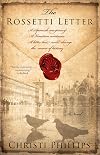
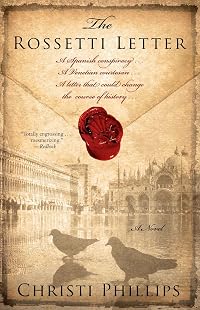
Fearing that her research will be rendered useless if a Cambridge professor proves his theory about seventeenth-century Venetian courtesan Alessandra Rossetti, Ph.D. candidate Claire Donovan agrees to chaperone a troubled teen in order to gain passage to the professor's presentation in Venice.Tags
Recommendations










Member Recommendations
Member Reviews
Wonderful fun, snappily written -- this is part historical novel and modern day, with a complicated plot playing out in the past while in the contemporary chapters, a history student tries to figure out what happened (for her dissertation). It's all set in a sparkly, enticing Venice with charm and intrigue and action and romance. The author is very good at playing off the two interleaved sections of her novel and at keeping the suspense going.
The story moves back and forth through time alternating between courtesan Alessandra Rossetti in the early 1600s and present day Ph.D. candidate Claire Donovan. This is the story of Alessandra who, struggling to survive, chooses the life of a courtesan and becomes embroiled in events beyond her control. Claire is writing her dissertation about the Spanish conspiracy to sack Venice during the time when Alessandra is a courtesan. She is determined to prove why Alessandra choose to write the letter revealing the conspiracy, and that Andrew Kent is wrong, a Professor lecturing in Venice taking the stance that there was no Spanish conspiracy.
An engaging first novel. A great mix of history, romance and intrigue. I thought the alternating show more points of view created a fast-paced suspenseful story. I eagerly look forward to the next in the series.
See more of my reviews at http://myobsessionwithbooks.blogspot.com/ show less
An engaging first novel. A great mix of history, romance and intrigue. I thought the alternating show more points of view created a fast-paced suspenseful story. I eagerly look forward to the next in the series.
See more of my reviews at http://myobsessionwithbooks.blogspot.com/ show less
Christi Phillip’s “Rossetti Letter” has the right mix of history and present day.
The sequences between the past Venice and the present day Venice were very good. It was like reading two stories at once. And the similar situations between Claire and Alessandra, being two women from two different eras, who are alone in the world and trying to make the best of it gives the story a very timeless theme.
I also seem to get the message that you do not need to give up femininity to make it in the world either.
Claire seems to have lost any interest in the opposite sex and her femininity and only gets it back with the help of Gwen and Giancarlo and the atmosphere in Venice. As Gwen puts it Claire needed to get her groove back.
Without giving show more too much away it was a great read. I enjoyed the historical parts of the story as much as the present day escapes of Claire and Gwen and would recommend it to anyone who likes a light hearted story laced with history. show less
The sequences between the past Venice and the present day Venice were very good. It was like reading two stories at once. And the similar situations between Claire and Alessandra, being two women from two different eras, who are alone in the world and trying to make the best of it gives the story a very timeless theme.
I also seem to get the message that you do not need to give up femininity to make it in the world either.
Claire seems to have lost any interest in the opposite sex and her femininity and only gets it back with the help of Gwen and Giancarlo and the atmosphere in Venice. As Gwen puts it Claire needed to get her groove back.
Without giving show more too much away it was a great read. I enjoyed the historical parts of the story as much as the present day escapes of Claire and Gwen and would recommend it to anyone who likes a light hearted story laced with history. show less
Synopsis (adapted from publisher): Claire Donovan has always dreamed of visiting Venice, and she's finishing her Ph.D. thesis on Alessandra Rossetti, a mysterious courtesan who wrote a secret letter to the Venetian Council warning of a Spanish plot to overthrow the Venetian Republic in 1618. Claire views Alessandra as a heroine and harbors a secret hope that her findings will elevate Alessandra to a more prominent place in history. But an arrogant Cambridge professor is set to present a paper at a prestigious Venetian university denouncing Alessandra as a co-conspirator -- a move that could destroy Claire's paper and career. As Claire races to locate the documents that will reveal the courtesan's true motives, Alessandra's story comes show more to life with all the sensuality, political treachery, and violence of seventeenth-century Venice. Claire also falls under the city's spell.
Review: I already knew and loved Claire, but it was refreshing to get some more background on her life. Perhaps because I'm in graduate school, I easily identified with her as she sought to finish her dissertation and find a job. The story alternates between Alessandra's life in 1618 and Claire's modern day life. The stories worked well together, and I found myself equally interested in both. Venice is always a divine book setting, and the city was almost a character in this novel. I will say I initially had a hard time remembering some of the characters from the 1600's, but the list of characters at the front of the book was quite helpful and jogged my memory. My one complaint about the book is trivial: I wanted a map. Venice is such a huge part of the story, and I'm reasonably familiar with the city (I've visited twice), but I still pulled out maps to see where the action was. There was a sense that the relative geography had more importance than it actually did. I always appreciate maps at the beginning of books, and this one would have been an especially good candidate. show less
Review: I already knew and loved Claire, but it was refreshing to get some more background on her life. Perhaps because I'm in graduate school, I easily identified with her as she sought to finish her dissertation and find a job. The story alternates between Alessandra's life in 1618 and Claire's modern day life. The stories worked well together, and I found myself equally interested in both. Venice is always a divine book setting, and the city was almost a character in this novel. I will say I initially had a hard time remembering some of the characters from the 1600's, but the list of characters at the front of the book was quite helpful and jogged my memory. My one complaint about the book is trivial: I wanted a map. Venice is such a huge part of the story, and I'm reasonably familiar with the city (I've visited twice), but I still pulled out maps to see where the action was. There was a sense that the relative geography had more importance than it actually did. I always appreciate maps at the beginning of books, and this one would have been an especially good candidate. show less
I wish it were possible to review a book by cutting it up into three separate books. Because two out of the three would get favorable reviews from me while the third... well, I don't think I'd have read the third after the first 20 pages or so if I had the choice.
Basically, The Rossetti Letter is three stories - that of modern-time Claire, out to prove her dissertation on Alessandra Rossetti, that of Alessandra, a courtesan who lived in seventeenth century Venice, and finally, a political conspiracy taking place in Venice in which Alessandra has a part in.
The modern story, I think, is given more credit in the summary than deserves, but it was entertaining, I found Claire likeable, I found the reason she actually got to go to Venice a show more bit laughable, and the relationships formed in Venice a bit contrived, but still - it was mindless fun.
I actually enjoyed Alessandra's story the most. I enjoyed learning about the lifestyle, the choices given to women without dowry and I had no idea that only one son in a family was usually allowed to marry, thereby making courtesans "necessary evils".
But the political, historical stuff - seriously, I felt so lost and I floundered my way through it because, frankly, it just wasn't that interesting. If the book had more of that part of the story in it then it did, then I honestly would not have finished the book, because as much as I enjoyed Alessandra and was amused by Claire, it wouldn't have been worth the boredom.
But, for the $5 this book ended up costing me - it was an okay read, just nothing to write home about. show less
Basically, The Rossetti Letter is three stories - that of modern-time Claire, out to prove her dissertation on Alessandra Rossetti, that of Alessandra, a courtesan who lived in seventeenth century Venice, and finally, a political conspiracy taking place in Venice in which Alessandra has a part in.
The modern story, I think, is given more credit in the summary than deserves, but it was entertaining, I found Claire likeable, I found the reason she actually got to go to Venice a show more bit laughable, and the relationships formed in Venice a bit contrived, but still - it was mindless fun.
I actually enjoyed Alessandra's story the most. I enjoyed learning about the lifestyle, the choices given to women without dowry and I had no idea that only one son in a family was usually allowed to marry, thereby making courtesans "necessary evils".
But the political, historical stuff - seriously, I felt so lost and I floundered my way through it because, frankly, it just wasn't that interesting. If the book had more of that part of the story in it then it did, then I honestly would not have finished the book, because as much as I enjoyed Alessandra and was amused by Claire, it wouldn't have been worth the boredom.
But, for the $5 this book ended up costing me - it was an okay read, just nothing to write home about. show less
The Rossetti Letter is a dual time period novel. In the modern day, Claire Donovan is completing her doctoral degree in early modern European history, writing her dissertation on the Spanish Conspiracy of 1618, in which the Spanish ambassador to Venice planned a takeover of the Republic. The plot of the conspiracy was denounced by a courtesan named Alessandra Rossetti, who had lovers in many influential places. Claire travels to Venice, where she finds that someone else, a well-known Cambridge historian, is writing a book on the exact same subject she is.
I enjoyed the historical part of this novel much more than the modern-day bits. It’s clear that the author doesn’t know much about modern-day academia. First, it stretches show more credibility that someone completing her doctorate would not have visited the country in which her dissertation is set. Claire’s dissertation is on the Spanish Conspiracy, yet before the events of the book, she’d never set foot in Venice or Spain to do her research. OK, I’ll buy that she doesn’t have much money, but in that case, wouldn’t she have gotten a grant or some kind of funding to travel?
I didn’t really understand why Claire wouldn’t have known about Andrew Kent’s research. Isn’t it the job of an academic to know who their competition is, especially if that competition is supposedly well-known in their field of study? Then there are the scenes in the Biblioteca Marciana. I found it hard to believe that Claire would be able to just send an e-mail, flash her idea, and waltz right on into a prestigious library. Don’t you need letters of reference or something for entrance if you’re still a student? It seemed strange to me that a librarian of a prestigious Venetian library would disclose information about who had a prior hold on a book—or that she would suggest that Claire use sex to get what she wants. I guess the author was trying to make a connection between Alessandra and Claire, but it was really unrealistic all the same. If Claire reads and writes Italian, then why is she reading her sources in an English translation, in an abridged format? I was also a bit disturbed by her, and Gwen’s blatant disregard for government property later on in the book.
However, as I said, I really enjoyed the historical half of the book. The author clearly loves Venice and early modern history, and the city of Venice comes alive in the pages of this novel. I’ve only made one trip to Venice, but I loved it while I was there; and it’s always good to find someone else who loves it, too. The early 17th century in Europe was a time of great change—as well as of great danger—and Phillips outlines the conspiracy very well, as Spain’s power waned on the even of the Thirty Years’ War. The historical part of the book is clearly well-researched, and I enjoyed reading along to figure out the mystery. The story moves very quickly, and the transition from one time period to the other isn’t jarring. I’ve read Phillips’s other book, The Devlin Diary, and enjoyed it for the most part, too—but I had the same kind of problems with it as I had with this book. show less
I enjoyed the historical part of this novel much more than the modern-day bits. It’s clear that the author doesn’t know much about modern-day academia. First, it stretches show more credibility that someone completing her doctorate would not have visited the country in which her dissertation is set. Claire’s dissertation is on the Spanish Conspiracy, yet before the events of the book, she’d never set foot in Venice or Spain to do her research. OK, I’ll buy that she doesn’t have much money, but in that case, wouldn’t she have gotten a grant or some kind of funding to travel?
I didn’t really understand why Claire wouldn’t have known about Andrew Kent’s research. Isn’t it the job of an academic to know who their competition is, especially if that competition is supposedly well-known in their field of study? Then there are the scenes in the Biblioteca Marciana. I found it hard to believe that Claire would be able to just send an e-mail, flash her idea, and waltz right on into a prestigious library. Don’t you need letters of reference or something for entrance if you’re still a student? It seemed strange to me that a librarian of a prestigious Venetian library would disclose information about who had a prior hold on a book—or that she would suggest that Claire use sex to get what she wants. I guess the author was trying to make a connection between Alessandra and Claire, but it was really unrealistic all the same. If Claire reads and writes Italian, then why is she reading her sources in an English translation, in an abridged format? I was also a bit disturbed by her, and Gwen’s blatant disregard for government property later on in the book.
However, as I said, I really enjoyed the historical half of the book. The author clearly loves Venice and early modern history, and the city of Venice comes alive in the pages of this novel. I’ve only made one trip to Venice, but I loved it while I was there; and it’s always good to find someone else who loves it, too. The early 17th century in Europe was a time of great change—as well as of great danger—and Phillips outlines the conspiracy very well, as Spain’s power waned on the even of the Thirty Years’ War. The historical part of the book is clearly well-researched, and I enjoyed reading along to figure out the mystery. The story moves very quickly, and the transition from one time period to the other isn’t jarring. I’ve read Phillips’s other book, The Devlin Diary, and enjoyed it for the most part, too—but I had the same kind of problems with it as I had with this book. show less
Claire Donovan is a graduate student at Harvard writing her thesis on the so-called Spanish Conspiracy, a 1618 plot by high-ranking Spaniards to attack and conquer Venice, a missing jewel in the crown of Spanish dominance. After presenting a draft of her research to a local historical society, one of the kindly old ladies shows her an article that references a Cambridge professor who seems to be about to release a book on this same obscure topic. When the opportunity arises for Claire to travel to Venice (to chaperone fifteen year old Gwen), she decides to attend a historical conference to meet this mysterious author. In Venice, Claire finds that her personal life is as dead as the history she studies and she makes an attempt to breathe show more new life into both of them.
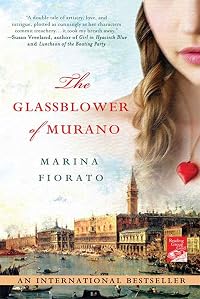
This book seemed like an intersection between two books that I have recently read. We have the female graduate student caught up in the past (The Physick Book of Deliverance Dane) who happens to be the divorced woman rediscovering herself in Venice (The Glassblower of Murano). Like both of these other novels, this one also shifts between a narrative from the past and the current one. I would rank this one below The Glassblower because it wasn't as compelling but above Deliverance Dane because Claire was a smarter and less annoying character than Connie. I liked that some issues were unresolved in this book without screaming "series".
http://webereading.com/2009/06/her-hands-looked-unnaturally-pale-in.html show less
This book seemed like an intersection between two books that I have recently read. We have the female graduate student caught up in the past (The Physick Book of Deliverance Dane) who happens to be the divorced woman rediscovering herself in Venice (The Glassblower of Murano). Like both of these other novels, this one also shifts between a narrative from the past and the current one. I would rank this one below The Glassblower because it wasn't as compelling but above Deliverance Dane because Claire was a smarter and less annoying character than Connie. I liked that some issues were unresolved in this book without screaming "series".
http://webereading.com/2009/06/her-hands-looked-unnaturally-pale-in.html show less
Members
- Recently Added By
Lists

Books Read in 2023
5,547 works; 145 members

Gaslamp Mysteries
78 works; 4 members
Author Information

4+ Works 1,185 Members

Christi Phillips is a LibraryThing Author, an author who lists their personal library on LibraryThing.
Series

Common Knowledge
- Canonical title
- The Rossetti Letter
- Original title
- The Rossetti letter
- Original publication date
- 2007-03-06
- People/Characters
- Claire Donovan; Alessandra Rossetti; Gwendolyn Fry; Andrew Kent; Giancarlo Baldessari; Antonio Perez, Viscount Utrillo-Navarre (show all 9); Alphonso de la Cueva, Marquis of Bedmar; Girolamo Silvia; Gabriella Monalisa Arianna Griseri
- Important places
- Venice, Veneto, Italy
- Epigraph
- The entire city is dedicated to Venus.-Alphonso de la Cueva, the marquis of Bedmar and Spanish Ambassador to Venice, 1608-1618
Two lone women in an unknown city-now that's what I call an adventure.-E.M. Forster,A Room With A View - Dedication
- For Brian
- First words
- Her hands looked unnaturally pale in the moonlight.
- Last words
- (Click to show. Warning: May contain spoilers.)"To Newgate," he says, settling back and letting his walking stick fall to the side. "You're under arrest."
- Blurbers
- Newman, Janice Cooke
- Original language*
- Englisch
*Some information comes from Common Knowledge in other languages. Click "Edit" for more information.
Classifications
Statistics
- Members
- 796
- Popularity
- 34,908
- Reviews
- 26
- Rating
- (3.49)
- Languages
- English, German, Spanish
- Media
- Paper, Ebook
- ISBNs
- 11
- ASINs
- 3