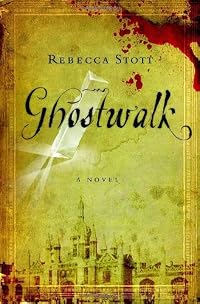
Ghostwalk
by Rebecca Stott
On This Page
Description
After the mysterious drowning of his mother Elizabeth Vogelsang, who was writing a controversial biography of Isacc Newton, Cameron Brown recruits his former lover to complete the book. This plunges her to into probing two series of murders, the 17th century murders of several who stood between Newton and his studies and present day targets of those who offend the an animal rights group.Tags
Recommendations




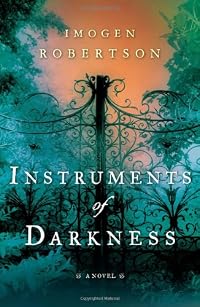
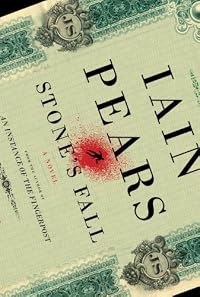
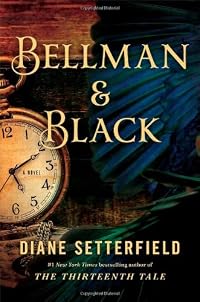
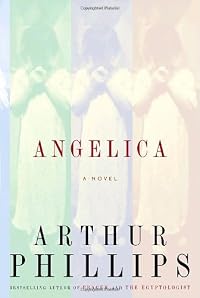
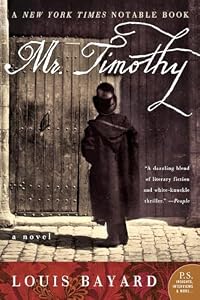
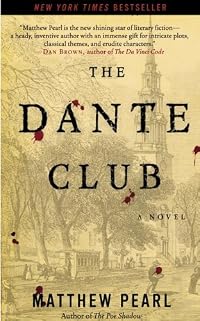
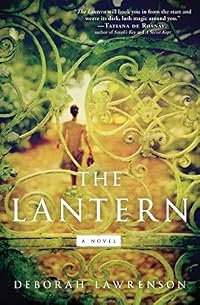
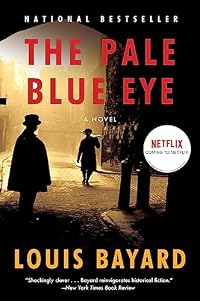

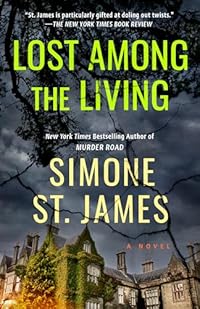
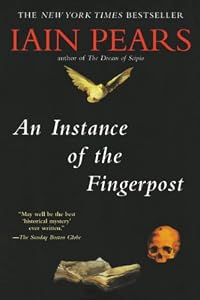
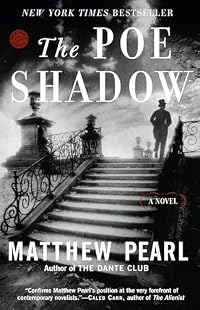
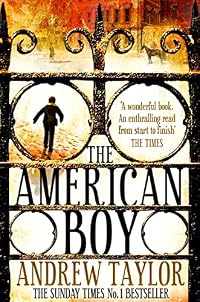
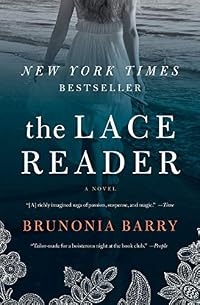
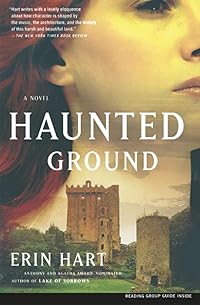
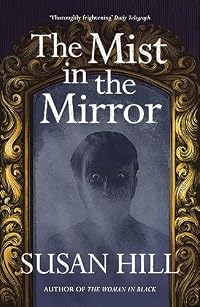
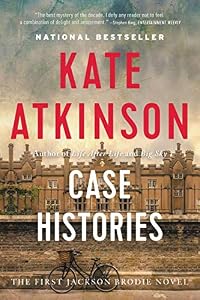
Member Recommendations

Member Reviews
I suspect that a check through the reviews might turn up some complaints about the blunt foreshadowing fulfilled by rushed and shadowy denouement, but on the whole, the book successfully presents the problem of human places: the way that places accrue intentions and acts and connotations and reputations until it is impossible not to see connections, particularly between acts of violence. In a neat and subtle pairing, it also raises the ugly problem of knowledge and application, the fact that science (or literature) can imagine things that take us ‘forward,’ but those same things can be turned into weapons just as easily as into tools and improvements, and the discoverers and writers are never able to prevent that.
This may be the single most annoying book I have read in the past year. First-person narrative can be well done, second-person narrative is very seldom successful, but combining the two as Stott did here makes me want to scream. Several screams per chapter. The narrator is continually addressing her remarks to "you", not "you the reader", but the married man with whom she has been carrying on an affair for some unknown reason (there's no accounting for tastes). I gritted my teeth and kept reading, and managed not to scream audibly, but the very promising historical mystery was eventually (in my opinion) utterly spoiled by the introduction of a ghostly supernatural element and the extremely tenuous, unlikely and unexplained -- or show more inexplicable -- connection between a series of mysterious deaths in the 17th century and another series of deaths in modern Cambridge. That's one bloodthirsty ghost.
The mess inspired me to look up the vows of The Detection Club (of which Chesterton, and later I believe Dorothy Sayers, was president) and their authors' promise to abjure "jiggery-pokery", although ghosts in moderation (this was not moderation) were allowable (had they read this book, that part of the vows may have been modified).
That being said, I did enjoy the well-researched extracts from the fictitious book on Isaac Newton and I appreciated the footnotes referencing actual books, which are listed in the bibliography. The modern story was a complete washout, but the story about Newton had promise and brings up some interesting possibilities. show less
The mess inspired me to look up the vows of The Detection Club (of which Chesterton, and later I believe Dorothy Sayers, was president) and their authors' promise to abjure "jiggery-pokery", although ghosts in moderation (this was not moderation) were allowable (had they read this book, that part of the vows may have been modified).
That being said, I did enjoy the well-researched extracts from the fictitious book on Isaac Newton and I appreciated the footnotes referencing actual books, which are listed in the bibliography. The modern story was a complete washout, but the story about Newton had promise and brings up some interesting possibilities. show less
I hate to say this because I am beginning to sound like a broken record but I finished another really spectacular book yesterday. Ghostwalk is Rebecca Stott's first novel and it is a treat. Ms. Stott has discovered an actual mystery surrounding Newton and his alchemy and she has created an intellectually challenging tale around it. Her story mixes the 21st century and the 17th century with multiple murders, alchemical details and contemporary terrorism.
The narrator, Lydia Brooke, has been asked to complete a biography of Isaac Newton. She moves into the home of the writer who has had an untimely death. Immediately she finds coincidences that cannot be explained rationally and ultimately is vouchsafed contact with Seventeenth Century show more figures. How this is possible is left to the reader to ponder. At the same time there is a campaign going on in Cambridge against animal use for scientific research. As Lydia struggles to complete the book the animal rights campaign escalates into violence and murder. Or does it? You will have to read it to find out.
As with The End Of Mr. Y, I now want to know everything about Isaac Newton and alchemy. This is why my shelves are always overflowing. show less
The narrator, Lydia Brooke, has been asked to complete a biography of Isaac Newton. She moves into the home of the writer who has had an untimely death. Immediately she finds coincidences that cannot be explained rationally and ultimately is vouchsafed contact with Seventeenth Century show more figures. How this is possible is left to the reader to ponder. At the same time there is a campaign going on in Cambridge against animal use for scientific research. As Lydia struggles to complete the book the animal rights campaign escalates into violence and murder. Or does it? You will have to read it to find out.
As with The End Of Mr. Y, I now want to know everything about Isaac Newton and alchemy. This is why my shelves are always overflowing. show less
This seems like one of those books that reviewers loved but most readers didn't like and I definitely agree with most readers in this case. It seems like this book just had too much going on. There was animal rights protests, neuroscience, Issac Newton, alchemy, murder, literature, and conspiracy. Any one of those topics on its own combined with the historical element could have been interesting but together it was just too much and the author did not do a good job drawing all those threads together which made the mystery very unsatisfying.
This book is written in the first person as Lydia recalls the events of this book and I found that style to be very grating. It also made it almost impossible to connect to that character which made show more my reading experience a lot less enjoyable. The other important character is Cameron and I thought he was awful. He's not supposed to be a likeable character and that's fine but he just wasn't well written enough to be an interesting unlikable character. The way he and Lydia talked to each other was so annoying. Just as a sample, take this interaction.
“Oh yes, I'm with The Alchemist. It's amazing how it changes the way you see things. Putrefaction is the key. Rotting reduces everything to chaos so it can be remade. Apples rotted into fire and blue light. Fantastic. Aggregating and disaggregating. Out of the rot comes the power.” You poured me a glass.
“Like champagne,” you said. “Grapes to liquid gold and air and then assimilated into human flesh. That’s you and me and the transmutation of the grape matter.”
“Are you making fun of me, Mr. Brown?” You kept your distance. We both kept our distance.
All their conversations annoyed me because it sounded like two people trying to impress each other.
The actual plot, as I said was too convoluted but the conclusion was also very predictable and because the mystery was so badly plotted, everything at the end felt very unearned and I think if some plot threads had been cut, it could have been much more satisfying and streamlined. I think that this book did a bad job picking between realism and paranormal and because it didn't go all in on either, it just felt very middling.
I wish I could have loved this one despite the low ratings but alas, that was not the case. I know this author wrote nonfiction before this and based on this book, I think she might be more suited for that. If she wrote a nonfiction that interested me I might pick it up but I doubt I would pick up another novel from her. show less
This book is said to be a thriller, but it isn't. Instead, what could have been an intelligent historical novel was spoiled by supernatural silliness.
Lydia was ghostwriting the last couple of chapters of a scholarly work on Newton and alchemy that was being written by Elizabeth until her death. Cameron, Elizabeth's son, asked Lydia to do this. Cameron and Lydia are former lovers, and Lydia narrates this story as a letter to Cameron.
But the author lost me when she went supernatural, when Lydia visited a psychic and when she began to notice too many coincidences. It is too easy for a writer of fiction to explain mysteries with ghosts.
Lydia was ghostwriting the last couple of chapters of a scholarly work on Newton and alchemy that was being written by Elizabeth until her death. Cameron, Elizabeth's son, asked Lydia to do this. Cameron and Lydia are former lovers, and Lydia narrates this story as a letter to Cameron.
But the author lost me when she went supernatural, when Lydia visited a psychic and when she began to notice too many coincidences. It is too easy for a writer of fiction to explain mysteries with ghosts.
Ghostwalk is one of the best novels I have read in a long time. I absolutely loved every sentence. The story is littered with musings on the philosophy of science and the historical investigation was brilliant. The ancient streets of Cambridge come alive and you can almost smell the teeming humanity in the 17th century.
I enjoyed this book so much that I will now read Ms Stott's other books and was delighted to find that I already have Darwin and the Barnnacle.
I enjoyed this book so much that I will now read Ms Stott's other books and was delighted to find that I already have Darwin and the Barnnacle.
When Elizabeth Vogelsang, Cambridge historian, is found drowned, her son Cameron contacts his ex-lover Lydia to ask if she will complete Elizabeth's final manuscript - an investigation of Isaac Newton's alchemical research, which is missing two critical chapters. Lydia's own research draws her into dangerous revelations about the Cambridge of 1665 and a series of murders there, which are reflecting into - bleeding into - modern Cambridge. You probably didn't see what I did there, with the "bleeding" and "reflecting", but if you read this book, you will. Rebecca Stott is okay with beating a motif to death.
Alas, this is a book that suffers from a brilliant idea, indifferently executed. One of the back-cover reviewers refers to "shimmering show more prose" (enough already with the Newtonian light metaphors!) and it IS pretty good prose. But Stott spends so much time on lovely metaphors and lush descriptions and Newtonian light and color motifs that the actual story moves at a glacial pace. If I were her (which I'm not, and anyway the book is already published so it's too late anyway), I would have spent a lot more time on developing more fully-formed characters and telling a marvelous story. show less
Alas, this is a book that suffers from a brilliant idea, indifferently executed. One of the back-cover reviewers refers to "shimmering show more prose" (enough already with the Newtonian light metaphors!) and it IS pretty good prose. But Stott spends so much time on lovely metaphors and lush descriptions and Newtonian light and color motifs that the actual story moves at a glacial pace. If I were her (which I'm not, and anyway the book is already published so it's too late anyway), I would have spent a lot more time on developing more fully-formed characters and telling a marvelous story. show less
Members
- Recently Added By
Published Reviews
ThingScore 75
Rebecca Stott, with her own spectral patterns on the wall, has accomplished something distinctively fresh with what she calls "a grubby little set of murders in Cambridge." Along the way, she manages to invoke both the non-causal entanglements of quantum physics and the paranoid conspiracies of Pynchon and DeLillo. Her home terrain, however, is the river-riven landscape of the human heart.
added by Talbin
Intense, intelligent, but overwrought, Stott's novel is a real slog. C+
added by Talbin
Lists

Books Read in 2015
3,299 works; 126 members

BingoDOG - Scientists in Fiction
111 works; 17 members

Best Mysteries With a Historical Setting
292 works; 160 members
Author Information

19+ Works 3,340 Members
Rebecca Stott is an affiliated scholar in the Department of History and Philosophy of Science at Cambridge University.
Some Editions
Awards and Honors
Awards
Common Knowledge
- Canonical title
- Ghostwalk
- Original title
- Ghostwalk
- Original publication date
- 2007 (Weidenfeld & Nicolson) (Weidenfeld & Nicolson)
- People/Characters
- Lydia Brooke; Cameron Brown; Isaac Newton; Elizabeth Vogelsang
- Important places
- Cambridge, Cambridgeshire, England, UK; University of Cambridge, Cambridge, Cambridgeshire, England, UK
- Dedication
- For Judith Boddy and a meteorologist in a taxi, whose name I never asked.
- First words
- Unrepaired and swollen with rain, the gate in the orchard wall refused to move until Cameron put his full weight against it and pushed, hard.
- Last words
- (Click to show. Warning: May contain spoilers.)And you, Cameron Brown, man of fractures and disguises, lie close still, under, between, inside, for we became one, and still are, entangled together, imprisoned, like time, in a skein of silk.
- Original language
- English
- Canonical DDC/MDS
- 823.914
- Canonical LCC
- PR6119.T69
Classifications
Statistics
- Members
- 1,420
- Popularity
- 16,545
- Reviews
- 82
- Rating
- (3.04)
- Languages
- 6 — Dutch, English, Finnish, German, Italian, Portuguese
- Media
- Paper, Audiobook, Ebook
- ISBNs
- 19
- ASINs
- 5