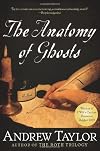
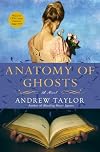
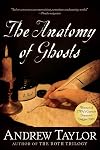
The Anatomy of Ghosts
by Andrew Taylor
On This Page
Description
A tale set in eighteenth-century Cambridge finds bookseller John Holdsworth commissioned to investigate Lady Anne Oldershaw's son's mental illness, a deep melancholy tied to a woman's mysterious death and a secret society.Tags
Recommendations
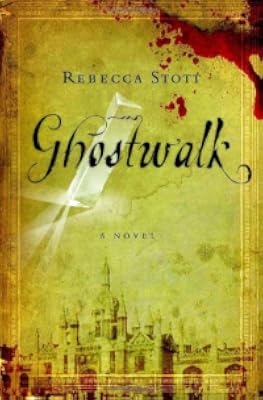
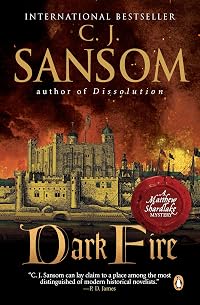
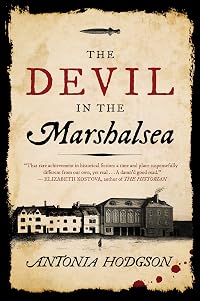
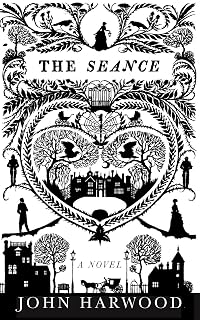










Member Recommendations
by ExVivre
Member Reviews
Although more of a detective novel than a ghost story, I thoroughly enjoyed Andrew Taylor's thoughtful and well constructed novel. Not so much for the mystery, involving a secret society at Cambridge University and the unrelated drownings of two women, but for the elegant language, very much in keeping with the eighteenth century setting, and the complex characters. Taylor knows how to employ the formal speech of the 1700s without sounding clumsy or impeding the story, and how to craft another time and place from his careful and creative historical research. I also liked reading about John Holdsworth, the 'detective' bibliophile of the novel, who actually made an impact on my imagination instead of merely working as a plot device.
After the deaths of his infant son and his wife in separate drowning accidents in London, John Holdsworth is glad to accept the offer of employment by Lady Oldershaw to investigate the possible sighting of a ghost by her son, a resident undergraduate at Jerusalem College, Cambridge. Little does he know that amid the tranquillity lie power struggles and intrigues, and that it is not only the dead who have the power to haunt a person.
If, like me, you picked up this novel expecting it to be a ghost story in the original sense (i.e. infused with the supernatural) in a historical setting, then be warned: the title and the blurbers' comments on the front and back covers give quite the wrong impression; this is a historical mystery holding up show more a magnifying glass to 18th-century society, and it is debatable whether anything paranormal does indeed take place as the book explores how people and events from the past can haunt someone – and even the living. Andrew Taylor once again manages to effortlessly create the atmosphere of a bygone age, along with its inhabitants, sights, sounds, smells, conventions and manners. It moves along at a slow pace, and it becomes apparent that several layers are woven through the narrative, which are worth exploring in a second reading now that the ending is known, though one important question remains unanswered. There are unexpected gems hidden among the prose, and even though the novel is well crafted, it leaves behind a slight sense of dissatisfaction. show less
If, like me, you picked up this novel expecting it to be a ghost story in the original sense (i.e. infused with the supernatural) in a historical setting, then be warned: the title and the blurbers' comments on the front and back covers give quite the wrong impression; this is a historical mystery holding up show more a magnifying glass to 18th-century society, and it is debatable whether anything paranormal does indeed take place as the book explores how people and events from the past can haunt someone – and even the living. Andrew Taylor once again manages to effortlessly create the atmosphere of a bygone age, along with its inhabitants, sights, sounds, smells, conventions and manners. It moves along at a slow pace, and it becomes apparent that several layers are woven through the narrative, which are worth exploring in a second reading now that the ending is known, though one important question remains unanswered. There are unexpected gems hidden among the prose, and even though the novel is well crafted, it leaves behind a slight sense of dissatisfaction. show less
This is the story of John Holdsworth, a down and out bookseller in late eighteenth century England, who has recently lost his young son to a drowning accident. This is soon followed by the suicide by drowning of his despondent wife. He had written a book entitled, "The Anatomy of Ghosts" to try and shake his wife free of the belief that she could communicate with her dead son through a charlatan medium. John's attempt to bring her back to reality only exacerbated the problem and may have driven her over the edge. The first third of this novel thus moves at a somber pace. Things begin to look up for John and us when he is saved from a downward spiral, by the request of a Lady Anne Oldershaw to catalog her deceased husband's library in show more preparation for donating it to Cambridge University. There is a catch, however. Lady Anne's son, Frank, who had been attending Jerusalem College, has suddenly insisted that he has seen a ghost, had a breakdown and has been committed to a doctor's care. As Holdsworth seems to be an expert on debunking ghosts, Lady Anne wants him to bring her son back to her and cure him of these foolish and dangerous thoughts. Here the story switches to the life in the college and mystery surrounding Frank's encounter with his ghost. The author sets the scene and mood of the story nicely with a myriad of details of late eighteenth century English life in the cities and colleges of the time. The pace of the book is slow at first, but picks up as the cast of characters and story unfold. There are a number of interesting plot lines and twists to keep our interest until the grand denouement. I found the book a bit long. It would perhaps have benefited from some tighter plotting, but overall was an enjoyable read with enough tragedy, romance, mystery, and intrigue for everyone. This book was provided for review by the good folks at Hyperion books. show less
A good friend of mine raves about Andrew Taylor, and now I know why. I'd never read anything by him before, so when I saw The Anatomy of Ghosts available to advanced reviewers, I jumped on the chance to read it - and I very much enjoyed it. I will definitely be on the lookout for more of his books.
The story takes place mainly at Cambridge University, where a young student claims to have seen a ghost and is taken to a nearby sanitarium for treatment. His mother, Lady Anne, who is connected with the University and is concerned for her son, hires a down-on-his-luck man to investigate the matter and restore her son to his right mind.
This story is chock full of interesting characters, all of whom step right off the page and into living show more color. Jerusalem college (a college within the larger University), is almost a character in itself with secrets and habits and its own lifestyle. The young men who go there to learn come away with much, much more than the degree they studied for. It was quite intriguing, and put me in mind of rumors and whispers that one hears about old campuses like that.
I particularly loved the writing, though. The story takes place in the late 18th century, and the writing set the tone, character, and pace perfectly, without venturing off into wordy exposition, all the while keeping the suspense and the intrigue going. Quite a feat! Too often historical fiction forgets itself and strays into modernity in order to ramp up the tension and suspense, but Taylor did not lapse at all.
I also really enjoyed the slight social commentary running throughout the novel, with regards to rank and position and power. Of course this is a popular theme throughout history, as people have always been obsessed with rank and position and power, but I felt that here it was put on display, in a way. It's hard to say just what I mean, because I don't mean that the writing was Austen-esque in terms of satirical social commentary, but rather that it was so gritty and real feeling that a modern reader would see it as such. It was not glorified or glamorous, but rather what I think was an accurate representation of the lengths that some will go to to attain power and the lengths some will go to to keep it. Fascinating stuff.
I would have given this book 5 stars, except that I feel that one portion of the plot was not resolved at all in the end, and I was left a little disappointed. The ending itself was satisfying, and I could not guess any of the twists and turns that the story would take (and there were quite a few!), but this one little detail was irksome for not being resolved, and so I had to drop down the rating a bit. Otherwise, I was drawn in and engaged in the story, and felt as if I was watching from the sidelines rather than reading, and I love the feeling of falling through the pages of a book.
I definitely recommend this one to historical fiction, mystery and thriller fans. show less
The story takes place mainly at Cambridge University, where a young student claims to have seen a ghost and is taken to a nearby sanitarium for treatment. His mother, Lady Anne, who is connected with the University and is concerned for her son, hires a down-on-his-luck man to investigate the matter and restore her son to his right mind.
This story is chock full of interesting characters, all of whom step right off the page and into living show more color. Jerusalem college (a college within the larger University), is almost a character in itself with secrets and habits and its own lifestyle. The young men who go there to learn come away with much, much more than the degree they studied for. It was quite intriguing, and put me in mind of rumors and whispers that one hears about old campuses like that.
I particularly loved the writing, though. The story takes place in the late 18th century, and the writing set the tone, character, and pace perfectly, without venturing off into wordy exposition, all the while keeping the suspense and the intrigue going. Quite a feat! Too often historical fiction forgets itself and strays into modernity in order to ramp up the tension and suspense, but Taylor did not lapse at all.
I also really enjoyed the slight social commentary running throughout the novel, with regards to rank and position and power. Of course this is a popular theme throughout history, as people have always been obsessed with rank and position and power, but I felt that here it was put on display, in a way. It's hard to say just what I mean, because I don't mean that the writing was Austen-esque in terms of satirical social commentary, but rather that it was so gritty and real feeling that a modern reader would see it as such. It was not glorified or glamorous, but rather what I think was an accurate representation of the lengths that some will go to to attain power and the lengths some will go to to keep it. Fascinating stuff.
I would have given this book 5 stars, except that I feel that one portion of the plot was not resolved at all in the end, and I was left a little disappointed. The ending itself was satisfying, and I could not guess any of the twists and turns that the story would take (and there were quite a few!), but this one little detail was irksome for not being resolved, and so I had to drop down the rating a bit. Otherwise, I was drawn in and engaged in the story, and felt as if I was watching from the sidelines rather than reading, and I love the feeling of falling through the pages of a book.
I definitely recommend this one to historical fiction, mystery and thriller fans. show less
"Books are not luxuries. They are meat and drink for the mind."
This quote from John Holdsworth, a major character in The Anatomy of Ghosts, is a simple truth. And The Anatomy of Ghosts is a twelve-course feast.
Holdsworth is a widowed bookseller, haunted by his failures as a parent and husband, eking out a living in 18th century London selling used volumes from a handcart. One day he is approached by the emissary of Lady Anne Oldershaw, offering him the position of curator of her late husband's library, with the obligation of cataloguing and placing a value on its contents in anticipation of its bestowal upon university. This seemingly simple task has a corollary obligation: return Lady Anne's son Frank to sanity, and thus restored, to show more London.
Young Frank has been committed to a sanitarium because he insists he has seen a ghost while at school in Cambridge. Holdsworth retrieves him from the hospital and sets him up in a secluded country cottage. While Frank whiles away his time in the fresh country air, Holdsworth is delving into the fact of the ghost...for Frank's ghost was Sylvia, the deceased wife of Philip Whichcote, and the circumstances of her death are questionable, at best.
Holdsworth is a reluctant sleuth, bound by contemporary conventions of place and social structure, but his curiosity is driven in part by his unresolved guilt over the deaths of his own wife and son, and he oversteps his bounds so carefully those above him in social strata barely notice. He uncovers a secretive society whose chief object is debauchery and blasphemy, and sniffs out a connection between young Oldershaw, the deceased Sylvia, Whichcote, and numerous other players of high rank in the small theater that is Cambridge University. Everything, everyone, is connected, whether or not they are aware of the connection.
Andrew Taylor tells his multi-layered story with clarity and precision. His attention to detail, his ear for dialogue, his creation of character, all are wicked sharp. This sentence, for example, tells the reader everything one needs to know about both individuals mentioned: "The doorstep was whitestoned every morning by a gangling maid named Dorcas, a poorhouse apprentice who feared Mrs Phear far more than she feared Almighty God because He at least was reputed to be merciful." Sights, smells, sartorial details -- all lovingly exposited almost to the point of wishing for a kerchief of one's own to hold to one's nose. The Anatomy of Ghosts is a rare treat for a lover of historical fiction and a lover of mysteries. Both are exquisitely contained within this one volume. If I had to make a comparison between them, I'd say with The Anatomy of Ghosts, Andrew Taylor has outdone Caleb Carr's The Alienist. show less
This quote from John Holdsworth, a major character in The Anatomy of Ghosts, is a simple truth. And The Anatomy of Ghosts is a twelve-course feast.
Holdsworth is a widowed bookseller, haunted by his failures as a parent and husband, eking out a living in 18th century London selling used volumes from a handcart. One day he is approached by the emissary of Lady Anne Oldershaw, offering him the position of curator of her late husband's library, with the obligation of cataloguing and placing a value on its contents in anticipation of its bestowal upon university. This seemingly simple task has a corollary obligation: return Lady Anne's son Frank to sanity, and thus restored, to show more London.
Young Frank has been committed to a sanitarium because he insists he has seen a ghost while at school in Cambridge. Holdsworth retrieves him from the hospital and sets him up in a secluded country cottage. While Frank whiles away his time in the fresh country air, Holdsworth is delving into the fact of the ghost...for Frank's ghost was Sylvia, the deceased wife of Philip Whichcote, and the circumstances of her death are questionable, at best.
Holdsworth is a reluctant sleuth, bound by contemporary conventions of place and social structure, but his curiosity is driven in part by his unresolved guilt over the deaths of his own wife and son, and he oversteps his bounds so carefully those above him in social strata barely notice. He uncovers a secretive society whose chief object is debauchery and blasphemy, and sniffs out a connection between young Oldershaw, the deceased Sylvia, Whichcote, and numerous other players of high rank in the small theater that is Cambridge University. Everything, everyone, is connected, whether or not they are aware of the connection.
Andrew Taylor tells his multi-layered story with clarity and precision. His attention to detail, his ear for dialogue, his creation of character, all are wicked sharp. This sentence, for example, tells the reader everything one needs to know about both individuals mentioned: "The doorstep was whitestoned every morning by a gangling maid named Dorcas, a poorhouse apprentice who feared Mrs Phear far more than she feared Almighty God because He at least was reputed to be merciful." Sights, smells, sartorial details -- all lovingly exposited almost to the point of wishing for a kerchief of one's own to hold to one's nose. The Anatomy of Ghosts is a rare treat for a lover of historical fiction and a lover of mysteries. Both are exquisitely contained within this one volume. If I had to make a comparison between them, I'd say with The Anatomy of Ghosts, Andrew Taylor has outdone Caleb Carr's The Alienist. show less
 This review was written for LibraryThing Early Reviewers.
John Holdsworth is having a tough time making ends meet. Living in 1780’s London, Holdsworth was once able to provide for his family through the ownership of a modest bookstore, supplementing that income from the authorship of a book called The Anatomy of Ghosts. But recently things have turned sour for Holdsworth, as both his wife and young son have drowned within weeks of each other, and his property has been taken from him. Just when he thinks all is lost, he’s granted an audience with Lady Anne Oldershaw, one of the most prominent members of society. When Holdsworth meets Lady Anne, she initially asks him to help her decide what to to with the library her husband left behind, but that’s not really all she wants. It turns out show more that Lady Anne’s young son Frank, once a student at Jerusalem College, has recently gone mad and is now housed in a private sanitarium. Lady Anne wants Holdsworth to get to the bottom of Frank’s apparent mental instability by secretly infiltrating the college under the guise of investigating the library. But when Holdsworth begins his covert operation, he discovers a new and bizarre world of 18th century academia, where the social classes are sharply divided and where devious secret societies have unnatural power. Uncovering what made Frank go mad that spring evening soon becomes a dangerous occupation, not only for Holdsworth but for all those associated with him at the college as well. In addition to all the shady business going on at the college, there is more than one instance of a ghost appearing, making Holdsworth the perfect choice for this difficult assignment. But what is really going on behind all these locked doors, and is Holdsworth really prepared for all he will find? In this gripping and intense historical mystery, Taylor takes us on a tour of 18th century London academia, grime and seediness notwithstanding.
Though this was a rather long book, I found myself quickly absorbed with the story and aching to discover just what was going on in this strange and twisted tale. Like the best offerings of historical fiction, this book elucidated on a subject and place that many may not know a lot about. Taylor kept things very interesting by throwing in various plot twists and intrigues throughout the narrative, which really kept me on my toes. I was surprised by a lot of things and found that the more attention I gave to it, the deeper I was caught in this peculiar and involving tale.
One of the things I found fascinating about this book was also something I took a little bit of exception to. The role that women played seemed at times faintly misogynistic, and I was unsure if this was an attempt to be true to the time and place or if it came as a reflection he author’s attitudes. The women ran the gamut from genteel and respectable to loose and sexually wayward, but whatever their circumstances were, it felt like they got very little respect in the text. I reiterate in saying that I’m almost certain that Taylor does this in attempt to faithfully recreate the world of 18th century London, but for a modern female reader, there was a lot that made me uncomfortable about it. The women portrayed here were mostly treated with disrespect or mollified, and even the secondary heroine was left to stew with her thoughts for most of the book instead of being placed in the central narrative. This was ostensibly a man’s book, being that it dealt intimately with men and men’s concerns, and I being that it was set in a men’s college, I could see the importance of writing it this way, though it did rebuff me at times.
One of the things that I liked best was the way the story was so expertly involved and that Taylor was so adept at managing several plot points convincingly. There were may characters here and at times it was difficult to keep them all straight, but, luckily, there is a character index right at the beginning of the book where it’s bound to be seen. This story had elements of suspense right alongside the history which I think is one of the things that made it so successful for me. I really got the feeling that I was peeking into a world long past in addition to being entertained and mystified by the secrets that were going on at the college, and found myself reading speedily to discover how all of the intrigue would boil down. I think it was particularly clever for Taylor to highlight the differences between the wealthy students and teachers and the ones who were there by scholarship and graft because it enabled the reader to get an idea of the class differences in that society. I have to say that I’m rather fond of reading about how the underprivileged got along during those times, and was very interested in reading about their economies and their ability to rise among the ranks through sheer effort alone.
I also really liked Holdsworth and felt that he was the perfect character to star in this story. I found him to be rather intelligent, and his intellectual deductions seemed very organic and believable. I also liked that his attitude was always above reproach and that he was so polite. I began to see that his job would have been all that much harder if he didn’t maintain a veneer of respectability, and in more than one instance, his habit of holding his tongue served him well in creating a confidante instead of an enemy. Holdsworh was universally liked and trusted, and this reader felt the same emotions for him. Because of Taylor’s ability to write a character who was so agreeable yet so inquisitive, the narrative took on a lot of shape and piquancy. Leaving the rascals to be rascals, Holdsworth maneuvered around them deftly and with good regard, which caused the other more malign characters to let their guards down around him. I’m not embarrassed to say that Holdsworth was my favorite aspect of the book and that he was a great character with which to share an adventure.
Though this book was puzzling in its regards to women, overall I found it to be very absorbing and gratifying. The conclusion leaves some ends to be tied up, which I also liked, and I’ve been wondering if this is the first book in a proposed series. If it is, I’m thinking I’ll continue on with it because it’s the type of book that’s not only readable, but that focuses on a character whom I found delightful and fresh. Those lovers of historical fantasy wit a little meat on its bones would probably love this book, and despite its length, it’s easy to fly through the pages and be utterly compelled by the story it has to tell. show less
Though this was a rather long book, I found myself quickly absorbed with the story and aching to discover just what was going on in this strange and twisted tale. Like the best offerings of historical fiction, this book elucidated on a subject and place that many may not know a lot about. Taylor kept things very interesting by throwing in various plot twists and intrigues throughout the narrative, which really kept me on my toes. I was surprised by a lot of things and found that the more attention I gave to it, the deeper I was caught in this peculiar and involving tale.
One of the things I found fascinating about this book was also something I took a little bit of exception to. The role that women played seemed at times faintly misogynistic, and I was unsure if this was an attempt to be true to the time and place or if it came as a reflection he author’s attitudes. The women ran the gamut from genteel and respectable to loose and sexually wayward, but whatever their circumstances were, it felt like they got very little respect in the text. I reiterate in saying that I’m almost certain that Taylor does this in attempt to faithfully recreate the world of 18th century London, but for a modern female reader, there was a lot that made me uncomfortable about it. The women portrayed here were mostly treated with disrespect or mollified, and even the secondary heroine was left to stew with her thoughts for most of the book instead of being placed in the central narrative. This was ostensibly a man’s book, being that it dealt intimately with men and men’s concerns, and I being that it was set in a men’s college, I could see the importance of writing it this way, though it did rebuff me at times.
One of the things that I liked best was the way the story was so expertly involved and that Taylor was so adept at managing several plot points convincingly. There were may characters here and at times it was difficult to keep them all straight, but, luckily, there is a character index right at the beginning of the book where it’s bound to be seen. This story had elements of suspense right alongside the history which I think is one of the things that made it so successful for me. I really got the feeling that I was peeking into a world long past in addition to being entertained and mystified by the secrets that were going on at the college, and found myself reading speedily to discover how all of the intrigue would boil down. I think it was particularly clever for Taylor to highlight the differences between the wealthy students and teachers and the ones who were there by scholarship and graft because it enabled the reader to get an idea of the class differences in that society. I have to say that I’m rather fond of reading about how the underprivileged got along during those times, and was very interested in reading about their economies and their ability to rise among the ranks through sheer effort alone.
I also really liked Holdsworth and felt that he was the perfect character to star in this story. I found him to be rather intelligent, and his intellectual deductions seemed very organic and believable. I also liked that his attitude was always above reproach and that he was so polite. I began to see that his job would have been all that much harder if he didn’t maintain a veneer of respectability, and in more than one instance, his habit of holding his tongue served him well in creating a confidante instead of an enemy. Holdsworh was universally liked and trusted, and this reader felt the same emotions for him. Because of Taylor’s ability to write a character who was so agreeable yet so inquisitive, the narrative took on a lot of shape and piquancy. Leaving the rascals to be rascals, Holdsworth maneuvered around them deftly and with good regard, which caused the other more malign characters to let their guards down around him. I’m not embarrassed to say that Holdsworth was my favorite aspect of the book and that he was a great character with which to share an adventure.
Though this book was puzzling in its regards to women, overall I found it to be very absorbing and gratifying. The conclusion leaves some ends to be tied up, which I also liked, and I’ve been wondering if this is the first book in a proposed series. If it is, I’m thinking I’ll continue on with it because it’s the type of book that’s not only readable, but that focuses on a character whom I found delightful and fresh. Those lovers of historical fantasy wit a little meat on its bones would probably love this book, and despite its length, it’s easy to fly through the pages and be utterly compelled by the story it has to tell. show less
It is 1786, the night of the Last Supper at the Holy Ghost Club. All of the disciples are finishing up their toasts, and St. Peter (Frank Oldershaw) is preparing to be inducted. As he goes to take his sacrifice, tragedy strikes. Now Frank is residing in the house of Dr. Jermyn, with his mind apparently broken, speaking of ghosts and quacking like a duck.
John Holdsworth is a former bookseller, on the verge of penury, having lost in quick succession his son, his wife, his business, and his home. His book, The Anatomy of Ghosts, caused a mild sensation at one point, with it's blasting of the 'charlatans' who take advantage of the grief-stricken by telling them that they can talk to the spirit of their dear departed. With it's debunking of show more many of the myths surrounding alleged "ghosts", it was in high demand. However, with the destruction by fire of his printing press, and the subsequent loss of his shop, John is not in a position to continue with it's distribution.
When John is commissioned by Lady Anne Oldershaw, daughter of the late Earl of Vauden whose family founded Jerusalem College, to tabulate the college's library contents to see where her husband's book collection might fit in, his secondary (but most important) task is to see about Frank, Lady Anne's only child, and to help him if at all possible. Did Frank really see a ghost? Is his sanity beyond saving?
As John journeys to Jerusalem, he uncovers an intricately layered plot where the players aren't always clearly defined. In a world of privilege where class plays a role in every interaction, will he be able to unravel the deeper mysteries and expose the secrets that lie at the bottom of them?
This is a brilliantly-written book, reminiscent of Poe in it's styling. There's madness, suicide, cruelty, mystery, ghosts, jealousy, bribery, and possibly murder, all set in 18th century England, where class is paramount, and ambitions run amok. The very beginning was a bit confusing for me, but it all became much clearer as the tale unfolded. As the fingers of suspicion point first to one, and then to another, you, along with Holdsworth, will begin to wonder who the real villains are. This is a wonderful 18th century thriller, with finely-detailed characters and a plot that will keep you hanging in to the very end.
QUOTES
He had never really noticed the poor in the days of his prosperity, except as irritants like lice or, at best, as bystanders in the great drama of existence in which their betters performed the speaking parts. He murmured these words aloud and a man who was passing gave him a wide berth. The only knowledge worth having was that a hungry belly made you a little mad.
Her dying husband cared more about the fate of his enemy than about the future of his wife. In the antechamber of death, hate was more powerful than love.
Trust youth to turn an episode of drunken adultery into a three-volume novel and present it to you before breakfast.
BOOK RATING: 4.5 out of 5 stars show less
John Holdsworth is a former bookseller, on the verge of penury, having lost in quick succession his son, his wife, his business, and his home. His book, The Anatomy of Ghosts, caused a mild sensation at one point, with it's blasting of the 'charlatans' who take advantage of the grief-stricken by telling them that they can talk to the spirit of their dear departed. With it's debunking of show more many of the myths surrounding alleged "ghosts", it was in high demand. However, with the destruction by fire of his printing press, and the subsequent loss of his shop, John is not in a position to continue with it's distribution.
When John is commissioned by Lady Anne Oldershaw, daughter of the late Earl of Vauden whose family founded Jerusalem College, to tabulate the college's library contents to see where her husband's book collection might fit in, his secondary (but most important) task is to see about Frank, Lady Anne's only child, and to help him if at all possible. Did Frank really see a ghost? Is his sanity beyond saving?
As John journeys to Jerusalem, he uncovers an intricately layered plot where the players aren't always clearly defined. In a world of privilege where class plays a role in every interaction, will he be able to unravel the deeper mysteries and expose the secrets that lie at the bottom of them?
This is a brilliantly-written book, reminiscent of Poe in it's styling. There's madness, suicide, cruelty, mystery, ghosts, jealousy, bribery, and possibly murder, all set in 18th century England, where class is paramount, and ambitions run amok. The very beginning was a bit confusing for me, but it all became much clearer as the tale unfolded. As the fingers of suspicion point first to one, and then to another, you, along with Holdsworth, will begin to wonder who the real villains are. This is a wonderful 18th century thriller, with finely-detailed characters and a plot that will keep you hanging in to the very end.
QUOTES
He had never really noticed the poor in the days of his prosperity, except as irritants like lice or, at best, as bystanders in the great drama of existence in which their betters performed the speaking parts. He murmured these words aloud and a man who was passing gave him a wide berth. The only knowledge worth having was that a hungry belly made you a little mad.
Her dying husband cared more about the fate of his enemy than about the future of his wife. In the antechamber of death, hate was more powerful than love.
Trust youth to turn an episode of drunken adultery into a three-volume novel and present it to you before breakfast.
BOOK RATING: 4.5 out of 5 stars show less
Members
- Recently Added By
Published Reviews
ThingScore 92
Andrew Taylor has written almost every kind of genre fiction, from village mysteries to psychological thrillers. But his mandarin style and eccentric imagination seem best suited to the historical crime novel... THE ANATOMY OF GHOSTS pitches us into dynamic but rowdy 18th-century England, when superstition still held a grip on rational minds despite the advent of the Enlightenment.
added by y2pk
In The Anatomy of Ghosts Taylor has captured, with his habitual economy and precision, the maelstrom of the 18th century and its myriad contradictions: its greed and its lassitude, its religiosity and its scepticism, its rigid class structure and its social fluidity, its casual brutality and its profound superstition. In the 1760s even the educated and sophisticated occupied a world bristling show more with ghosts and omens. But, though the novel describes itself as a ghost story, it's not a book that will force you to go to bed with the lights on. Instead it is the haunting power of fear and regret that gives the narrative its particular tension. show less
added by souloftherose
As the days edge further into autumn, what better way to pass the time than with a good old-fashioned ghost story? Andrew Taylor's The Anatomy of Ghosts provides just that, as grieving bookseller John Holdsworth is coerced into attempting to disprove the existence of "an alleged apparition" in a corrupt, crumbling 18th-century Cambridge college.
added by wandering_star
Lists

Ghosts
278 works; 18 members

Best Mysteries With a Historical Setting
292 works; 160 members
Author Information

54+ Works 6,098 Members
Some Editions
Awards and Honors
Common Knowledge
- Original publication date
- 2010-09-02
- People/Characters
- John Holdsworth; Lady Anne Oldershaw; Frank Oldershaw; Mulgrave; Harry Archdale; Philip Whichcote (show all 23); Sylvia Whichcote; John Floyd, known as Tom Turdman; Tobias Soresby; Mr. Richardson; Elinor Carbury; Dr. Carbury; Dr. Jermyn; Mrs. Phear; Augustus; Dorcas; Lawrence Cross; Ned Farmer; Mrs. Farmer; Maria Holdsworth; Susan; Ben; Norcross
- Important places
- Cambridge, Cambridgeshire, England, UK
- Epigraph
- It is wonderful that five thousand years have now elapsed since the creation of the world, and still it is undecided whether or not there has ever been an instance of the spirit of any person appearing after death. All argum... (show all)ent is against it; but all belief is for it. (Dr Johnson, 31st March 1778 (Boswell's Life of Johnson)
- Dedication
- In memory of Don
- First words
- Late in the evening of Thursday, 16 February, 1786, the Last Supper was nearing its end.
- Quotations
- Books are not luxuries. They are meat and drink for the mind.
drowning runs "like a watery thread through the whole sad affair"
Money was a powerful thing, Holdsworth thought, the true philosopher's stone, with the power of transmuting dreams.
For a long moment, nothing happened. Then she turned towards him like a door swinging slowly on its hinge. - Last words
- (Click to show. Warning: May contain spoilers.)The paleness in the dusk had slipped away.
- Blurbers
- Fyfield, Frances; Bowen, Rhys
- Original language
- English UK
Classifications
Statistics
- Members
- 580
- Popularity
- 50,982
- Reviews
- 103
- Rating
- (3.47)
- Languages
- 5 — Danish, English, German, Italian, Swedish
- Media
- Paper, Audiobook, Ebook
- ISBNs
- 30
- UPCs
- 1
- ASINs
- 9