On This Page
Description
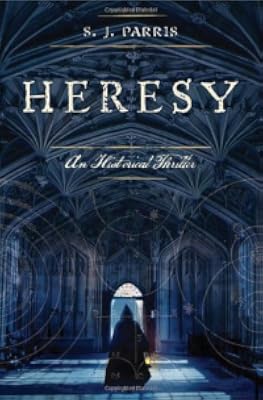
Masterfully blending true events with fiction, this blockbuster historical thriller delivers a page-turning murder mystery set on the sixteenth-century Oxford University campus.Giordano Bruno was a monk, poet, scientist, and magician on the run from the Roman Inquisition on charges of heresy for his belief that the Earth orbits the sun and that the universe is infinite. This alone could have got him burned at the stake, but he was also a student of occult philosophies and magic. In S. J. show more Parris's gripping novel, Bruno's pursuit of this rare knowledge brings him to London, where he is unexpectedly recruited by Queen Elizabeth I and is sent undercover to Oxford University on the pretext of a royal visitation. Officially Bruno is to take part in a debate on the Copernican theory of the universe; unofficially, he is to find out whatever he can about a Catholic plot to overthrow the queen. His mission is dramatically thrown off course by a series of grisly murders and a spirited and beautiful young woman. As Bruno begins to discover a pattern in these killings, he realizes that no one at Oxford is who he seems to be. Bruno must attempt to outwit a killer who appears obsessed with the boundary between truth and heresy. Like The Dante Club and The Alienist, this clever, sophisticated, exceptionally enjoyable novel is written with the unstoppable narrative propulsion and stylistic flair of the very best historical thrillers. show lessTags
Recommendations














Member Recommendations

Member Reviews
After fleeing from an Italian monastery to escape the Inquisition, former monk Giordano Bruno eventually ends up in Oxford during Elizabeth I's reign. Before making a trip to Oxford with his friend, Philip Sidney, Bruno is enlisted by Sir Francis Walsingham to provide information on the underground Catholic movement in Oxford. Bruno is a guest at Lincoln College, where he is to engage in a disputation with its rector, John Underhill. Before the disputation, the college is thrown into turmoil by the death of one of its members. Both Bruno and the rector suspect murder. Despite Underhill's undisguised dislike of Bruno, he tasks Bruno with undertaking a quiet investigation of the murder. Soon, there is another death, and another, and the show more circumstances seem to have a strange literary connection.
Even though the plot, characters, and setting were all interesting, I didn't have any trouble when I had to stop at a climactic point in the story. Something about the book didn't quite work for me. Maybe it was the reader on the audio version, who I thought read a little too fast and with too little expression. Maybe it was the forcing of fictional events (the murders) and characters into the framework of a real event (the disputation). I wondered as I listened what the purpose of the disputation was. It seemed to be a distraction from the plot, and I thought the story would have worked better without it. I found out afterward that the disputation was an actual historic event. I'll give this series another try before I give up on it. Next time I'll try the print (or ebook) version rather than the audio and see if that makes a difference. show less
Even though the plot, characters, and setting were all interesting, I didn't have any trouble when I had to stop at a climactic point in the story. Something about the book didn't quite work for me. Maybe it was the reader on the audio version, who I thought read a little too fast and with too little expression. Maybe it was the forcing of fictional events (the murders) and characters into the framework of a real event (the disputation). I wondered as I listened what the purpose of the disputation was. It seemed to be a distraction from the plot, and I thought the story would have worked better without it. I found out afterward that the disputation was an actual historic event. I'll give this series another try before I give up on it. Next time I'll try the print (or ebook) version rather than the audio and see if that makes a difference. show less
Tudor Noir
A review of the Penguin Canada eBook (February 2, 2010)
I had actually read this around the time it first came out in 2010, but my recent encounters with the later written 3 Giordano Bruno prequel novellas (2014-2020) compelled me to a re-read. A reader friendly price of $5.99 Cdn. for the Kindle eBook on Amazon.ca made for quick access and the easy notation of quotes.
Heresy itself opens with a prequel set in the San Domenico Maggiore monastery in the Naples of 1576. The inquisitive novice monk Giordano Bruno is caught reading a banned book of Erasmus in the lavatory, usually one of the few places of privacy he could find. This leads to his escape from the monastery and the Inquisition and a journey through Italy and Europe show more until he lands in Tudor Elizabethan England in May 1583.
See portrait at https://upload.wikimedia.org/wikipedia/commons/thumb/f/f3/Portrait_of_Giordano_B...
A portrait of the historical Giordano Bruno. Image sourced from Wikipedia CC BY 4.0, Link.
Due to his earlier friendship in Italy with poet (and fellow spy) Philip Sidney, Giordano is enlisted by Elizabeth I's spymaster Sir Francis Walsingham to report on any suspicious Catholic activity in Oxford University where the now ex-communicated monk is going for a debate on Copernican theory. This is an era when the new Church of England viewed Catholic activity as being potentially treasonous and a danger to Protestant society. Walsingham had seen first hand the 1572 massacre of Protestants in Catholic France when he was the English ambassador there. The result being a quid pro quo of repression in England.
Giordano lands in the midst of a suspicious group of University Fellows and Students, whose loyalties are questionable. Then a series of murders begins to add further confusion to the mix. Meanwhile Giordano is also hoping to locate a lost book of the ancient Egyptian high priest Hermes Trismegistus, which may have been rescued from the book purge which occurred at the University. His search may bring him into the midst of a dangerous group of book smugglers. There is also the potential enticement of the University Rector's self-educated and proud daughter, a potential ally but also perhaps a foe / rival for the ex-monk.
I thought it was all very well constructed and researched, it being especially intriguing that many of the characters are drawn from real-life and events such as the Copernican debate really did occur. The book was perhaps overlong at 474 pages, but I was compelled to finish it quite quickly and I think that I'll gradually continue further with the series in the future.
Trivia and Links
S.J. Parris is the penname used by writer Stephanie Merritt for her historical fiction novels featuring Giordano Bruno.
S.J. Parris's fictional character Giordano Bruno is based on the real-life Giordano Bruno (1548-1600) [Note: Potential spoilers if you click through]. show less
A review of the Penguin Canada eBook (February 2, 2010)
I had actually read this around the time it first came out in 2010, but my recent encounters with the later written 3 Giordano Bruno prequel novellas (2014-2020) compelled me to a re-read. A reader friendly price of $5.99 Cdn. for the Kindle eBook on Amazon.ca made for quick access and the easy notation of quotes.
Heresy itself opens with a prequel set in the San Domenico Maggiore monastery in the Naples of 1576. The inquisitive novice monk Giordano Bruno is caught reading a banned book of Erasmus in the lavatory, usually one of the few places of privacy he could find. This leads to his escape from the monastery and the Inquisition and a journey through Italy and Europe show more until he lands in Tudor Elizabethan England in May 1583.
See portrait at https://upload.wikimedia.org/wikipedia/commons/thumb/f/f3/Portrait_of_Giordano_B...
A portrait of the historical Giordano Bruno. Image sourced from Wikipedia CC BY 4.0, Link.
Due to his earlier friendship in Italy with poet (and fellow spy) Philip Sidney, Giordano is enlisted by Elizabeth I's spymaster Sir Francis Walsingham to report on any suspicious Catholic activity in Oxford University where the now ex-communicated monk is going for a debate on Copernican theory. This is an era when the new Church of England viewed Catholic activity as being potentially treasonous and a danger to Protestant society. Walsingham had seen first hand the 1572 massacre of Protestants in Catholic France when he was the English ambassador there. The result being a quid pro quo of repression in England.
Giordano lands in the midst of a suspicious group of University Fellows and Students, whose loyalties are questionable. Then a series of murders begins to add further confusion to the mix. Meanwhile Giordano is also hoping to locate a lost book of the ancient Egyptian high priest Hermes Trismegistus, which may have been rescued from the book purge which occurred at the University. His search may bring him into the midst of a dangerous group of book smugglers. There is also the potential enticement of the University Rector's self-educated and proud daughter, a potential ally but also perhaps a foe / rival for the ex-monk.
I thought it was all very well constructed and researched, it being especially intriguing that many of the characters are drawn from real-life and events such as the Copernican debate really did occur. The book was perhaps overlong at 474 pages, but I was compelled to finish it quite quickly and I think that I'll gradually continue further with the series in the future.
Trivia and Links
S.J. Parris is the penname used by writer Stephanie Merritt for her historical fiction novels featuring Giordano Bruno.
S.J. Parris's fictional character Giordano Bruno is based on the real-life Giordano Bruno (1548-1600) [Note: Potential spoilers if you click through]. show less
This much is true: Giordano Bruno did go to Oxford in the spring of 1583, in the party of the Prince Palatine Albert Laski and Sir Philip Sidney, where he did engage in a debate on the Copernican theory.
On this thread, S.J. Parks (pseudonym of journalist Stephanie Merritt) has hung her murder mystery. The book opens as Bruno flees his monastery with the Inquisition nipping at his heels. We next see him on his way to Oxford, having traveled far both geographically and socially. By now he had become quite well-known as a lecturer in mnemonics and a theologian, enjoyed the protection of Henri III, and, in fact, lived in England at the home of the French Ambassador, Michel de Castelnau.
At Oxford, he is immediately confronted with the show more effects that religious differences in England have had there. Though the Queen sought to consolidate Protestantism there through the appointment of Robert Dudley, Lord Leicester, as chancellor, previous Marian appointments meant that there was still Catholic presence there, and concerns about treason and espionage were not entirely unjustified. Bruno, as an excommunicate, would be unsympathetic to the papist cause, yet because he was a former monk and an Italian, many English Protestants would be suspicious of him.
Bruno has not been in Oxford long when his preparations for the disputation are interrupted by horrific screams, screams that turn out to be from the sub-rector, whose throat is being torn out by an Irish wolfhound. But how did the dog get into an enclosed, locked garden? Bruno is suspicious that this is not an accident. When he finds in the man's room a journal dated using the Gregorian calendar, and in that journal a cipher in invisible writing with the phrase "ora pro nobis", he is sure that something is amiss. A second murder follows hard on the first, and Bruno is plunged into religious and political intrigue.
I will say that I am not ordinarily a fan of books that use well-known historical (or, for that matter, literary) characters as detectives. And, frankly, the part of this book relating to the actual working out of the mystery was the least satisfying. (Honestly, there really aren't a whole lot of murderers who engage in the sort of intricate "message-sending" sort of murders that occur here.) I was much more interested in the playing out of the religious and political tensions between Protestant and Catholic, English and continental European, and how that affected life in Oxford, both for town and gown.
That said, it's quite a well-written book and I'd recommend it to anyone who enjoys mysteries set in Elizabethan times. Me, I've plucked John Bossy's Giordano Bruno and the Embassy Affair off the shelf on which it has been languishing and will let you know whether Bruno really was a spy! show less
On this thread, S.J. Parks (pseudonym of journalist Stephanie Merritt) has hung her murder mystery. The book opens as Bruno flees his monastery with the Inquisition nipping at his heels. We next see him on his way to Oxford, having traveled far both geographically and socially. By now he had become quite well-known as a lecturer in mnemonics and a theologian, enjoyed the protection of Henri III, and, in fact, lived in England at the home of the French Ambassador, Michel de Castelnau.
At Oxford, he is immediately confronted with the show more effects that religious differences in England have had there. Though the Queen sought to consolidate Protestantism there through the appointment of Robert Dudley, Lord Leicester, as chancellor, previous Marian appointments meant that there was still Catholic presence there, and concerns about treason and espionage were not entirely unjustified. Bruno, as an excommunicate, would be unsympathetic to the papist cause, yet because he was a former monk and an Italian, many English Protestants would be suspicious of him.
Bruno has not been in Oxford long when his preparations for the disputation are interrupted by horrific screams, screams that turn out to be from the sub-rector, whose throat is being torn out by an Irish wolfhound. But how did the dog get into an enclosed, locked garden? Bruno is suspicious that this is not an accident. When he finds in the man's room a journal dated using the Gregorian calendar, and in that journal a cipher in invisible writing with the phrase "ora pro nobis", he is sure that something is amiss. A second murder follows hard on the first, and Bruno is plunged into religious and political intrigue.
I will say that I am not ordinarily a fan of books that use well-known historical (or, for that matter, literary) characters as detectives. And, frankly, the part of this book relating to the actual working out of the mystery was the least satisfying. (Honestly, there really aren't a whole lot of murderers who engage in the sort of intricate "message-sending" sort of murders that occur here.) I was much more interested in the playing out of the religious and political tensions between Protestant and Catholic, English and continental European, and how that affected life in Oxford, both for town and gown.
That said, it's quite a well-written book and I'd recommend it to anyone who enjoys mysteries set in Elizabethan times. Me, I've plucked John Bossy's Giordano Bruno and the Embassy Affair off the shelf on which it has been languishing and will let you know whether Bruno really was a spy! show less
This book introduces the character of Giordano Bruno, an excommunicated Italian monk who ends up in Elizabethan England under the protection of the French King Henri II and is recruited by Francis Walsingham as a spy. Bruno travels to Oxford to participate in a debate on the structure of the Universe and in search of a secret book, but also to spy on recalcitrant Catholics in this strictly Protestant land. He is drawn into solving a series of brutal murders and uncovering a secret ring of Catholic sympathisers.
Parris draws us in with her fine depiction of Elizabethan life and very clearly describes the religious hysteria of the times. Bruno is a well-rounded character who displays sufficient strengths, weaknesses and internal conflicts show more to be utterly believable and for us to root for him as the story unfolds. Other characters are strongly drawn and we often find ourselves sympathising as we condemn.
This is excellent both as an historical picture and as a driven thriller. show less
Parris draws us in with her fine depiction of Elizabethan life and very clearly describes the religious hysteria of the times. Bruno is a well-rounded character who displays sufficient strengths, weaknesses and internal conflicts show more to be utterly believable and for us to root for him as the story unfolds. Other characters are strongly drawn and we often find ourselves sympathising as we condemn.
This is excellent both as an historical picture and as a driven thriller. show less
Summary: Giordano Bruno is an ex-monk, excommunicated from the Catholic Church for his heretical views on the nature of the universe. After fleeing Italy one step ahead of the Inquisition, he spent years on the run throughout Europe, teaching and debating, before finding himself in England in 1583. He is set to visit Oxford to debate the rector of Lincoln College, but before he leaves, he is recruited by Sir Francis Walsingham, the Queen's Intelligence master, to sniff out any Catholic conspirators who may be planning to overthrow the Protestant Queen Elizabeth I. However, Bruno barely has time to settle in at Oxford, let alone make any investigations, before the college fellows begin dying in a series of brutal murders. Everyone has show more seems to have a secret, and Bruno suspects that there is something deeper going on - and he's determined to find out what before the death toll can climb any higher.
Review: Heresy contained just about everything I could want from a historical thriller: an interesting mystery set in a relevant historical context, a fast pace that kept me turning pages even in my dissertation-induced attention-deprived state, and an ample number of red herrings with a satisfying but non-obvious resolution, all wrapped around a core of historical facts. Giordano Bruno was real, and he did visit Oxford in 1583 to debate Copernican theory with the rector of Lincoln college. Many of the other characters, the murders, and Bruno's role as a de facto detective are fictitious, but are well-integrated with what we know from the historical records.
I did have a few problems with the book, too, although they weren't enough to majorly affect my enjoyment. For starters, we're introduced to a lot of Oxford Fellows very quickly, and they're not all characterized well enough to be immediately distinguishable by name later on. The tone also got a little too modern at times, and while that probably helped keep the book a quick read, there were some anachronisms in dialogue and tone that I found a little distracting. There was also a fair amount of emphasis put on certain elements (such as Bruno's search for arcane occult texts) that didn't pan out to much. Overall, though, I had a lot of fun with this book; while I haven't read a huge number of historical thrillers to compare, I thought Heresy was a well-put-together example of the genre, and definitely worth my time. 4 out of 5 stars.
Recommendation: Heresy was essentially everything I was hoping for but failed to get from The Name of the Rose. And, while I don't think that the two works are comparable in scope or intent, if (like me) your favorite parts of Eco's work were the murder mystery and the banned books and the skulking around a medieval monastery, you'll probably find Heresy as much fun as I did. Otherwise, I think fans of historical fiction who enjoy mysteries or are looking for a break from "royal scandals and intrigue" novels will enjoy this book as well. show less
Review: Heresy contained just about everything I could want from a historical thriller: an interesting mystery set in a relevant historical context, a fast pace that kept me turning pages even in my dissertation-induced attention-deprived state, and an ample number of red herrings with a satisfying but non-obvious resolution, all wrapped around a core of historical facts. Giordano Bruno was real, and he did visit Oxford in 1583 to debate Copernican theory with the rector of Lincoln college. Many of the other characters, the murders, and Bruno's role as a de facto detective are fictitious, but are well-integrated with what we know from the historical records.
I did have a few problems with the book, too, although they weren't enough to majorly affect my enjoyment. For starters, we're introduced to a lot of Oxford Fellows very quickly, and they're not all characterized well enough to be immediately distinguishable by name later on. The tone also got a little too modern at times, and while that probably helped keep the book a quick read, there were some anachronisms in dialogue and tone that I found a little distracting. There was also a fair amount of emphasis put on certain elements (such as Bruno's search for arcane occult texts) that didn't pan out to much. Overall, though, I had a lot of fun with this book; while I haven't read a huge number of historical thrillers to compare, I thought Heresy was a well-put-together example of the genre, and definitely worth my time. 4 out of 5 stars.
Recommendation: Heresy was essentially everything I was hoping for but failed to get from The Name of the Rose. And, while I don't think that the two works are comparable in scope or intent, if (like me) your favorite parts of Eco's work were the murder mystery and the banned books and the skulking around a medieval monastery, you'll probably find Heresy as much fun as I did. Otherwise, I think fans of historical fiction who enjoy mysteries or are looking for a break from "royal scandals and intrigue" novels will enjoy this book as well. show less
Heresy is a historical novel that follows a period in the life of Giordano Bruno, an ex-monk who has developed a reputation as a philosopher and gained status through his relationship with King Henri III of France. This book covers a time he spent at Oxford in England. He's been brought to the university to debate with the head of the school, Rector Underhill. But while Bruno is at Oxford a number of brutal murders occur and he is recruited by Underhill to look into the crimes.
The book is interesting because it covers the period in English history after the Church of England separated from the Roman Catholic Church, but does not look at that time through the point of view of the monarchy. Instead it focuses on how the conflict between show more the two churches affects the students and faculty at Oxford. There's violence, deception, and quite a few compromised values.
The problem with putting historical characters in a fictional environment is that the author has to develop personalities for the characters while remaining true to the real people. In this case, the characters suffer because they lack strong emotions. Everyone in the book, with the exception of Bruno and his well-connected friend, Philip Sydney, seems to be one dimensional and self-serving. This was a time when people believed that choosing the wrong side would be the same as denying God. Yet there was little passion shown in their choices. The rector has a beautiful daughter named Sophia whom everyone wants to protect, but the only romantic relationship is talked about rather than shown and also lacks passion.
The decisions the characters make often seem abrupt and without rationalization. There's a gate keeper who helps Bruno without any explanation as to why he's decided to trust a stranger over the people he knows and works for. And Rector Underhill's decision to ask Bruno to investigate the crimes also seems out of the blue.
Yet, despite the issues I mentioned, I enjoyed the novel. The subject matter is fascinating and the mystery works well. It's a good read for people who enjoy historical fiction.
Steve Lindahl – author of Motherless Soul and White Horse Regressions show less
The book is interesting because it covers the period in English history after the Church of England separated from the Roman Catholic Church, but does not look at that time through the point of view of the monarchy. Instead it focuses on how the conflict between show more the two churches affects the students and faculty at Oxford. There's violence, deception, and quite a few compromised values.
The problem with putting historical characters in a fictional environment is that the author has to develop personalities for the characters while remaining true to the real people. In this case, the characters suffer because they lack strong emotions. Everyone in the book, with the exception of Bruno and his well-connected friend, Philip Sydney, seems to be one dimensional and self-serving. This was a time when people believed that choosing the wrong side would be the same as denying God. Yet there was little passion shown in their choices. The rector has a beautiful daughter named Sophia whom everyone wants to protect, but the only romantic relationship is talked about rather than shown and also lacks passion.
The decisions the characters make often seem abrupt and without rationalization. There's a gate keeper who helps Bruno without any explanation as to why he's decided to trust a stranger over the people he knows and works for. And Rector Underhill's decision to ask Bruno to investigate the crimes also seems out of the blue.
Yet, despite the issues I mentioned, I enjoyed the novel. The subject matter is fascinating and the mystery works well. It's a good read for people who enjoy historical fiction.
Steve Lindahl – author of Motherless Soul and White Horse Regressions show less
How can you not adore a book-loving monk who is excommunicated for reading a banned book in the privy (aka outhouse)? Bruno Giordano is my newest friend and I hope he has many more adventures that we get to share. Set in 1580s England, Bruno is sent by Queen Elizabeth’s man Walsingham to ferret out Catholic heretics at Oxford University. But Bruno has his own agenda (he’s on the track of a very special ‘lost’ book) and develops a few more once there.
There is something extremely engaging about Giordano, who was a real philosopher, heretic, confidant of royalty, and extender of Copernican theory, which was considered heresy at the time. I won’t rehash the plot but will tell you that it is riveting and had me madly turning pages show more way late into the night. HERESY is part mystery, part history, part religious conflict, always human, and always fascinating.
I hope SJ Parris has more planned for Bruno, but if not, I’ll try whatever she tries next. I’ve already told so many people about Heresy, they’re going to ban me soon, but this was an ARC and I’m happy to spread the word. show less
There is something extremely engaging about Giordano, who was a real philosopher, heretic, confidant of royalty, and extender of Copernican theory, which was considered heresy at the time. I won’t rehash the plot but will tell you that it is riveting and had me madly turning pages show more way late into the night. HERESY is part mystery, part history, part religious conflict, always human, and always fascinating.
I hope SJ Parris has more planned for Bruno, but if not, I’ll try whatever she tries next. I’ve already told so many people about Heresy, they’re going to ban me soon, but this was an ARC and I’m happy to spread the word. show less
Members
- Recently Added By
Published Reviews
ThingScore 75
"On the whole, though, Heresy is fascinatingly sincere, with no higher aim than to be as good an example of its type as it can."
added by bookfitz
"Parris, an economical writer, keeps the mysticism in check as she portrays Bruno, with his sly, agile intelligence, encountering the dark, introverted world of Oxford, where fear and suspicion prevail."
added by bookfitz
"Spirited storytelling, an appealing sleuth and a cool, mutilated villain will lead readers to hope this is the launch of a series."
added by bookfitz
Lists

Historical Fiction
889 works; 91 members

Cerebral Mysteries
34 works; 23 members

Jean's 12in12 Mystery List TBR
10 works; 1 member

Huxley's Reading Log 2020
24 works; 1 member

Authors from England
147 works; 4 members

al.vick-series
381 works; 2 members
Author Information

27 Works 4,251 Members
Awards and Honors
Series

Work Relationships
Is contained in
Common Knowledge
- Canonical title
- Heresy
- Original title
- Heresy
- Alternate titles
- Heresy: A Thriller
- Original publication date
- 2011
- People/Characters
- Giordano Bruno; Sir Philip Sidney; Sir Francis Walsingham; John Underhill; Sophia Underhill; Margaret Underhill (show all 20); Albert Laski; Rowland Jenkes; Humphrey Pritchard; Richard Godwyn; Walter Slythurst; Thomas Allen; Gabriel Norris; Lawrence Weston; Roger Mercer; James Coverdale; Cobbett; John Florio; William Bernard; Jerome Gilbert
- Important places
- University of Oxford, Oxford, Oxfordshire, England, UK; Oxford, Oxfordshire, England, UK; London, England, UK
- First words
- The outer door was thrown open with a crash that resounded along the passage and the floorboards shook with the purposeful marching of several pairs of feet.
- Quotations
- Playing politics with the lives of others was part of the path to advancement, but that, as I was just beginning to understand, was the real heresy.
I was caught reading Erasmus in the privy. - Last words
- (Click to show. Warning: May contain spoilers.)When I wrote to Sophia to tell her of Jerome's courage, I would also impress upon her that it was not too late to hope for a better world.
- Blurbers
- Pearl, Matthew; Mosse, Kate; Neville, Katherine; Bourne, Sam; Iggulden, Conn
- Original language
- English
Classifications
Statistics
- Members
- 1,551
- Popularity
- 14,849
- Reviews
- 104
- Rating
- (3.53)
- Languages
- 7 — Czech, Dutch, English, French, Italian, Portuguese, Spanish
- Media
- Paper, Audiobook, Ebook
- ISBNs
- 39
- ASINs
- 10
