On This Page
Description
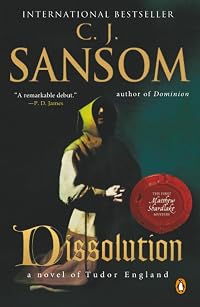
From the bestselling author of Winter in Madrid and Dominion comes the exciting and elegantly written first novel in the Matthew Shardlake Tudor Mystery series Dissolution is an utterly riveting portrayal of Tudor England. The year is 1537, and the country is divided between those faithful to the Catholic Church and those loyal to the king and the newly established Church of England. When a royal commissioner is brutally murdered in a monastery on the south coast of England, Thomas show more Cromwell, Henry VIII's feared vicar general, summons fellow reformer Matthew Shardlake to lead the inquiry. Shardlake and his young protégé uncover evidence of sexual misconduct, embezzlement, and treason, and when two other murders are revealed, they must move quickly to prevent the killer from striking again. A "remarkable debut" (P. D. James), Dissolution introduces a thrilling historical series that is not to be missed by fans of Wolf Hall and Bring Up the Bodies. show lessTags
Recommendations


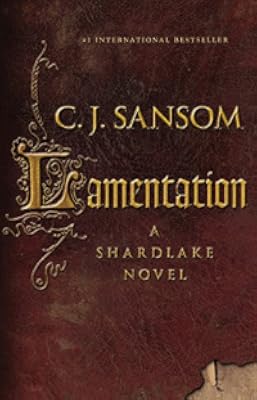
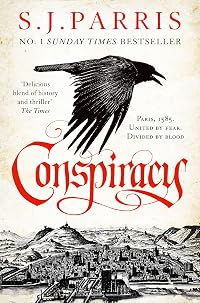
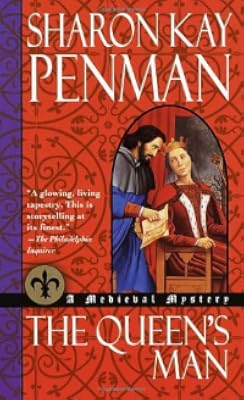

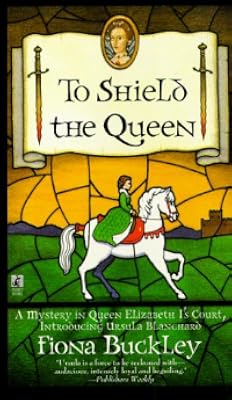






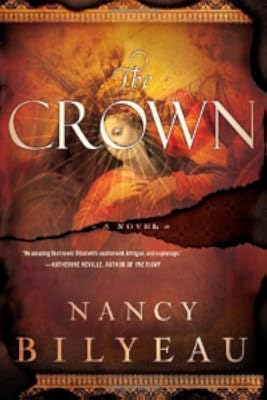
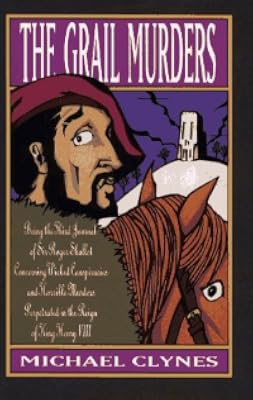
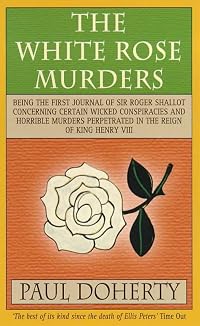
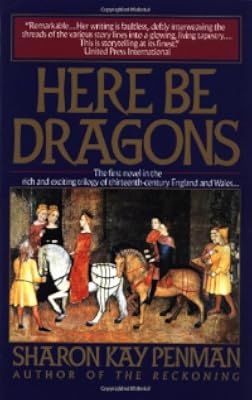

Member Recommendations

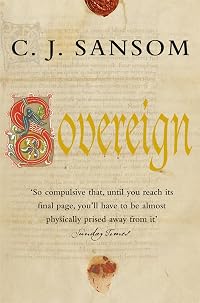
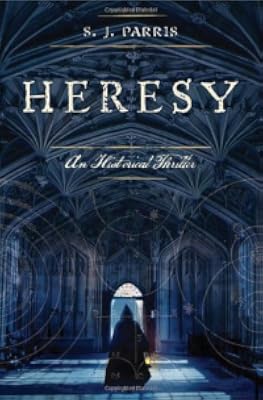
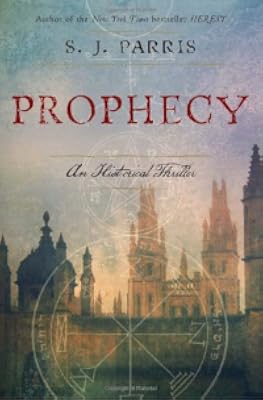
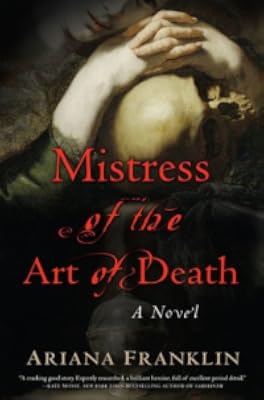
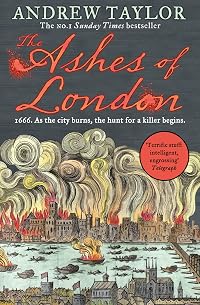
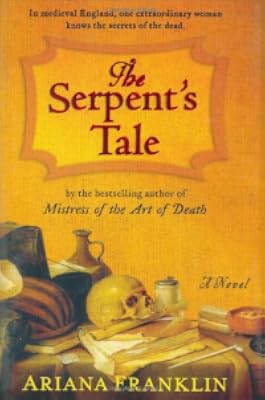
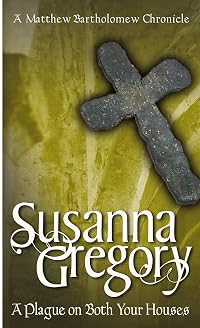
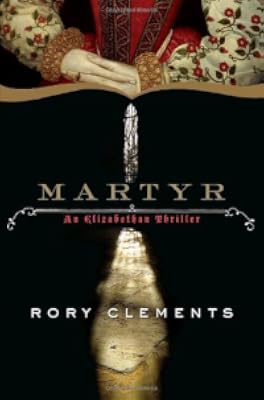
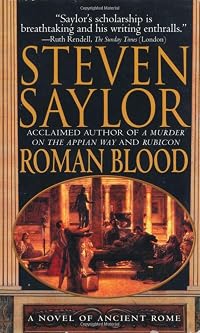
Caramellunacy Both feature ghastly murders in a monastery in a time of religious conflict and turmoil. The Name of the Rose (medieval Italy) is more philosophical, while Dissolution (Tudor England) is more of a straight-forward historical mystery. Both offer interesting insights into the political and religious issues of the times.
182
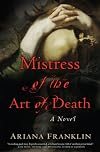
wandering_star Both these series are excellent mysteries set in well-drawn medieval England.
90
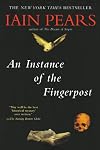
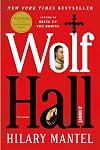

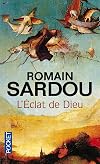
by anonymous user
Member Reviews
Okay, I'm hooked. I started reading this book on Thursday and finished it on Sunday night Every minute I wasn't doing something else (and some of them when I was like when I was making strawberry jam) I was reading this book.
I've always been fascinated by the Tudor period in English history but most of what I have read has been centred on the royal family. This book showed the underpinnings of the Reformation that made sure the royal edicts were carried out. The nitty gritty of everyday life is shown from the clothing to the weather to sexual habits and even to the bathroom accomodations (something I've always wondered about).
I didn't always like Shardlake or even admire him but partly that's because Sansom made him realistic with show more failing and foibles that all of us have. I suspect that I will like Shardlake more now that he has started to question Cromwell and the reformist movement. I'm sorry that some of the characters from the monastery won't be in future books as I thought they were most interesting (or maybe they will pop up in the future?)
I had an inkling about the ending but that just made me want to read faster.
I'm looking forward to the other two books I have on Mt. TBR. There no greater satisfaction than finishing a good book and realizing there are more to come. show less
I've always been fascinated by the Tudor period in English history but most of what I have read has been centred on the royal family. This book showed the underpinnings of the Reformation that made sure the royal edicts were carried out. The nitty gritty of everyday life is shown from the clothing to the weather to sexual habits and even to the bathroom accomodations (something I've always wondered about).
I didn't always like Shardlake or even admire him but partly that's because Sansom made him realistic with show more failing and foibles that all of us have. I suspect that I will like Shardlake more now that he has started to question Cromwell and the reformist movement. I'm sorry that some of the characters from the monastery won't be in future books as I thought they were most interesting (or maybe they will pop up in the future?)
I had an inkling about the ending but that just made me want to read faster.
I'm looking forward to the other two books I have on Mt. TBR. There no greater satisfaction than finishing a good book and realizing there are more to come. show less
At the height of the English Reformation under King Henry VIII, property lawyer Matthew Shardlake is sent (at the behest of Thomas Cromwell) to investiage a gruesome murder at Scarnsea Abbey - and to persuade the abbot to voluntarily close the monastery. Accompanied by his assistant Mark Poer, Shardlake uncovers a tangle of sins, licentiousness and deceptions - as well as further murders. But he also unearths some ugly truths about his mentor and the reformist cause.
It is rather unusual to read a historical novel with a disabled main character. Sansom uses Shardlake's hunched back to good effect - given people's superstitions and downright cruelty, Matthew keeps himself at an emotional distance from those around him. Having had to cope show more with others' prejudices, he is determined to maintain fair and rational judgments rather than letting personal dislike or sympathies inhibit his investigations. Finally, his deformity plays a large role in reconciling his world-weary approach with his almost naive idealism when it comes to the reformist actions in England. Matthew Shardlake is such an interesting and multi-faceted character; I very much enjoyed learning about the political and religious turmoil of the times alongside him.
None of this is to suggest that the mystery gets short shrift in Dissolution. It doesn't. Sansom gives us many suspects, many motives, and a truly unexpected denouement when the culprit is finally unmasked. The snowbound monastery surrounded by a treacherous bog provides the reader with a truly creepy atmosphere. I constantly expected someone to spring out from a secret passage or a shadowy corner. And the fear and hostility of the common people towards the monastery and the monks fear of Cromwell and King Henry despite adherence to the 'new' rules is palpable - further enhancing the atmosphere.
Also posted at A Hoyden's Look at Literature. show less
It is rather unusual to read a historical novel with a disabled main character. Sansom uses Shardlake's hunched back to good effect - given people's superstitions and downright cruelty, Matthew keeps himself at an emotional distance from those around him. Having had to cope show more with others' prejudices, he is determined to maintain fair and rational judgments rather than letting personal dislike or sympathies inhibit his investigations. Finally, his deformity plays a large role in reconciling his world-weary approach with his almost naive idealism when it comes to the reformist actions in England. Matthew Shardlake is such an interesting and multi-faceted character; I very much enjoyed learning about the political and religious turmoil of the times alongside him.
None of this is to suggest that the mystery gets short shrift in Dissolution. It doesn't. Sansom gives us many suspects, many motives, and a truly unexpected denouement when the culprit is finally unmasked. The snowbound monastery surrounded by a treacherous bog provides the reader with a truly creepy atmosphere. I constantly expected someone to spring out from a secret passage or a shadowy corner. And the fear and hostility of the common people towards the monastery and the monks fear of Cromwell and King Henry despite adherence to the 'new' rules is palpable - further enhancing the atmosphere.
Also posted at A Hoyden's Look at Literature. show less
I've come rather late to this popular series. The book is now nineteen-years-old and the series is seven books strong. Worse than that, this book has been on my shelves for NINE YEARS (that's the curse of keeping a book database, you know stuff like this and can't hide behind I've had this for a while.)
Anyway, my wife and I finally listened to 'Dissolution' on a long drive and now I have to buy the other six books.
So, what's good about it?
Firstly, Sansom is completely comfortable with both the day-to-day life and the power politics of the Tudor period and he doesn't sugar-coat either. This isn't a nostalgia trip to jolly Olde England, it's a journey through a time of immense social turmoil when many of our current aristocracy and landed show more gentry established their wealth through the ruthless pursuit of land being taken from the monasteries by the King. Sansom makes it easy to visualise London as the pit it was in 1537. He mercilessly displays the thuggery and corruption of Thomas Cromwell and his Commissioners. He also shows how the monasteries had decayed into places that benefitted only the monks who live in them and who lived dissolute lives of indulgence that were far from the Rules of the Orders they were in.
Finally, there's the mystery. It's a good one. One of Cromwell's Commissioners, on a mission to force the Abbot of ancient Scarsea Monastery to agree to dissolve the monastery and transfer the lands to the King, has been decapitated in the monastery and the altar has been desecrated by the sacrifice of a black cockerel. Cromwell gives Shardlake a commission to keep the murder quiet, find the murderer and get the abbot's agreement to dissolution as quickly and quietly as possible. What follows is a twisty plot with more than one death, lots of suspects and a surprising amount of physical conflict.
It was a very entertaining read. I can see why this series is so popular and I will now join the ranks of the faithful following Shardlake's career through King Henry's bloody reign (the man had 57,000 people executed, including almost anyone who was ever a trusted advisor) and beyond. show less
I've heard a lot of good things about this series, and I wasn't disappointed. Historical mysteries are especially enjoyable when the author has done his/her homework, and this is the case here :-) I liked the setting, the many details from the time period, and the mystery plot was quite good (I did guess who the murderer was before the main character did, though...).
At first I thought that the writing style was too cool and detached, but it grew on me. Also, I had read Hilary Mantel's "Wolf Hall" a few months ago, so reading this book meant entering a familiar universe. I liked that!
I'm looking forward to reading the rest of the series.
P.S. My book reader's heart melted when the monastery's library turned out to have a copy of show more Aristotle's "On Comedy" - "a fake, of course" :-)))))) show less
At first I thought that the writing style was too cool and detached, but it grew on me. Also, I had read Hilary Mantel's "Wolf Hall" a few months ago, so reading this book meant entering a familiar universe. I liked that!
I'm looking forward to reading the rest of the series.
P.S. My book reader's heart melted when the monastery's library turned out to have a copy of show more Aristotle's "On Comedy" - "a fake, of course" :-)))))) show less
A wonderful historical mystery set in 1537 England, just as King Henry VIII and his enthusiastic minister Thomas Cromwell are beginning the work of dissolving the country's monasteries. Matthew Shardlake, the story's protagonist, begins the story as a stalwart supporter of religious reform, but by the end of the story he is beginning to question, if not the ends of the reform movement (to dispose of "papist fripperies and fraud"), then certainly the lengths to which his mentor, Cromwell, will go to force religious reform upon the country.
And that's what places this novel a step above most other historical novels I've read. The novel doesn't just present history as a colorful backdrop, as so many others are content to do, but challenges show more readers to interact with history, encouraging them to question, think, and react. Sure, I enjoyed the plot of the tale, revolving around a serious of mysterious deaths at a desolate monastery targeted for closure. And I appreciated the narrative skills of the author, Sansom, who possesses the gift of creating authentically complex characters, and who knows how to manufacture atmosphere without regurgitating the thesaurus. But what I'll remember most about this tale, years from now, is how the book challenged me to address my own preconcieved notions about religious belief, monks, Henry VIII, and the politics of religious reformation. show less
And that's what places this novel a step above most other historical novels I've read. The novel doesn't just present history as a colorful backdrop, as so many others are content to do, but challenges show more readers to interact with history, encouraging them to question, think, and react. Sure, I enjoyed the plot of the tale, revolving around a serious of mysterious deaths at a desolate monastery targeted for closure. And I appreciated the narrative skills of the author, Sansom, who possesses the gift of creating authentically complex characters, and who knows how to manufacture atmosphere without regurgitating the thesaurus. But what I'll remember most about this tale, years from now, is how the book challenged me to address my own preconcieved notions about religious belief, monks, Henry VIII, and the politics of religious reformation. show less
Matthew Shardlake is sent by Thomas Cromwell to a monastery in Sussex to investigate the brutal murder of one of Cromwell's commissioners, as well as the theft of a holy relic and the desecration of the church.
All the characters are convincing and complex, the community of monks in Scarnsea like a society under the microscope, displaying all too human vanities, compulsions and deceits. One especially warms to Matthew Shardlake, a hunchbacked lawyer and reformer fighting double prejudice as Thomas Cromwell's commissioner and not immune himself from feelings of jealousy and forming inappropriate emotional attachments, even doubting his own faith, but also slightly too trusting and somewhat naive for a man in his position. The dialogue, show more especially at the beginning of the book, feels a little forced at times, as the author is trying to impart historical details to set the scene or flesh out the individual backgrounds to establish the characters for the reader. The pace almost slows to a stop in a few places and could have been tauter, and the solution to Singleton's murder was stretching credibility just that little bit too far for my comfort zone. That said, it's still the best (historical) murder mystery novel I've read in ages, one where the plotting wasn't so blindingly obvious that one could spot the murderer after about five chapters into the book, but it's about more than the violent taking of a life: as Matthew Shardlake says at the end of the book, the perpetrator would not have committed a murder "but for the times we live in, and ... would never have got away with fraud had things been more stable. You might as well ask what country England has become." The most memorable thing about this novel are the vivid and evocative descriptions of mid-Tudor England, and the way C J Sansom manages to convey to the reader the turmoil and upheaval of those years of the English Reformation. He provides plenty of opportunity for philosophical and theological thought and discussion by presenting a variety of different viewpoints, without forcing us to make a decision one way or another, but rather letting us make up our own minds. Even if your knowledge of that part of history is a bit sketchy (as is mine), when reading this book you realize that this was a momentous turning point in history and we are still able to see its remnants nearly five centuries later. I've already got the next book in the sequence (Dark Fire) lined up. show less
All the characters are convincing and complex, the community of monks in Scarnsea like a society under the microscope, displaying all too human vanities, compulsions and deceits. One especially warms to Matthew Shardlake, a hunchbacked lawyer and reformer fighting double prejudice as Thomas Cromwell's commissioner and not immune himself from feelings of jealousy and forming inappropriate emotional attachments, even doubting his own faith, but also slightly too trusting and somewhat naive for a man in his position. The dialogue, show more especially at the beginning of the book, feels a little forced at times, as the author is trying to impart historical details to set the scene or flesh out the individual backgrounds to establish the characters for the reader. The pace almost slows to a stop in a few places and could have been tauter, and the solution to Singleton's murder was stretching credibility just that little bit too far for my comfort zone. That said, it's still the best (historical) murder mystery novel I've read in ages, one where the plotting wasn't so blindingly obvious that one could spot the murderer after about five chapters into the book, but it's about more than the violent taking of a life: as Matthew Shardlake says at the end of the book, the perpetrator would not have committed a murder "but for the times we live in, and ... would never have got away with fraud had things been more stable. You might as well ask what country England has become." The most memorable thing about this novel are the vivid and evocative descriptions of mid-Tudor England, and the way C J Sansom manages to convey to the reader the turmoil and upheaval of those years of the English Reformation. He provides plenty of opportunity for philosophical and theological thought and discussion by presenting a variety of different viewpoints, without forcing us to make a decision one way or another, but rather letting us make up our own minds. Even if your knowledge of that part of history is a bit sketchy (as is mine), when reading this book you realize that this was a momentous turning point in history and we are still able to see its remnants nearly five centuries later. I've already got the next book in the sequence (Dark Fire) lined up. show less
The first in the Matthew Shardlake series sees the hunchback lawyer travelling to an isolated monastery. Part of his mission is to uncover any scandal, whether financial, sexual or against the new rules for the church in England, so that the monastery can be dissolved. But the previous commissioner was murdered and Shardlake also has to investigate the death. Was it caused by someone inside the monastery?
I really enjoyed this story. A good mix of history and mystery. Shardlake grows as a character over the course of the novel as the events he uncovers lead him to question his belief and trust in his employer, Cromwell. I enjoyed the variety of characters and their various secrets. Also the answer to the death was one I didn't expect. I show more will definitely be reading more about Shardlake. show less
I really enjoyed this story. A good mix of history and mystery. Shardlake grows as a character over the course of the novel as the events he uncovers lead him to question his belief and trust in his employer, Cromwell. I enjoyed the variety of characters and their various secrets. Also the answer to the death was one I didn't expect. I show more will definitely be reading more about Shardlake. show less
Members
- Recently Added By
Published Reviews
A well-written historical mystery, unique for both its characters and setting. A definite winner for fans of historical mystery.
added by thelitwitch
Lists

The Guardian's 1000 Novels Everyone Must Read
1,005 works; 547 members

Best Historical Fiction
620 works; 257 members

Historical Fiction
889 works; 91 members

Cerebral Mysteries
34 works; 23 members

Best 21st Century Books (So Far)
670 works; 86 members

Favorite Series
238 works; 94 members

Books featuring monks and/or nuns
166 works; 33 members
Best Historical Crime
44 works; 17 members

Crime and Mysteries to Read
746 works; 31 members

British Mystery
469 works; 14 members

Historical Fiction Lovers
88 works; 4 members

Top Five Books of 2016
795 works; 228 members
MysteryCAT: Historical Crime
27 works; 7 members

al.vick-wishlist-mystery
11 works; 1 member

Authors from Scotland
9 works; 1 member
Favourite Books
1,819 works; 309 members

BBC Radio 4 Bookclub
340 works; 13 members

Books Read in 2015
3,299 works; 129 members

KayStJ's to-read list
1,616 works; 11 members

Set in the 15th and 16th Centuries
28 works; 4 members

Books Read in 2017
4,249 works; 129 members

Books Read in 2012
816 works; 31 members

A Novel Cure
742 works; 23 members

Books Read in 2019
4,052 works; 108 members

Books Read in 2020
4,379 works; 124 members
Best Mysteries With a Historical Setting
292 works; 160 members
Author Information

Some Editions
Awards and Honors
Awards
Distinctions
Notable Lists
Series

Work Relationships
Is contained in
Has the adaptation
Common Knowledge
- Canonical title
- Dissolution
- Original title
- Dissolution
- Alternate titles*
- Kloostermoord
- Original publication date
- 2003
- People/Characters
- Matthew Shardlake (Lawyer Commisioner); Mark Poer; Thomas Cromwell, 1st Earl of Essex (Vicar General); Abbott Fabian; Brother Edwig (Bursar); Brother Gabriel of Ashford (Sacrist | Precentor) (show all 21); Guy Malton (Brother Guy | Infirmarian); Brother Hugh (Chamberlain); Brother Jude (Pittancer); Brother Mortimus of Kelso (Prior); Lawrence Goodhaps (Canon Lawyer); Brother Athelstan; Alice Fewterer (assistant to Brother Guy); Simon Whelplay (novice); Brother Jerome Wentworth (Carthusian monk); Brother Luke; Gilbert Copynger (Justice); Orphan Stonegarden; Robin Singleton; Bugge (gatekeeper); Mark Smeaton
- Important places
- Scarnsea monastery, Scarnsea, England, UK (fictional); Romney Marsh, Kent, England, UK; London, England, UK
- Important events
- Reign of Henry VIII (1509-04-21 | 1547-01-28); Dissolution of the Monasteries (1536 | 1541)
- Dedication
- To the writers' group:
Jan, Luke, Mary, Mike B, Mike H, Roz, William
and especially Tony, our inspiration. The crucible.
And to Caroline - First words
- I was down in Surrey, on business for Lord Cromwell's office, when the summons came.
- Quotations
- You untangle a knot with slow teasing, not sharp pulling, and believe me we have here a knot such as I have never seen.
- Last words
- (Click to show. Warning: May contain spoilers.)We stood silent, watching the seabirds bobbing on the river, while behind us echoed the distant sound of crashing lead.
- Blurbers
- James, P.D.; Dexter, Colin; Robinson, Peter
- Original language
- English
*Some information comes from Common Knowledge in other languages. Click "Edit" for more information.
Classifications
Statistics
- Members
- 4,698
- Popularity
- 3,055
- Reviews
- 205
- Rating
- (3.93)
- Languages
- 21 — Czech, Danish, Dutch, English, Finnish, French, German, Greek, Hungarian, Italian, Norwegian (Bokmål), Norwegian, Polish, Russian, Serbian, Croatian, Spanish, Swedish, Turkish, Ukrainian, Portuguese (Brazil)
- Media
- Paper, Audiobook, Ebook
- ISBNs
- 80
- UPCs
- 1
- ASINs
- 21