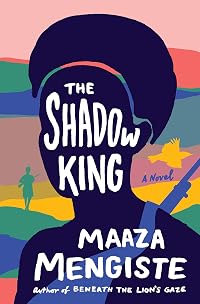
The Shadow King
by Maaza Mengiste
On This Page
Description
"A brilliant novel, lyrically lifting history towards myth. It's also compulsively readable. I devoured it in two days." -- Salman Rushdie. With the threat of Mussolini's army looming, recently orphaned Hirut struggles to adapt to her new life as a maid to Kidane and his wife Aster. Kidane, an officer in Emperor Haile Selassie's army, rushes to mobilize his strongest men before the Italians invade. His initial kindness to Hirut shifts into cruelty when she resists his advances, and Hirut show more finds herself tumbling into a new world of thefts and violations, of betrayals and rage. As the war begins in earnest, the Emperor goes into exile and Ethiopia quickly loses hope. Hirut helps disguise a gentle peasant as the emperor and soon becomes his guard, inspiring other women to take up arms against the Italians. -- adapted from jacket show lessTags
Recommendations






























Member Recommendations
Member Reviews
This book wove together so many interests of mine that I found it mesmerizing to read. It takes place in Ethiopia from the 1930s on. I count among friends many people from Ethiopia so anytime I can learn more about their country I am interested. In the 1930s Italy, under Mussolini, attempted to conquer Ethiopia. So the subjects of fascism and colonial ambition form a large part of the story. One of the Italian soldiers who comes to Ethiopia brings a camera with him and he is often tasked with taking photographs of the captured Ethiopians. Although I'm not a great photographer I am always interested in what a good photographer can capture. That soldier happened to be Jewish so there is the whole question of the treatment of Jews by the show more Nazis that raises its ugly head. The most intriguing facet of the story and the whole reason Mengiste wrote the book is the integral part the Ethiopian women took in the resistance.
There are four women who play major roles in this book. Hirut was still a young girl when the Italians invaded. She was a servant in the household of Aster and Kidane, having been taken in by Kidane when her parents died. Also in the household is a woman known only as "the cook" who, rather shockingly, was a slave. Aster, Kidane's wife, did not want to be married. She and the cook tried to run away together just before the wedding ceremony but were caught and brought back. Aster bore a son to Kidane but he died in childhood which tragedy has deeply scarred both parents. The other main woman has many names: Fifi, Ferres, etc and she has many personas to go with those names. She has been a prostitute and she comes to the Italian camp to be the mistress of the commander. But she is also a spy who passes on much valuable information to the resistance fighters. Each of these women play an important role in the Ethiopian army.
It is Hirut who comes up with the observation that a musician who has joined the resistance looks just like Haile Selassie. Minim becomes the Shadow King and rallies the Ethiopians when the real Selassie has fled the country. Inspired by the faux Selassie the Ethiopians fight on against the Italians who eventually leave Ethiopia to return to the war in Europe.
The book is written with many interruptions to the narrative. There are descriptions of photographs, short biographies of tangential characters, interludes about what Selassie is doing and thinking, and a sort of Greek chorus to give overviews. With a less skilled writer this might make the book choppy but each time one of these sequences occurred I read them avidly. show less
There are four women who play major roles in this book. Hirut was still a young girl when the Italians invaded. She was a servant in the household of Aster and Kidane, having been taken in by Kidane when her parents died. Also in the household is a woman known only as "the cook" who, rather shockingly, was a slave. Aster, Kidane's wife, did not want to be married. She and the cook tried to run away together just before the wedding ceremony but were caught and brought back. Aster bore a son to Kidane but he died in childhood which tragedy has deeply scarred both parents. The other main woman has many names: Fifi, Ferres, etc and she has many personas to go with those names. She has been a prostitute and she comes to the Italian camp to be the mistress of the commander. But she is also a spy who passes on much valuable information to the resistance fighters. Each of these women play an important role in the Ethiopian army.
It is Hirut who comes up with the observation that a musician who has joined the resistance looks just like Haile Selassie. Minim becomes the Shadow King and rallies the Ethiopians when the real Selassie has fled the country. Inspired by the faux Selassie the Ethiopians fight on against the Italians who eventually leave Ethiopia to return to the war in Europe.
The book is written with many interruptions to the narrative. There are descriptions of photographs, short biographies of tangential characters, interludes about what Selassie is doing and thinking, and a sort of Greek chorus to give overviews. With a less skilled writer this might make the book choppy but each time one of these sequences occurred I read them avidly. show less
[[Mengiste]]'s latest novel, [The Shadow King], is one that I found on the recently released long list for the Booker Prize. It caught my eye as a novel written by an African woman about the unsung women warriors that fought for Ethiopia against the Italian invasion in the 1930s.
Mengiste is a masterful writer. She develops strong, complex, flawed characters on both sides, the Ethiopians and the Italians. And her Ethiopian female characters are complex as well - they are certainly not perfect role models or heroines. But they are real and strong and human. They have complex relationships with each other, that are realistic instead of glorifying.
I appreciated this book and learning a little bit about this time period, but, as expected, show more reading about war is brutal and violent. A lot of this book was very uncomfortable to read and I wouldn't describe as pleasant. This book is very deserving of the critical claim it is receiving, but also is a challenging read. However, as the author states, it's so important to give these women a voice and acknowledge their contributions.
Original publication date: 2020
Author’s nationality: Ethiopian
Original language: English
Length: 428 pages
Rating: 3.5 stars
Format/where I acquired the book: library hardback
Why I read this: booker list, description grabbed my attention show less
Mengiste is a masterful writer. She develops strong, complex, flawed characters on both sides, the Ethiopians and the Italians. And her Ethiopian female characters are complex as well - they are certainly not perfect role models or heroines. But they are real and strong and human. They have complex relationships with each other, that are realistic instead of glorifying.
I appreciated this book and learning a little bit about this time period, but, as expected, show more reading about war is brutal and violent. A lot of this book was very uncomfortable to read and I wouldn't describe as pleasant. This book is very deserving of the critical claim it is receiving, but also is a challenging read. However, as the author states, it's so important to give these women a voice and acknowledge their contributions.
Original publication date: 2020
Author’s nationality: Ethiopian
Original language: English
Length: 428 pages
Rating: 3.5 stars
Format/where I acquired the book: library hardback
Why I read this: booker list, description grabbed my attention show less
“He raises his arm and brings it down and hurls his voice into the valley: Charge! He screams it though there is no way he can be heard. Charge! The war cries erupt, the ascari surge forward, the air thickens with dust and voice and horn, and soon the chaos no longer spins. It is his to control. It becomes exhilarating. And as the ascari dash across the field, he imagines the coming clash as colossal and symphonic, operatic and tragic.”
Sweeping historic fiction about the invasion of Ethiopia in 1935 by Mussolini’s troops. It highlights the active role women played in the war, moving from support to full-fledged soldiers. It opens in 1974, as protagonist Hirut returns to Addis Ababa with a mysterious box. It then flashes back to show more tell her story. It is not just a story of war, though. It is also a story of family. It includes characters from both sides, portraying their personalities, backstories, and motivations.
This is an ambitious novel. The characters are deeply developed. There are many forms of “shadows,” such as photographs that evoke memories of those who died in the war, a body double for Emperor Haile Selassie (who fled to England), the victims that maintain their dignity in the face of horrific cruelty, and others who become a shadow of their former selves in a multitude of ways. It weaves in descriptions of photos, a Greek chorus, and Interludes.
“A group of Abyssinians are astride horses in brightly colored saddles at the top of the hill across the valley. They are galloping down at full speed, a burst of light and color: a dozen warriors with wild hair, their cries like a discordant Greek chorus. Far ahead of them, that improbable figure, his chest exposed to the soldati, leaping over stone and grass, incomprehensible. Beautiful, even.”
It starts slowly and builds up to the climactic battle. It feels fragmented at times, but overall, it is a lyrically written, powerful evocation of a piece of history. It inspired me to research more about the Italo-Ethiopian wars. As a caution, this book contains extreme war-related brutality, murder of civilians, and rape.
“Here is the truth he wants to ignore: that what is forged into memory tucks itself into bone and muscle. It will always be there and it will follow us to the grave.” show less
Sweeping historic fiction about the invasion of Ethiopia in 1935 by Mussolini’s troops. It highlights the active role women played in the war, moving from support to full-fledged soldiers. It opens in 1974, as protagonist Hirut returns to Addis Ababa with a mysterious box. It then flashes back to show more tell her story. It is not just a story of war, though. It is also a story of family. It includes characters from both sides, portraying their personalities, backstories, and motivations.
This is an ambitious novel. The characters are deeply developed. There are many forms of “shadows,” such as photographs that evoke memories of those who died in the war, a body double for Emperor Haile Selassie (who fled to England), the victims that maintain their dignity in the face of horrific cruelty, and others who become a shadow of their former selves in a multitude of ways. It weaves in descriptions of photos, a Greek chorus, and Interludes.
“A group of Abyssinians are astride horses in brightly colored saddles at the top of the hill across the valley. They are galloping down at full speed, a burst of light and color: a dozen warriors with wild hair, their cries like a discordant Greek chorus. Far ahead of them, that improbable figure, his chest exposed to the soldati, leaping over stone and grass, incomprehensible. Beautiful, even.”
It starts slowly and builds up to the climactic battle. It feels fragmented at times, but overall, it is a lyrically written, powerful evocation of a piece of history. It inspired me to research more about the Italo-Ethiopian wars. As a caution, this book contains extreme war-related brutality, murder of civilians, and rape.
“Here is the truth he wants to ignore: that what is forged into memory tucks itself into bone and muscle. It will always be there and it will follow us to the grave.” show less
This historical novel about the Second Italo-Ethiopian War opens in the main bus station in Addis Ababa in 1974, just prior to the overthrow of Emperor Haile Selassie I, the revered head of Ethiopia since 1930. Hirut, the central character of this historical novel, carries a box containing the personal effects of Ettore Navarra, a photographer in the invading Italian army, whose task is to chronicle the successful war effort against the Ethiopians, in the face of Italy's humiliating defeat in the First Italo-Ethiopian War in the late 19th century. Ettore, whose ancestry put him and his Jewish father at risk of persecution and deportation during the war, has returned nearly 40 years after its conclusion to photograph the Ethiopian people show more at a time of turmoil, and wishes to reconnect with Hirut, who was captured by General Carlo Fucelli, the driven and sadistic leader of the invading forces.
Hirut is a beautiful young servant in the household of Kidane, a high ranking officer in the Ethiopian Army, and his wife Aster, a haughty and cruel woman who is jealous of Hirut's beauty and Kidane's attraction towards her. The narrative begins in 1935, as the Italian Army was set to invade Ethiopia from Italian Somaliland. Hirut is an orphan, and Kidane vowed to her mother before her death that he would look after her with kindness, although he could not protect her from the wrath of his headstrong wife. As Kidane and his men go off to war Aster and other women in the community desire to fight alongside the men, as they were taught to fire rifles and fight by their fathers, but they are instructed to stay behind and support them instead.
The badly equipped and trained Ethiopian Army, although superior in numbers, was overwhelmed by the Italian forces in early 1936, and before the capital of Addis Ababa could be captured Emperor Haile Selassie fled to England, which sapped the spirit of his people. Hirut, who was now no longer a servant to Kidare and Aster but a valuable member of the women who assisted Kidare's troop, noticed that one of the men looked exactly like the exiled emperor, and suggested that he be dressed as a "shadow king", in order to boost the morale of their countrymen during the war effort. She served as his loyal companion, but during a fateful battle against Fucelli and his army she fought bravely, but was captured and taken to a hilltop jail built by the Italians, where she and other Ethiopian fighters were cruelly tortured and killed, and escape seemed to be an impossible wish.
"The Shadow King" is filled with heroic and memorable but deeply flawed characters on both sides, and Hirut overcomes terrible cruelty from her masters and the Italians with a laudable toughness and bravery that inspire both those fighting alongside her, along with the Italian photographer Ettore, who sympathizes with her plight despite the danger it puts him in.
I struggled reading "The Shadow King", but that was largely due to my own difficulty concentrating, and in retrospect this is a superb and very well written novel about a little known conflict that could be considered the first battle of World War II, which is deserving of its place on this year's Booker Prize longlist. show less
Hirut is a beautiful young servant in the household of Kidane, a high ranking officer in the Ethiopian Army, and his wife Aster, a haughty and cruel woman who is jealous of Hirut's beauty and Kidane's attraction towards her. The narrative begins in 1935, as the Italian Army was set to invade Ethiopia from Italian Somaliland. Hirut is an orphan, and Kidane vowed to her mother before her death that he would look after her with kindness, although he could not protect her from the wrath of his headstrong wife. As Kidane and his men go off to war Aster and other women in the community desire to fight alongside the men, as they were taught to fire rifles and fight by their fathers, but they are instructed to stay behind and support them instead.
The badly equipped and trained Ethiopian Army, although superior in numbers, was overwhelmed by the Italian forces in early 1936, and before the capital of Addis Ababa could be captured Emperor Haile Selassie fled to England, which sapped the spirit of his people. Hirut, who was now no longer a servant to Kidare and Aster but a valuable member of the women who assisted Kidare's troop, noticed that one of the men looked exactly like the exiled emperor, and suggested that he be dressed as a "shadow king", in order to boost the morale of their countrymen during the war effort. She served as his loyal companion, but during a fateful battle against Fucelli and his army she fought bravely, but was captured and taken to a hilltop jail built by the Italians, where she and other Ethiopian fighters were cruelly tortured and killed, and escape seemed to be an impossible wish.
"The Shadow King" is filled with heroic and memorable but deeply flawed characters on both sides, and Hirut overcomes terrible cruelty from her masters and the Italians with a laudable toughness and bravery that inspire both those fighting alongside her, along with the Italian photographer Ettore, who sympathizes with her plight despite the danger it puts him in.
I struggled reading "The Shadow King", but that was largely due to my own difficulty concentrating, and in retrospect this is a superb and very well written novel about a little known conflict that could be considered the first battle of World War II, which is deserving of its place on this year's Booker Prize longlist. show less
(9.5)What a marvelous book and in my opinion unlucky not to have won this years ManBooker. I found it informative, confronting and beautifully crafted.
The story opens with an older woman, Hirut, travelling with a box of photos and letters to a rendezvous with Ettore, a retired photographer of the Italian army, which invaded Ethiopia in 1935.
We then are taken back to Hirut in 1935, a servant for Kidane, an officer in Emperor Haile Selassie's army. As the men mobilize against the invading Italians, the women are expected to follow, providing food and medical support. When morale gets low, as Haile Selassie flees to Britain for safety, Hirut makes a suggestion that they disguise one of their men as Selassie and the women insist on taking show more up arms with the men.
When Kidane's wife, Aster and Hirut are captured and taken to a concentration camp in the high country they meet Ettore. Ettore's role is to photograph, the Italian assaults and indeed the captured prisoners but his commanding officer goes one step further asking him to take photos of the atrocities committed by the Italians. This doesn't sit comfortably with Ettore but he feels he has no choice. He develops a respect for the courage displayed by the Ethiopians. When the Italians follow Germany's lead in eliminating Italians of Jewish ancestry, Ettore is recalled to Italy. He buries his treasured photos and letters under a tree, witnessed by Hirut. After being rescued, Hirut and Aster join their menfolk in another attack on the Italian camp. Ettore asks Hirut to unearth his box and keep it safe.
This book had this reader seeking further enlightenment about the 2nd Ethiopian-Italian war, an event I had no prior knowledge of and also of Haile Selassie's reign. There is so much more to this story, the complex relationship between Kidane, Aster and Hirut, both violent and caring, the portrayal of a divided nation and the political and historical background that precedes war between nations. I feel better informed for reading this. show less
The story opens with an older woman, Hirut, travelling with a box of photos and letters to a rendezvous with Ettore, a retired photographer of the Italian army, which invaded Ethiopia in 1935.
We then are taken back to Hirut in 1935, a servant for Kidane, an officer in Emperor Haile Selassie's army. As the men mobilize against the invading Italians, the women are expected to follow, providing food and medical support. When morale gets low, as Haile Selassie flees to Britain for safety, Hirut makes a suggestion that they disguise one of their men as Selassie and the women insist on taking show more up arms with the men.
When Kidane's wife, Aster and Hirut are captured and taken to a concentration camp in the high country they meet Ettore. Ettore's role is to photograph, the Italian assaults and indeed the captured prisoners but his commanding officer goes one step further asking him to take photos of the atrocities committed by the Italians. This doesn't sit comfortably with Ettore but he feels he has no choice. He develops a respect for the courage displayed by the Ethiopians. When the Italians follow Germany's lead in eliminating Italians of Jewish ancestry, Ettore is recalled to Italy. He buries his treasured photos and letters under a tree, witnessed by Hirut. After being rescued, Hirut and Aster join their menfolk in another attack on the Italian camp. Ettore asks Hirut to unearth his box and keep it safe.
This book had this reader seeking further enlightenment about the 2nd Ethiopian-Italian war, an event I had no prior knowledge of and also of Haile Selassie's reign. There is so much more to this story, the complex relationship between Kidane, Aster and Hirut, both violent and caring, the portrayal of a divided nation and the political and historical background that precedes war between nations. I feel better informed for reading this. show less
51. The Shadow King by Maaza Mengiste
reader: Robin Miles
published: 2019
format: 16:09 audible audiobook (448 pages in hardcover)
acquired: September 11
listened: Sep 11 – Oct 8
rating: 3½
locations: Ethiopia
about the author: Ethiopian-born American, born 1974
This was interesting. A take on the second Italio-Ethiopian war, or, if you like, the second failed invasion of Ethiopia by Italy. This one was led by Mussolini in 1935. It's a cool topic and made more interesting as it's told partially through the eyes of the women Ethiopian soldiers. But I never did take to the style, so I can‘t say I personally liked it all that much. Actually I found it annoying on audio. If there weren't so many interesting comments on this, I would have show more called it a failed poetic prose, but there is some personal preference on that. I know very little about this place or war or Haile Selassie, so it was rewarding just to learn a bit.
I have thoughts on the the shadow king himself as a play on Dante‘s shades in Inferno.
I'll add that this is another contemporary book that dwells on making the reader physically uncomfortable with the descriptions of injuries, brutality and messed up sex. (I would add [Shuggie Bain] to that list.) I don't like that aspect, but it has its point.
Anyway, not my thing. YMMV.
2020
https://www.librarything.com/topic/322920#7285574 show less
reader: Robin Miles
published: 2019
format: 16:09 audible audiobook (448 pages in hardcover)
acquired: September 11
listened: Sep 11 – Oct 8
rating: 3½
locations: Ethiopia
about the author: Ethiopian-born American, born 1974
This was interesting. A take on the second Italio-Ethiopian war, or, if you like, the second failed invasion of Ethiopia by Italy. This one was led by Mussolini in 1935. It's a cool topic and made more interesting as it's told partially through the eyes of the women Ethiopian soldiers. But I never did take to the style, so I can‘t say I personally liked it all that much. Actually I found it annoying on audio. If there weren't so many interesting comments on this, I would have show more called it a failed poetic prose, but there is some personal preference on that. I know very little about this place or war or Haile Selassie, so it was rewarding just to learn a bit.
I have thoughts on the the shadow king himself as a play on Dante‘s shades in Inferno.
I'll add that this is another contemporary book that dwells on making the reader physically uncomfortable with the descriptions of injuries, brutality and messed up sex. (I would add [Shuggie Bain] to that list.) I don't like that aspect, but it has its point.
Anyway, not my thing. YMMV.
2020
https://www.librarything.com/topic/322920#7285574 show less
Fascism. Colonialism. History is ugly, but considering what I see on the news lately, not much has changed. We are still hateful. We still see differences as "other".
So often WW2 novels that I read are focused on Europe, but this one is focused on the Italian invasion of Ethiopa. A nation that managed to remain indpendent for decades until the rest of the world sat back and allowed Italy's fascists to invade in the 1930s and claim it for their own.
The women of this novel are tough. The violence they faced unimaginable.
Trigger warning - sexual assault, rape, war crimes
So often WW2 novels that I read are focused on Europe, but this one is focused on the Italian invasion of Ethiopa. A nation that managed to remain indpendent for decades until the rest of the world sat back and allowed Italy's fascists to invade in the 1930s and claim it for their own.
The women of this novel are tough. The violence they faced unimaginable.
Trigger warning - sexual assault, rape, war crimes
Members
- Recently Added By
Lists

Top Five Books of 2020
982 works; 350 members

Female Author
1,234 works; 67 members
The Guardian Books of the Year 2020
126 works; 8 members

Books Read in 2020
4,379 works; 124 members

Tour of Africa
54 works; 2 members

Not the NYT list of top 100 21st century books
100 works; 6 members
Author Information

6+ Works 1,477 Members
Some Editions
Awards and Honors
Awards
Distinctions
Common Knowledge
- Canonical title
- The Shadow King
- Original publication date
- 2019-09-24
- People/Characters
- Hirut; Kidane; Aster; Ettore Navarra; Carlo Fucelli
- Important places
- Ethiopia
- Important events
- Second Italo-Abyssinian War
- Epigraph
- Hereafter we shall be made into things of song, for the men of the future.
— The Iliad, Homer
Woe to the land shadowing with wings, which is beyond the rivers of Ethiopia.
— Isiah, Chapter 18, Verse 1
What god hurls you on, stroke on stroke to the long dying fall. Why the horror clashing through your music, terror struck to song. Where do your words of god and grief begin.
— Agamemnon, Aeschylus - First words
- She does not want to remember but she is here and memory is gathering bones.
Classifications
Statistics
- Members
- 898
- Popularity
- 29,995
- Reviews
- 38
- Rating
- (3.81)
- Languages
- 9 — Dutch, English, Finnish, French, German, Italian, Portuguese, Spanish, Swedish
- Media
- Paper, Audiobook, Ebook
- ISBNs
- 28
- ASINs
- 5