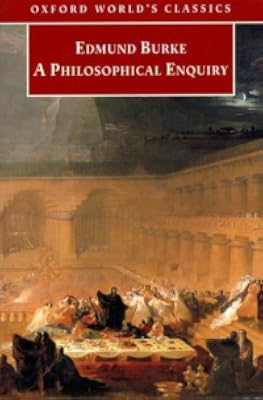
A Philosophical Enquiry into the Origin of Our Ideas of the Sublime and Beautiful
by Edmund Burke
On This Page
Description
An eloquent and sometimes even erotic book, the Philosophical Enquiry was long dismissed as a piece of mere juvenilia. However, Burke's analysis of the relationship between emotion, beauty, and art form is now recognized as not only an important and influential work of aesthetic theory, but also one of the first major works in European literature on the Sublime, a subject that has fascinated thinkers from Kant and Coleridge to the philosophers and critics of today. ""I'm gratified you're. show more keeping Burke's text on the Sublime available in an inexpensive edition. Thanks again for keeping it easil show lessTags
Recommendations







Member Reviews
Edmund Burke's influential 'Philosophical Enquiry' (1757) should be considered as an early attempt at phenomenology and the psychology of aesthetics rather than as a full-blown philosophical work. He addresses language, for example, only briefly as a somewhat desultory if fruitful coda.
Still, Burke's description of the 'sublime' (the human response to external stimuli that evoke awe, terror or reverence) still stands as a stimulating insight into what remains a psychological mystery - intense feeling that exists without language although it can be triggered by language.
His description of 'beauty' is perhaps less successful because he is describing the norms of his time far more than he is doing in the case of the 'sublime'. The modern show more mind will naturally baulk at the negative associations he gives to 'blackness' and at his essentialist view of simpering women.
Philosophy generally only works when it describes things regardless of contingent cultural conditions unless (as in the case of Heidegger) it is fully aware of that contingency and factors it in as part of the philosophy - in other words that the thinker is maximally aware of the conditions of his thinking.
Burke is clearly not aware of the conditioning of his thinking. So, for all the acute analysis of the 'sublime ' which has been so influential in Western cultural history, I am afraid we have to say that Burke as philosopher does not quite stand the test of time.
Where he does stand the test of time is as a source of insight into the eighteenth century mind as it turns a little from the Enlightenment towards recognising that our responses to the world cannot be encompassed by pure reason but have other more emotional drivers.
To his credit, he does not try to rationalise the sentiments underpinning and surrounding both the sublime and the beautiful. He allows them to 'be' as experiences that we can all recognise (even if they are more culturally variable than he seems to think) and then he investigates them.
This is the work of an ambitious young man - he was only 28 at the time. A certain earnestness of enquiry is present through the work. He knows he does not know. He is trying to think his way to some sort of understanding that he knows is incomplete. The book is definitely exploratory.
The work remains reasonably readable today because eighteenth century prose tends to clarity more than obscurity. The longeurs only come when you see him puzzling through thoughts that were hard to clarify for himself as much as for us.
Yet when he lets rip with descriptions of our actual emotional responses to the sublime and the beautiful, then the two and a half centuries that separate us from him drift away. Much that he writes is embedded not in his century but in us. And he writes well when he needs to.
Curiously, based on Adam Phillips' notes (it is appropriate that the Editor is a psychotherapist and not a philosopher), the vast majority of Burke's many classical and literary quotations are marked out as 'misquoted'.
Evidently Burke was churning this out in his lodgings without access to a library and from memory. One assumes that the bulk of his readers were also school classicists from memory and not from the academy or else this might have been used against him.
There is perhaps an insight here into a fluidity in the use of texts that would not be tolerable in later ages and that misquotation was probably regarded as fine so long as it was not the Bible. His audience could read the Latin and scan a line. The misremembered word was not relevant to the project.
Phillips refers to the eroticism of the 'Philosophical Enquiry' but that it is too strong. Burke is simply culturally enabled to describe some truths without the dead weight of the Victorian age and still retain some delicacy.
Although not a great work of philosophy, this is still worth reading for its cultural importance. It enables reason to be balanced by sentiment but, more importantly, it opens the door to experimental psychology ... exactly what is happening when an external object excites an emotion?
He does not answer that question adequately - there is no cause given for the effect beyond the phenomena themselves - but he is asking the right questions. He is also providing clear and credible descriptions of the relationships between observer and phenomena.
His 'philosophy of language' is also not stupid. It too asks an important question which he cannot adequately answer. How is it that words alone, which have no necessary link to the reality they describe, can be formed to excite emotions such as awe, delight, desire and pleasure?
This is an important question which still has no satisfactory answer. He contributes by pointing out the mystery that we read without forming clear pictures as we read and yet we 'understand' something from the linking of the words rather than any deep consideration of what they portray.
Read any line of 'literature' and ask yourself if you actually envision each word and each event clearly rather than construct a meaning internally that, on careful consideration, is seemingly disconnected from the 'pictures' the language should represent and you will see what I mean.
These final observations by Burke on language are worth dwelling on although having described the mystery he has only the most limited account of what is going on. As before, he asks the right question, supplies the evidence of the problem and then moves on.
The science and philosophy he uses may be state of the art in 1757 (he knows his Locke) and he is a philosopher to the degree that he does what helps to define philosophy (asking awkward questions of the facts of the matter) but he does not do much more than that.
What he does manage to do is get his readers to see that abstract ratiocination can only go so far in describing our responses to the world and that our emotional life, especially in relation to core underlying drives like fear and erotic desire, needs to be observed more closely in order to understand it. show less
Still, Burke's description of the 'sublime' (the human response to external stimuli that evoke awe, terror or reverence) still stands as a stimulating insight into what remains a psychological mystery - intense feeling that exists without language although it can be triggered by language.
His description of 'beauty' is perhaps less successful because he is describing the norms of his time far more than he is doing in the case of the 'sublime'. The modern show more mind will naturally baulk at the negative associations he gives to 'blackness' and at his essentialist view of simpering women.
Philosophy generally only works when it describes things regardless of contingent cultural conditions unless (as in the case of Heidegger) it is fully aware of that contingency and factors it in as part of the philosophy - in other words that the thinker is maximally aware of the conditions of his thinking.
Burke is clearly not aware of the conditioning of his thinking. So, for all the acute analysis of the 'sublime ' which has been so influential in Western cultural history, I am afraid we have to say that Burke as philosopher does not quite stand the test of time.
Where he does stand the test of time is as a source of insight into the eighteenth century mind as it turns a little from the Enlightenment towards recognising that our responses to the world cannot be encompassed by pure reason but have other more emotional drivers.
To his credit, he does not try to rationalise the sentiments underpinning and surrounding both the sublime and the beautiful. He allows them to 'be' as experiences that we can all recognise (even if they are more culturally variable than he seems to think) and then he investigates them.
This is the work of an ambitious young man - he was only 28 at the time. A certain earnestness of enquiry is present through the work. He knows he does not know. He is trying to think his way to some sort of understanding that he knows is incomplete. The book is definitely exploratory.
The work remains reasonably readable today because eighteenth century prose tends to clarity more than obscurity. The longeurs only come when you see him puzzling through thoughts that were hard to clarify for himself as much as for us.
Yet when he lets rip with descriptions of our actual emotional responses to the sublime and the beautiful, then the two and a half centuries that separate us from him drift away. Much that he writes is embedded not in his century but in us. And he writes well when he needs to.
Curiously, based on Adam Phillips' notes (it is appropriate that the Editor is a psychotherapist and not a philosopher), the vast majority of Burke's many classical and literary quotations are marked out as 'misquoted'.
Evidently Burke was churning this out in his lodgings without access to a library and from memory. One assumes that the bulk of his readers were also school classicists from memory and not from the academy or else this might have been used against him.
There is perhaps an insight here into a fluidity in the use of texts that would not be tolerable in later ages and that misquotation was probably regarded as fine so long as it was not the Bible. His audience could read the Latin and scan a line. The misremembered word was not relevant to the project.
Phillips refers to the eroticism of the 'Philosophical Enquiry' but that it is too strong. Burke is simply culturally enabled to describe some truths without the dead weight of the Victorian age and still retain some delicacy.
Although not a great work of philosophy, this is still worth reading for its cultural importance. It enables reason to be balanced by sentiment but, more importantly, it opens the door to experimental psychology ... exactly what is happening when an external object excites an emotion?
He does not answer that question adequately - there is no cause given for the effect beyond the phenomena themselves - but he is asking the right questions. He is also providing clear and credible descriptions of the relationships between observer and phenomena.
His 'philosophy of language' is also not stupid. It too asks an important question which he cannot adequately answer. How is it that words alone, which have no necessary link to the reality they describe, can be formed to excite emotions such as awe, delight, desire and pleasure?
This is an important question which still has no satisfactory answer. He contributes by pointing out the mystery that we read without forming clear pictures as we read and yet we 'understand' something from the linking of the words rather than any deep consideration of what they portray.
Read any line of 'literature' and ask yourself if you actually envision each word and each event clearly rather than construct a meaning internally that, on careful consideration, is seemingly disconnected from the 'pictures' the language should represent and you will see what I mean.
These final observations by Burke on language are worth dwelling on although having described the mystery he has only the most limited account of what is going on. As before, he asks the right question, supplies the evidence of the problem and then moves on.
The science and philosophy he uses may be state of the art in 1757 (he knows his Locke) and he is a philosopher to the degree that he does what helps to define philosophy (asking awkward questions of the facts of the matter) but he does not do much more than that.
What he does manage to do is get his readers to see that abstract ratiocination can only go so far in describing our responses to the world and that our emotional life, especially in relation to core underlying drives like fear and erotic desire, needs to be observed more closely in order to understand it. show less
O jovem Burke sabe que o que nos provoca as paixões são as ideias da mente, além das disposições corporais. Por isso, bem unidos que são, um relaxamento de um ocasiona o de outro, e a beleza provoca isso. Ela é uma paixão baseada no prazer que subtrai do amor a luxúria advinda do sexo, e se liga ao sentimento de sociedade que os sencientes tem entre si. Tem muito de suave e sensação de relaxamento, causando amor nos corpos, sem recair no desejo, e impulso de posse. E a doçura e amabilidade é a beleza do gosto.
De modo que as emoções não são diretamente relacionadas a crenças, situações verdadeiras, percepções empíricas não-mediadas e conceitos bem determinados. Mas sim, surgem do entreter de pensamentos, por meio show more da imaginação, ou em conformidade com essas crenças, situações e percepções.
O prazer da similitude é o que mais nos agrada a imaginação. Pela experiência e observação, desenvolvemos a partir de uma propensão universal, as diferenças no gosto, que são de refinamento do julgamento. Não sendo algo simples o gosto se forma a partir dos prazeres primários dos sentidos, dos prazeres secundários da imaginação e das conclusões da faculdade racional. E melhora por aumento de atenção, conhecimento e exercício frequente.
Burke trata do sublime, a mais potente paixão de auto-conservação, fundada na dor e perigo, mas sem efetivação do malefício, por distância e posição de segurança. Um horror agradável, tranquilidade colorida de terror, o sublime é um deleite, ou seja, uma emoção positiva não fundada no prazer. Surge também de ideias terríveis e fantásticas; estas quando determinadas e detalhadas demais, por exemplo, por pintores, ganham um tom ridículo, grotesco, incapaz de uma paixão séria. Já na poesia o efeito é conseguido, pois mantém-se a indeterminação e o obscuro que obtém o efeito do magnífico. No muito grande e muito pequeno, há tal ocupação da alma, quando da perplexidade-assombro, que a mente é preenchida e isso com algum terror. Esse é o grau mais alto do sublime, a antecipar nossa razão que não acha mais a unidade. Os outros níveis sendo a admiração, a reverência e o respeito.
Ademais: os críticos procuraram as regras da arte e nelas as regras para certas paixões.
"But art can never give the rules that make an art. This is, I believe, the reason why artists in general, and poests principally, have been confined in so narrow a circle; they have been rather imitators of one another than of nature; and this with so faithful an uniformity, and to so remote an antiquity, that it is hard to say who gave the first model." (p. 91) show less
De modo que as emoções não são diretamente relacionadas a crenças, situações verdadeiras, percepções empíricas não-mediadas e conceitos bem determinados. Mas sim, surgem do entreter de pensamentos, por meio show more da imaginação, ou em conformidade com essas crenças, situações e percepções.
O prazer da similitude é o que mais nos agrada a imaginação. Pela experiência e observação, desenvolvemos a partir de uma propensão universal, as diferenças no gosto, que são de refinamento do julgamento. Não sendo algo simples o gosto se forma a partir dos prazeres primários dos sentidos, dos prazeres secundários da imaginação e das conclusões da faculdade racional. E melhora por aumento de atenção, conhecimento e exercício frequente.
Burke trata do sublime, a mais potente paixão de auto-conservação, fundada na dor e perigo, mas sem efetivação do malefício, por distância e posição de segurança. Um horror agradável, tranquilidade colorida de terror, o sublime é um deleite, ou seja, uma emoção positiva não fundada no prazer. Surge também de ideias terríveis e fantásticas; estas quando determinadas e detalhadas demais, por exemplo, por pintores, ganham um tom ridículo, grotesco, incapaz de uma paixão séria. Já na poesia o efeito é conseguido, pois mantém-se a indeterminação e o obscuro que obtém o efeito do magnífico. No muito grande e muito pequeno, há tal ocupação da alma, quando da perplexidade-assombro, que a mente é preenchida e isso com algum terror. Esse é o grau mais alto do sublime, a antecipar nossa razão que não acha mais a unidade. Os outros níveis sendo a admiração, a reverência e o respeito.
Ademais: os críticos procuraram as regras da arte e nelas as regras para certas paixões.
"But art can never give the rules that make an art. This is, I believe, the reason why artists in general, and poests principally, have been confined in so narrow a circle; they have been rather imitators of one another than of nature; and this with so faithful an uniformity, and to so remote an antiquity, that it is hard to say who gave the first model." (p. 91) show less
This book by Burke made me to think more about Aesthetics, such a great introduction to the Philosophy of Aesthetics. Burke wants to enquire if he can categorize aesthetics rationally and tries to explore thoroughly.
I loved his writing on Fear, Fear robs us from everything, our rationally is suspended. It might be the object of our attention, nothing else will be on our mind. I would recommend this to someone who wants to take time to think about aesthetics, emotions.
I loved his writing on Fear, Fear robs us from everything, our rationally is suspended. It might be the object of our attention, nothing else will be on our mind. I would recommend this to someone who wants to take time to think about aesthetics, emotions.
If you are into philosophy enough to find this obscure book on your own then you probably would be better off not reading it. It is a very well written, very well thought out work, but at points can be extremely repetitive and short.There are sections where you would hope that Burke would go into vast detail but he only offer a paragraph or two while there are sections that continue on for pages leaving you to question,"why?"At times i also found Burke sounding as if he was giving a scientific report on things that in truth can not now nor have ever been able to be comprehended by science let alone measured.I found part five, which dealt with the words very thought intriguing, it however was not worth reading through the other four to show more obtain. Part two section two on terror highly quotable as well as all of Part one.Overall I would say if you do find this book and would like to give it a go, Read part one then skip to part five and rest your worry because you are not missing anything. show less
This book by Burke made me to think more about Aesthetics, such a great introduction to the Philosophy of Aesthetics. Burke wants to enquire if he can categorize aesthetics rationally and tries to explore thoroughly.
I loved his writing on Fear, Fear robs us from everything, our rationally is suspended. It might be the object of our attention, nothing else will be on our mind. I would recommend this to someone who wants to take time to think about aesthetics, emotions.
I loved his writing on Fear, Fear robs us from everything, our rationally is suspended. It might be the object of our attention, nothing else will be on our mind. I would recommend this to someone who wants to take time to think about aesthetics, emotions.
He set himself a difficult goal, to discuss the Sublime and Beautiful. He makes minor observations but nothing substantial towards defining Sublime and Beautiful.
A difficult read. I agree with some of it, many of his thoughts are unique to his mind.
A difficult read. I agree with some of it, many of his thoughts are unique to his mind.
A Philosophical Enquiry into the Sublime and Beautiful by Edmund Burke
BIBLIOGRAPHIC DETAILS:
Available in Print: COPYRIGHT: (1757) Independently published (January 25, 2022); ISBN 979-8408120826; PAGES 143; Unabridged
Available in Digital: Yes
My version: *Audio: COPYRIGHT: 4/1/2020 ; ISBN: 9781781982709; PUBLISHER: Naxos AudioBooks; DURATION: 05:56:32; PARTS: 5; File Size: 169225 KB; Unabridged
SERIES: No
SUMMARY/ EVALUATION:
How I picked it: I’m afraid I don’t remember.
What’s it about? It’s an attempt at a logical, reasonable analyses of the perception of what is beautiful and what is sublime. Postulates that sublimity requires an element of fear—ocean storms; man-eating beasts and the like are sublime. Purports that beauty is not show more based on proportion alone and discusses other elements and the emotions aroused.
What did I think? One of those books I had to listen to a couple of times and struggled to keep my attention on it. Interesting and thought provoking, but I think it’s a little arrogant to intellectualize emotions and presume that one has grasped all that goes into a perception, or that one size fits all to any great extent.
AUTHOR:
Edmund Burke
From Wikipedia:
“12 January [NS] 1729[5] – 9 July 1797) was an Anglo-Irish statesman, economist, and philosopher. Born in Dublin, Burke served as a member of Parliament (MP) between 1766 and 1794 in the House of Commons of Great Britain with the Whig Party.
Burke was a proponent of underpinning virtues with manners in society and of the importance of religious institutions for the moral stability and good of the state.[6] These views were expressed in his A Vindication of Natural Society. He criticised the actions of the British government towards the American colonies, including its taxation policies. Burke also supported the rights of the colonists to resist metropolitan authority, although he opposed the attempt to achieve independence. He is remembered for his support for Catholic emancipation, the impeachment of Warren Hastings from the East India Company, and his staunch opposition to the French Revolution.”
NARRATOR:
Matt Addis
From IMDb: “Matt Addis is known for Hounded (2022), Doctor Who: The Eighth Doctor Adventures (2006) and The Devil's Hour (2022).”
GENRE:
Philosophy, non-fiction
SUBJECTS:
perceptions; beauty; sublime; fear
RATING:.
3
STARTED READING – FINISHED READING
09-27-2022 to 12-5-2022 show less
BIBLIOGRAPHIC DETAILS:
Available in Print: COPYRIGHT: (1757) Independently published (January 25, 2022); ISBN 979-8408120826; PAGES 143; Unabridged
Available in Digital: Yes
My version: *Audio: COPYRIGHT: 4/1/2020 ; ISBN: 9781781982709; PUBLISHER: Naxos AudioBooks; DURATION: 05:56:32; PARTS: 5; File Size: 169225 KB; Unabridged
SERIES: No
SUMMARY/ EVALUATION:
How I picked it: I’m afraid I don’t remember.
What’s it about? It’s an attempt at a logical, reasonable analyses of the perception of what is beautiful and what is sublime. Postulates that sublimity requires an element of fear—ocean storms; man-eating beasts and the like are sublime. Purports that beauty is not show more based on proportion alone and discusses other elements and the emotions aroused.
What did I think? One of those books I had to listen to a couple of times and struggled to keep my attention on it. Interesting and thought provoking, but I think it’s a little arrogant to intellectualize emotions and presume that one has grasped all that goes into a perception, or that one size fits all to any great extent.
AUTHOR:
Edmund Burke
From Wikipedia:
“12 January [NS] 1729[5] – 9 July 1797) was an Anglo-Irish statesman, economist, and philosopher. Born in Dublin, Burke served as a member of Parliament (MP) between 1766 and 1794 in the House of Commons of Great Britain with the Whig Party.
Burke was a proponent of underpinning virtues with manners in society and of the importance of religious institutions for the moral stability and good of the state.[6] These views were expressed in his A Vindication of Natural Society. He criticised the actions of the British government towards the American colonies, including its taxation policies. Burke also supported the rights of the colonists to resist metropolitan authority, although he opposed the attempt to achieve independence. He is remembered for his support for Catholic emancipation, the impeachment of Warren Hastings from the East India Company, and his staunch opposition to the French Revolution.”
NARRATOR:
Matt Addis
From IMDb: “Matt Addis is known for Hounded (2022), Doctor Who: The Eighth Doctor Adventures (2006) and The Devil's Hour (2022).”
GENRE:
Philosophy, non-fiction
SUBJECTS:
perceptions; beauty; sublime; fear
RATING:.
3
STARTED READING – FINISHED READING
09-27-2022 to 12-5-2022 show less
Members
- Recently Added By
Lists

100 Books to Read in a Lifetime (That Are Older Than 200 Years)
415 works; 175 members

Literary Theory and Criticism: What Happens and Why
37 works; 5 members

Harold Bloom - The Western Canon: B. The Aristocratic Age
231 works; 13 members
Author Information

242+ Works 7,886 Members
Born in Ireland in 1729, Edmund Burke was an English statesman, author, and orator who is best remembered as a formidable advocate for those who were victims of injustice. He was the son of a Dublin lawyer and had also trained to practice law. In the 1760s, Burke was elected to the House of Commons from the Whig party. Burke spent most of his show more career in Parliament as a member of the Royal Opposition, who was not afraid of controversy, as shown by his support for the American Revolution and for Irish/Catholic rights. His best-known work is Reflections on the French Revolution (1790). Some other notable works are On Conciliation with the American Colonies (1775) and Impeachment of Warren Hastings (1788). Edmund Burke died in 1797. (Bowker Author Biography) show less
Some Editions
Series
Belongs to Publisher Series
Work Relationships
Common Knowledge
- Canonical title
- A Philosophical Enquiry into the Origin of Our Ideas of the Sublime and Beautiful
- Original title
- A Philosophical Enquiry into the Origin of our Ideas of the Sublime and Beautiful
- Original publication date
- 1757
- People/Characters
- Edmund Burke
- Original language
- English
Classifications
- Genres
- Philosophy, Nonfiction, General Nonfiction, Literature Studies and Criticism, Art & Design
- DDC/MDS
- 111.85 — Philosophy & psychology Metaphysics (existence, purpose, and the nature of reality) Ontology Properties of being Aesthetics
- LCC
- BH181 .B8 — Philosophy, Psychology and Religion Aesthetics Aesthetics History
- BISAC
Statistics
- Members
- 1,235
- Popularity
- 20,014
- Reviews
- 7
- Rating
- (3.68)
- Languages
- 10 — Dutch, English, French, German, Hungarian, Italian, Portuguese, Slovak, Spanish, Swedish
- Media
- Paper, Audiobook, Ebook
- ISBNs
- 70
- ASINs
- 23