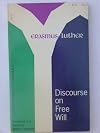
Discourse on Free Will
by Desiderius Erasmus, Martin Luther
On This Page
Description
Desiderius Eramsus (1466/9-1536) was the most renowned scholar of his age, a celebrated humanist and Classicist, and the first teacher of Greek at Cambridge. An influential figure in the Protestant Reformation, though without ever breaking from the Church himself, he satirised both human folly and the corruption of the Church. Martin Luther (1483-1546) was the founder of the German Reformation. His 95 Theses became a manifesto for reform of the Catholic Church and led to his being tried for show more heresy. He remained in Germany, Professor of Biblical Exegesis at the University of Wittenburg, until his death, publishing a large number of works, including three major treatises and a translation of the New Testament into German. Comprising Erasmus's "The Free Will" and Luther's "The Bondage of the Will", Discourse on Free Will is a landmark text in the history of Protestantism. Encapsulating the perspective on free will of two of the most important figures in the history of Christianity, it remains to this day a powerful, thought-provoking and timely work. show lessTags
Recommendations





Member Reviews
This is a helpful introduction to the debate between Erasmus and Luther on the freedom of the will. However, since the bulk of Luther's argument is based on his exegesis of the biblical text, and this is mostly excised in this presentation of the debate, his argument as presented is sketchy.
Desiderius Erasmus was the most renowned scholar of his age, a celebrated humanist and classicist, and the first teacher of Greek at Cambridge. An influential figure in the Protestant Reformation, though without ever breaking from the Church himself, he satirised both human folly and the corruption of the Church.
Martin Luther was the founder of the German Reformation. His 95 Theses became a manifesto for reform of the Catholic Church and led to his being tried for heresy. He remained in Germany, professor of biblical exegesis at the University of Wittenberg, until his death, publishing a large number of works, including three major treatises and a translation of the New Testament into German.
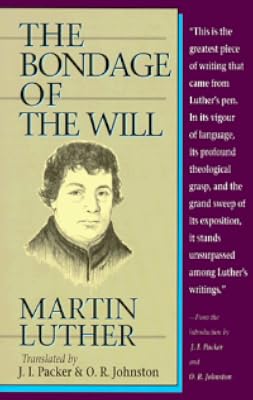
Comprising Erasmus’s The Free Will and show more Luther’s The Bondage of the Will, Discourse on Free Will is a landmark text in the history of Protestantism. Encapsulating the perspective on free will of two of the most important figures in the history of Christianity, it remains to this day a powerful, thought-provoking, and timely work. show less
Martin Luther was the founder of the German Reformation. His 95 Theses became a manifesto for reform of the Catholic Church and led to his being tried for heresy. He remained in Germany, professor of biblical exegesis at the University of Wittenberg, until his death, publishing a large number of works, including three major treatises and a translation of the New Testament into German.
Comprising Erasmus’s The Free Will and show more Luther’s The Bondage of the Will, Discourse on Free Will is a landmark text in the history of Protestantism. Encapsulating the perspective on free will of two of the most important figures in the history of Christianity, it remains to this day a powerful, thought-provoking, and timely work. show less
U-1
Jan 15, 2021Catalan
Ratings
Members
- Recently Added By
Author Information

610+ Works 10,313 Members
Desiderius Erasmus was born, probably in 1469, in Rotterdam, Holland. He studied in Paris, traveled in England, Germany, and Italy, and wrote in Latin. Living at the time of the Renaissance when most intellectual concepts were being examined, Erasmus was a great admirer of the ancient writers and edited many of their works. Erasmus remained a show more Roman Catholic, but believed that many of the priests and theologians had distorted the simple teachings of Jesus. He published an edition of the New Testament-the first edition in the original Greek-in order to make clear the essential teachings of Christianity. Erasmus liked above all things clear and honest thinking; he despised intolerance and persecution. He was the greatest of the humanists because his books, more effectively than any others, propagated a humane philosophy of life, teaching that one's chief duties are to be intelligent, open-minded, and charitable. The most famous and the most influential of Erasumus' books were The Praise of Folly (1509) and Colloquies (1518). These works, written in lively, colloquial, and witty Latin, expressed his ideas on the manners and customs of his time. Erasmus exerted a powerful influence not only through his books, but also through the private letters that he wrote to a great number of humanist scholars in all parts of Western Europe. He carried on extensive correspondences with Thomas More of England. More than 1500 of his letters survive today. Erasmus died in Basel, Switzerland, on July 12, 1536. (Bowker Author Biography) show less

2,224+ Works 41,837 Members
Martin Luther (1483-1546) was the Father of the Reformation. Most famous possibly for his 95 theses, he wrote many works which sparked debate and helped shape thinking - not only in his own time, but ours as well.
Series
Belongs to Publisher Series
Common Knowledge
- Canonical title
- Discourse on Free Will
- Original title
- De libero arbitrio
- Original publication date
- 1524
- First words
- Among the many difficulties encountered in Holy Scripture--and there are many of them--none presents a more perplexed labyrinth than the problem of the freedom of the will.
- Last words
- (Click to show. Warning: May contain spoilers.)Amen.
- Original language
- Latin; German
Classifications
Statistics
- Members
- 643
- Popularity
- 45,248
- Reviews
- 3
- Rating
- (3.61)
- Languages
- 6 — Catalan, English, German, Italian, Latin, Swedish
- Media
- Paper, Ebook
- ISBNs
- 12
- ASINs
- 12