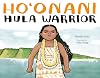
Ho'onani: Hula Warrior
by Heather Gale
On This Page
Description
"An empowering celebration of identity, acceptance and Hawaiian culture based on the true story of a young girl in Hawai'i who dreams of leading the boys-only hula troupe at her school. Ho'onani feels in-between. She doesn't see herself as wahine (girl) OR kane (boy). She's happy to be in the middle. But not everyone sees it that way. When Ho'onani finds out that there will be a school performance of a traditional kane hula chant, she wants to be part of it. But can a girl really lead the show more all-male troupe? Ho'onani has to try . . . Based on a true story, Ho'onani: Hula Warrior is a celebration of Hawaiian culture and an empowering story of a girl who learns to lead and learns to accept who she really is--and in doing so, gains the respect of all those around her. Ho'onani's story first appeared in the documentary A Place in the Middle by filmmakers Dean Hamer and Joe Wilson."-- show lessTags
Recommendations










Member Reviews
In this picture book based on a true story, a nonbinary youth finds her place as a hula warrior.
Hoʻonani Kamai doesn’t identify with either wahine (girl) or kāne (boy); “she prefer[s] just Hoʻonani.” (Feminine pronouns refer to Hoʻonani throughout.) One day, her teacher Kumu Hina announces auditions for a traditional hula chant the high school kāne will perform. With Kumu Hina’s encouragement, Hoʻonani auditions despite the shock of the kāne. After passing the test, she practices “until Hawai‘i’s history [becomes] a part of her.” Practice pays off, as her chant’s strength and power gain her true acceptance as their leader. Kumu Hina warns that people may get upset that a wahine is leading, but Hoʻonani faces show more the performance with courage. Through every challenge and doubt, Hoʻonani “[holds] her place. Strong, sure, and steady.” Her strength and bravery lead her to find her place as a hula warrior. Based on the documentary A Place in the Middle, this story brings to light the Hawaiian tradition of valuing those who are māhū, or nonbinary. Teacher and activist Kumu Hina creates a place of safety and acceptance, encouraging her students to treat others with respect. Hoʻonani’s courage to be true to herself and her place in the middle is empowering. Hawaiian words are intermixed, and Song’s illustrations are full of emotion and determination.
Hoʻonani deserves a place on any shelf. (author’s note) (Picture book. 4-9)
-Kirkus Review show less
Hoʻonani Kamai doesn’t identify with either wahine (girl) or kāne (boy); “she prefer[s] just Hoʻonani.” (Feminine pronouns refer to Hoʻonani throughout.) One day, her teacher Kumu Hina announces auditions for a traditional hula chant the high school kāne will perform. With Kumu Hina’s encouragement, Hoʻonani auditions despite the shock of the kāne. After passing the test, she practices “until Hawai‘i’s history [becomes] a part of her.” Practice pays off, as her chant’s strength and power gain her true acceptance as their leader. Kumu Hina warns that people may get upset that a wahine is leading, but Hoʻonani faces show more the performance with courage. Through every challenge and doubt, Hoʻonani “[holds] her place. Strong, sure, and steady.” Her strength and bravery lead her to find her place as a hula warrior. Based on the documentary A Place in the Middle, this story brings to light the Hawaiian tradition of valuing those who are māhū, or nonbinary. Teacher and activist Kumu Hina creates a place of safety and acceptance, encouraging her students to treat others with respect. Hoʻonani’s courage to be true to herself and her place in the middle is empowering. Hawaiian words are intermixed, and Song’s illustrations are full of emotion and determination.
Hoʻonani deserves a place on any shelf. (author’s note) (Picture book. 4-9)
-Kirkus Review show less
In this picture book based on a true story, a nonbinary youth finds her place as a hula warrior.
Hoʻonani Kamai doesn’t identify with either wahine (girl) or kāne (boy); “she prefer[s] just Hoʻonani.” (Feminine pronouns refer to Hoʻonani throughout.) One day, her teacher Kumu Hina announces auditions for a traditional hula chant the high school kāne will perform. With Kumu Hina’s encouragement, Hoʻonani auditions despite the shock of the kāne. After passing the test, she practices “until Hawai‘i’s history [becomes] a part of her.” Practice pays off, as her chant’s strength and power gain her true acceptance as their leader. Kumu Hina warns that people may get upset that a wahine is leading, but Hoʻonani faces show more the performance with courage. Through every challenge and doubt, Hoʻonani “[holds] her place. Strong, sure, and steady.” Her strength and bravery lead her to find her place as a hula warrior. Based on the documentary A Place in the Middle, this story brings to light the Hawaiian tradition of valuing those who are māhū, or nonbinary. Teacher and activist Kumu Hina creates a place of safety and acceptance, encouraging her students to treat others with respect. Hoʻonani’s courage to be true to herself and her place in the middle is empowering. Hawaiian words are intermixed, and Song’s illustrations are full of emotion and determination.
Hoʻonani deserves a place on any shelf. (author’s note) (Picture book. 4-9)
-Kirkus Review show less
Hoʻonani Kamai doesn’t identify with either wahine (girl) or kāne (boy); “she prefer[s] just Hoʻonani.” (Feminine pronouns refer to Hoʻonani throughout.) One day, her teacher Kumu Hina announces auditions for a traditional hula chant the high school kāne will perform. With Kumu Hina’s encouragement, Hoʻonani auditions despite the shock of the kāne. After passing the test, she practices “until Hawai‘i’s history [becomes] a part of her.” Practice pays off, as her chant’s strength and power gain her true acceptance as their leader. Kumu Hina warns that people may get upset that a wahine is leading, but Hoʻonani faces show more the performance with courage. Through every challenge and doubt, Hoʻonani “[holds] her place. Strong, sure, and steady.” Her strength and bravery lead her to find her place as a hula warrior. Based on the documentary A Place in the Middle, this story brings to light the Hawaiian tradition of valuing those who are māhū, or nonbinary. Teacher and activist Kumu Hina creates a place of safety and acceptance, encouraging her students to treat others with respect. Hoʻonani’s courage to be true to herself and her place in the middle is empowering. Hawaiian words are intermixed, and Song’s illustrations are full of emotion and determination.
Hoʻonani deserves a place on any shelf. (author’s note) (Picture book. 4-9)
-Kirkus Review show less
Ho'onani: Hula Warrior by Heather Gale is a delightful, empowering picture book for kids based on a true story. Ho'onani is part of a big, loving family who mostly encourage her to be herself. All but her sister, that is. Her sister can't understand why Ho'onani doesn't act like a 'normal' girl. But Ho'onani doesn't feel like a 'girl'. She doesn't feel like a 'boy' either. She feels somewhere in-between. Hawai'ian actually has a word for someone who feels this way, and it was perfectly acceptable before contact with Europeans. (Many indigenous cultures all over the world had or have anywhere from 3-10 gender identities. The concept is not as new and radical as opponents of the idea would have people believe.) When it is announced at her show more school that a hula will be performed, Ho'onani decides to try out, even though it is supposed to be the boys only. Not only does she succeed in getting a place with the troupe, she ends up the leader of it! This is a great illustration that if a person is capable of something, gender stereotypes shouldn't prevent them from being able to do it. I like the fact that the antagonistic, doubting sister didn't stifle Ho'onani's determination and dedication. I read this with my cubs and we all enjoyed it. Highly recommended!
***Many thanks to the Netgalley & Penguin Random House/ Tundra Books for providing an egalley in exchange for a fair and honest review. show less
***Many thanks to the Netgalley & Penguin Random House/ Tundra Books for providing an egalley in exchange for a fair and honest review. show less
So few children's picture books are set in Hawaii or feature native Hawaiian characters. Ho'onani: Hula Warrior is the story of Ho'onani Kamai, who "did not see herself as a wahine, 'girl.' Or think she was a kane, 'boy.'" Ho'onani is mahu - she has some masculine and some feminine traits, and is most comfortable in the middle. Her mother says, "She is who she is!" and her father says, "She does what she wants!" But Ho'onani's sister Kana wishes that she would conform and not stand out. However, she Ho'onani is chosen to lead a traditional hula chant in front of the school, Kana is the first to rise in a standing ovation.
An Author's Note precedes the text. A pronunciation guide for Hawaiian words (wahine and kane) would have been show more useful.
A Place in the Middle: aplaceinthemiddle.org (documentary) show less
An Author's Note precedes the text. A pronunciation guide for Hawaiian words (wahine and kane) would have been show more useful.
A Place in the Middle: aplaceinthemiddle.org (documentary) show less
I watched the trailer for the documentary this book is based on. Just the trailer and I got chills. I may have even teared up. This picture book doesn't quite have the power of seeing the real Ho'onani belt out a traditional hula chant. But it's worth reading and sharing. Today in the US there is greater recognition and acceptance of gender fluidity. We should also recognize that different cultures around the world have been accepting of people who are nonbinary. Ho'onani is referred to as "she" throughout the book (and I assume the author would be using her preferred pronouns) but she identifies as "in the middle" between girl and boy.
There's a refrain in the text: "Strong, sure, and steady." It describes how Ho'onani carries out the show more hula. It feels like a mantra for any child (or person) who is defying expectations so they can be true to themselves. show less
There's a refrain in the text: "Strong, sure, and steady." It describes how Ho'onani carries out the show more hula. It feels like a mantra for any child (or person) who is defying expectations so they can be true to themselves. show less
I really enjoyed this beautifully illustrated and well paced book. I particularly liked the use of repetition and appreciated learning some words in Hawai'ian. I'm excited to share this book with other parents of gender nonconforming children, especially for families of colour. I would love to see more books like this from other indigenous cultures highlighting historical figures who've found their place outside of the gender roles familiar to westerners.
 This review was written for LibraryThing Early Reviewers.
I absolutely loved this children's book detailing the true story of Ho'onani Kamai and her determination to be the person she wants to be no matter the cultural and societal limitations placed upon her. I had no idea this book was based on a true story before reading it and could not have been more pleased with the message it sends to not only children, but Kanaka Maoli youth and youth of color in general.
This review was written for LibraryThing Early Reviewers.Members
- Recently Added By
Published Reviews
ThingScore 100
Hoʻonani’s courage to be true to herself and her place in the middle is empowering. Hawaiian words are intermixed, and Song’s illustrations are full of emotion and determination.
added by g33kgrrl
Lists

School library books removed after TX state legislator inquiry
429 works; 6 members

Banned or Challenged Books
400 works; 41 members

Florida's Book Bans and Challenges
311 works; 4 members

Rainbow Gardens Wish List: Seedlings & Saplings
104 works; 3 members

Children's Picture Books
188 works; 1 member

Book Riot Read Harder 2026
80 works; 1 member
Author Information

1 Work 203 Members
All Editions
Awards and Honors
Awards
Notable Lists
Common Knowledge
- Original publication date
- 2019-10-01
- People/Characters
- Ho'onani Kamai
- Important places
- Honolulu, O'ahu, Hawai'i, USA
- Dedication
- To my mom, who taught us to love people for who they are - HG
To Small Grandma, who always cooked dinner - MS - First words
- Ho'onani Kamai did not see herself as a wahine, "girl."
- Last words
- (Click to show. Warning: May contain spoilers.)Not as a wahine, not as a kāne, but as a hula warrior.
- Original language
- English US; Hawaiian
Classifications
Statistics
- Members
- 203
- Popularity
- 161,270
- Reviews
- 22
- Rating
- (4.33)
- Languages
- English
- Media
- Paper, Ebook
- ISBNs
- 3
- ASINs
- 1