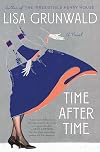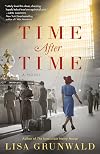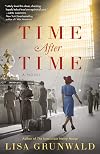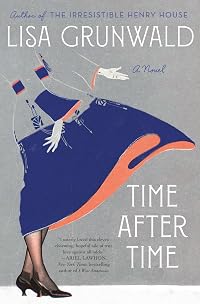
Time After Time
by Lisa Grunwald 
On This Page
Description
"On a clear December morning in 1937, at the famous gold clock in Grand Central Terminal, Joe Reynolds, a hardworking railroad man from Queens, meets a vibrant young woman who seems mysteriously out of place. Nora Lansing is a Manhattan socialite whose flapper clothing, pearl earrings, and talk of the Roaring Twenties don't seem to match the bleak mood of Depression-era New York. Captivated by Nora from her first electric touch, Joe despairs when he tries to walk her home and she disappears. show more Finding her again--and again--will become the focus of his love and his life. Nora, an aspiring artist and fiercely independent, is shocked to find she's somehow been trapped, her presence in the terminal governed by rules she cannot fathom. It isn't until she meets Joe that she begins to understand the effect that time is having on her, and the possible connections to the workings of Grand Central and the astrological phenomenon known as Manhattanhenge. As thousands of visitors pass under the famous celestial blue ceiling each day, Joe and Nora create a life unlike any they could have imagined. With infinite love in a finite space, they take full advantage of the "Terminal City" within a city, dining at the Oyster Bar, visiting the Whispering Gallery, and making a home at the Biltmore Hotel. But when the construction of another historic landmark threatens their future, Nora and Joe are forced to test the limits of freedom and love. Delving into Grand Central's rich past, Lisa Grunwald crafts a masterful historical novel about a love affair that defies age, class, place, and even time"-- show lessTags
Recommendations













































Member Recommendations


Member Reviews
Do you believe in fated love? What if the person you are fated to love dies before you meet them? Can a love that is meant to be combined with a special scientific phenomenon overcome the veil between the living and the dead? Lisa Grunwald's novel Time After Time, offers potential answers to these questions.
Joe Reynolds, a leverman for the railroad, is heading to work when he first spies a young woman who looks lost and out of place in Grand Central Station. Nora Lansing is coatless, luggageless, and dressed as a flapper despite it being 1937 and the midst of the Great Depression. A year later, Joe comes across Nora again still dressed inappropriately for the weather and the time. This time he offers to walk her home but along the way show more she disappears. He cannot get her out of his head. She will reappear again the following year. She is, in fact, a ghost and she reappears on the anniversary of her 1925 death in a subway accident when the phenomenon callled Manhattanhenge occurs. The fact of her death more than a decade before will not keep Joe and Nora from falling for each other. Together they learn the limits of Nora's existence, discovering that she disappears if she goes too far from Grand Central Station. Knowing this, somehow they build a life together within the constraints governing her existence, living and working in the Biltmore Hotel, shopping in the station stores, exploring the various places in the suprisingly vast city below the city. But the life they are living isn't a full one and eventually they'll have to make a decision about their future.
The premise of the novel was incredibly intriguing and Grunwald has done an amazing job bringing the 1930s and 40s in New York City to life. The descriptions of Grand Central Station and the city as it moves from the Depression to WWII and beyond are superb. The heady, starry eyed romance fades as the difficulties of Joe's life and obligations outside of the station and Nora's desire for more independence infringe on the fantastical semi-life he and Nora have built together. In this way the novel is more realistic than a romance, even if one of the main characters is a ghost. The novel's pacing is somewhat uneven, stretching out in the middle to feel overly long but the wrap up of the ending is brief and perfectly calibrated. This is meant to be an epic love story and although it doesn't quite live up to that, it will hit all but the most jaded the reader right in the feels. show less
Joe Reynolds, a leverman for the railroad, is heading to work when he first spies a young woman who looks lost and out of place in Grand Central Station. Nora Lansing is coatless, luggageless, and dressed as a flapper despite it being 1937 and the midst of the Great Depression. A year later, Joe comes across Nora again still dressed inappropriately for the weather and the time. This time he offers to walk her home but along the way show more she disappears. He cannot get her out of his head. She will reappear again the following year. She is, in fact, a ghost and she reappears on the anniversary of her 1925 death in a subway accident when the phenomenon callled Manhattanhenge occurs. The fact of her death more than a decade before will not keep Joe and Nora from falling for each other. Together they learn the limits of Nora's existence, discovering that she disappears if she goes too far from Grand Central Station. Knowing this, somehow they build a life together within the constraints governing her existence, living and working in the Biltmore Hotel, shopping in the station stores, exploring the various places in the suprisingly vast city below the city. But the life they are living isn't a full one and eventually they'll have to make a decision about their future.
The premise of the novel was incredibly intriguing and Grunwald has done an amazing job bringing the 1930s and 40s in New York City to life. The descriptions of Grand Central Station and the city as it moves from the Depression to WWII and beyond are superb. The heady, starry eyed romance fades as the difficulties of Joe's life and obligations outside of the station and Nora's desire for more independence infringe on the fantastical semi-life he and Nora have built together. In this way the novel is more realistic than a romance, even if one of the main characters is a ghost. The novel's pacing is somewhat uneven, stretching out in the middle to feel overly long but the wrap up of the ending is brief and perfectly calibrated. This is meant to be an epic love story and although it doesn't quite live up to that, it will hit all but the most jaded the reader right in the feels. show less
 This review was written for LibraryThing Early Reviewers.
Joe Reynolds is a leverman at Grand Central Station and one morning after his shift in early December 1937, he meets Nora who seems just a little out of place in her flapper clothes. When he offers to walk her home, she disappears suddenly with no signs of her left behind. At least until Joe encounters her again in early December the following year, looking exactly the same. And thus begins Joe and Nora's relationship, during which he'll be left waiting over and over again.
This book landed on my radar as a result of a list of time travel titles put together by BookRiot a few years ago, and while I enjoyed the novel, I don't agree with classifying it as a time travel novel. There are fantastical elements to be sure, but time moves in its show more usual linear fashion. That quibble aside, the novel is a solid piece of historical fiction. Grunwald has done her research and it shines through but not in an obnoxiously obvious way as she provides excellent details about life in the station during the Depression and WWII. Both Nora and Joe are compelling characters and while the plot is relatively predictable, the ride is still an enjoyable one. Recommended for fans of historical fiction set in the 1930s and 1940s, as well as those who enjoy vaguely timey-wimey plots. show less
This book landed on my radar as a result of a list of time travel titles put together by BookRiot a few years ago, and while I enjoyed the novel, I don't agree with classifying it as a time travel novel. There are fantastical elements to be sure, but time moves in its show more usual linear fashion. That quibble aside, the novel is a solid piece of historical fiction. Grunwald has done her research and it shines through but not in an obnoxiously obvious way as she provides excellent details about life in the station during the Depression and WWII. Both Nora and Joe are compelling characters and while the plot is relatively predictable, the ride is still an enjoyable one. Recommended for fans of historical fiction set in the 1930s and 1940s, as well as those who enjoy vaguely timey-wimey plots. show less
People often ask me where I get my book recommendations. Frequently I get them from my bookish friends, other bloggers, and authors. So when two people whose taste I respect (including author Adriana Trigiani) told me I have to read Lisa Grunwald's Time After Time, I listen.
I'm not normally a fan of time travel/magical books, but this one sucked me right in. In 1925, a young woman named Nora was killed, along with many other people, in a horrific train crash at Grand Central Terminal in New York City.
In 1937, Joe, a railroad leverman man who works at Grand Central, finds Nora standing near the gold clock at the terminal, looking lost and out of place. He asks if he can help her, and there is a spark between them. She says she has to go show more home to Turtle Bay Gardens, and Joe goes back to work.
Exactly one year later, Joe sees Nora again at the terminal. He takes her to lunch at a coffee shop in the terminal and they get to know each other. Joe offers to walk her home, and after a young man accosts them and Joe scares him off, he turns to find that Nora has disappeared.
When Joe goes to the address that Nora gave him, a man living there says that Nora doesn't live there- she died thirteen years ago in the train crash. Joe is astonished and can't believe the story, but something about Nora is different and maybe this could explain it.
Joe can't get Nora out of his mind. He discovers that Nora shows up on the anniversary of the day of her death, which happens to be Manhattanhenge, a phenomenon when the sun lines up with the East/West streets so that you can see it from the East River to the Hudson River.
Every year on that day, he looks for Nora at the exact place he orginally found her. Now they need to find out what makes her disappear. While they figure that out, they fall in love as they explore all of Grand Central Terminal together.
Lucky for them, Grand Central Terminal has everything they need- food, clothing stores, and Nora even takes art lessons there. They try to have as normal a life as possible, even staying at the Biltmore Hotel there.
Watching them fall in love is lovely, and seeing Grand Central Terminal through their eyes is magical. It will be impossible now to go to Grand Central Terminal and not look for Nora and Joe, as well as stare at the window that seems to be Nora's porthole to life.
I can't recommend Time After Time highly enough. It is a love story to get lost in, and it feels like it is destined to be a classic, a book that you can return to again and again to reread. Joe and Nora touched my heart deeply. Time After Time is the love story of the summer. Do yourself a favor and read this book. show less
I'm not normally a fan of time travel/magical books, but this one sucked me right in. In 1925, a young woman named Nora was killed, along with many other people, in a horrific train crash at Grand Central Terminal in New York City.
In 1937, Joe, a railroad leverman man who works at Grand Central, finds Nora standing near the gold clock at the terminal, looking lost and out of place. He asks if he can help her, and there is a spark between them. She says she has to go show more home to Turtle Bay Gardens, and Joe goes back to work.
Exactly one year later, Joe sees Nora again at the terminal. He takes her to lunch at a coffee shop in the terminal and they get to know each other. Joe offers to walk her home, and after a young man accosts them and Joe scares him off, he turns to find that Nora has disappeared.
When Joe goes to the address that Nora gave him, a man living there says that Nora doesn't live there- she died thirteen years ago in the train crash. Joe is astonished and can't believe the story, but something about Nora is different and maybe this could explain it.
Joe can't get Nora out of his mind. He discovers that Nora shows up on the anniversary of the day of her death, which happens to be Manhattanhenge, a phenomenon when the sun lines up with the East/West streets so that you can see it from the East River to the Hudson River.
Every year on that day, he looks for Nora at the exact place he orginally found her. Now they need to find out what makes her disappear. While they figure that out, they fall in love as they explore all of Grand Central Terminal together.
Lucky for them, Grand Central Terminal has everything they need- food, clothing stores, and Nora even takes art lessons there. They try to have as normal a life as possible, even staying at the Biltmore Hotel there.
Watching them fall in love is lovely, and seeing Grand Central Terminal through their eyes is magical. It will be impossible now to go to Grand Central Terminal and not look for Nora and Joe, as well as stare at the window that seems to be Nora's porthole to life.
I can't recommend Time After Time highly enough. It is a love story to get lost in, and it feels like it is destined to be a classic, a book that you can return to again and again to reread. Joe and Nora touched my heart deeply. Time After Time is the love story of the summer. Do yourself a favor and read this book. show less
I loved this book and could hardly put it down. At the same time I couldn't wait to finish it yet was so sad when it ended. It's a wonderfully creative and clever book, with well-written phrases, original descriptions, and believable characters. I started a new category of "love story" instead of "romance" since "romance" is not an accurate genre for this special book. It is the most moving yet unique love story I've read in a long time. But it's much more than that, as the novel recreates the world of Grand Central Station in the 1920's-1940's, plus includes fascinating scientific details about the sun and New York City. This is a book I'll be telling my friends they must read!
Steady Joe Reynolds works at Grand Central Terminal through the Depression and through WWII (he's deemed essential), and it's there that he meets Nora Lansing, who captures his eye, imagination, and heart. Nora's appearances in the terminal coincide with the phenomenon known as Manhattanhenge, and are connected to that as well as the energy that powers GCT itself. As Nora and Joe meet, lose each other, and meet again through the years, they begin to piece together the mystery of her existence, and figure out a way for her to stay - if she wants to.
A beautiful, detailed history of Grand Central Terminal throughout the first half of the 1900s, as well as an unusual love story. Peripheral characters are thoughtfully portrayed, especially show more Joe's brother and sister-in-law.
See also: Voices After Midnight by Richard Peck (middle grade), The Time Traveler's Wife by Audrey Niffenegger, Rules of Civility by Amor Towles, City of Girls by Elizabeth Gilbert
Quotes from ARC (not for publication)
She had been forced onto the threshold of a door that was seconds from closing behind her. The past and present ceased to exist, or rather, each of them pulled at her. But she wasn't able to turn back, and she wasn't able to go forward. (Nora, 75)
Patience was a lot harder when you threw in so much doubt. (85)
"My ma always said you can either have a lot of faith or no faith at all." (Joe to Nora, 129)
...people often spoke about [Grand Central] being timeless....But to anyone who knew it well, the terminal was filled with time....with time you could sense all around you, as if the many people who'd come and gone had left something real behind them, had spent their time, like money. (144)
Even in their brief time together, Nora had come to understand the difference between infatuation and love. Infatuation was weather. Love was climate. (186)
Trains and people had come and gone, and all Joe had ever done was smooth the way for other people's adventures. (333) show less
A beautiful, detailed history of Grand Central Terminal throughout the first half of the 1900s, as well as an unusual love story. Peripheral characters are thoughtfully portrayed, especially show more Joe's brother and sister-in-law.
See also: Voices After Midnight by Richard Peck (middle grade), The Time Traveler's Wife by Audrey Niffenegger, Rules of Civility by Amor Towles, City of Girls by Elizabeth Gilbert
Quotes from ARC (not for publication)
She had been forced onto the threshold of a door that was seconds from closing behind her. The past and present ceased to exist, or rather, each of them pulled at her. But she wasn't able to turn back, and she wasn't able to go forward. (Nora, 75)
Patience was a lot harder when you threw in so much doubt. (85)
"My ma always said you can either have a lot of faith or no faith at all." (Joe to Nora, 129)
...people often spoke about [Grand Central] being timeless....But to anyone who knew it well, the terminal was filled with time....with time you could sense all around you, as if the many people who'd come and gone had left something real behind them, had spent their time, like money. (144)
Even in their brief time together, Nora had come to understand the difference between infatuation and love. Infatuation was weather. Love was climate. (186)
Trains and people had come and gone, and all Joe had ever done was smooth the way for other people's adventures. (333) show less
This review was written for LibraryThing Early Reviewers.Ok, I did not see that coming. Usually, when a character does something unexpected near the end of a book, it means that the author has written herself into a corner that she can't get out of without someone having an epiphany or just acting way out of character or something. But in this case, the behavior totally felt like something the character would do, even if I wasn't expecting it. I won't even tell you which character does the unexpected thing, so read the book to find out. It's worth it all the way through.
This review was written for LibraryThing Early Reviewers.This charming historical romance takes place in the 1930s and 1940s, primarily in New York City's Grand Central Terminal. The adventurous 23-year-old flapper girl Nora and a hardworking railroad employee, Joe, who is a decade her senior, meet at Grand Central in 1937 and fall in love. The only problem is that Nora is dead. Killed in a subway crash in 1925, Nora returns every year on the anniversary of her death to Grand Central. With Joe's help, Nora learns that she can maintain her bodily form only if she stays within 900 feet of the terminal.
Thus begins a strange romance, where the couple try to make a normal life, taking advantage all of the things a mid-century railroad terminal provides. This includes the Biltmore Hotel, where the show more couple lives in hotel rooms, work for Nora, and even an education for Nora at the Grand Central Academy of Art! There are problems, of courses, mainly that Joe can never bring Nora to Queens to visit his family and that Nora remains forever young while Joe continues to age. It's a clever and sweet narrative and it has a twist ending that I enjoyed. show less
Thus begins a strange romance, where the couple try to make a normal life, taking advantage all of the things a mid-century railroad terminal provides. This includes the Biltmore Hotel, where the show more couple lives in hotel rooms, work for Nora, and even an education for Nora at the Grand Central Academy of Art! There are problems, of courses, mainly that Joe can never bring Nora to Queens to visit his family and that Nora remains forever young while Joe continues to age. It's a clever and sweet narrative and it has a twist ending that I enjoyed. show less
Members
- Recently Added By
Lists

KayStJ's to-read list
1,616 works; 11 members
Author Information

Lisa Grunwald is a LibraryThing Author, an author who lists their personal library on LibraryThing.
Common Knowledge
- Canonical title
- Time After Time
- Original publication date
- 2019-06
- People/Characters
- Joe Reynolds; Nora Lansing
- Important places
- Grand Central Station, New York, New York, USA; Grand Central Terminal, New York, New York, USA
- Important events
- Manhattan Solstices
- Epigraph
- Time after time
I tell myself that I'm
So lucky to be loving you
So lucky to be
The one you run to see
In the evening, when the day is through
I only know what I know
The passing years will show
And time after time
You'll hear me say that I'm
So lucky to be loving you.
—Sammy Cahn and Jule Styne, 1947
If you're lost you can look
And you will find me,
Time after time.
—Cyndi Lauper and Rob Hyman, 1983 - First words
- She wasn't carrying a suitcase, and she wasn't wearing a coat.
- Quotations
- Ralston Young wasn't usually particular about what he preached. He could rip a page from a Sears, Roebuck catalogue and find a message from God in it.
once inside the Metro car, Nora could sense the tribal tension among the riders, their loud voices and languages crossing in the air like unseen swords.
Up on deck, the three red-and-black smokestacks shone, jaunty as trumpet keys.
But patience, real patience, meant more than simply waiting. Patience meant you had to honor the moments before things happened the same way you honored the moments when they did.
Bits of memory settled around her like ash.
But a moment later, she had glanced at her mother's dresser, where framed family photographs were staggered like stadium seats, as if the people in the pictures were all watching her expectantly. (show all 11)
Joe had never owned a suitcase, though he had been surrounded for most of his life by people carrying them around like little billboards.
Every time one of the terminal doors swung open, the inrushing air seemed like an invitation—the wide world reaching out its arms and asking Nora to come away with it.
Easels of varying heights and vintages stood in irregular rows, like untrained soldiers.
She folded back a corner of the bedcover, making a perfect triangle, as if she were marking a page in a book.
A person without a past is no more alive than a person without a future.
Classifications
- Genres
- Fiction and Literature, Science Fiction, Romance, General Fiction, Historical Fiction
- DDC/MDS
- 813.54 — Literature & rhetoric American literature in English American fiction in English 1900-1999 1945-1999
- LCC
- PS3557 .R837 .T56 — Language and Literature American literature American literature Individual authors 1961-
- BISAC
Statistics
- Members
- 385
- Popularity
- 81,447
- Reviews
- 47
- Rating
- (3.68)
- Languages
- English, German
- Media
- Paper, Audiobook, Ebook
- ISBNs
- 9
- ASINs
- 3