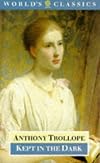
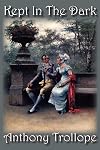
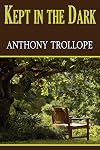
Kept in the Dark
by Anthony Trollope
On This Page
Description
First published in serial form from May through December, 1882, in Good Words and in book form in 1882. Trollope died during the last month of serial publication.Tags
Recommendations
















Member Reviews
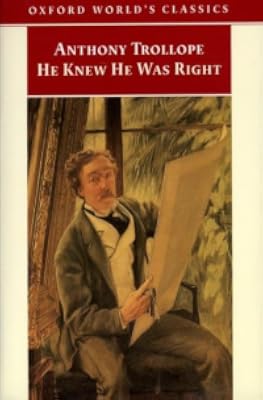
I'm inclined to agree with some other reviewers that it seems like "He Knew He Was Right" - lite. Or perhaps The Happy Version. Though it is hard to take quite seriously in this day and age the actual cause of the rift between Celia and George, it is actually a very good character study of both of them and enjoyable for that aspect. I particularly felt that George needed to be taken down a peg, even if Celia had lacked some moral courage to tell "her secret". However, I mostly found the comeuppance of Mis Altafiora more enjoyable.
I've been intending on reading Trollope for quite some time, and this one won... well, it's short!
This edition is also a direct photostat from the original Victorian serial, which is aesthetically charming, but slightly annoying to read (two columns per page).
My opinion? Well, this is not Great Literature,regardless of the reviews out there that go on about Trollope's 'insight into humanity' in this work, blah, blah, blah. This was written as a serial, and it is very much a soap-opera-esque entertainment. It effectively keeps you on the edge of your seat, going "OMG! What will happen next? Will they reconcile? Can I just strangle her now? Or at least give her a good shake? Can I kick him in the seat of his pants?"
All the characters are show more bloody idiots, repressive Victorian society or no.
Yet they are compelling.
Our main character, Cecilia, dumps her fiance when she realizes the spark of romance just isn't there. To help her get over it, her mom takes her on a trip. While traveling, she meets a suitable man who's just been dumped by his fiancee. She feels like it would be trying to steal the show (and just awkward) to tell him the story of her prior relationship, so she doesn't. They become friends, and she realizes that this guy actually knows - and despises - her ex. Which makes it even more awkward to tell him about it. Then they get engaged... and married. How can she tell him she was engaged to this man he hates now? But it's impossible that he'll never find out: they move in the same social circles, after all - and Cecilia also has a frenemy who keeps threatening to tell.
Oh, the drama. (It's a lot more complicated; the above paragraph is vastly simplified.) It's not a wholly satisfying novel; Trollope wants to tie everything up neatly, but while Cecilia's dumbassery is something I could have a bit of sympathy for, her husband was really just a jerk who deserved some just desserts. show less
This edition is also a direct photostat from the original Victorian serial, which is aesthetically charming, but slightly annoying to read (two columns per page).
My opinion? Well, this is not Great Literature,regardless of the reviews out there that go on about Trollope's 'insight into humanity' in this work, blah, blah, blah. This was written as a serial, and it is very much a soap-opera-esque entertainment. It effectively keeps you on the edge of your seat, going "OMG! What will happen next? Will they reconcile? Can I just strangle her now? Or at least give her a good shake? Can I kick him in the seat of his pants?"
All the characters are show more bloody idiots, repressive Victorian society or no.
Yet they are compelling.
Our main character, Cecilia, dumps her fiance when she realizes the spark of romance just isn't there. To help her get over it, her mom takes her on a trip. While traveling, she meets a suitable man who's just been dumped by his fiancee. She feels like it would be trying to steal the show (and just awkward) to tell him the story of her prior relationship, so she doesn't. They become friends, and she realizes that this guy actually knows - and despises - her ex. Which makes it even more awkward to tell him about it. Then they get engaged... and married. How can she tell him she was engaged to this man he hates now? But it's impossible that he'll never find out: they move in the same social circles, after all - and Cecilia also has a frenemy who keeps threatening to tell.
Oh, the drama. (It's a lot more complicated; the above paragraph is vastly simplified.) It's not a wholly satisfying novel; Trollope wants to tie everything up neatly, but while Cecilia's dumbassery is something I could have a bit of sympathy for, her husband was really just a jerk who deserved some just desserts. show less
Remarkably short for a Trollope novel, it felt a bit like an undeveloped first draft or proposal. Cecelia gets engaged to Sir Francis, but becomes disenchanted with him and breaks off the engagement. She and her mother go abroad to get over this episode and there she meets George Western and marries him. For one reason and another she never gets round to telling him about her previous engagement and eventually the meddling Sir Francis spills the beans and George is devastated.
The first few chapters dealing with the period up to the breaking off of the first engagement are written in rather a superficial style, but then things settled down to unremitting misery for most of the rest of the novel. Many of the emotions expressed and show more positions taken by Mr and Mrs Western echoed those developed at greater length in "He Knew He Was Right". Miss Altifiorla (difficult name!) was a good character, but Sir Francis got more and more dastardly as the book went in. What was the wrong he wanted revenge on Mr Western for? Was it just the questioning of the gambling debt? I liked the roles of Sir Frnacis' sidekicks in speaking reason to him. I liked the explanation that Cecelia first does not tell George her story because it is so similar to his own that she doesn't want him to think she is mocking him - a very British sense of embarrassment!
I thought Trollope was interesting on the expectation a Victorian husband had that his wife should be pure and unsullied by any former attachments to anyone else. Also on whether a husband should admit to having been wrong and risk his authority. Things got wound up pretty promptly at the end - it seems as if Trollope were just going through the motions. show less
The first few chapters dealing with the period up to the breaking off of the first engagement are written in rather a superficial style, but then things settled down to unremitting misery for most of the rest of the novel. Many of the emotions expressed and show more positions taken by Mr and Mrs Western echoed those developed at greater length in "He Knew He Was Right". Miss Altifiorla (difficult name!) was a good character, but Sir Francis got more and more dastardly as the book went in. What was the wrong he wanted revenge on Mr Western for? Was it just the questioning of the gambling debt? I liked the roles of Sir Frnacis' sidekicks in speaking reason to him. I liked the explanation that Cecelia first does not tell George her story because it is so similar to his own that she doesn't want him to think she is mocking him - a very British sense of embarrassment!
I thought Trollope was interesting on the expectation a Victorian husband had that his wife should be pure and unsullied by any former attachments to anyone else. Also on whether a husband should admit to having been wrong and risk his authority. Things got wound up pretty promptly at the end - it seems as if Trollope were just going through the motions. show less
A young woman's reticence about an earlier engagement nearly ruins her marriage. Trollope excels at portraying otherwise good men whose stubborn suspicions and/or inability to forget the past doom their relationships. Many readers think of Victorian novels as simple couple meet, overcome obstacles and live happily ever after stories. This is not the case with Trollope.
Kept In the Dark, sort of "He Knew He Was Right-lite" is a Trollope novella for completists, i.e., not exactly one of his best efforts. Very repetitive to the point where I could skip an entire page and not miss anything. Endless hand-wringing over a trivial episode. Well, it was a paycheck, and that was what AT was looking for, I guess.
Ratings
Members
- Recently Added By
Author Information

343+ Works 50,623 Members
Anthony Trollope was born in London, England on April 24, 1815. In 1834, he became a junior clerk in the General Post Office, London. In 1841, he became a deputy postal surveyor in Banagher, Ireland. He was sent on many postal missions ending up as a surveyor general in the post office outside of London. His first novel, The Macdermots of show more Ballycloran, was published in 1847. His other works included Castle Richmond, The Last Chronicle of Barset, Lady Anna, The Two Heroines of Plumplington, and The Noble Jilt. He died after suffering from a paralytic stroke on December 6, 1882. (Bowker Author Biography) show less
Work Relationships
Is contained in
Common Knowledge
- Original publication date
- 1882
- People/Characters
- Cecilia Holt; George Western; Sir Francis Geraldine; Miss Altifiorla
- First words
- There came an episode in the life of Cecilia Holt which it is essential should first be told.
- Last words
- (Click to show. Warning: May contain spoilers.)'I cannot bring myself to say such a word. You know that it is all right between us. I cannot speak the word which you shall never be made to hear. I am the happiest woman now in all England, and you must not force me to say that which shall in any way lessen my glory.'
Classifications
Statistics
- Members
- 244
- Popularity
- 134,151
- Reviews
- 6
- Rating
- (3.28)
- Languages
- English
- Media
- Paper, Audiobook, Ebook
- ISBNs
- 43
- ASINs
- 8