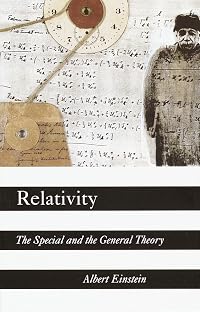
Relativity: The Special and the General Theory
by Albert Einstein
On This Page
Description
Originally published in 1916. PREFACE: The present book is intended, as far as possible, to give an exact insight into the theory of Relativity to those readers who, from a general scientific and philosophical point of view, are interested in the theory, but who are not conversant with the mathematical apparatus of theoretical physics. The work presumes a standard of education corresponding to that of a university matriculation examination, and, despite the shortness of the book, a fair show more amount of patience and force of will on the part of the reader.... show lessTags
Recommendations


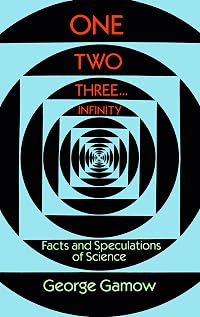
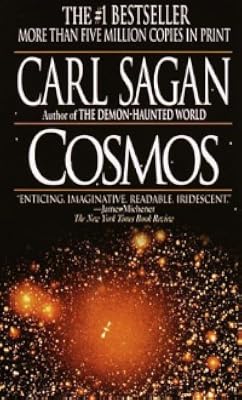


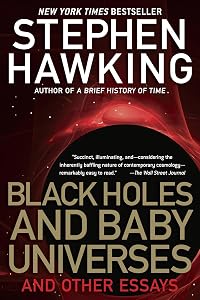

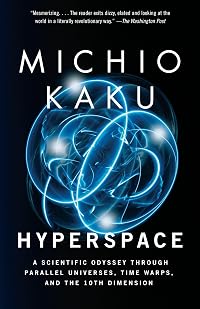







Member Recommendations
by anonymous user
Member Reviews
“The universe of these beings is finite and yet has no limits.” – Albert Einstein, in chapter XXXI
So says one of the great thinkers – perhaps, the great thinker – of the twentieth century in explaining his general theory of relativity. While there was much mathematical in its derivation, Einstein explains it in common language to the educated reader in this short work. He also explains the special theory of relativity here. While such things are hard to digest (at least at first), they are certainly able to be digested in this format. That this presentation exists in such clarity at all bespeaks to Einstein’s genius.
I once took theology classes at a seminary on Mercer Street in Princeton, just down the street from where show more Einstein used to live. Stories about his commonness yet uncommonness still filled the town. He amazingly had the gall to claim that the universe was circular or elliptical – and then attempted to prove it. He did so by clear thought, not by experiment as he was a theoritician, and this book contains an accessible version of those thoughts. For that reason alone, the curious reader is encouraged to dwell deeply within this record of his understanding.
Like mathematics, physics is a field full of geniuses whose ingenuity is common with respect to each other. I am not a physicist, and I will not attempt to comment on the science presented. From what I understand, some of Einstein’s formulations have been questioned by contemporary experiments, and string theory (though still unproven) attempts to generalize even further. To me, neither of these discredits Einstein’s accomplishment with regards to relativity. Of course, his annus mirabilis (“miracle year” of 1905) included other important findings like Brownian motion, and for better or for worse, his legacy will forever be bound with the Manhattan project and its atomic bomb.
Thumbing through a work like this and dwelling on the beauty of its contents surely provide one of the greatest experiences humans can have. Only a handful of works, like those by Immanuel Kant or Isaac Newton or Augustine of Hippo, reach the heights like this. As such, anyone with any inkling of interest in physics should attempt to study these theories, and who better to read than the author of them himself? I enjoyed my time reading this work immensely. The translation is clear and scientific, but reading still is a little difficult due to the complex subject matter. Nonetheless, being a dog eating the crumbs from Einstein’s table still provides quite a treat! show less
So says one of the great thinkers – perhaps, the great thinker – of the twentieth century in explaining his general theory of relativity. While there was much mathematical in its derivation, Einstein explains it in common language to the educated reader in this short work. He also explains the special theory of relativity here. While such things are hard to digest (at least at first), they are certainly able to be digested in this format. That this presentation exists in such clarity at all bespeaks to Einstein’s genius.
I once took theology classes at a seminary on Mercer Street in Princeton, just down the street from where show more Einstein used to live. Stories about his commonness yet uncommonness still filled the town. He amazingly had the gall to claim that the universe was circular or elliptical – and then attempted to prove it. He did so by clear thought, not by experiment as he was a theoritician, and this book contains an accessible version of those thoughts. For that reason alone, the curious reader is encouraged to dwell deeply within this record of his understanding.
Like mathematics, physics is a field full of geniuses whose ingenuity is common with respect to each other. I am not a physicist, and I will not attempt to comment on the science presented. From what I understand, some of Einstein’s formulations have been questioned by contemporary experiments, and string theory (though still unproven) attempts to generalize even further. To me, neither of these discredits Einstein’s accomplishment with regards to relativity. Of course, his annus mirabilis (“miracle year” of 1905) included other important findings like Brownian motion, and for better or for worse, his legacy will forever be bound with the Manhattan project and its atomic bomb.
Thumbing through a work like this and dwelling on the beauty of its contents surely provide one of the greatest experiences humans can have. Only a handful of works, like those by Immanuel Kant or Isaac Newton or Augustine of Hippo, reach the heights like this. As such, anyone with any inkling of interest in physics should attempt to study these theories, and who better to read than the author of them himself? I enjoyed my time reading this work immensely. The translation is clear and scientific, but reading still is a little difficult due to the complex subject matter. Nonetheless, being a dog eating the crumbs from Einstein’s table still provides quite a treat! show less
Well-written discussion of a complex subject. Unfortunately, Einstein's ideas on time and synchronicity do not comply with quantum mechanics. Given that quantum theory has an extensive set of experiments demonstrating these concepts it is a shame that Einstein was never able to bring his theory into alignment with reality. Still a great read though.
I read this about 25 years ago, when I was in college and rather enamored with physics. I must have been pretty odd already; I couldn't put it down and stayed up all night reading it. I was absolutely captivated. I had to stretch my mind to its limits to not nearly grasp concepts Einstein had clearly visualized well before it was possible to verify them empirically. It’s been a long time, but I remember it being well written, even simple, and charming as well. It explained relativity (and discussed the question of whether the universe is bounded or not) infinitely better (okay, bad pun) than my physics texts and professors. It’s not Harry Potter, but you just might find it hard to put down, too.
It's almost occult how this book's methodical and straightforward exposition constructs concepts, concepts that pull and prod and pry and finally get down to the brass tacks of beating the shit out of your brain. It doesn't exactly excel as an introduction or overview or reference, but it exceeds all of those roles through a complete lack of mercy.
This year is the centennial of the publication of Einstein's general theory of relativity. I got my hands on the Pi Press edition, which was published 10 years ago (coinciding with the centennial of the special theory of relativity.) Yesterday, the New Horizons spacecraft flew past Pluto, sending huge volumes of information back to Earth - and the day before, CERN announced that the LHC has found proof of the existence of the pentaquark. Science continues to reach new frontiers, though nothing that can compete with the relativity revolution ushered in by Einstein a century ago.
This edition has an introduction by Roger Penrose which focuses on Einstein's theories in the history of science – where he argues (and he’s certainly not show more alone about that) that the special theory of relativity had in fact long been in the works in 1905 and would have been formulated eventually also if there had been no Einstein. But it is the general theory of relativity that is Einstein’s unique contribution, and which proved to be so thoroughly revolutionary.
The book also includes an essay by David C. Cassidy titled "The Cultural Legacy of the Relativity Theory" which examines the impact of the theory outside of physics. This proved to be an interesting read and for me it contained lots of new information. On the reception of the theory among the general public he writes: "Relativity was not just another important new theory. It profoundly challenged the common understanding of everyday physical concepts — space, time, mass, simultaneity.(...) Even the very name "theory of relativity," coming after the rise of Darwin's theory of evolution, seemed to confirm the decline of old absolute values and beliefs, together with the old world order, and the triumph of a universal relativism. Einstein, of course, objected to such interpretations. Relativity theory had nothing to do with relativism, he insisted. In fact, he had first called it the "theory of invariants," for its emphasis on the unchanging character of natural laws within different reference frames."
Though Einstein’s objections were indeed to the point, they also regrettably didn’t help much. It would seem that the real problem was - and still is - the widening gap between specialists and non-specialists; between scientists and the general public.
My first read of Einstein’s Relativity contained only his own text as published in 1916. After the read I didn’t really feel a whole lot wiser, but rereading Einstein's text was definitely useful. It also helped that this time I knew the disposition of the text and could attack it proceed with more patience. I also identified what had hampered me so much on the first read: that pesky Lorentz transformation! It wasn't quite as daunting this time around. Still, in comparison Gaussian coordinates is a piece of cake. So when Einstein states the general principle of relativity as "All Gaussian coordinate systems are essentially equivalent for the formulation of the general laws of nature," I feel rather relieved that I can say ok I get that - somehow. Stephen Hawking writes in A Brief History of Time that "seventy years ago, if [Arthur] Eddington is to be believed, only two people understood the general theory of relativity." Which really brightened my day -- if only for a split second however, since he goes on to say: "Nowadays tens of thousands of university graduates do, and many millions of people are at least familiar with the idea." I liked that he used the term "familiar", I feel it applies to me as well.
Also included in this edition is a commentary by Robert Geroch which provides some useful elucidations expanding on the explanations Einstein uses in the various chapters. Einstein’s own examples aren't necessarily the best, so for myself Geroch's comments were very welcome and mostly quite helpful – and he also describes more recent developments in this field. I’m certain it would have made a difference if I had started out with this edition, and I’d recommend it to anyone.
This work is licensed under a Creative Commons Attribution-NonCommercial-ShareAlike 3.0 Unported License. show less
This edition has an introduction by Roger Penrose which focuses on Einstein's theories in the history of science – where he argues (and he’s certainly not show more alone about that) that the special theory of relativity had in fact long been in the works in 1905 and would have been formulated eventually also if there had been no Einstein. But it is the general theory of relativity that is Einstein’s unique contribution, and which proved to be so thoroughly revolutionary.
The book also includes an essay by David C. Cassidy titled "The Cultural Legacy of the Relativity Theory" which examines the impact of the theory outside of physics. This proved to be an interesting read and for me it contained lots of new information. On the reception of the theory among the general public he writes: "Relativity was not just another important new theory. It profoundly challenged the common understanding of everyday physical concepts — space, time, mass, simultaneity.(...) Even the very name "theory of relativity," coming after the rise of Darwin's theory of evolution, seemed to confirm the decline of old absolute values and beliefs, together with the old world order, and the triumph of a universal relativism. Einstein, of course, objected to such interpretations. Relativity theory had nothing to do with relativism, he insisted. In fact, he had first called it the "theory of invariants," for its emphasis on the unchanging character of natural laws within different reference frames."
Though Einstein’s objections were indeed to the point, they also regrettably didn’t help much. It would seem that the real problem was - and still is - the widening gap between specialists and non-specialists; between scientists and the general public.
My first read of Einstein’s Relativity contained only his own text as published in 1916. After the read I didn’t really feel a whole lot wiser, but rereading Einstein's text was definitely useful. It also helped that this time I knew the disposition of the text and could attack it proceed with more patience. I also identified what had hampered me so much on the first read: that pesky Lorentz transformation! It wasn't quite as daunting this time around. Still, in comparison Gaussian coordinates is a piece of cake. So when Einstein states the general principle of relativity as "All Gaussian coordinate systems are essentially equivalent for the formulation of the general laws of nature," I feel rather relieved that I can say ok I get that - somehow. Stephen Hawking writes in A Brief History of Time that "seventy years ago, if [Arthur] Eddington is to be believed, only two people understood the general theory of relativity." Which really brightened my day -- if only for a split second however, since he goes on to say: "Nowadays tens of thousands of university graduates do, and many millions of people are at least familiar with the idea." I liked that he used the term "familiar", I feel it applies to me as well.
Also included in this edition is a commentary by Robert Geroch which provides some useful elucidations expanding on the explanations Einstein uses in the various chapters. Einstein’s own examples aren't necessarily the best, so for myself Geroch's comments were very welcome and mostly quite helpful – and he also describes more recent developments in this field. I’m certain it would have made a difference if I had started out with this edition, and I’d recommend it to anyone.
This work is licensed under a Creative Commons Attribution-NonCommercial-ShareAlike 3.0 Unported License. show less
It's remarkable to read about physics in Einstein's own words. He has a wonderful way of communicating his insights in simple terms, building up from first principles toward complex ideas. There is still much about this theory that I fail to grasp, but I got more from reading his prose than from most other sources I've found on the subject. I encourage anyone curious about relativity to engage with this primary text.
The aim of this book is to introduce people without a strong physics (or even scientific) background to the special and general theories of relativity - theories that Einstein was the primary developer of. Einstein assumes the reader has passes a "university matriculation exam." What that meant in the first half of the 20th Century, I don't know but in practice what's required is the level of algebra I had by age 16 plus a smattering of mentions of the square root of minus 1. I also found basic calculus useful for one section, though it is possible to do without it.
For the most part this book is excellent, introducing the minimal amount of mathematics and formal language necessary to understand the most important and fundamental show more concepts of Einstein's theories in a way that is accessible whilst concise. It might be possible to do it better with a bigger book, a less formal style and a lot more diagrams but it very interesting to get Einstein's unique perspective as originator of the theories and insight into his thought processes.
A few sections are remarkable in contrast with the rest, for being unclear. The section on addition of velocities in special relativity leaves rather more to the reader than anything else in the book, mathematically, and when I looked it up it turned out to be much easier to work out using basic calculus than algebraic division - and the bit that wasn't clear was that a division of two equations was what was required. This section could be skipped without losing much.
The remainder of the muddy sections come at the back end of the section on general relativity. The simplest precise mathematical formulation of this theory is expressed using tensors - and tensor algebra is way beyond what anybody encounters in standard school maths or physics curricula. Einstein makes no attempt to explain it and in fact never shows the fundamental equation of general relativity. This makes it very hard for him to explain how gravitational fields and space-time interact, which leads to the lack of clarity in the latter stages of this part of the book. Things get easier and clearer again when he moves on to relativity and cosmology.
The final part of the book is a collection of appendices expanding on things discussed earlier on. I required pen and paper to check the derivation of the Lorentz Transformations from first principles - but this section could just be skipped if the maths bothers you - it doesn't add a lot but it is interesting to see it, if your algebra is up to it.
The most rewarding thing for me, since nothing here is completely new to me, was listening to Einstein's voice. He seemed to come at things from a viewpoint much more generally philosophical than most present day physicists would, discussing Kant, Descartes and Hume, for instance. The section on the concept of "empty space" was fascinating - he concludes that general relativity precludes this notion - one cannot have space-time without it containing "fields." What he means is fields of force - the electromagnetic field, gravitational field etc. This implies the notion of a field being present even if its magnitude is zero - which is a bizarre concept. Modern quantum mechanics backs these ideas to the hilt and leads me to think that one of the most important areas of inquiry for fundamental physics as it stands is the connection between the classical idea of space-time and the quantum idea of the vacuum. The fundamental nature of both is obscure - and in some sense they should be the same thing.
Overall this is an excellent introduction to special relativity and at least the conceptual underpinnings of general relativity, if not of the full theory, which really just can't be explained properly without knowledge of tensors. show less
For the most part this book is excellent, introducing the minimal amount of mathematics and formal language necessary to understand the most important and fundamental show more concepts of Einstein's theories in a way that is accessible whilst concise. It might be possible to do it better with a bigger book, a less formal style and a lot more diagrams but it very interesting to get Einstein's unique perspective as originator of the theories and insight into his thought processes.
A few sections are remarkable in contrast with the rest, for being unclear. The section on addition of velocities in special relativity leaves rather more to the reader than anything else in the book, mathematically, and when I looked it up it turned out to be much easier to work out using basic calculus than algebraic division - and the bit that wasn't clear was that a division of two equations was what was required. This section could be skipped without losing much.
The remainder of the muddy sections come at the back end of the section on general relativity. The simplest precise mathematical formulation of this theory is expressed using tensors - and tensor algebra is way beyond what anybody encounters in standard school maths or physics curricula. Einstein makes no attempt to explain it and in fact never shows the fundamental equation of general relativity. This makes it very hard for him to explain how gravitational fields and space-time interact, which leads to the lack of clarity in the latter stages of this part of the book. Things get easier and clearer again when he moves on to relativity and cosmology.
The final part of the book is a collection of appendices expanding on things discussed earlier on. I required pen and paper to check the derivation of the Lorentz Transformations from first principles - but this section could just be skipped if the maths bothers you - it doesn't add a lot but it is interesting to see it, if your algebra is up to it.
The most rewarding thing for me, since nothing here is completely new to me, was listening to Einstein's voice. He seemed to come at things from a viewpoint much more generally philosophical than most present day physicists would, discussing Kant, Descartes and Hume, for instance. The section on the concept of "empty space" was fascinating - he concludes that general relativity precludes this notion - one cannot have space-time without it containing "fields." What he means is fields of force - the electromagnetic field, gravitational field etc. This implies the notion of a field being present even if its magnitude is zero - which is a bizarre concept. Modern quantum mechanics backs these ideas to the hilt and leads me to think that one of the most important areas of inquiry for fundamental physics as it stands is the connection between the classical idea of space-time and the quantum idea of the vacuum. The fundamental nature of both is obscure - and in some sense they should be the same thing.
Overall this is an excellent introduction to special relativity and at least the conceptual underpinnings of general relativity, if not of the full theory, which really just can't be explained properly without knowledge of tensors. show less
Members
- Recently Added By
Lists

25 Greatest Science Books of All Time
33 works; 6 members

Folio Society
831 works; 53 members

Blue Pyramid 1,276 Best Books of All Time
1,248 works; 32 members

The r/AskScience Reading List
159 works; 3 members

Greatest Books, allegedly
484 works; 9 members

Robert B. Downs's Books that Changed the World
16 works; 1 member

The Well-Educated Mind, Susan Wise Bauer, 2016
179 works; 3 members

.
396 works; 1 member

In Our Time books
4,934 works; 2 members
Talk Discussions
Past Discussions
Relativity by Albert Einstein in Folio Society Devotees (October 2024)
Author Information

365+ Works 16,419 Members
Albert Einstein was born on March 14, 1879 in Ulm. He spent his childhood in Munich where his family owned a small machine shop. By the age of twelve, Einstein had taught himself Euclidean Geometry. His family moved to Milan, where he stayed for a year, and he used it as an excuse to drop out of school, which bored him. He finished secondary show more school in Aarau, Switzerland and entered the Swiss Federal Institute of Technology in Zurich. Einstein graduated in 1900, by studying the notes of a classmate since he did not attend his classes out of boredom, again. His teachers did not like him and would not recomend him for a position in the University. For two years, Einstein worked as a substitute teacher and a tutor before getting a job, in 1902, as an examiner for a Swiss patent office in Bern. In 1905, he received his doctorate from the University of Zurich for a theoretical dissertation on the dimension of molecules. Einstein also published three theoretical papers of central importance to the development of 20th Century physics. The first was entitled "Brownian Motion," and the second "Photoelectric Effort," which was a revolutionary way of thinking and contradicted tradition. No one accepted the proposals of the first two papers. Then the third one was published in 1905 and called "On the Electrodynamics of Moving Bodies." Einstein's words became what is known today as the special theory of relativity and said that the physical laws are the same in all inertial reference systems and that the speed of light in a vacuum is a universal constant. Virtually no one understood or supported Einstein's argument. Einstein left the patent office in 1907 and received his first academic appointment at the University of Zurich in 1909. In 1911, he moved to a German speaking university in Prague, but returned to Swiss National Polytechnic in Zurich in 1912. By 1914, Einstein was appointed director of the Kaiser Wilhelm Institute of Physics in Berlin. His chief patron in those early days was German physicist Max Planck and lent much credibility to Einstein's work. Einstein began working on generalizing and extending his theory of relativity, but the full general theory was not published until 1916. In 1919, he predicted that starlight would bend in the vicinity of a massive body, such as the sun. This theory was confirmed during a solar eclipse and cause Einstein to become world renowned after the phenomenon. Einstein received be Nobel Prize in Physics in 1921. With his new fame, Einstein attempted to further his own political and social views. He supported pacifism and Zionism and opposed Germany's involvement in World War I. His support of Zionism earned him attacks from both Anti-Semitic and right wing groups in Germany. Einstein left Germany for the United States when Hitler came into power, taking a position at the Institute for Advanced Study in Princeton, New Jersey. Once there, he renounced his stand on pacifism in the face of Nazi rising power. In 1939 he collaborated with other physicists in writing a letter to President Franklin D. Roosevelt informing him of the possibility that the Nazis may in fact be attempting to create an atomic bomb. The letter bore only Einstein's signature but lent credence to the letter and spurred the U.S. race to create the bomb first. Einstein became an American citizen in 1940. After the war, Einstein was active in international disarmament as well as world government. He was offered the position of President of Israel but turned the honor down. Albert Einstein died on April 18, 1955 in Princeton, New Jersey. (Bowker Author Biography) show less
Some Editions
Awards and Honors
Awards
Notable Lists
Series
Belongs to Publisher Series
Work Relationships
Is contained in
Common Knowledge
- Canonical title
- Relativity: The Special and the General Theory
- Original title
- Über die spezielle und die allgemeine Relativitätstheorie
- Alternate titles
- Die Grundlage der allgemeinen Relativitätstheorie; Relativity: The Special and General Theory
- Original publication date
- 1916
- People/Characters
- Albert Einstein; Galileo Galilei; Willem de Sitter; Hendrik Lorentz; Hippolyte Fizeau; Hermann Minkowski (show all 11); Isaac Newton; Urbain Le Verrier; Arthur Eddington; Alexander Friedmann; Edwin Hubble
- Important places
- Outer Space
- Important events
- Theory of Special Relativity; Theory of General Relativity
- First words
- In your schooldays most of you who read this book made acquaintances with the noble building of Euclid's geometry, and you remember—perhaps with more respect than love—the magnificent structure on the lofty staircase of w... (show all)hich you were chased about for uncounted hours by conscientious teachers.
- Last words
- (Click to show. Warning: May contain spoilers.)I think that such a far-reaching theoretical renunciation is not for the present justified by our actual knowledge, and that one should not desist from pursuing to the end of the path of the relativistic field theory.
- Original language
- German
- Disambiguation notice
- Be careful when combining the title La teoria de la relatividad, translation Relativity Theory or The Theory of Relativity. The title may belong to another book and not this one.
Classifications
Statistics
- Members
- 5,111
- Popularity
- 2,701
- Reviews
- 39
- Rating
- (3.94)
- Languages
- 16 — Catalan, Chinese, Czech, Dutch, English, Finnish, French, German, Greek, Hebrew, Hungarian, Italian, Norwegian (Bokmål), Spanish, Swedish, Portuguese (Brazil)
- Media
- Paper, Audiobook, Ebook
- ISBNs
- 184
- UPCs
- 4
- ASINs
- 88