
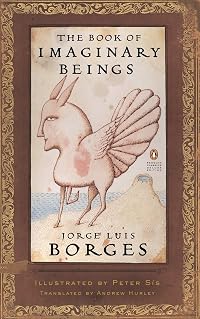
The Book of Imaginary Beings
by Jorge Luis Borges, Margarita Guerrero
On This Page
Description
The master, writing with sometime collaborator Guerrero, compiled 82 one- and two-page descriptions of everything from "The Borametz" (a Chinese "plant shaped like a lamb, covered with golden fleece") to "The Simurgh" ("an immortal bird that makes its nest in the tree of science") and "The Zaratan" (a particularly cunning whale) in An Anthology of Fantastic Zoology in 1954. He added 34 more (and illustrations) for a 1967 edition, giving it the present title, and it was published in English show more in 1969. This edition, with fresh translations from Borges's Collected Fictions translator Hurley, and new illustrations from Caldecott-winner Sis, gives the beings new life. They prove the perfect foils for classic Borgesian musings on everything from biblical etymology to the underworld, giving the creatures particularly (and, via Sis, whimsically) vivid and perfectly scaled shape. "We do not know what the dragon means, just as we do not know the meaning of the universe," Borges (1899-1986) and Guerrero write in a preface, and the genius of this book is that it seems to easily contain the latter within it. show lessTags
Recommendations





















Member Recommendations
Bookwomble Both bestiaries, one fantastical (Borges) an inspiration for the other, factual (Henderson).
20
bluepiano A novel containing a naturalist's observations of fantastical plants and animals: plants with tendrils that penetrate nesting chicks, swallows who hibernate in mud, and the like. A very good book.
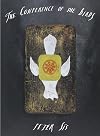
themulhern Sis's work on the illustration of Borges's book inspired him to write his book.
Member Reviews
About the only fault that I can find with this book is the lack of illustrations. I assume illustrated editions exist, but this isn't one of them, so I had to make do with the meager projections of my brain. 120 entries describing imaginary beasts from all around the world and from different times and even a few sprung straight from the fertile minds of CS Lewis and Franz Kafka. Written with dry wit and effortless erudition, each entry is a polished gem, each being a wonder of shape and marvel of history and odd curate's egg of the culture that produced it. A book to be kept handy for dipping into, I think.
This is a book past its Best Before date. It's a bestiary that covers fantastical creatures from mythology and literature, including the well-known and the obscure. I also introduces a bunch from single and recent pieces of fiction (like Kafka & CS Lewis). Good representation of Europe and Asia, not so good (to non-existent) coverage of indigenous people of the Americas, Australia and assorted islands.
Great concept, but without fabulous full colour illustrations, this can be better covered with a google search. Wikipedia has a perfect synopsis for this book, so I'd recommend reading that instead. This was a book I'd pick up and read an entry or two and it took me ages and ages to get through because the writing was overwhelmingly dry show more and uninteresting. It did have some moments, but I had to read a lot of boring words to get to it. Illustrations would have helped because the text wasn't evocative enough to spark my imagination.
Recommended for: creative people looking for inspiration and who live in 1967.
Why I Read This Now: Well "now" doesn't actually apply, as I'm sure I started reading this in 2019. Possibly 2018. But I did read the whole stale 197 pages and finished it today. show less
Great concept, but without fabulous full colour illustrations, this can be better covered with a google search. Wikipedia has a perfect synopsis for this book, so I'd recommend reading that instead. This was a book I'd pick up and read an entry or two and it took me ages and ages to get through because the writing was overwhelmingly dry show more and uninteresting. It did have some moments, but I had to read a lot of boring words to get to it. Illustrations would have helped because the text wasn't evocative enough to spark my imagination.
Recommended for: creative people looking for inspiration and who live in 1967.
Why I Read This Now: Well "now" doesn't actually apply, as I'm sure I started reading this in 2019. Possibly 2018. But I did read the whole stale 197 pages and finished it today. show less
The Book of Imaginary Beings is a slightly disappointing compendium of various mythological, folkloric and fictional creatures, of "sphinxes and griffons and centaurs" and the like (pg. 14), arranged alphabetically. Part of the disappointment comes from the fact that it lacks as a reading experience. It's very dry and academic; a reference book that its primary author, Jorge Luis Borges, says should be dipped into at random, "just as one plays with the shifting patterns of a kaleidoscope" (pg. 12). Coming from the pen of the esteemed Borges, you expect something literary, but the book has little in the way of flair and, despite the kaleidoscope analogy, the text does not shapeshift playfully as Borges could do with such nuance in his show more short stories.
Realising and accepting, with some disappointment, that this book is a dry mythological bestiary, and not another string to Borges' literary bow, the willing reader still finds that the book is lacking as a reference book. It's far from comprehensive (off the top of my head, there are no yetis or chupacabras, and no doubt I could think of more) and though it benefits from Borges' erudition (he writes of delving into "the mazelike vaults of the Biblioteca Nacional in search of old authors and abstruse references" (pg. 11)), The Book of Imaginary Beings is more a primer than an encyclopaedia.
It is further weakened by its breadth; it does commendably well to embrace Anglo-Saxon, Greek, Norse, Latin American and Chinese mythology, but fictional contributions (there are entries entitled 'An Animal Imagined by Kafka' and 'A Creature Imagined by C. S. Lewis') muddy the waters a bit as to what the book is trying to achieve. Ultimately, the book survives in print because of the continued literary credit of its author, which it struggles to match, and as a reference book it has long since been superseded by the 0.0001 seconds of a Google search. The internet, in its ugliest facets, could well have found its place in this bestiary, but then again, it's a monstrous, sentient labyrinth that would have been inconceivable even to Borges' imagination. show less
Realising and accepting, with some disappointment, that this book is a dry mythological bestiary, and not another string to Borges' literary bow, the willing reader still finds that the book is lacking as a reference book. It's far from comprehensive (off the top of my head, there are no yetis or chupacabras, and no doubt I could think of more) and though it benefits from Borges' erudition (he writes of delving into "the mazelike vaults of the Biblioteca Nacional in search of old authors and abstruse references" (pg. 11)), The Book of Imaginary Beings is more a primer than an encyclopaedia.
It is further weakened by its breadth; it does commendably well to embrace Anglo-Saxon, Greek, Norse, Latin American and Chinese mythology, but fictional contributions (there are entries entitled 'An Animal Imagined by Kafka' and 'A Creature Imagined by C. S. Lewis') muddy the waters a bit as to what the book is trying to achieve. Ultimately, the book survives in print because of the continued literary credit of its author, which it struggles to match, and as a reference book it has long since been superseded by the 0.0001 seconds of a Google search. The internet, in its ugliest facets, could well have found its place in this bestiary, but then again, it's a monstrous, sentient labyrinth that would have been inconceivable even to Borges' imagination. show less
"As we all know," says the preface, "There is a kind of lazy pleasure in useless and out-of-the-way erudition." And that lazy pleasure comes well through in the reading of this book, as it must have done in the writing of it.
This is a bestiary in the old fashioned sense: a miscellany of accounts of creatures, all pulled from secondary sources, and selected more for their thematic or literary value than any attempt at rigorous research. It's a great book, either for reading through or one entry at a time, and it includes both the well-known creatures like dragons, ones I've never seen in any other book (A Bao A Qu), and fictional creatures from early fantasy and mystical writings.
I can't help but wonder what is to become of efforts like show more this; this compilation was surely the result of many sunny hours browsing through well-loved books and libraries, and yet now I can get the same result in about an hour with Google books search... and for all that the ease of information is great, I can't help but think with no need anymore for lazy erudition, we'll lose something valuable.
I'd also love to read this in the original Spanish, especially as a not-insignificant fraction of the original sources were in English. show less
This is a bestiary in the old fashioned sense: a miscellany of accounts of creatures, all pulled from secondary sources, and selected more for their thematic or literary value than any attempt at rigorous research. It's a great book, either for reading through or one entry at a time, and it includes both the well-known creatures like dragons, ones I've never seen in any other book (A Bao A Qu), and fictional creatures from early fantasy and mystical writings.
I can't help but wonder what is to become of efforts like show more this; this compilation was surely the result of many sunny hours browsing through well-loved books and libraries, and yet now I can get the same result in about an hour with Google books search... and for all that the ease of information is great, I can't help but think with no need anymore for lazy erudition, we'll lose something valuable.
I'd also love to read this in the original Spanish, especially as a not-insignificant fraction of the original sources were in English. show less
[b: The Book of Imaginary Beings|16568|The Book of Imaginary Beings|Jorge Luis Borges|https://images.gr-assets.com/books/1388222911s/16568.jpg|2241328] is something I likely should have read before reading the book it directly inspired, [b: The Book of Barely Imagined Beings|13562662|The Book of Barely Imagined Beings A 21st Century Bestiary|Caspar Henderson|https://images.gr-assets.com/books/1358299908s/13562662.jpg|19138344]. Like other readers, though, I ended up reading them in reverse order. That wasn't truly a bad thing, not at all. If anything the other book whetted my taste for my first dip into the work of [a: Jorge Luis Borges|500|Jorge Luis Borges|https://images.gr-assets.com/authors/1496948506p2/500.jpg] only to find myself show more utterly in love with his writing. As Borges points out in the introduction, however, nature's imagination is vastly better than our own - the creatures in these pages may be strange, but the natural world is much stranger. That still doesn't mean we can't enjoy a good story now and then.
This book is an encyclopedia or sorts, albeit a very short one, about creatures of fiction, myth, and folklore. In these pages are creatures from Zoroastrianism to theosophy, ancient Chinese belief and Celtic myth, Judaism and Christian mysticism and everything in between. While some entries are to be expected (the dragons, basilisks, and manticores) there are also some delights such as the Lamed Wufniks. In so many words there are around 30 Lamed Wufniks in the world at any time. They are destined to be poor all their lives, and it is through their actions and beliefs that God judges the rest of the world. Should anyone discover they are a Lamed Wufnik, they will instantly die and another shall become one.
Like all bestiaries, this is a book of myth and morality. There is a lot to be learned within its pages, and much humor there besides. Ultimately, through these pages we learn the difficulty of perfection, and the joy of living with the mysteries of the world.
I can't wait to read more by this author. show less
This book is an encyclopedia or sorts, albeit a very short one, about creatures of fiction, myth, and folklore. In these pages are creatures from Zoroastrianism to theosophy, ancient Chinese belief and Celtic myth, Judaism and Christian mysticism and everything in between. While some entries are to be expected (the dragons, basilisks, and manticores) there are also some delights such as the Lamed Wufniks. In so many words there are around 30 Lamed Wufniks in the world at any time. They are destined to be poor all their lives, and it is through their actions and beliefs that God judges the rest of the world. Should anyone discover they are a Lamed Wufnik, they will instantly die and another shall become one.
Like all bestiaries, this is a book of myth and morality. There is a lot to be learned within its pages, and much humor there besides. Ultimately, through these pages we learn the difficulty of perfection, and the joy of living with the mysteries of the world.
I can't wait to read more by this author. show less
This almanac of fantastic creatures is highly recommended for the dreamer, the fabulist, the folklorist, the child, the storyteller, the poet, the optimist, the dungeon-master, and the mystic in each and every one of us. With obvious erudition, and with wit so subtle that it’s easily mistaken for mere exposition, Borges leverages these hundred or so miscellaneous monsters to remind us that dreams, folklore, literature, philosophy, history, and religion form a vast and unified intellectual continent, little remembered and less explored.
In medieval times books about strange creatures were called bestiaries. Kind of a dictionary of one-of-a-kind freaks of nature which appear in the world and then disappear. This elegantly written book by the Argentinian Borges is his own creation about Beings which never existed except in the minds of the writers who described them. This is actually a book about his fascination with older books (bibliomania). This would not interest most readers, but I loved it. Borges reads books for no other reason than to experience the world within books, which is the only reason to do it. This is the fruit of his lifetime of labor. I have many other books by Borges and will get to them as I find them in my book boxes. This goes on my all time list show more of favorite books. The book's entries are organized alphabetically. He covers the Egyptian Eater of the Dead, The Greek Minotaur (original myth of The Hunger Games books), the Scottish Fairies and Doppelganger. No pictures, Index. show less
Members
- Recently Added By
Lists

Unread books
1,063 works; 82 members

Magic Realism
371 works; 51 members

Spanish Language in English Translation
19 works; 2 members

Books Read in 2015
3,299 works; 127 members

Amanda's Guaranteed Books
110 works; 5 members

Mythical Monsters of the World
199 works; 79 members
Author Information

861+ Works 58,639 Members
Born in Buenos Aires, Argentina, in 1899, Jorge Borges was educated by an English governess and later studied in Europe. He returned to Buenos Aires in 1921, where he helped to found several avant-garde literary periodicals. In 1955, after the fall of Juan Peron, whom he vigorously opposed, he was appointed director of the Argentine National show more Library. With Samuel Beckett he was awarded the $10,000 International Publishers Prize in 1961, which helped to establish him as one of the most prominent writers in the world. Borges regularly taught and lectured throughout the United States and Europe. His ideas have been a profound influence on writers throughout the Western world and on the most recent developments in literary and critical theory. A prolific writer of essays, short stories, and plays, Borges's concerns are perhaps clearest in his stories. He regarded people's endeavors to understand an incomprehensible world as fiction; hence, his fiction is metaphysical and based on what he called an esthetics of the intellect. Some critics have called him a mystic of the intellect. Dreamtigers (1960) is considered a masterpiece. A central image in Borges's work is the labyrinth, a mental and poetic construct, that he considered a universe in miniature, which human beings build and therefore believe they control but which nevertheless traps them. In spite of Borges's belief that people cannot understand the chaotic world, he continually attempted to do so in his writing. Much of his work deals with people's efforts to find the center of the labyrinth, symbolic of achieving understanding of their place in a mysterious universe. In such later works as The Gold of the Tigers, Borges wrote of his lifelong descent into blindness and how it affected his perceptions of the world and himself as a writer. Borges died in Geneva in 1986. (Bowker Author Biography) show less
2 Works 3,187 Members
Some Editions
Awards and Honors
Awards
Series
Belongs to Publisher Series
Work Relationships
Is contained in
Is an expanded version of
Common Knowledge
- Canonical title
- The Book of Imaginary Beings
- Original title
- El libro de los seres imaginarios
- Original publication date
- 1957
- People/Characters
- Emanuel Swedenborg; Franz Kafka; C. S. Lewis; Edgar Allan Poe; Bahamut; Baldanders (show all 21); Behemoth; Cheshire Cat; Centaur; Cerberus; Buddha; Lewis Carroll; H. G. Wells; Kraken; Lamia; Leviathan; Lilith; Phoenix; Roc; Sphinx; Unicorn
- Important places
- Wonderland
- First words
- If one wishes to gaze upon the most marvelous landscape in the world, one must go to the topmost story of the Tower of Victory in Chitor.
- Last words
- (Click to show. Warning: May contain spoilers.)These same symbolic values will be found in Moby Dick, written ten centuries later.
- Blurbers
- Updike, John; DeMott, Benjamin; Hoffman, Stanton
- Original language
- Spanish
- Disambiguation notice*
- Versione ridotta de "Il libro degli esseri immaginari"; per favore non combinateli, grazie.
*Some information comes from Common Knowledge in other languages. Click "Edit" for more information.
Classifications
- Genre
- Fiction and Literature
- DDC/MDS
- 398.469 — Society, government, & culture Customs, etiquette & folklore Folklore & Folktales Paranatural and legendary phenomena as subjects of folklore Legendary minerals, plants, animals Animals
- LCC
- GR825 .B613 — Geography, Anthropology and Recreation Folklore Folklore By subject Animals, plants, and minerals
- BISAC
Statistics
- Members
- 3,007
- Popularity
- 5,912
- Reviews
- 30
- Rating
- (4.01)
- Languages
- 18 — Czech, Dutch, English, Estonian, Finnish, French, German, Greek, Hebrew, Hungarian, Italian, Japanese, Lithuanian, Russian, Serbian, Spanish, Turkish, Portuguese (Brazil)
- Media
- Paper
- ISBNs
- 47
- ASINs
- 22
