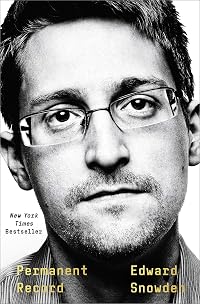
Permanent Record
by Edward Snowden
On This Page
Description
Edward Snowden, the man who risked everything to expose the US government's system of mass surveillance, reveals for the first time the story of his life, including how he helped to build that system and what motivated him to try to bring it down.In 2013, twenty-nine-year-old Edward Snowden shocked the world when he broke with the American intelligence establishment and revealed that the United States government was secretly pursuing the means to collect every single phone call, text show more message, and email. The result would be an unprecedented system of mass surveillance with the ability to pry into the private lives of every person on earth. Six years later, Snowden reveals for the very first time how he helped to build this system and why he was moved to expose it.
Spanning the bucolic Beltway suburbs of his childhood and the clandestine CIA and NSA postings of his adulthood, Permanent Record is the extraordinary account of a bright young man who grew up online—a man who became a spy, a whistleblower, and, in exile, the Internet's conscience. Written with wit, grace, passion, and an unflinching candor, Permanent Record is a crucial memoir of our digital age and destined to be a classic.
. show less
Tags
Recommendations
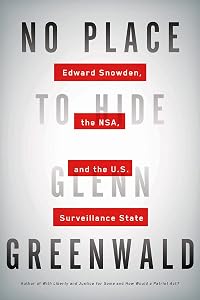

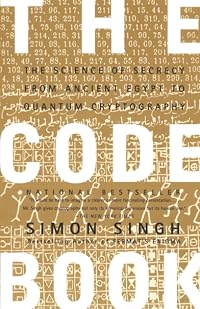
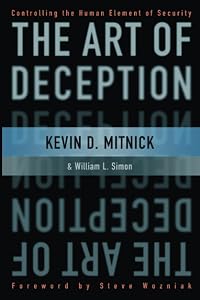
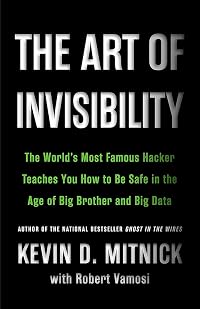
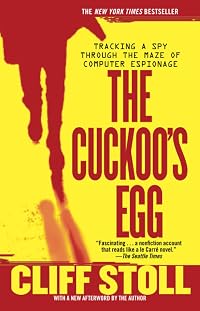





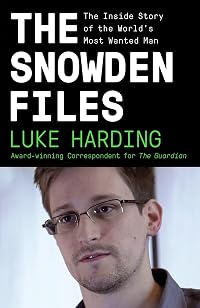


Member Recommendations
anonymous user Das ursprüngliche Buch über die Snowden-Enthüllungen.
anonymous user Another person's point of view while the stories were starting to come together and being written.
Barton does say he was contacted before Glenn but Ed does say Glenn was contacted before Barton.
Member Reviews
It’s curious that we’ve become so reconciled with the massive amount of state secrets we learned about when Edward Snowden worked with journalists to expose its vast extent and power in 2013. Since then, he’s lived in exile almost as long as he worked for the US intelligence services, helping to build a system that would capture, store, and make searchable the digital traces of communications of the entire world, an all-encompassing shift from targeted to mass surveillance. Yet we’ve become somehow used to the idea, defensively forgetting that nearly everything we do is not forgotten.
Snowden’s memoir, Permanent Record, doesn’t reveal any state secrets he hasn't already selectively shared with the world. It doesn’t tell us show more anything about how he got those secrets out that hasn’t already been covered in Laura Poitras’s film, Citizenfour. It’s more personal and reflective. It explains how he became entranced by technology and the internet, how he ended up following a family tradition by working for the government, which meant in practice working for private companies, how he became alarmed by the systems people like him were building, and why he decided he had a moral duty to the country he served to share what he knew with journalists to get the word out. It’s a portrait of a young geek who grew up close to the beltway and in the shadow of 9/11, so he signed up to serve rather than become a silicon valley entrepreneur. After an accident sidelined him from the military before he was out of training, he decided to follow his parents’ footsteps and get a security clearance so he could apply his tech skills to government service.
He describes the anxiety around having his past scoured as he was vetted at age 22 as a way to explore the implications of all the traces we leave behind, juvenile beliefs long shed, jokes that aren’t funny anymore, now all part of our permanent record. But he passed easily and that not only gave him a chance to get a job with the government, it made him attractive to contractors. Those give the agencies a workforce by allowing them to circumvent legal caps on the number of government employees. (As in higher ed, it’s easier to get money to pay for commercial services than to hire people.) “It’s America’s most legal and convenient method of transferring public money to the private purse,” he writes. Soon after he got his clearance he realized he couldn’t serve his country unless he worked for the private sector, which is where high-level systems work is done. And it was being done by “computer dudes” like him. At an “indoc” orientation they were told they were special, the elite, which struck him as odd.
"You don’t need to tell a bunch of computer whizzes that they possess superior knowledge and skills that uniquely qualify them to act independently and make decisions on behalf of their fellow citizens without any oversight or review. Nothing inspires arrogance like a lifetime controlling machines that are incapable of criticism.
"This, to my thinking, actually represented the great nexus of the Intelligence Community and the tech industry: both are entrenched and unelected powers that pride themselves on maintaining absolute secrecy about their developments. Both believe that they have the solutions for everything, which they never hesitate to unilaterally impose. Above all they both believe that these solutions are inherently apolitical, because they are based on data, whose prerogatives are regarded as preferable to the chaotic whims of the common citizen.
Within a few short years he was in a position to see how the entire system operated, and what he saw threw him into a moral crisis. Eventually he decided the only way he could serve the nation would be to expose what was going on, whatever the personal cost. Toward the end of the book, he shifts from memoir to an argument for why privacy matters. It matters because “any elected government that relies on surveillance to maintain control of a citizenry that regards surveillance as anathema to democracy has effectively ceased to be a democracy.”
But it’s not just the state that uses surveillance for control. Both government and businesses exploit our permanent records.
"Algorithms analyze it for patterns of established behavior in order to extrapolate behaviors to come, a type of digital prophecy that’s only slightly more accurate than analog methods like palm reading . . . its science is, in fact, anti-scientific, and fatally misnamed: predictability is actually manipulation…
"We can’t permit our data to be used to sell us the very things that must not be sold, such as journalism. If we do, the journalism we get will be merely the journalism we want, or the journalism the powerful want us to have, not the honest collective conversation that’s necessary. We can’t let the godlike surveillance we’re under be used to “calculate” or citizenship scores, or to “predict” our criminal activity; to tell us what kind of education we can have, or what kind of job we can have, or whether we can have an education or a job at all; to discriminate against us based on our financial, legal, and medical histories, not to mention our ethnicity or race, which are constructs that data often assumes or imposes. And as for our most intimate data, our genetic information: if we allow it to be used to identify us, then it will be used to victimize us, even to modify us – to remake the very essence of our humanity in the image of the technology that seeks its control.
"Of course all of the above has already happened."
Permanent Record is both a memoir of growing up with technology and an argument for breaking the law as an act of moral patriotism.
As for me, I’m interested in data privacy as a condition for intellectual freedom because that’s stuff librarians care about. The implications of digital record-keeping and prediction are inescapable. We’ve become so inured to these systems we use them for enrollment management – this Washington Post article about it is chilling. Learning analytics, too, have the potential to be invasive in ways that fail to respect students’ agency and right to self-determination. I recently had a chance to pose some questions to Kyle Jones, the PI for the Data Doubles project, and his answers made for interesting reading in tandem with Snowden’s warnings.
We have choices to make. Deciding we don’t have a choice is the easy way out, but it would be a terrible mistake. show less
Snowden’s memoir, Permanent Record, doesn’t reveal any state secrets he hasn't already selectively shared with the world. It doesn’t tell us show more anything about how he got those secrets out that hasn’t already been covered in Laura Poitras’s film, Citizenfour. It’s more personal and reflective. It explains how he became entranced by technology and the internet, how he ended up following a family tradition by working for the government, which meant in practice working for private companies, how he became alarmed by the systems people like him were building, and why he decided he had a moral duty to the country he served to share what he knew with journalists to get the word out. It’s a portrait of a young geek who grew up close to the beltway and in the shadow of 9/11, so he signed up to serve rather than become a silicon valley entrepreneur. After an accident sidelined him from the military before he was out of training, he decided to follow his parents’ footsteps and get a security clearance so he could apply his tech skills to government service.
He describes the anxiety around having his past scoured as he was vetted at age 22 as a way to explore the implications of all the traces we leave behind, juvenile beliefs long shed, jokes that aren’t funny anymore, now all part of our permanent record. But he passed easily and that not only gave him a chance to get a job with the government, it made him attractive to contractors. Those give the agencies a workforce by allowing them to circumvent legal caps on the number of government employees. (As in higher ed, it’s easier to get money to pay for commercial services than to hire people.) “It’s America’s most legal and convenient method of transferring public money to the private purse,” he writes. Soon after he got his clearance he realized he couldn’t serve his country unless he worked for the private sector, which is where high-level systems work is done. And it was being done by “computer dudes” like him. At an “indoc” orientation they were told they were special, the elite, which struck him as odd.
"You don’t need to tell a bunch of computer whizzes that they possess superior knowledge and skills that uniquely qualify them to act independently and make decisions on behalf of their fellow citizens without any oversight or review. Nothing inspires arrogance like a lifetime controlling machines that are incapable of criticism.
"This, to my thinking, actually represented the great nexus of the Intelligence Community and the tech industry: both are entrenched and unelected powers that pride themselves on maintaining absolute secrecy about their developments. Both believe that they have the solutions for everything, which they never hesitate to unilaterally impose. Above all they both believe that these solutions are inherently apolitical, because they are based on data, whose prerogatives are regarded as preferable to the chaotic whims of the common citizen.
Within a few short years he was in a position to see how the entire system operated, and what he saw threw him into a moral crisis. Eventually he decided the only way he could serve the nation would be to expose what was going on, whatever the personal cost. Toward the end of the book, he shifts from memoir to an argument for why privacy matters. It matters because “any elected government that relies on surveillance to maintain control of a citizenry that regards surveillance as anathema to democracy has effectively ceased to be a democracy.”
But it’s not just the state that uses surveillance for control. Both government and businesses exploit our permanent records.
"Algorithms analyze it for patterns of established behavior in order to extrapolate behaviors to come, a type of digital prophecy that’s only slightly more accurate than analog methods like palm reading . . . its science is, in fact, anti-scientific, and fatally misnamed: predictability is actually manipulation…
"We can’t permit our data to be used to sell us the very things that must not be sold, such as journalism. If we do, the journalism we get will be merely the journalism we want, or the journalism the powerful want us to have, not the honest collective conversation that’s necessary. We can’t let the godlike surveillance we’re under be used to “calculate” or citizenship scores, or to “predict” our criminal activity; to tell us what kind of education we can have, or what kind of job we can have, or whether we can have an education or a job at all; to discriminate against us based on our financial, legal, and medical histories, not to mention our ethnicity or race, which are constructs that data often assumes or imposes. And as for our most intimate data, our genetic information: if we allow it to be used to identify us, then it will be used to victimize us, even to modify us – to remake the very essence of our humanity in the image of the technology that seeks its control.
"Of course all of the above has already happened."
Permanent Record is both a memoir of growing up with technology and an argument for breaking the law as an act of moral patriotism.
As for me, I’m interested in data privacy as a condition for intellectual freedom because that’s stuff librarians care about. The implications of digital record-keeping and prediction are inescapable. We’ve become so inured to these systems we use them for enrollment management – this Washington Post article about it is chilling. Learning analytics, too, have the potential to be invasive in ways that fail to respect students’ agency and right to self-determination. I recently had a chance to pose some questions to Kyle Jones, the PI for the Data Doubles project, and his answers made for interesting reading in tandem with Snowden’s warnings.
We have choices to make. Deciding we don’t have a choice is the easy way out, but it would be a terrible mistake. show less
Awww, this is actually the cutest love story (yes I know that's not supposed to be what I take away). Extremely well written, and very intriguing from page 1. It's a memoir but intersperses a lot of Snowden's thoughts and commentaries, and I appreciated how at the end he details the ways in which private companies have changed their actions based on the information he leaked. Nothing new or novel, but this is a reminder of how terrifying it is that we've become so complacent with our security, yet despite, I never felt that Snowden was critical or judgemental.
Listened on audio. MacAudio is brilliant.
Listened on audio. MacAudio is brilliant.
I had fun reliving the days after the personal computer entered our lives, and recalled, from having sons of my own who are contemporaries of Snowden, just how completely computer gaming took over a part of their lives. I also recalled, with sadness now, how wondrous the Internet was when it was free from government and corporate dominance. It was a force with which to reckon and to challenge oneself.
I loved the chapter about hacks where Snowden figures out how not to do any of his Math homework. I had to laugh when reading this because one of my own children used that same tactic in a high school computer class. Explanation finally understood...after all these years!
I was fearful of having to read parts of the book about where Snowden show more would make the decision to work for the public to his detriment and against his government. In the end, I was cheering Snowden and mortified by my own federal government’s secrets. I can’t help but feel Snowden is a hero whose intent was in the public interest.
I was astounded by the fact that Snowden and one other techie were the nighttime sysadmins for 12 hours for the whole global CIA network, and they were *contractors*!
Snowden’s description of his night shift on the computer reminded me of my own nighttime job where and when a work colleague of mine used to play Scrabble together on the computer to make the long nighttime hours pass more quickly.
I was wondering how much of the information Snowden revealed about his training (its location and what he learned) is common knowledge or if it should not have been revealed.
This is probably the most terrifying book I’ve ever read because it’s not about history but about the present and the future. It is also not science fiction, but what I would consider to be the truth. It actually kept me awake at night thinking about the blatant disregard of the Constitution and unconstitutional secret-keeping by the American intelligence community. How can a country acting in such a manner even be considered to be a functioning democracy? Was it foreshadowing of the further demise of American democracy?
I was a bit annoyed at Snowden’s hacking into unknowing subjects’ personal computers even though I understand he needed that to maintain his own secret identity.
Here we have an extremely intelligent man. I somehow wonder if he did what he did in part just to see if he could do it AND get away with it.
I like how, throughout his book, Snowden carefully explains “computerspeak” to us common folk. That is an important component of making this book accessible to all who read it.
One aspect of this book, oddly enough, I did not like was that when I wanted to talk about the book’s contents, the people with whom I’d spoken wanted to give me their negative impression of the author. That was missing the point of what he wrote. I found that frustrating.
It’s true that computer systems are quite a mystery to all but the techies. I’m amazed by their knowledge.
This was as interesting, and probably more interesting, reading for me than any spy novel ever.
Some parts of Snowden’s story made me laugh: “I wasn’t wild about the idea of taking thousands of pictures of my computer screen in the middle of a top secret facility.”
What a nightmare it must have been for Lindsay following Ed’s departure! I loved the last line of the book, and knowing how her situation ended.
It’s good to know that web security increased after Snowden’s revelation to the world. “The year 2016 was a landmark in tech history, the first year since the invention of the Internet that more Web traffic was encrypted than unencrypted.” show less
I loved the chapter about hacks where Snowden figures out how not to do any of his Math homework. I had to laugh when reading this because one of my own children used that same tactic in a high school computer class. Explanation finally understood...after all these years!
I was fearful of having to read parts of the book about where Snowden show more would make the decision to work for the public to his detriment and against his government. In the end, I was cheering Snowden and mortified by my own federal government’s secrets. I can’t help but feel Snowden is a hero whose intent was in the public interest.
I was astounded by the fact that Snowden and one other techie were the nighttime sysadmins for 12 hours for the whole global CIA network, and they were *contractors*!
Snowden’s description of his night shift on the computer reminded me of my own nighttime job where and when a work colleague of mine used to play Scrabble together on the computer to make the long nighttime hours pass more quickly.
I was wondering how much of the information Snowden revealed about his training (its location and what he learned) is common knowledge or if it should not have been revealed.
This is probably the most terrifying book I’ve ever read because it’s not about history but about the present and the future. It is also not science fiction, but what I would consider to be the truth. It actually kept me awake at night thinking about the blatant disregard of the Constitution and unconstitutional secret-keeping by the American intelligence community. How can a country acting in such a manner even be considered to be a functioning democracy? Was it foreshadowing of the further demise of American democracy?
I was a bit annoyed at Snowden’s hacking into unknowing subjects’ personal computers even though I understand he needed that to maintain his own secret identity.
Here we have an extremely intelligent man. I somehow wonder if he did what he did in part just to see if he could do it AND get away with it.
I like how, throughout his book, Snowden carefully explains “computerspeak” to us common folk. That is an important component of making this book accessible to all who read it.
One aspect of this book, oddly enough, I did not like was that when I wanted to talk about the book’s contents, the people with whom I’d spoken wanted to give me their negative impression of the author. That was missing the point of what he wrote. I found that frustrating.
It’s true that computer systems are quite a mystery to all but the techies. I’m amazed by their knowledge.
This was as interesting, and probably more interesting, reading for me than any spy novel ever.
Some parts of Snowden’s story made me laugh: “I wasn’t wild about the idea of taking thousands of pictures of my computer screen in the middle of a top secret facility.”
What a nightmare it must have been for Lindsay following Ed’s departure! I loved the last line of the book, and knowing how her situation ended.
It’s good to know that web security increased after Snowden’s revelation to the world. “The year 2016 was a landmark in tech history, the first year since the invention of the Internet that more Web traffic was encrypted than unencrypted.” show less
I have worked in and around the IT industry for over 15 years and grew up, similarly to Snowden, enamored with technology. I got my first PC, a XT clone, at around age 10 and started running my own BBS shortly after. I remember those first days of the internet, my first website, and the days before social media. None of what he exposed in 2013 really surprised me or people like me - at least not from a technological perspective. It was always an assumption that this stuff could happen. Taking over cameras, stepping through backdoors in routers, listening in on microphones, browsing private social media pages. Of course that's possible. What we didn't fully appreciate was the scope. The story Edward Snowden has to tell is an important show more one... and the book covers his life and the events surrounding his whistleblowing with great detail and emotion. It not only explains what he did, but he tries to tell the story of why he did it. It's a wonderfully crafted book that should be standard reading for any technologist.
That the US government is collecting data on such an enormous scale, passively, and storing it in perpetuity... that should frighten everyone, and it's enough to start making you paranoid of the things you do online. Of course, I'm just a middle aged white guy in Canada who lives a fairly standard, boring life. I'm not a juicy surveillance target. Or am I?
Hello?
...are you reading this?
Hello? show less
That the US government is collecting data on such an enormous scale, passively, and storing it in perpetuity... that should frighten everyone, and it's enough to start making you paranoid of the things you do online. Of course, I'm just a middle aged white guy in Canada who lives a fairly standard, boring life. I'm not a juicy surveillance target. Or am I?
Hello?
...are you reading this?
Hello? show less
Snowden’s bombshell leak of NSA’s data collection program in 2013 changed the world forever. Keeping track of every netizen in the world was a sci-fi dream up until then. With the revelation came an unprecedented level of awareness of weaknesses in computer systems and a better understanding of data privacy. While Snowden has been branded as a traitor and ‘whistleblower’ by his government, I personally see him as a selfless hero who sacrificed his career and everything he knew for what he believed in.
He talks about all this in the book, the latter part of which discusses the thought process and the physical processes that went behind collecting data for the leak and how he moved to Hong Kong. However, I found the earlier show more chapters more interesting, especially the ones that discussed his childhood introduction and later obsession with computers and the Internet. Like him, I grew up in the 90s. Just like him, my first introduction was to game consoles and then later to 486 computers (and later Pentium 2!). And once more like him, I grew up on dial-up Internet.
His thoughts on the ‘wild’, decentralized nature of the early Internet and how it shaped his thinking were very similar to mine. I built personas and interacted with people online where no one would ask for your real name and people would (mostly) treat each other with respect. His views on how malleable the Internet was before corporatization took over were compelling, and I can’t help but agree with him on how the Internet has changed (for the worse) since then.
The chapters on pre-9/11 America were appealing as well, mostly because of how freedom was interpreted back then. His brief stint with the army felt like it was out of a movie, to be honest. Of course, people will read the book for Snowden’s jobs with the CIA and NSA. They don’t disappoint.
I gained a better understanding of Snowden’s feelings towards his country and towards his fellow citizens. These chapters gave insight into the intelligence community and how the American ones flout their own constitution all the time. He explains how these communities work, highlighting their rigid power structures. More than that, he clarifies his rationale for the things he did by connecting it to the US Constitution, highlighting his loyalty but disavowing nationalism.
We live in an increasingly surveilled world. Nothing on your computer or the Internet is private anymore - if you have a file on your computer, NSA has access to it, or that’s what Snowden highlights in the book. Going forward, encryption is the key.
The book was eye-opening and educational. It really resonated with me because of my own experiences with the Internet and just how closely my views are in alignment with Snowden’s, notably towards decentralization. This is a must-read if you’re remotely interested in data privacy, freedom of speech, and the future of the Internet. show less
He talks about all this in the book, the latter part of which discusses the thought process and the physical processes that went behind collecting data for the leak and how he moved to Hong Kong. However, I found the earlier show more chapters more interesting, especially the ones that discussed his childhood introduction and later obsession with computers and the Internet. Like him, I grew up in the 90s. Just like him, my first introduction was to game consoles and then later to 486 computers (and later Pentium 2!). And once more like him, I grew up on dial-up Internet.
His thoughts on the ‘wild’, decentralized nature of the early Internet and how it shaped his thinking were very similar to mine. I built personas and interacted with people online where no one would ask for your real name and people would (mostly) treat each other with respect. His views on how malleable the Internet was before corporatization took over were compelling, and I can’t help but agree with him on how the Internet has changed (for the worse) since then.
The chapters on pre-9/11 America were appealing as well, mostly because of how freedom was interpreted back then. His brief stint with the army felt like it was out of a movie, to be honest. Of course, people will read the book for Snowden’s jobs with the CIA and NSA. They don’t disappoint.
I gained a better understanding of Snowden’s feelings towards his country and towards his fellow citizens. These chapters gave insight into the intelligence community and how the American ones flout their own constitution all the time. He explains how these communities work, highlighting their rigid power structures. More than that, he clarifies his rationale for the things he did by connecting it to the US Constitution, highlighting his loyalty but disavowing nationalism.
We live in an increasingly surveilled world. Nothing on your computer or the Internet is private anymore - if you have a file on your computer, NSA has access to it, or that’s what Snowden highlights in the book. Going forward, encryption is the key.
The book was eye-opening and educational. It really resonated with me because of my own experiences with the Internet and just how closely my views are in alignment with Snowden’s, notably towards decentralization. This is a must-read if you’re remotely interested in data privacy, freedom of speech, and the future of the Internet. show less
I don't agree with everything Snowden did, and I don't know how complete this book is about his motivations and actions, but even with those caveats, it's an excellent book.
The most interesting aspect for me was not the factual description of what he did (although there are some never-before-read details), but his mindset and motivation to choose to betray the NDAs and chain of command while (possibly) honoring the oath of service. The technical details about his archiving system (it basically crawled a bunch of the published-within-IC sources and then indexed them, republishing for internal use, which allowed him perfect cover for exfiltration...) were still interesting, of course. That NSA had incredibly lax internal security and show more compartmentalization in the 1993-2013 period (due to losing all the cold war people and replacing them with...a specific demographic profile), CIA and State's technical incompetence, etc. are all pretty well supported by evidence. (Incidentally, the technical jack of all trades at CIA job sounds pretty amazing.)
Least expected angle was just how impressive his wife is. NSA's initial angle was "stripper", which brings a whole set of assumptions. However, this was pretty clearly inaccurate -- she's an intelligent and thoughtful person (although not involved in Snowden's exfiltration of data or escape), and based on actions since the incident (moving to Russia, marrying Snowden a year later, ...), seems
His descriptions of contracting culture and the gov/contractor split, hypertrophy and metastasis of the IC and contractors, etc all are strongly supported by evidence (and my personal experience as a contractor with the government for several years).
What is missing, and calls into question the veracity of the whole account, is the exact process of deciding to do all of this. In the book, it was that he accidentally saw a STLW (Stellar Wind) document, related to one of the most morally and legally questionable programs post-Church conducted by the USG (and for which individuals should be prosecuted and likely hanged), then just started searching for and consuming information for his own education (to see if these programs really existed), and only then decided to leak. That's possible, but it's not strongly supported. The mysterious occurrence of epilepsy around this time which motivated him to spend time on self-reflection and switching to a role with less of everything except access to this data, etc. seems a bit too convenient. This is the one area where I'm still a bit suspicious of the whole affair (either that an external power was involved, or that other NSA insiders supported him), but the story as told could also be the truth -- it's just difficult or impossible to validate.
Overall, one of the best books about the complex and evolving interplay between young, relatively powerless individuals who have technical competence and thus effective technical control over large institutions like government vs. the official power structures, the failures of USG/IC, and one of the biggest news stories in civil liberties since the 1970s. show less
The most interesting aspect for me was not the factual description of what he did (although there are some never-before-read details), but his mindset and motivation to choose to betray the NDAs and chain of command while (possibly) honoring the oath of service. The technical details about his archiving system (it basically crawled a bunch of the published-within-IC sources and then indexed them, republishing for internal use, which allowed him perfect cover for exfiltration...) were still interesting, of course. That NSA had incredibly lax internal security and show more compartmentalization in the 1993-2013 period (due to losing all the cold war people and replacing them with...a specific demographic profile), CIA and State's technical incompetence, etc. are all pretty well supported by evidence. (Incidentally, the technical jack of all trades at CIA job sounds pretty amazing.)
Least expected angle was just how impressive his wife is. NSA's initial angle was "stripper", which brings a whole set of assumptions. However, this was pretty clearly inaccurate -- she's an intelligent and thoughtful person (although not involved in Snowden's exfiltration of data or escape), and based on actions since the incident (moving to Russia, marrying Snowden a year later, ...), seems
His descriptions of contracting culture and the gov/contractor split, hypertrophy and metastasis of the IC and contractors, etc all are strongly supported by evidence (and my personal experience as a contractor with the government for several years).
What is missing, and calls into question the veracity of the whole account, is the exact process of deciding to do all of this. In the book, it was that he accidentally saw a STLW (Stellar Wind) document, related to one of the most morally and legally questionable programs post-Church conducted by the USG (and for which individuals should be prosecuted and likely hanged), then just started searching for and consuming information for his own education (to see if these programs really existed), and only then decided to leak. That's possible, but it's not strongly supported. The mysterious occurrence of epilepsy around this time which motivated him to spend time on self-reflection and switching to a role with less of everything except access to this data, etc. seems a bit too convenient. This is the one area where I'm still a bit suspicious of the whole affair (either that an external power was involved, or that other NSA insiders supported him), but the story as told could also be the truth -- it's just difficult or impossible to validate.
Overall, one of the best books about the complex and evolving interplay between young, relatively powerless individuals who have technical competence and thus effective technical control over large institutions like government vs. the official power structures, the failures of USG/IC, and one of the biggest news stories in civil liberties since the 1970s. show less
#Permanent Record by Edward Snowden
Who out there has not heard of Snowden? Few I imagine. He is the NSA and CIA worker who blew the whistle on the massive surveillance dragnet that the US government (the UK as well and every other government that has access to a terminal) perpetrates routinely on its private citizens - who are no longer private citizens at all but mere data subjects.
Although it’s not in the book, I remember Snowden being quoted as saying we are building the greatest weapon for oppression of mankind that has been seen. He was talking about the internet.
When I listened to the interview that he did on the podcast The Joe Rogan Experience (it’s still available on Overcast) I was shocked to hear Rogan admit that he show more hadn’t read Snowden's book. Why I wondered to myself would you go into a three hour interview with one of the most famous whistleblowers of the 21st century without having read his book?
I have read the book. And I was happy to see it. Having watched Laura Poitras film Citizenfour (2014), and knowing that Glenn Greenwald and Ewen MacAskill the Guardian journalists who broke the Snowden story - have all raised their profiles and had stories out of this young man’s sacrifice, it was time that we heard his own story. And here it is, beautifully written and entertaining as well as vitally important.
I was worried that the book might be quite technical and I wouldn’t understand it. But I need not have worried. Permanent Record is much more about the why rather than the how. Why a young man might give up his whole life as he knows it – home, family, friends, extremely well paid job – for his principles.
The book starts with the author’s childhood,
“Many of the first 2000 or so nights of my life ended in civil disobedience – until the night I turned six years old – I discovered direct action. The authorities weren’t interested in calls for reform,”
moves on to his love of tech born of playing early console games, a chequered school career dogged by illness, boredom and parental divorce and his attempt to join special forces which was cut brutally short by a training injury.
He felt that tech was too easy for him – that he didn’t want computers to be the way he earned his living. But it seems the digital writing was already on the wall. Snowden was catapaulted forward by determination, and the need to earn a living.
What followed was a meteoric rise within the intelligence community.
“It’s only in hindsight that I’m able to appreciate just how high my star had risen. I’d gone from being the student who couldn’t speak in class to being the teacher of the language of a new age…. In just seven short years of my career, I’d climbed from maintaining local servers to crafting and maintaining globally deployed systems – from graveyard-shift security guard to key master of the puzzle palace.”
But his unfettered access to documents set him on his path to questioning … and the questioning led to his discovery of a program called XKEYSCORE. He describes this as the exact point of the interface between the state and its surveillance targets.
‘Everyone’s communications were in the system – everyone’s.’
And this information we learn is being kept, stored in gigantic underground servers somewhere, forever.
The book covers his flight to Hong Kong and the breaking of the story to the world’s press, the US authorities cancelling his passport stranding him in Russia (where he still lives) and his partner (now wife) Lindsay’s unfailing support despite being targeted herself after he left. show less
Who out there has not heard of Snowden? Few I imagine. He is the NSA and CIA worker who blew the whistle on the massive surveillance dragnet that the US government (the UK as well and every other government that has access to a terminal) perpetrates routinely on its private citizens - who are no longer private citizens at all but mere data subjects.
Although it’s not in the book, I remember Snowden being quoted as saying we are building the greatest weapon for oppression of mankind that has been seen. He was talking about the internet.
When I listened to the interview that he did on the podcast The Joe Rogan Experience (it’s still available on Overcast) I was shocked to hear Rogan admit that he show more hadn’t read Snowden's book. Why I wondered to myself would you go into a three hour interview with one of the most famous whistleblowers of the 21st century without having read his book?
I have read the book. And I was happy to see it. Having watched Laura Poitras film Citizenfour (2014), and knowing that Glenn Greenwald and Ewen MacAskill the Guardian journalists who broke the Snowden story - have all raised their profiles and had stories out of this young man’s sacrifice, it was time that we heard his own story. And here it is, beautifully written and entertaining as well as vitally important.
I was worried that the book might be quite technical and I wouldn’t understand it. But I need not have worried. Permanent Record is much more about the why rather than the how. Why a young man might give up his whole life as he knows it – home, family, friends, extremely well paid job – for his principles.
The book starts with the author’s childhood,
“Many of the first 2000 or so nights of my life ended in civil disobedience – until the night I turned six years old – I discovered direct action. The authorities weren’t interested in calls for reform,”
moves on to his love of tech born of playing early console games, a chequered school career dogged by illness, boredom and parental divorce and his attempt to join special forces which was cut brutally short by a training injury.
He felt that tech was too easy for him – that he didn’t want computers to be the way he earned his living. But it seems the digital writing was already on the wall. Snowden was catapaulted forward by determination, and the need to earn a living.
What followed was a meteoric rise within the intelligence community.
“It’s only in hindsight that I’m able to appreciate just how high my star had risen. I’d gone from being the student who couldn’t speak in class to being the teacher of the language of a new age…. In just seven short years of my career, I’d climbed from maintaining local servers to crafting and maintaining globally deployed systems – from graveyard-shift security guard to key master of the puzzle palace.”
But his unfettered access to documents set him on his path to questioning … and the questioning led to his discovery of a program called XKEYSCORE. He describes this as the exact point of the interface between the state and its surveillance targets.
‘Everyone’s communications were in the system – everyone’s.’
And this information we learn is being kept, stored in gigantic underground servers somewhere, forever.
The book covers his flight to Hong Kong and the breaking of the story to the world’s press, the US authorities cancelling his passport stranding him in Russia (where he still lives) and his partner (now wife) Lindsay’s unfailing support despite being targeted herself after he left. show less
Members
- Recently Added By
Published Reviews
ThingScore 88
Snowden liefert einzigartige Einsichten in das Innenleben amerikanischer Geheimdienste: ein Psychogramm der Mitarbeiter/innen und eine Analyse der Strukturen. Beides verbindet der 36-Jährige mit seiner eigenen ungewöhnlichen Geschichte. […] Edward Snowden ist ein Vorbild dafür, was es heißt, sich für Rechtsstaatlichkeit und die eigenen Werte zu engagieren.
added by private library
In the aftermath of 9/11, he joined the US army because he "wanted to show I wasn't just a brain in a jar", and had he not suffered stress fractures during training, he would have become a special forces soldier. Snowden says his greatest regret was his own "reflexive, unquestioning support" for the decision to wage war after the attacks, and how it led to "the promulgation of secret policies, show more secret laws, secret courts and secret wars". He found out about this parallel world working for different intelligence agencies as a contractor tasked with upgrading their antediluvian IT systems. As the spies pivoted towards cyber espionage, the top brass missed something quite important: "The CIA didn't quite understand. The computer guy knows everything, or rather can know everything." Snowden, it seems, was in a position to access their crown jewels.
[...] He eventually decided his loyalties lay not with the agencies he was working for, but the public they were set up to protect. He felt ordinary citizens were being betrayed, and he had a duty to explain how. show less
[...] He eventually decided his loyalties lay not with the agencies he was working for, but the public they were set up to protect. He felt ordinary citizens were being betrayed, and he had a duty to explain how. show less
added by Cynfelyn
Lists

Best Biographies, Autobiographies and Memoirs
465 works; 160 members

Books Read in 2021
5,361 works; 114 members

Books That Changed Our Perspective
423 works; 168 members
Author Information

Some Editions
Awards and Honors
Distinctions
The Guardian Book of the Day (2019-09-14)
Notable Lists
Common Knowledge
- Canonical title
- Permanent Record
- Original title
- Permanent Record
- Original publication date
- 2019-07-19
- People/Characters
- Edward Snowden
- Important places
- Geneva, Switzerland; Tokyo, Japan; The Tunnel, Kunia, Oahu, Hawaii
- Related movies
- Citizenfour (2014 | IMDb)
- Dedication
- To L
- First words
- My name is Edward Joseph Snowden.
- Quotations
- I still struggle to accept the sheer magnitude and speed of the change, from an America that sought to define itself by a calculated and performative respect for dissent to a security state whose militarized police demand obe... (show all)dience, drawing their guns and issuing the order for total submission now heard in every city: “Stop resisting.”
The 2008 crisis, which laid so much of the foundation for the crises of populism that a decade later would sweep across Europe and America, helped me realize that something that is devastating for the public can be, and often... (show all) is, beneficial to the elites. This was a lesson that the US government would confirm for me in other contexts, time and again, in the years ahead.
...the companies themselves are American and are subject to American law. The problem is, they’re also subject to classified American policies that pervert law and permit US government to surveil virtually every man, woman,... (show all) and child who has ever touched a computer or picked up a phone.
I worked, I was sure of it, for the good guys, and that made me a good guy, too.
...Hiroshima...Nagasaki...Those places are holy places, whose memorials honor the two hundred thousand incinerated and the countless poisoned by fallout while reminding us of technology’s amorality.
If government surveillance was having the effect of turning the citizen into a subject, at the mercy of state power, then corporate surveillance was turning the consumer into a product, which corporations sold to other corpor... (show all)ations, data brokers, and advertisers.
A decade later, it had become clear, to me at least, that the repeated evocations of terror by the political class were not a response to any specific threat but a cynical attempt to turn terror into a permanent danger that r... (show all)equired permanent vigilance enforced by unquestionable authority.
Arab Spring...They were declaring that in a truly just society the people were not answerable to the government, the government was answerable to the people. Although each crowd in each city, even on each day, seemed to have ... (show all)its own specific motivation and its own specific goals, they all had one thing in common: a rejection of authoritarianism, a recommitment to the humanitarian principle that an individual’s rights are inborn and inalienable.
It’s this clash, between the authoritarian and the liberal democratic, that I believe to be the major ideological conflict of my time—not some concocted, prejudiced notion of an East-West divide, or of a resurrected crusa... (show all)de against Christiandom or Islam.
I liked reading the Constitution partially because its ideas are great, partially because its prose is good, but really because it freaked out my coworkers. In an office where everything you had printed had to be thrown into ... (show all)a shredder after you were done with it, someone would always be intrigued by the presence of hardcopy pages lying on a desk. They’d amble over to ask, “What have you got there?””The Constitution.”Then they’d make a face and back away slowly.
America’s Founders were skilled engineers of political power, particularly attuned to the perils posed by legal subterfuge and the temptations of the presidency toward exercising monarchical authority. To forestall such eve... (show all)ntualities, they designed a system, laid out in the Constitution’s first three articles, that established the US government in three coequal branches, each supposed to provide checks and balances to the others. But when it came to protecting the privacy of American citizens in the digital age, each of these branches failed in its own way, causing the entire system to halt and catch fire.
A “whistleblower” in my definition, is a person who through hard experience has concluded that their life inside an institution has become incompatible with the principles developed in—and the loyalty owed to—the grea... (show all)ter society outside it, to which that institution should be accountable.
...the media, the de facto fourth branch of the US government, protected by the Bill of Rights...
...I was resolved to bring to light a single, all-encompassing fact: that my government had developed and deployed a global system of mass surveillance without the knowledge or consent of its citizenry.
...just because I shared my knowledge didn’t mean that anyone had to share my opinion
I wasn’t wild about the idea of taking thousands of pictures of my computer screen in the middle of a top secret facility.
I’m going to refrain from publishing how exactly I went about my own writing—my own copying and encryption—so that the NSA will still be standing tomorrow.
I was storing the NSA’s storage, making an off-site backup of evidence of the IC’s abuses.
Breaking a 128-bit key would take 2 to the 64th power times longer than a day, or fifty million billion years. By that time, I might even be pardoned.
Analysts understood that the government would never publicly prosecute them, because you can’t exactly convict someone of abusing your secret system of mass surveillance if you refuse to admit the existence of the system it... (show all)self.
The Russian government must have decided that it would be better off without me and the media swarm clogging up the country’s major airport. On August 1 it granted me temporary asylum.
The year 2016 was a landmark in tech history, the first year since the invention of the Internet that more Web traffic was encrypted than unencrypted.
Any elected government that relies on surveillance to maintain control of a citizenry that regards surveillance as anathema to democrat has effectively ceased to be a democracy - Original language
- English
Classifications
- Genres
- Biography & Memoir, Technology, General Nonfiction, Nonfiction
- DDC/MDS
- 327.12730092 — Society, government, & culture Political science International Relations: Spies Foreign policy and specific topics in international relations Espionage and subversion North America United States
- LCC
- JF1525 .W45 .S655 — Political Science Political institutions and public administration Political institutions and public administration Public administration
- BISAC
Statistics
- Members
- 1,780
- Popularity
- 12,336
- Reviews
- 59
- Rating
- (4.27)
- Languages
- 12 — Catalan, Chinese, Danish, English, Finnish, French, German, Italian, Polish, Portuguese, Romanian, Spanish
- Media
- Paper, Audiobook, Ebook
- ISBNs
- 47
- ASINs
- 13