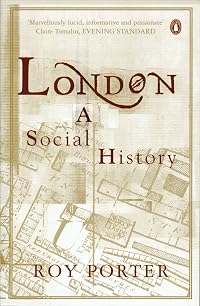
London: A Social History
by Roy Porter
On This Page
Description
This dazzling and yet intimate book is the first modern one-volume history of London from Roman times to the present. An extraordinary city, London grew from a backwater in the Classical age into an important medieval city, a significant Renaissance urban center, and a modern collossus. Roy Porter writes a whole life of this world-renowned place - from the grid streets and fortresses of Julius Caesar and William the Conqueror to the medieval, walled "most noble city" of churches, friars, and show more crown and town relationships. Within the crenellated battlements, manufactures and markets developed and street-life buzzed, enlivened with the cries of hawkers and peddlers. People worked, talked, haggled, and relaxed in London's medieval streets, while craftsmen lived where they worked, nestled trade-by-trade in neighborhoods. London's profile in 1500 was much as it was at the peak of Roman power. The city owed its courtly splendor and national pride of the Tudor Age to the phenomenal expansion of its capital. It was the envy of foreigners, the spur of civic patriotism, and a hub of culture, architecture, and great literature and new religion. Tudor Londoners had an insatiable appetite for new workshops, yards and stores, and comfortable homes; and makeshift quarters for laborers from rural areas began to dot the rising city. London experienced a cruel civil war, fires, enlightenment in thought, government, and living, and the struggle and benefits of empire from the eighteenth through the twentieth centuries. From the lament that "London was but is no more" to "you, who are to stand a wonder to all Years and ages ... a phoenix," London became an elegant, eye-catching, metropolitan hub. It was a mosaic that represented the shared values of a people - both high and low born - at work and play. London was and is a wonder city, a marvel. Not since ancient times has there been such a city - not eternal, but vibrant, living, full of a free people ever evolving. As no one before him, Roy Porter captures the deep pulse of his hometown and makes it our own. London's fortunes, people, and imperial glory are recaptured with brio and wit. This is a transcendent book for all lovers of London, cities, and the habits and fortunes of peoples. show lessTags
Recommendations

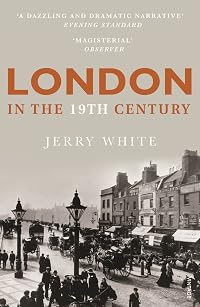

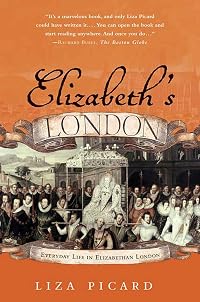
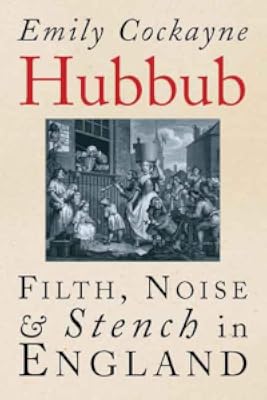


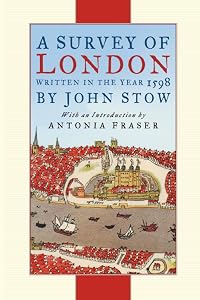







Member Recommendations

Member Reviews
'London was always a muddle that worked. Will it remain that way?' is Roy Porter's closing question in this extensive, but engrossing, work. I chose his final remark to start this review because it encapsulates his view that London is "not the eternal city" and, he argues, may well now be at its end as a livable metropolis. Pessimistically he argues that it was at its greatest " ... between the two Elizabeths, between 1570 and 1986 to be more precise..." and he seems to sincerely fret that, once again, as in Roman times, London might be abandoned and "left to the dogs".
Certainly he presents the evidence that London grew too fast and too big "like a fungus" and he details the social and human dimension of that massive growth - show more unstructured, uncontrolled and ungoverned. From the mobs, the riots the plagues and the Great Fire came an unruly tradition that was translated into a totally unplanned sprawl as the people moved up, and away, from the collapsing city's origins.
Given the published date it is appropriate that he concentrates on the hardness of the Margaret Thatcher policy years and the dreadful impact that such laissez faire, "market forces" led attitudes to the city's growingly desperate needs for public housing, transport and infrastructure. The industries that provided the employment - that provided the taxes and disposable income for the city's fitness and survival - fled to the provinces (or over-seas). The redevelopment, Porter explains, did nothing to resolve these problems as the jobs that were created were filled by transfer, the housing that was built was so `upscale' that the indigenous could not afford to live in it and the `gentrification' of the East End and London Docks only provided for the Thatcherites of the "greed is good" generation. Tourism is now how London survives as even its traditional money-based `service industries' evacuate the remaining centers, to internet-commute, diversify, down-size or are sold off to foreign interests.
Porter's pessimism then is perhaps justified? We must hope not ... as Dr. Johnson once remarked; London is life and its crumbling and dissolution would be our collective loss. show less
Certainly he presents the evidence that London grew too fast and too big "like a fungus" and he details the social and human dimension of that massive growth - show more unstructured, uncontrolled and ungoverned. From the mobs, the riots the plagues and the Great Fire came an unruly tradition that was translated into a totally unplanned sprawl as the people moved up, and away, from the collapsing city's origins.
Given the published date it is appropriate that he concentrates on the hardness of the Margaret Thatcher policy years and the dreadful impact that such laissez faire, "market forces" led attitudes to the city's growingly desperate needs for public housing, transport and infrastructure. The industries that provided the employment - that provided the taxes and disposable income for the city's fitness and survival - fled to the provinces (or over-seas). The redevelopment, Porter explains, did nothing to resolve these problems as the jobs that were created were filled by transfer, the housing that was built was so `upscale' that the indigenous could not afford to live in it and the `gentrification' of the East End and London Docks only provided for the Thatcherites of the "greed is good" generation. Tourism is now how London survives as even its traditional money-based `service industries' evacuate the remaining centers, to internet-commute, diversify, down-size or are sold off to foreign interests.
Porter's pessimism then is perhaps justified? We must hope not ... as Dr. Johnson once remarked; London is life and its crumbling and dissolution would be our collective loss. show less
I think I first heard of this book way back when I was at university in Finland and did a British and Irish studies module about London in literature—it has therefore spent over fifteen years on my TBR list. But better late than never: when I came across it in a charity shop six weeks ago I rushed to buy it and didn't waste much time picking it up to read (unlike some other books on my shelves). And although the book doesn't reach the present—it comes to a somewhat pessimistic outlook for London coming out of the Thatcher era—some of its final thoughts about the tourist London, the rich foreign houseowner's London still seem relevant, even if investment in transport has evidently increased and the mayor brought a new element in show more the question of who governs London. show less
Porter gives a good overview of London's rise as a great city, then a detailed view of its society (poor, rich, and in-between) during the long 19th century, covering the rise of capitalism and the Victorian era. If you are interested in the English classics (Defoe, Dickens, Doyle, etc.), this is a great companion book. It can help you to understand the many sides of a city that grew too fast at the beginning of the industrial revolution. It paints a fine picture of the glories and the filth and shame of London.
Porter's history of London is readable, entertaining and informative, its only fault being that of length (and of the focus on the 19th century, but this is a matter of taste). While the book itself doesn't slacken in pace or passion, towards the end, the reader cannot but flag at all the facts and figures. Good read though, all said.
Although this history starts at the beginning of London, it reaches the Reformation by page 45 (of over 400 pages) so it i primarily about early modern and modern London
History of London
Ratings
Members
- Recently Added By
Lists

Best Books on London (non-fiction)
43 works; 11 members
Author Information

78+ Works 6,046 Members
Roy Sydney Porter was born December 31, 1946. He grew up in a south London working class home. He attended Wilson's Grammar School, Camberwell, and won an unheard of scholarship to Cambridge. His starred double first in history at Cambridge University (1968) led to a junior research fellowship at his college, Christ's, followed by a teaching post show more at Churchill College, Cambridge. His Ph.D. thesis, published as The Making Of Geology (1977), became the first of more than 100 books that he wrote or edited. Porter was a Fellow and Director of Studies in History at Churchill College, Cambridge from 1972 to 1979; Dean from 1977 to 1979; Assistant Lecturer in European History at Cambridge University from 1974 to 1977, Lecturer from 1977 to 1979. He joined the Wellcome Institute fot the History of Medicine in 1979 where he was a Senior Lecturer from 1979 to 1991, a Reader from 1991 to 1993, and finally a Professor in the Social History of Medicine from 1993 to 2001. Porter was Elected a fellow of the British Academy in 1994, and he was also made an honorary fellow by both the Royal College of Physicians and the Royal College of Psychiatrists. Roy Porter died March 4, 2002, at the age of 55. (Bowker Author Biography) show less
Common Knowledge
- Original publication date
- 1994
- Important places
- London, England, UK
- Epigraph
- When I grow rich
Say the bells of Shoreditch
Children's son, Oranges and Lemons
From the bones of extinct monsters and the coins of Roman emperors in the cellars to the name of the shopman over the door, the whole story is fascinating and the material endless. Perhaps Cockneys are a prejudiced race, but ... (show all)certainly this inexhaustible richness seems to belong to London more than to any other great city. Virginia Woolf (1916) - Dedication
- To my parents
- First words
- London is not the eternal city; it had its hour upon the stage.
- Last words
- (Click to show. Warning: May contain spoilers.)London was always a muddle that worked. Will it remain that way?
- Blurbers
- Tomalin, Claire; Ziegler, Philip; Sennett, Richard; Cannadine, David; Ackroyd, Peter; Colvin, Clare (show all 7); Holmes, Richard
Classifications
Statistics
- Members
- 488
- Popularity
- 62,166
- Reviews
- 6
- Rating
- (3.69)
- Languages
- English
- Media
- Paper, Ebook
- ISBNs
- 6
- ASINs
- 3