
On This Page
Description
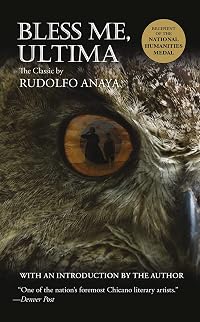
Classic Literature. Fiction. Exquisite prose and wondrous storytelling have helped make Rudolfo Anaya the father of Chicano literature in English. Indeed, Anaya's tales fairly shimmer with the haunting beauty and richness of his culture. The winner of the Pen Center West Award for Fiction for his unforgettable novel Alburquerque, Anaya is perhaps best loved for his classic bestseller, Bless Me, Ultima... Antonio Marez is six years old when Ultima comes to stay with his family in New Mexico. show more She is a curandera, one who cures with herbs and magic. Under her wise wing, Tony will probe the family ties that bind and rend him, and he will discover himself in the magical secrets of the pagan past-a mythic legacy as palpable as the Catholicism of Latin America. And at each life turn there is Ultima, who delivered Tony into the world...and will nurture the birth of his soul. show lessTags
Recommendations



Member Recommendations
Member Reviews
3.5***
Opening Lines: Ultima came to stay with us the summer I was almost seven. When she came the beauty of the llano unfolded before my eyes, and the gurgling waters of the river sang to the hum of the turning earth. The magical time of childhood stood still, and the pulse of the living earth pressed its mystery into my living blood. She took my hand, and the silent, magic powers she possessed made beauty from the raw, sun-baked llano, the green river valley, and the blue bowl which was the white sun’s home.
Antonio Marez (Tony) narrates this coming-of-age story as he recounts the several years that Ultima lived with his family in the mid 1940s. She was elderly and her small New Mexico village virtually deserted when Tony’s show more parents decided to bring Ultima to live with them. She had been a great friend to his mother’s and father’s families; a curandera, she had healed the sick and prayed with them to ward off evil. Her knowledge of plants and herbs is frequently sought out, but also results in some residents calling her “una bruja” (a witch). With her calm demeanor she helps Tony make sense of the world and the evil in it. She helps him to find his own inner strength and to recognize the power of goodness, love and forgiveness.
This is a magical, mystical story that reminds me of the oral story-telling traditions of my grandparents. It is a spiritual journey as much as a journey from babyhood to childhood. Antonio relates many of his vivid dreams – some quite disturbing – which Ultima helps him to interpret. He tries to puzzle out the realities and meanings in the teachings of the Catholic Church as he prepares for his first confession and first communion. He embraces education and learning, although other students make fun of him, and develops a good relationship with his first teacher. He begins to recognize the differences between his parents’ wishes for his future; his father is a man of the plains, a vaquero, and wants this free life for his son, while his mother hopes Antonio will be a priest. He loves and learns from his uncles on both sides of the family – ranchers and farmers. He witnesses some violent and disturbing scenes, but also marvels at the inner strength of his father, mother and Ultima, and learns about loyalty and friendship.
Over the course of the novel (about two years) Tony and his friends also figure out some lessons for themselves. At one point he and his friend Cico have to run from a group of bullies. He asks Cico why the gang attacked them. “I don’t know,” Cico answered, “except that people, grown-ups and kids, seem to want to hurt each other – and it’s worse when they’re in a group.”
I really liked the way in which the adults in the novel tried to explain the world to the child in ways he could understand, and in ways which helped him feel more secure and less troubled. Towards the end, Antonio realizes Ultima’s great lesson: “That the tragic consequences of life can be overcome by the magical strength that resides in the human heart.”
In Anaya’s writing the landscape becomes as important as any character. In fact, it is alive with movement, promise, danger, strength, and forgiveness. It can shelter you or injure you. It can nourish you or kill you.
The novel includes quite a lot of Spanish language words, phrases and even sentences. Non-Spanish speakers may feel a little lost, though I believe context and later paragraphs serve to everything pretty clearly. (Curse words are NOT translated, however.) show less
Opening Lines: Ultima came to stay with us the summer I was almost seven. When she came the beauty of the llano unfolded before my eyes, and the gurgling waters of the river sang to the hum of the turning earth. The magical time of childhood stood still, and the pulse of the living earth pressed its mystery into my living blood. She took my hand, and the silent, magic powers she possessed made beauty from the raw, sun-baked llano, the green river valley, and the blue bowl which was the white sun’s home.
Antonio Marez (Tony) narrates this coming-of-age story as he recounts the several years that Ultima lived with his family in the mid 1940s. She was elderly and her small New Mexico village virtually deserted when Tony’s show more parents decided to bring Ultima to live with them. She had been a great friend to his mother’s and father’s families; a curandera, she had healed the sick and prayed with them to ward off evil. Her knowledge of plants and herbs is frequently sought out, but also results in some residents calling her “una bruja” (a witch). With her calm demeanor she helps Tony make sense of the world and the evil in it. She helps him to find his own inner strength and to recognize the power of goodness, love and forgiveness.
This is a magical, mystical story that reminds me of the oral story-telling traditions of my grandparents. It is a spiritual journey as much as a journey from babyhood to childhood. Antonio relates many of his vivid dreams – some quite disturbing – which Ultima helps him to interpret. He tries to puzzle out the realities and meanings in the teachings of the Catholic Church as he prepares for his first confession and first communion. He embraces education and learning, although other students make fun of him, and develops a good relationship with his first teacher. He begins to recognize the differences between his parents’ wishes for his future; his father is a man of the plains, a vaquero, and wants this free life for his son, while his mother hopes Antonio will be a priest. He loves and learns from his uncles on both sides of the family – ranchers and farmers. He witnesses some violent and disturbing scenes, but also marvels at the inner strength of his father, mother and Ultima, and learns about loyalty and friendship.
Over the course of the novel (about two years) Tony and his friends also figure out some lessons for themselves. At one point he and his friend Cico have to run from a group of bullies. He asks Cico why the gang attacked them. “I don’t know,” Cico answered, “except that people, grown-ups and kids, seem to want to hurt each other – and it’s worse when they’re in a group.”
I really liked the way in which the adults in the novel tried to explain the world to the child in ways he could understand, and in ways which helped him feel more secure and less troubled. Towards the end, Antonio realizes Ultima’s great lesson: “That the tragic consequences of life can be overcome by the magical strength that resides in the human heart.”
In Anaya’s writing the landscape becomes as important as any character. In fact, it is alive with movement, promise, danger, strength, and forgiveness. It can shelter you or injure you. It can nourish you or kill you.
The novel includes quite a lot of Spanish language words, phrases and even sentences. Non-Spanish speakers may feel a little lost, though I believe context and later paragraphs serve to everything pretty clearly. (Curse words are NOT translated, however.) show less
This isn't a book I would normally pick up due to its emphasis on Southwestern folk religion. However, my community selected this book for its "Big Read" program this month and I decided I would at least read the book, even if I don't attend any of the community events. I didn't realize until today that the book is on one of the ALA Office of Intellectual Freedom's lists of frequently challenged books, so I've also participated in Banned Books Week.
Although the book is often described as a coming of age novel, the main character is a tad young for the traditional coming of age novel. The book covers the 2-year time period from the summer before Antonio enters first grade through the summer after third grade. (Antonio is a bright child show more and skipped the second grade.) The book is about his spiritual coming of age, though, so the description fits.
Antonio is a sensitive, introspective child, who is exposed to violence at a young age. He wrestles with the problem of evil, especially in his nightmares. He longs for his first communion, when he will "eat God." Antonio expects to know the answers to all of his questions once God is inside him, and he is greatly disappointed by God's silence after his first communion. The Catholic rituals and catechisms don't address the kinds of questions he has for God. Ultima, the curandera who lives with Antonio's family, is the only adult who provides any real spiritual guidance for Antonio. Although she performs at least some Catholic religious customs, Ultima's religion has its roots in Native American shamanistic beliefs. The other major influences on Antonio's spiritual development come from two of his pals: his friend, Cico, who believes in a fish god, and his friend, Florence, who is an atheist.
I'm not sure why Bless Me, Ultima has been challenged so frequently, but my guess is that many challenges have come from parents who object to it as required reading for their children. The book does have a strong emphasis on the supernatural, and it could be disturbing to some young people. I would recommend that parents read the book and decide for themselves whether their child is mature enough for the book's themes. There are other good books that illustrate Hispanic American culture, so it should be easy to find an alternative reading selection that would accomplish the same purpose.
This well-written novel is recommended especially to students of cultural anthropology for its portrayal of Southwestern religious syncretism. show less
Although the book is often described as a coming of age novel, the main character is a tad young for the traditional coming of age novel. The book covers the 2-year time period from the summer before Antonio enters first grade through the summer after third grade. (Antonio is a bright child show more and skipped the second grade.) The book is about his spiritual coming of age, though, so the description fits.
Antonio is a sensitive, introspective child, who is exposed to violence at a young age. He wrestles with the problem of evil, especially in his nightmares. He longs for his first communion, when he will "eat God." Antonio expects to know the answers to all of his questions once God is inside him, and he is greatly disappointed by God's silence after his first communion. The Catholic rituals and catechisms don't address the kinds of questions he has for God. Ultima, the curandera who lives with Antonio's family, is the only adult who provides any real spiritual guidance for Antonio. Although she performs at least some Catholic religious customs, Ultima's religion has its roots in Native American shamanistic beliefs. The other major influences on Antonio's spiritual development come from two of his pals: his friend, Cico, who believes in a fish god, and his friend, Florence, who is an atheist.
I'm not sure why Bless Me, Ultima has been challenged so frequently, but my guess is that many challenges have come from parents who object to it as required reading for their children. The book does have a strong emphasis on the supernatural, and it could be disturbing to some young people. I would recommend that parents read the book and decide for themselves whether their child is mature enough for the book's themes. There are other good books that illustrate Hispanic American culture, so it should be easy to find an alternative reading selection that would accomplish the same purpose.
This well-written novel is recommended especially to students of cultural anthropology for its portrayal of Southwestern religious syncretism. show less
“From my mother I had learned that man is of the earth, that his clay feet are part of the ground that nourishes him, and that it is this inextricable mixture that gives man his measure of safety and security….But from my father and Ultima I had learned that the greater immortality is in the freedom of man, and that freedom is best nourished by the noble expanse of land and air and pure, white sky. I dreaded to think of a time when I could not walk upon the llano and feel like the eagle that floats on its skies: free, immortal, limitless.” – Rudolfo Anaya, Bless Me, Ultima
Antonio Márez is a young boy living in rural New Mexico in the mid-1940s. Última, a curandera (herbal healer), comes to live with his family due to her show more advancing age. Antonio’s father wants him to become a vaquero and his mother wants him to become a priest. In going to school for the first time, he is thrown into a multicultural environment – Anglo, Mexican, and Native American. Antonio narrates his story, looking back on his life from age six to nine. It is a classic coming of age story.
Antonio is exposed to a variety of beliefs. His mother is a devout Catholic, his father is not religious, Última embraces mystic folklore, a townsman believes in witches and curses, a fellow student is an atheist, and a friend finds the mysterious Golden Carp, a pagan god of Native American legend. He is exposed to violence and grapples with questions of why bad things happen to good people.
At first, I thought Antonio too young to be the protagonist of a coming of age story, but I think the author is portraying how an innocent child figures out how to “be” in the world. Antonio reflects on questions about religion, faith, spirituality, good vs. evil, mysticism, and folklore. For such a young person, he is quite the philosopher! And with him, the reader can engage in examining similar questions. By the end, while his path is not determined, we can see a way forward for him. It is a many-layered story that I found quite thought-provoking. show less
Antonio Márez is a young boy living in rural New Mexico in the mid-1940s. Última, a curandera (herbal healer), comes to live with his family due to her show more advancing age. Antonio’s father wants him to become a vaquero and his mother wants him to become a priest. In going to school for the first time, he is thrown into a multicultural environment – Anglo, Mexican, and Native American. Antonio narrates his story, looking back on his life from age six to nine. It is a classic coming of age story.
Antonio is exposed to a variety of beliefs. His mother is a devout Catholic, his father is not religious, Última embraces mystic folklore, a townsman believes in witches and curses, a fellow student is an atheist, and a friend finds the mysterious Golden Carp, a pagan god of Native American legend. He is exposed to violence and grapples with questions of why bad things happen to good people.
At first, I thought Antonio too young to be the protagonist of a coming of age story, but I think the author is portraying how an innocent child figures out how to “be” in the world. Antonio reflects on questions about religion, faith, spirituality, good vs. evil, mysticism, and folklore. For such a young person, he is quite the philosopher! And with him, the reader can engage in examining similar questions. By the end, while his path is not determined, we can see a way forward for him. It is a many-layered story that I found quite thought-provoking. show less
Ultima, a curandera – a sort of spiritual healer in the Mexican culture – comes to live with Antonio’s family in a small New Mexico town. She helps him to understand the world around him, both physically and spiritually, and to find his own place and purpose in it.
Much of Antonio’s struggle is rooted in the differing cultures represented in his own family. His mother is from the Luna family, farmers, people rooted and cultivated in the earth. His father is a Marez, ranchers, people who wander the earth following the wind. But on a deeper level, Antonio is confused about the spiritual element to the world. What is the essence of God? And do deities beyond the traditional notions of faith exist, ones that are tied to the natural show more world? Ultima guides Antonio through these conflicts and helps him begin to construct his own ideas out of all of the elements of his history and experience.
Rudolfo Anaya’s book is two things. First, [Bless Me, Ultima] is New Mexico, examining all of the conflicting extremes, both physical and spiritual, that identify the place and its people. Secondly, the book is a profoundly spiritual book. Anaya examines so many of the basic quandaries which face a person striving to live by faith, wondering, through Antonio, whether there is more than God at work in the world. The answers for Antonio are a blend of the world he can touch and the world that exists beyond, much like his own nature is a blend of the two diverse people that his parents represent.
The poetry of Anaya’s writing is on display on nearly every page. One sample, the first paragraph of the book, should be enough to hook you:
“Ultima came to stay with us the summer I was almost seven. When she came the beauty of the llano unfolded before my eyes, and the gurgling waters of the river sang to the hum of the turning earth. The magical time of childhood stood still, and the pulse of the living earth pressed its mystery into my living blood. She took my hand, and the silent magic powers she possessed made beauty from the raw, sun-baked llano, the green river valley, and the blue bowl which was the white sun’s home. My bare feet felt the throbbing earth and my body trembled with excitement. Time stood still, and it shared with me all that had been, and all that was to come.”
Bottom Line: A beautifully written book, profoundly spiritual, and perfectly in tune with the place of its birth.
4 ½ bones!!!!! show less
Much of Antonio’s struggle is rooted in the differing cultures represented in his own family. His mother is from the Luna family, farmers, people rooted and cultivated in the earth. His father is a Marez, ranchers, people who wander the earth following the wind. But on a deeper level, Antonio is confused about the spiritual element to the world. What is the essence of God? And do deities beyond the traditional notions of faith exist, ones that are tied to the natural show more world? Ultima guides Antonio through these conflicts and helps him begin to construct his own ideas out of all of the elements of his history and experience.
Rudolfo Anaya’s book is two things. First, [Bless Me, Ultima] is New Mexico, examining all of the conflicting extremes, both physical and spiritual, that identify the place and its people. Secondly, the book is a profoundly spiritual book. Anaya examines so many of the basic quandaries which face a person striving to live by faith, wondering, through Antonio, whether there is more than God at work in the world. The answers for Antonio are a blend of the world he can touch and the world that exists beyond, much like his own nature is a blend of the two diverse people that his parents represent.
The poetry of Anaya’s writing is on display on nearly every page. One sample, the first paragraph of the book, should be enough to hook you:
“Ultima came to stay with us the summer I was almost seven. When she came the beauty of the llano unfolded before my eyes, and the gurgling waters of the river sang to the hum of the turning earth. The magical time of childhood stood still, and the pulse of the living earth pressed its mystery into my living blood. She took my hand, and the silent magic powers she possessed made beauty from the raw, sun-baked llano, the green river valley, and the blue bowl which was the white sun’s home. My bare feet felt the throbbing earth and my body trembled with excitement. Time stood still, and it shared with me all that had been, and all that was to come.”
Bottom Line: A beautifully written book, profoundly spiritual, and perfectly in tune with the place of its birth.
4 ½ bones!!!!! show less
Bless Me, Ultima is set in a small village on the edge of the plains (the llano) of New Mexico during the 1940s. It is a coming of age novel from the Hispanic perspective. Six year old Antonio must grapple with many conflicts as he strives to grow into a man in a multi-faith, multi-cultural setting.
Antonio has been born into a Catholic family and looks forward to his first Communion, but he has many questions about his natal faith. Paganism is native to this area of the Southwest and Antonio finds much to admire in this belief system. Antonio has a keen eye and mind that is open to many ideas as he searches for what is true. Both world views are present within his home. His mother is a strong Catholic while his elderly aunt Ultima (La show more Grande) is a curandera (healer) who aligns with a more pagan world view with its focus on the natural world.
Being in the Southwest, Antonio must also live in two cultures simultaneously. His native tongue is Spanish. When we first encounter Antonio, he speaks no English. He learns the English language and Anglo culture at school and is such a quick learner that he is promoted directly from first to third grade after his first year at school. He has a naturally inquiring mind that works well in a scholarly environment.
Antonio's mother is extremely proud of her little scholar since she has aspirations for him to become a priest and fill a role that has been missing for generations from her agrarian family. Antonio's maternal grandfather and uncles are the Lunas. They are peaceful farmers connected to the land and the flowing of seasons. Mama wants her Antonito to grow into a gentle and quiet man who fits into the Luna family mold. Antonio's father hopes for his son to become, like all Marez men, a plainsman of the llano. This group are a free spirited and wild bunch who prefer the wide open spaces and nomadic life. Alongside this parental struggle to bestow identity upon their son, is Ultima who teaches Antonio the healing arts and encourages him to listen to his own mind and heart. Ultima tells him that he must decide for himself what kind of man he will become.
Antonio experiences change as a palpable thing that affects him deeply as he searches for identity and embarks on his journey to manhood. I was transported back to that youthful hypersensitivity to change as Antonio tells his brother:
"I don't know--sometimes I get the feeling that I will come home, and it will all be changed. It won't be the same anymore--" I could not tell him that I wanted the castle of giants to stand forever, that I wanted the goat path and the hill to be for always. But I had misgivings, I was beginning to learn that things wouldn't always be the same.
Bless Me, Ultima is a poignant novel that engaged my emotions while it wrapped me in beautiful prose that made it hard to put down each night. I was drawn into the story. I felt sadness and terror and confusion. I also felt happiness and peace and hopefulness. Anaya's descriptions of the natural world were absolutely stunning and, at times, brought me to tears. I will not soon forget this book. show less
Antonio has been born into a Catholic family and looks forward to his first Communion, but he has many questions about his natal faith. Paganism is native to this area of the Southwest and Antonio finds much to admire in this belief system. Antonio has a keen eye and mind that is open to many ideas as he searches for what is true. Both world views are present within his home. His mother is a strong Catholic while his elderly aunt Ultima (La show more Grande) is a curandera (healer) who aligns with a more pagan world view with its focus on the natural world.
Being in the Southwest, Antonio must also live in two cultures simultaneously. His native tongue is Spanish. When we first encounter Antonio, he speaks no English. He learns the English language and Anglo culture at school and is such a quick learner that he is promoted directly from first to third grade after his first year at school. He has a naturally inquiring mind that works well in a scholarly environment.
Antonio's mother is extremely proud of her little scholar since she has aspirations for him to become a priest and fill a role that has been missing for generations from her agrarian family. Antonio's maternal grandfather and uncles are the Lunas. They are peaceful farmers connected to the land and the flowing of seasons. Mama wants her Antonito to grow into a gentle and quiet man who fits into the Luna family mold. Antonio's father hopes for his son to become, like all Marez men, a plainsman of the llano. This group are a free spirited and wild bunch who prefer the wide open spaces and nomadic life. Alongside this parental struggle to bestow identity upon their son, is Ultima who teaches Antonio the healing arts and encourages him to listen to his own mind and heart. Ultima tells him that he must decide for himself what kind of man he will become.
Antonio experiences change as a palpable thing that affects him deeply as he searches for identity and embarks on his journey to manhood. I was transported back to that youthful hypersensitivity to change as Antonio tells his brother:
"I don't know--sometimes I get the feeling that I will come home, and it will all be changed. It won't be the same anymore--" I could not tell him that I wanted the castle of giants to stand forever, that I wanted the goat path and the hill to be for always. But I had misgivings, I was beginning to learn that things wouldn't always be the same.
Bless Me, Ultima is a poignant novel that engaged my emotions while it wrapped me in beautiful prose that made it hard to put down each night. I was drawn into the story. I felt sadness and terror and confusion. I also felt happiness and peace and hopefulness. Anaya's descriptions of the natural world were absolutely stunning and, at times, brought me to tears. I will not soon forget this book. show less
I read this book aloud to my husband while we were on vacation in New Mexico; it was a recommendation of a woman working at Collected Works in Santa Fe. I loved that we got to read it while traveling in that landscape. Beyond that, I appreciated Antonio's accessible and incisive treatment of the inherent practical (what will I do) and intellectual (what do I believe) conflicts of growing up: I think I would have found a great deal of solace in this book if I had read it in junior high.
My husband wants to know Theresa and Deborah's version of this story--he laughed every time Antonio's sisters were granted a hilariously cursory mention. The narrator expresses absolutely no curiosity about their lives--especially in comparison with his show more preoccupation with the lives of his older brothers--but Theresa and Deborah seem to be enjoying a pretty rich experience on their own. show less
My husband wants to know Theresa and Deborah's version of this story--he laughed every time Antonio's sisters were granted a hilariously cursory mention. The narrator expresses absolutely no curiosity about their lives--especially in comparison with his show more preoccupation with the lives of his older brothers--but Theresa and Deborah seem to be enjoying a pretty rich experience on their own. show less
Growing up hurts, which is something no one ever says. "These are the best years of your life!" people say, which really means "my life isn't very exciting now that I'm older". Growing up means you can do more things, but as we age out of being children we're wounded in ways we don't even know hurt because we don't know enough to know what hurts yet.
Antonio Márez, six years old, lives with his father and mother in a small New Mexico town spread around a valley. He's torn in several directions in several ways: his father's family wants him to be a rancher, while his mother's family wants him to be a farmer; his mother wants him to be a priest, but he's not sure he understands the holy mysteries of Catholicism; his father wants to move show more with his family to California, yet his older brothers leave with this dream unrealized and Antonio with a burden to support his parents.
Six years old.
As the book progresses, it becomes something of a bildungsroman. Each chapter is a small part of the boy's life, some more influential to his character than others. Centrally, Ultima, a curandera (Native healer), comes to live with the Márez family. Ultima is known to Antonio's mother and father and was present at Antonio's birth. We slowly learn that Ultima does have some true power, seemingly where the church does not.
Tony follows the two paths, that of the curandera, which he seems fated to, and that of the priest, which seems to be forced upon him. Tony desperately wants to be a priest but assumes the Catholic answers will fall into his head. His faith in Ultima's abilities and knowledge seems much more natural.
The book hints at larger questions that Tony feels must have answers, but ultimately left me somewhat unfulfilled. The ending suggests that a melding of religion and folklore is the best path, but ends at that point. Ultima's character seems above it all (and honestly, the character is not more than a light sketch) and exists separate from Catholicism and in spite of it. In a world where Mexicans are slowly becoming Americans and learning English, Anaya convinces me of the problems but doesn't convince me of a solution. show less
Antonio Márez, six years old, lives with his father and mother in a small New Mexico town spread around a valley. He's torn in several directions in several ways: his father's family wants him to be a rancher, while his mother's family wants him to be a farmer; his mother wants him to be a priest, but he's not sure he understands the holy mysteries of Catholicism; his father wants to move show more with his family to California, yet his older brothers leave with this dream unrealized and Antonio with a burden to support his parents.
Six years old.
As the book progresses, it becomes something of a bildungsroman. Each chapter is a small part of the boy's life, some more influential to his character than others. Centrally, Ultima, a curandera (Native healer), comes to live with the Márez family. Ultima is known to Antonio's mother and father and was present at Antonio's birth. We slowly learn that Ultima does have some true power, seemingly where the church does not.
Tony follows the two paths, that of the curandera, which he seems fated to, and that of the priest, which seems to be forced upon him. Tony desperately wants to be a priest but assumes the Catholic answers will fall into his head. His faith in Ultima's abilities and knowledge seems much more natural.
The book hints at larger questions that Tony feels must have answers, but ultimately left me somewhat unfulfilled. The ending suggests that a melding of religion and folklore is the best path, but ends at that point. Ultima's character seems above it all (and honestly, the character is not more than a light sketch) and exists separate from Catholicism and in spite of it. In a world where Mexicans are slowly becoming Americans and learning English, Anaya convinces me of the problems but doesn't convince me of a solution. show less
Members
- Recently Added By
Lists

PBS The Great American Read
100 works; 21 members

Magic Realism
371 works; 52 members

Banned Books Week 2014
268 works; 62 members

Banned or Challenged Books
400 works; 39 members

Books Read in 2014
2,343 works; 89 members

SantaThing 2014 Gifts
299 works; 17 members

Feminism
167 works; 4 members

Chicano/a Literature
10 works; 1 member

The Desert: A Reading List
5 works; 1 member

AP Lit
363 works; 6 members

Banned Books - Latinx
11 works; 1 member
Our Favorite Banned Books
138 works; 122 members

B-B to Get
131 works; 1 member
Author Information

68+ Works 6,287 Members
Rudolfo Anaya, an educator and author, was born on October 30, 1937, in Pastura, New Mexico. He earned a B.A. in English in 1963, an M.A. in 1968 and a second M.A. in Guidance Counseling in 1972 from the University of New Mexico. During the 1960s, Anaya taught in the Albuquerque public schools. In 1974 he began to teach at the University of New show more Mexico and earned the title of professor emeritus in 1993. Anaya's first novel, Bless Me, Ultima began as a trilogy including Heart of Aztlan (1976), and Tortuga (1979). This loose trilogy based on his life experience as a Chicano child, formed Anaya's reputation. Anaya mixed old Spanish folk tales based on the oral tradition with a theme of loss, specifically the loss of religious belief. In 1993, he won the PEN West Center Fiction Award for his novel Albuquerque. 1995 Anaya received both the El Fuego Nuevo Award from the Mexican American Educators and the Excellence in Humanities Award from the New Mexico Endowment for the Humanities. Anaya has lectured extensively around the world. His works have been translated into many languages such as Italian, Russian and Japanese. With his wife Patricia, he founded the Aztlan Premio, a prize encouraging Chicano writers. Anaya resides in Albuquerque. In 2016, President Barack Obama awarded him the National Humanities Medal. He died at the age of 82 on June 28, 2020. (Bowker Author Biography) show less
Some Editions
Awards and Honors
Awards
Notable Lists
Series

Work Relationships
Has the adaptation
Is abridged in
Has as a supplement
Has as a student's study guide
Has as a teacher's guide
Common Knowledge
- Canonical title
- Bless Me, Ultima
- Original title
- Bless Me, Ultima
- Original publication date
- 1972
- People/Characters
- Antonio Marez; Ultima (La Grande)
- Important places
- Guadelupe; the llano; Las Pasturas; New Mexico, USA
- Related movies
- Bless Me, Ultima (2013 | IMDb)
- Dedication
- Con Honor Para Mis Padres
- First words
- Ultima came to stay with us the summer I was almost seven.
- Quotations
- And that is what Ultima tried to teach me, that the tragic consequences of life can be overcome by the magical strength that resides in the human heart.
- Last words
- (Click to show. Warning: May contain spoilers.)Ultima was really buried here. Tonight.
- Original language
- English
- Disambiguation notice
- This is the book; do not combine with the film
Classifications
Statistics
- Members
- 4,060
- Popularity
- 3,814
- Reviews
- 123
- Rating
- (3.71)
- Languages
- English, Italian, Spanish, Turkish
- Media
- Paper, Audiobook, Ebook
- ISBNs
- 40
- UPCs
- 2
- ASINs
- 23