On This Page
Description
This text provides a general picture of the Roman province of Britain during the period from AD 43 until the fifth century. This edition has been revised in the light of recent archaeological research. A new introductory chapter looks at Britain before the first Roman invasion.Tags
Recommendations







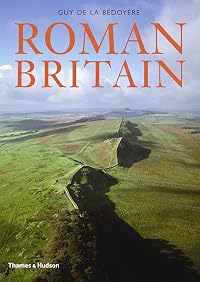
















Member Reviews
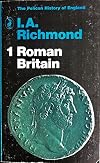
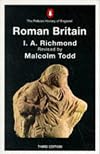
Roman Britain was originally written in 1955 by the archaeologist I. A. Richmond; there was a second edition in 1963, and then Richmond died in 1965. I have the 1995 third edition, revised by his student Malcolm Todd. (I was a bit grumpy to learn that the 1990s printings of the series are about a centimeter taller than the older ones, so my collection will not look very aesthetic when completed.) Todd's preface indicates that of the book's six chapters, one is totally new, three were "virtually completely rewritten," and one is "heavily revised," and thus there is just one where Todd "ventured to preserve parts of Richmond's original treatment" (ix).
Both Richmond and Todd were archaeologists, and I don't know that I've ever read a show more history book by an archaeologist before; if I am to be uncharitable, it certainly reads like it was by an archaeologist, down to its chapter organization, which is largely about different places: military sites (ch. 2), urban centers (ch. 3), rural settlements (ch. 4), and so on. Todd himself doesn't seem to happy with this, as his preface says, "an entirely new work... would certainly be differently ordered" (ix). I found the book frustrating because it seems to me that history ought to tell, well, a story, but a sense of story was very much missing from this book. The first chapter is a quick catalogue of pre-Roman tribes in Britain, but gives little sense of what they were actually like.
The second chapter, "Military History," is the only one that seems to tell some kind of story, moving chronologically from the Roman conquest in A.D. 43-44 to the building of Hadrian's Wall in the early 100s and then to the collapse of Roman influence in Britain around 400. But I often felt like I didn't know why things were happening: why did the Romans decide to conquer Britain? why did Boudicca rise up against it all? why did Roman influence fade? Often it felt like were just getting brief summaries of places things had happened without the actual context for the actual happenings.
This is even worse in most of the other chapters; "Urban Centers" is more a bunch of stuff found in cities than anything that gives you a sense of what urban life was actually like, I had a similar problem with basically every chapter. Perhaps this is an insurmountable problem in the sense that we just don't know what things were like, all we have are these fragments? But if so, I think Richmond and Todd could have made that more clear.
I intend to follow up reading The Pelican History of England by getting the replacement series, The Penguin History of Britain, from the library, so one of the things I am interested in seeing is how our understanding of history has changed over time. How do we view the past differently in the 1950s and '60s versus the 1990s and 2000s? To that end, I want to try to capture each book's "thesis," to get a sense of how it wants us to view the era in question. That's honestly kind of hard to do with this book, but what I found most interesting was its (occasional) sense of how the Romans managed Britain. Richmond and Todd tell us the Romans were adaptive, not imposing: "nothing is more characteristic of Roman Imperial development than readiness to work within existing arrangements, provided these could be assimilated to Roman form" (70). They focused on integrating new societies into theirs, not exclusionary... so long as the taxes flowed. This was true of religion, for example: "It may at first sight seem strange that the worship of native war-gods was permitted so freely. But Roman tolerance of native cults was very generous and in any case the virtues of the warrior were worth cultivating if they were turned to the service of Rome" (169). The way the natives were folded in was through persuasion and cultural incentives: Celtic aristocratic families "were encouraged to adopt Roman ways and to give their sons a Roman education.... Once this movement got under way the rest would follow" (55).
But of course Rome could use force of arms when it needed... but when they decided to do this is somewhat more sketchily explained, despite an entire chapter on military history! show less
Both Richmond and Todd were archaeologists, and I don't know that I've ever read a show more history book by an archaeologist before; if I am to be uncharitable, it certainly reads like it was by an archaeologist, down to its chapter organization, which is largely about different places: military sites (ch. 2), urban centers (ch. 3), rural settlements (ch. 4), and so on. Todd himself doesn't seem to happy with this, as his preface says, "an entirely new work... would certainly be differently ordered" (ix). I found the book frustrating because it seems to me that history ought to tell, well, a story, but a sense of story was very much missing from this book. The first chapter is a quick catalogue of pre-Roman tribes in Britain, but gives little sense of what they were actually like.
The second chapter, "Military History," is the only one that seems to tell some kind of story, moving chronologically from the Roman conquest in A.D. 43-44 to the building of Hadrian's Wall in the early 100s and then to the collapse of Roman influence in Britain around 400. But I often felt like I didn't know why things were happening: why did the Romans decide to conquer Britain? why did Boudicca rise up against it all? why did Roman influence fade? Often it felt like were just getting brief summaries of places things had happened without the actual context for the actual happenings.
This is even worse in most of the other chapters; "Urban Centers" is more a bunch of stuff found in cities than anything that gives you a sense of what urban life was actually like, I had a similar problem with basically every chapter. Perhaps this is an insurmountable problem in the sense that we just don't know what things were like, all we have are these fragments? But if so, I think Richmond and Todd could have made that more clear.
I intend to follow up reading The Pelican History of England by getting the replacement series, The Penguin History of Britain, from the library, so one of the things I am interested in seeing is how our understanding of history has changed over time. How do we view the past differently in the 1950s and '60s versus the 1990s and 2000s? To that end, I want to try to capture each book's "thesis," to get a sense of how it wants us to view the era in question. That's honestly kind of hard to do with this book, but what I found most interesting was its (occasional) sense of how the Romans managed Britain. Richmond and Todd tell us the Romans were adaptive, not imposing: "nothing is more characteristic of Roman Imperial development than readiness to work within existing arrangements, provided these could be assimilated to Roman form" (70). They focused on integrating new societies into theirs, not exclusionary... so long as the taxes flowed. This was true of religion, for example: "It may at first sight seem strange that the worship of native war-gods was permitted so freely. But Roman tolerance of native cults was very generous and in any case the virtues of the warrior were worth cultivating if they were turned to the service of Rome" (169). The way the natives were folded in was through persuasion and cultural incentives: Celtic aristocratic families "were encouraged to adopt Roman ways and to give their sons a Roman education.... Once this movement got under way the rest would follow" (55).
But of course Rome could use force of arms when it needed... but when they decided to do this is somewhat more sketchily explained, despite an entire chapter on military history! show less
Pelican History of England 1
Baltimore, MD
Ratings
Members
- Recently Added By
Author Information

14+ Works 550 Members
Some Editions
Series

Belongs to Publisher Series
Pelican Books (A315)
Common Knowledge
- Canonical title
- Roman Britain (Pelican History of England v.1) (Pelican History of England v.1)
- Original publication date
- 1955
- Important places
- England, UK; Britannia, Roman Empire
- Important events
- Roman occupation of Britain
- Epigraph
- [None]
- Dedication
- [None]
- First words
- Roman Britain is the first volume of a series planned to form an intelligent and consecutive guide to the development of English Society in all its aspect from the Roman invasion to the outbreak of the First World War.... (show all)
Editorial note.
During this century the subject of Roman Britain has grown, and grown so large that all aspects of it cannot be covered in a small volume.
Author's preface.
The earliest political connexion of Rome with these islands came so suddenly that it was almost the first connexion of any kind between the Roman world and Britain.
Chapter one. Military history. - Last words
- (Click to show. Warning: May contain spoilers.)This may well be true, for it would reflect the notable lack of political cohesion and cultural unity which permitted so rapid an acquisition of the province and defeated the first attempt to introduce a religious focus of loyalty at Camulodunum.
- Original language
- English
- Disambiguation notice
- Be aware that Ian A. Richmond wrote two books by this title: one for the Britain in Pictures series (published 1947) and this one, for the P... (show all)elican History of England (1st pub. 1955). (The first is listed as a further reference in the bibliography of the second). Please discriminate between the two, do not combine, and do not add either book to the other's series.
Classifications
- Genres
- History, Nonfiction, General Nonfiction, Anthropology
- DDC/MDS
- 913.42 — History & geography Geography & travel Travel to Specific Places English antiquities
- LCC
- DA145 .R5 — History of Europe, Asia, Africa and Oceania Great Britain History of Great Britain England History By period Early and medieval to 1485 Celts. Romans. Saxons. Danes. Normans
- BISAC
Statistics
- Members
- 482
- Popularity
- 62,891
- Reviews
- 3
- Rating
- (3.72)
- Languages
- English
- Media
- Paper
- ISBNs
- 3
- ASINs
- 29