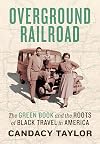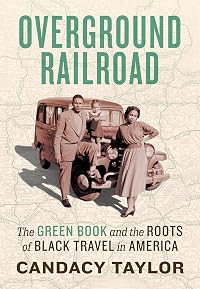
Overground Railroad: The Green Book and the Roots of Black Travel in America
by Candacy Taylor
On This Page
Description
The first book to explore the historical role and residual impact of the Green Book, a travel guide for black motorists. Published from 1936 to 1966, the Green Book was hailed as the "black travel guide to America." At that time, it was very dangerous and difficult for African-Americans to travel because black travelers couldn't eat, sleep, or buy gas at most white-owned businesses. The Green Book listed hotels, restaurants, gas stations, and other businesses that were safe for black show more travelers. It was a resourceful and innovative solution to a horrific problem. It took courage to be listed in the Green Book, and 'Overground Railroad' celebrates the stories of those who put their names in the book and stood up against segregation. It shows the history of the Green Book, how we arrived at our present historical moment, and how far we still have to go when it comes to race relations in America. show lessTags
Recommendations
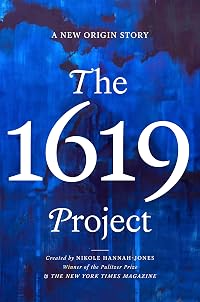
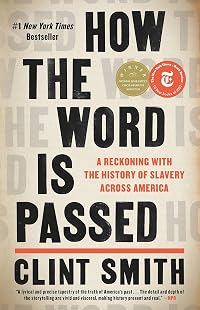
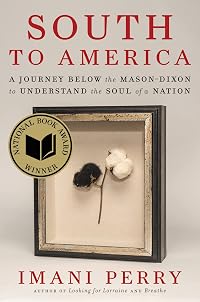

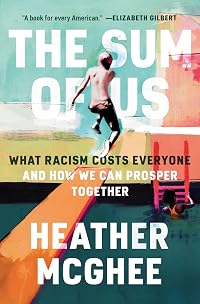
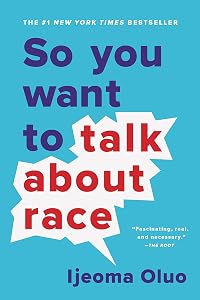
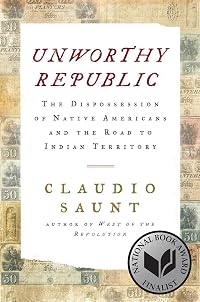
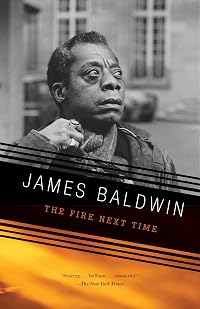
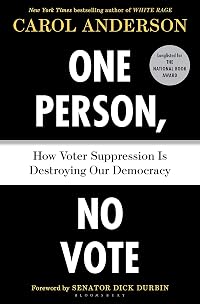

Member Recommendations
Member Reviews
How challenging would it be to take a long-distance road trip if you didn't know whether in any given city along your path you could get gas, secure lodging or buy food? Or in which towns your mere presence could be a threat to your very life? Prior to the Civil Rights Era (and, if we're being honest, through it and beyond), driving as a Black motorist has always been fraught, dangerous and filled with uncertainty. Thankfully, the Green Book was available.
While on the surface this book is about the origin, history, contents and lifespan of the Green Book, it contains so much more eye-opening information in context, which help to paint a stark picture of the ways in which the "simple" act of travel was anything but for Black citizens. show more The intentional practices, safety rituals and precautions black motorists took (e.g., keeping a chauffeur hat in the vehicle as a prop and purposely driving at night to avoid being stopped without reason) are actions that would never occur to a white driver. Though the text is a little repetitive in places and occasionally jumps around a bit in time, I very much appreciated this book for the ways in which it educated me. It is well-written, engaging and thorough. Highly recommended. show less
While on the surface this book is about the origin, history, contents and lifespan of the Green Book, it contains so much more eye-opening information in context, which help to paint a stark picture of the ways in which the "simple" act of travel was anything but for Black citizens. show more The intentional practices, safety rituals and precautions black motorists took (e.g., keeping a chauffeur hat in the vehicle as a prop and purposely driving at night to avoid being stopped without reason) are actions that would never occur to a white driver. Though the text is a little repetitive in places and occasionally jumps around a bit in time, I very much appreciated this book for the ways in which it educated me. It is well-written, engaging and thorough. Highly recommended. show less
What an absolutely amazing book! Candacy Taylor has written a wonderfully readable and eye-opening account of a vital publication called The Green Book, which helped the black traveler on the road to find safe accommodations and businesses willing to serve him during the height of Jim Crow oppression. The impact of this book went beyond this. It also meant more investments in black owned businesses that were listed and the resulting economic boost. The description of many of these businesses, entertainers, and leaders within the black community is fascinating.
It also addresses the topic of racism directly, and her examples should break anybody's heart. And it existed at all levels. "Between 1877 and 1968, the Ku Klux Klan and other show more white vigilante gangs casually massacred more that four thousand black people." And by the publishing of the 1948 Green Book, almost 200 anti-lynching laws had been introduced into Congress - and none of them passed. None. (p.106).
But it doesn't stop there. It is also a convincing commentary on the extent of racism even today. A study conducted in Chicago's "hypersegregated" neighborhoods found that whites used drugs at about the same rate as blacks did, but Chicago's black community "had an imprisonment rate more than forty times higher than that for the surrounding white communities." (p.122). Furthermore, it was discovered that Brooklyn, Chicago, and New Orleans, spent more than one million dollars per city block to incarcerate its residents each year, usually located in traditionally black neighborhoods where Green Book sites had been clustered. Do you think that maybe - just maybe - this is part of why Colin Kaepernick took his knee?
There is much, much more to this book than this, and it is certainly not all about racism. It is enjoyable, it is sad, it is informative, it is happy, and boy, is it eye-opening. Anybody who wants try to better understand an experience most of us could never comprehend should read this book.
I won this uncorrected Advanced Readers Copy from Goodreads.com and any reference to a page number may, or may not match the final publication which is due to be published in January, 2020. show less
It also addresses the topic of racism directly, and her examples should break anybody's heart. And it existed at all levels. "Between 1877 and 1968, the Ku Klux Klan and other show more white vigilante gangs casually massacred more that four thousand black people." And by the publishing of the 1948 Green Book, almost 200 anti-lynching laws had been introduced into Congress - and none of them passed. None. (p.106).
But it doesn't stop there. It is also a convincing commentary on the extent of racism even today. A study conducted in Chicago's "hypersegregated" neighborhoods found that whites used drugs at about the same rate as blacks did, but Chicago's black community "had an imprisonment rate more than forty times higher than that for the surrounding white communities." (p.122). Furthermore, it was discovered that Brooklyn, Chicago, and New Orleans, spent more than one million dollars per city block to incarcerate its residents each year, usually located in traditionally black neighborhoods where Green Book sites had been clustered. Do you think that maybe - just maybe - this is part of why Colin Kaepernick took his knee?
There is much, much more to this book than this, and it is certainly not all about racism. It is enjoyable, it is sad, it is informative, it is happy, and boy, is it eye-opening. Anybody who wants try to better understand an experience most of us could never comprehend should read this book.
I won this uncorrected Advanced Readers Copy from Goodreads.com and any reference to a page number may, or may not match the final publication which is due to be published in January, 2020. show less
As with all the race-related reading I've done over the past couple of years, this book continues to teach me, to open my eyes, to make me understand.... I am so grateful to have access to these books, these accounts, these shared stories.
This book is an eye-opening & fascinating view of Black road travel (& its many related problems) from the 1930s through the 1960s. While the book is serious & obviously addresses horrific systemic & personal racism, it also remains upbeat in many ways, reflecting the original Green Books in that they helped make safer Black travel an accessible reality.
The book is presented chronologically through the editions & is not only a micro look at travel, but also a macro look at the race issues of the time show more throughout the US. Many wonderful photos of the Green Book covers, content, locations, & people are included. Sadly, lynching photos were popular at one time (I daresay with social media, they are heartbreakingly & horrifyingly still all too common) & one is included, as well as some examples of racist advertising. America needs to face & explore its racist soul.
A must-read for a piece of history that too many Americans know little to nothing about.
Taylor, the author, is also a cultural documentarian & has worked with the Smithsonian to create a traveling exhibit in conjunction with the book. I'm not sure how the exhibit is being affected by covid, but it looks like the exhibit is currently in Memphis until Jan. of 2021. Her webpage has more info, as does the Smithsonian page.
http://www.taylormadeculture.com/the-green-book
https://www.sites.si.edu/s/topic/0TO36000000U032GAC/the-negro-motorist-green-boo....
Taylor mentions in the Author's Note that she is working on a children's edition aimed for 9- to 12-year-olds. I'm looking forward to seeing what she publishes. show less
This book is an eye-opening & fascinating view of Black road travel (& its many related problems) from the 1930s through the 1960s. While the book is serious & obviously addresses horrific systemic & personal racism, it also remains upbeat in many ways, reflecting the original Green Books in that they helped make safer Black travel an accessible reality.
The book is presented chronologically through the editions & is not only a micro look at travel, but also a macro look at the race issues of the time show more throughout the US. Many wonderful photos of the Green Book covers, content, locations, & people are included. Sadly, lynching photos were popular at one time (I daresay with social media, they are heartbreakingly & horrifyingly still all too common) & one is included, as well as some examples of racist advertising. America needs to face & explore its racist soul.
"The Green Book was a formidable weapon in the fight for equal rights. It gave black Americans permission to venture out onto America's highways and enjoy the country they helped build. Victor Green probably didn't set out to create a weapon for change, but it's also likely that when Steve Jobs put a video camera in a phone, he didn't plan to trigger a new civil rights movement, either. The point is that real change can come from simple tools that solve a problem. That is why the Green Book was so powerful."
A must-read for a piece of history that too many Americans know little to nothing about.
Taylor, the author, is also a cultural documentarian & has worked with the Smithsonian to create a traveling exhibit in conjunction with the book. I'm not sure how the exhibit is being affected by covid, but it looks like the exhibit is currently in Memphis until Jan. of 2021. Her webpage has more info, as does the Smithsonian page.
http://www.taylormadeculture.com/the-green-book
https://www.sites.si.edu/s/topic/0TO36000000U032GAC/the-negro-motorist-green-boo....
Taylor mentions in the Author's Note that she is working on a children's edition aimed for 9- to 12-year-olds. I'm looking forward to seeing what she publishes. show less
There is much to appreciate in this book, but frankly, it's a bit of a mess. It's not a professionally written history book. In the end, I wasn't sure if the project of documenting The Green Book prompted the author's diversion of focus away from it, or if it was the other way around, the project was used as a structure to get at the issues she really wanted to talk about all along. What did I appreciate? Certainly, reading about a number of "facilities" from the not so distant past that provided comfort and safety to those of America who had no expectation of getting what all Americans should be able to get regardless of their race. This book certainly gives much depth to what a white reader, and maybe even some younger black readers, show more might have first been introduced to in the recent movie, Green Book. A dimension of the social dynamics that even made The Green Book necessary in the first place were the "sundown towns" in which blacks were banned from being in for any reason after sundown. Not just on the other side of the tracks, so to speak, but not in town at all. This book makes it perfectly clear this was not an issue only in Southern states, as the movie mentioned earlier might suggest. It's in a chapter about Route 66, the notable U.S. highway where it became crystal clear to me how much my own connection to past racist towns was so obvious. To start, my younger brother was born in a former sundown town in Illinois. My older brother went to college in a different town where barbershops had been segregated. My wife was born in another town where the Klu Klux Klan had held cross-burning rallies in a popular tourist location, and a cousin lives in a former sundown town in California. None of these places were in former Confederate states. My, my, weren't we white folks wide spread in our American racism? On the negative side, there are a number of little things -- which I will not itemize here -- that show a lack of professionalism in producing this book, but the one that really floored me was the author's error on knowing when Martin Luther King Jr. was assassinated and when Richard Nixon took office as U.S. president. I mean google it, why not, even if you weren't alive yet, like I was. Ultimately, that leads me to the final impression I ended up with, that the author approaches the information she has on issues very much like too many people on social media do, i.e. not knowing what they don't know, but assuming they know all that is needed to be known. show less
There are things we don't know, but can learn. Just as there are things we can learn, but never really know. This book travels a familiar road unrecognizable to many of us. Fascinating, heart-breaking, disturbing and hopeful. Not an academic volume, but full of revelation.
A wealth of information about traveling in the United States during the Jim Crow era and the challenges that African Americans faced when they traveled as chronicled by The Green Book. As a youngster I remembered seeing the Green Book someplace during my travels. My father took our family on many trips and the one thing that I remember is that we did not see many people of African American descent on our travels. I did not understand the challenges that they were facing. This book provides a snap shot of those times and illustrates the problem that people of color face today while traveling.
I really enjoyed reading this book, especially for some of the stories that were in it and the fact that it showed the challenges that black show more travelers faced. I personally think that the book could have used a good final editing; however, it does not decrease the value as a historical document. show less
I really enjoyed reading this book, especially for some of the stories that were in it and the fact that it showed the challenges that black show more travelers faced. I personally think that the book could have used a good final editing; however, it does not decrease the value as a historical document. show less
This is not just about road tripping while black. It’s an examination of our country’s approach to civil liberties and the rampant racist highways that have been paved through our political systems and subconscious.
Every reader will learn something new here, it might be one or two things for some or it might be a new fact every few minutes for others, how exciting!
Every reader will learn something new here, it might be one or two things for some or it might be a new fact every few minutes for others, how exciting!
Members
- Recently Added By
Published Reviews
Taylor creates a vivid, multi-voiced travelogue, drawing on interviews, archival documents and newspaper accounts. Historic photographs provide context. Her contemporary images drawn from her travels — landscapes of boarded-up or graffiti-laced wastelands, empty vistas where sites once stood — also play a dynamic, before-and-after role in storytelling.
added by private library
Lists

Black Authors
384 works; 32 members
Author Information

4 Works 459 Members
3 Works 420 Members
Awards and Honors
Awards
Work Relationships
Common Knowledge
- Original publication date
- 2020-01-07
- People/Characters
- Victor Hugo Green; Frank Schiffman; Orson Welles; Thurgood Marshall; George Grant; John D. Rockefeller (show all 8); Laura Spelman Rockefeller; Langston Hughes
- Important places
- Harlem, New York, New York, USA; Apollo Theater, Harlem, New York, New York, USA; Sundown Towns
- Dedication
- For Ron, Mom, Aimee, Adger, Sophie, and Chris
- First words
- Introduction: "Don't you dare say a word."
Chapter One: As Ron hurried down the plush carpeted stairs on his way to the garage, carrying a stack of Screamin' Jay Hawkins and Howlin' Wolf CDs, he said, "Okay. I'm ready to roll!" I stared at him and shook my head. "It's... (show all) after ten o'clock. Why can't you drive during the day, like a normal person?" His answer was always the same. "Traffic." - Quotations
- After scouting more than 3,600 Green Book sites, I realized that most of my well-meaning liberal friends in the coastal cities had never seen the poverty that millions of Americans are living in. By the time I got to Detroit,... (show all) after leaving Los Angeles and driving across the country, I was in tears.
The sites that are still with us symbolize survival: They endured the times the pendulum swung forward and a wrecking ball swung back. These businesses survived urban renewal, gentrification, and white supremacist policies. A... (show all)nd the people in these communities survived underfunded schools and overfunded prisons. All of this cemented my faith that we would survive Trump.
Driving too slowly, however, could also attract attention, so to avoid getting pulled over, most black men at the time learned to drive a mile or two under the speed limit. A slower car in front could pose yet another problem... (show all) for black motorists in Jim Crow states, where it was illegal for a black driver to pass a white driver.
Black Americans who went to mainstream banks for auto financing were generally denied loans, but even after World War II, the roughly 3 percent of black men who received bank credit were often charged higher interest rates th... (show all)an white customers. Moreover, black men living in the South needed a white man to cosign for a loan. (Women of any race were denied credit without a male cosigner until well into the 1970s.)
In 1930, a few years before Cadillac opened its showroom doors to African Americans, journalist George Schuyler addressed this issue, saying that “Blacks who drove expensive cars offended white sensibilities, and some black... (show all)s kept to older models so as not to give the dangerous impression of being above themselves.”
The exclusion of black people from golf courses as anything but caddies was commonplace, but in 1943 it was written directly into the Professional Golfers Association (PGA) bylaws that only “members of the Caucasian race”... (show all) were allowed to join. (The clause was finally removed in 1961.)
George Grant, an African American dentist, made the most significant contribution when he designed the first golf tee, in 1899.
Twenty-three years after Grant invented his wooden golf tee, Joseph Bartholomew, a native of New Orleans and a self-taught golfer, became the first African American to design a public golf course.... As a black man, he was fo... (show all)rbidden from playing on this course or any of the several he designed in New Orleans and across the state of Louisiana.
Presenting the illusion of access and then going to great lengths to employ a hidden, covert system to deny it constitutes an even more insidious racism, and one much harder to fight. For this and so many other reasons, the a... (show all)utomobile was powerful for black physical and social mobility.
It’s likely that Esso’s benevolence for black people had been inspired by Laura Spelman Rockefeller, the wife of John D. Rockefeller, Esso’s CEO. Spelman Rockefeller, who was white, had been raised in Cleveland, Ohio, i... (show all)n a house that was a stop on the Underground Railroad. Her parents, Harvey Buell Spelman and Lucy Henry Spelman, had been fearless and powerful abolitionists.
...in the conundrum of segregation being both a blessing and a curse, black-owned businesses especially benefited, largely because in many cases, black people were denied services and shut out of white America.
In 1917, Senator James K. Vardaman of Mississippi stated on the Senate floor that allowing black men to serve in the armed forces was a mistake that would “inevitably lead to disaster,” because once you “impress the Neg... (show all)ro with the fact that he is defending the flag” and “inflate his untutored soul with military airs,” he would demand that “his political rights must be respected.”
Rockefeller (the CEO of Esso) was the chairman of the advisory committee at the United Negro College Fund, which he founded in 1944.
Today, many of the homes that were bought with the help of the GI Bill are worth ten times their purchase price and have provided financial security, retirement, and college tuition for three generations of the same family. B... (show all)lack GIs being denied access to this entitlement program is partially why today the average white American family has nearly ten times the net worth of the average black American family.
Route 66 tourist shops sell hundreds of products featuring Elvis, Marilyn Monroe, James Dean, and Betty Boop, all in an effort to recapture a time that didn’t exist for black travelers, and only rarely for whites. The Ameri... (show all)can ideals associated with Route 66, then and now, have usurped the true narrative, erasing the more harrowing aspects of the road’s past. Today, the Route 66 brand is so weighted with nostalgia that parts of the fabled highway are suffocating under an idealized past that never was.
The freeway system was tied into “urban renewal” projects that spanned America, which not only took tourism away from Route 66 towns but also decimated black communities. Urban renewal’s effect on black neighborhoods wa... (show all)s even more destructive, as many of the new freeways bisected more black communities than white.
Freeways created physical and psychological barriers, dividing a nation that was already struggling to find common ground. And although this was a time when the country thought it was moving forward, the pendulum was actually... (show all) swinging backward—and this time, when it did, it literally became a wrecking ball.
In the wake of the Civil Rights Act, white business owners found that desegregation increased profits by broadening their customer base, and it gave some of them the courage they had needed to do the right thing.
Once black people could venture into new areas, they did. However, as more black travelers patronized white businesses, black business owners lost the support they had relied on, and many struggled to keep their businesses op... (show all)en. It was a no-win situation.
In less than a decade after the passage of the Civil Rights Act, at least half of the Green Book black-owned businesses were closed, either through lack of support or through eminent domain, which allowed federal, state, and ... (show all)city governments to take over the land to expand freeway systems and for urban renewal projects.
In many respects, Nixon’s “war on drugs” essentially became a war on black communities, the places where Green Book sites once thrived. Apparently, Nixon’s plan worked. Just one decade after the Green Book ceased publ... (show all)ication, the number of Americans incarcerated had doubled. And today it has skyrocketed to 700 percent of what it was in the 1960s.
Nearly every U.S. president since Nixon designed his own “get tough on crime” initiative, but it was President Bill Clinton’s 1994 Crime Bill that was the worst. Among other outrageous provisions, it eliminated higher e... (show all)ducation for inmates, authorized the use of boot camps for delinquent minors, and allocated money for new prisons, contributing to the prison-industrial complex we know today.
Clinton’s Crime Bill kicked the pendulum of justice further back than any failed policies that attempted to address racial equality since the passage of the Civil Rights Act. Once we locked up nearly a third of our black me... (show all)n, families dissolved, more black-owned businesses closed, and schools in black neighborhoods started to look more like jails. And once black men were released from jail, they couldn’t go back to their homes because it would be a violation of their parole; those who did go home put the whole family at risk for eviction. Only two years after the Crime Bill was signed, seventeen billion dollars that had been allocated for public housing was being used to build new prisons.
...“prison gerrymandering” pulls black people out of their communities and places them, at least in the census, into nearly all-white communities. Once these black inmates are counted as residents, the rise in population ... (show all)gives these towns more legislative power in Washington, while simultaneously disempowering the black communities the inmates left when they were incarcerated. - Last words
- (Click to show. Warning: May contain spoilers.)Chapter 11: All black Americans wanted was the ability to walk, run, drive, shop, and live freely outside their neighborhoods, just like white people. After the Hampton House became another casualty to integration, community activist Georgia Ayers summed it up: "We got what we wanted, but lost what we had."
(Click to show. Warning: May contain spoilers.)Epilogue: As the author and educator Jelani Cobb tells his students at Columbia: "History doesn't repeat itself. Humans do." - Blurbers
- Gates, Henry Louis, Jr.; Thompson, Heather Ann; Lewis, David Levering; Wilson, William Julius
- Original language
- English
- Canonical DDC/MDS
- 970.980; 973.049607300904
- Canonical LCC
- E185.61
Classifications
- Genres
- General Nonfiction, Nonfiction, Travel, History
- DDC/MDS
- 970.980 — History & geography History of North America History of North America History, geographic treatment, biography
- LCC
- E185.61 — History of the United States United States Elements in the population Afro-Americans Status and development since emancipation
- BISAC
Statistics
- Members
- 347
- Popularity
- 90,945
- Reviews
- 14
- Rating
- (4.22)
- Languages
- English
- Media
- Paper, Audiobook, Ebook
- ISBNs
- 12
- ASINs
- 2